Outdoor
Pool Float Storage Ideas
11 practical pool float storage ideas for a tidy backyard, including outdoor bins, PVC racks, wall hooks, carts, mesh corrals, deck boxes, benches, and baskets.
Pool floats make summer days more enjoyable, but they can quickly create a messy backyard when there is nowhere practical to keep them. Large inflatable loungers, rings, noodles, kickboards, and children's pool toys often end up scattered across the deck, leaning against fences, or blowing around the yard.
A good pool float storage system should keep these items accessible without blocking walkways or making the patio feel crowded. It also needs to allow wet floats to dry, stand up to outdoor conditions, and accommodate accessories of different sizes. The most attractive solution will not be useful for long if it is difficult to reach or too small for the floats your family regularly uses.
You do not need a large pool house or custom-built cabinet to keep the area organized. Outdoor bins, simple racks, wall hooks, rolling carts, mesh corrals, and covered benches can all work depending on the size of the yard and the number of items you own.
Before choosing a solution, consider where the floats are used, how often they need to be stored, and whether you prefer to keep them inflated. These 11 pool float storage ideas will help you create a pool area that feels tidy, practical, and ready for summer.
Use a large outdoor storage bin
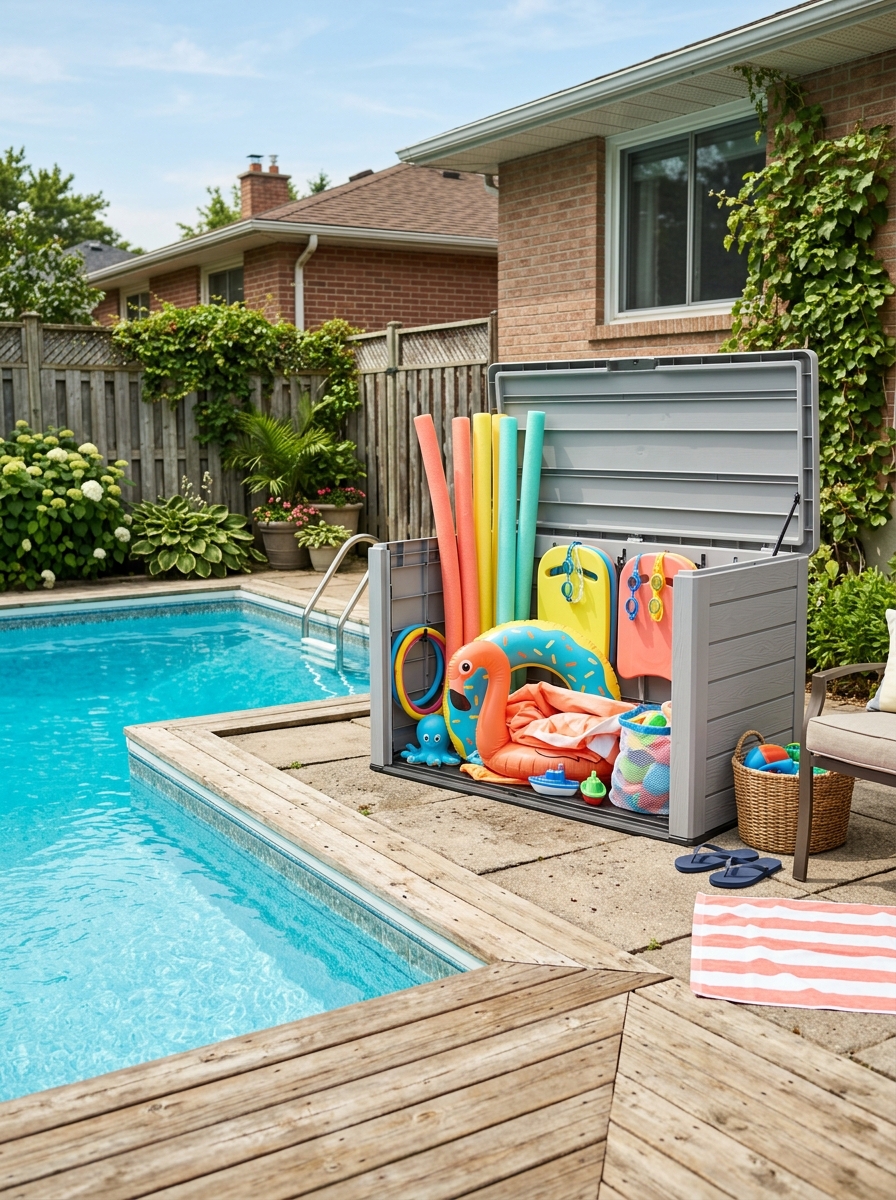
A large outdoor storage bin is one of the simplest ways to contain pool toys and smaller inflatable items. It can sit near the pool, against an exterior wall, or beneath a covered patio where everyone can reach it easily.
Choose a weather-resistant bin with drainage or ventilation so damp toys do not remain trapped inside. A completely sealed container may protect items from rain, but wet floats and towels should be dried before being placed inside to prevent odor and mildew.
Storage bins work best for deflated floats, pool noodles, goggles, diving toys, pumps, and smaller accessories. Very large inflated loungers may not fit, so measure both the container and your biggest items before purchasing one.
A neutral gray, white, black, or wood-look finish can help the bin blend with the patio furniture. Keep the top clear so the lid remains easy to open and the storage system stays convenient.
Build a simple PVC pool float rack
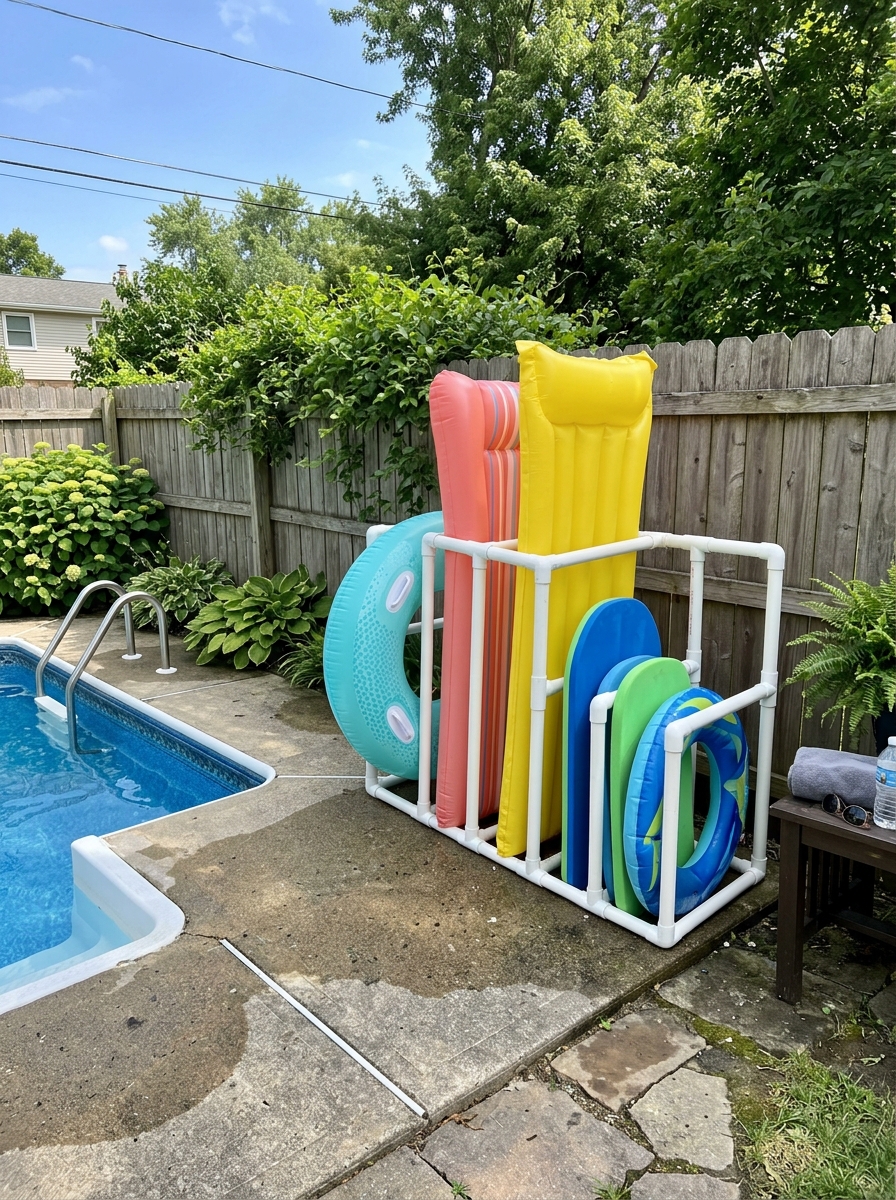
A PVC rack is an affordable way to store large inflated floats upright. The lightweight frame can be built with several vertical dividers, allowing rings, loungers, and flat floats to slide between them without being piled on top of one another.
This style of storage works particularly well beside a fence, garage wall, or pool equipment area. Because the structure is open, water can drain and the floats can dry naturally after use.
Use outdoor-rated PVC and secure the base so the rack does not tip in strong wind. A wider frame may be needed for oversized loungers, while closer dividers can hold thinner floats and kickboards.
White PVC is practical, but it can also be painted with an appropriate outdoor finish to coordinate with the patio. Keep the rack in a shaded or partially covered area when possible to reduce prolonged sun exposure on the inflatables.
Add wall-mounted hooks
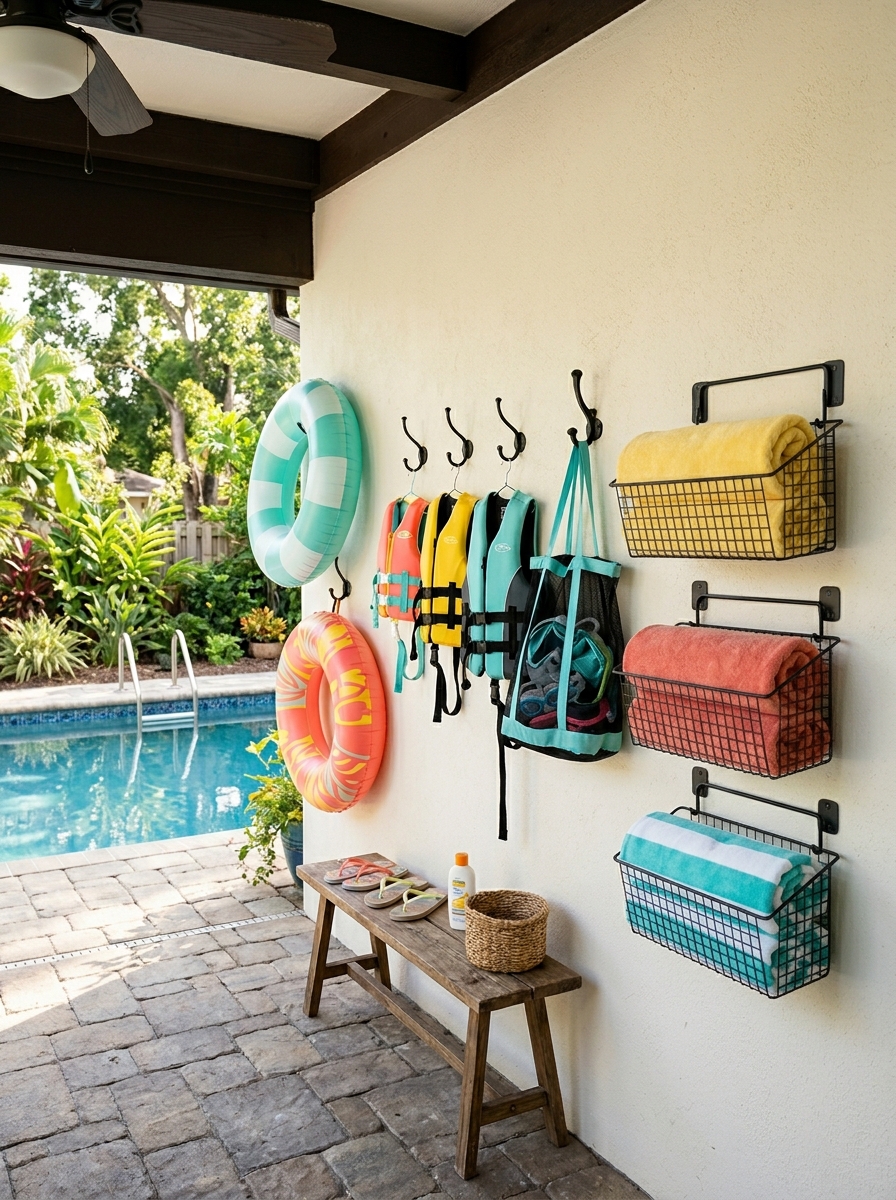
Wall-mounted hooks use vertical space and keep pool items away from the ground. They work well on a pool-house wall, exterior garage wall, sturdy fence, or covered patio.
Large hooks can hold inflatable rings, life jackets, skimmer nets, towels, and lightweight loungers. Smaller hooks can be used for goggles, swim bags, and cleaning tools. Leave enough distance between the hooks so large floats do not overlap heavily.
Choose rust-resistant hardware designed for outdoor use. Hooks should be securely installed into a suitable surface rather than attached only to thin siding or unstable fence panels.
This solution is most effective when the wall is near the pool but protected from constant rain and intense afternoon sun. A neat row of hooks can also make colorful pool accessories look intentional rather than cluttered.
Use a freestanding metal storage rack
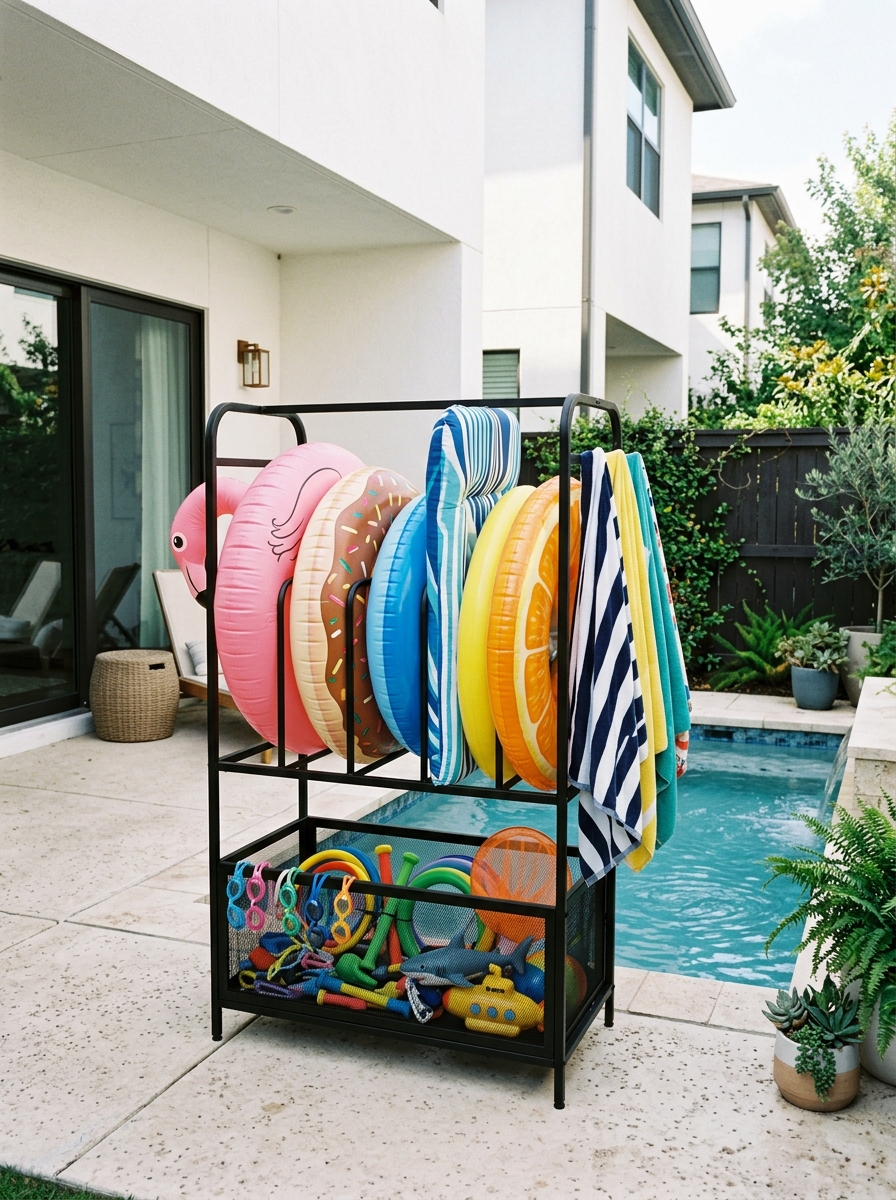
A freestanding metal rack is a useful option when you cannot attach hooks or shelves to an exterior wall. It can be positioned near the pool and moved if the layout changes.
Look for a rust-resistant rack with wide vertical sections or open arms. The design should allow inflated floats to stand upright while smaller baskets or hooks hold accessories such as goggles, towels, and water toys.
A weighted base is important, especially in windy yards. The rack should also have enough clearance around it so users can remove one float without pulling down everything else.
Black metal creates a clean contemporary look, while white or pale gray can feel lighter beside a bright pool deck. Place rubber feet beneath the frame to protect the patio and improve stability.
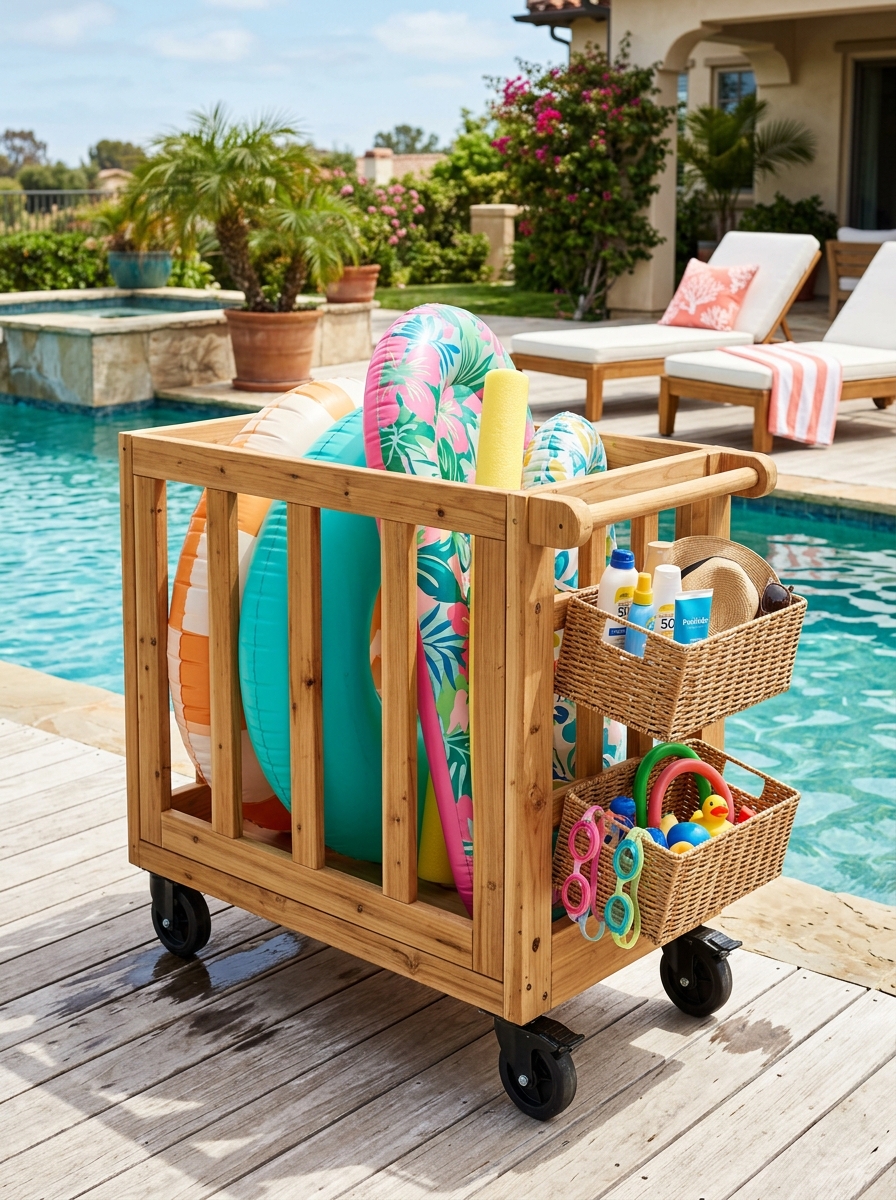
Create a rolling pool float cart
A rolling cart makes it easier to move pool floats between the water, patio, garage, or covered storage area. This is particularly helpful when the floats need to be protected at night or during bad weather.
The cart can be built from wood, PVC, or powder-coated metal. Use tall sides or dividers to prevent large inflatables from sliding out, and choose outdoor wheels that move smoothly across the patio surface.
Smaller baskets can be attached to the sides for sunscreen, goggles, water toys, towels, and inflator pumps. Keeping these accessories together saves time and reduces the number of loose items around the pool.
Do not overload the cart with heavy equipment if it is designed primarily for inflatables. It should remain easy for one adult to move and should have locking wheels to prevent it from rolling unexpectedly.
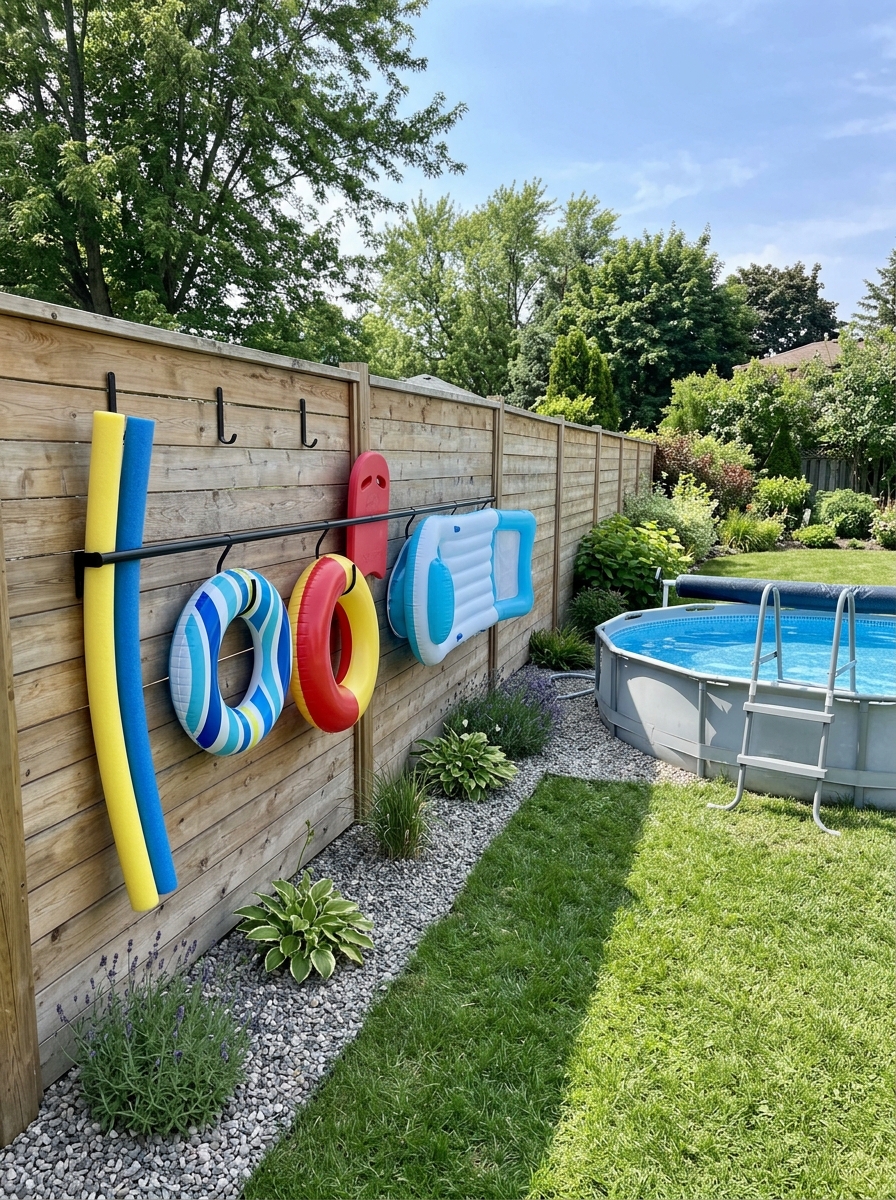
Hang floats on a fence
A fence can provide useful storage without adding another large piece of furniture to the pool area. Heavy-duty outdoor hooks or horizontal rails can hold rings, lightweight loungers, noodles, and swim equipment.
Position the storage on a section of fence that does not interfere with gates, seating, or landscaping. Items should remain easy to reach without narrowing the walkway beside the pool.
Make sure the fence is strong enough to support the storage hardware and the weight of wet accessories. Inflatable floats are light, but multiple items can create more wind resistance than expected.
This method works best when the fence receives partial shade. Long exposure to intense sun can fade colors and shorten the life of some inflatable materials, so seasonal items should still be moved into covered storage when they are not used regularly.
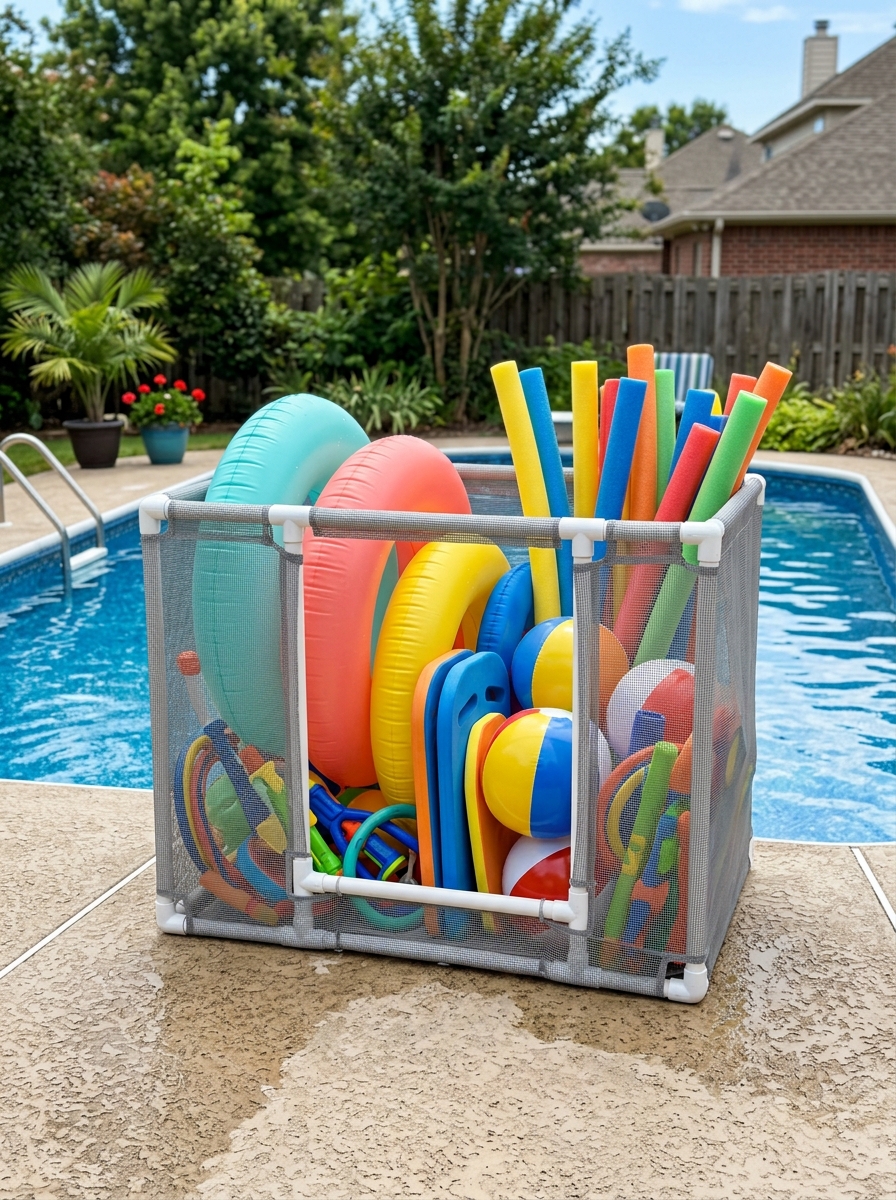
Make a mesh storage corral
A mesh storage corral is ideal for families with many lightweight pool toys and inflated floats. Its open sides keep everything contained while allowing air to circulate and water to drain.
The frame can be made from PVC, treated wood, or outdoor metal, with durable mesh secured around the sides. A wide opening or hinged section makes it easier to remove larger items from the bottom of the pile.
Unlike a solid bin, a mesh corral allows you to see what is inside. This helps children find toys without emptying the entire container and makes it easier to notice items that still need to dry.
Place the corral on a level surface and anchor it if the yard experiences strong wind. Do not fill it above the frame, since loose floats can still catch the wind and escape.
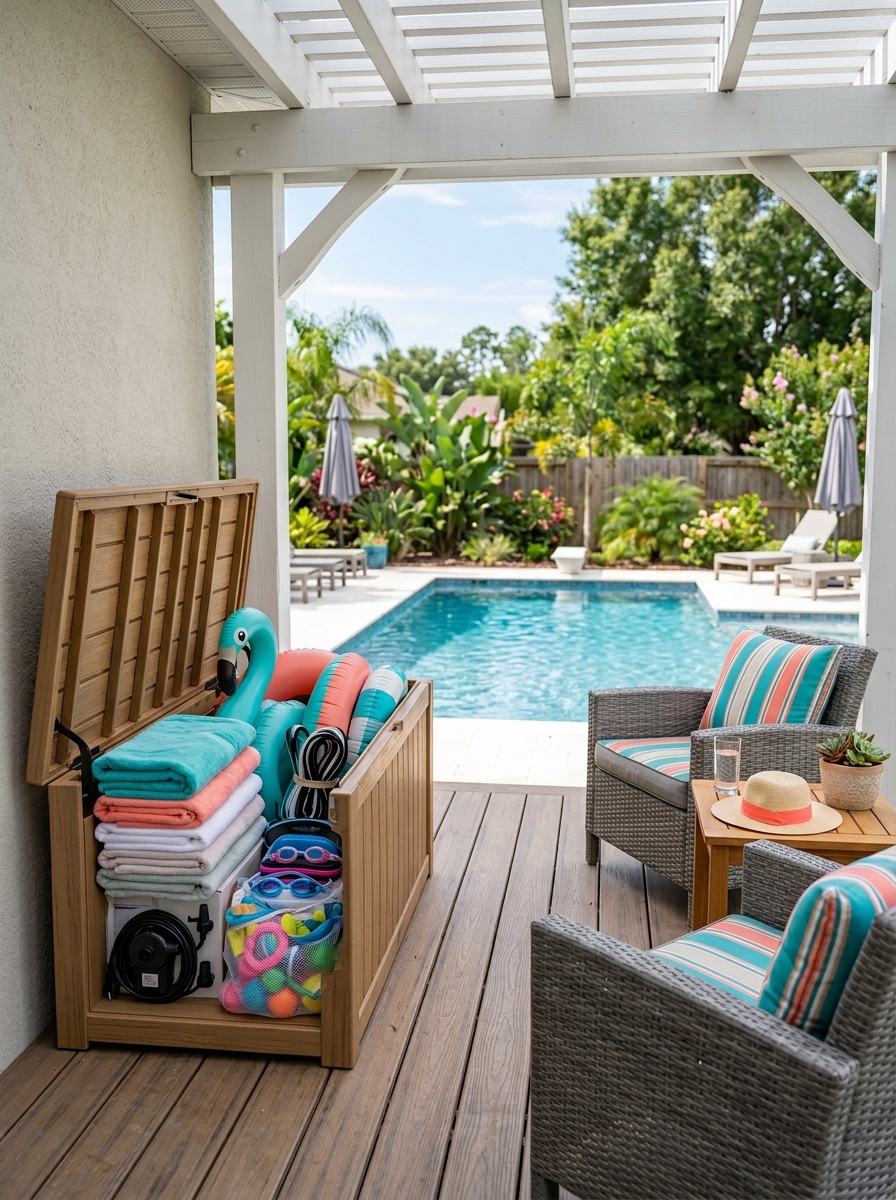
Store floats inside a deck box
A deck box provides concealed storage and can help the pool area look calmer when the toys are not being used. It is especially useful for pumps, towels, smaller floats, pool covers, and accessories that benefit from protection against rain.
Select a box designed for outdoor use with a secure lid and enough internal space for your equipment. Some designs include ventilation, hydraulic hinges, and lockable lids, which can improve convenience and safety.
Large inflated floats usually need to be partially or fully deflated before storage. Keep a portable electric pump inside the box so they can be inflated again without searching for supplies.
Place the deck box somewhere that does not block circulation around the pool. A box with a flat reinforced lid may also function as a casual bench, but only if the manufacturer states that it is suitable for seating.
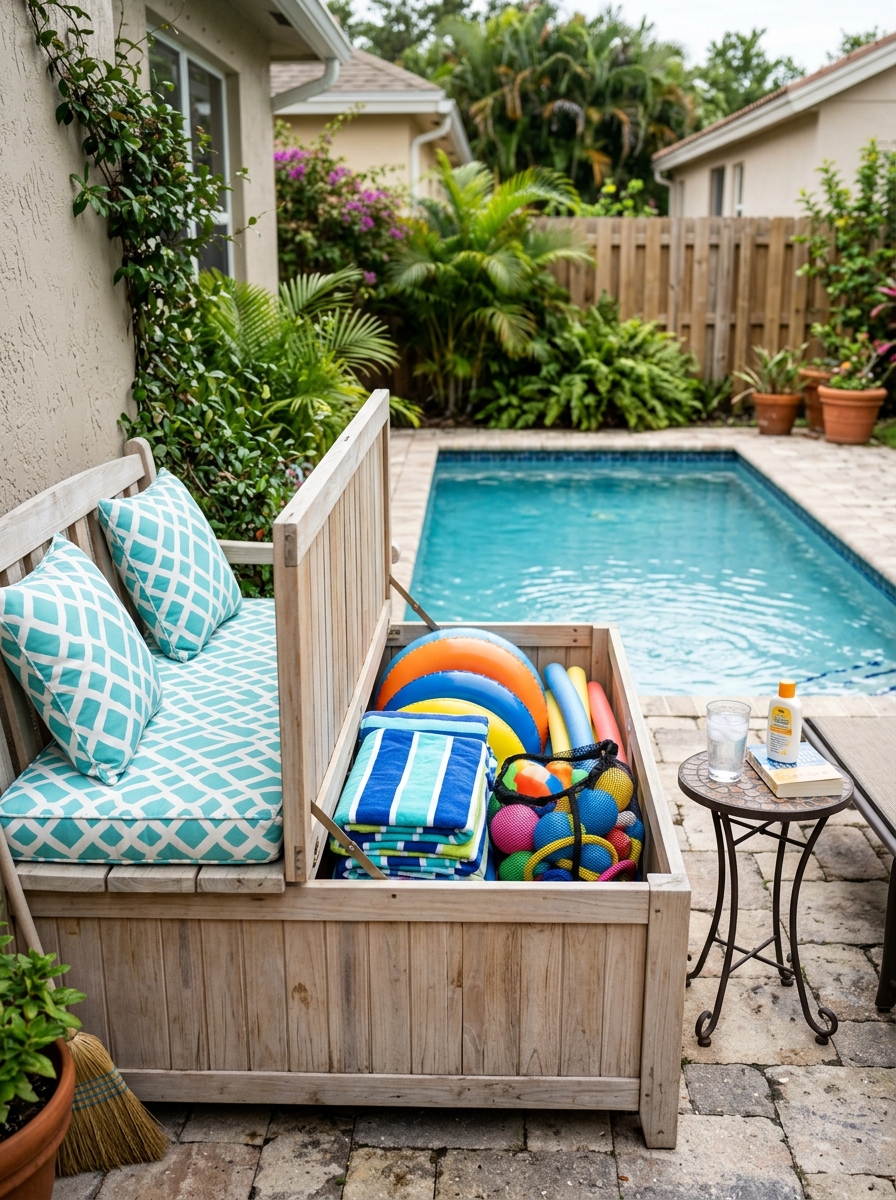
Add a covered storage bench
A covered storage bench combines seating with a hidden place for pool accessories. It can be useful on a smaller patio where every piece of furniture needs to serve more than one purpose.
Choose an outdoor bench with a ventilated storage compartment and weather-resistant construction. The interior can hold folded or deflated floats, towels, toys, sunscreen, and small cleaning supplies.
Use removable outdoor cushions that can be stored elsewhere during heavy rain. The lid should open easily without requiring the entire bench to be moved away from the wall.
This solution is best for items that fit comfortably inside. Do not force large inflated floats into the compartment, since sharp hinges or compressed storage may damage them.
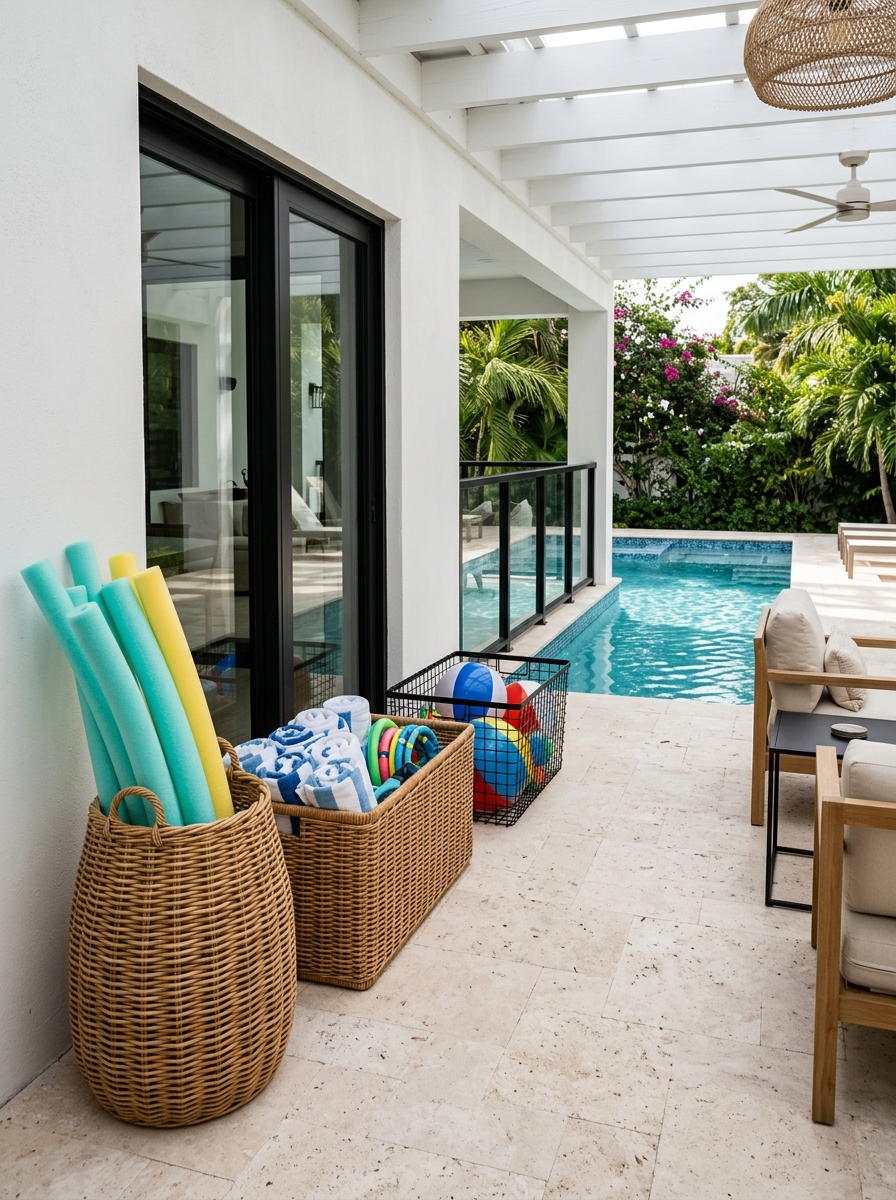
Use oversized outdoor baskets
Oversized baskets are a flexible choice for pool noodles, towels, small rings, balls, and frequently used accessories. They are easy to move and can make colorful pool equipment feel more orderly.
Use baskets made from weather-resistant resin wicker, coated wire, plastic rope, or durable outdoor fabric. Traditional natural fiber baskets may deteriorate quickly if they remain exposed to water and sun.
Tall baskets work well for noodles and rolled towels, while wide open baskets are better for rings and toys. Two or three baskets can divide accessories into simple categories without creating an overly complicated system.
Place them under a covered patio or inside a pool house for better protection. Since open baskets do not secure the contents, lightweight items should be moved indoors during windy weather.
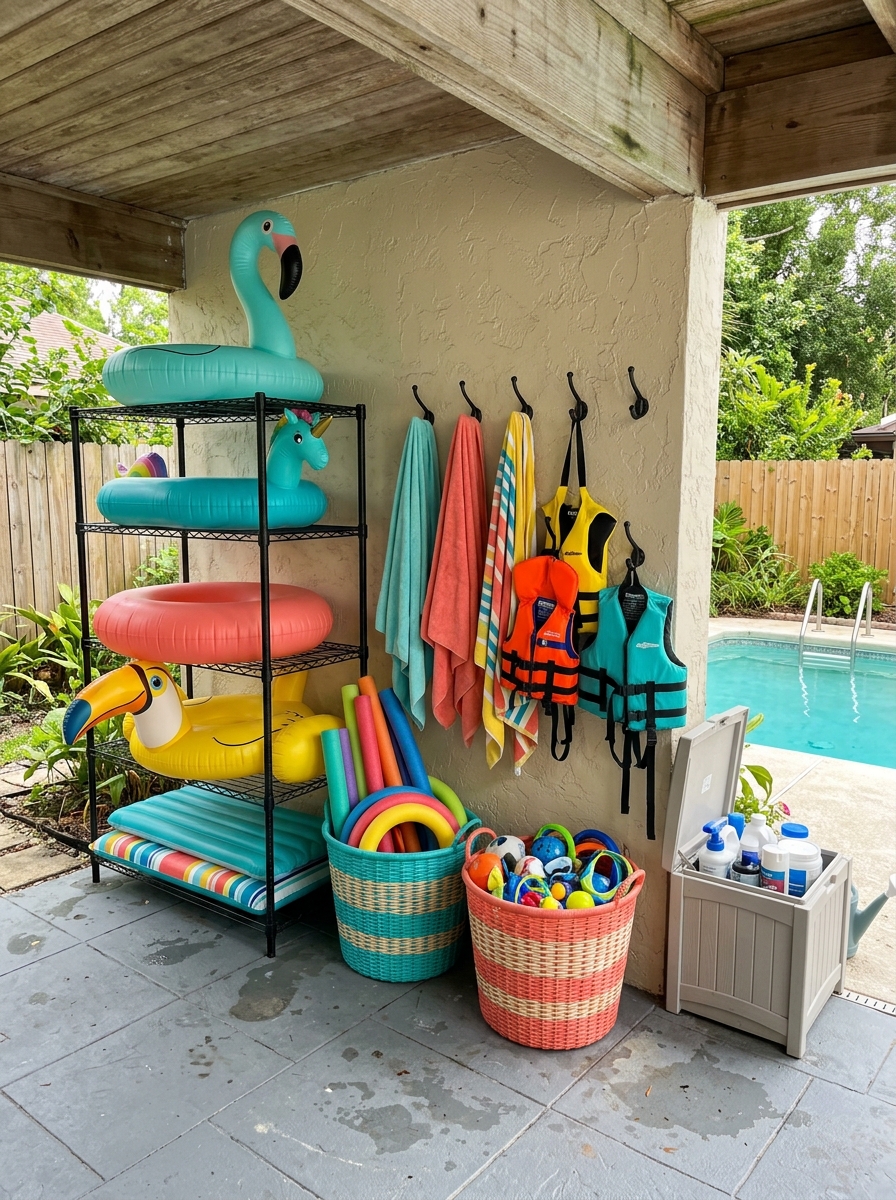
Create a complete pool storage zone
When a household owns several floats and accessories, one container may not be enough. A dedicated storage zone combines several solutions in one organized area so every item has a logical place.
Use a rack for large inflated floats, hooks for life jackets and towels, baskets for small toys, and a closed box for pumps and supplies. Grouping these elements together prevents storage from spreading across the entire patio.
Place the zone near the pool but away from the main seating and walking areas. A garage wall, fence corner, pool-house exterior, or covered side patio may provide the right balance between access and visual separation.
Keep the arrangement simple enough that everyone can use it. Labels may help inside closed containers, but the visible system should be easy to understand without detailed instructions. Regularly remove damaged toys and seasonal items so the area does not become overcrowded. These small apartment storage ideas use a similar clear-place-for-everything approach.
How to choose the right pool float storage
- Count the items you actually use so the solution is sized for your real collection rather than one or two floats.
- Decide whether floats will remain inflated: racks, hooks, carts, and mesh corrals suit inflated items, while boxes and benches suit deflated ones.
- Consider sun, rain, and wind. Open storage improves airflow, while covered storage protects contents but requires them to dry first.
- Keep everyday items close to the pool and move seasonal floats, spare pumps, and backup supplies farther away.
Protect pool floats between uses by rinsing away chlorine, sunscreen, dirt, and salt; allowing them to dry before closed storage; keeping them away from rough concrete, sharp hardware, and constant direct sun; and cleaning, drying, and loosely folding them for indoor storage at the end of the season.
Final thoughts
Pool float storage does not need to be complicated. The best solution is the one that fits your collection, backyard layout, and daily routine. A simple rack may be enough for large inflated loungers, while baskets and a deck box can organize smaller toys and accessories.
Open solutions such as hooks, racks, carts, and mesh corrals improve airflow and make items easy to reach. Closed bins and benches create a cleaner appearance and protect supplies from the weather, but the contents need to be dry before storage.
By giving each type of pool accessory a clear place, you can keep the patio safer, reduce visual clutter, and spend less time gathering toys after every swim.