Bedroom
Minimalist Luxury Bedroom Ideas
Minimalist luxury bedroom ideas with warm neutrals, upholstered beds, oversized headboards, layered bedding, dark wood, floating nightstands, sculptural lighting, full-height curtains, and refined styling.
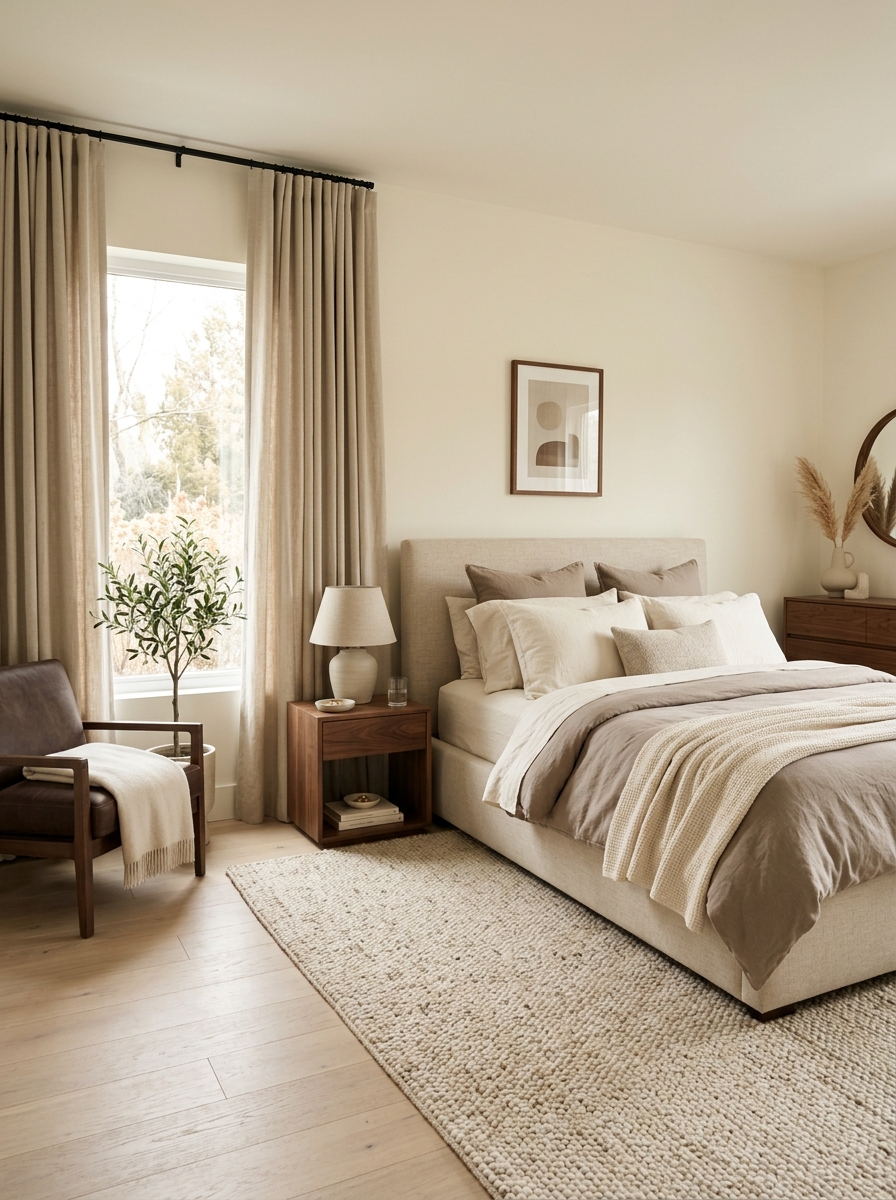
A minimalist luxury bedroom combines the visual calm of minimalism with the comfort and refinement of a high-end interior. Instead of filling the room with decorative objects, this style relies on proportion, material quality, soft texture, and carefully controlled lighting.
The result should feel peaceful without looking empty. An upholstered bed, full-height curtains, warm wood, natural stone, and layered bedding can make a simple room feel expensive even when the color palette remains restrained. Every element has a purpose, and the materials provide much of the visual interest.
Minimalist luxury also works in rooms of different sizes. A large bedroom can use an oversized headboard and generous furniture placement, while a compact apartment bedroom may rely on tonal colors, floating nightstands, and concealed storage. The goal is not to imitate a luxury hotel but to create a polished bedroom that remains comfortable and personal.
Warm ivory, cream, mushroom, taupe, oatmeal, walnut, bronze, travertine, and muted black are especially effective in this style. These 13 minimalist luxury bedroom ideas will help you create a calm, elegant space that feels elevated without becoming cold or overdecorated.
Begin with a warm neutral palette
Warm neutral colors create a calm foundation for a minimalist luxury bedroom. Cream, ivory, mushroom, oatmeal, taupe, and warm beige make the room feel soft and cohesive without relying on bold decoration.
Use several related tones rather than repeating one exact shade. For example, combine warm ivory walls with an oatmeal bed, taupe curtains, and a mushroom-colored rug. The subtle differences create depth while preserving the quiet appearance.
Natural and artificial light can change the undertones significantly. A beige that appears warm during the day may look gray or pink under bedroom lighting, so test paint and fabric samples in the actual room before committing.
Introduce a small amount of contrast through walnut furniture, bronze lighting, or a muted black frame. These darker details give the room structure and prevent the pale palette from looking washed out. If you prefer a softer version of this palette, these warm bedroom aesthetic ideas use similar colors in a more relaxed way.
Choose an upholstered statement bed
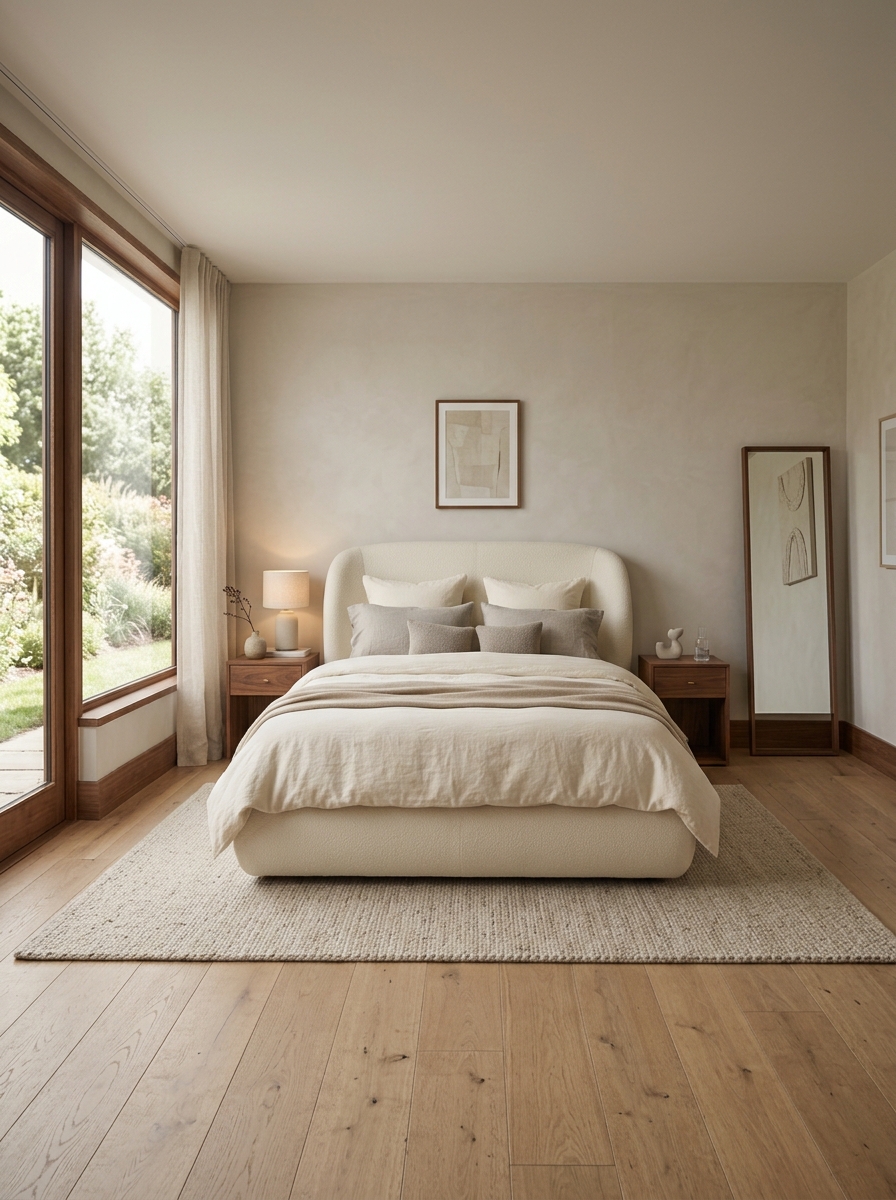
The bed is the natural focal point of a bedroom, so selecting one strong design can reduce the need for excessive furniture and decoration. A generously upholstered bed creates softness, comfort, and visual presence without introducing complicated details.
Look for a bed with clean tailoring, rounded corners, channel stitching, or a simple curved silhouette. Linen-blend, textured weave, velvet, and boucle can all work, depending on how tactile you want the room to feel.
A cream or taupe bed will blend gently into a neutral palette, while deeper mushroom or brown upholstery can add contrast. Keep the surrounding furniture simpler so the bed remains the clear focus.
Scale is important. The bed should feel substantial but still leave enough space for easy movement, nightstands, and curtains. An oversized design in a small room may feel cramped rather than luxurious.
Use an oversized padded headboard
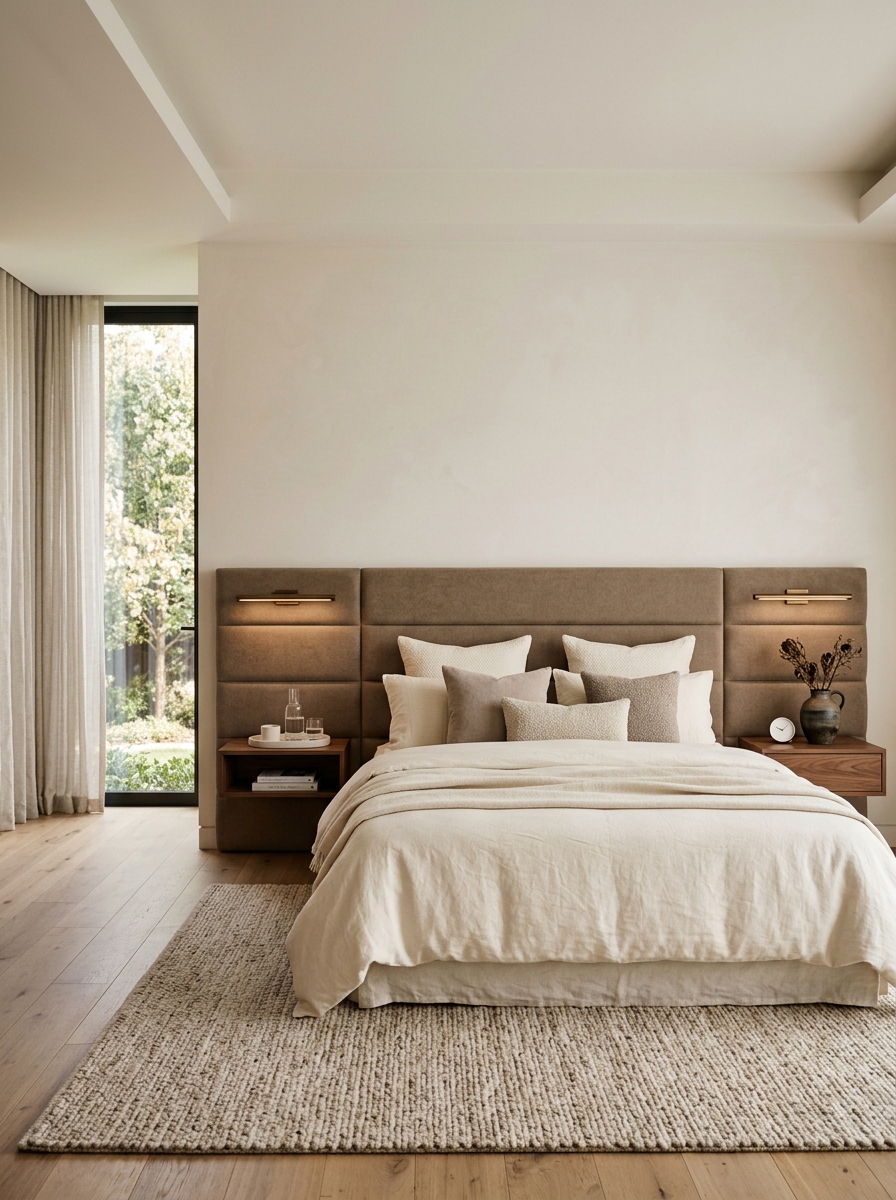
An oversized headboard can make a bedroom feel custom and architecturally finished. Extending the headboard beyond the width of the bed visually connects the sleeping area with the nightstands and creates a stronger focal wall.
A floor-to-ceiling upholstered panel can produce a dramatic effect, while a wide horizontal headboard feels quieter and works well in rooms with lower ceilings. Channelled, fluted, or smooth padded designs all suit a minimalist interior when the detailing remains restrained.
Choose a fabric close to the wall or bedding color for a seamless appearance. A taupe headboard against warm ivory walls creates gentle contrast, while a cream headboard on a beige wall feels softer and more tonal.
Keep the artwork above the bed minimal or omit it completely. The headboard already provides enough visual presence and does not need to compete with several framed pieces.
Layer linen, wool, and velvet bedding
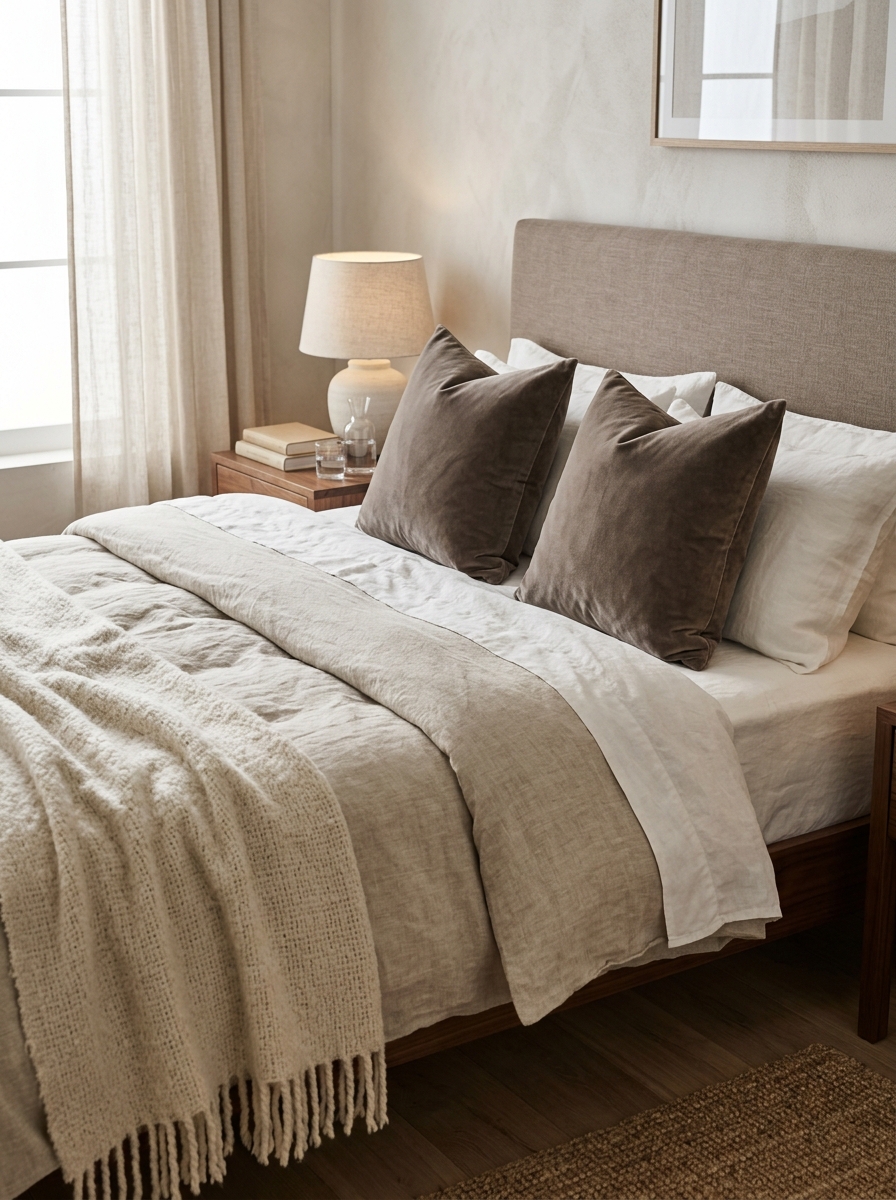
Texture is essential in a minimalist bedroom because the color palette is often quiet. Linen, washed cotton, wool, velvet, and softly woven fabrics can make the bed feel rich and inviting without requiring strong patterns.
Start with comfortable sheets and a simple duvet or quilt. Add one folded blanket across the foot of the bed and a limited number of accent pillows. Combining an oatmeal linen duvet, cream wool throw, and one or two velvet cushions creates enough variation.
Keep the colors closely related so the textures remain the main feature. Too many contrasting pillows or blankets can make the bed look busy and work against the minimalist atmosphere.
The bedding should look relaxed but intentional. Gentle folds and natural wrinkles feel more comfortable than a stiff arrangement designed only for display.
Add dark wood for contrast
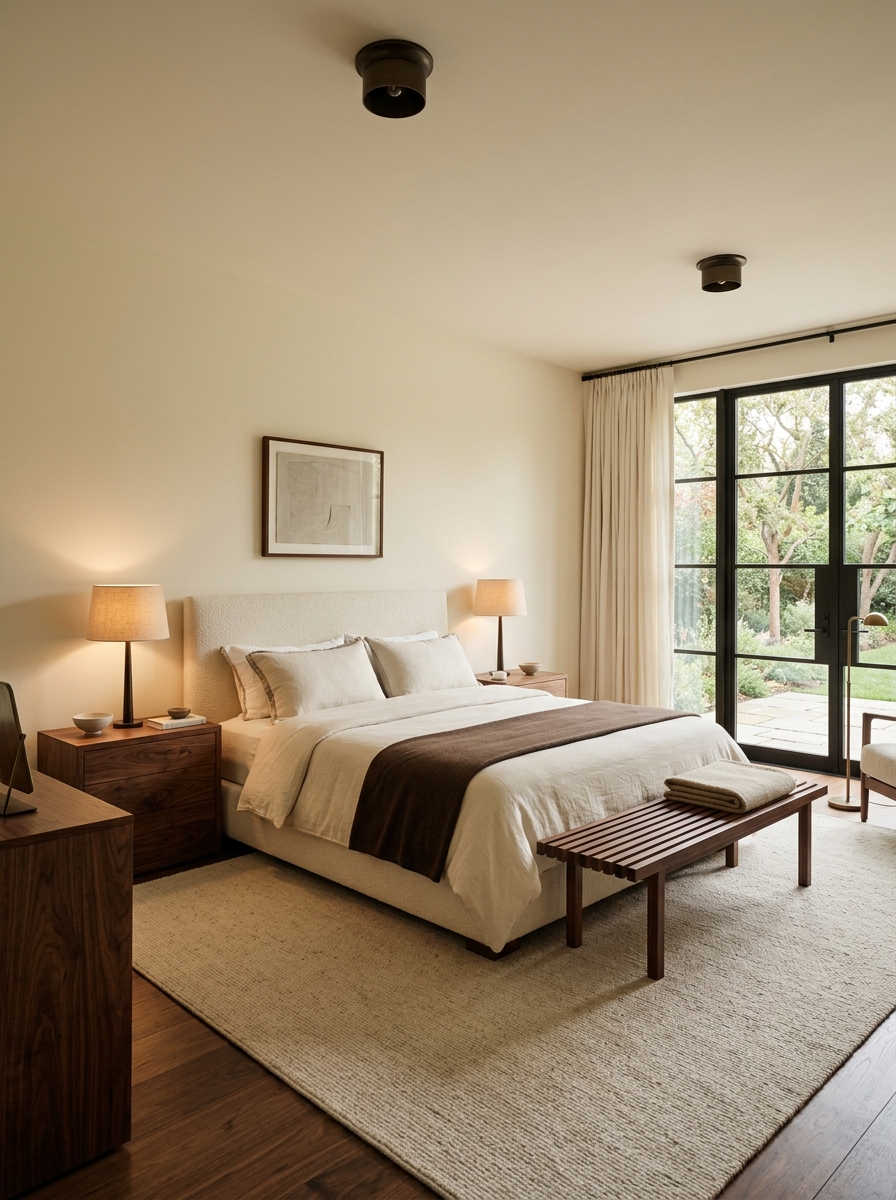
Dark wood adds warmth and definition to a pale minimalist bedroom. Walnut, smoked oak, and dark-stained timber can prevent cream and beige surfaces from blending into one another.
Use dark wood on selected pieces such as the nightstands, bench, dresser, or bed frame. A full walnut feature wall can also look striking, but it should be balanced with lighter bedding, flooring, and curtains.
Visible grain provides natural pattern without introducing decorative prints. Matte or low-sheen finishes generally look more refined and organic than glossy wood.
Repeat the dark tone in one or two smaller details, such as a picture frame or lamp base. This helps the wood feel connected to the rest of the room rather than appearing as a single isolated object.
Use floating nightstands
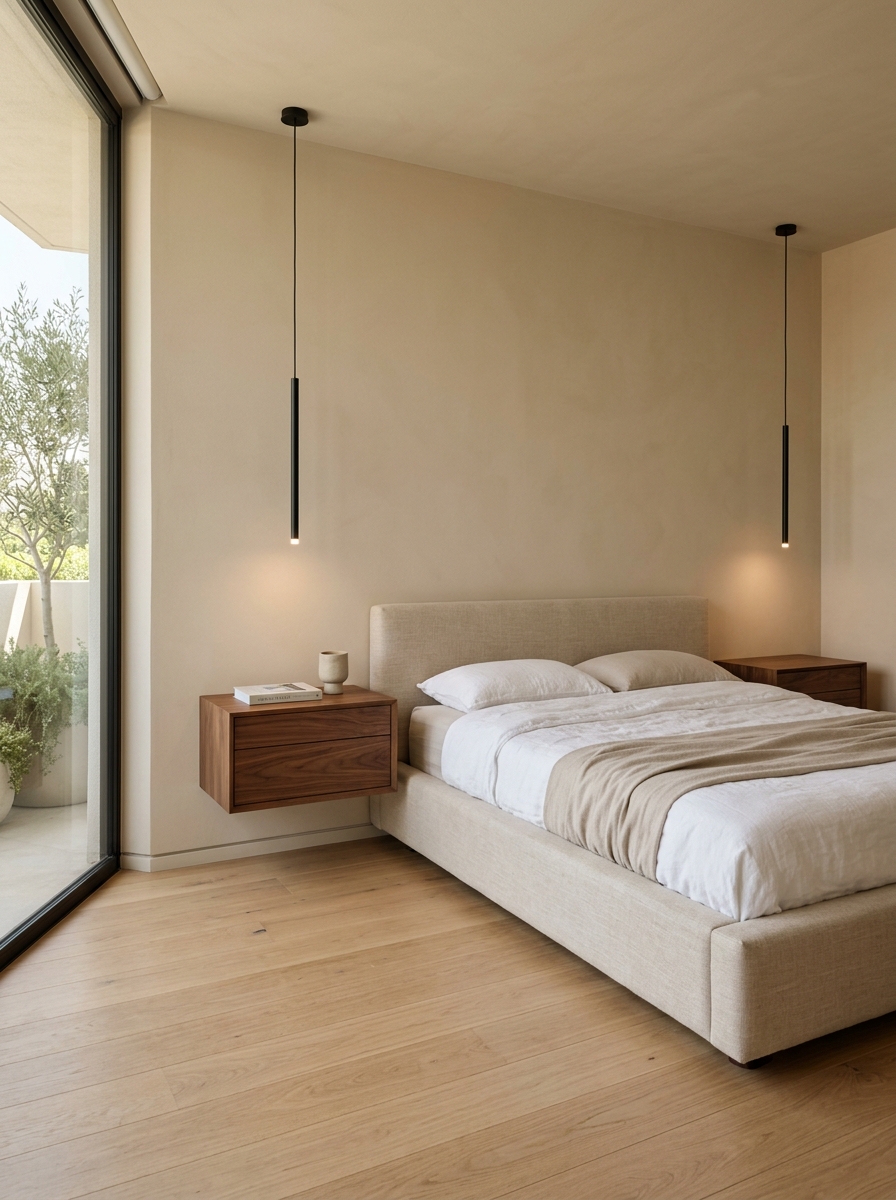
Floating nightstands support the clean lines of a minimalist bedroom and keep more of the floor visible. This can make the room appear lighter and more spacious, particularly in a compact layout.
Choose simple drawer-front designs in walnut, pale oak, mushroom, or warm white. The nightstands should provide enough concealed storage for everyday items without becoming oversized.
Wall-mounted nightstands also make it easier to keep the area around the bed visually clean. The open floor beneath them can help a rug or continuous flooring extend uninterrupted across the room.
Install the nightstands at a comfortable height relative to the mattress. They should be easy to reach while lying in bed and securely fixed to the wall.
Introduce sculptural bedside lighting
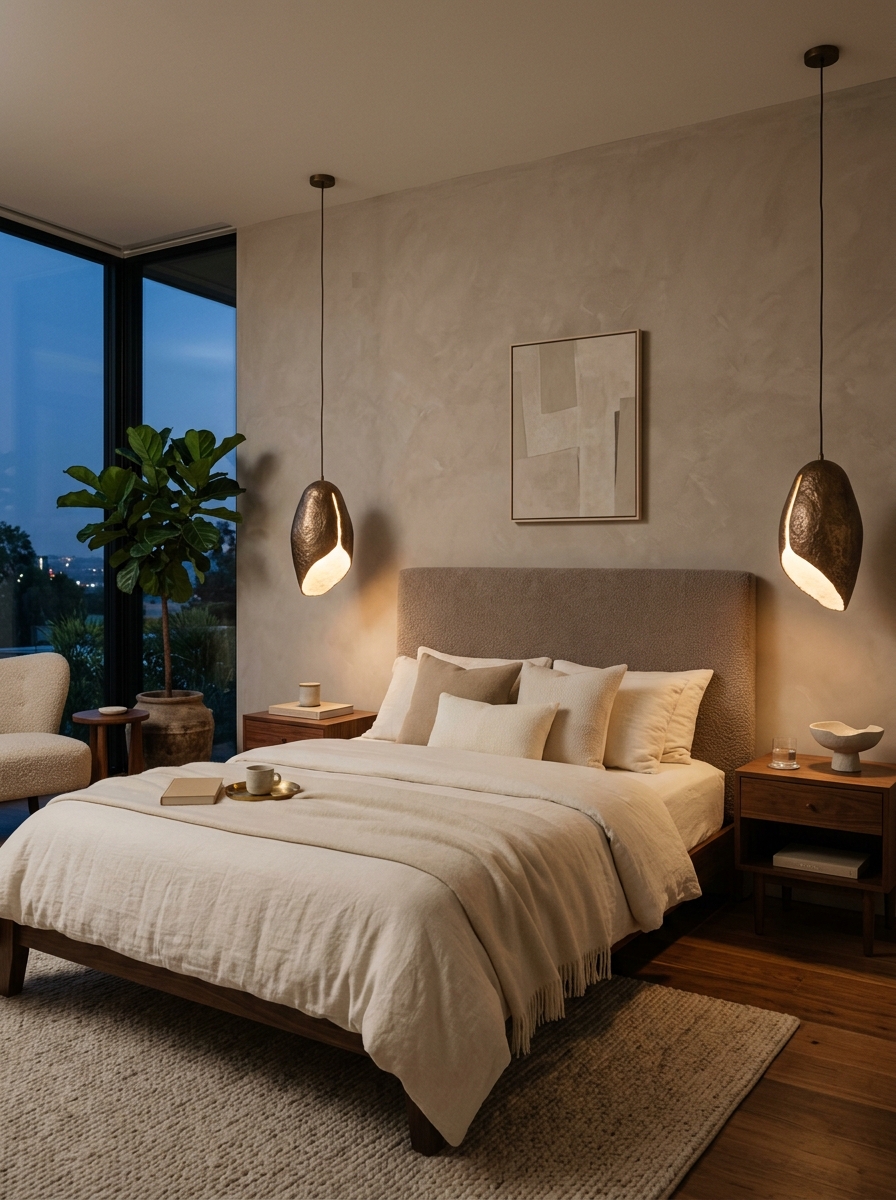
Bedside lighting can function as both a practical feature and a piece of visual design. Sculptural lamps, pendants, or wall sconces add character without filling the room with decoration.
Wall-mounted sconces and hanging pendants also free the nightstand surface. This keeps the bedside area cleaner and allows the lighting to frame the bed more clearly.
Choose simple forms in plaster, bronze, ceramic, smoked glass, or muted black. The fixture should feel distinctive but not highly ornamental. Rounded domes, elongated cylinders, and softly curved shades work particularly well.
Use warm bulbs or integrated lighting with a soft glow. Cool bright light can make a neutral bedroom feel clinical and undermine the relaxed atmosphere.
Keep artwork oversized and minimal
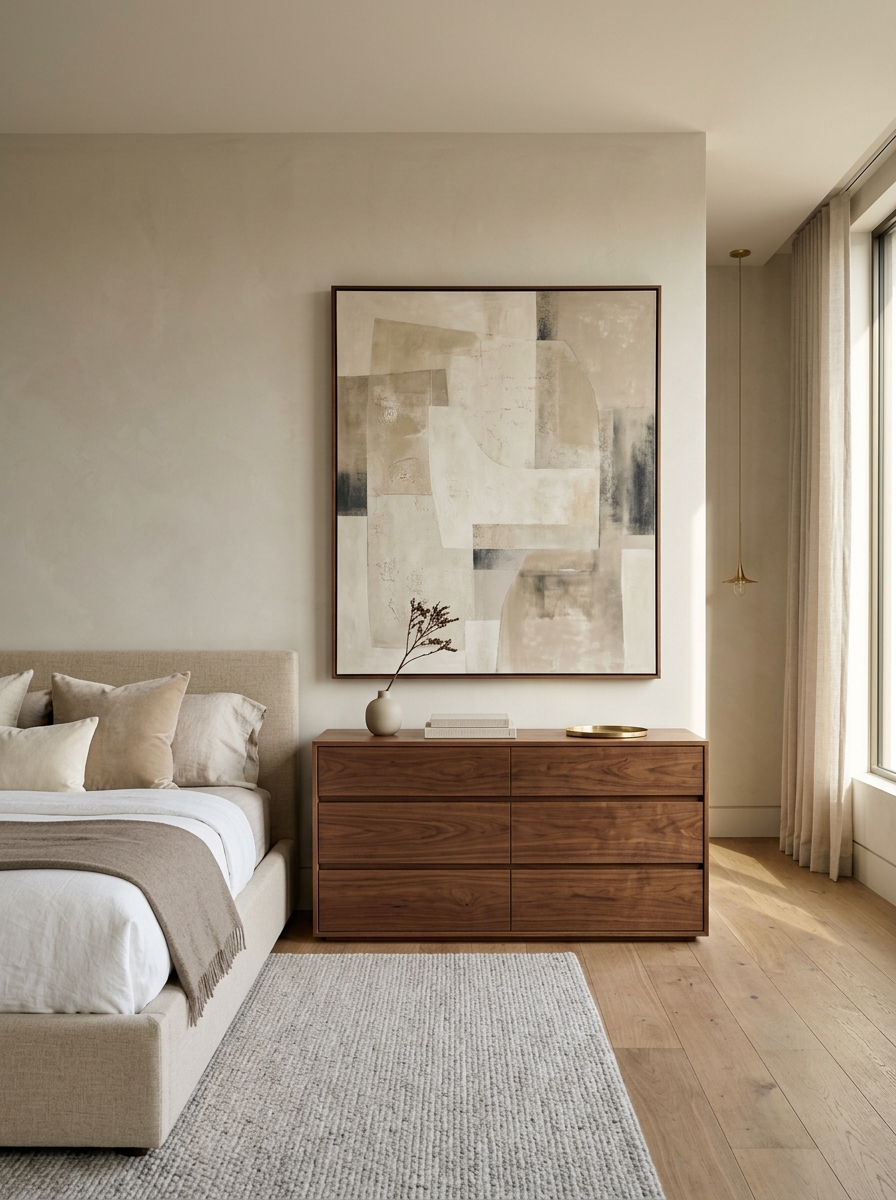
One large artwork often feels more refined than a collection of small frames in a minimalist bedroom. Oversized art can complete a wall while maintaining the visual calm of the room.
Choose abstract, textural, or tonal artwork in colors that connect with the bedding and furniture. Cream, charcoal, taupe, muted brown, and soft olive can add interest without overwhelming the palette.
Place the artwork above a dresser, opposite the bed, or on an otherwise empty wall. If the headboard is already large and detailed, it may be better to keep the wall above the bed bare.
Use a slim frame in dark wood, bronze, or muted black. The artwork should feel integrated with the bedroom rather than added as a separate decorative theme.
Hang full-height curtains
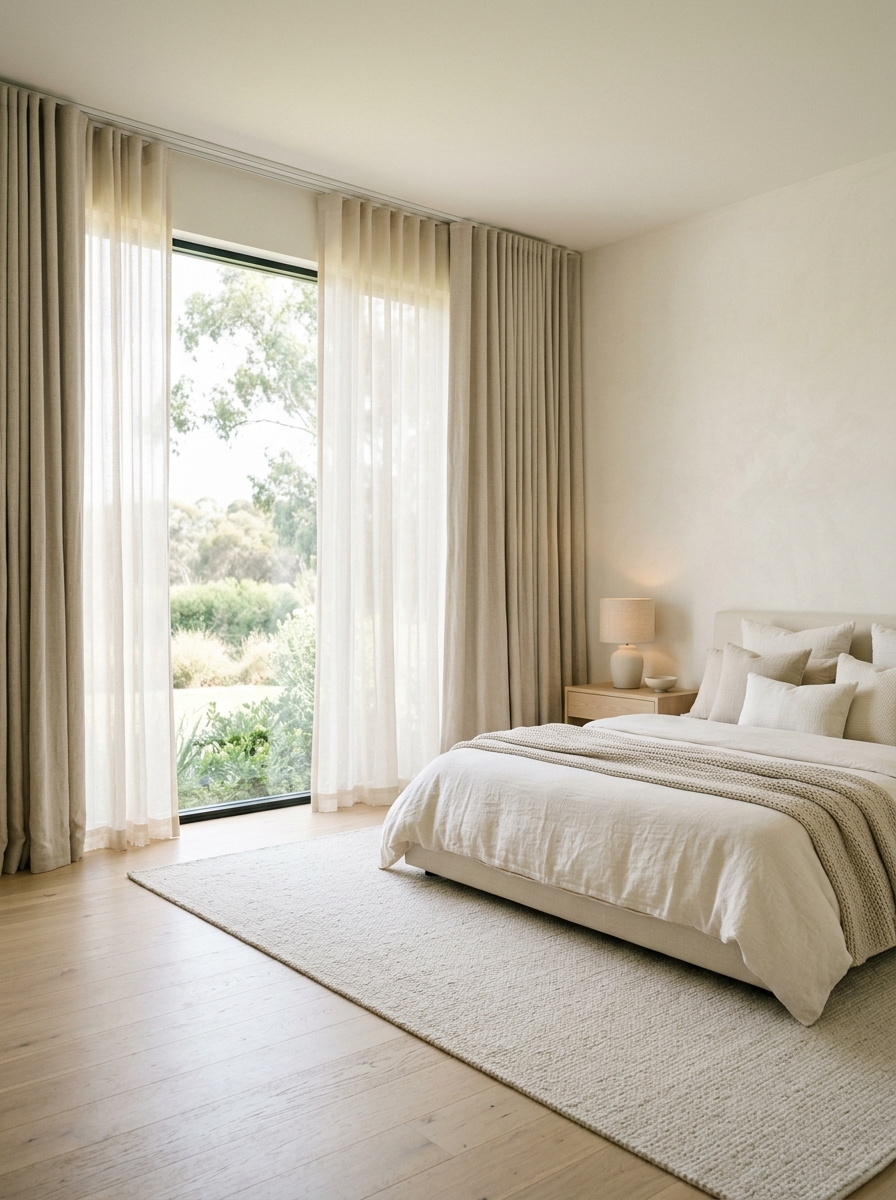
Full-height curtains make a bedroom feel taller, softer, and more finished. Mounting the curtain track close to the ceiling and allowing the fabric to reach the floor creates a continuous vertical line.
Linen and linen-blend fabrics are especially suitable because they filter daylight gently and introduce natural texture. For better light control, pair sheer curtains with a concealed blackout layer.
Choose warm white, oatmeal, beige, or soft taupe fabric. Strong patterns and contrasting trims may make the room feel busier and are usually unnecessary when the quality and volume of the fabric provide enough visual interest.
The curtains should be generously full rather than stretched flat across the window. Proper fabric volume contributes significantly to the high-end appearance.
Add a soft textured rug
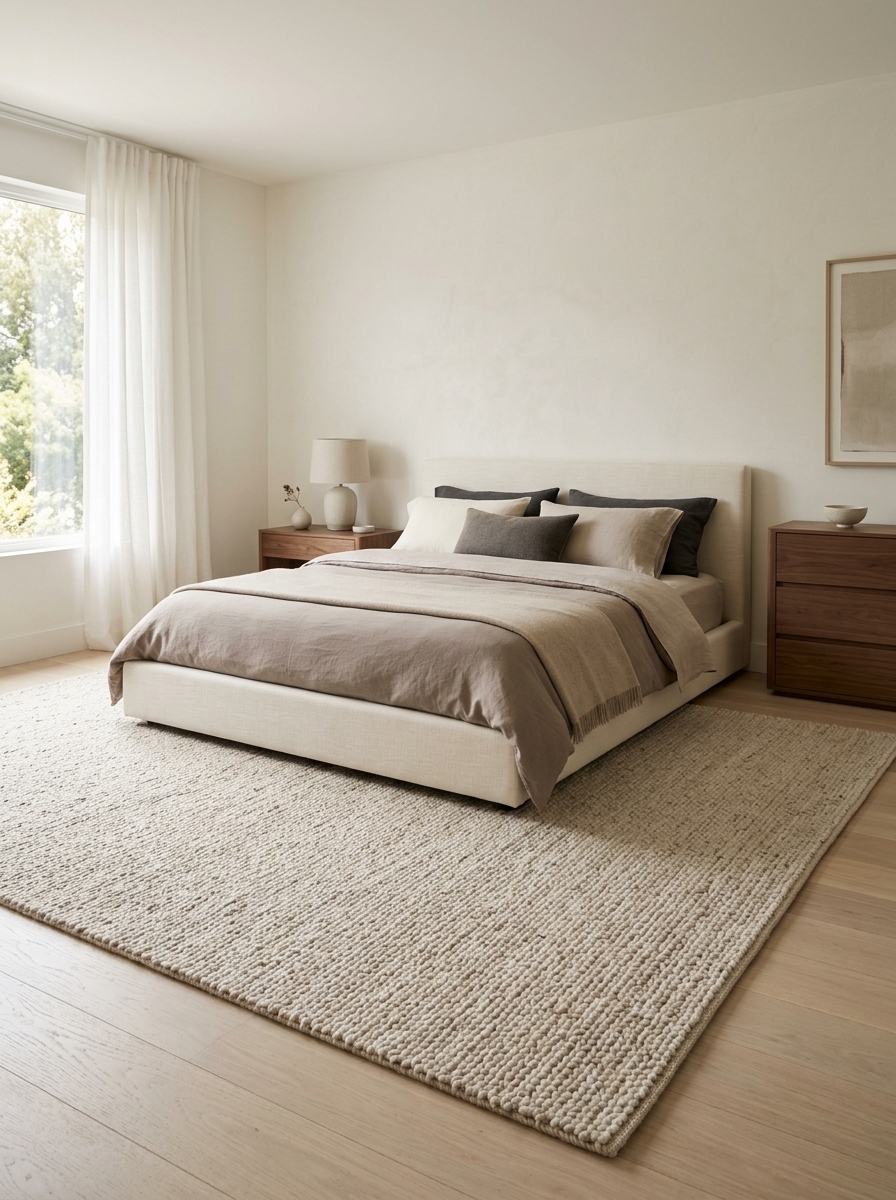
A rug helps define the bed area and softens the bedroom both visually and physically. It can also make the room feel more luxurious by adding comfort beneath the feet and balancing harder materials such as wood or stone.
Choose a rug large enough to extend beyond both sides and the foot of the bed. A rug that is too small can make the furniture arrangement look disconnected.
Wool, wool-blend, and dense woven rugs provide warmth and texture. Use cream, oatmeal, taupe, or a very subtle tonal pattern to support the calm palette.
Avoid extremely high piles in areas that need regular cleaning or where furniture must remain stable. The rug should feel comfortable but still practical for everyday use.
Style with fewer, larger objects
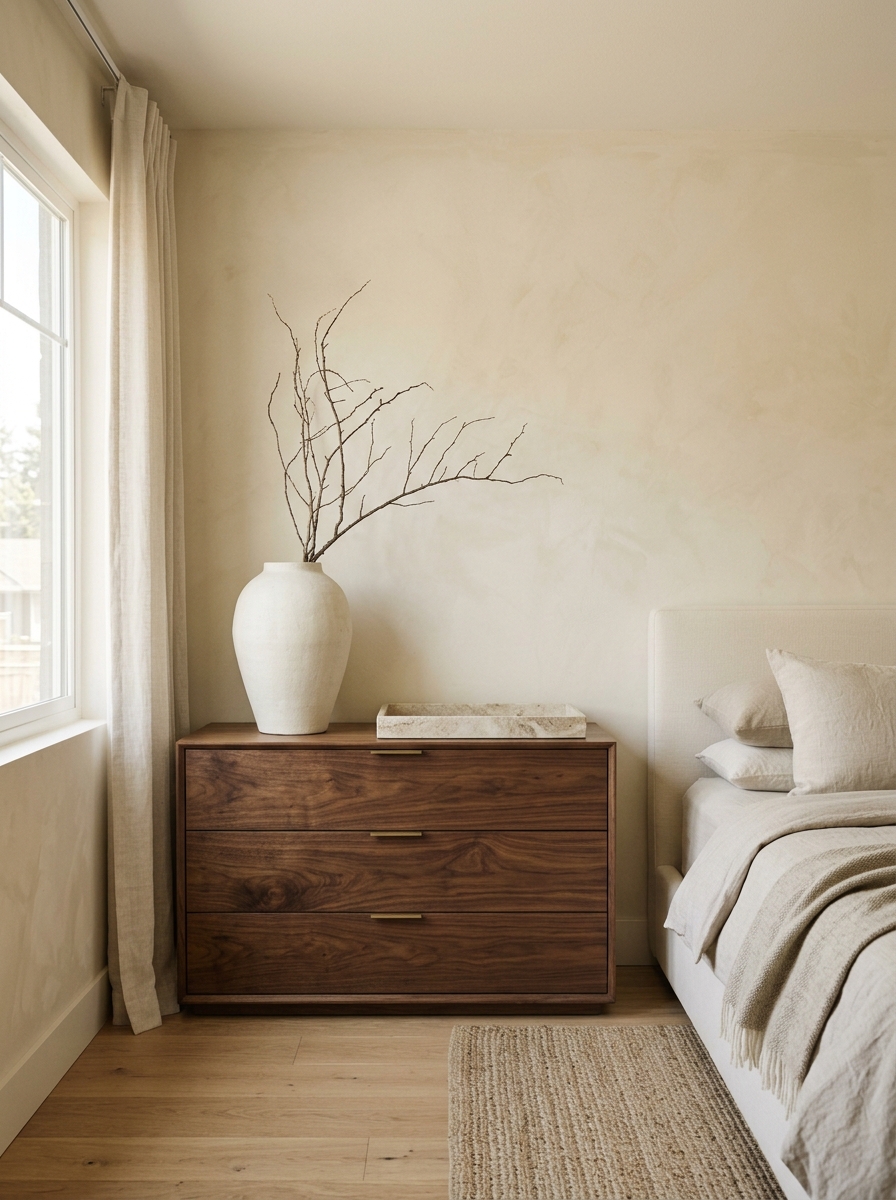
A minimalist luxury bedroom looks more polished when it uses a small number of objects with clear visual presence. Many tiny accessories can create clutter even when they share the same color palette.
Choose pieces such as one large ceramic vase, a sculptural table lamp, a substantial tray, or a single branch arrangement. Leave enough empty space around each object so its shape and material remain visible.
The same principle applies to the bed and furniture. Use a restrained pillow arrangement, one purposeful bench, and only the storage pieces the room genuinely needs.
Practical objects can still be attractive. A ceramic dish for jewelry, a well-made carafe, or a neatly placed book can add personality without disrupting the calm design.
Create luxury in a small bedroom
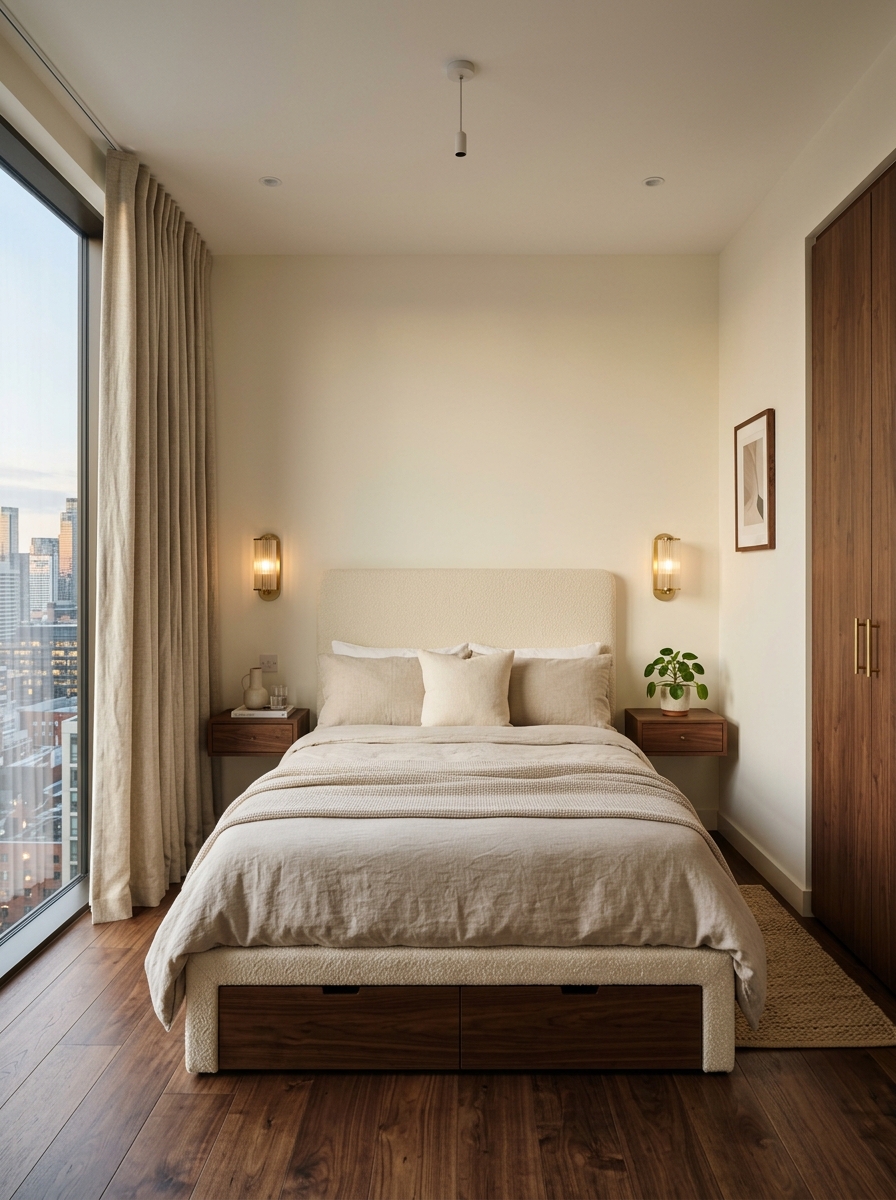
A small bedroom can feel luxurious when the furniture is carefully scaled and visual clutter is controlled. Minimalism is especially useful in compact spaces because it keeps the room from becoming crowded.
Choose a bed that fits comfortably, then use floating nightstands, wall lighting, and built-in or concealed storage to preserve floor and surface space. Avoid adding a bench or lounge chair when it interferes with circulation.
A tonal palette can make the boundaries of the room feel less fragmented. Warm ivory walls, a cream bed, oatmeal curtains, and pale flooring create continuity, while one dark wood piece adds enough contrast.
Full-height curtains, a large mirror, and soft layered lighting can also make the bedroom feel taller and more polished. The luxury comes from thoughtful proportion and material selection rather than room size. These small bedroom ideas offer more ways to make a compact room feel bigger.
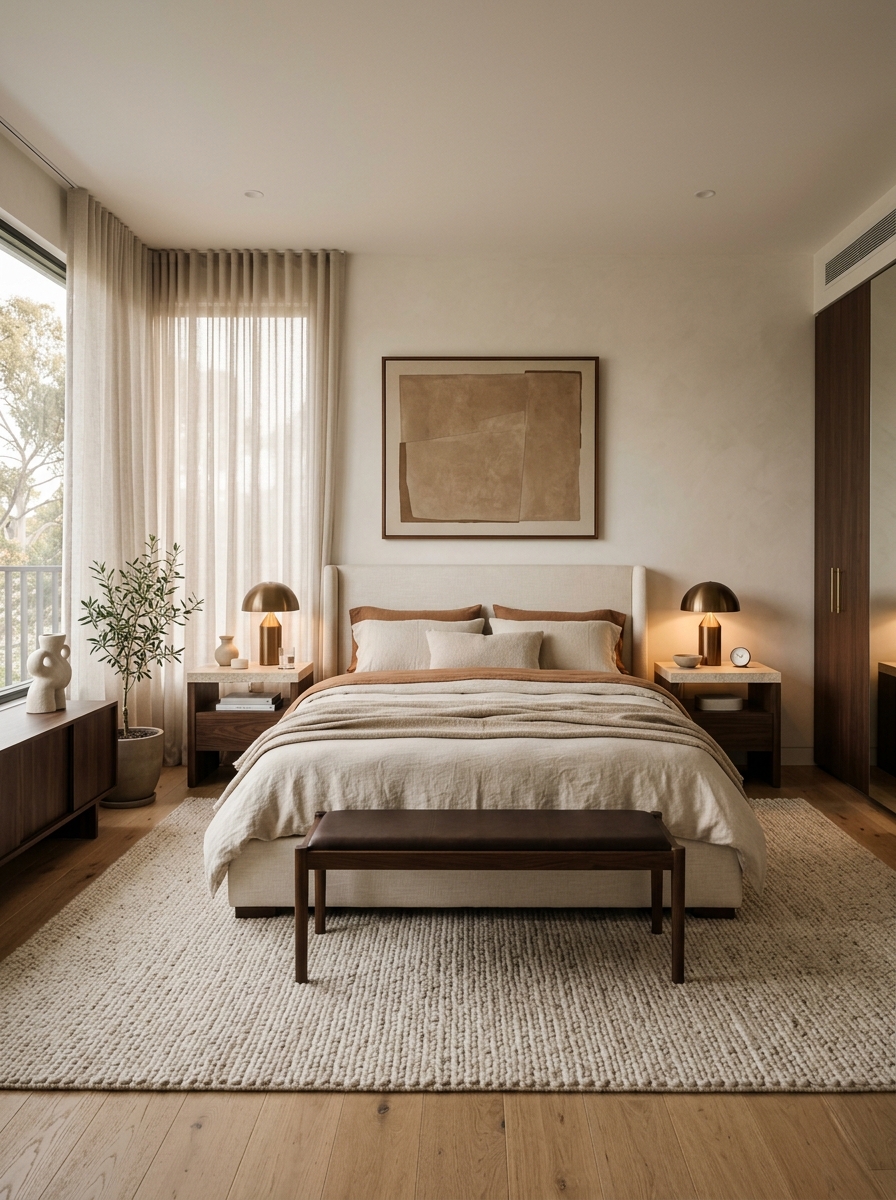
Balance clean design with warmth
A minimalist luxury bedroom should feel calm and edited, but it should not feel cold or unwelcoming. Warmth comes from texture, lighting, natural materials, and comfortable proportions rather than a large amount of decoration.
Combine smooth surfaces with tactile fabrics. A stone nightstand, upholstered bed, linen bedding, wool rug, and wood dresser can create a rich material mix while the overall room remains simple.
Use warm layered lighting in the evening and preserve natural daylight during the day. Both affect how comfortable and inviting the neutral palette feels.
The room should also support real daily life. Include enough storage, accessible bedside surfaces, and practical window coverings. A bedroom is most luxurious when it feels beautiful and easy to use rather than designed only for photographs. These cozy bedroom decor ideas are useful if you want the same comfort with a softer everyday feel.
How to make a minimalist bedroom look expensive
Begin with the largest visible elements. The bed, headboard, curtains, rug, and wall color determine most of the room's atmosphere. Choosing these pieces carefully will have more impact than adding several small accessories.
Use materials that show texture and natural variation. Linen, wool, wood grain, stone, brushed metal, and quality upholstery can make a quiet color palette feel rich. The room does not need real marble or designer furniture, but the finishes should look cohesive and intentional.
Scale also influences how expensive a bedroom appears. Curtains should reach the floor, rugs should extend beyond the bed, and artwork should suit the size of the wall. Undersized pieces can make the room feel disconnected even when each item is attractive.
Finally, control clutter. Use closed storage for everyday belongings and leave some surfaces empty. A calm room allows the stronger materials and furniture shapes to receive more attention.
How to keep minimalist luxury from looking like a hotel
Avoid making every surface and textile match perfectly. A bedroom feels more personal when it includes subtle variation in tone, texture, and material.
Include one or two pieces that feel collected rather than purchased as part of a matching set. A handmade ceramic vase, vintage-inspired stool, original artwork, or distinctive reading lamp can add individuality.
Comfort should remain visible. Relaxed linen bedding, a book beside the bed, or a soft robe on a wooden hook can make the room feel inhabited without becoming cluttered.
You can also use warmer wood and softer lighting than many commercial hotel rooms. These elements give the bedroom a more intimate and residential character.
Final thoughts
Minimalist luxury bedrooms combine visual calm with material richness. Warm neutrals, upholstered furniture, natural wood, soft textiles, stone, and ambient lighting create an elegant atmosphere without the need for excessive decoration.
The most effective approach is to invest attention in the larger elements and edit the smaller ones. A strong bed, properly sized rug, generous curtains, and thoughtful lighting can transform the room more convincingly than a large collection of decorative accessories.
Whether the bedroom is spacious or compact, the goal remains the same: create a room that feels refined, comfortable, practical, and peaceful. When every element supports that goal, minimalist luxury becomes both beautiful and easy to live with.