Bedroom
Mid-Century Modern Bedroom Ideas
14 mid-century modern bedroom ideas for creating a warm, stylish space with walnut furniture, clean lines, globe lamps, geometric rugs, and cozy modern bedding.
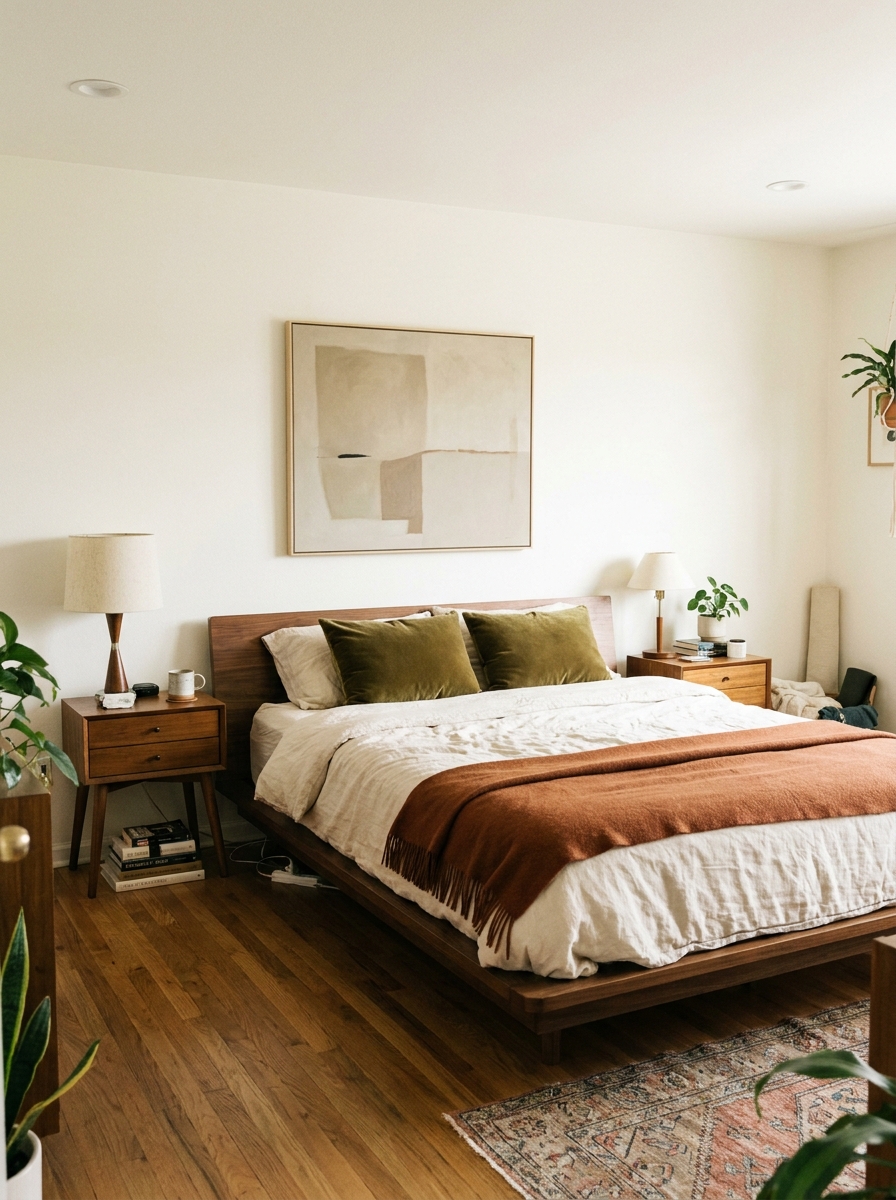
Mid-century modern bedrooms combine clean lines, natural wood, practical furniture, and warm colors to create spaces that feel stylish without becoming overly formal. The look is distinctive, but it is also comfortable enough for everyday living.
A mid-century modern bedroom does not need to look like a perfect recreation of the 1950s or 1960s. The most inviting rooms blend recognizable vintage-inspired elements with modern bedding, contemporary lighting, and simple decor. A walnut bed, tapered nightstands, globe lamps, abstract art, and a geometric rug may be all you need to establish the style.
The color palette can be richer than the soft beige interiors seen everywhere today. Walnut, olive green, mustard yellow, burnt orange, cream, muted blue, and warm white all work beautifully together. The key is to use these tones with restraint so the bedroom still feels calm enough for rest.
Here are 14 mid-century modern bedroom ideas for creating a warm and stylish space. If you prefer an even softer look, these warm bedroom aesthetic ideas are a good companion to this style.
Start with a low walnut platform bed
A low platform bed immediately gives a bedroom a stronger mid-century modern character. Look for a simple wooden frame with clean horizontal lines, visible grain, and tapered or recessed legs. Walnut and teak are especially effective because their rich tones bring warmth into the room.
Keep the bedding lighter so the bed does not make the space feel heavy. Cream, oatmeal, warm white, and soft beige create a calm base, while olive, rust, mustard, or muted blue can be introduced through a throw blanket and a few cushions.
Avoid covering the bed with too many decorative pillows. Mid-century interiors usually feel more edited, so a small number of well-chosen textiles will look more intentional. For a softer version of this foundation, these cozy bedroom decor ideas show how bedding and texture can warm up the room.
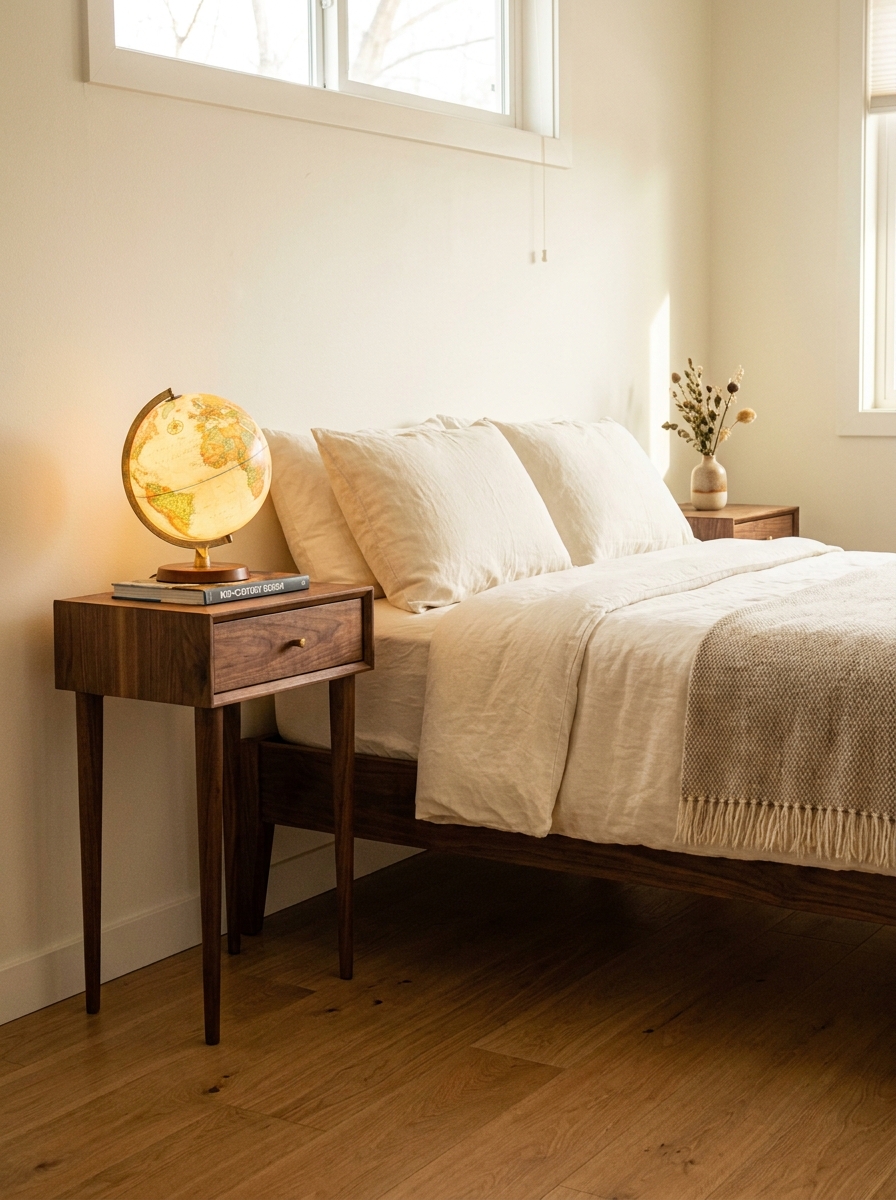
Add tapered-leg nightstands
Tapered legs are one of the most recognizable details in mid-century furniture. A pair of raised nightstands can make the bedroom feel lighter because more of the floor remains visible.
Choose simple nightstands with one drawer or a small open shelf. Walnut, teak, and medium oak all work well. They do not need to match the bed perfectly, but the wood tones should feel related.
Keep the styling minimal with a lamp, a book, and perhaps one small ceramic object. Crowded nightstands can make the bedroom feel less restful and distract from the furniture's clean shape.
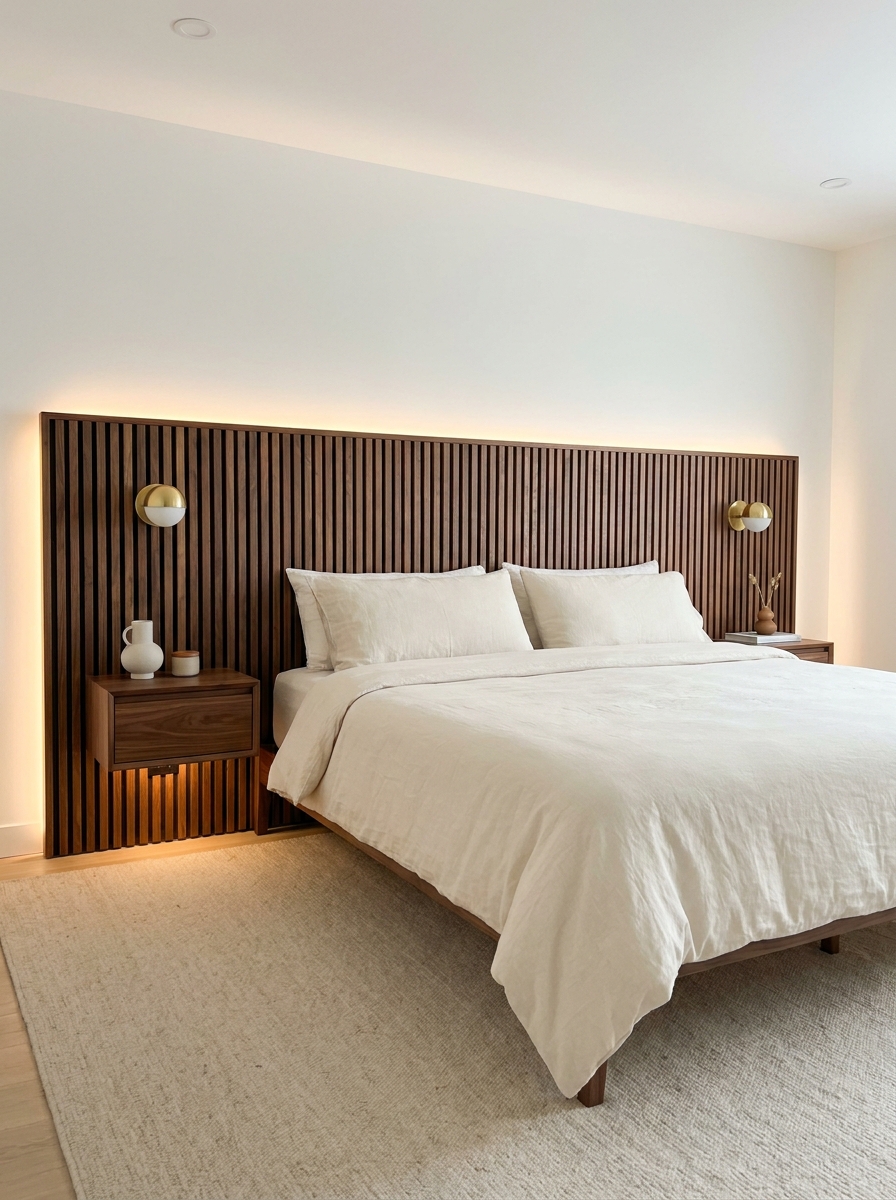
Use a slatted wood headboard
A slatted wood headboard adds architectural texture without requiring a full feature wall. Vertical slats can make the ceiling feel taller, while horizontal slats emphasize the low, linear shape associated with mid-century design.
Choose a medium or dark wood tone for a stronger statement, or pale oak for a lighter modern interpretation. Keep the wall around the headboard simple so the wood pattern remains the main feature.
A slatted headboard works particularly well with plain bedding, globe sconces, and minimal framed art. Too many patterns around it can make the room feel busy.
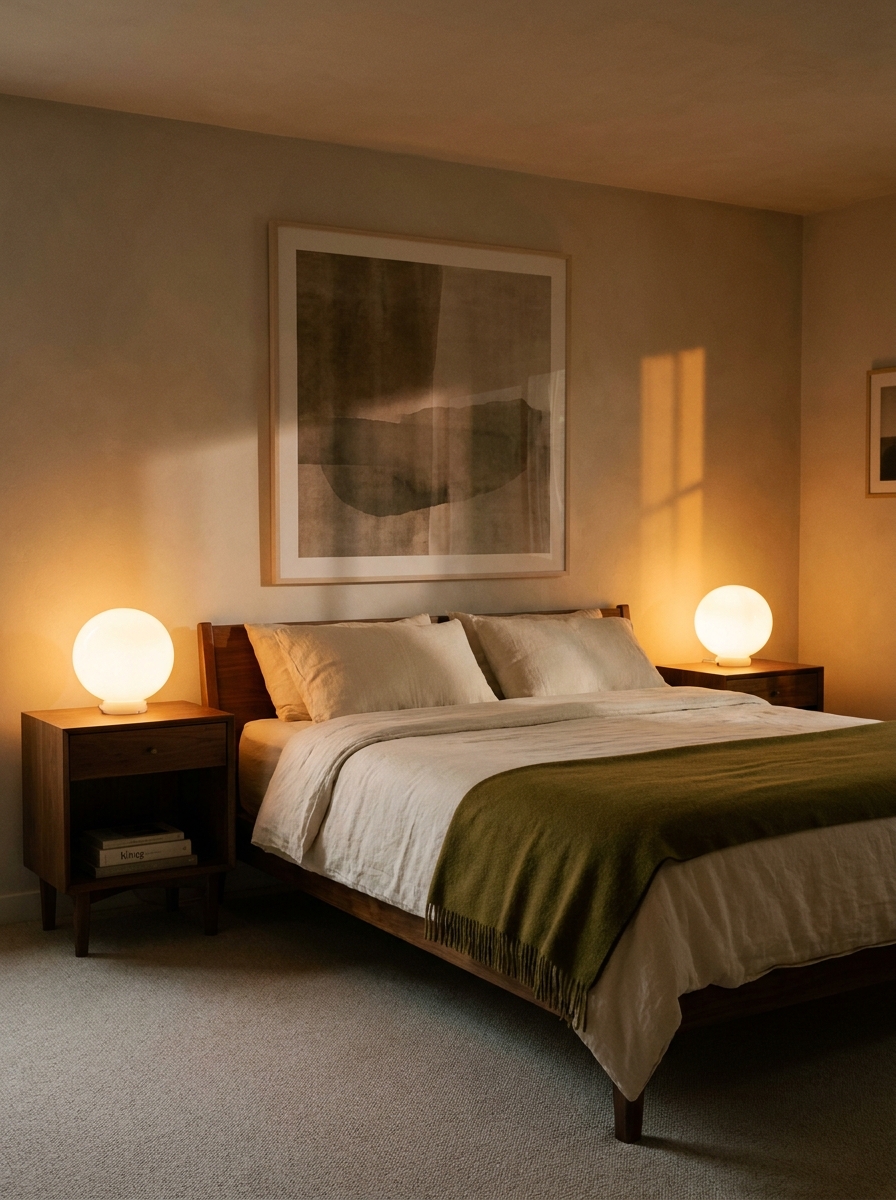
Choose globe bedside lamps
Opal glass globe lamps are a simple way to introduce mid-century style without replacing large furniture pieces. Their rounded shape softens the straight lines of beds, dressers, and nightstands.
Use matching lamps for a balanced bedroom, or choose one sculptural lamp if the room has an asymmetrical layout. Brass, black, and walnut bases all coordinate well with mid-century furniture.
Warm bulbs are important. Cool white light can make walnut and olive tones feel flat, while warm light enhances the richness of the materials and makes the bedroom more relaxing.
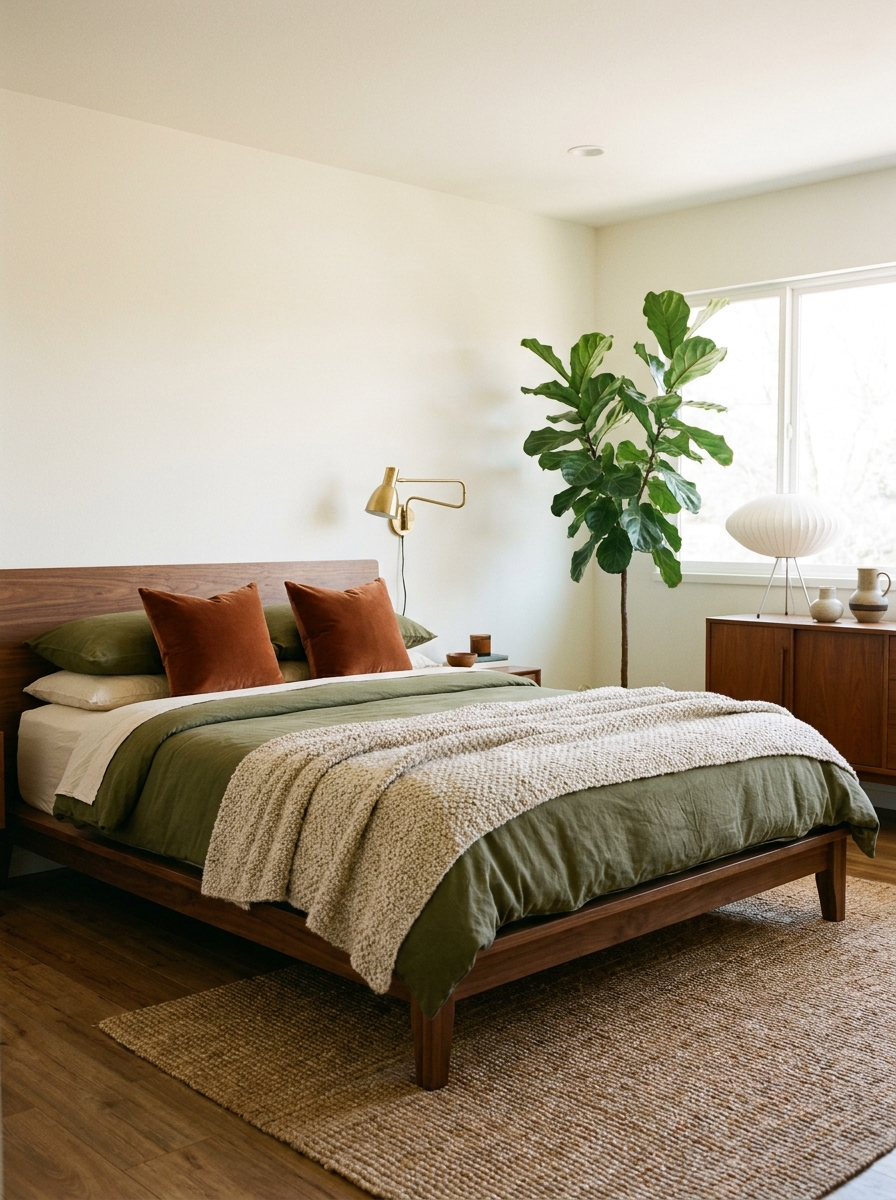
Introduce olive green bedding
Olive green works naturally in mid-century interiors because it pairs beautifully with walnut, cream, mustard, rust, and brass. It adds color without making the bedroom feel overly bright.
You can use olive as the main duvet color or introduce it more subtly through cushions, a quilt, curtains, or an upholstered bench. If the bed is already dark wood, break up the green with lighter sheets and a cream throw.
This combination feels rich and grounded, but natural daylight and warm white walls will keep the bedroom from becoming too dark.
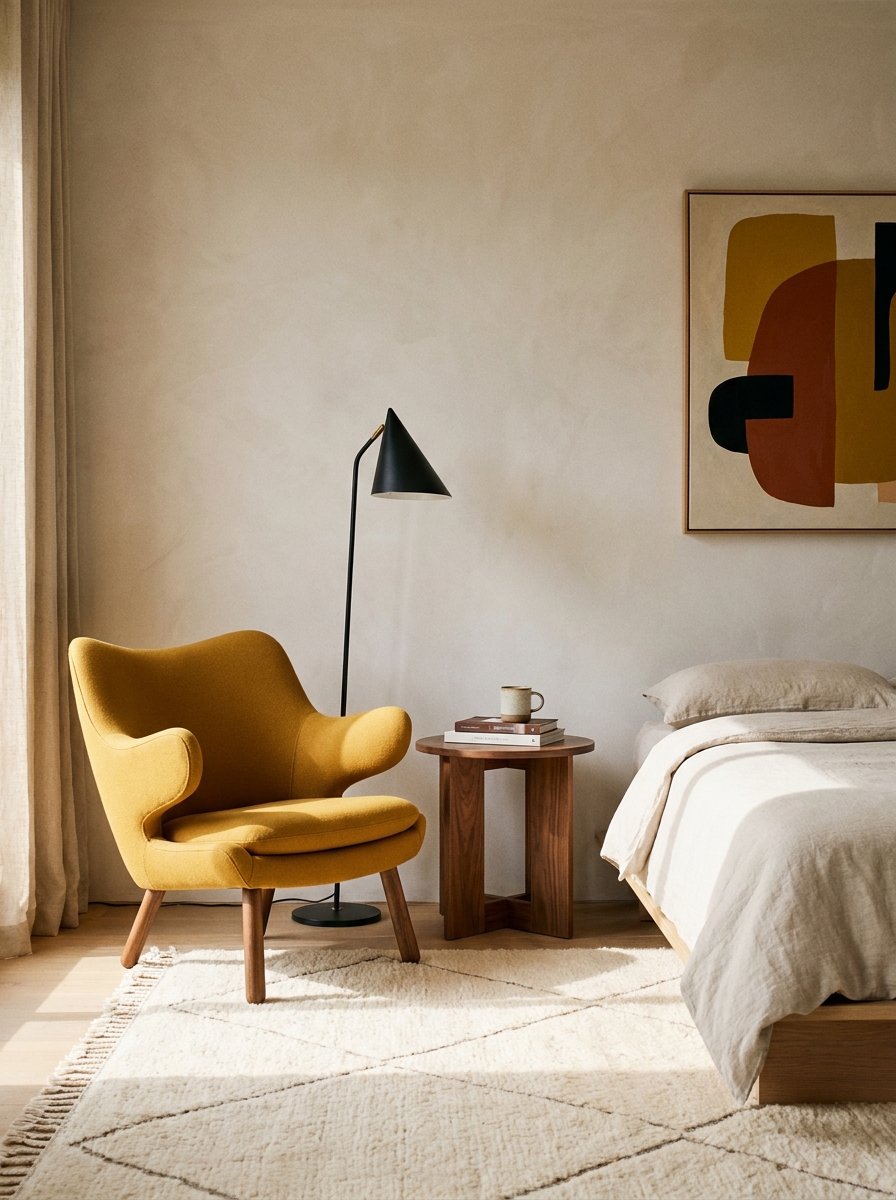
Add a mustard accent chair
A mustard yellow chair can bring energy and personality into a neutral bedroom. It is especially effective in an empty corner near a window, dresser, or small side table.
Choose a compact chair with a sculptural shape, tapered wooden legs, or curved arms. The chair should add function as a reading or dressing spot rather than serving as decoration only.
Balance mustard with walnut, cream, olive, and black. Repeating the color once elsewhere, perhaps in a small artwork or cushion, will help the chair feel connected to the room.
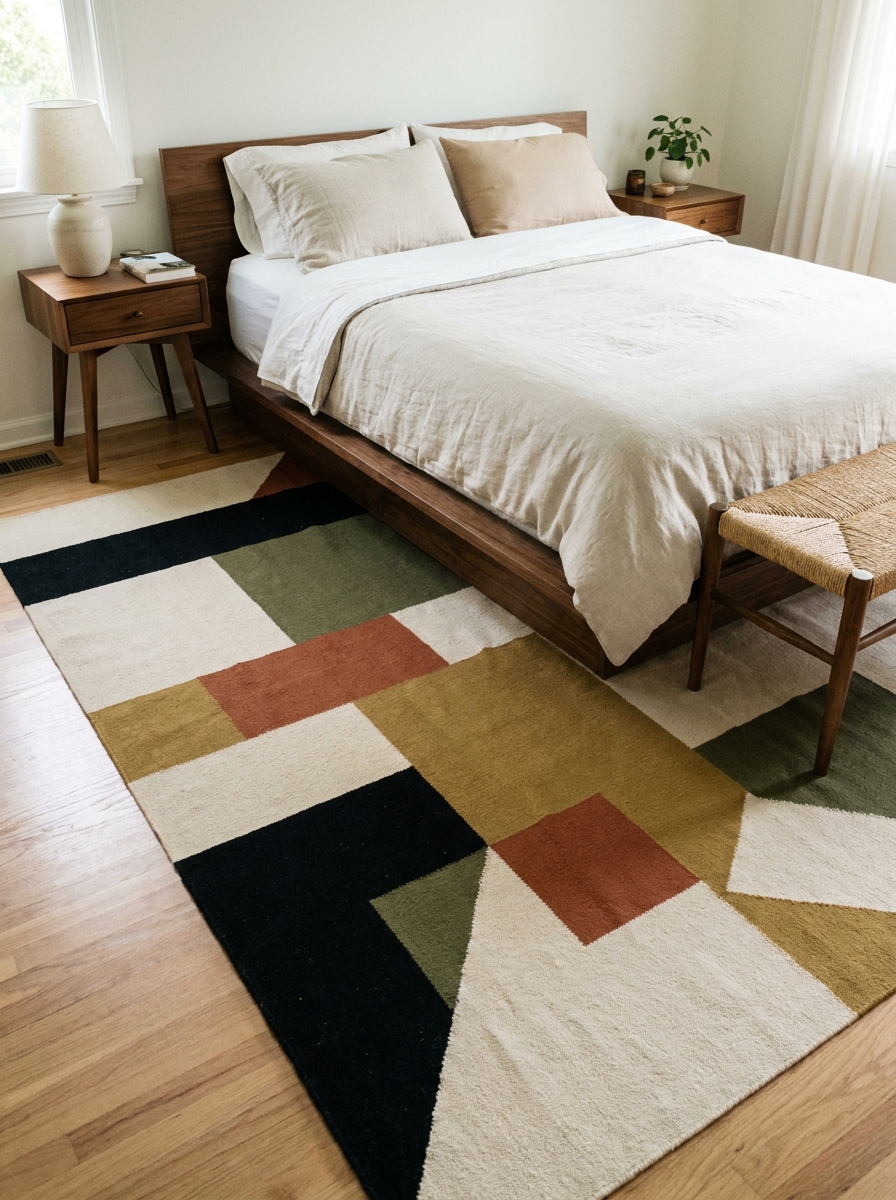
Place a geometric rug under the bed
A geometric rug can introduce pattern and help anchor the bed. Mid-century-inspired designs often feature simple blocks, curved forms, diamonds, stripes, or abstract shapes rather than intricate traditional patterns.
Choose a rug that extends beyond the sides and foot of the bed so it feels proportional. A rug that is too small can make the bedroom look disconnected.
If the bedding is colorful, use a more restrained rug in cream, brown, black, or muted beige. If the bedding is neutral, the rug can introduce olive, mustard, rust, or soft blue.
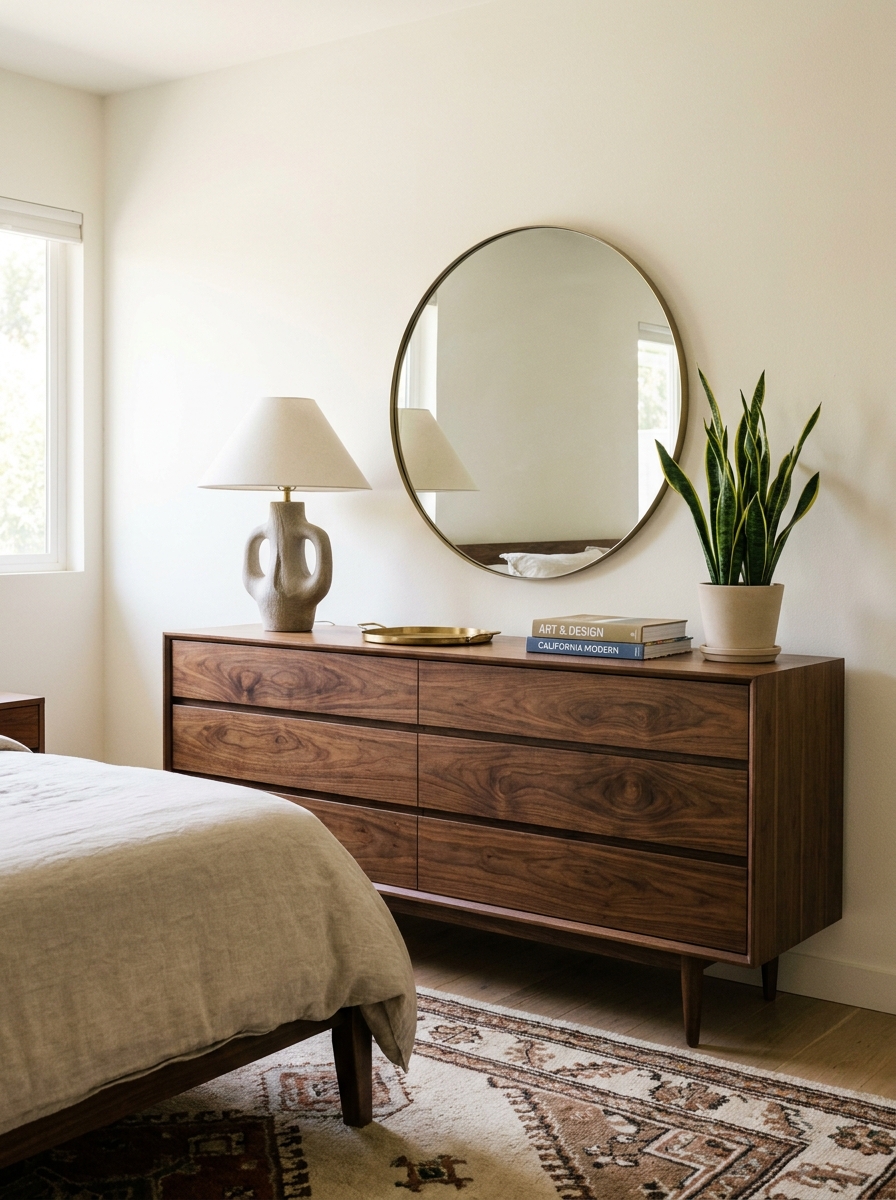
Style a low mid-century dresser
A low dresser adds useful storage while reinforcing the horizontal lines of mid-century design. Look for a walnut or teak piece with simple drawers, recessed handles, or tapered legs.
The dresser top should not become a collection point for clutter. Style it with a lamp, leaning artwork, a small tray, and perhaps one plant or sculptural object.
A round or irregularly shaped mirror above the dresser can soften its straight edges. You could also lean one large abstract print against the wall for a more relaxed look.
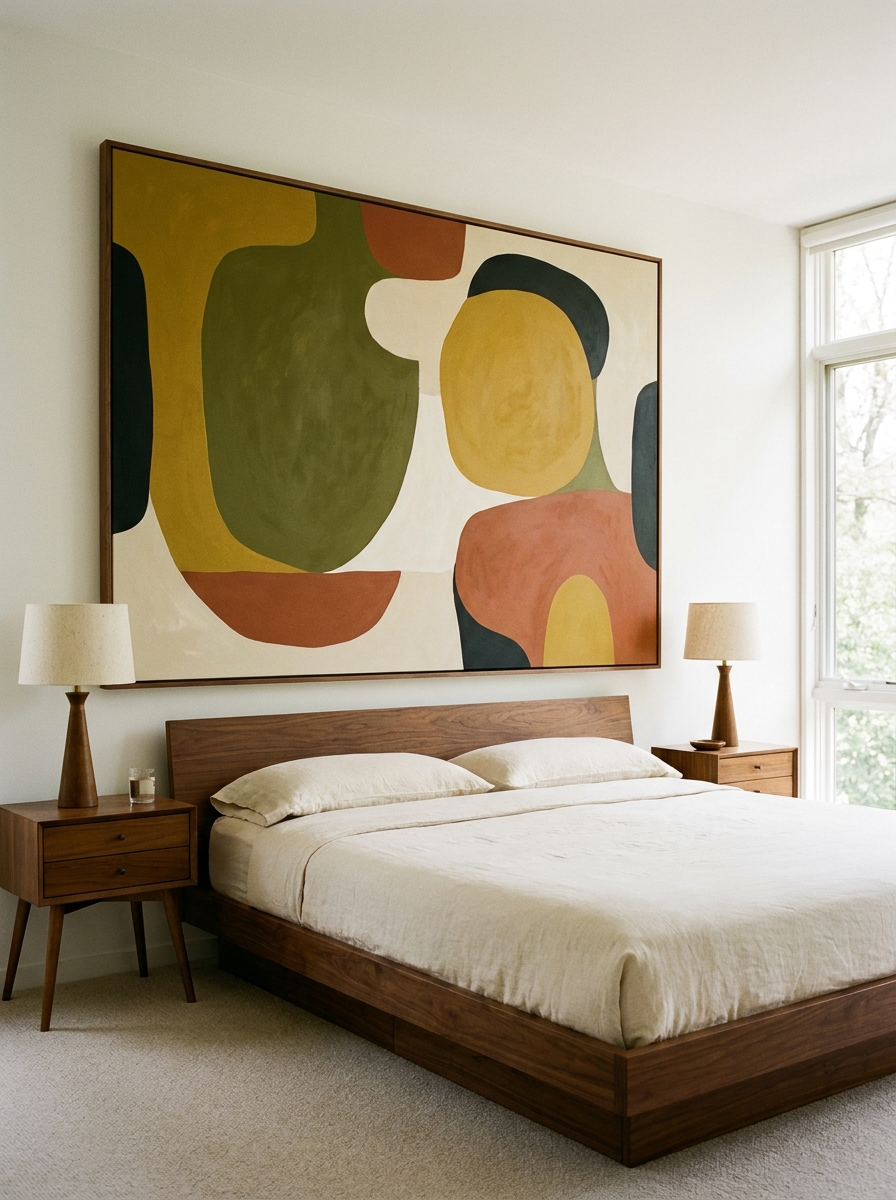
Add vintage-inspired abstract art
Abstract art is one of the easiest ways to bring mid-century personality into a bedroom. Look for organic shapes, color blocks, simple lines, and earthy colors such as olive, rust, mustard, cream, blue, and black.
One oversized artwork above the bed can create a clean focal point. A smaller pair of prints works well if the headboard is tall or visually detailed.
Keep the frames simple in walnut, black, brass, or pale wood. Leave some blank wall space around the artwork so the bedroom still feels restful.
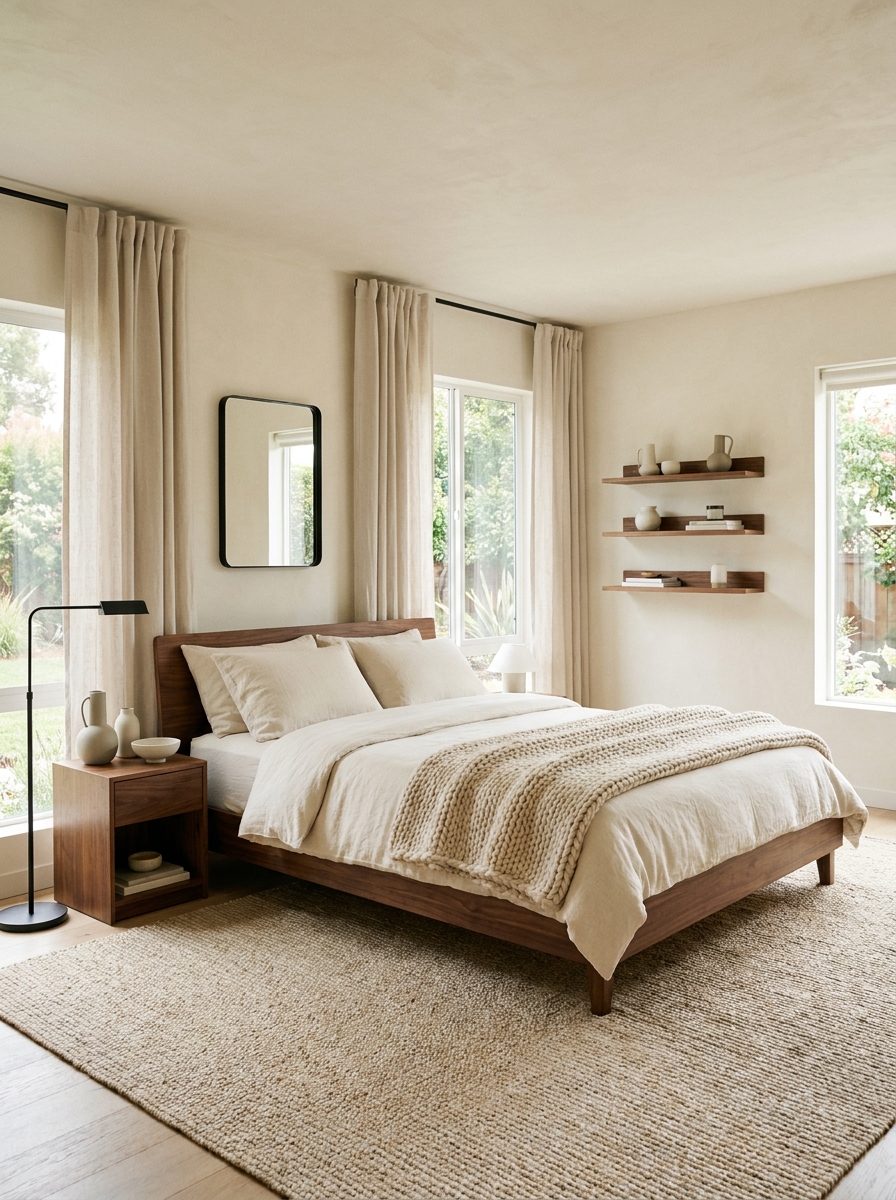
Use a warm wood and cream palette
A combination of warm wood and cream creates a softer version of mid-century modern style. It works especially well in smaller bedrooms where darker colors might feel heavy.
Use walnut or teak for the bed, dresser, or nightstands, then balance it with cream bedding, warm white walls, a pale rug, and linen curtains. Black or brass accents can add definition without disrupting the calm palette.
Texture is important in a limited color scheme. Mix smooth wood with woven fabric, boucle, linen, wool, and matte ceramics so the room does not feel flat. This is especially useful if you are adapting the style with small bedroom ideas where every finish needs to earn its place.
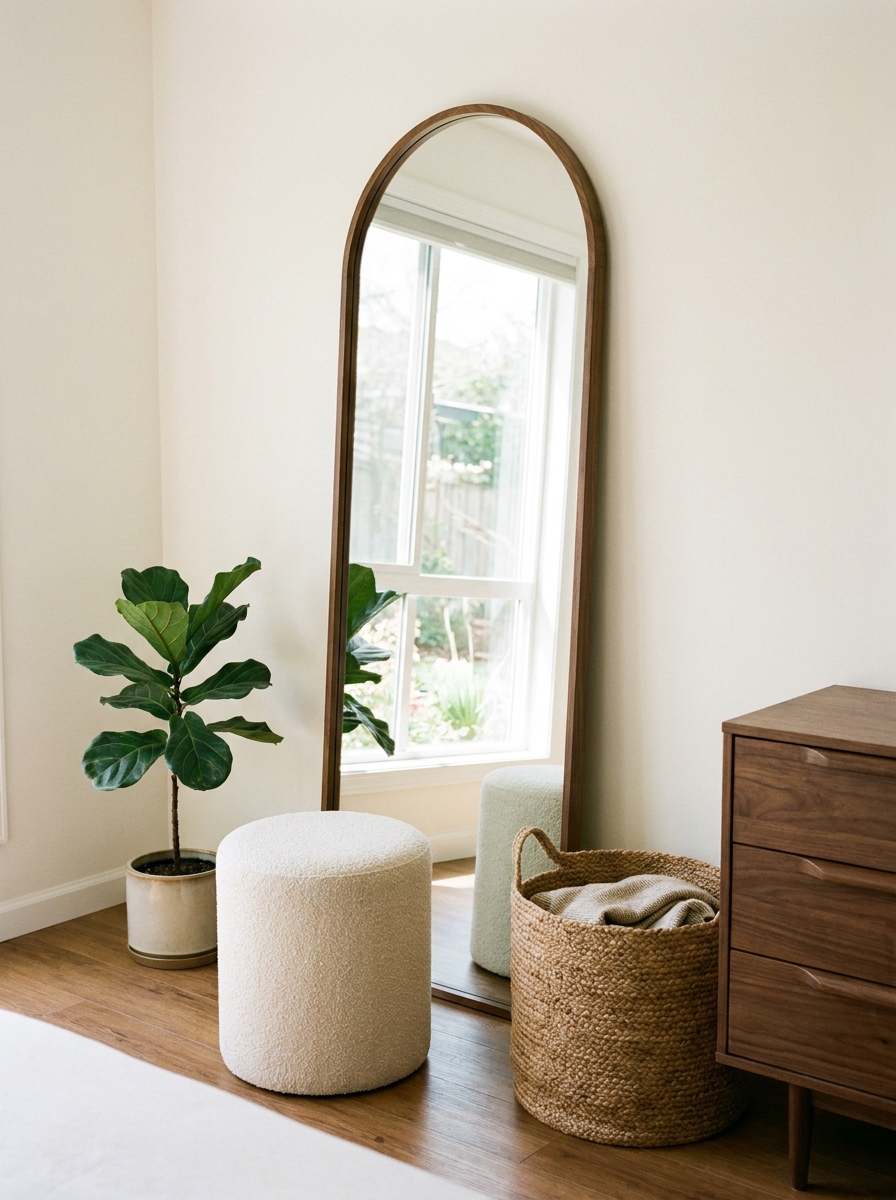
Add a vintage-style full-length mirror
A full-length mirror is useful in a bedroom and can add another sculptural element. Look for rounded corners, an arched top, a walnut frame, or a slim brass border.
Lean the mirror against an empty wall near the dresser or wardrobe, or mount it if floor space is limited. Positioning it across from a window can reflect more light into the room.
Keep the area around the mirror simple. A small stool, plant, or basket is enough to make the corner feel finished without cluttering it.
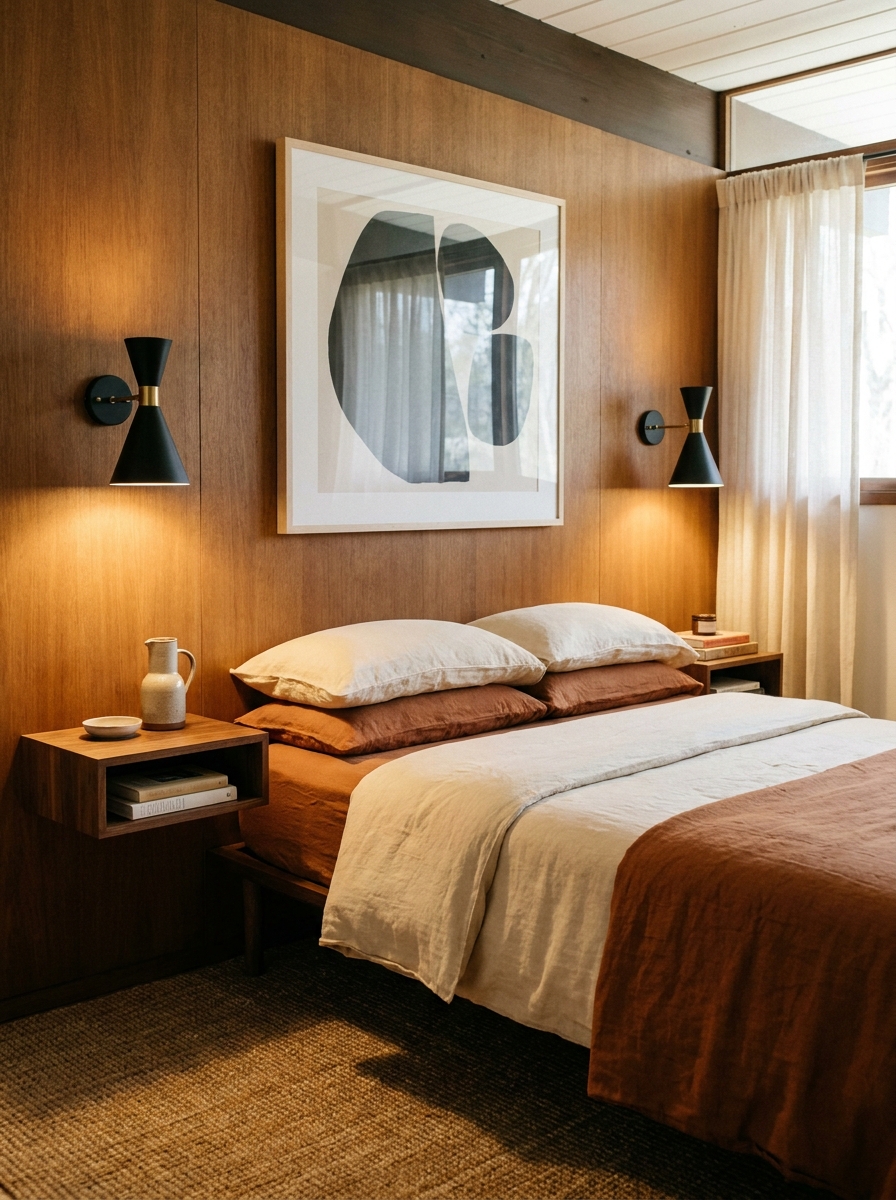
Use wall sconces to save nightstand space
Wall sconces can make a bedroom look more polished while freeing up nightstand space. They are especially helpful in small bedrooms where narrow bedside tables cannot hold large lamps.
Choose globe, cone, or dome-shaped sconces in brass, black, or warm metal. Plug-in versions can create the look without requiring permanent electrical changes, which makes them useful for rental homes.
Install the lights at a comfortable reading height and keep the cords neat if they remain visible. If you rent, the same logic applies to apartment bedroom ideas: choose pieces that add style without requiring permanent changes.
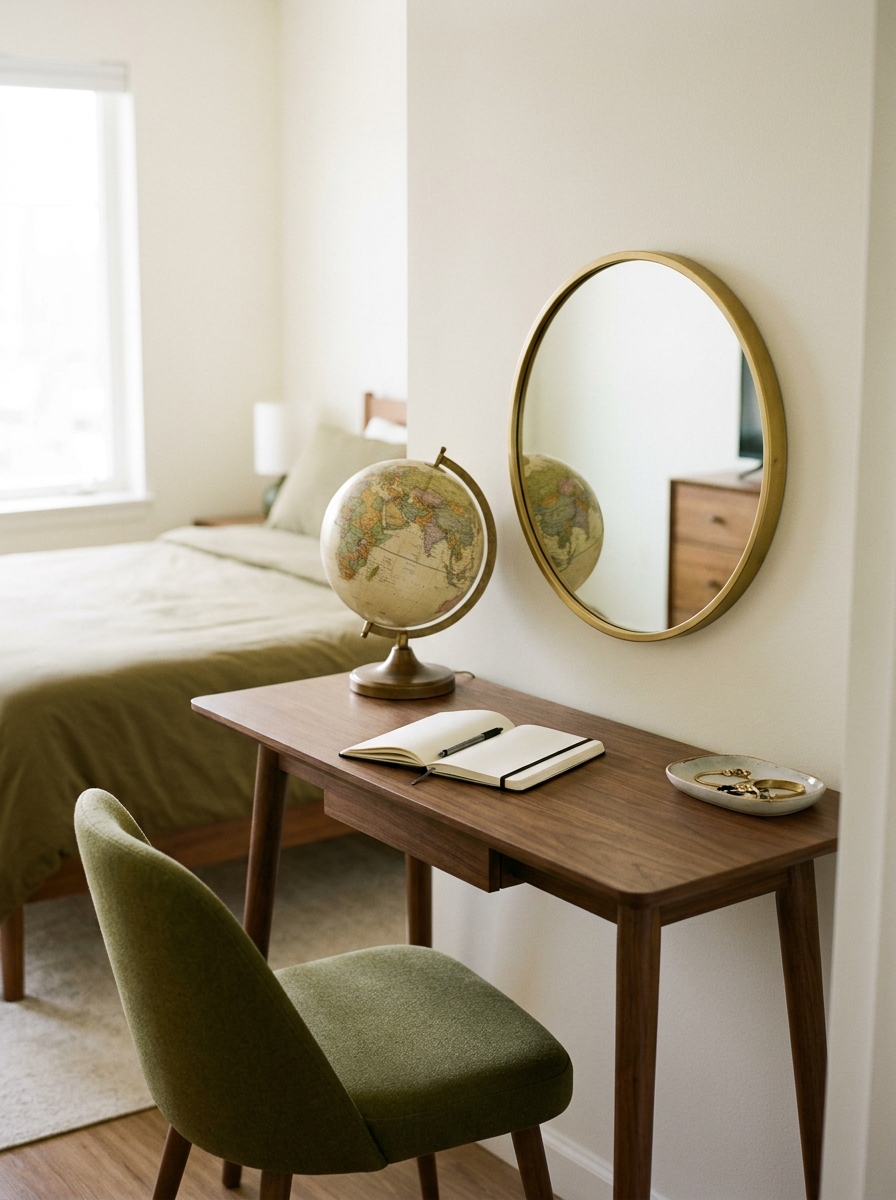
Add a small vanity or desk
A slim vanity or writing desk can make a bedroom more functional without taking up much space. Choose a simple walnut table with tapered legs and one or two small drawers.
Pair it with a compact chair, round mirror, and sculptural lamp. Keep the surface mostly clear so the area remains visually connected to the bedroom rather than looking like a crowded office.
This setup can work as a vanity in the morning and a small workspace during the day, making it especially useful in apartments and smaller homes.
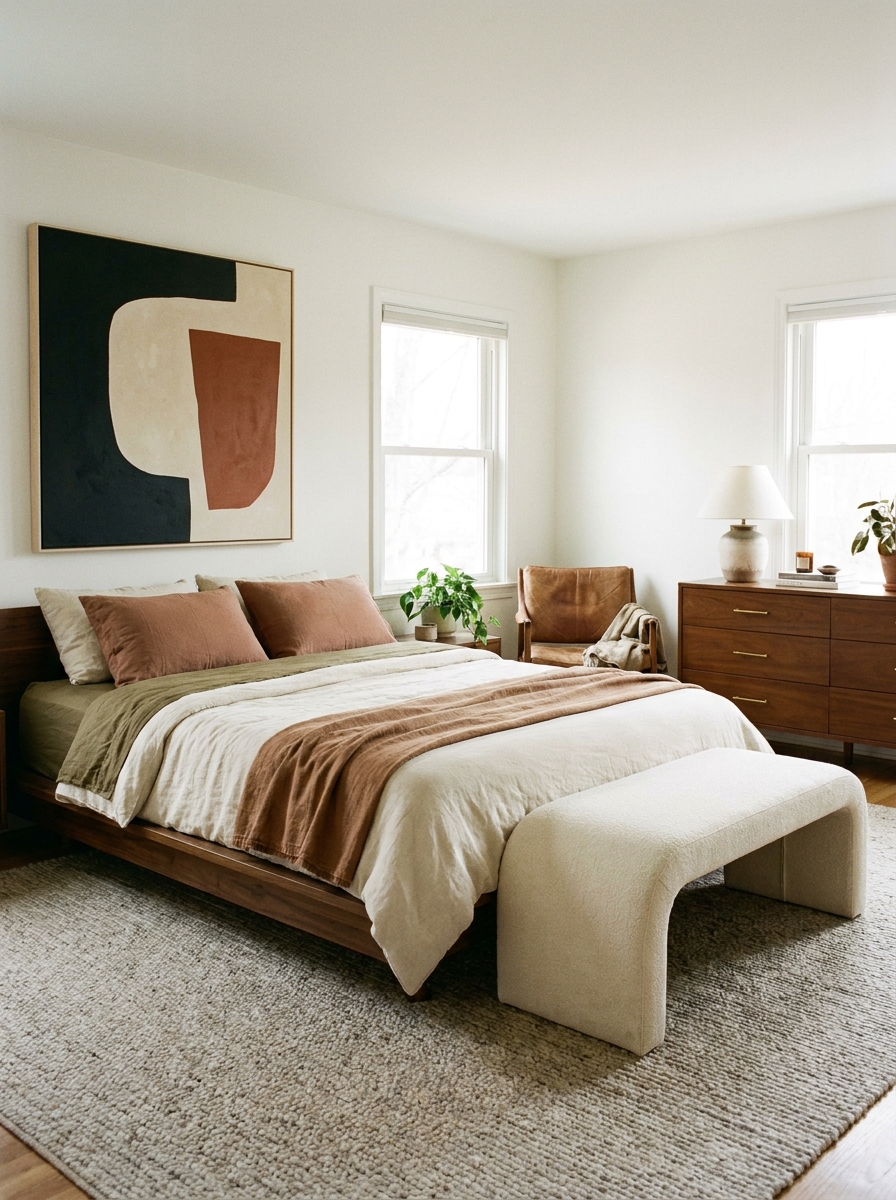
Blend mid-century furniture with modern bedding
Mixing mid-century furniture with contemporary textiles prevents the bedroom from feeling like a period set. A walnut platform bed and vintage-style dresser can work beautifully with modern linen bedding, a simple contemporary rug, and minimal accessories.
Choose two or three clear mid-century elements, then allow the rest of the room to stay modern and relaxed. This gives the space character without making every item compete for attention.
The result should feel collected over time. The wood furniture provides warmth and structure, while modern textiles make the bedroom feel comfortable and current. If your room leans more relaxed and layered, you can borrow texture ideas from boho bedroom ideas without losing the mid-century foundation.
Final thoughts
A mid-century modern bedroom feels most successful when it balances strong design with comfort. Natural wood, clean lines, sculptural lighting, and warm accent colors give the room character, but soft bedding and an uncluttered layout keep it restful.
Begin with one foundation piece, such as a walnut platform bed, low dresser, or tapered nightstands. Then add one or two distinctive details through globe lighting, abstract art, a geometric rug, or an olive or mustard accent.
You do not need to recreate an entire vintage interior. Mixing a few mid-century elements with modern bedding and practical storage will create a bedroom that feels warm, stylish, and easy to live in.
FAQ
What makes a bedroom mid-century modern?
Mid-century modern bedrooms usually include clean-lined wood furniture, low profiles, tapered legs, sculptural lighting, geometric patterns, and warm colors like walnut, olive, mustard, rust, and cream.
How do you make a mid-century modern bedroom feel cozy?
Balance the structured furniture with soft bedding, warm bulbs, a textured rug, linen curtains, and a restrained color palette. Cream textiles help walnut furniture feel warm instead of heavy.
Can mid-century modern work in a small bedroom?
Yes. Low beds, raised nightstands, wall sconces, compact dressers, and mirrors all work well in small bedrooms because they keep the layout open while still adding style.