Entryway
Entryway Decor Ideas
15 entryway decor ideas for creating a stylish first impression with slim consoles, mirrors, benches, baskets, lamps, rugs, hooks, shoe storage, and practical drop zones.
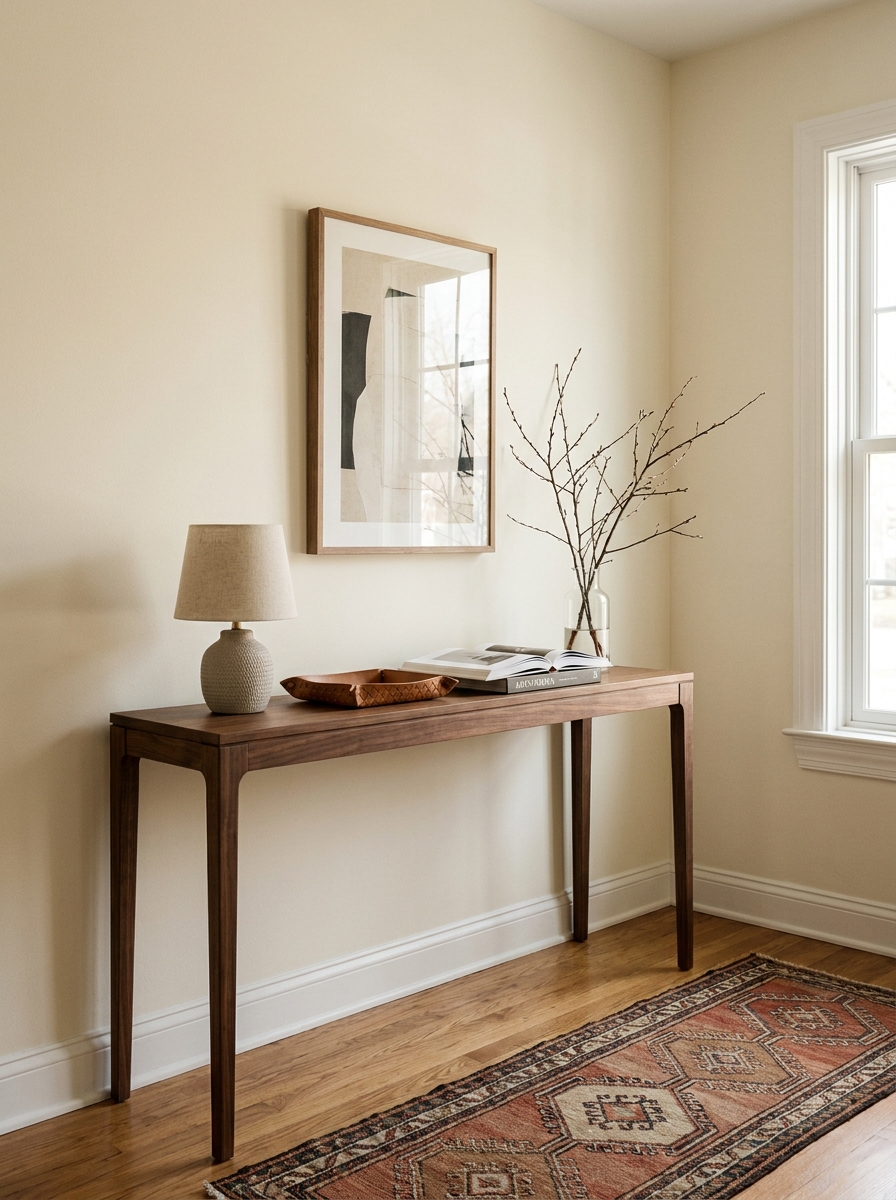
The entryway is the first part of a home that guests see, but it is also one of the hardest spaces to decorate well. It needs to look welcoming while handling everyday items such as shoes, keys, bags, coats, and mail. Without a clear plan, even a beautiful entry can quickly become cluttered.
The best entryway decor ideas balance style with function. A slim console, practical bench, mirror, runner rug, wall hooks, and a few storage pieces can completely change how the space feels. You do not need a large foyer or a separate hallway to create an attractive entrance. Many of these ideas also work in small apartments, narrow hallways, and open-plan homes where the front door leads directly into the living area.
It also helps to treat the entryway as an introduction to the rest of the home. The colors, materials, and decorative details should connect naturally with nearby rooms without matching them exactly. Warm wood, patterned textiles, sculptural lighting, and carefully chosen artwork can give the space personality while keeping it useful.
Here are 15 entryway decor ideas for creating a stylish, organized, and welcoming first impression.
Add a slim console table
A slim console table gives the entryway an immediate focal point without taking up too much walking space. It provides a surface for keys, a lamp, a small tray, artwork, and a few decorative objects while helping the entrance feel intentional.
Choose a console with proportions that suit the hallway. In a narrow entry, a table around 10 to 14 inches deep can provide useful surface space without becoming an obstacle. Wall-mounted consoles and floating shelves are even better for extremely tight areas because they keep the floor visible.
The style of the console can set the direction for the whole entryway. Walnut adds warmth, pale oak feels light and modern, black metal creates contrast, and a painted piece can introduce a stronger color. Keep the surface lightly styled so it remains useful for everyday life.
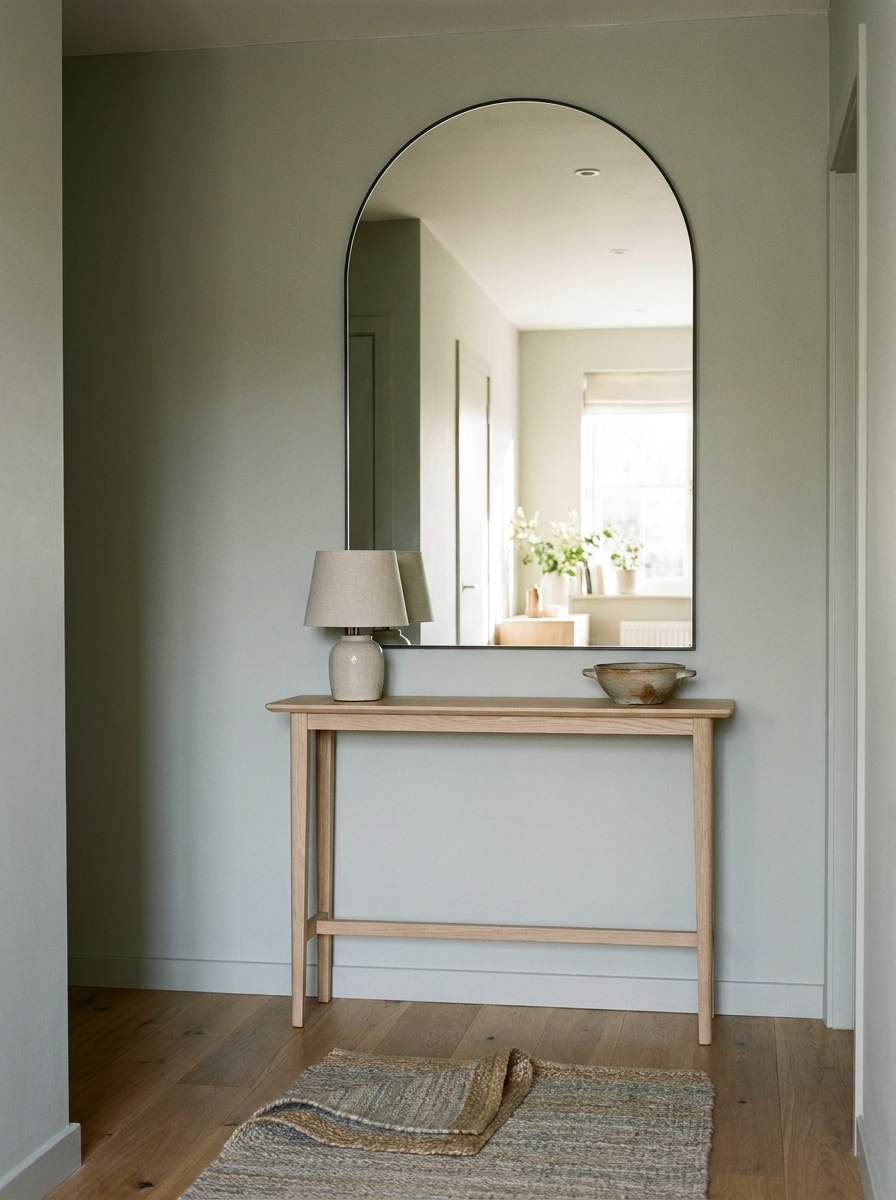
Hang an oversized mirror
An oversized mirror can make a small or narrow entryway feel brighter and more spacious. It reflects natural light, creates visual depth, and gives you a practical place to check your appearance before leaving home.
Round and arched mirrors soften the straight lines of doors, consoles, and hallway walls. Rectangular mirrors can create a more architectural look, especially when framed in black, walnut, or brass. The mirror should be large enough to feel intentional rather than like a small accessory floating above the console.
Position it where it can reflect light from a nearby window or doorway. Avoid placing it directly opposite a cluttered area, since the reflection will make that clutter appear twice as noticeable.
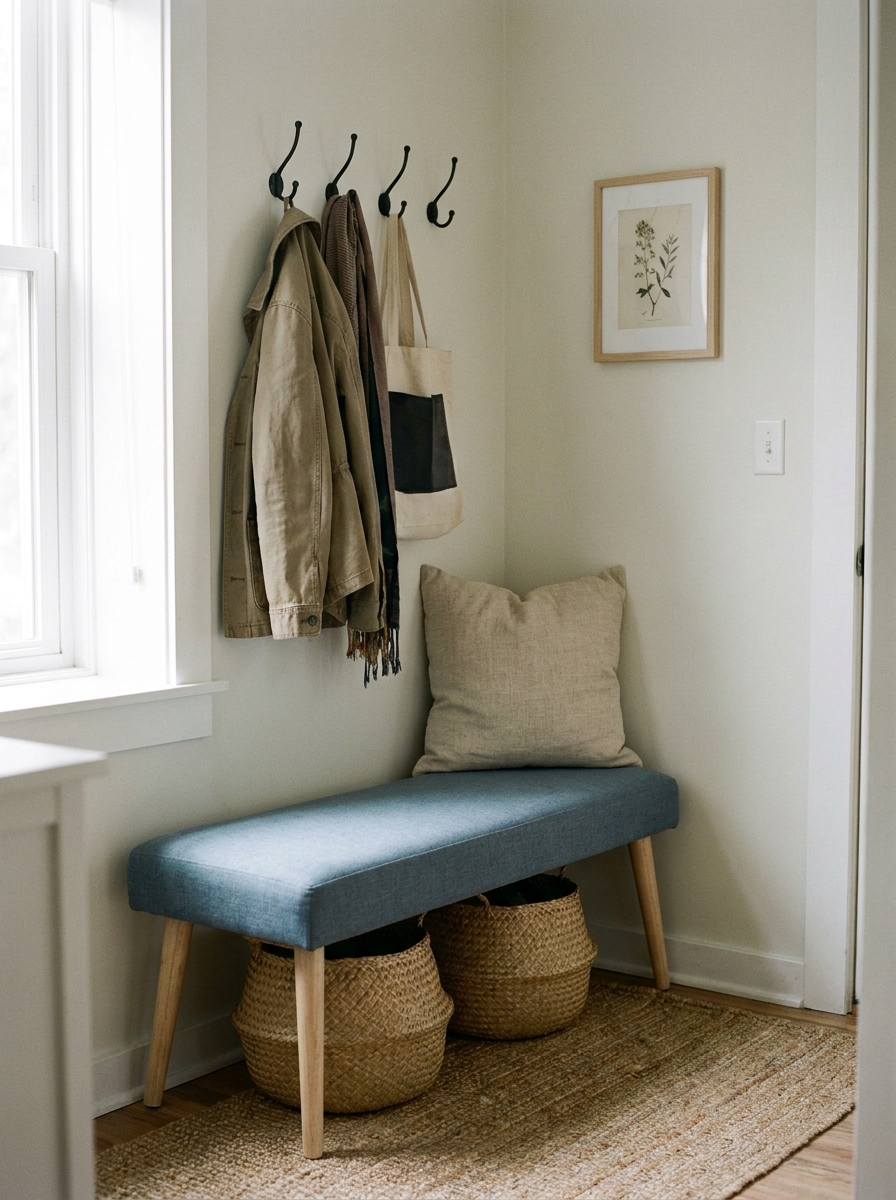
Style a small entryway bench
A bench gives you a place to sit while putting on shoes and can add useful storage at the same time. It works particularly well near the front door, beneath wall hooks, or along an empty section of hallway.
Look for a bench with an open shelf, woven baskets, or a lift-up seat if storage is limited. A slim upholstered bench can make the space feel softer, while a wooden bench creates a more natural and streamlined look.
Keep the styling practical. One cushion, a folded throw, or a small basket is usually enough. The bench should remain usable rather than becoming a display surface covered with decorative objects.
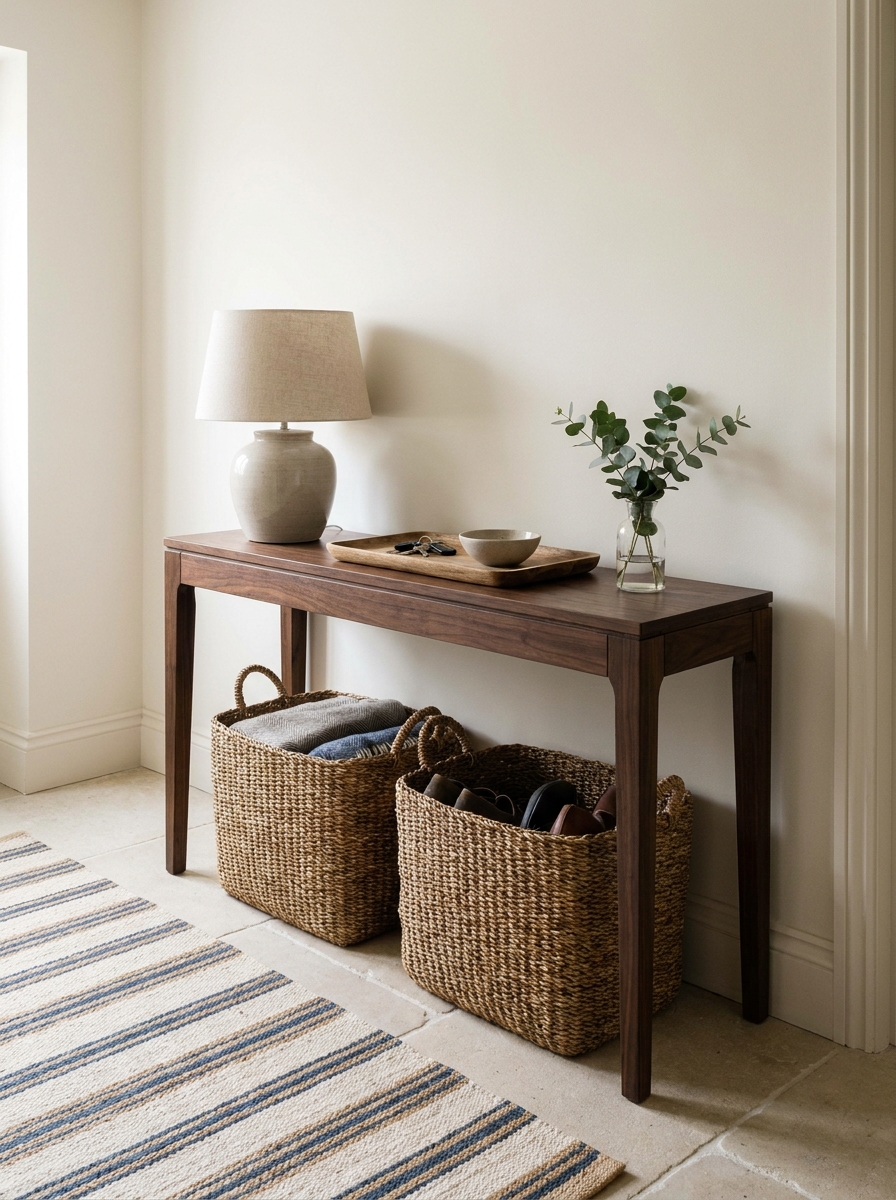
Add baskets beneath the console
The empty space beneath a console table is ideal for storage. Baskets can hold shoes, scarves, pet accessories, umbrellas, reusable bags, or items that need to be taken out of the house.
Choose baskets that fit neatly without completely filling the space. Two matching baskets create a balanced look, while one larger basket can make the arrangement feel more relaxed. Woven materials add warmth, but fabric bins or structured boxes may work better in a more modern interior.
Use the baskets for categories rather than mixed clutter. One can hold shoes, another can contain seasonal accessories, and a smaller container can be reserved for everyday items. For more whole-home storage inspiration, these small apartment storage ideas focus on making useful pieces look intentional.
Use a statement table lamp
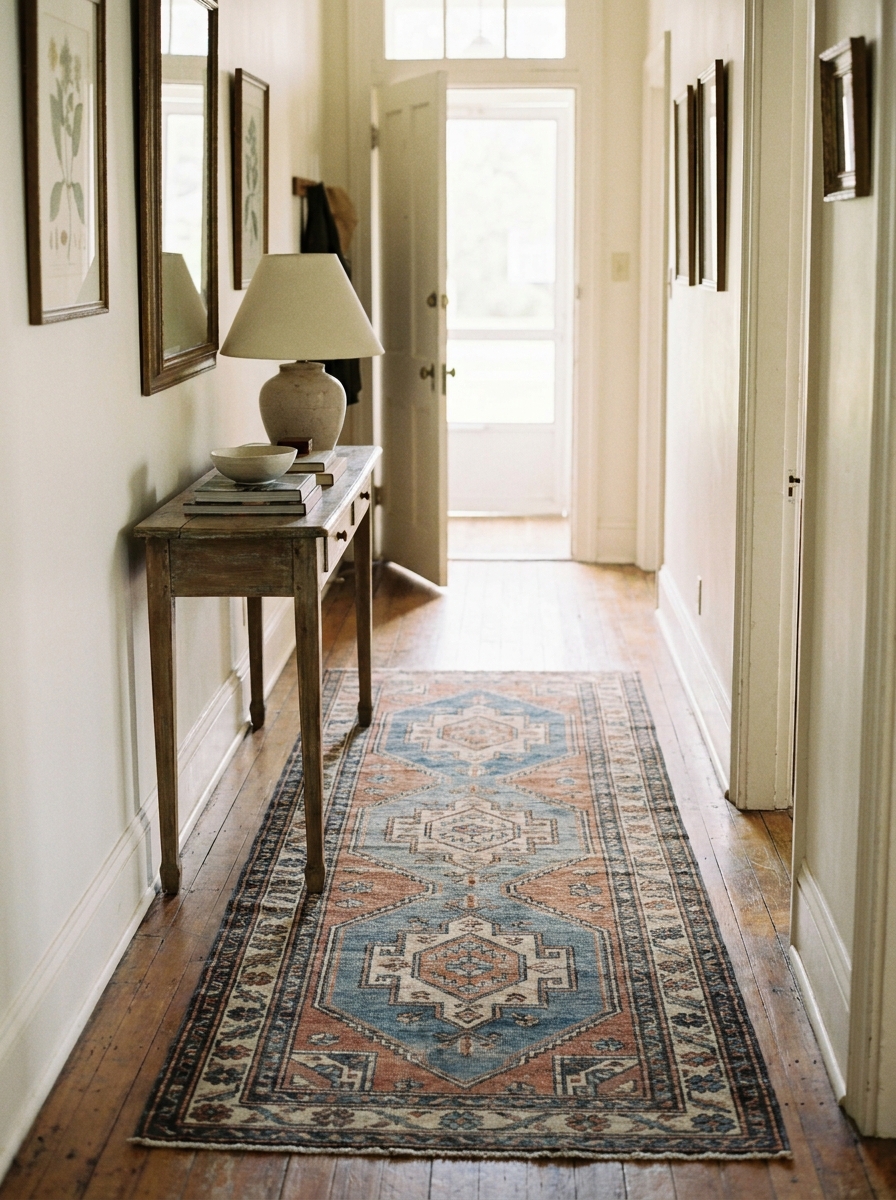
A lamp can make an entryway feel warmer, especially in the evening when overhead lighting may feel too harsh. It also gives the console area more height and creates a stronger visual focal point.
Choose a lamp with a shape or material that adds character. A ceramic base, pleated shade, colored glass, or sculptural metal design can introduce personality without requiring a lot of other decor.
Make sure the lamp is proportional to the console. A very large lamp can overwhelm a narrow table, while a tiny one may look insignificant. A medium-height lamp positioned to one side usually leaves enough room for a tray, artwork, and a few practical items.
Create an entryway gallery wall
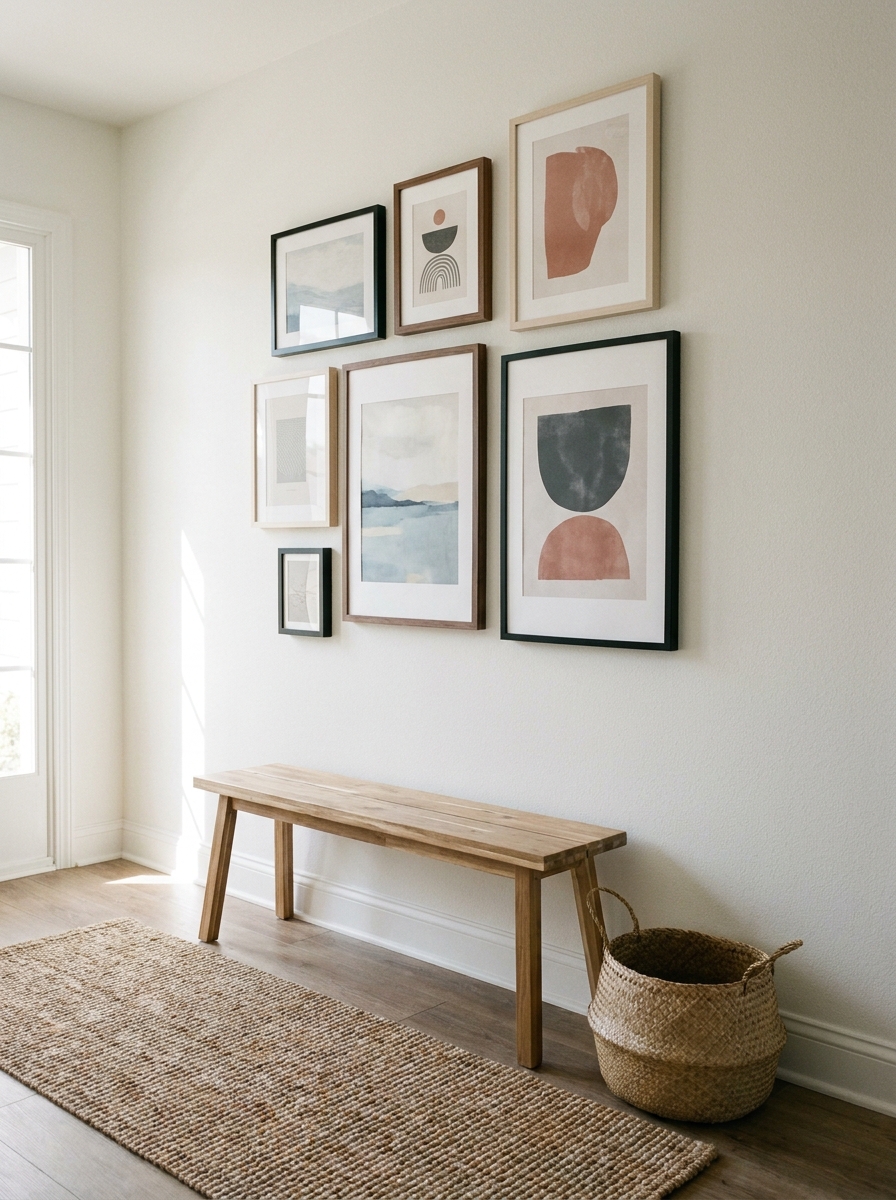
A gallery wall can bring personality to a plain hallway or entryway. It works especially well above a bench, beside a console, or along the wall leading into the rest of the home.
Use a mix of artwork that feels connected through color, subject, or frame style. Abstract prints, photographs, landscapes, botanical illustrations, and personal art can all work together when the arrangement is balanced.
Before hanging the frames, arrange them on the floor or create paper templates on the wall. This helps you test the spacing and overall shape. Leave enough empty wall around the collection so the entryway does not feel visually crowded. If you want more wall-focused inspiration, these living room wall decor ideas are useful beyond the living room too.
Add a narrow runner rug
A runner rug can guide the eye through the entryway while adding color, pattern, and softness. It also helps protect the floor in a high-traffic area.
Choose a low-pile or flatwoven rug that is easy to clean and will not interfere with the door. The width should leave some flooring visible on both sides, which prevents the hallway from feeling cramped.
A patterned runner can hide everyday marks better than a solid pale rug. Muted stripes, vintage-inspired motifs, small geometrics, and subtle checkerboard patterns can all add interest without overwhelming the entrance.
Decorate a small apartment entryway
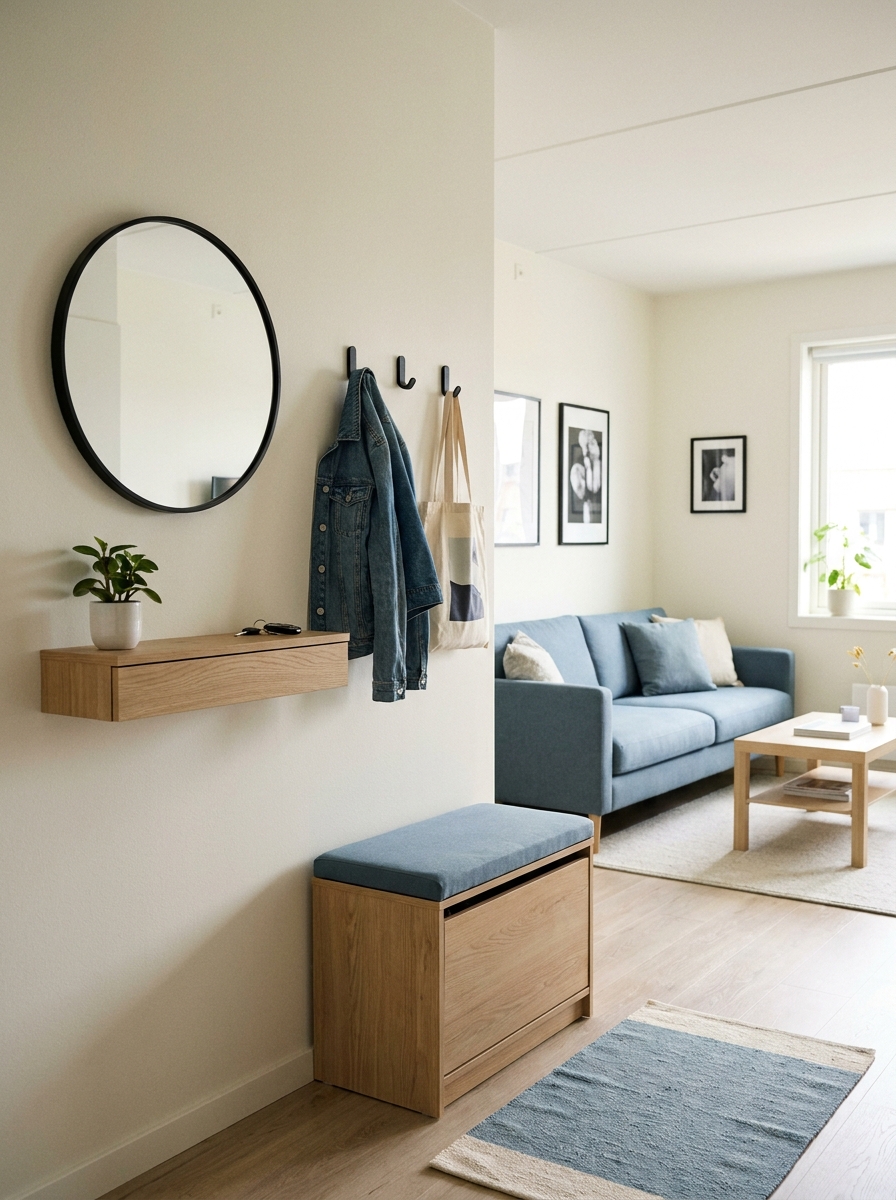
A small apartment may not have a defined foyer, but you can create the feeling of one with a few carefully placed elements. A narrow shelf, wall hooks, a mirror, and a small rug can visually separate the entrance from the living area.
Use vertical space whenever possible. Wall-mounted storage, peg rails, and floating shelves provide function without occupying valuable floor space. A mirror can also help the entrance feel less enclosed.
Keep the color palette connected to the nearby room so the transition feels natural. Repeating one wood tone, metal finish, or accent color can make the entryway feel like part of the home rather than an isolated corner. These apartment decor ideas can help the entryway connect with the rest of a small home.
Install wall hooks for everyday storage
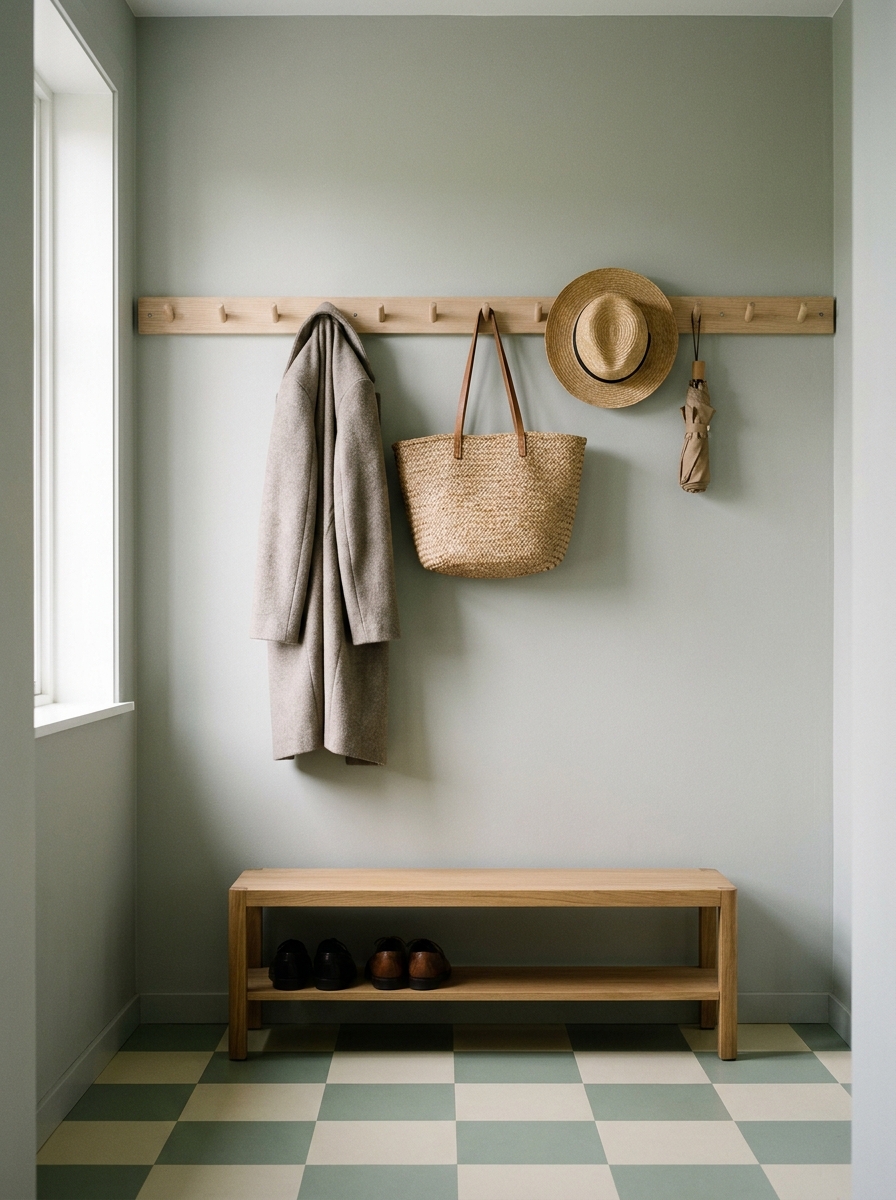
Wall hooks provide an easy place for coats, bags, hats, and umbrellas. They are especially helpful in entryways that do not have a nearby closet.
A row of matching hooks creates a clean, structured appearance, while a wooden peg rail can feel warmer and more relaxed. Install them at a height that is practical for the people using the space, and consider adding a lower row for children.
Avoid filling every hook at once. Rotating seasonal items and storing less-used pieces elsewhere will keep the wall from looking overloaded.
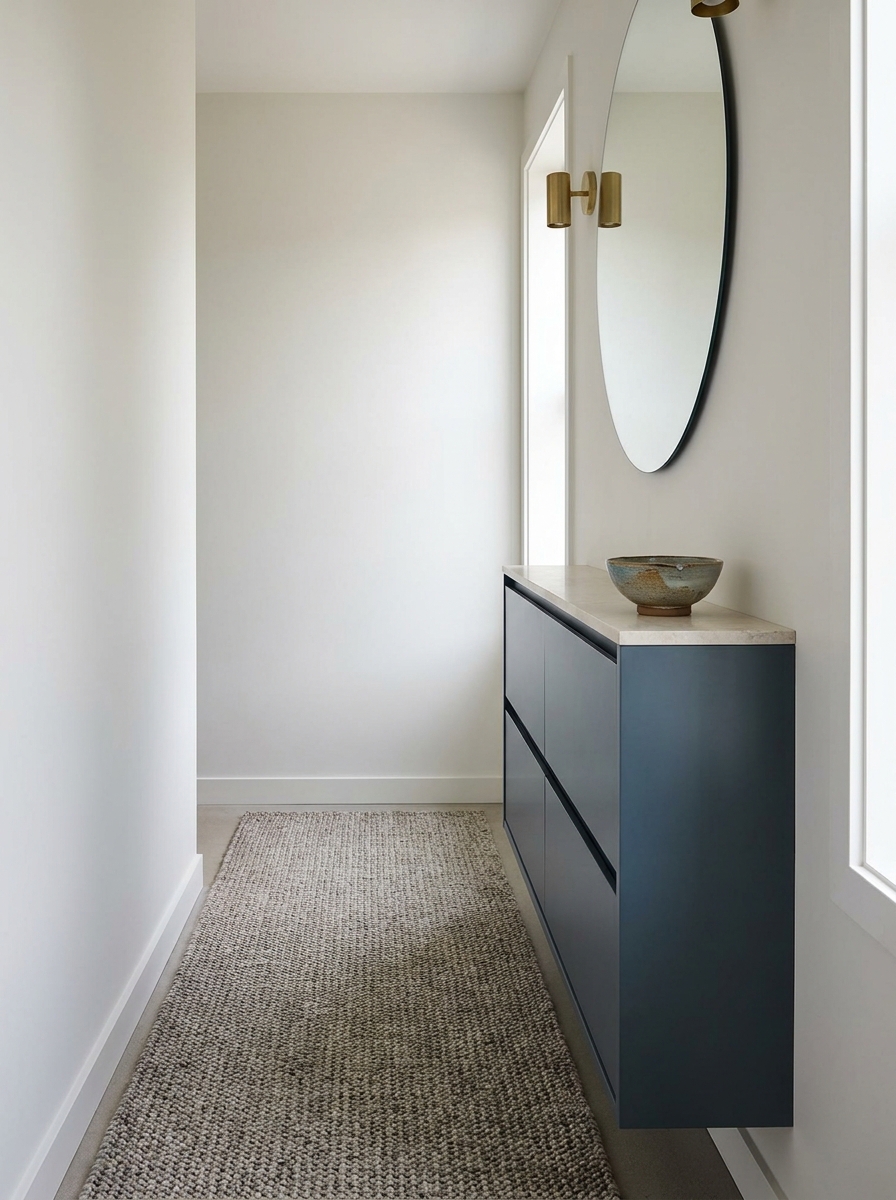
Add a closed shoe cabinet
A closed shoe cabinet can dramatically reduce visual clutter. Unlike open shelving, it hides mismatched shoes and helps the entrance feel calmer.
Slim cabinets are particularly useful in narrow hallways because they offer storage without projecting far into the walkway. Some models also provide a shallow surface for keys, mail, and a small lamp.
Choose a finish that blends with the wall for a quieter look or use a contrasting cabinet to make it a feature. Wall-mounted designs can create the illusion of more floor space and make cleaning easier.
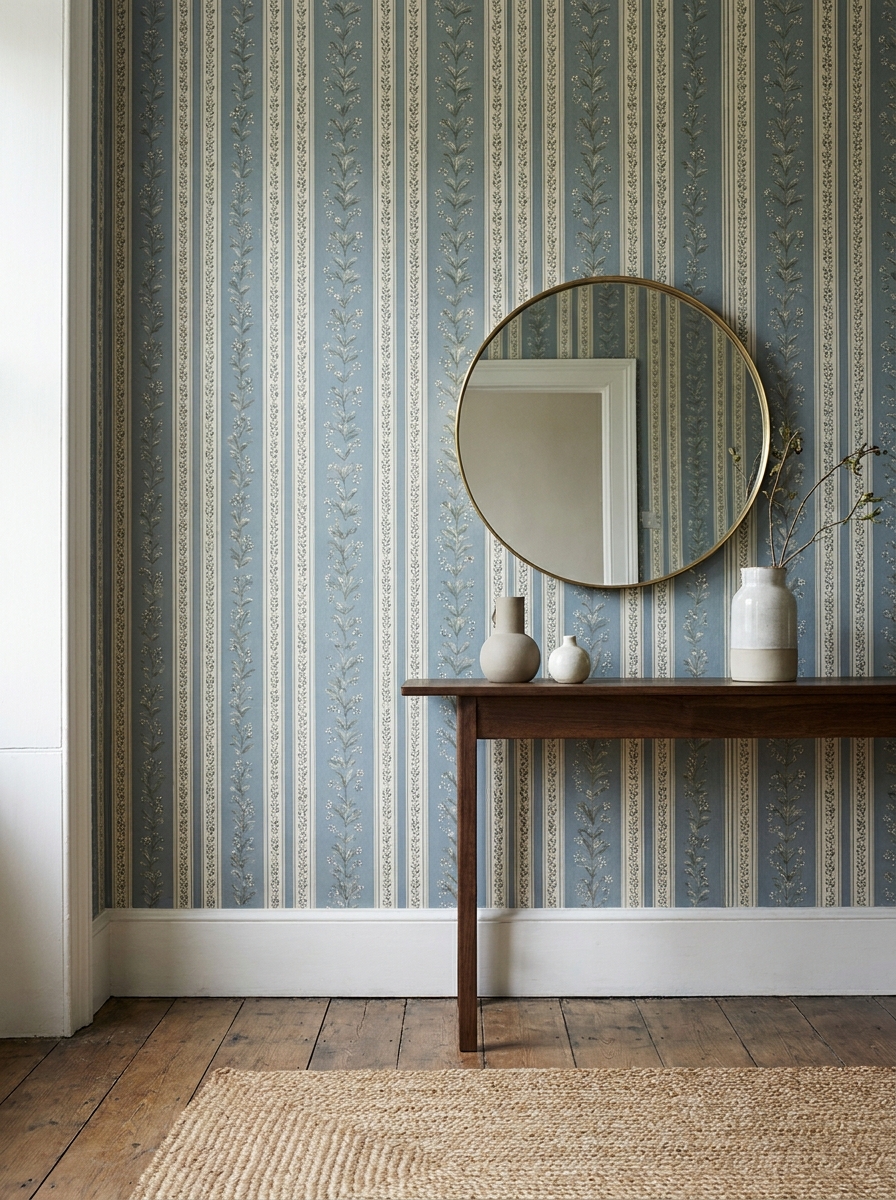
Try wallpaper in the entryway
Wallpaper can turn a small entryway into a memorable transition space. Because the area is usually compact, you can use a stronger pattern without committing to it throughout a large room.
Stripes can make the walls feel taller, botanical designs add softness, and geometric patterns create a more modern effect. Removable wallpaper is a useful option for renters or anyone who prefers an easier update.
Balance patterned walls with simpler furniture and accessories. A busy wallpaper usually needs only a plain console, restrained lighting, and one or two decorative objects.
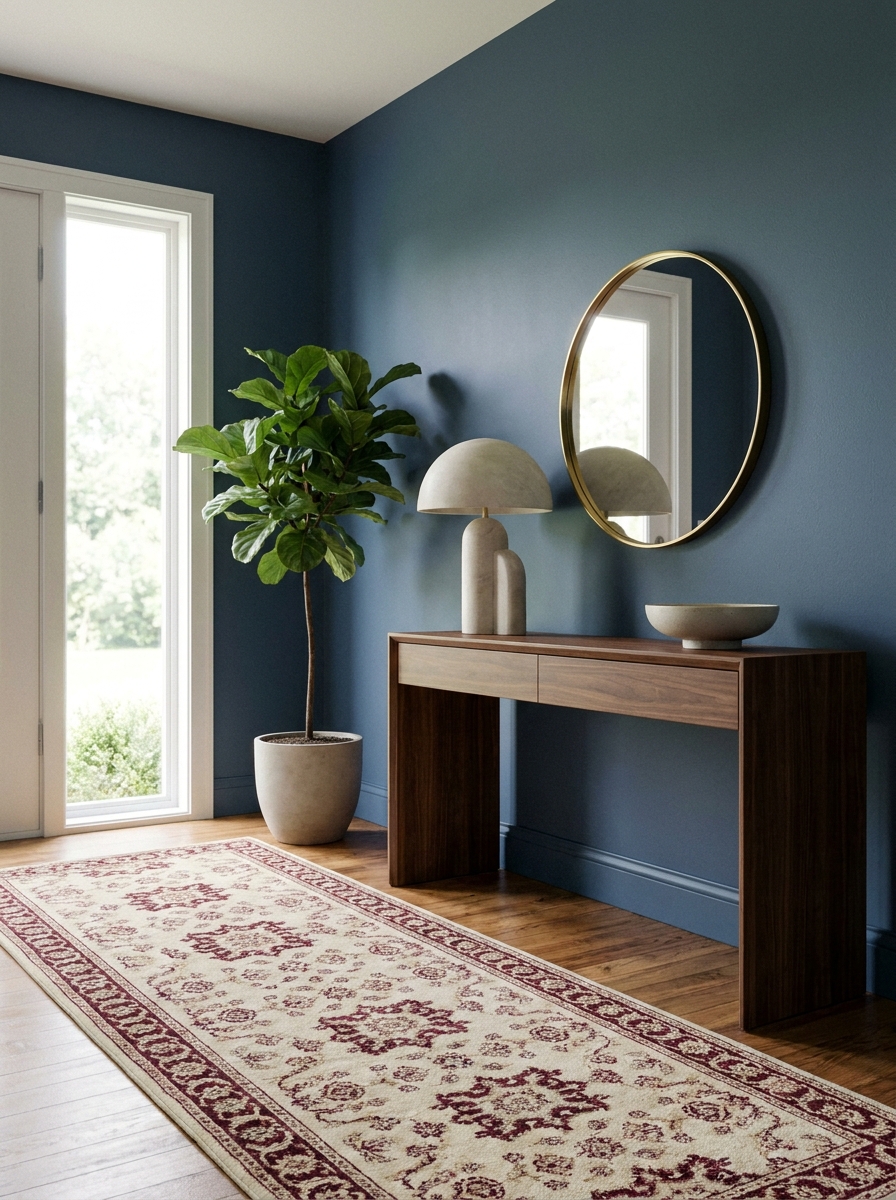
Paint the entryway a bold color
A bold wall color can define the entryway and give it a distinct identity. Deep blue, burgundy, terracotta, green-gray, and muted plum can all create a strong first impression.
If the space is small or lacks natural light, use the color on one wall, the interior side of the front door, or the lower half of the walls. This introduces character without making the whole entrance feel dark.
Repeat the color subtly in a nearby rug, artwork, or decorative object. This helps the entrance connect with the rest of the home and makes the choice feel deliberate.
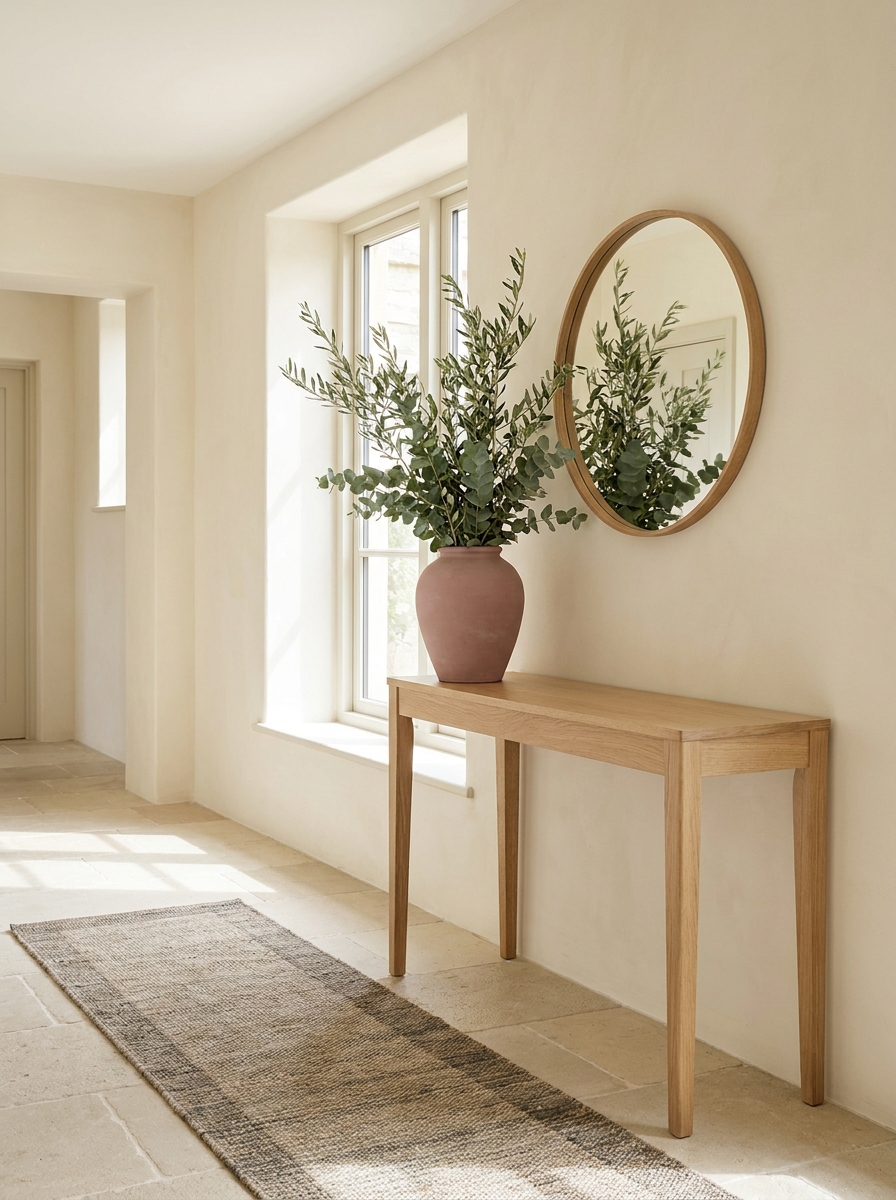
Add a tall plant or branch arrangement
A tall plant or branch arrangement can bring height and natural texture into the entryway. It works particularly well beside a console, in an empty corner, or near a staircase.
Choose the scale carefully. A narrow olive tree, ficus, or tall vase with branches can fill vertical space without taking up too much floor area. In a darker entryway, a convincing artificial plant may be more practical.
Keep the container simple and connected to the rest of the decor. Stone, ceramic, woven, or dark metal planters can each create a different look while allowing the greenery to remain the focus.
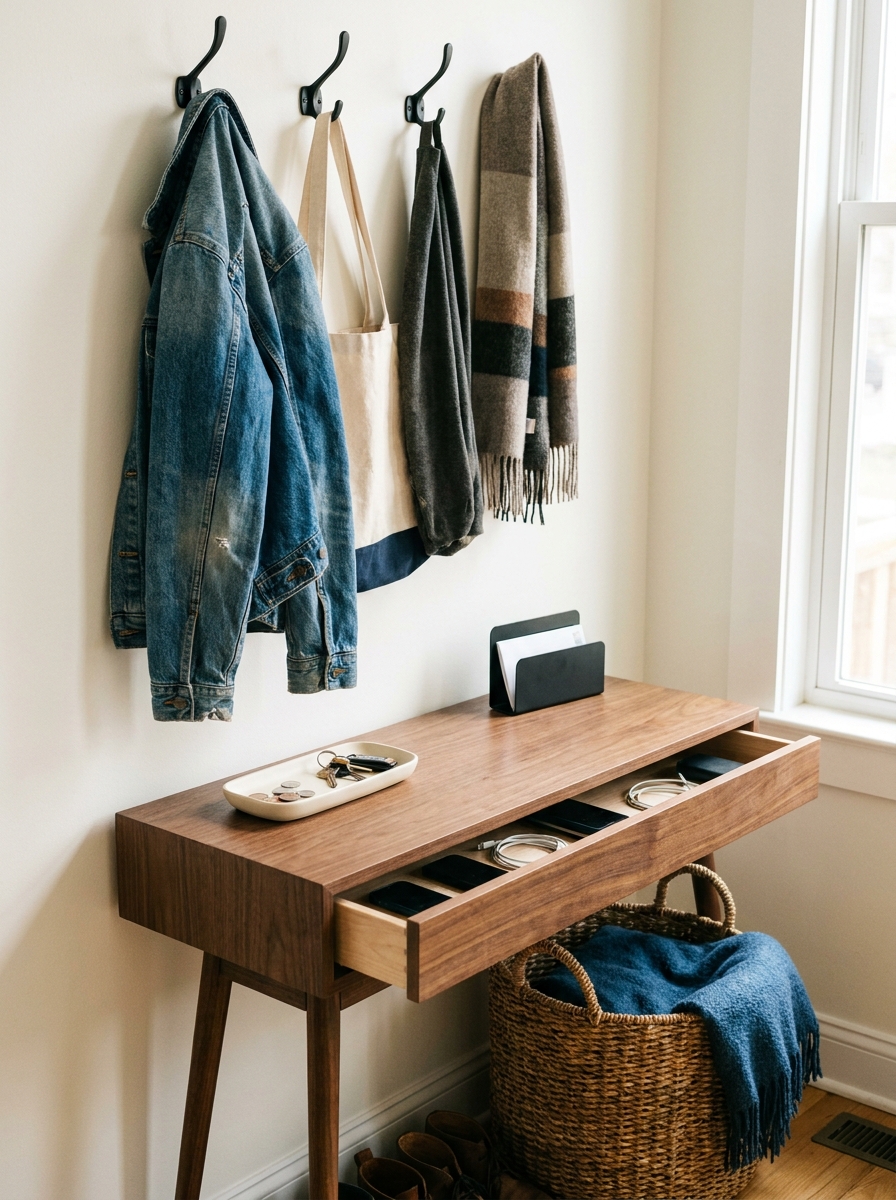
Create a practical drop zone
A drop zone gives everyday items a designated place as soon as you enter the home. This can include a tray for keys, a bowl for coins, hooks for bags, a mail sorter, and a charging drawer.
The arrangement should match your habits. If shoes are the main source of clutter, prioritize a bench and shoe storage. If mail and keys tend to collect on surfaces, add small organizers at hand level.
Avoid building a system with too many containers. A few clearly defined storage points are easier to maintain than a complicated arrangement that requires constant sorting.
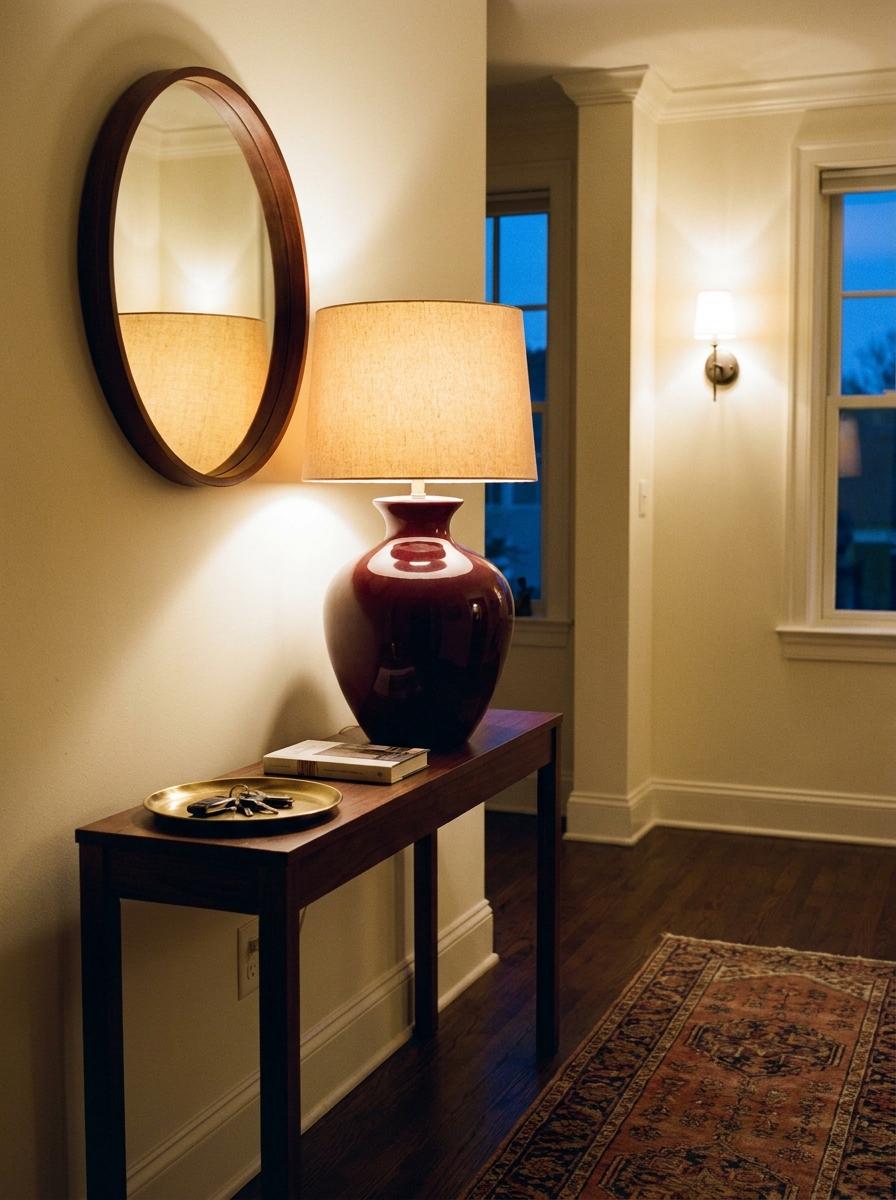
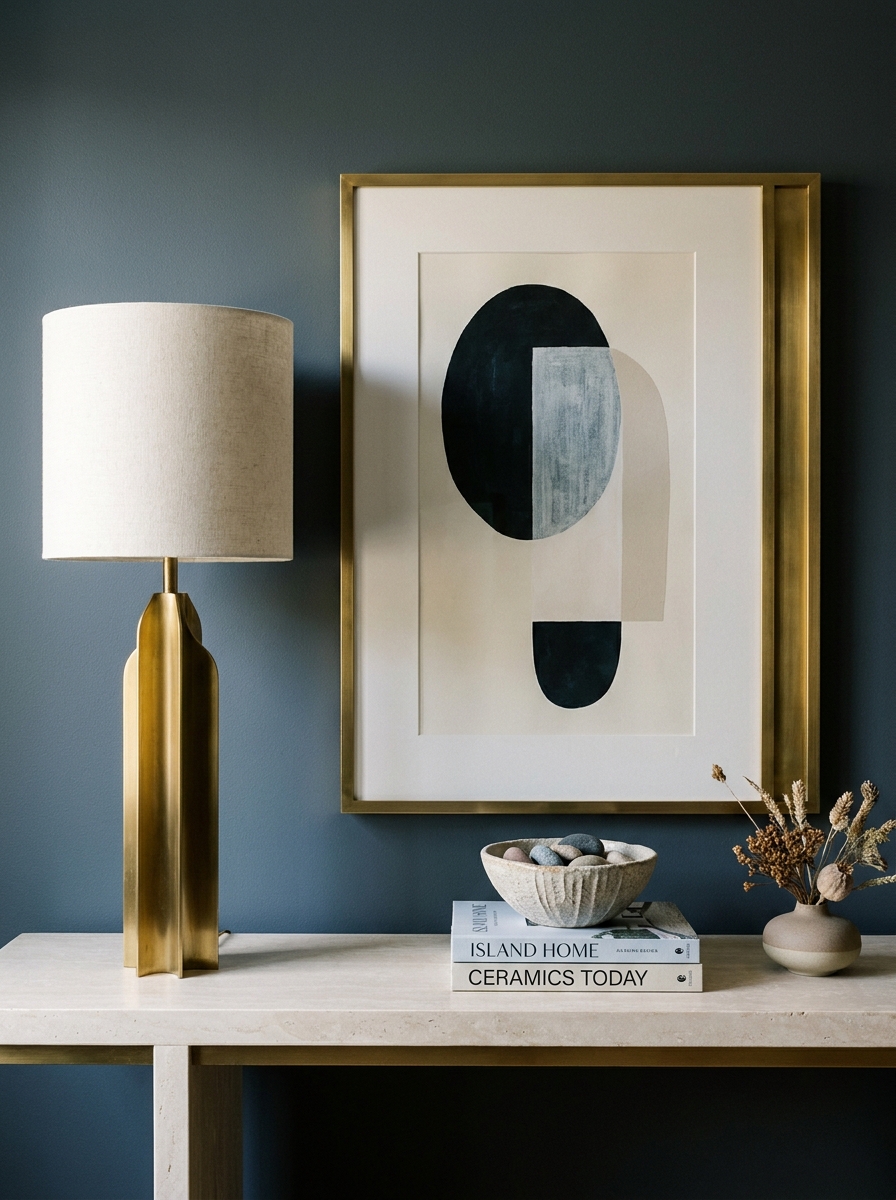
Keep console styling balanced
A well-styled console usually combines objects of different heights and shapes while leaving enough open space for practical use. Start with one taller element, such as a lamp or vase, then add a medium object and a smaller tray or stack of books.
Avoid placing matching objects at equal distances unless you want a formal symmetrical look. An asymmetrical arrangement often feels more relaxed and natural. However, the visual weight should still feel balanced across the table.
Do not fill every inch. Empty space helps the individual objects stand out and leaves room for keys, bags, or mail when needed. If your console includes a narrow wall shelf nearby, this guide on how to style floating shelves can help keep the same balanced feeling.
How to decorate an entryway without creating clutter
- Identify what regularly enters and leaves the home, such as shoes, coats, keys, mail, and bags.
- Choose one main focal point, like an oversized mirror, statement lamp, bold wall color, patterned rug, or wallpaper.
- Limit small accessories so the console stays useful for daily life.
- Keep the walking path clear so the door can open fully and people can move through comfortably.
Entryway decor should support the way you actually come and go. A few practical pieces, edited styling, and clear storage will usually look better than a crowded surface full of small accessories. If you are working with a quiet corner rather than a hallway, these reading corner ideas for small spaces use a similar small-footprint approach.
Final thoughts
A stylish entryway does not depend on having a large foyer. Even a small section beside the front door can feel welcoming when it includes the right mix of storage, lighting, texture, and decoration.
Start with the practical pieces your home needs most, such as a shoe cabinet, bench, console, or wall hooks. Then add one strong decorative feature through a mirror, runner, artwork, wallpaper, or bold color.
The most successful entryways feel attractive but easy to use. When every everyday item has a place and the decor remains thoughtfully edited, the entrance can create a strong first impression without becoming another area that constantly collects clutter.
FAQ
How do you decorate a small entryway?
Use a slim console or floating shelf, an oversized mirror, wall hooks, a narrow runner, and one or two storage baskets. Keep the walking path clear and avoid too many small accessories.
What should every entryway have?
A useful entryway usually needs a place for keys, shoes, bags or coats, and one visual focal point such as a mirror, lamp, artwork, wallpaper, or runner rug.
How do you keep an entryway from looking cluttered?
Use closed storage for shoes, baskets for categories, hooks for everyday items, and a tray for small things. Leave empty space on the console so it remains practical.