Living Room
Mid-Century Modern Living Room Ideas
15 inspiring mid-century modern living room ideas to create a warm, functional, and stylish space, featuring low-profile sofas, walnut consoles, tapered legs, and retro accents.
Mid-century modern living rooms feel warm, functional, and full of character. The style became popular in the middle of the twentieth century, but its clean lines, natural wood, sculptural furniture, and practical layouts still look relevant today.
A mid-century modern living room does not need to look like a preserved 1960s interior. The most inviting rooms mix recognizable mid-century features with comfortable modern pieces. A low sofa, walnut console, tapered furniture legs, geometric textiles, and warm accent colors can create the look without making the room feel themed.
This style is also a useful change from all-neutral interiors. Walnut, teak, olive green, mustard yellow, rust, cream, and black can make a room feel richer while remaining balanced. The key is to choose a few strong features and leave enough open space for each piece to stand out. If you want to explore other styles, these cozy living room ideas show how to make any room feel warmer.
Here are 15 mid-century modern living room ideas for creating a stylish, comfortable, and timeless space.
Start with a low-profile sofa
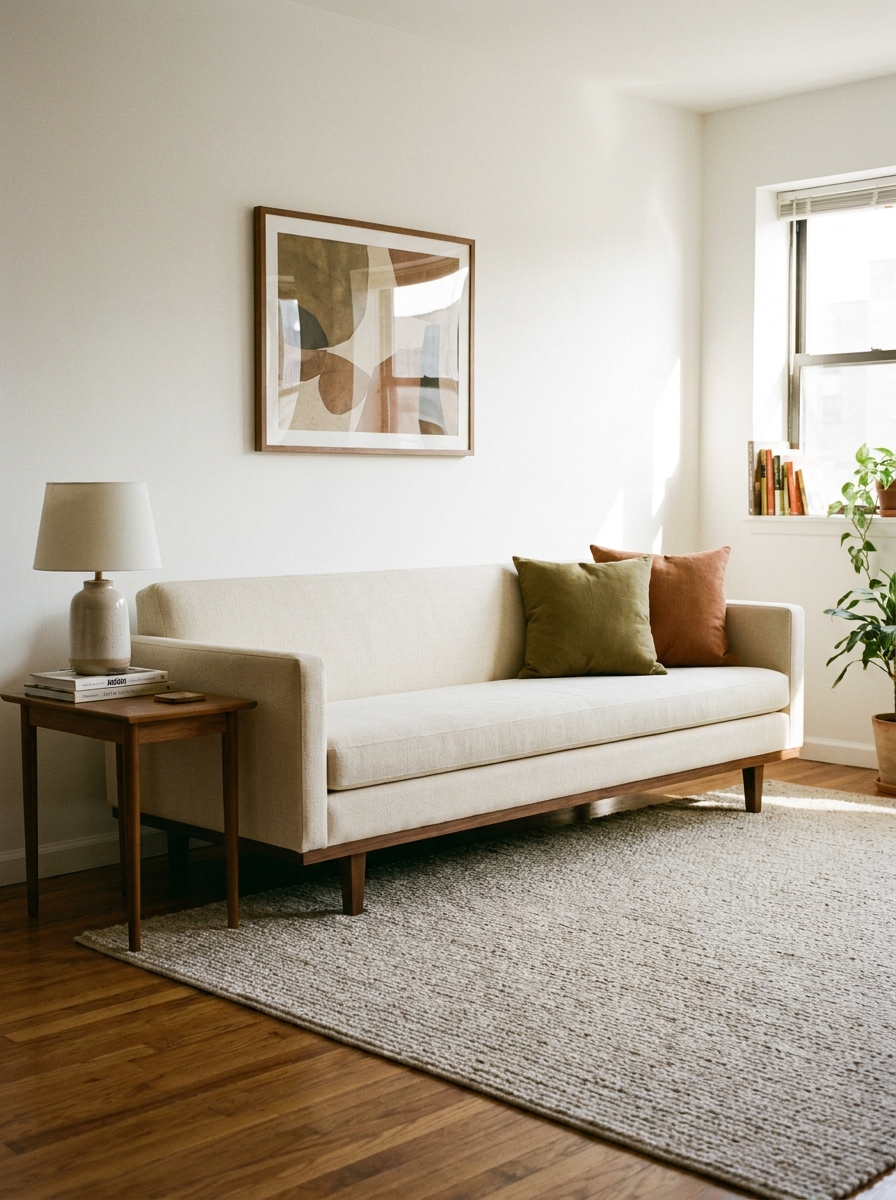
A low-profile sofa is one of the easiest ways to establish a mid-century modern living room. Look for a design with a straight or gently curved silhouette, narrow arms, and visible wooden or metal legs. Keeping the sofa raised from the floor makes the room feel lighter and emphasizes the clean horizontal lines associated with the style.
Neutral upholstery in cream, oatmeal, camel, or warm gray creates a flexible foundation. You can then add color through cushions, art, and nearby furniture. Olive green, rust, mustard, and deep blue all work beautifully with warm wood.
Comfort still matters. Choose a sofa with enough depth for everyday use rather than selecting something purely because it looks vintage. The goal is to create a room that captures the style while remaining practical.
Add a walnut media console
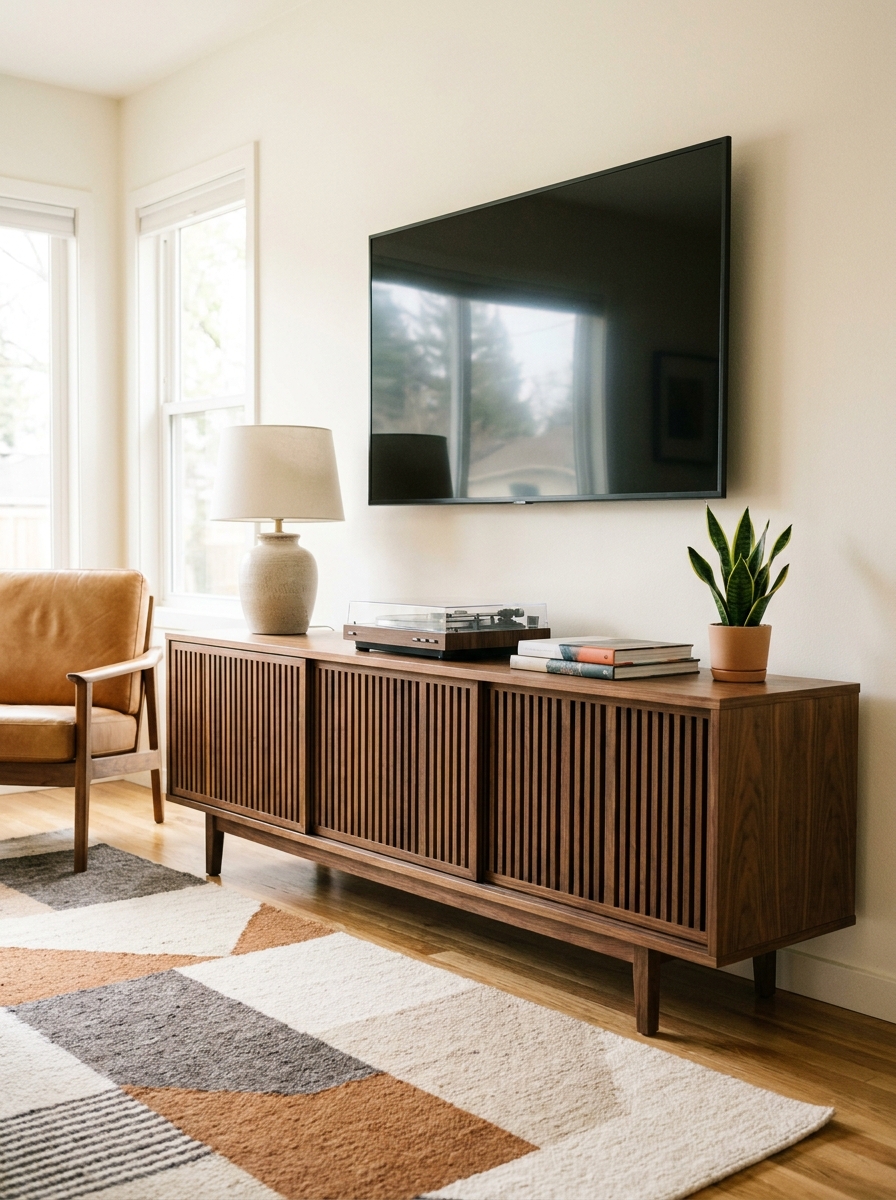
Walnut furniture brings warmth and depth into a mid-century modern living room. A long, low media console is especially effective because it combines storage with the horizontal proportions that define the style.
Choose a console with sliding doors, simple drawers, or subtle cane-front details. Keep the top lightly styled with a ceramic lamp, a few books, a small plant, or one sculptural object. Too many accessories can distract from the shape and grain of the wood.
A walnut console works well against a white, cream, olive, or muted blue wall. It can support a television, record player, artwork, or a combination of practical and decorative items.
Choose furniture with tapered legs
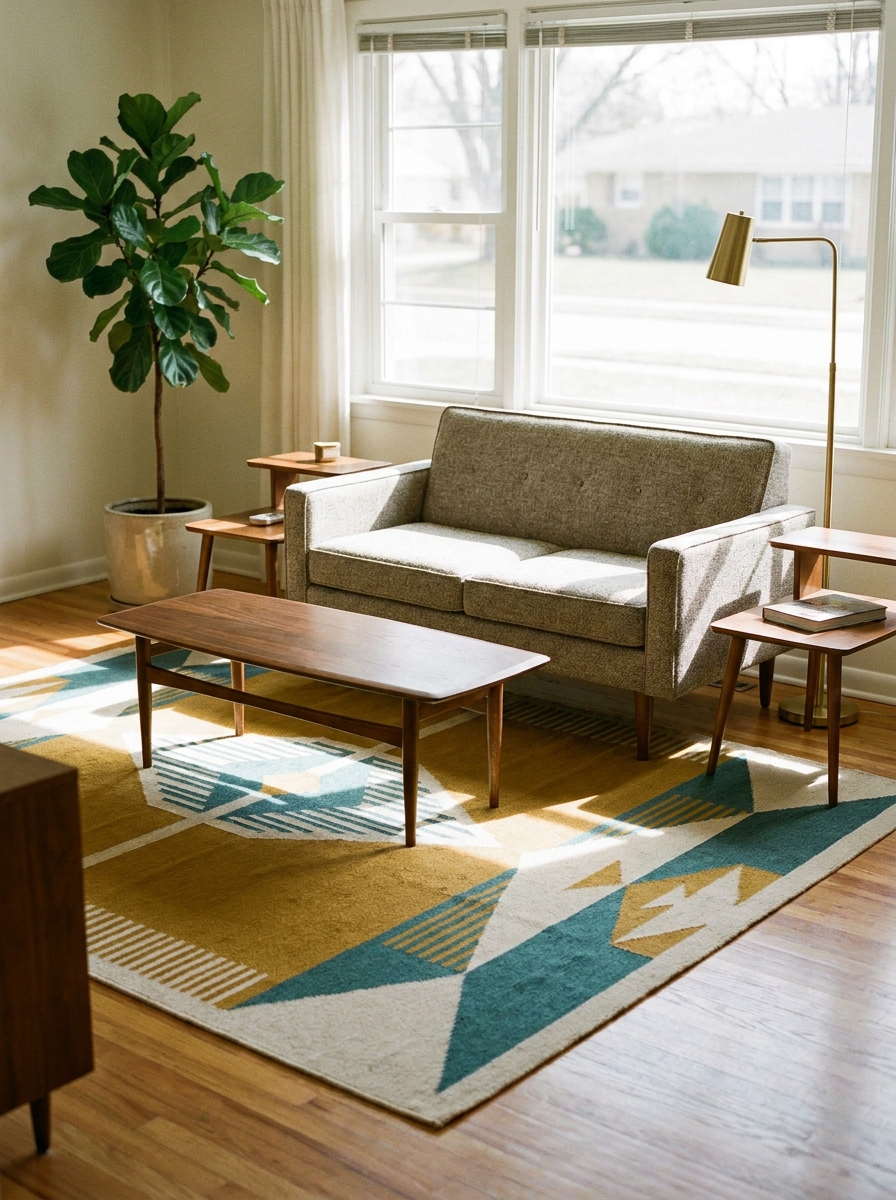
Tapered legs give furniture a lighter and more refined appearance. They are common on mid-century sofas, chairs, sideboards, coffee tables, and side tables, and they help keep the floor visible in smaller living rooms.
You do not need every item to have the same leg shape. A sofa with tapered wooden legs can sit beside a round pedestal table or a metal floor lamp. The room will feel more natural when the furniture coordinates without matching perfectly.
This detail is particularly useful if your current room feels bulky. Replacing one heavy table or cabinet with a raised piece can make the entire layout feel more open. If you want more ways to open up your space, see these small living room layout ideas.
Add a sculptural lounge chair
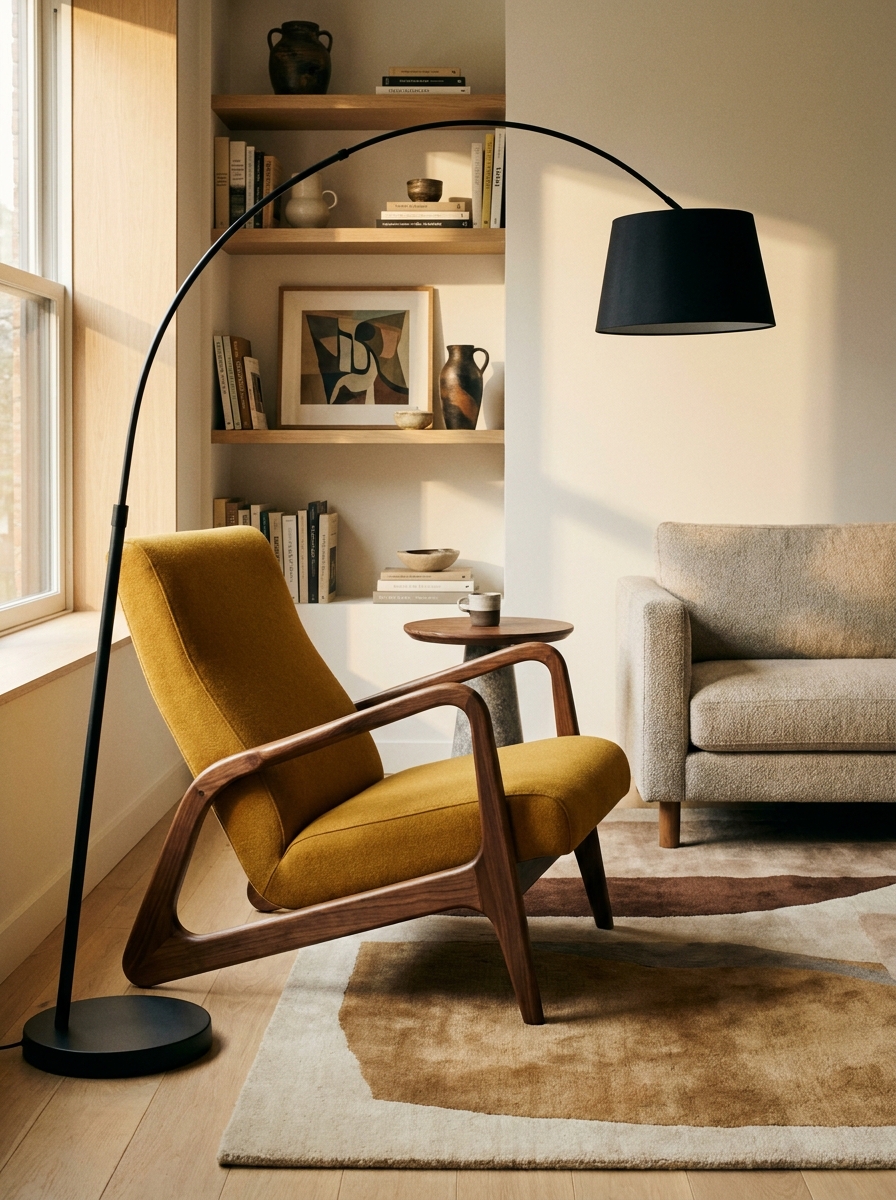
A distinctive lounge chair can become the focal point of a mid-century modern living room. Look for curved wooden arms, molded shapes, low seating, woven details, or upholstered shells that feel sculptural without being uncomfortable.
Place the chair at an angle rather than lining it up rigidly with the sofa. This makes the seating arrangement feel more conversational and gives the chair room to stand out. These cozy reading corner ideas can help if you want the nook to feel more intentional.
You can choose a neutral chair for a calm look or use the chair to introduce color. Mustard yellow, burnt orange, deep green, and cognac leather all suit the style.
Mix warm wood with white walls
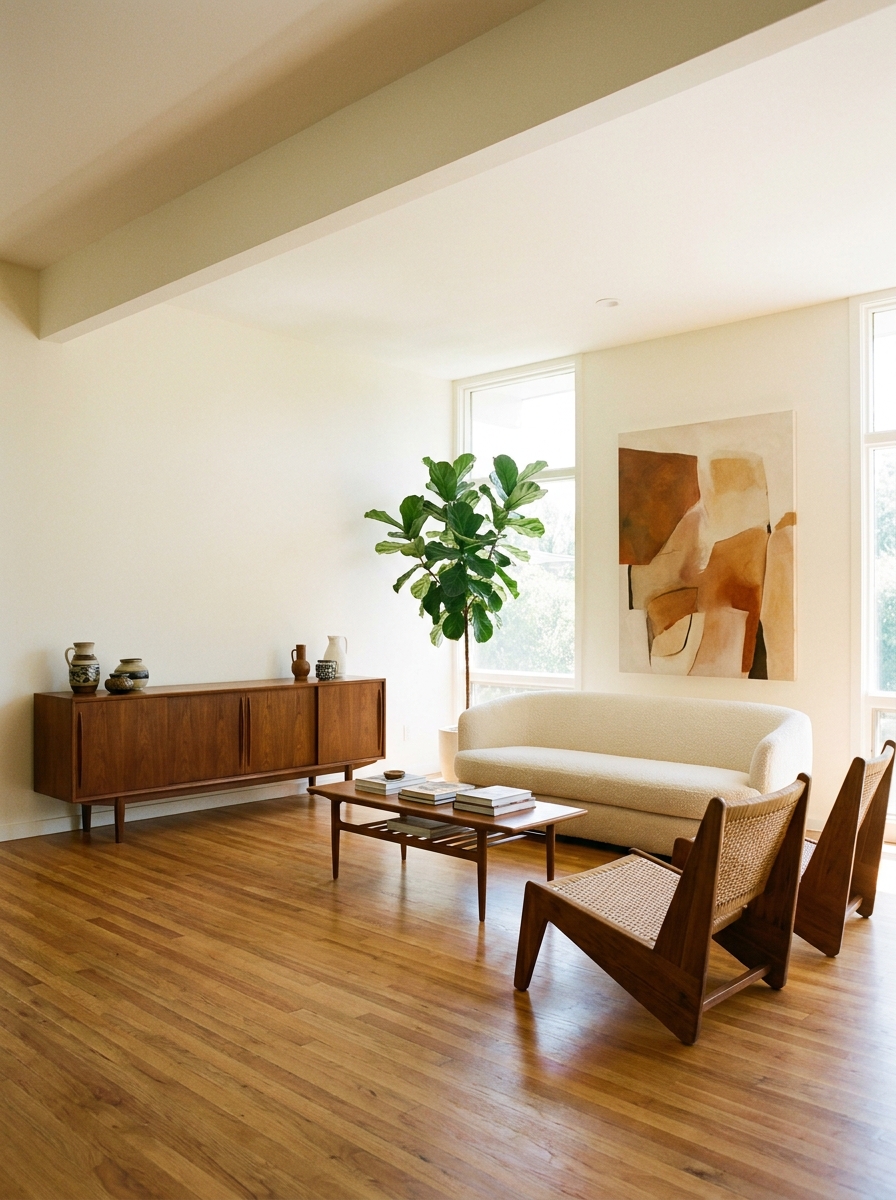
White walls allow walnut, teak, and oak furniture to stand out without making the room feel dark. This contrast is one of the simplest ways to create a clean mid-century modern look.
Use warm wood through the coffee table, console, chair frames, shelving, or flooring. You do not need every wood tone to match exactly, but keeping them within a similar warm family will create a more cohesive result.
To prevent white walls from feeling plain, add abstract art, a large plant, or a single accent wall feature. The room should remain simple enough that the furniture shapes and natural wood grain stay visible. Once the furniture is set, these living room wall decor ideas can help make the blank space feel finished.
Bring in mustard and rust accents
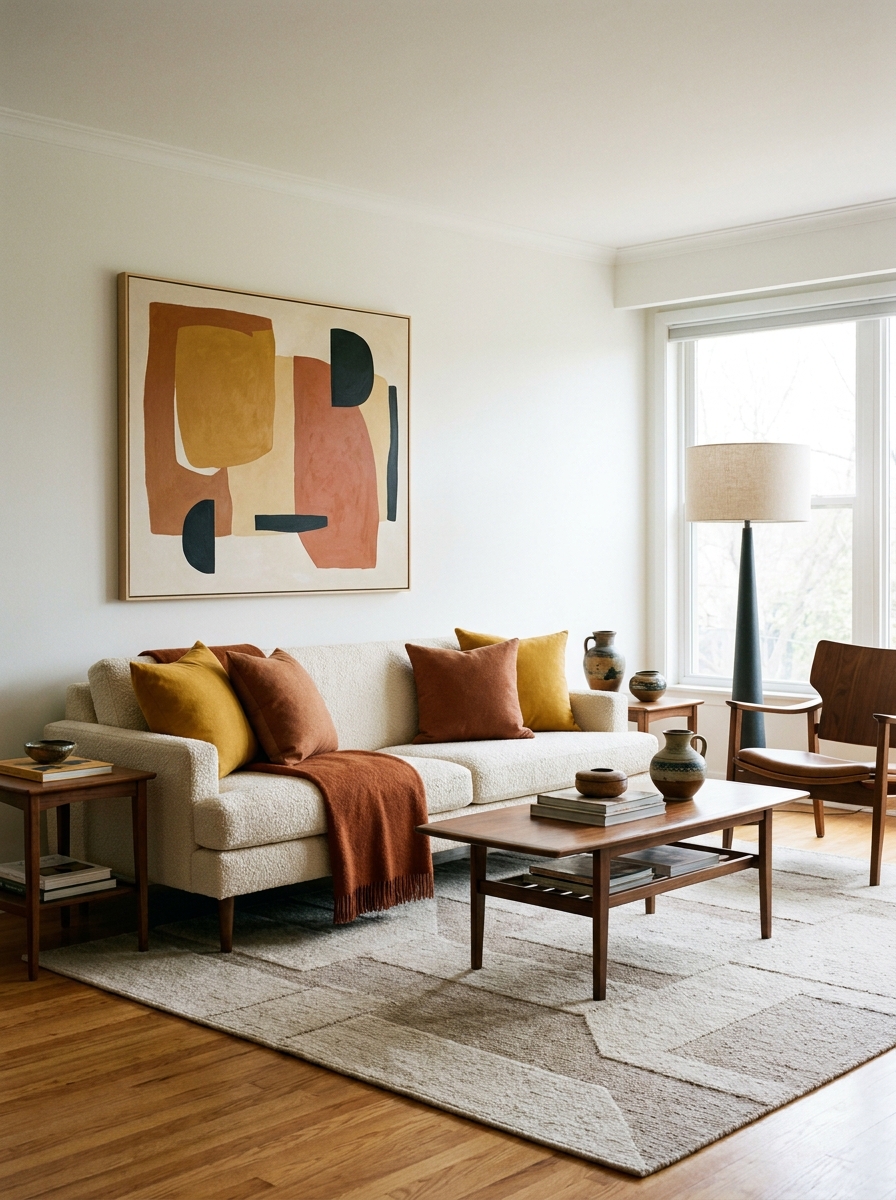
Mustard yellow and burnt orange can bring energy into a mid-century modern living room without overwhelming it. These colors connect naturally with walnut and teak while adding the retro warmth associated with 1950s and 1960s interiors.
Use them in small amounts through cushions, an accent chair, a throw blanket, pottery, or artwork. If the room already includes several wood tones, one strong accent color may be enough.
Balance these warmer shades with cream, olive, charcoal, or soft white. This keeps the room stylish rather than overly nostalgic.
Use a geometric rug
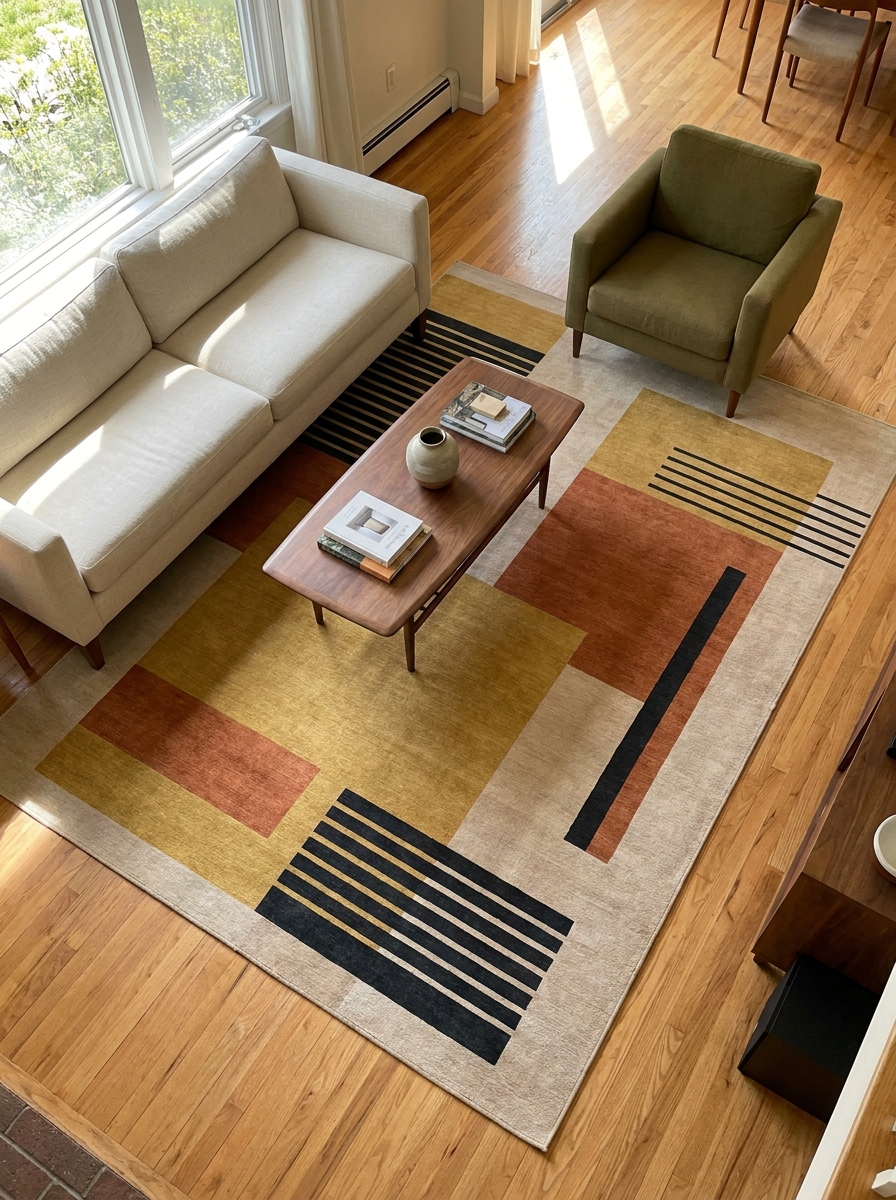
A geometric rug can introduce pattern while defining the seating area. Mid-century designs often use simple shapes, curved lines, diamonds, blocks, or abstract forms rather than ornate traditional patterns.
Choose a rug that supports the furniture rather than competing with it. If the sofa and chairs are colorful, use a neutral rug with black, beige, or brown shapes. If the furniture is mostly neutral, the rug can introduce mustard, orange, olive, or muted blue.
Make sure the rug is large enough for the front legs of the main seating pieces to rest on it. A rug that is too small can make the layout feel disconnected.
Style a mid-century coffee table
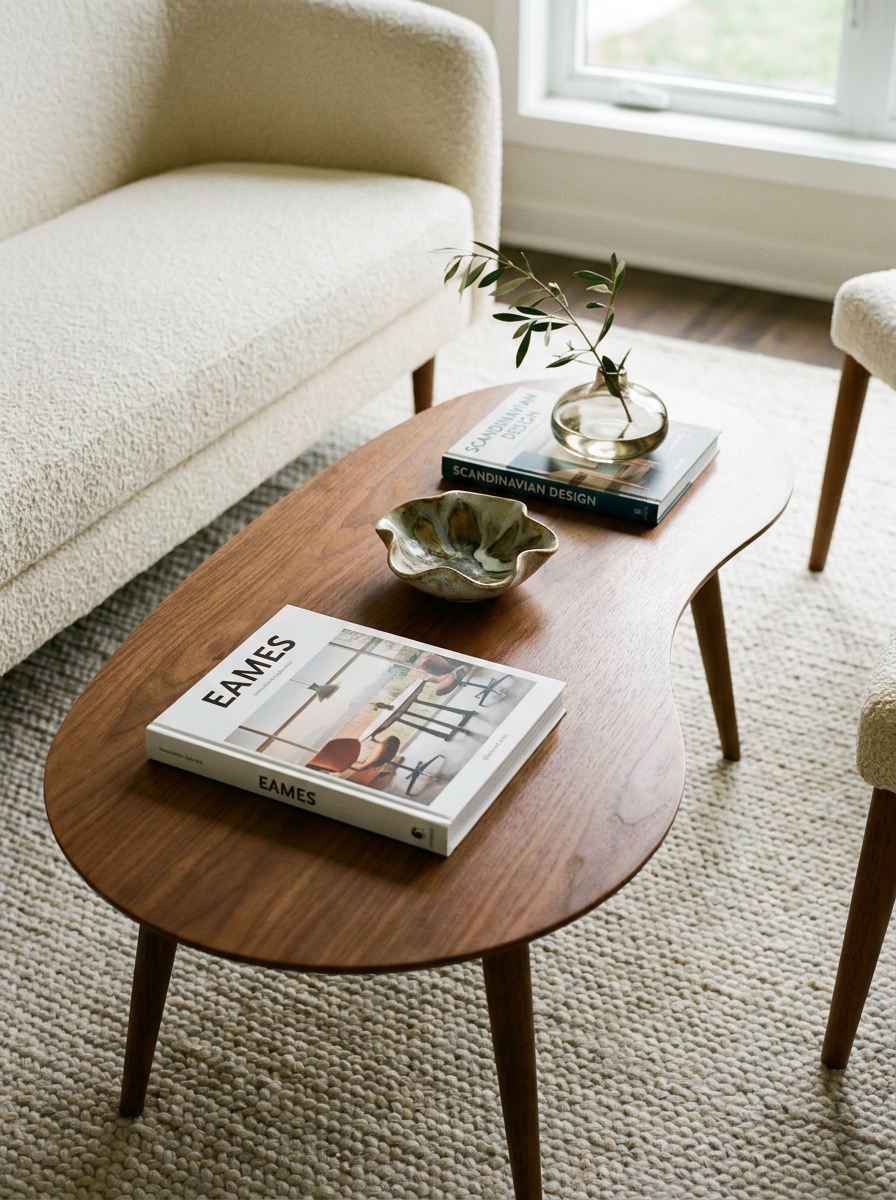
A coffee table can become a subtle statement piece in a mid-century modern living room. Oval, kidney-shaped, triangular, and slim rectangular tables all suit the style, especially when made from walnut, teak, glass, or a combination of wood and metal.
Keep the styling simple so the table’s shape stays visible. A small tray, two books, a ceramic bowl, and a low plant or candle are usually enough.
If the room is small, choose a table with rounded edges or a lighter glass top. This improves movement and keeps the center of the room from feeling heavy.
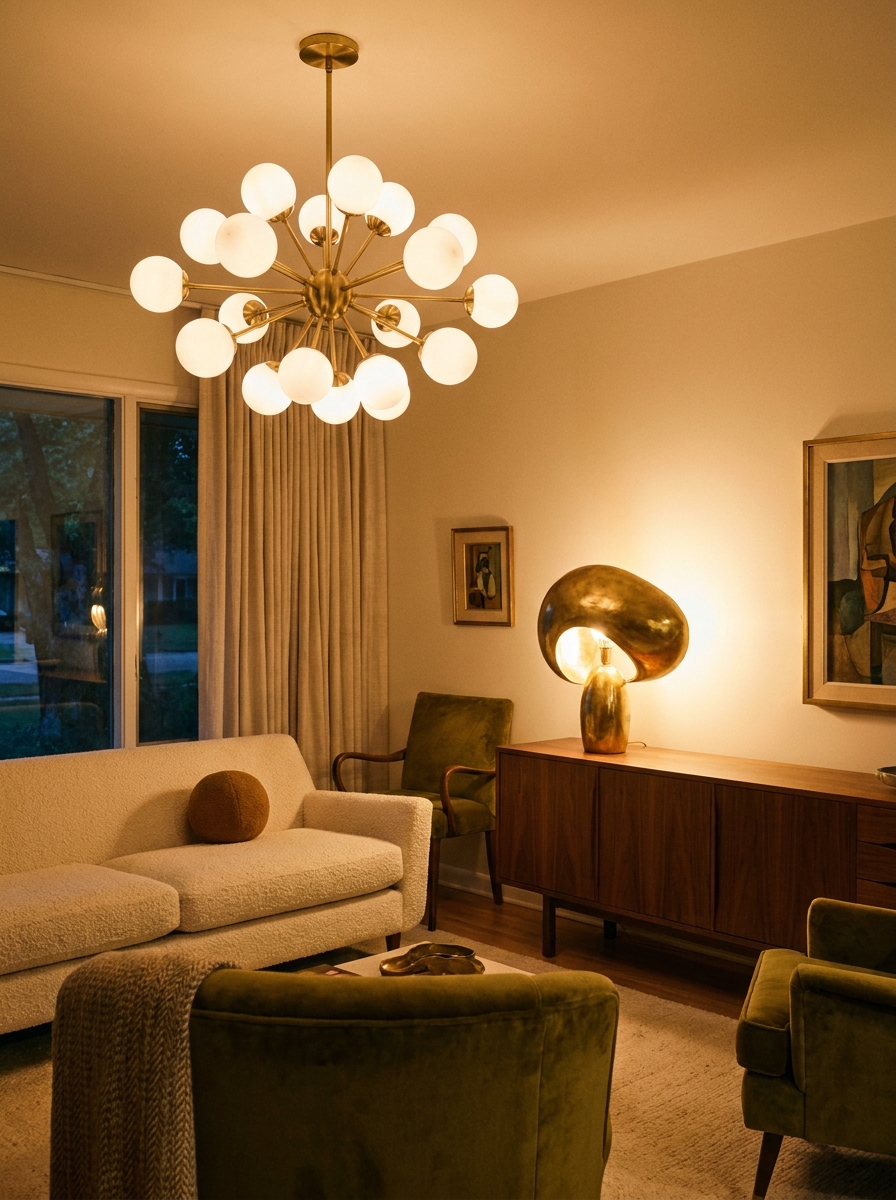
Add globe or sputnik lighting
Lighting can instantly give a living room a stronger mid-century identity. Globe pendants, opal glass sconces, tripod lamps, and sputnik chandeliers all reference the era while still working in contemporary interiors.
Choose one statement light rather than filling the room with several dramatic fixtures. A brass globe chandelier can anchor the center of the room, while a sculptural floor lamp can create interest beside a sofa or lounge chair.
Use warm bulbs to complement wood and colored textiles. Harsh cool lighting can make the room feel less inviting and flatten the natural materials.
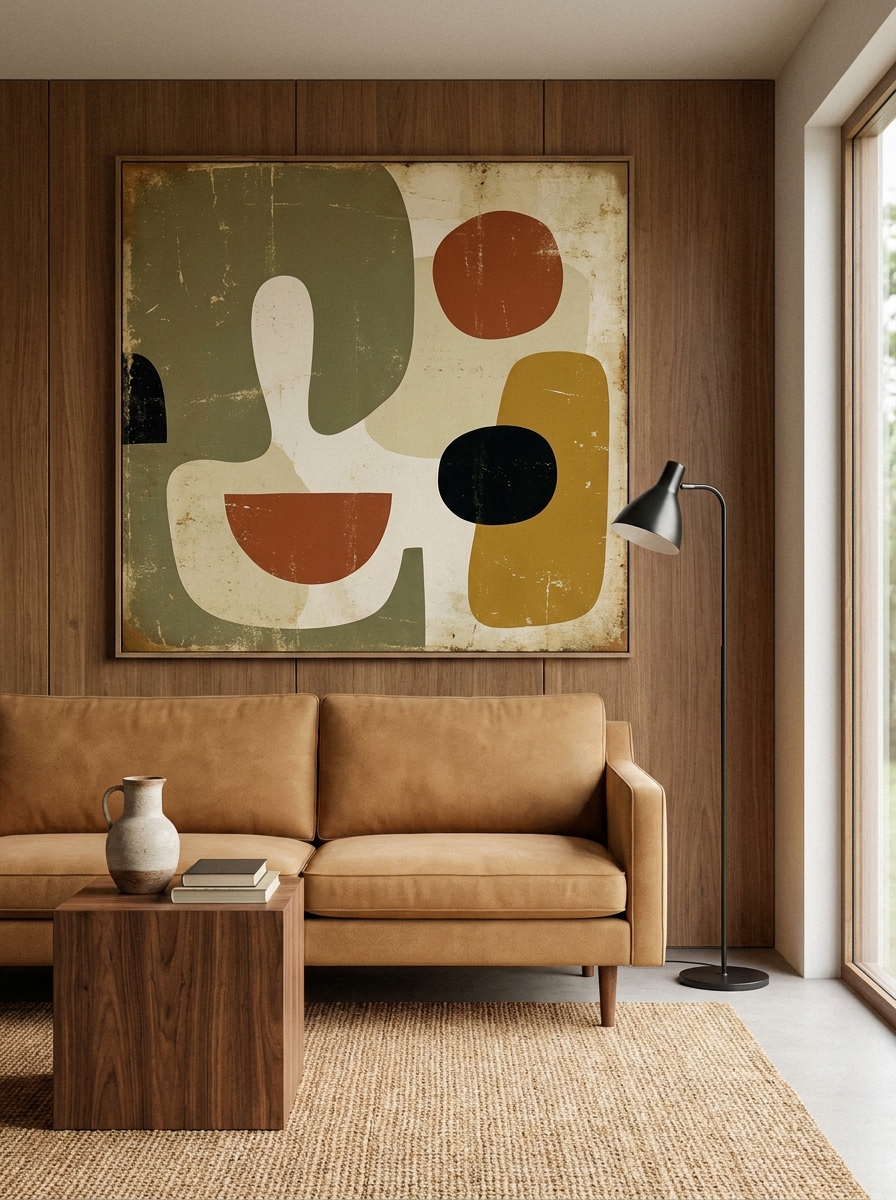
Decorate with vintage-inspired art
Artwork is an easy way to introduce mid-century character without replacing furniture. Look for abstract compositions, color-blocked prints, organic forms, simple line art, or vintage travel-inspired designs.
One oversized piece above the sofa can create a strong focal point, while a smaller gallery arrangement can add variety. Use walnut, black, brass, or thin natural wood frames to coordinate with the rest of the room.
Avoid filling every wall. Mid-century modern interiors often rely on negative space, allowing each object and artwork to feel more intentional. If you want to display items on shelves instead, this guide on how to style floating shelves can help keep them balanced.
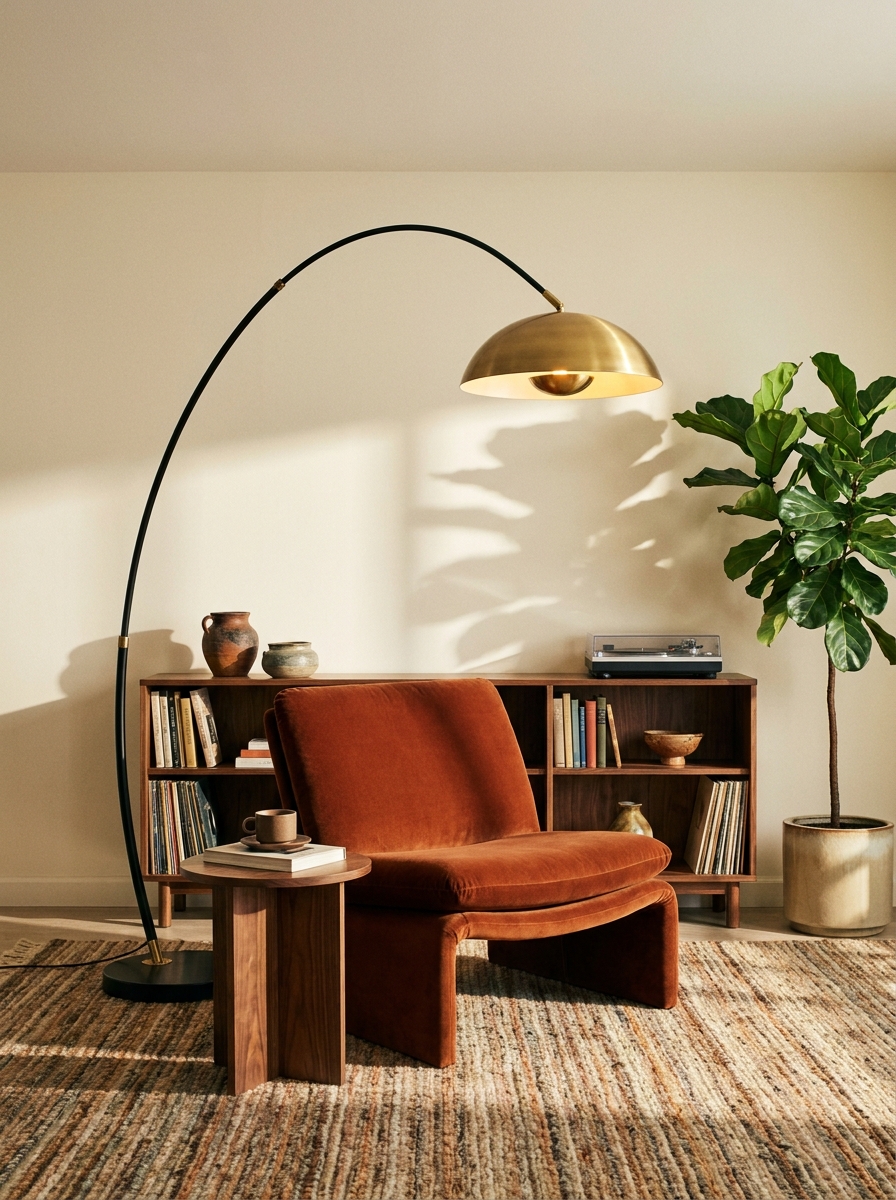
Use a statement floor lamp
A statement floor lamp adds height and structure to the room. Arc lamps, tripod lamps, cone shades, and globe designs all suit mid-century spaces because they combine function with sculptural form.
Place the lamp beside a sofa, behind a lounge chair, or near a reading corner. It should illuminate the seating area while also contributing to the room’s overall composition.
Black, brass, and warm metal finishes work particularly well. If the room already contains many wood pieces, a metal lamp can provide useful contrast.
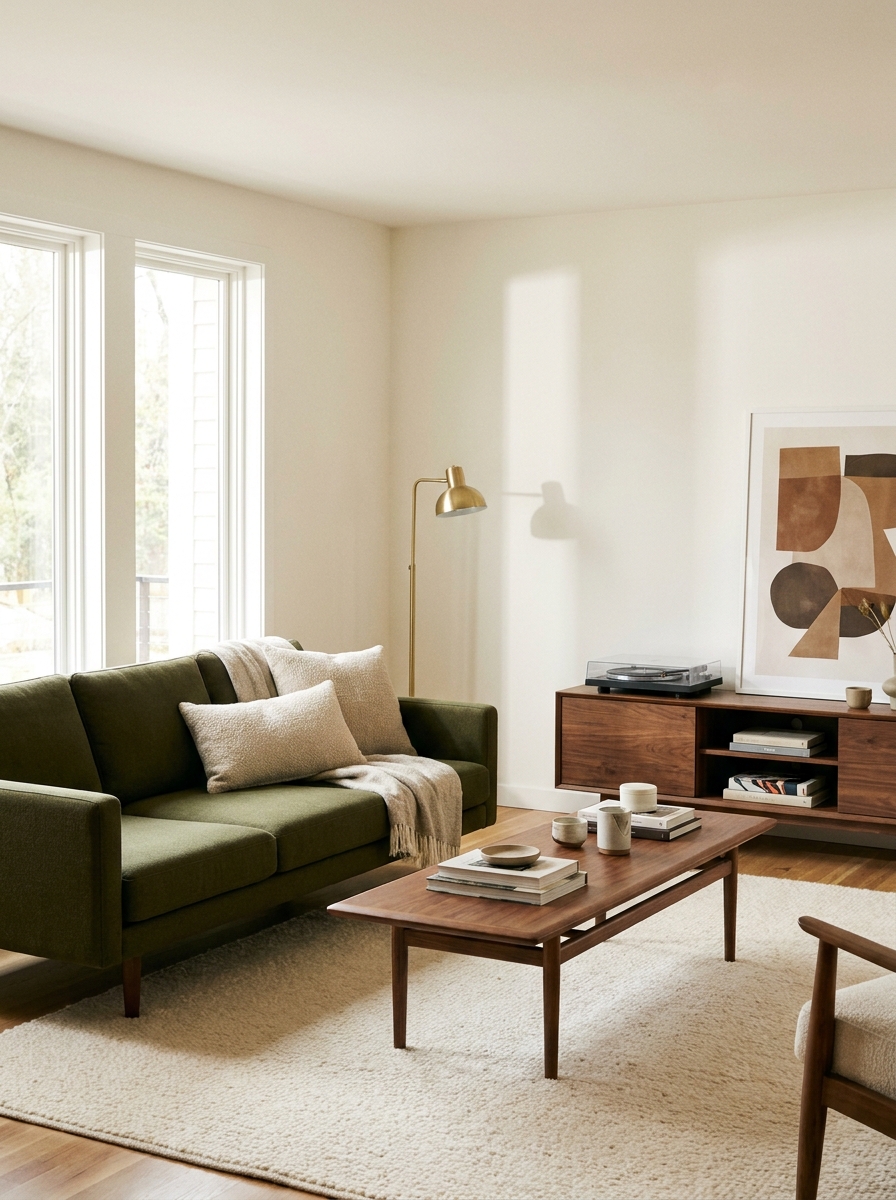
Combine olive green with walnut
Olive green and walnut create a rich but natural color combination. The green softens the warmth of the wood, while the wood prevents the green from feeling cold.
Use olive through upholstery, curtains, cushions, or an accent wall. A full olive sofa can become the room’s main feature, while a smaller chair or pair of cushions offers a more subtle approach.
Balance the combination with cream, warm white, black, or brass. This keeps the room grounded and prevents the palette from becoming too dark.
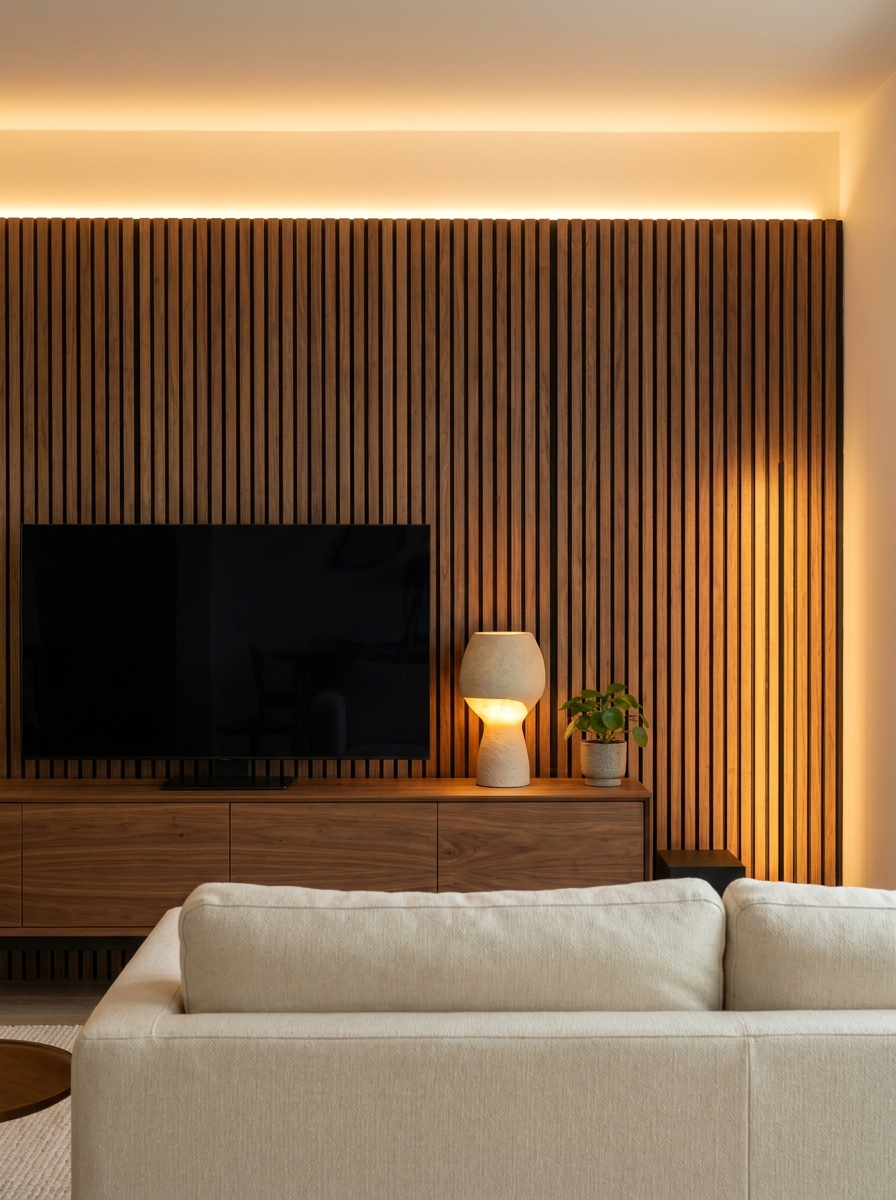
Add a slatted wood feature wall
A slatted wood wall can add architectural warmth and strengthen the mid-century look. It works well behind a television, sofa, console, or fireplace and introduces texture without relying on additional decor.
Use walnut or medium-tone wood slats for a richer look, or pale oak for a lighter modern interpretation. Covering one focused area is usually enough. A full room of wood paneling may feel too heavy in a smaller space.
Keep the furniture and accessories around the feature wall simple so the wood texture remains the main visual element.
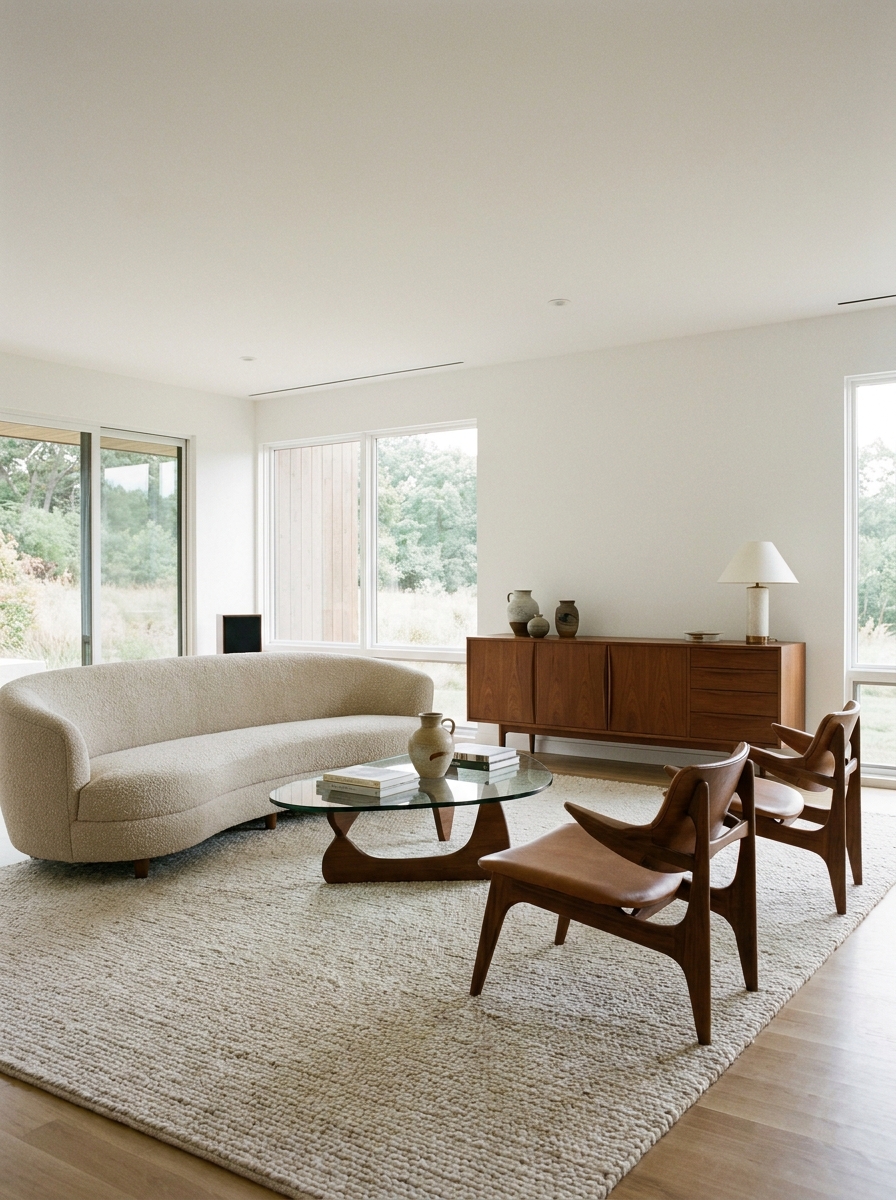
Keep the layout open and uncluttered
Mid-century modern design values function and clear movement. Furniture should create a comfortable seating arrangement without blocking windows, doorways, or natural pathways.
Use fewer pieces with stronger shapes rather than filling the room with many small items. A sofa, two chairs, one coffee table, and a console may be enough for an average living room.
Leaving open space also helps the design details stand out. Tapered legs, sculptural chairs, geometric rugs, and statement lighting become more noticeable when they are not surrounded by clutter. For smaller rooms, these small living room ideas focus on keeping the layout practical but comfortable.
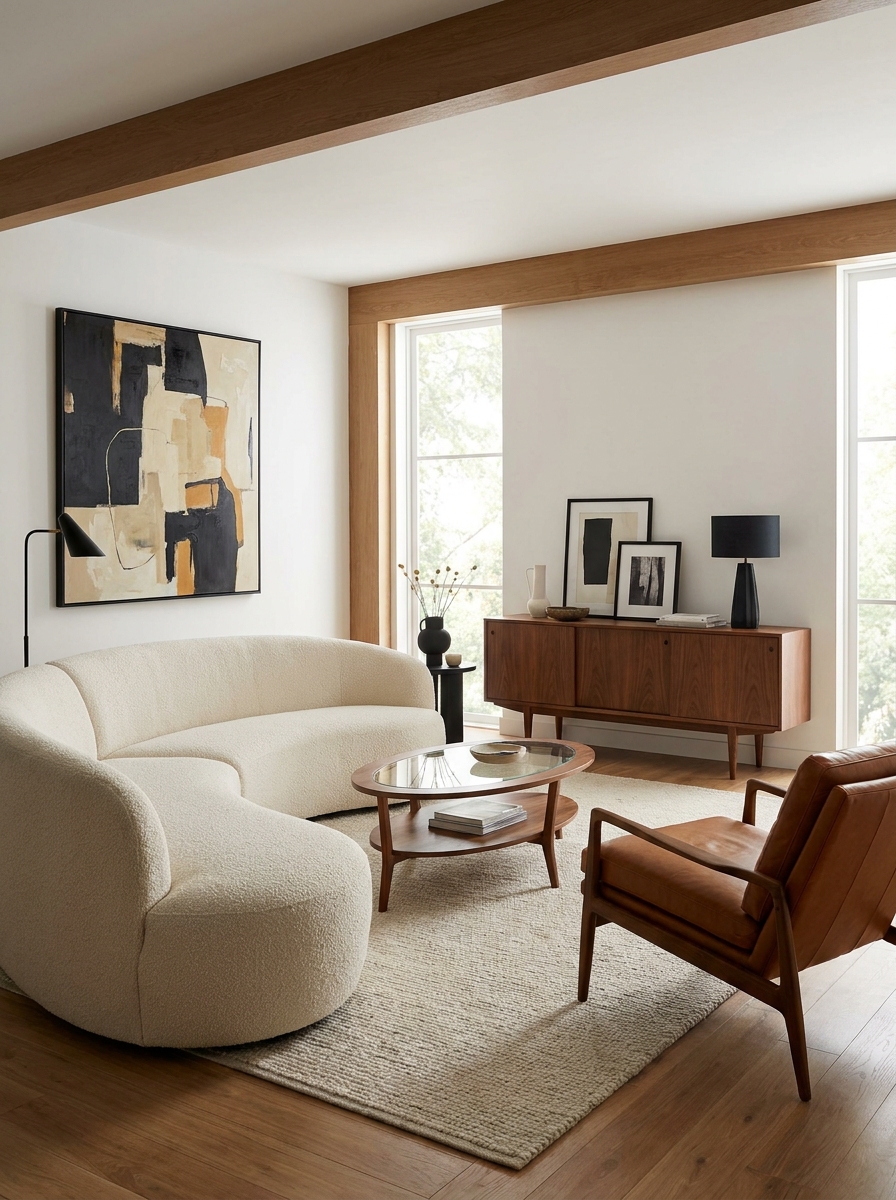
Blend mid-century style with modern decor
A living room often feels more natural when mid-century elements are mixed with contemporary decor. You can pair a vintage-inspired walnut console with a modern cream sofa, or place a sculptural mid-century chair beside a simple contemporary coffee table.
This approach prevents the room from looking like a period set. It also allows you to keep furniture you already own while adding the style gradually.
Choose two or three strong mid-century features, then keep the rest of the room simple. The result will feel collected, current, and easier to live with.
Final thoughts
A mid-century modern living room works best when it feels warm, functional, and thoughtfully edited. You do not need to fill the room with vintage furniture or copy a 1960s interior exactly. A few recognizable features can create the style while keeping the space comfortable and current.
Start with one strong foundation piece, such as a low-profile sofa, walnut console, sculptural chair, or geometric rug. Then introduce color through olive green, mustard, rust, or warm neutral textiles. Complete the room with simple artwork, statement lighting, and enough open space for the furniture to breathe.
The most successful mid-century modern living rooms balance character with restraint. Natural wood, clean lines, expressive shapes, and practical layouts create a look that feels distinctive without becoming dated. If you want the same warm vintage-inspired feeling in a sleep space, these mid-century modern bedroom ideas follow the same design language with softer bedding and calmer lighting. For an eating area, these mid-century modern dining room ideas use walnut, brass, sculptural lighting, and tailored seating in a similar way.
FAQ
How do you make a mid-century modern living room feel cozy?
Mix clean lines and walnut wood with soft textures like boucle, linen, and layered rugs. Add warm accent colors like mustard, olive, and rust, and use warm, layered lighting.
What wood is best for mid-century modern furniture?
Walnut and teak are the most traditional wood choices for mid-century modern furniture because of their warm tones and rich grain. White oak and honey oak also work well.
Can you mix mid-century modern with other styles?
Yes, mid-century modern mixes beautifully with contemporary, boho, and minimalist styles. The key is to select a few strong mid-century pieces (like a console or chair) and balance them with simple modern basics.