Reading Corner
Window Reading Nook Ideas
15 window reading nook ideas for a cozy book corner, including built-in benches, bay windows, narrow seats, bookshelves, bedroom nooks, apartment windows, cottage seats, attic nooks, storage drawers, and cushion styling.
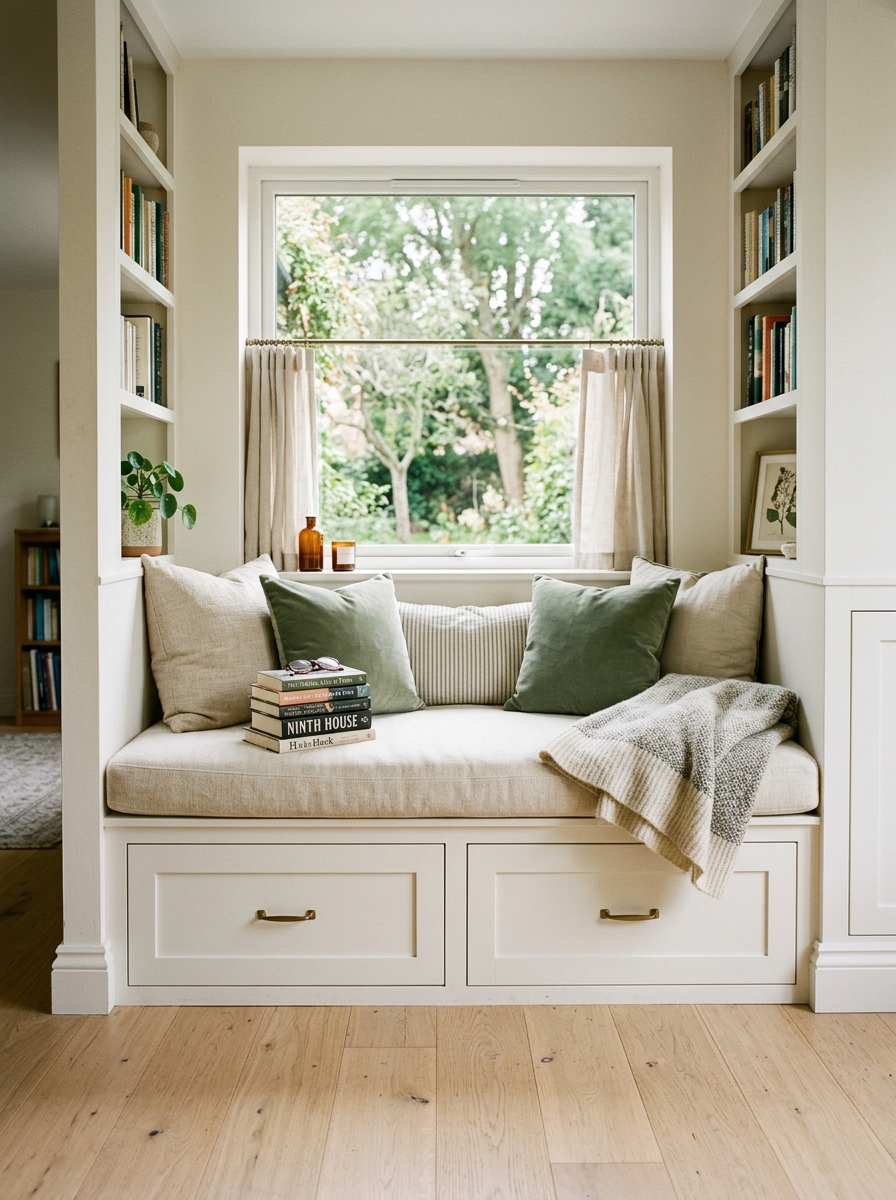
A window reading nook is one of the most inviting ways to use natural light in a home. It turns a simple window area into a quiet place for reading, resting, journaling, or enjoying a slow morning with coffee. Unlike a regular reading chair setup, a window nook feels built into the room because the window itself becomes part of the design.
The best window reading nooks combine comfort with function. A cushioned bench, supportive pillows, nearby shelves, hidden storage, and soft window treatments can make the space feel cozy without becoming cluttered. Even a small window ledge or narrow alcove can become useful when the proportions are handled carefully.
This article focuses specifically on window-based reading spaces. Instead of freestanding chairs or chaise lounges, these ideas highlight built-in benches, bay windows, arched windows, storage drawers, bookshelf surrounds, attic windows, and cushion styling. The goal is to create a book corner that feels bright, comfortable, and naturally connected to the room.
Whether you have a large bay window, a small apartment window, a bedroom corner, or a narrow hallway window, these 15 window reading nook ideas will help you turn that space into a cozy and beautiful place to read.
Build a classic window seat reading nook
A built-in window seat is the most classic version of a window reading nook. It creates a dedicated place to sit while making the window feel like a feature rather than just an opening in the wall.
The seat should be deep enough to sit comfortably, ideally with a firm cushion and a few supportive pillows. If the bench is too shallow, it may look pretty but will not be comfortable for reading.
Built-in drawers or lift-up storage beneath the seat make the nook even more useful. This hidden space can hold blankets, books, board games, or seasonal items without adding extra furniture to the room.
Keep the surrounding styling simple. A soft cushion, a few pillows, and a nearby wall light or small shelf may be all the nook needs to feel complete.
Create a bay window reading nook
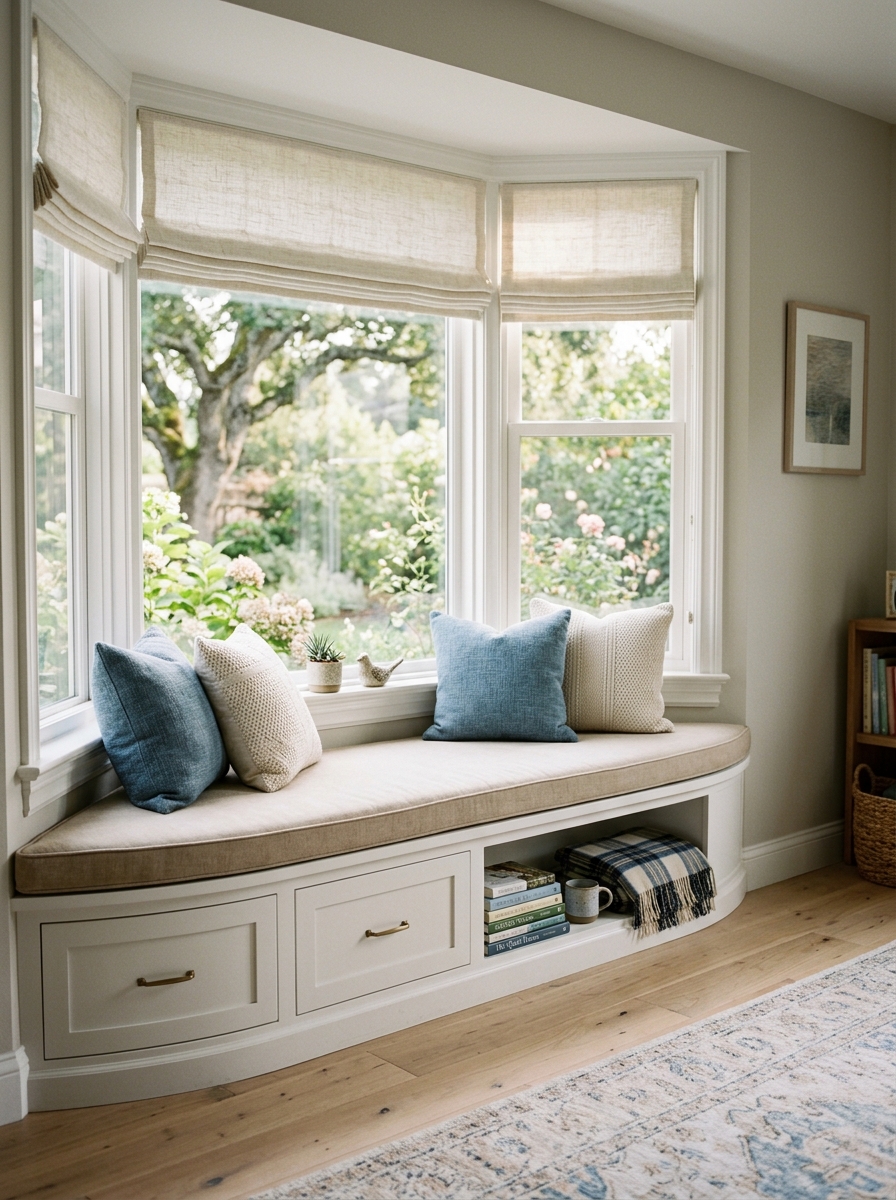
A bay window naturally creates a small sheltered area that is perfect for reading. The angled shape makes the nook feel separate from the rest of the room while still keeping it open and bright.
A built-in bench works especially well because it follows the shape of the window. Add a fitted cushion, a few pillows, and drawers or cubbies below the seat for extra storage.
Bay windows often receive strong light, so window treatments matter. Roman shades, woven shades, or soft curtains can help control glare while still preserving the bright atmosphere.
This style works beautifully in bedrooms, living rooms, dining rooms, and older homes with architectural character. Keep the colors calm so the window shape remains the main feature.
Use a narrow window bench
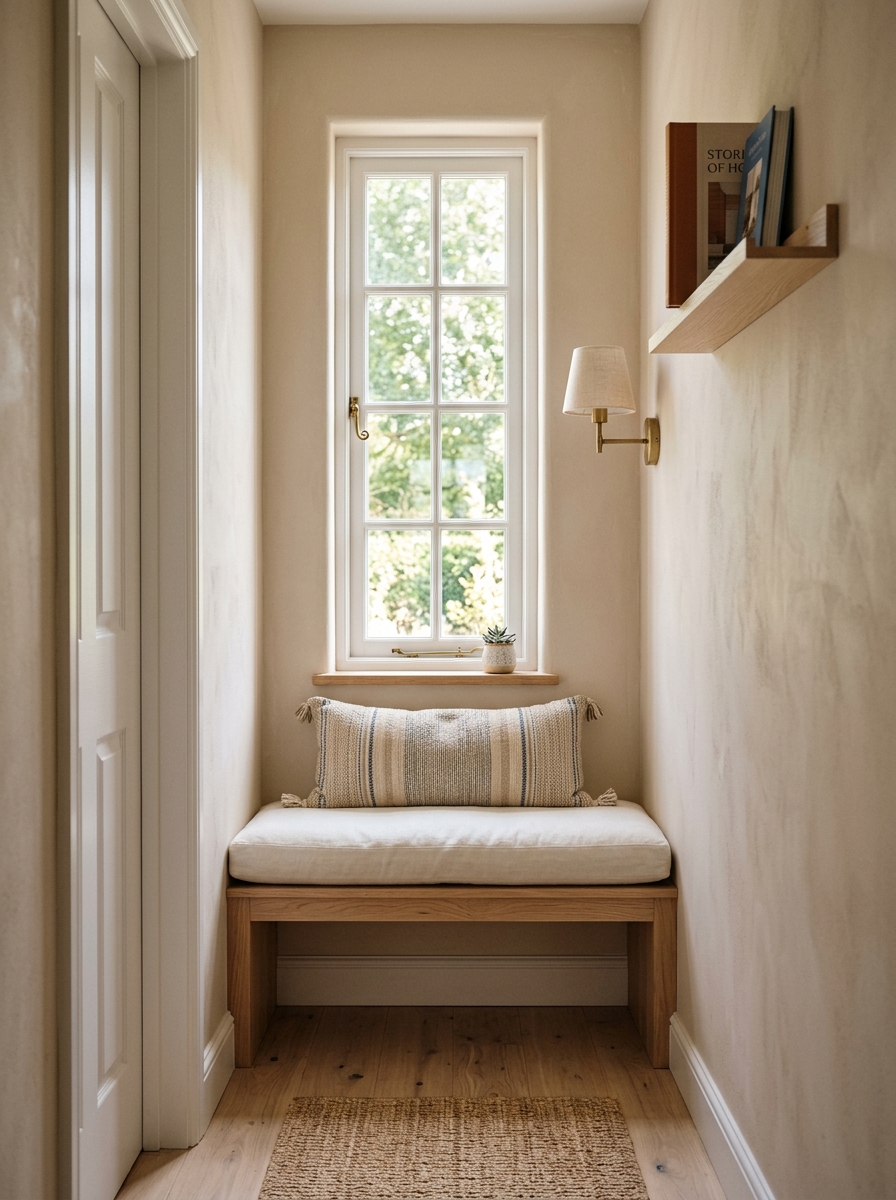
A narrow window bench can still become a useful reading nook when the design stays simple. This is a good option for hallways, bedrooms, landings, or small rooms where there is not enough depth for a large built-in seat.
Choose a slim bench cushion and keep the pillow arrangement minimal. Too many cushions can make a narrow nook feel crowded and reduce the actual seating space.
A wall sconce, small ledge, or nearby shelf can add function without taking up floor space. This helps the nook remain practical even when the footprint is limited.
Use light colors and simple lines to keep the space from feeling cramped. A narrow nook should feel intentional, not squeezed into the room.
Add bookshelves around the window
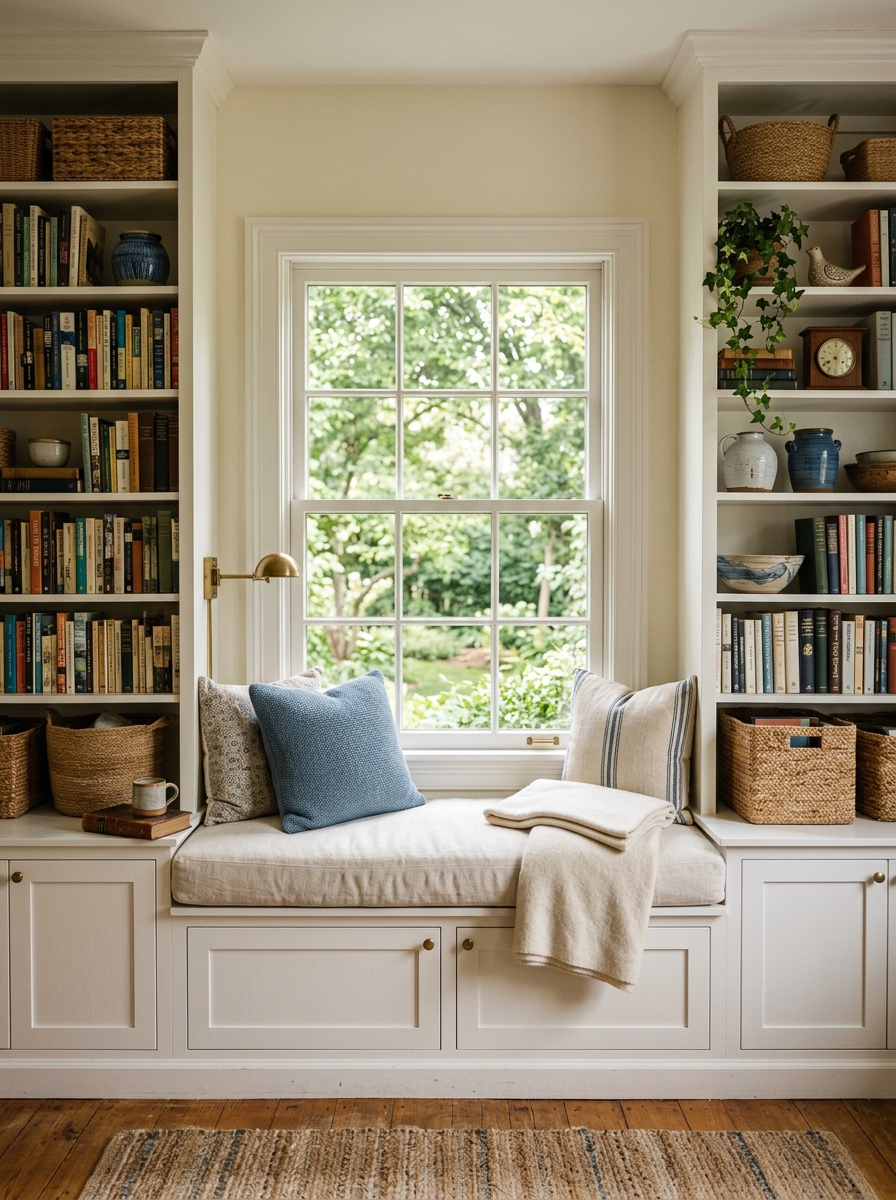
Bookshelves around a window can turn a simple seat into a true reading nook. The shelves frame the window, keep books within reach, and make the entire wall feel custom and intentional.
Built-in shelves are ideal, but freestanding bookcases placed carefully on either side of the window can create a similar effect. The window seat in the center becomes the natural place to sit.
Keep the shelves organized but not overly perfect. Books, baskets, ceramics, and a few decorative objects can create warmth while still keeping the wall functional.
Good lighting is important because shelves around a window can make the sides of the nook darker. Add a wall light, picture light, or small lamp if possible.
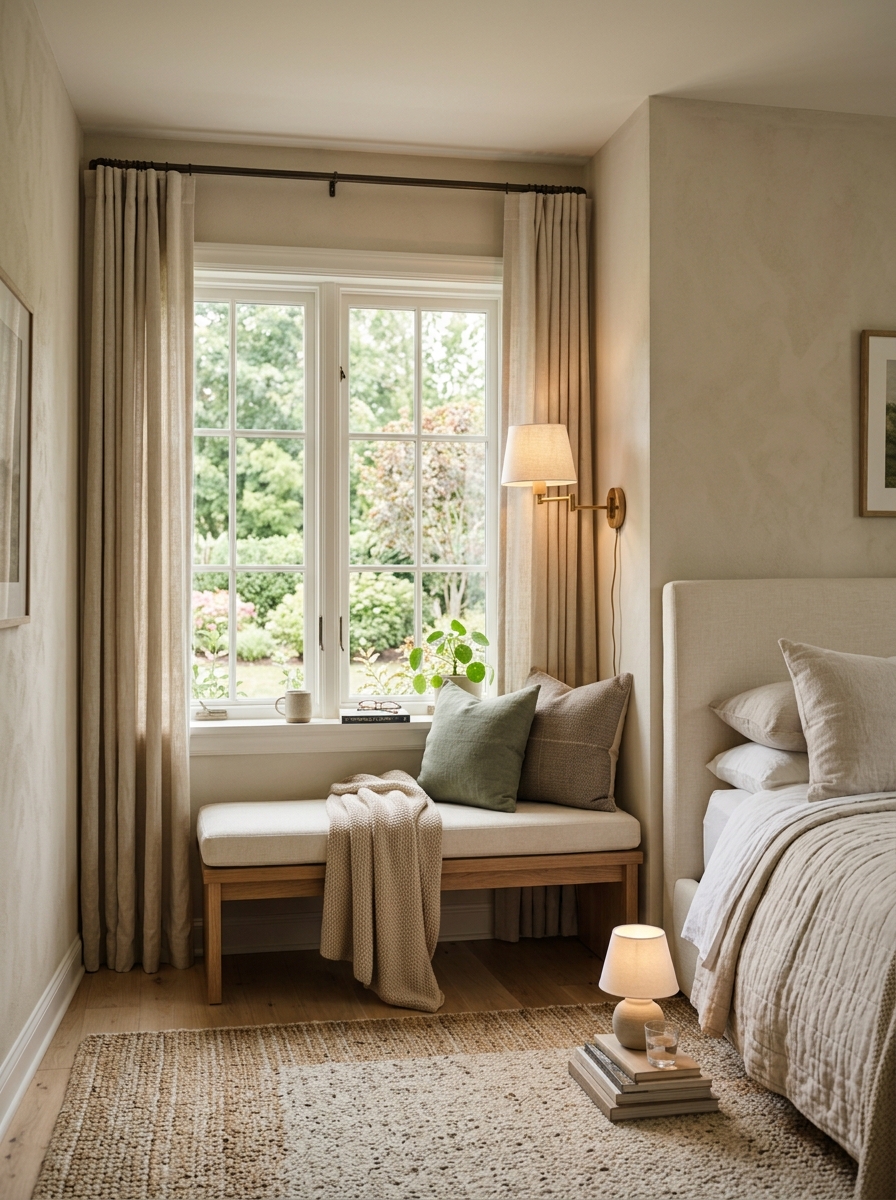
Design a bedroom window reading nook
A bedroom window reading nook creates a restful spot that is separate from the bed. It can make the room feel more complete while giving you a quiet place to read before sleep or in the morning.
Position the nook where it does not block access to the bed, closet, or curtains. A small built-in bench or low upholstered seat can work well beneath the window.
Use colors that connect with the bedding without matching everything exactly. A cream cushion, muted green pillows, or dusty blue throw can help the nook feel coordinated with the rest of the bedroom.
Add soft lighting nearby for evening reading. A plug-in wall sconce can be a practical option if there is no built-in wiring.
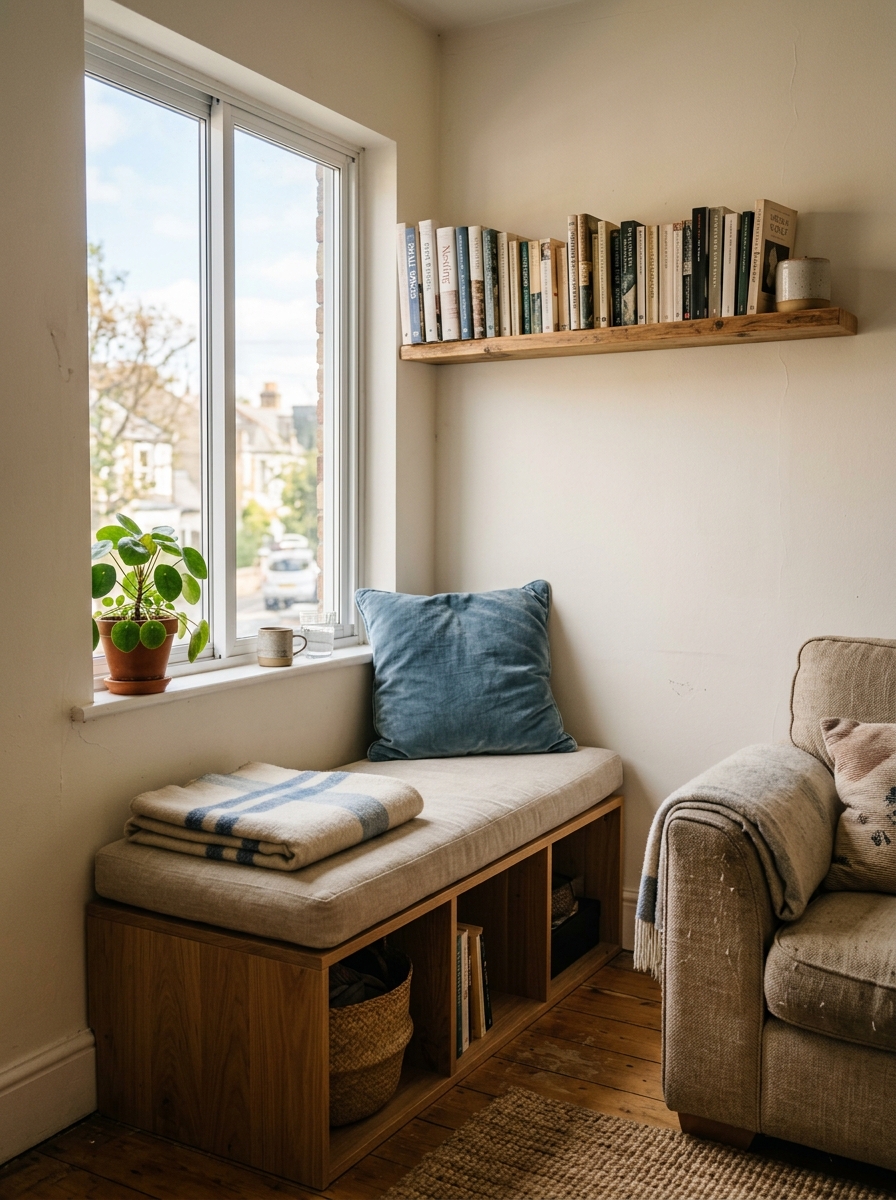
Create a small apartment window nook
A small apartment window can become a reading nook even without a built-in bench. A low storage bench, compact cushion, or narrow upholstered seat can define the area without requiring renovation.
Use furniture that fits closely beneath or beside the window so the walkway remains clear. A floating shelf can hold books without adding another table.
Keep the color palette simple to prevent the nook from feeling visually busy. Soft white, pale wood, beige, dusty blue, and sage green all work well in compact rooms.
This setup is especially useful in studio apartments or small living rooms where every corner needs to serve a purpose. For other compact corners, reading corner ideas for small spaces can help you plan around tight proportions.
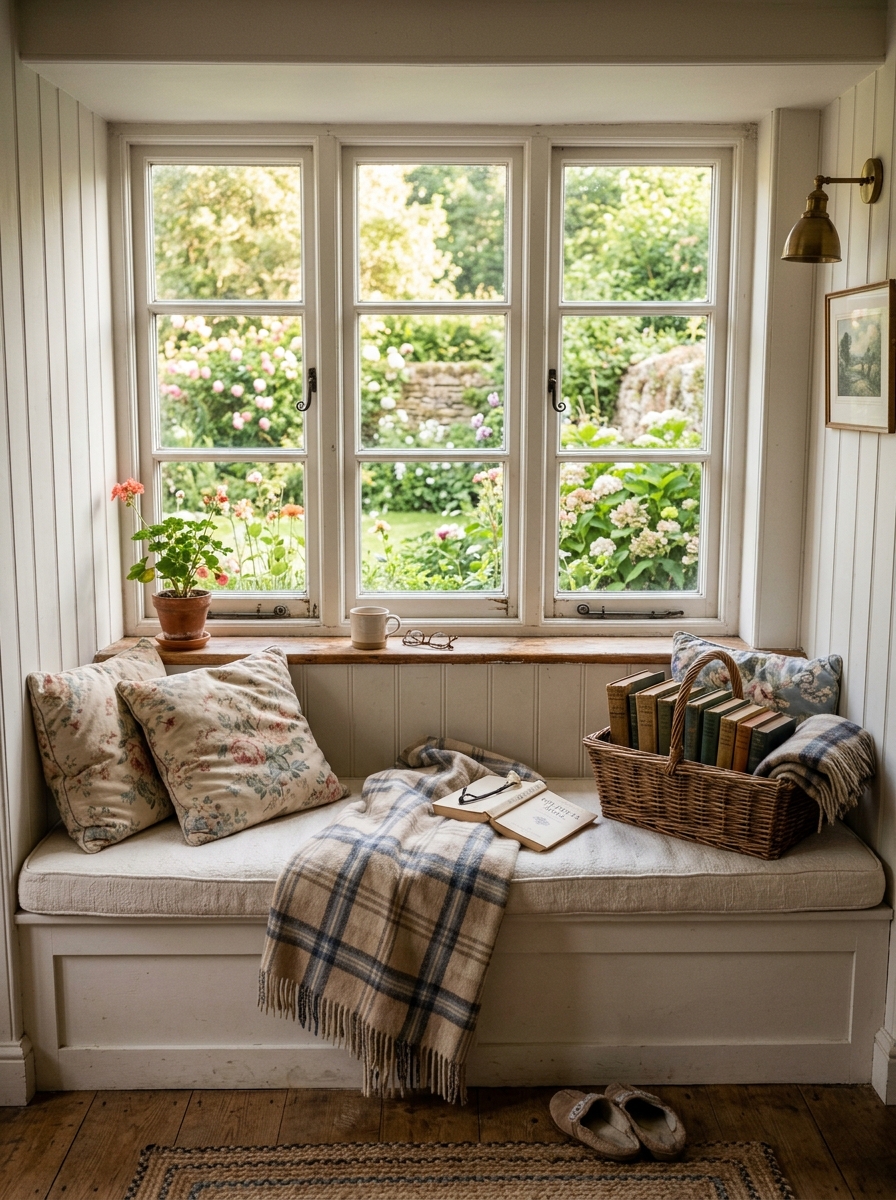
Style a cozy cottage window seat
A cottage-style window reading nook feels warm, layered, and slightly nostalgic. It often uses soft cushions, floral or checked pillows, painted wood, and cozy fabrics.
This style works beautifully with older windows, beadboard walls, painted trim, and simple shelves. The key is to keep the look charming without overdecorating the small space.
Use a mix of cream, sage, faded blue, soft yellow, and warm wood. A few patterned pillows can add personality while the main cushion remains simple.
Add a basket for books or a folded blanket nearby. The nook should feel welcoming and lived in rather than perfectly staged.
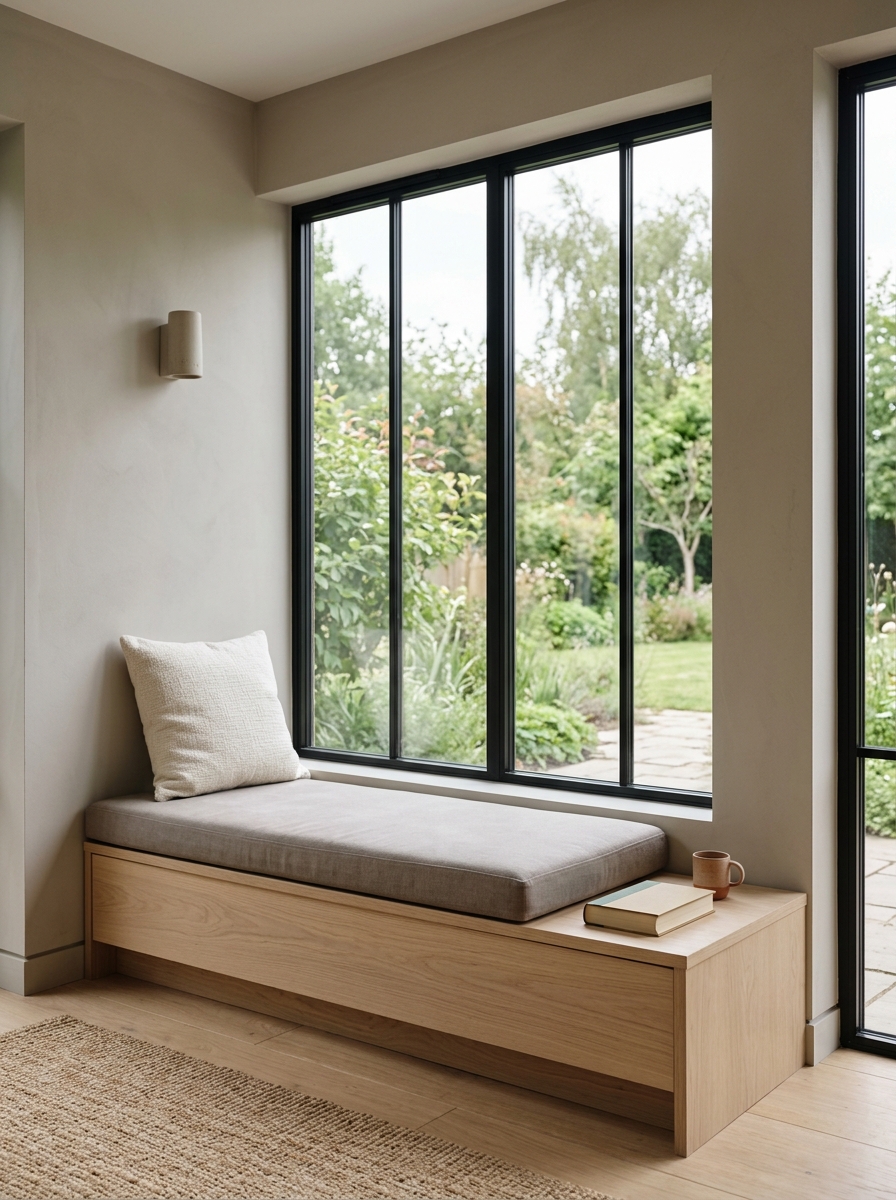
Keep a modern minimalist window nook simple
A modern minimalist window nook uses clean lines, restrained colors, and simple materials. Instead of many pillows and decorative objects, the design relies on proportion, light, and texture.
A low built-in bench with a smooth cushion can create a calm seating area beneath the window. Keep the palette focused on warm white, beige, pale oak, soft gray, and black accents.
Choose one or two pillows at most. A simple wall light or small side ledge can add function without breaking the minimal look.
This approach works well in modern apartments, new-build homes, and bedrooms where the rest of the room is already clean and uncluttered.
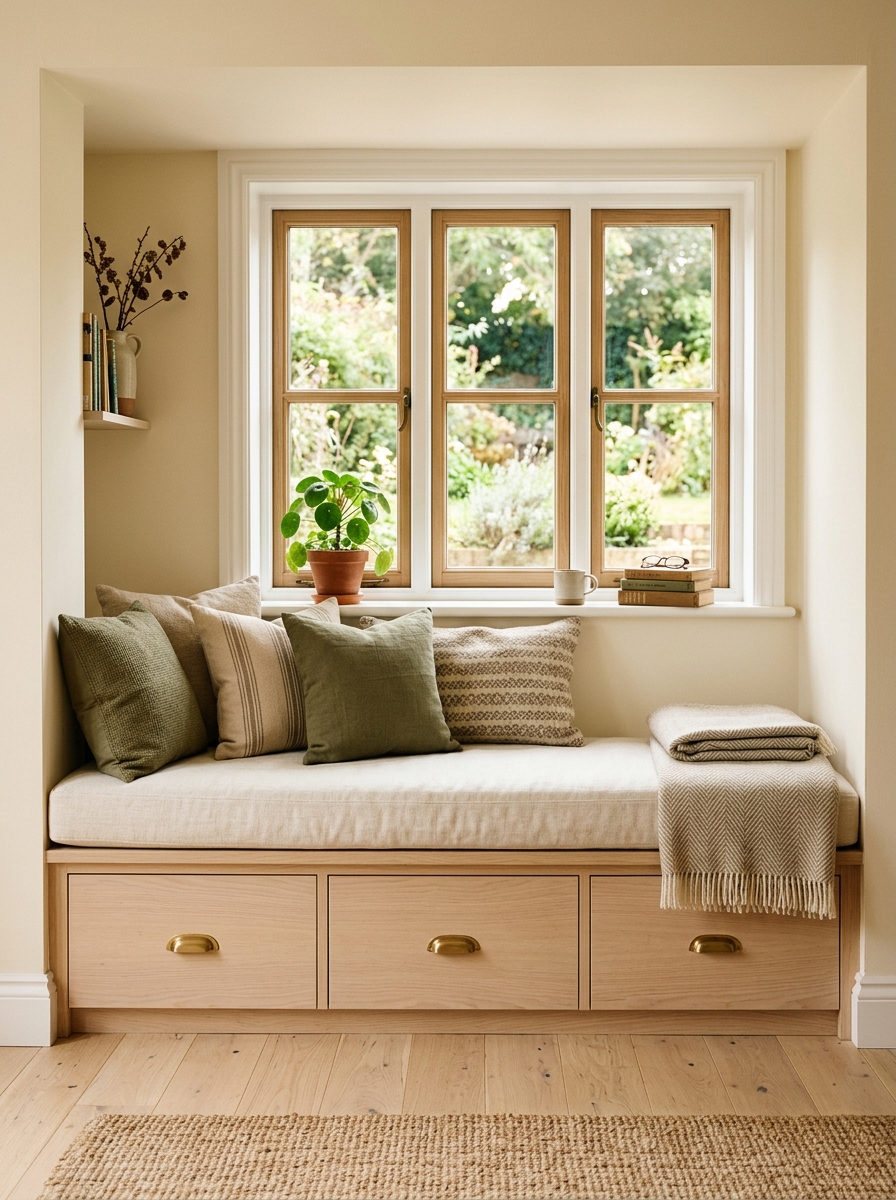
Add storage drawers under the window seat
Storage drawers make a window reading nook much more practical. They allow the bench to serve as both seating and hidden storage, which is especially helpful in bedrooms, playrooms, hallways, and small living rooms.
Use drawers for blankets, books, toys, craft supplies, or seasonal items. Choose simple drawer fronts so the storage blends into the architecture.
Hardware can change the style of the nook. Brass pulls feel warm and classic, black pulls feel modern, and hidden finger pulls create a more minimal look.
Keep the cushion and pillows easy to remove so the drawers remain accessible. A beautiful nook should still be convenient to use every day.
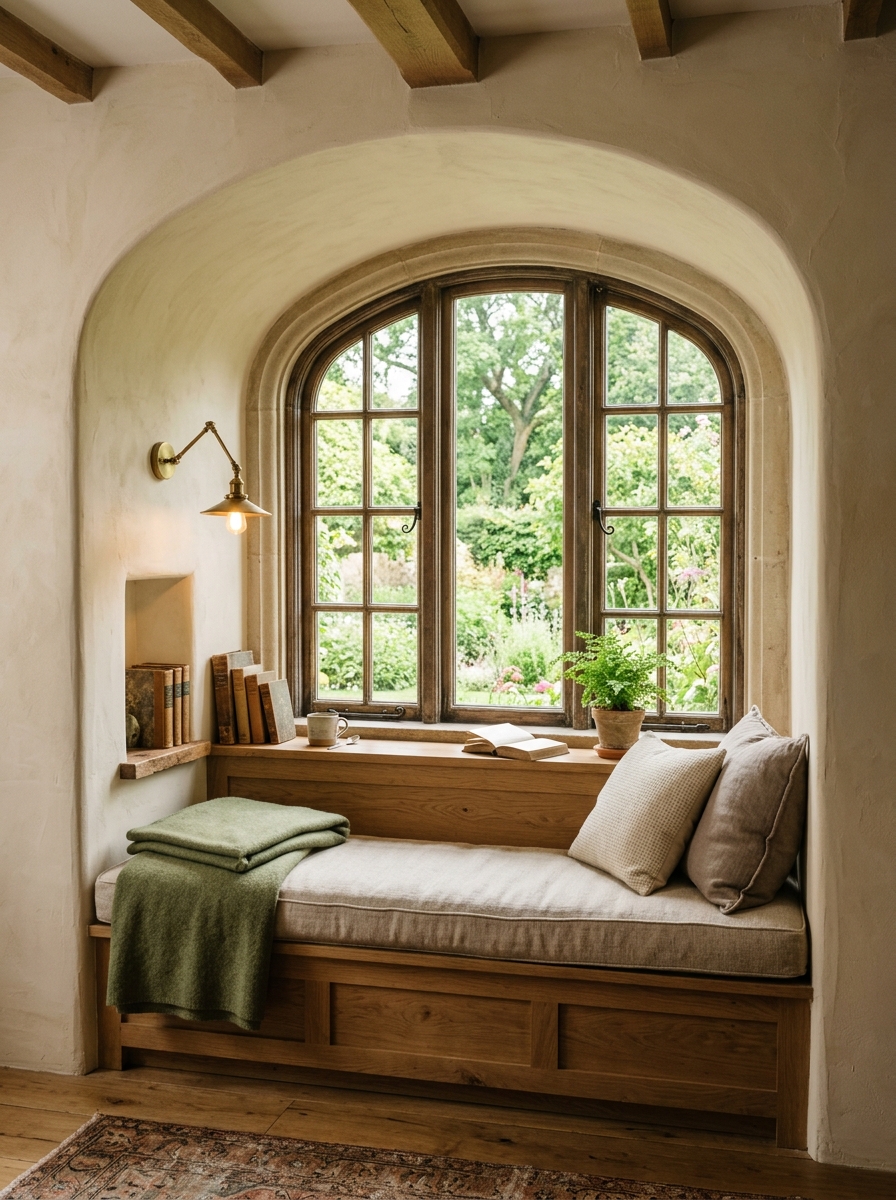
Use an arched window reading nook
An arched window can make a reading nook feel especially beautiful because the window shape already creates architectural interest. The seating below should support that shape without competing with it.
A simple bench or curved cushion works well beneath an arched opening. Keep the surrounding decor quiet so the window remains the focal point.
Use soft fabrics and warm materials to balance the architectural lines. Linen cushions, light wood, plaster walls, and brass lighting can all make the nook feel elegant but still cozy.
This idea works well in older homes, Mediterranean-inspired interiors, and spaces where the window already has strong character.
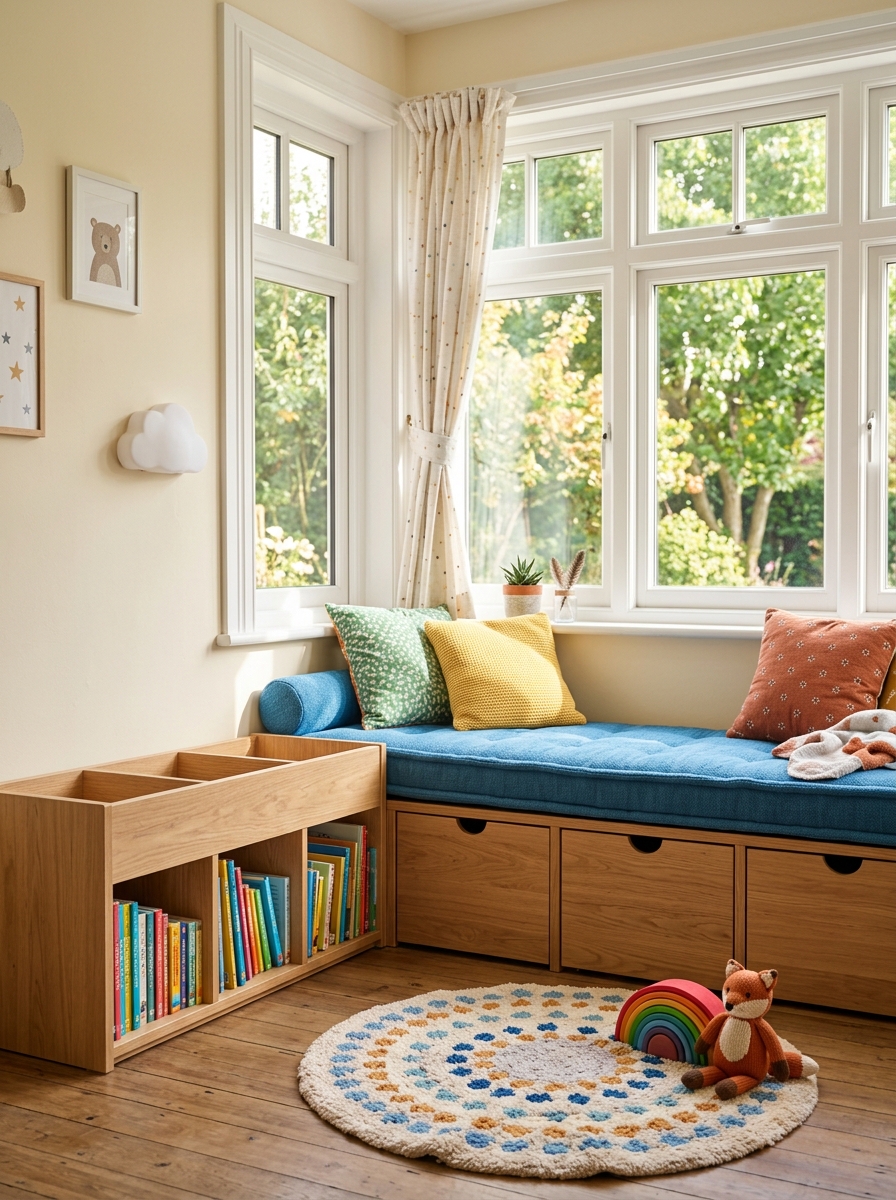
Create a kids' window reading nook
A kids' window reading nook can encourage reading by making books feel accessible and inviting. The space should be comfortable, cheerful, and durable enough for everyday use.
Use washable cushion covers, sturdy storage drawers, and a few playful pillows. Keep books in low shelves or cubbies so they are easy to reach.
The colors can be brighter than an adult reading nook, but the design should still feel organized. Soft blue, green, yellow, rust, or playful patterns can work well when balanced with neutral furniture.
Safety matters too. Avoid loose cords, unstable shelves, or high seating without proper support. The nook should feel cozy but practical for children.
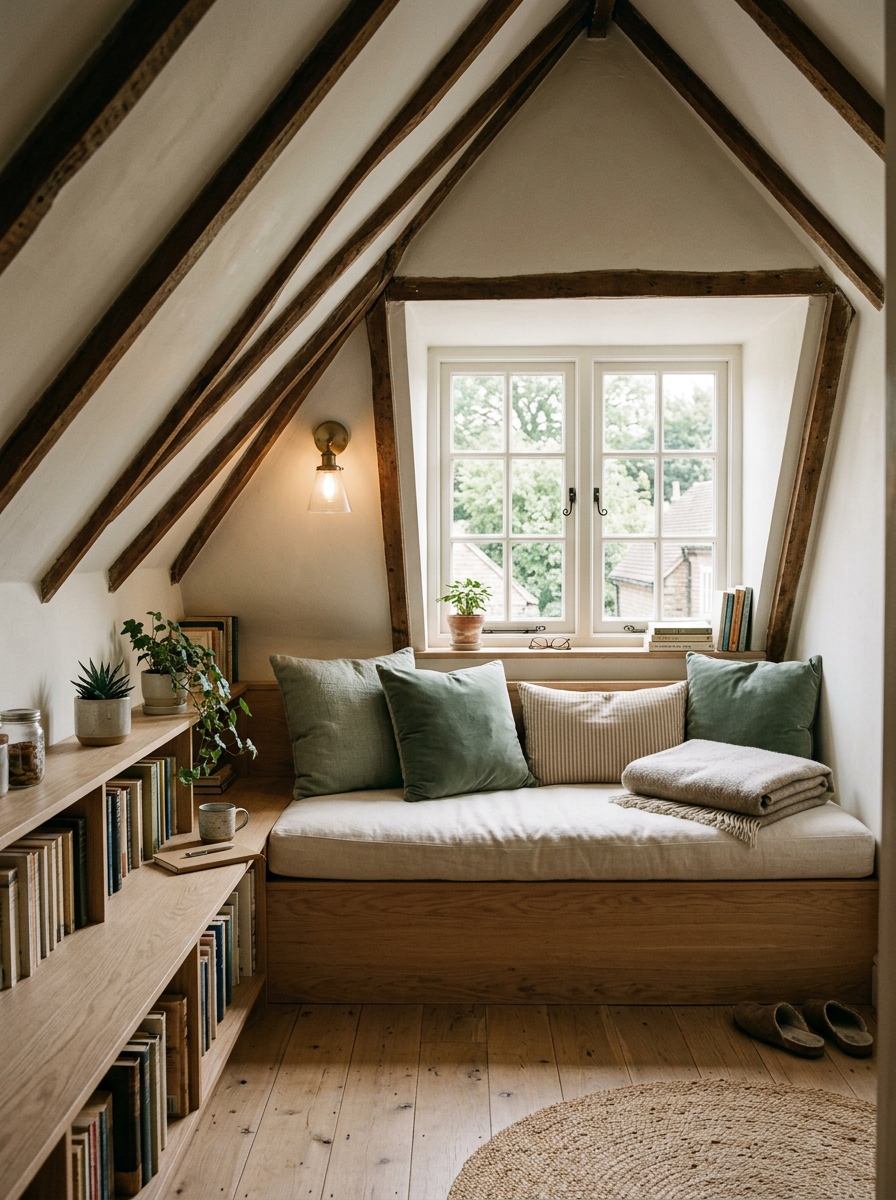
Build an attic window reading nook
An attic window nook can feel especially cozy because sloped ceilings naturally create a sheltered atmosphere. The challenge is making the low ceiling and awkward angles feel intentional rather than cramped.
Place a low bench or cushion beneath a dormer window where the head height allows comfortable seating. Built-in shelves or drawers can make use of the angled walls.
Use light colors to keep the attic from feeling dark. Warm white walls, pale wood, cream cushions, and soft textiles can make the space feel bright and inviting.
A small wall sconce or reading light is useful because attic corners can lose daylight quickly.
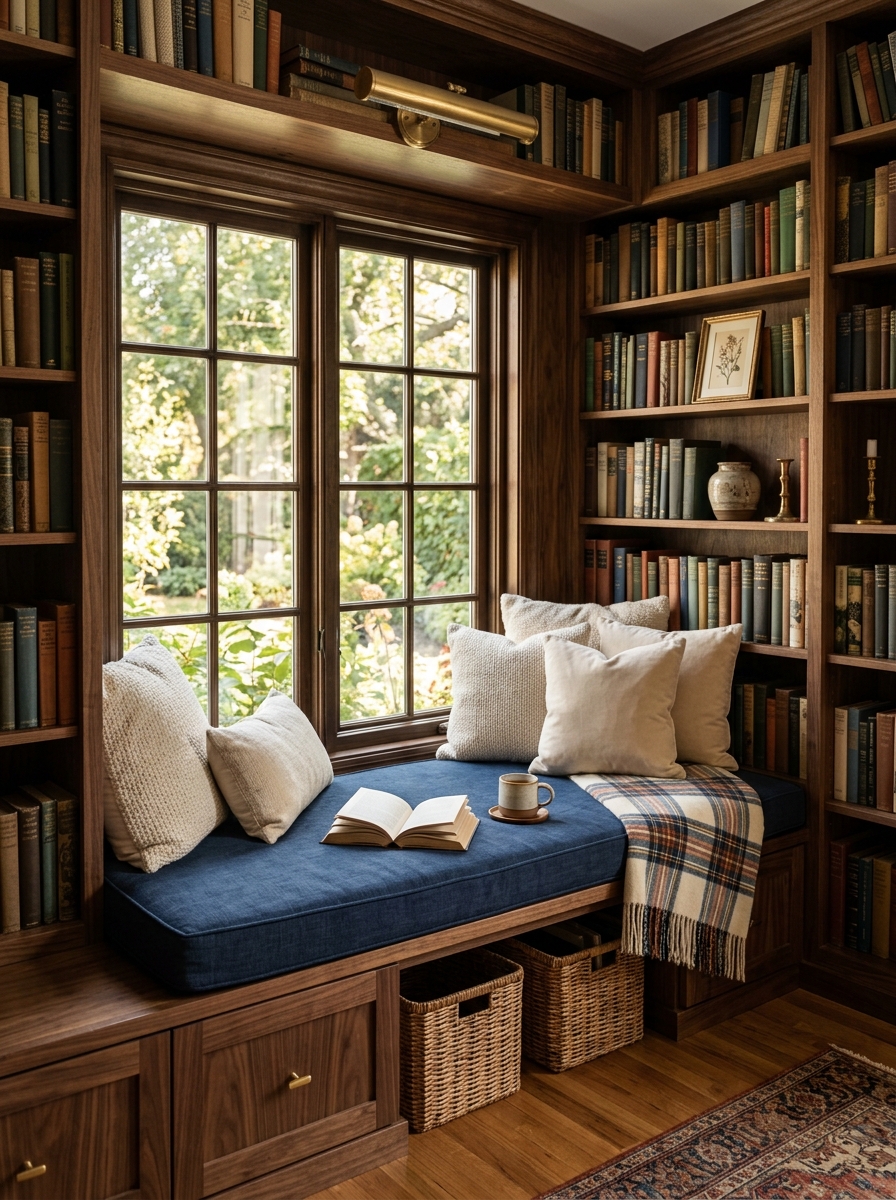
Create a library window seat
A library window seat combines natural light with book storage, making it one of the most satisfying reading nook setups. The window provides brightness, while the surrounding shelves keep books within easy reach.
This idea works in home offices, living rooms, hallways, or dedicated libraries. The seat can sit between tall bookcases or beneath a window on a wall of built-ins.
Use deeper colors if you want a richer library feeling. Walnut shelves, navy cushions, olive accents, and brass lighting can create a more traditional or moody effect.
Keep the seat comfortable. A beautiful library nook will not be used often if the cushion is too thin or the lighting is poor.
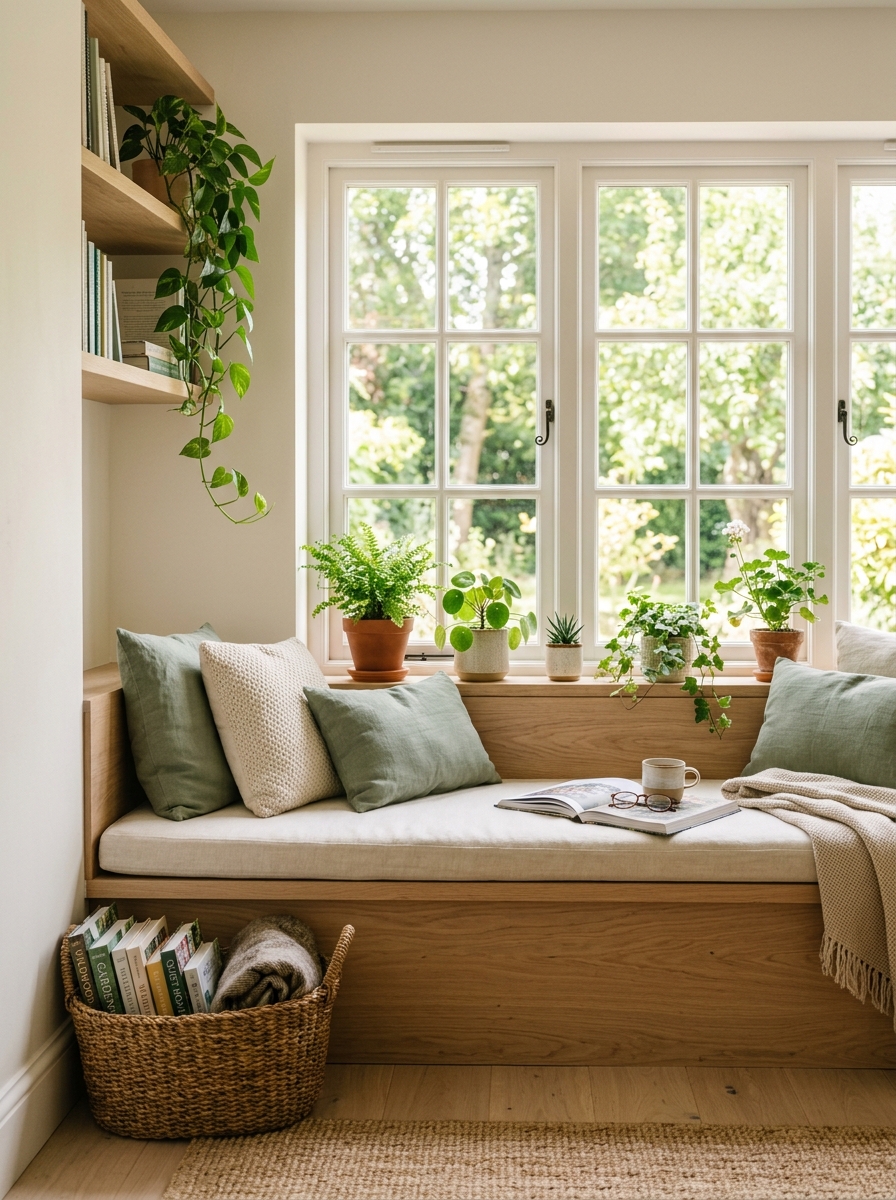
Add plants to a window reading nook
Plants are a natural fit for window reading nooks because they thrive near light and soften the hard edges of the window frame. They also make the nook feel fresh and calming.
Use a few small plants on the sill, a trailing plant on a nearby shelf, or one larger floor plant beside the bench. Avoid crowding the seat with pots so the nook remains comfortable.
Choose plants based on the amount of light the window receives. Bright windows can support more options, while lower-light windows may need hardy plants or realistic faux greenery.
A plant-filled window nook works well with warm neutrals, wood, linen, and woven baskets. The result feels relaxed and connected to nature.
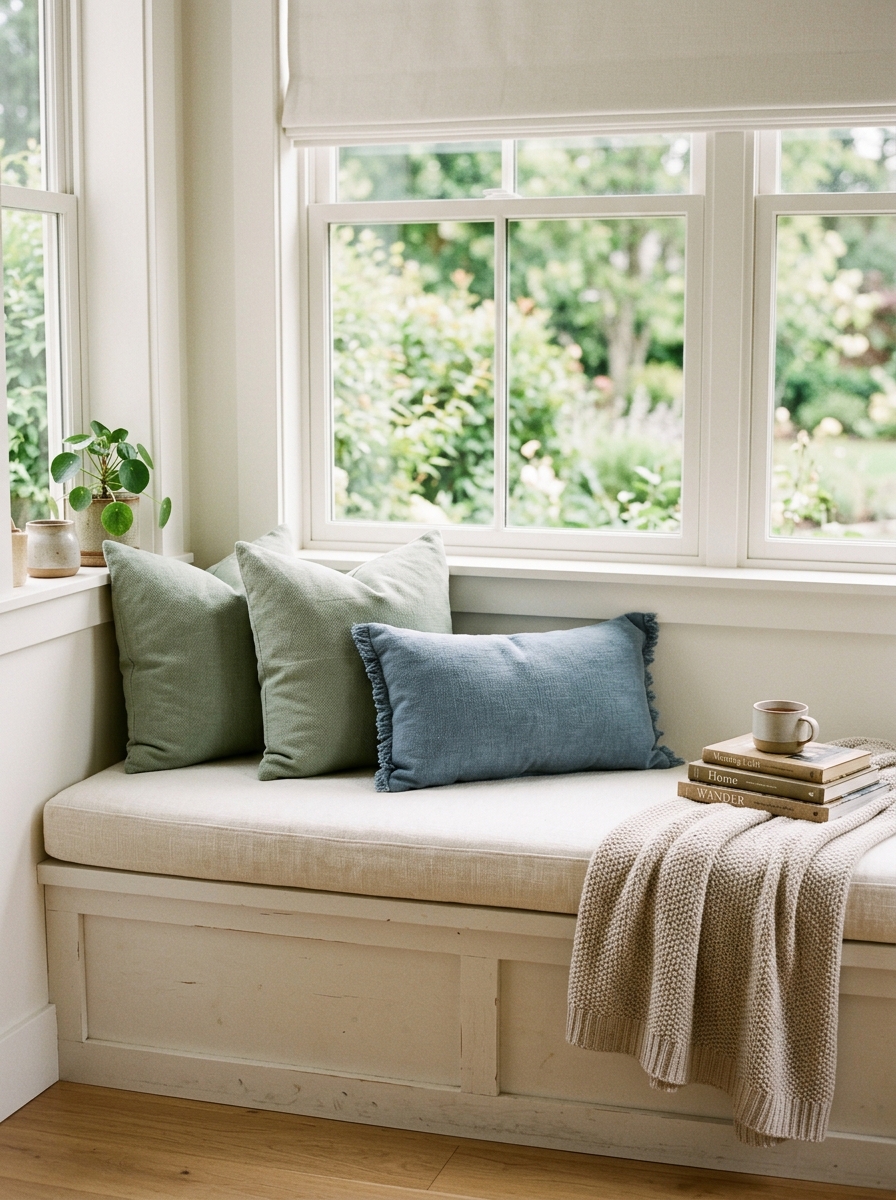
Layer cushions and pillows for comfort
The cushion and pillows are what make a window reading nook truly usable. A hard bench may look clean, but it will not feel inviting for long reading sessions.
Start with a firm seat cushion that fits the bench properly. Add two or three supportive pillows rather than many decorative ones. A lumbar pillow can make a narrow bench much more comfortable.
Use textures that suit the room. Linen, cotton, velvet, waffle weave, and soft wool can all work depending on the season and style.
Keep the colors connected to the surrounding space. A cream cushion with sage, dusty blue, or terracotta pillows can create interest while still feeling calm.
How to design a window reading nook
Start by measuring the window area carefully. The seat needs enough depth to be comfortable, enough clearance to avoid blocking curtains or vents, and enough support for daily use.
Think about storage early. Drawers, lift-up benches, or open cubbies can make a window nook much more useful, especially in smaller homes.
Lighting is also important. Natural light is the main advantage of a window nook, but a wall sconce, picture light, or nearby lamp will make the space usable in the evening.
Finally, choose fabrics that can handle regular use. Removable cushion covers, washable pillow covers, and durable textiles will keep the nook easier to maintain over time.
What makes a window seat comfortable?
Comfort starts with the cushion. A seat cushion should be thick enough to soften the bench but firm enough to support sitting. If it collapses too much, the nook may feel awkward over time.
Back support matters too. Add pillows along the wall or window side so the seat is not just a flat surface. A lumbar pillow can make a narrow bench feel much better.
The seat should also be positioned near useful surfaces. A nearby shelf, side ledge, or storage cubby gives you a place for books, glasses, or a drink.
The most comfortable nook is one that feels easy to use. If you need to move several pillows or reach across the room for a book, the space will feel less practical.
How to style a window reading nook
Keep the styling simple and functional. A cushion, a few pillows, a throw, and a small stack of books are usually enough.
Use colors that connect with the room. The nook should feel like part of the surrounding space, not a separate decoration added later.
Add texture through fabric, wood, baskets, or woven shades. Texture helps the nook feel cozy even when the color palette is quiet.
Avoid overcrowding the windowsill. Too many plants, candles, or objects can block light and make the seating area harder to use.
Final thoughts
A window reading nook can turn an ordinary window into one of the most loved areas of the home. It combines natural light, comfortable seating, and a sense of quiet separation from the rest of the room.
Whether you have a bay window, a bedroom corner, an attic dormer, or a small apartment window, there is usually a way to create a reading spot that feels cozy and practical.
The best designs focus on comfort first. A well-fitted cushion, supportive pillows, accessible books, and simple lighting can make even a small window area feel like a true book corner.