Bedroom
10 Closet Organization Ideas for Small & Walk-In Closets
10 closet organization ideas for small & walk-in closets: double rods, shoe cubbies, labeled bins, LED lighting and more clever closet storage ideas.
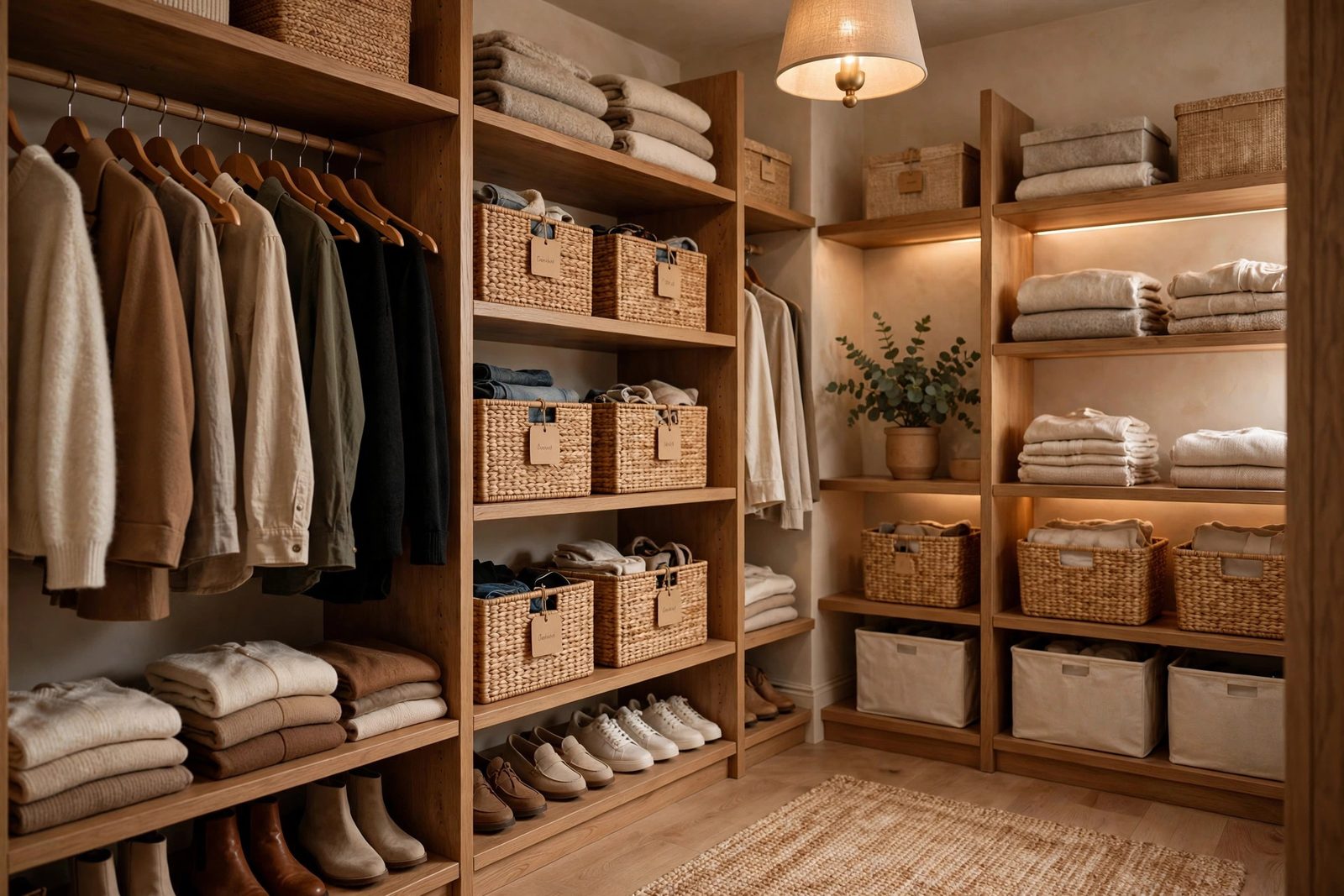
These closet organization ideas are your fresh-start playbook, whether you are working with a tiny reach-in or a full walk-in. January always brings that new-year, organized-home energy — but the truth is that closet chaos builds up year-round, and the fix is rarely buying more stuff. It is zoning what you own so everything has a visible, reachable home.
A well-organized closet saves you real minutes every single morning: no digging for the other shoe, no re-wrinkling three shirts to find the one you want. The ideas below work across closet sizes because they all follow the same logic — group by category, use vertical space, and make the most-used items the easiest to grab.
You will not need a renovation or a big budget either. Most of these are weekend-level projects built on matching hangers, simple shelving, and labels. Here are ten closet organization ideas to turn even the smallest closet into a space that works as hard as you do.
How Do You Layout a Walk-In Closet That Actually Stays Organized?
Treat a walk-in closet like a tiny store you get to shop in daily: one wall for hanging, one wall for shelves and drawers, and the center kept clear so you can actually see everything. Zone the hanging wall by length — long dresses and coats in one stretch, shirts and pants double-hung in another — so no rod space is wasted on air.
Warm wood shelving instantly makes a walk-in feel finished rather than utilitarian, and open shelves work better than closed doors here because they keep everything visible. Group folded items by category (denim, sweaters, gym wear) and keep only one layer deep so stacks stay tidy.
The finishing move is consistency: matching hangers, labeled bins on the high shelves, and a warm light source so the whole space glows. When everything matches, a walk-in closet reads as calm and intentional — and it is much easier to put things back where they belong.
What's the Best Way to Organize a Small Reach-In Closet?
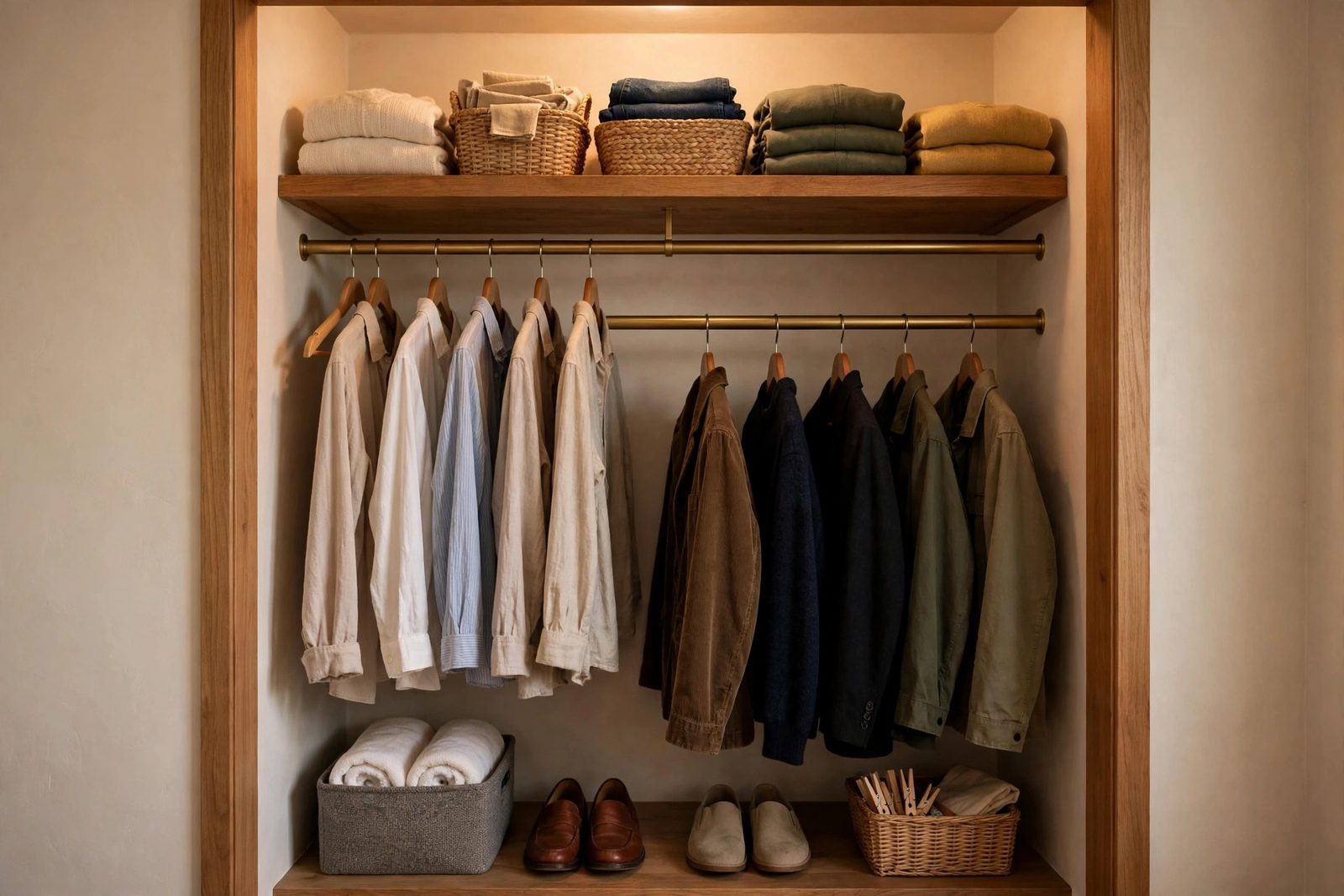
The single biggest upgrade for a small reach-in closet is a second hanging rod. Most closets come with one lonely rod that leaves a dead zone of air below knee level — drop a second rod under the first and you instantly double your hanging space for shirts, pants, and skirts, with a long-hang section at one end for dresses.
Keep the shelf above the top rod for the items you reach for least: out-of-season bins, spare bedding, luggage. Use stackable labeled bins there so nothing tips over when you pull one down, and reserve the prime middle zone — between shoulder and knee — for whatever you wear most.
If the closet feels dark and cramped, swap to slim velvet hangers throughout. They take up less width than plastic or wood, grip clothes so nothing slides to the floor, and a full rod of matching hangers makes even a basic reach-in look surprisingly boutique.
Do Matching Hangers Really Make a Difference?
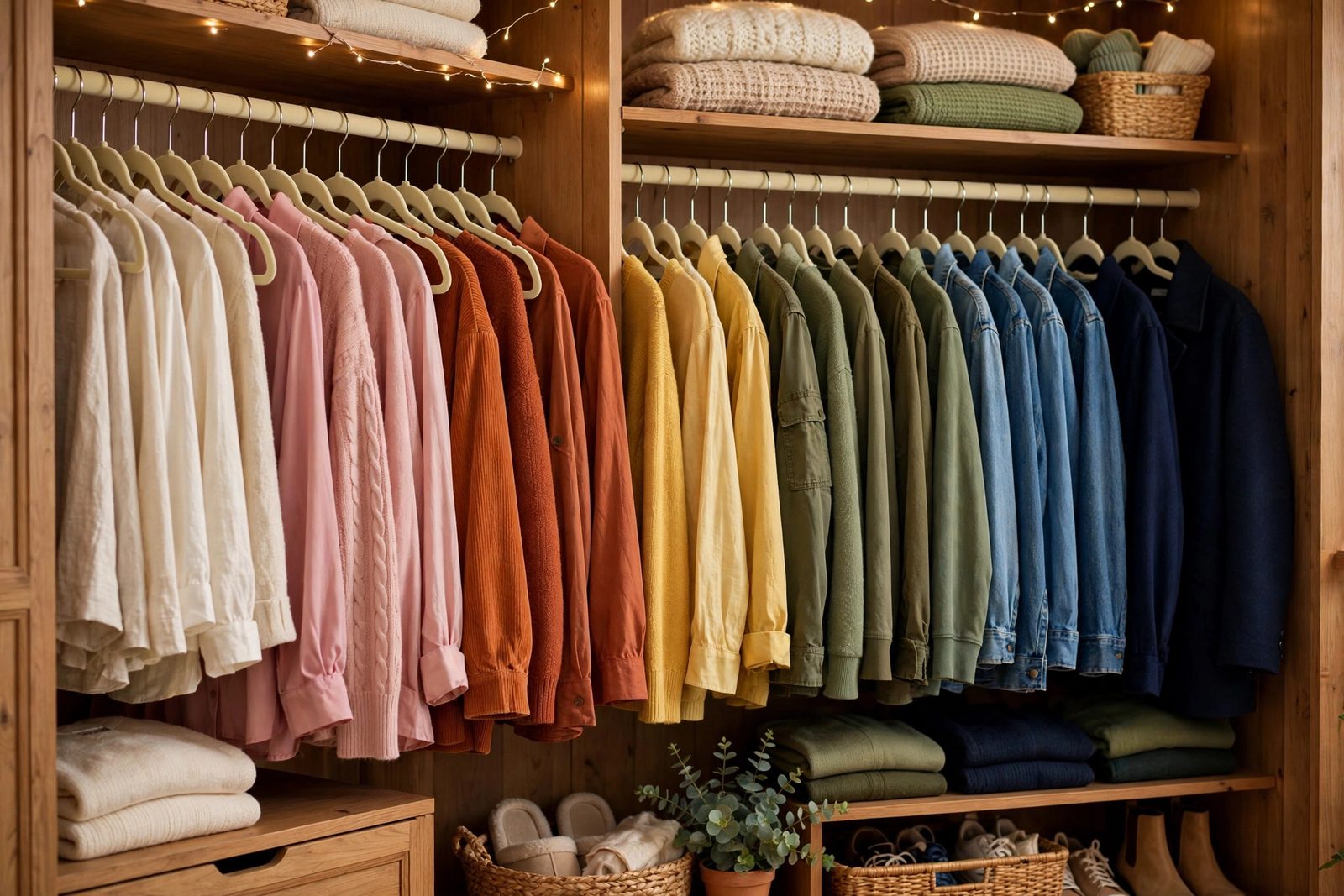
Yes — matching hangers are the cheapest visual reset in closet organization. A rod full of cream velvet hangers removes the visual noise of mixed plastic, wire, and store hangers, and because they are slim, you can fit roughly a third more clothes on the same rod without it looking crammed.
Take it one step further with color coding: arrange garments from light to dark within each category, or group by color family across the whole rod. You will get dressed faster because your eye finds the section you want instantly — and the gradient effect makes the closet look styled rather than stuffed.
Commit to one hanger type everywhere and retire the rest. Keep a small basket on the closet floor for empty hangers so they never dangle on the rod taking up space, and buy hangers once in bulk rather than mixing styles over time.
How Should You Store Shoes in a Closet?
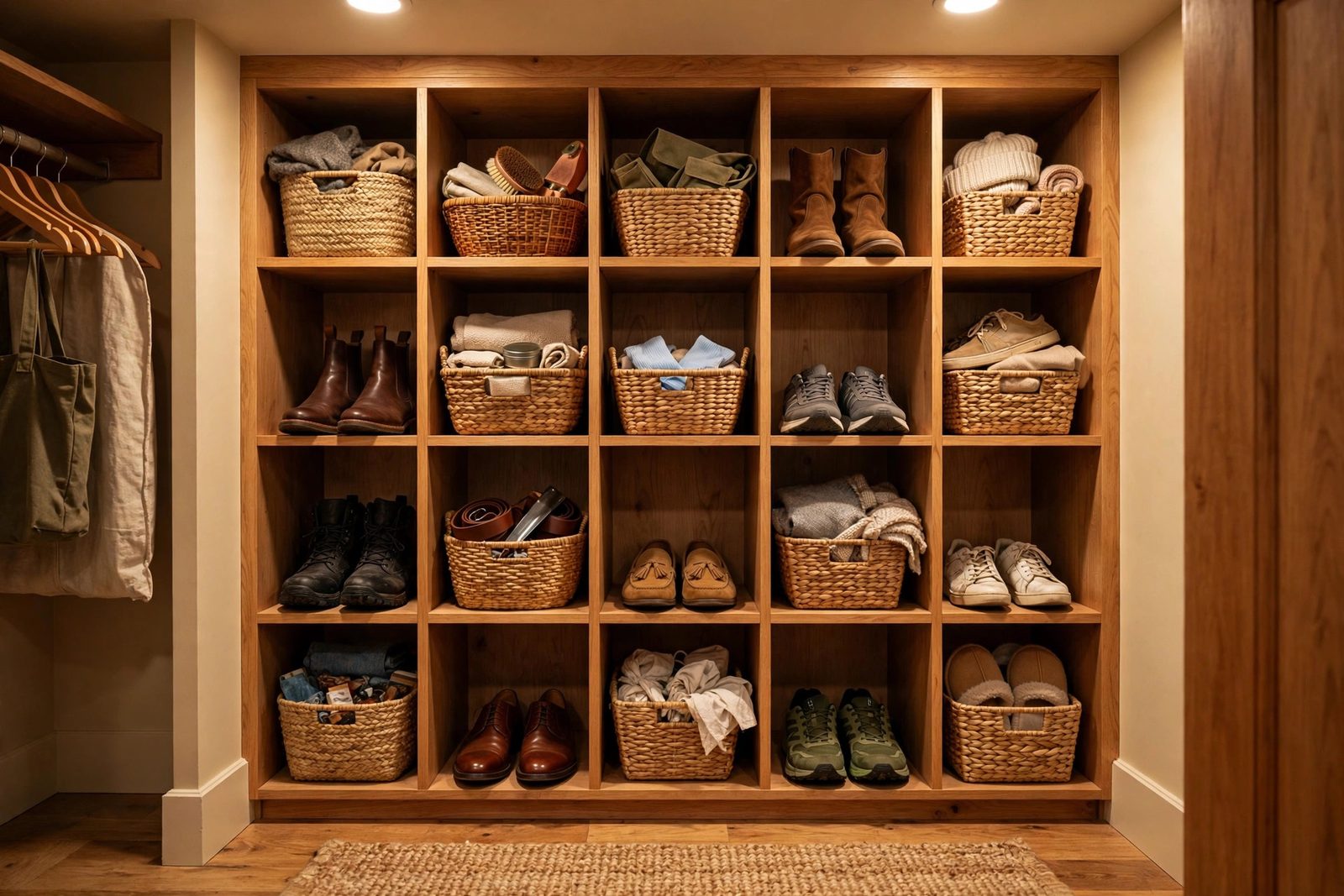
Shoes belong in their own zone, not scattered on the closet floor. A wall of cubby shelving turns a shoe pile into a display: assign each pair one cubby so the collection stays naturally capped, and face shoes toe-out or heel-out in a consistent direction for a tidy look.
Mix in a few woven baskets within the cubbies for the pairs you wear constantly — running shoes, everyday sneakers — so you can grab and toss without re-shelving. Baskets also hide the pairs that are practical but not pretty, and they keep laces from tangling across shelves.
Keep the pairs you wear weekly at eye or hand level, special-occasion shoes up high, and out-of-season boots in labeled bins above. If your shoe count keeps growing past the cubbies, that is the signal to donate a pair for every new one that arrives.
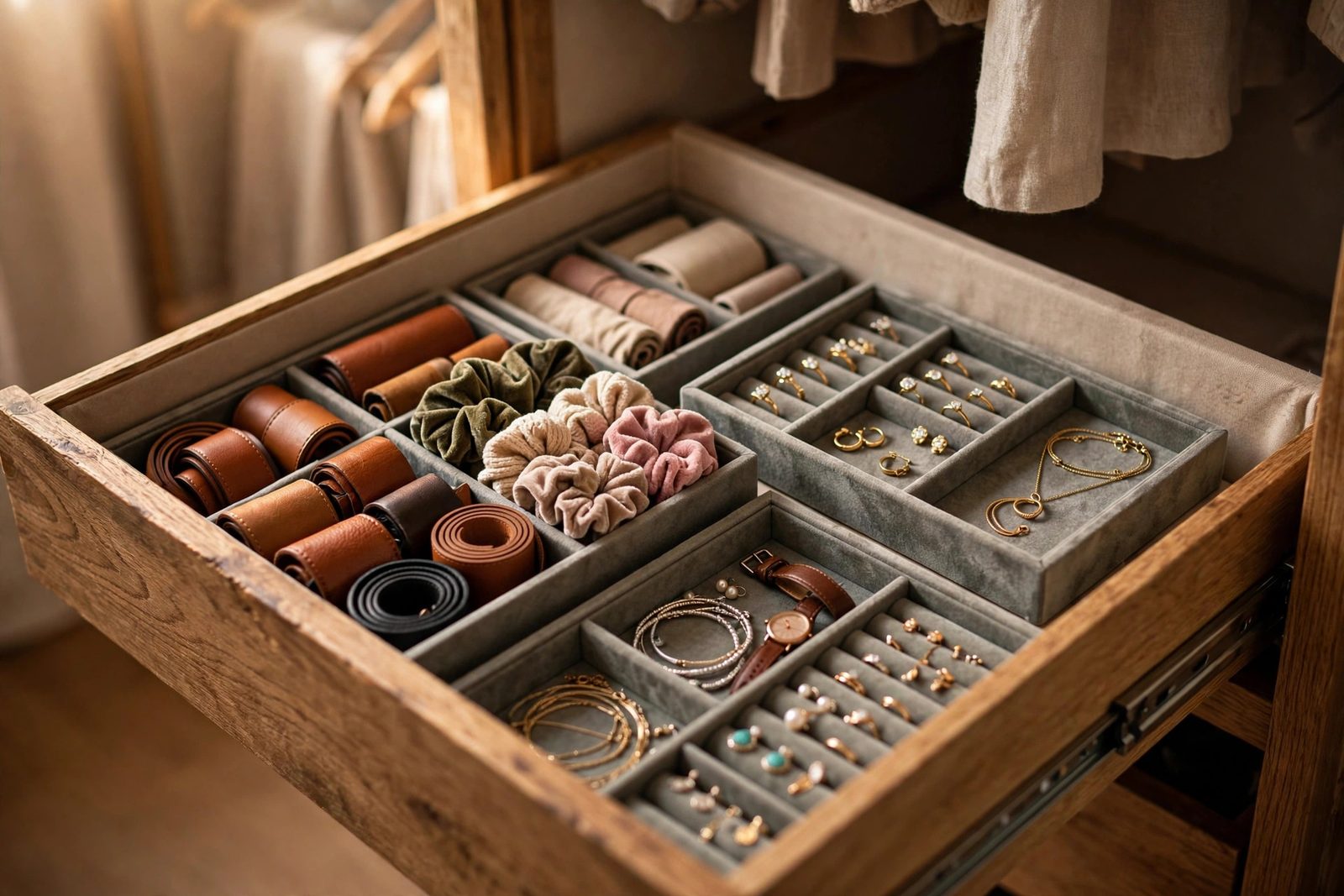
How Do You Organize Small Accessories and Jewelry?
Accessories disappear without compartments, so give every drawer a grid. Drawer organizers with small square sections are perfect for sunglasses, watches, and belts rolled into coils — rolling instead of folding keeps belts and scarves visible and stops them from creasing into a tangled nest.
Jewelry deserves its own tray: a shallow velvet-lined insert with rings slots, necklace channels, and small bowls for earrings keeps everything untangled and means you can see all your options at once. Pulling on a pair of earrings takes ten seconds instead of a five-minute dig through a pouch.
Use the vertical inside of the closet door for the overflow: a hanging organizer with clear pockets is ideal for scarves, clutches, and sunglasses you grab on the way out. The rule is one accessory home per category — when everything has a slot, mornings get noticeably faster.
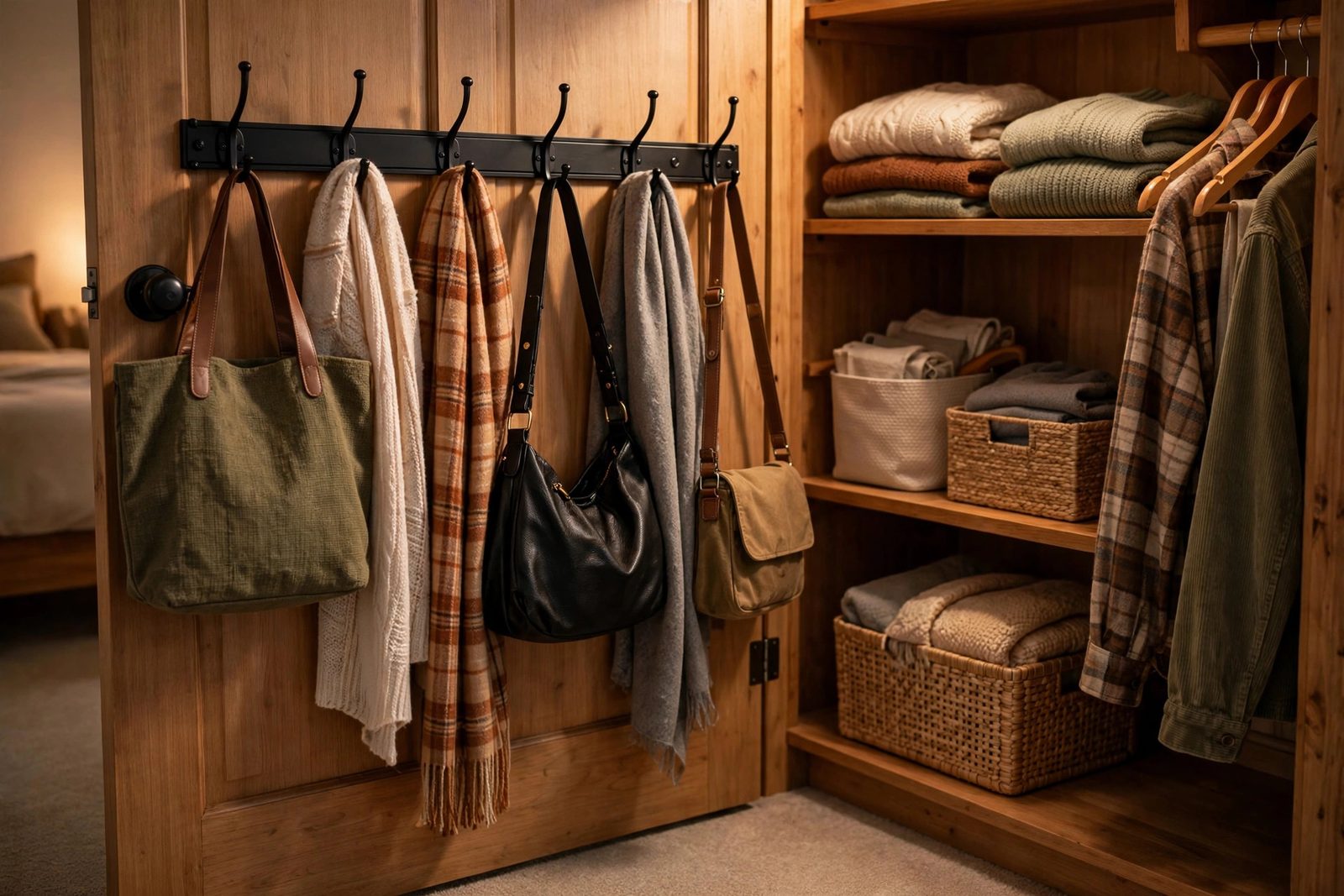
What's the Best Way to Use the Back of a Closet Door?
The back of the closet door is free real estate: an over-the-door rack with sturdy hooks turns it into a grab-and-go station for tomorrow's outfit, bags, scarves, and hats. No drilling, no damage — it just hooks over the top, which makes it perfect for renters.
Dedicate one hook to the "tomorrow" habit: hang the next day's outfit there each evening and your morning routine gets almost thoughtless. Use the other hooks by category — work bag, gym bag, scarves, one statement hat — so the door never becomes a dumping ground.
Watch the door's swing clearance and keep heavier items low on the rack so it does not bang or swing when you open and close the door. A narrow rack with five to seven hooks holds plenty; a wide double-row version will fight the door frame in a small closet.
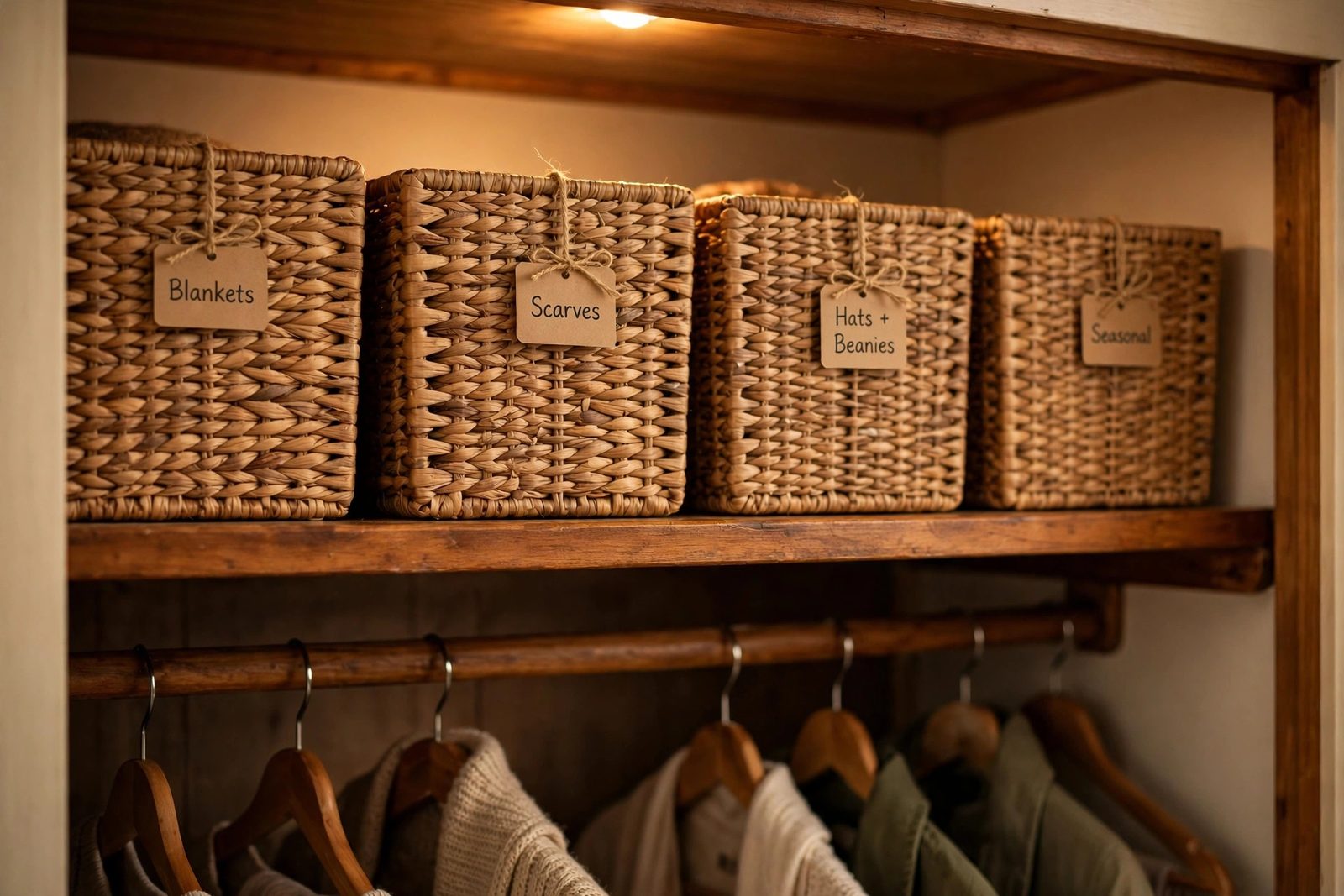
How Do You Make Top-Shelf Storage Actually Usable?
Top shelves fail when they become the place loose items go to die. The fix is bins — woven storage bins with clear, large labels like "WINTER ACCESSORIES," "SWIM," or "SPARE BEDDING" — so the top shelf becomes a filing cabinet you can read at a glance instead of a mystery zone.
Choose bins with handles and keep them light enough to lift down one-handed; anything too heavy for that belongs on a lower shelf. Woven or fabric bins keep the shelf looking warm and finished, and matching bins in one size create the calm, uniform look of a styled closet.
Map the bins to a seasonal rotation: when spring arrives, swap the winter bins for the summer ones and re-label as needed. Doing this swap twice a year doubles as a natural declutter checkpoint — if a bin's contents surprise you, that is a sign something inside can go.
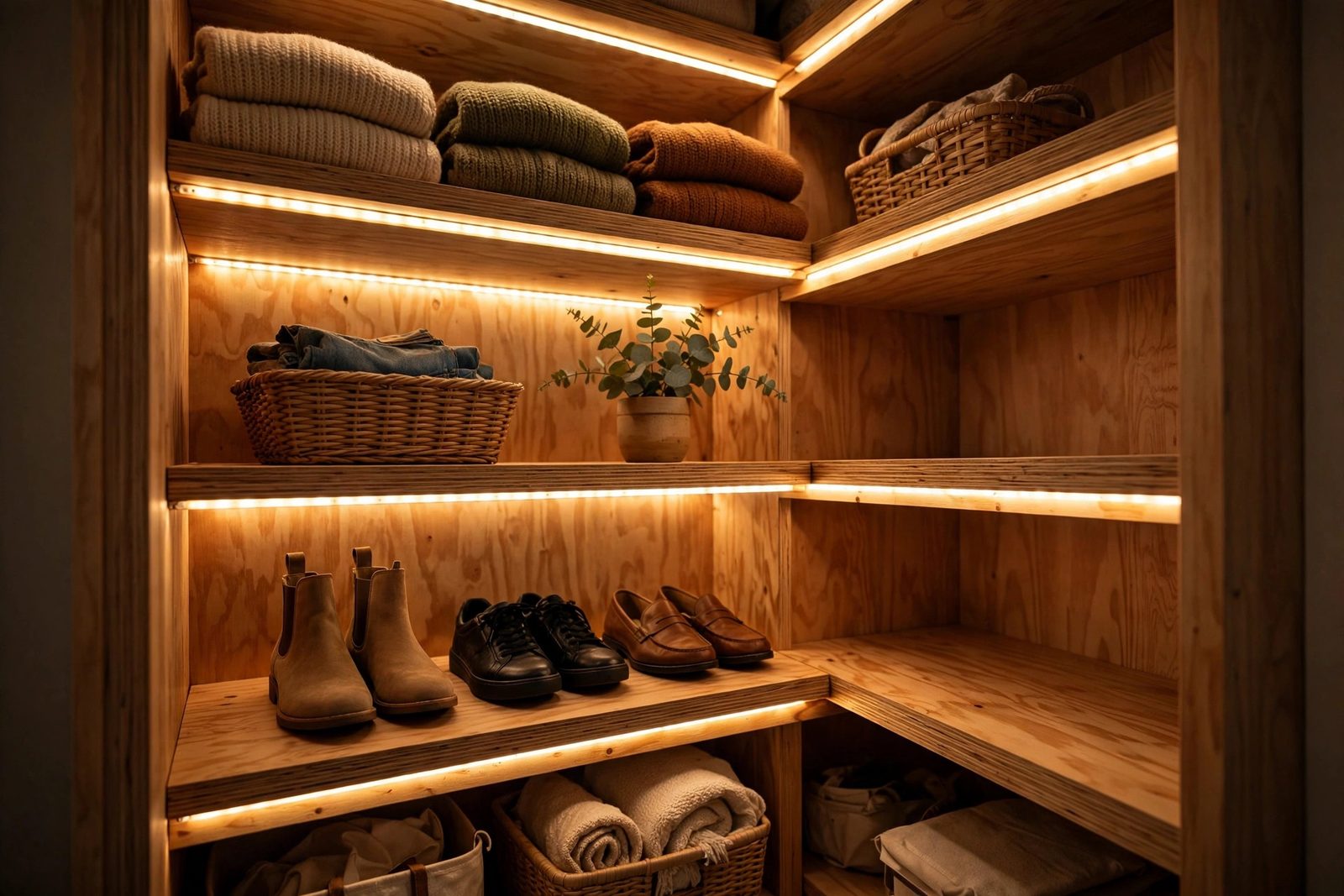
How Do You Add Lighting to a Closet Without Wiring?
A dark closet hides your clothes and makes the whole space feel smaller. Battery-powered LED strip lights with motion sensors fix it in an afternoon: stick a strip along the underside of each shelf or above the hanging rod, and the light switches on the moment you open the door.
Stick to warm white (around 3000K) — cool white makes colors look off and fabrics feel harsh, while warm light flatters every fabric and makes the closet feel like a boutique dressing room. Run the strips so light washes down the clothes rather than blasting straight into your eyes.
Rechargeable strips beat disposable-battery ones over time, and most good ones hold a charge for weeks since they only run for a minute at a time. Clean the shelf surface with a dry cloth before sticking the adhesive, and the strips will hold for years without a single screw.
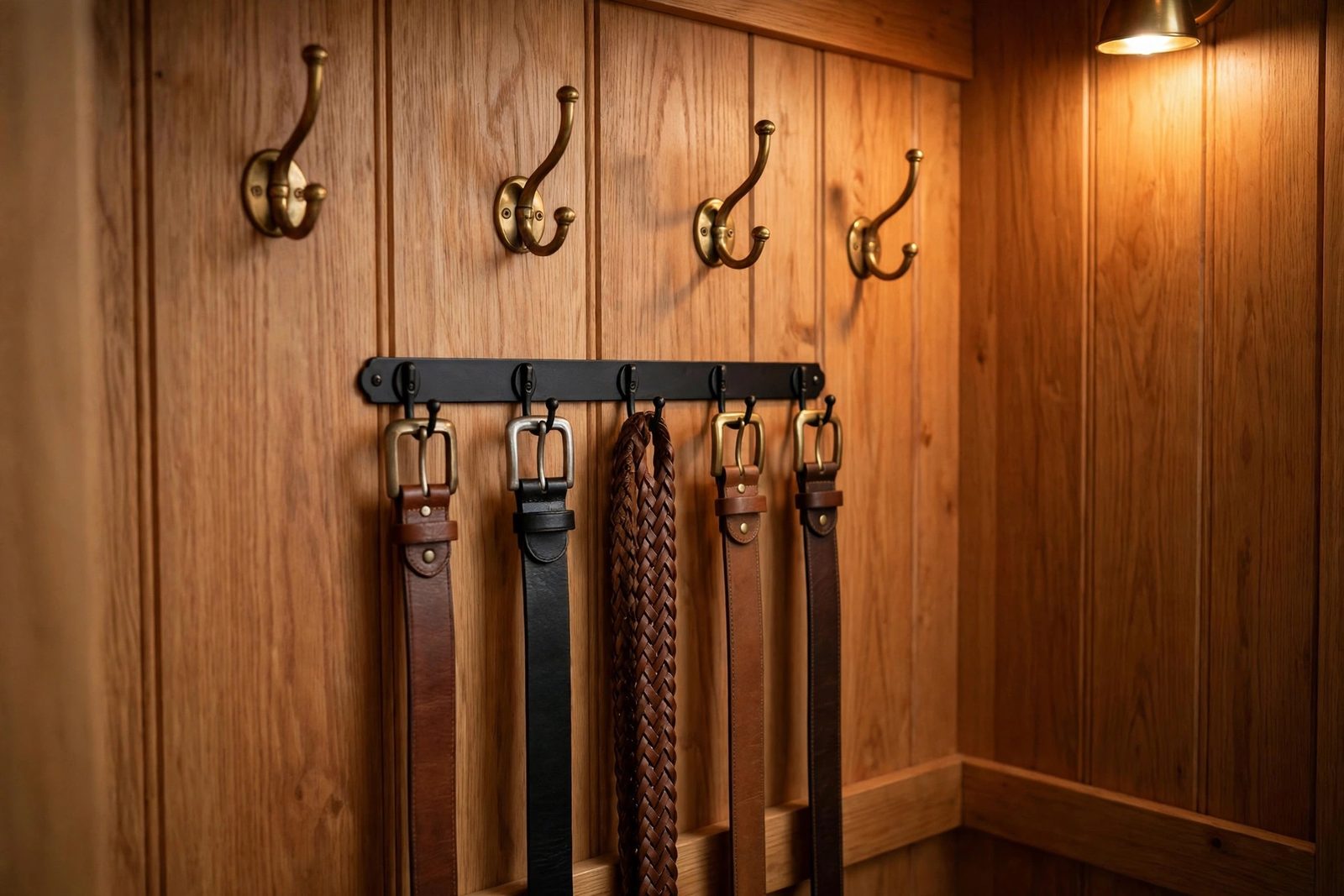
What Hardware Makes a Closet Easier to Use Every Day?
Small hardware earns its keep daily. A pull-out valet rod mounted inside the closet gives you a dedicated spot to steam an outfit, stage tomorrow's clothes, or hang dry-cleaning before you put it away — it slides out when you need it and disappears when you do not.
Valet hooks do the same job on a smaller scale: mount two or three on the closet wall or the inside of a door frame for tonight's jeans, a robe, or the bag you are packing. A pull-out belt rack keeps belts visible and untangled instead of coiled in a drawer you never open.
Install hardware at the heights you actually use — valet hooks at elbow height, the belt rack near your pants or trousers zone — and keep it minimal. Two well-placed hooks you use daily beat a wall of organizers you never touch.
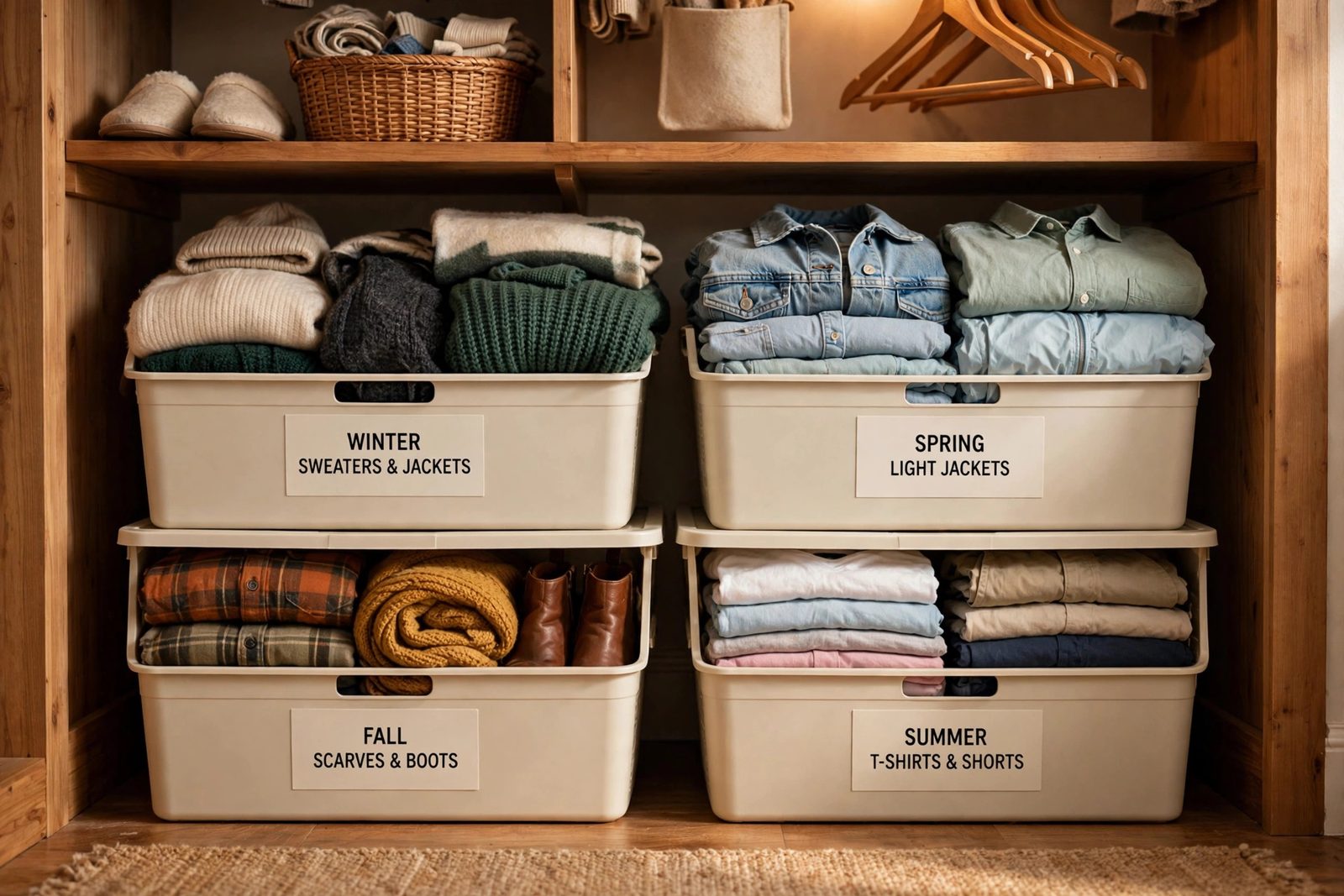
Where Should You Store Seasonal Clothing?
Your closet only needs to hold the current season's clothes — everything else lives in labeled bins. Stack clear or labeled bins on the closet floor or the highest shelf, grouping by category (heavy sweaters, winter coats, summer linens) so the swap takes an hour, not a weekend.
Before anything goes into a bin, wash or dry-clean it; stains and body oils set permanently over months of storage. Toss in cedar blocks or lavender sachets to keep moths away and everything smelling fresh, and skip the vacuum bags for natural fibers like wool — they need air to keep their shape.
Label the bins big and specific ("WINTER / HEAVY SWEATERS," not "STUFF") and keep one running list on your phone of what's in storage. The seasonal swap becomes the best declutter moment of the year: if you did not miss it all season, it does not go back in the closet.
The One-Weekend Closet Reset Method
Start Saturday by pulling everything out — yes, all of it — and sorting into four piles: keep, donate, relocate, trash. The keep pile then gets sorted by category (tops, pants, dresses, shoes, accessories), and you immediately notice the duplicates: you do not need seven near-identical black tees, and the reset makes that undeniable.
Sunday is for zoning: put the keep pile back by category, heaviest rotation at eye level, least-used up high. Add the infrastructure as you go — second rod, bins, labels, LED strips — because installing storage into an empty closet is ten times faster than rearranging around clothes. Finish by hanging tomorrow's outfit on the door hook and enjoy the calm.
Maintain it with the one-in-one-out rule from here on: every new item that enters earns its spot by replacing something that leaves. A closet reset once a year plus that one rule keeps the system working for years instead of months.
Renter-Friendly Closet Upgrades (No Drilling Required)
Renters can do almost everything on this list. Tension rods create a second hanging level or a scarf bar between closet walls, adhesive hooks hold valet hooks and small racks, over-the-door organizers need nothing but the door itself, and battery LED strips stick to any shelf with adhesive backing.
The one thing to check is weight: tension rods hold shirts and scarves but not a full row of winter coats, and adhesive hooks need clean, dry surfaces to bond properly. Test one hook with a light item for 24 hours before trusting it with your favorite bag.
When you move, all of it comes down in an afternoon and the closet looks exactly as you found it. Keep the original single rod and any shelf hardware you removed in a labeled bag — future you will thank present you on move-out day.
Final thoughts
The best closet organization ideas are not really about products — they are about deciding where things live and then making those homes easy to use. A second rod, matching hangers, a label maker, and a strip of LED lights cost less than a single shopping trip, and together they turn a chaotic closet into a space you actually enjoy opening.
Start with the idea that solves your biggest morning pain point: digging for shoes, re-wrinkled shirts, or a door that will not close. Fix that one thing this weekend, and the rest of the list becomes a natural follow-up rather than an overwhelming project.
Your closet should work as hard as your mornings do. Pick one idea, implement it this week, and notice how much lighter getting dressed feels when everything has its place.
FAQ
What are the best closet organization ideas for small closets?
Add a second hanging rod to double your space, switch to slim velvet hangers so more fits on each rod, use the back of the door for bags and accessories, and keep the top shelf for labeled bins of out-of-season items. Keep only current-season clothes in the closet and store the rest elsewhere.
How do I organize a walk-in closet on a budget?
Zone it by category — one wall for hanging, one for shelves — then add the cheap wins: matching hangers, a second rod where there's dead air, woven bins with labels, and battery LED strips for light. Most walk-in transformations cost well under a hundred dollars if you skip custom built-ins.
How do I declutter my closet before organizing it?
Pull everything out and sort into keep, donate, relocate, and trash. Try the seasonal test: if you didn't wear it this past season and wouldn't buy it again today, it goes. Be ruthless with duplicates — you don't need seven near-identical black tees — and donate the good stuff the same week so it doesn't creep back.
What is the best way to store shoes in a small closet?
Give shoes their own zone with a cubby shelf or over-the-door organizer so they stop migrating to the floor. Keep weekly-worn pairs at grab height, special-occasion pairs up high, and out-of-season boots in labeled bins. One pair in, one pair out keeps the collection capped.
How can renters organize a closet without drilling?
Tension rods, over-the-door racks, adhesive hooks, freestanding shelf units, and battery LED strips all need zero drilling. Match adhesive hook weight ratings to the item, test one hook for 24 hours first, and keep the original hardware in a bag so move-out is painless.
How do I keep my closet organized long-term?
Follow the one-in-one-out rule so the closet never grows past its storage, do a quick five-minute reset weekly (rehang strays, fold toppled stacks), and use the seasonal clothing swap twice a year as your built-in declutter checkpoint. Systems survive; one-time purges don't.