Bedroom
10 Color Drenching Ideas for Bold, Cocooning Rooms
These 10 color drenching ideas turn small bedrooms into bold, cocooning retreats — one color on walls, ceiling, trim and bedding done right.
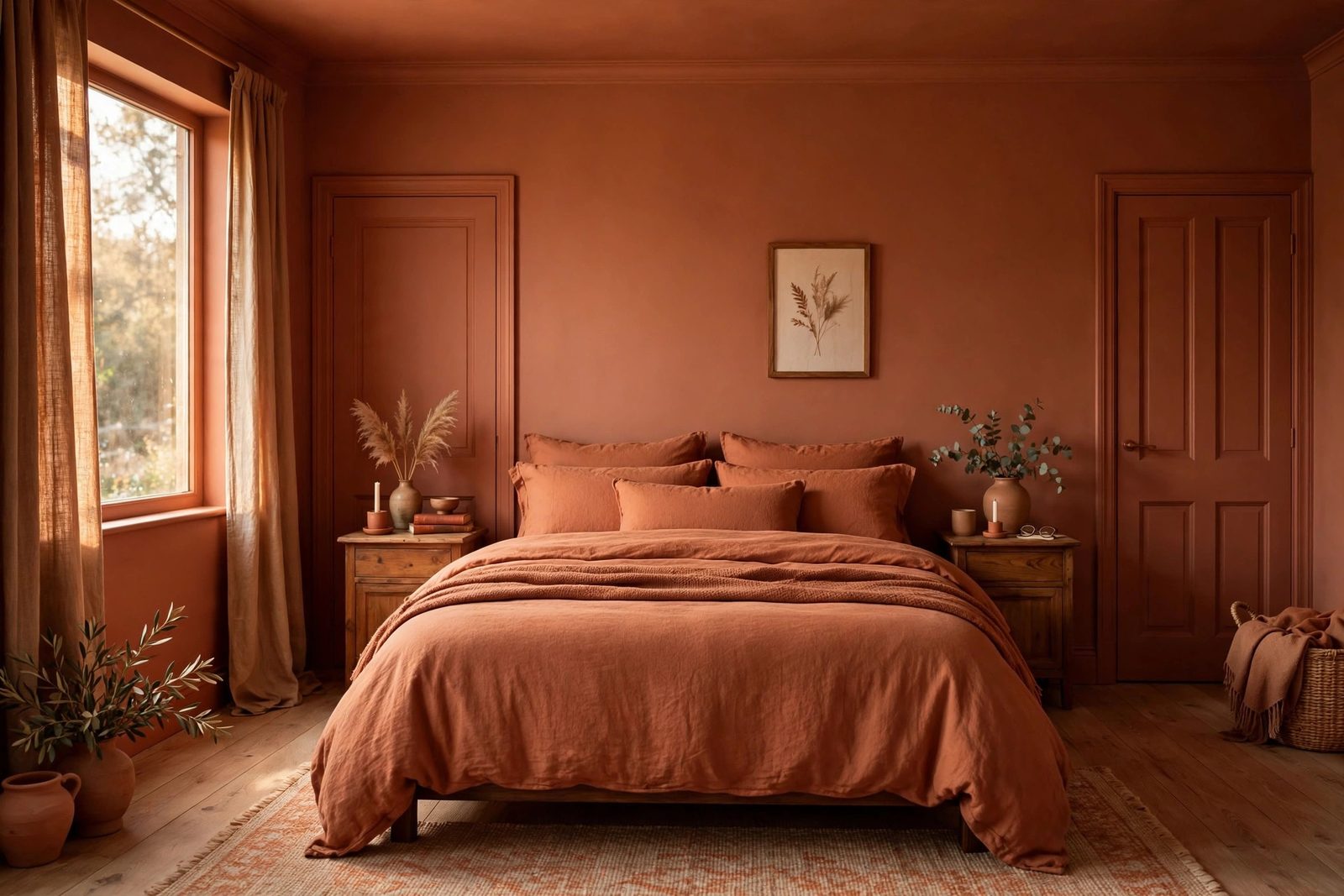
Color drenching ideas are having a moment, and for good reason: painting the walls, ceiling, trim, doors, and even bedding-adjacent furniture all in one color is the fastest way to make a small bedroom feel bold, intentional, and impossibly cozy. Instead of white ceilings and contrasting trim breaking the room into visual pieces, one enveloping hue blurs every boundary and turns the whole space into a single warm embrace.
This is the 2027 answer for small bedrooms and powder baths, the rooms where the old advice was always play it safe with white. Color drenching flips that logic: a small room wrapped in deep forest green or warm terracotta feels cocooning rather than cramped, because there is no visual clutter for the eye to trip over. One color, done with care, reads expensive and looks curated even on a renter-friendly budget.
Below are ten color drenching ideas, each built around one drenched color — from midnight navy to mushroom taupe to oxblood burgundy — with practical how-to guidance on getting the paint, sheen, bedding, and lighting right for each one.
How Do You Color Drench a Bedroom in Warm Terracotta?
Terracotta is the friendliest entry point into color drenching ideas. Pick a warm, earthy terracotta — something like a sun-baked clay with orange-brown undertones — and take it everywhere: walls, ceiling, window trim, doors, and baseboards, all in the same paint. Drench the ceiling too; this is the part most people chicken out on, and it is exactly what makes the room feel wrapped rather than just painted.
Because the paint does all the heavy lifting, the rest of the room stays simple. Choose bedding in tonal terracotta shades — a slightly deeper duvet, a lighter rust throw, cream linen pillows — so the bed melts into the walls instead of competing with them. Wood nightstands in a mid-tone oak or walnut add warmth without breaking the monochrome spell, and a woven jute or kilim rug keeps the earthy story going underfoot.
Lighting matters more in a drenched room than anywhere else: warm white bulbs (2700K) keep terracotta glowing amber instead of going orange. A brass or copper table lamp picks up the warm undertones, and sheer curtains in a soft cream let daylight filter in so the color never feels heavy by day.
Can Deep Forest Green Make a Small Bedroom Feel Bigger?
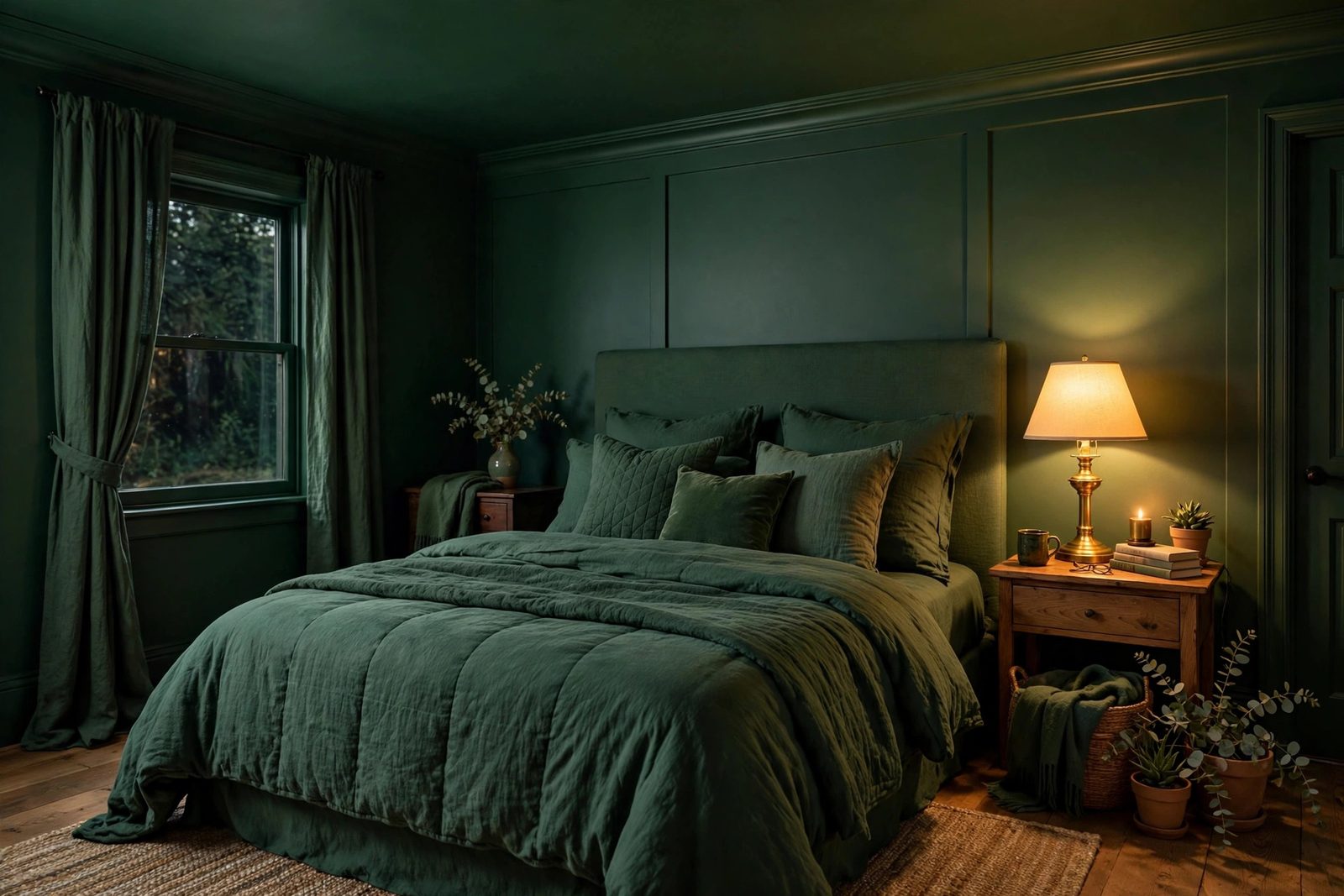
Deep forest green is the classic color drenching move for small bedrooms because it reads as a shadow — edges disappear, corners recede, and the room feels deeper than it is. Choose a green with real depth, not a bright grassy tone: think pine, hunter, or deep spruce. Paint walls, ceiling, trim, and even the inside of the closet door the same green so nothing interrupts the flow.
Brass is forest green's best friend. A brass table lamp, picture frames, or curtain rod gives the eye a gleaming accent to land on, which is important in a monochrome room — without one or two contrasting moments, the space can feel flat. Keep bedding tonal: a deep green duvet with moss or olive pillows and one cream or natural-linen accent layer so the bed has dimension.
This is a color that drinks light, so go generous with lighting. Two bedside lamps instead of one, a floor lamp in the dark corner, and warm bulbs throughout. The reward is a bedroom that feels like sleeping inside a pine forest at dusk — deeply calming and completely private.
How Do You Pull Off a Midnight Navy Drenched Bedroom?
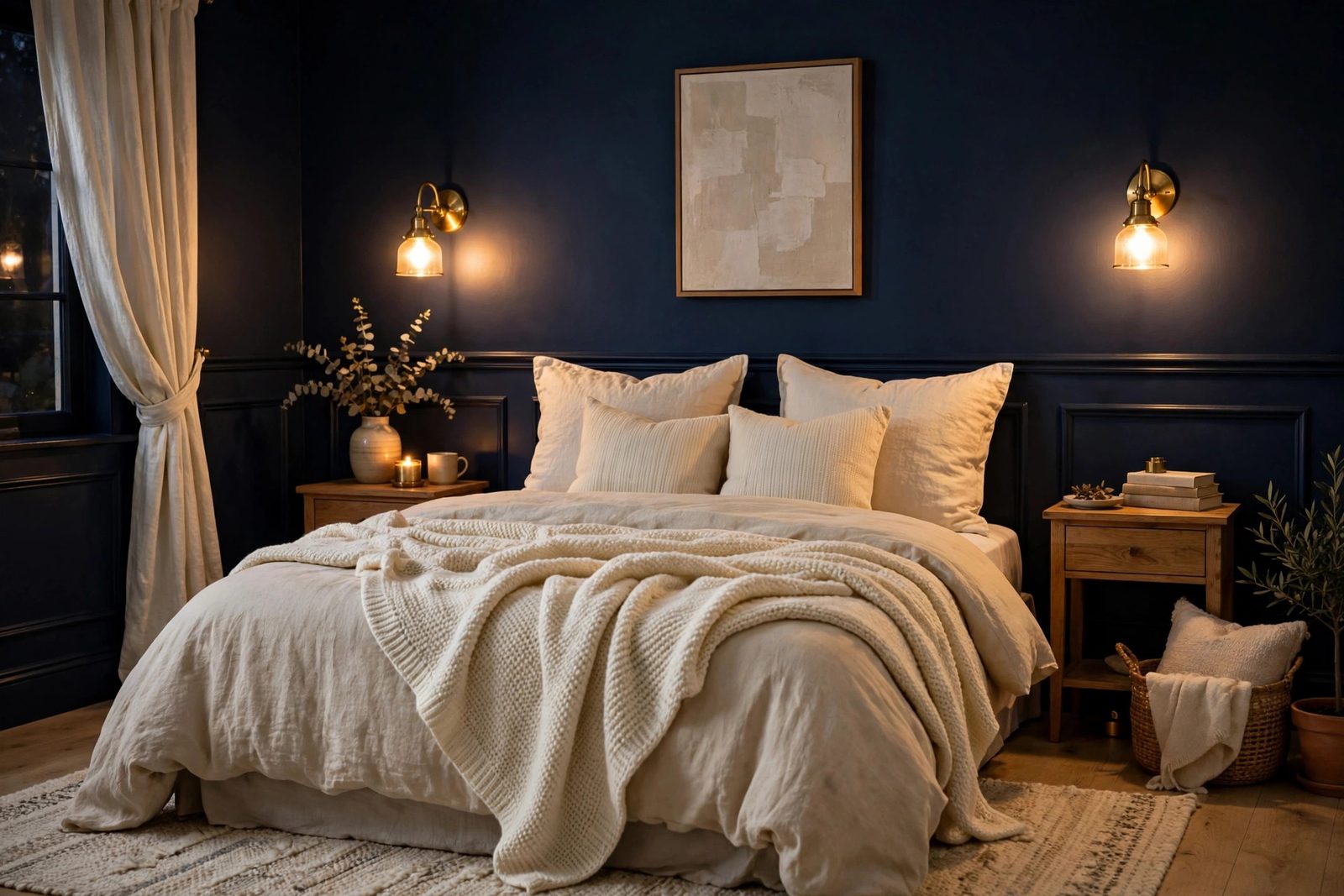
Midnight navy is drama without risk: it behaves almost like a neutral once it is on the walls, but it makes a small bedroom feel like a private club. Pick a navy with a blue-black base rather than a bright royal — you want ink, not flag. Drench walls, ceiling, trim, and the radiator cover if you have one; unpainted white radiators are the classic giveaway of a half-committed drench.
Brass sconces are the perfect partner for navy drenching. Mount one over each nightstand or float two flanking the headboard — the warm metal glows against the dark blue like candlelight and gives the room its focal points. A cream throw folded at the foot of the bed is the other essential accent; one light element in a dark drenched room keeps it from feeling like a cave.
Bedding should stay tonal but not identical: navy duvet, slightly lighter slate-blue sheets, cream or natural linen pillows. Keep the floor light if you can — a natural-fiber rug or pale wood floors stop a navy room from feeling bottom-heavy.
Is Mushroom Taupe the Most Livable Drenched Neutral?
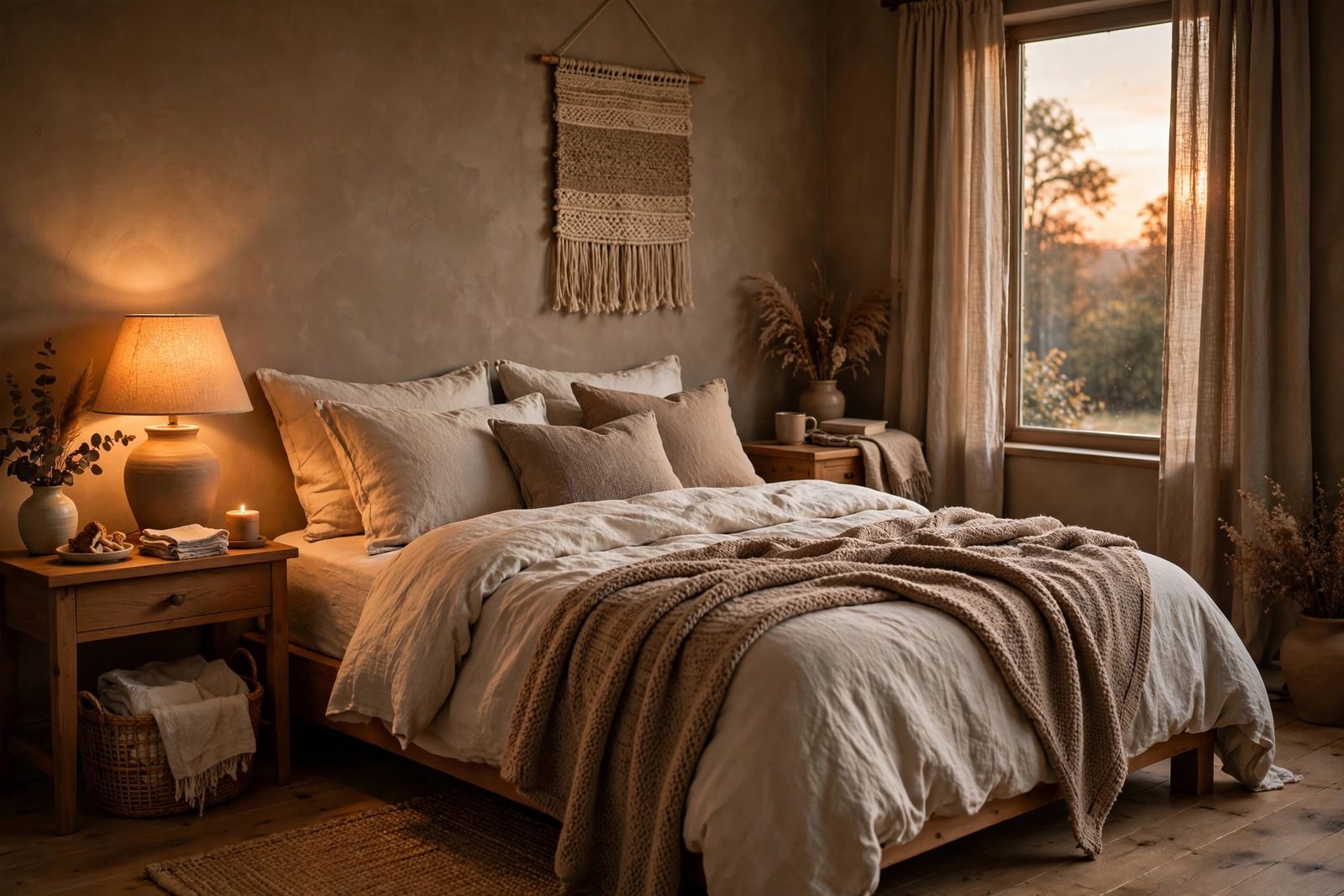
If bold feels scary, mushroom taupe is your color drenching gateway: a warm greige-taupe that envelops the room without shouting. It is the one drenched neutral that never reads flat, because its gray-beige balance shifts beautifully with the light — pinkish at dawn, golden at dusk. Take it across walls, ceiling, trim, and even paint the nightstands and dresser to match for the full cocoon effect.
Linen bedding is the natural partner here. Layer natural, oatmeal, and flax tones over the taupe base — the rumpled texture of linen is what gives a monochrome neutral room its depth, since the color itself is quiet. Avoid anything stark white; it will look harsh against warm taupe. Cream, ivory, and sand keep the harmony.
Taupe drenching is also the most resale-friendly of all these ideas, which matters if you rent or plan to sell. One gallon less commitment than navy, but all of the wrapped-up coziness. Add a textured boucle chair or a sheepskin throw for one plush moment, and the room feels like a high-end hotel suite.
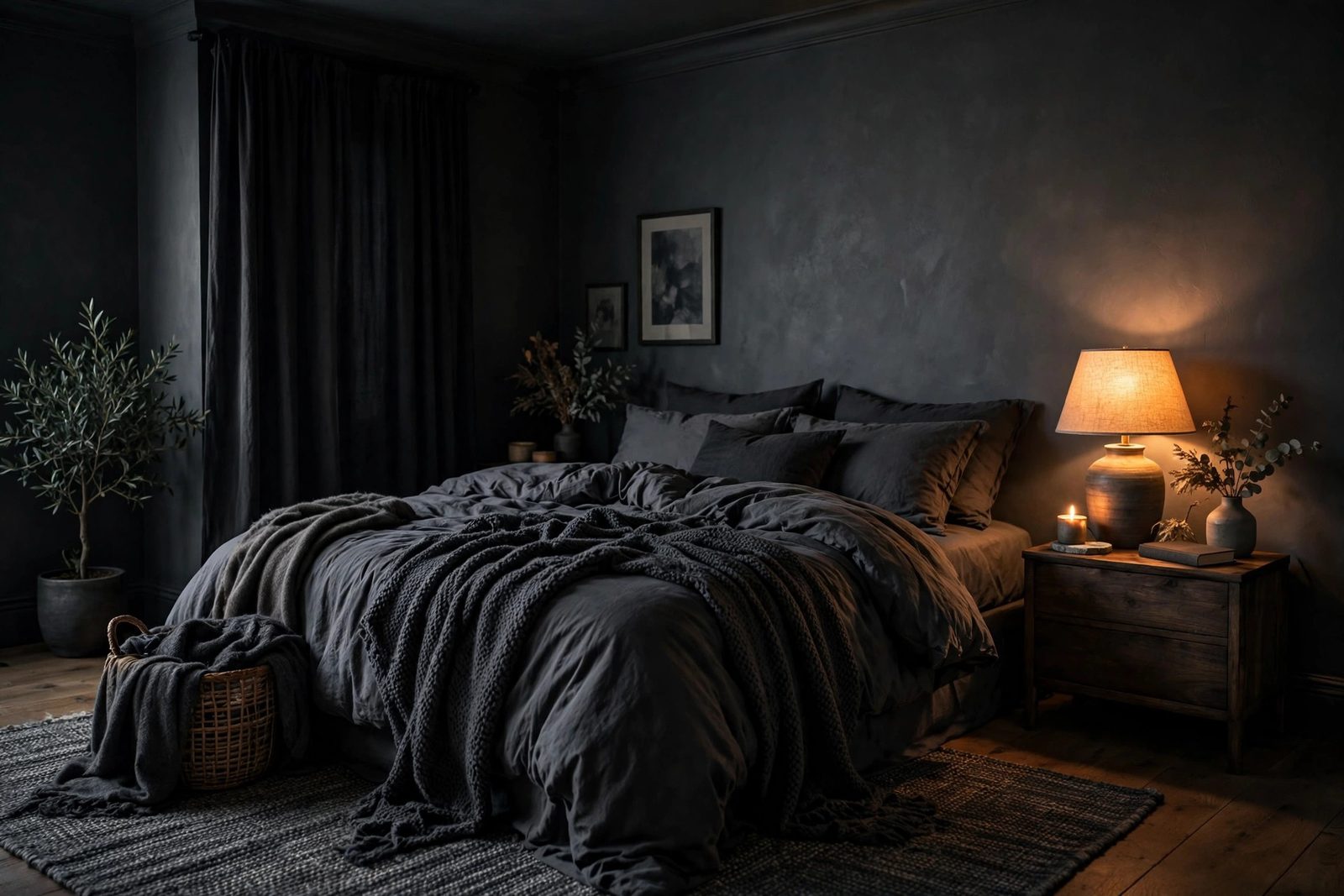
How Dark Is Too Dark? Charcoal Gray Drenching Done Right
Charcoal gray is the moodiest of the color drenching ideas, and it works because gray at this depth stops reading as office-neutral and starts reading as smoke and velvet. Choose a charcoal with a warm undertone — a pure blue-gray can turn cold and flat, but one with a whisper of brown feels like candlelight even in daylight. Drench everything: walls, ceiling, trim, door, and the headboard wall is no longer special, which is the point.
Soft lamp glow is non-negotiable in charcoal. Skip the overhead entirely and build the room around two or three warm lamps with fabric shades — the amber pools of light against dark walls are what make charcoal feel cocooning instead of gloomy. Dimmer switches are worth every penny here; a drenched dark room at half-light is pure atmosphere.
Bedding in tonal charcoals and slates keeps the envelope intact, with one medium-gray or warm-white layer for contrast — a pale throw at the foot of the bed is enough. Keep artwork minimal and large: one oversized piece with a thin black or brass frame, or a leaning mirror to bounce the lamplight around.
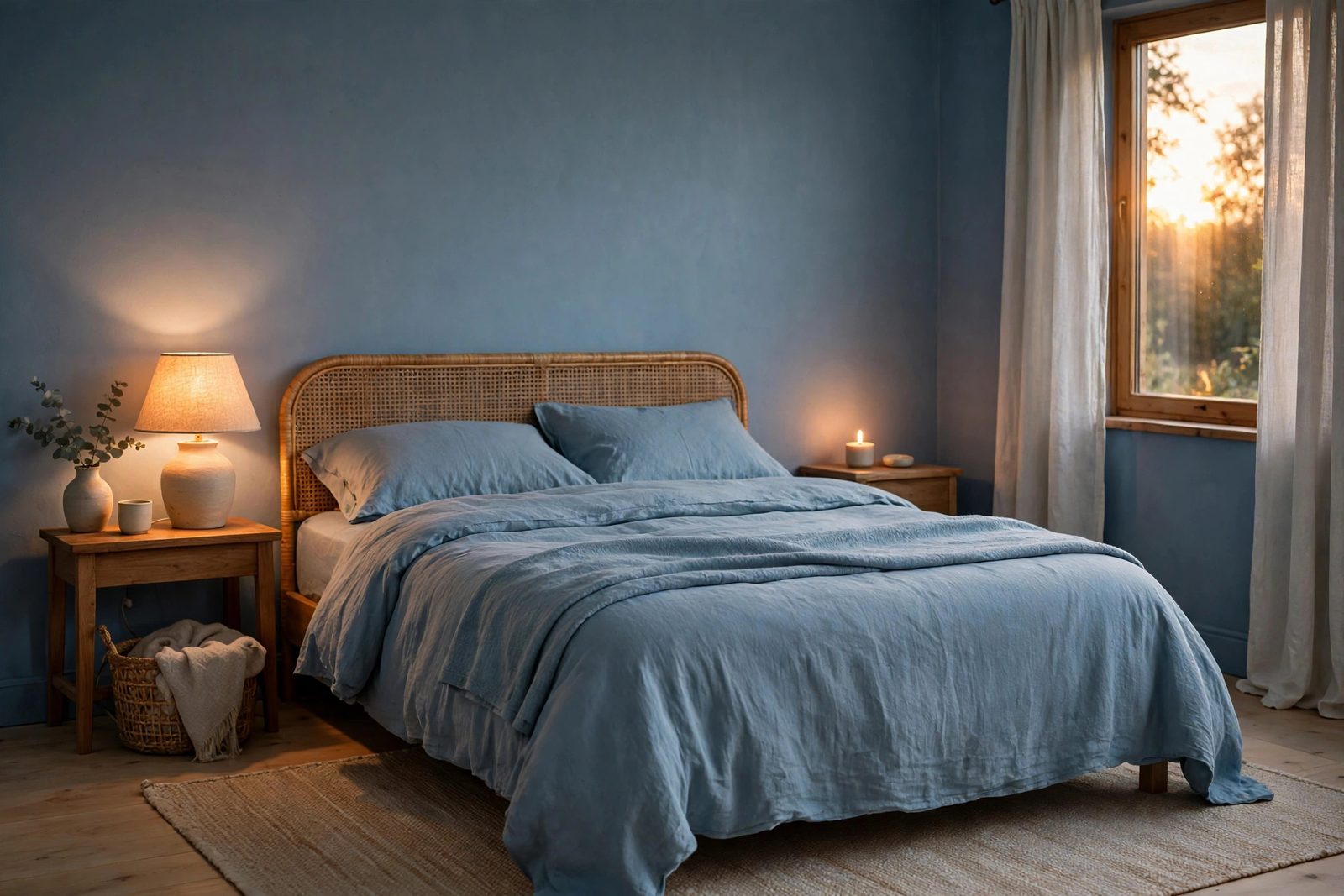
Can Dusty Blue Be a Color Drenching Color?
Dusty blue is the serene outlier in color drenching ideas: softer and airier than navy, but still saturated enough to wrap a room. Pick a blue with gray in it — a powdery, denim-adjacent tone — so it stays sophisticated rather than nursery-like. Drench walls, ceiling, and trim, and consider painting the wardrobe or built-in closet doors the same blue so storage disappears into the walls.
Minimal tonal bedding is the whole point here: a dusty-blue duvet, slightly lighter percale sheets, and pillows that range from chambray to slate. Resist the urge to add contrasting colors; this drench works because of its restraint. The one allowed accent is natural wood — a light oak bench or walnut nightstand — which keeps the blue from feeling chilly.
This is the best drenched color for light sleepers and low-light rooms. Dusty blue reflects more light than the dark drenches, so a north-facing bedroom still feels bright by day, and at night the whole room hums with calm. It is color drenching for people who want the cocoon without the cave.
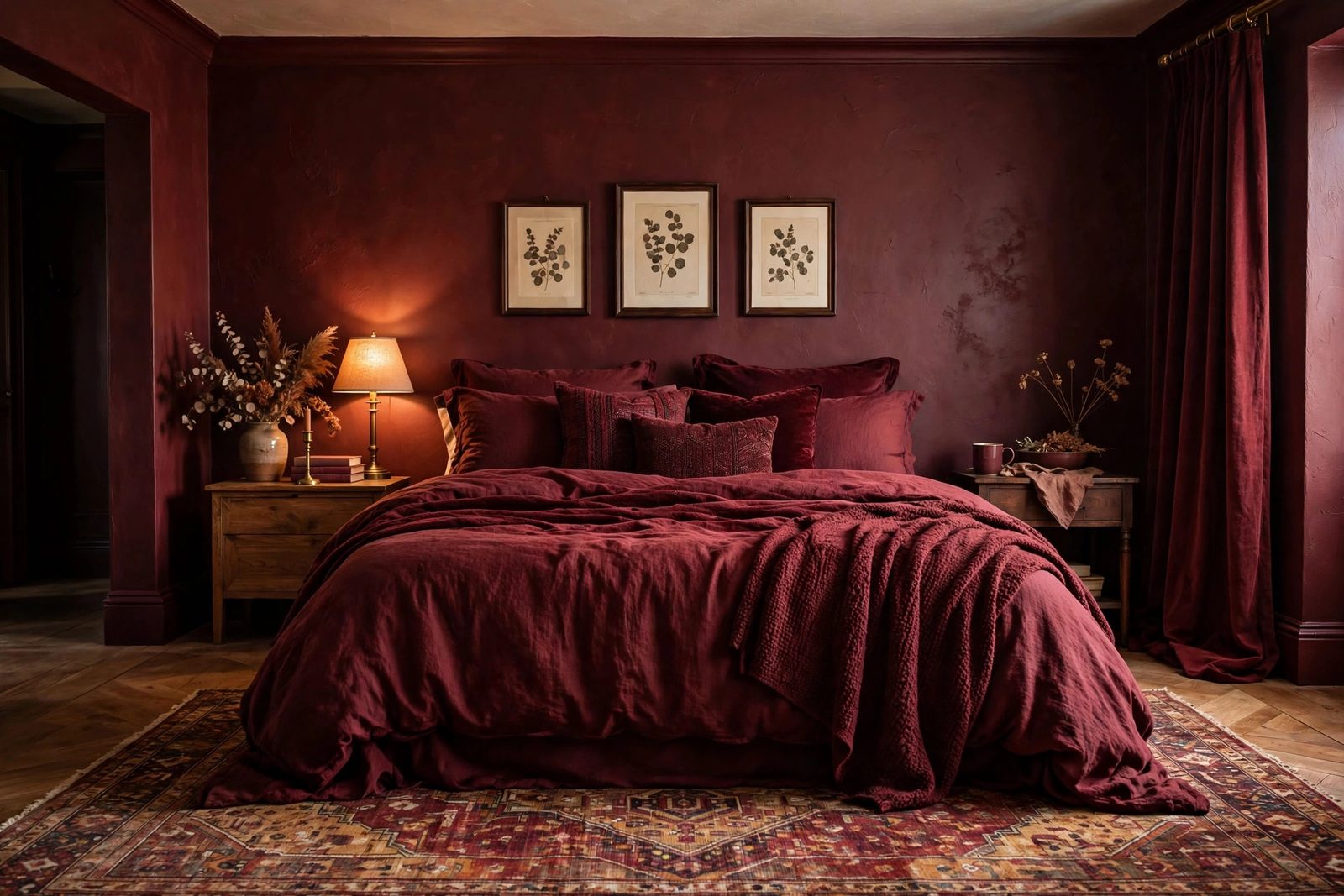
How Do You Style an Oxblood Burgundy Drenched Room?
Oxblood burgundy is the boldest of these color drenching ideas — a deep wine-red that turns a bedroom into something between a library and a jewel box. Go full commitment: walls, ceiling, trim, doors, and even the window frames in the same oxblood. Half-measures look accidental; the full drench looks like a design decision with a capital D.
A vintage rug is the perfect anchor for burgundy drenching. A Persian or Turkish-style rug in faded reds, creams, and browns sits beautifully on top of the envelope and gives the floor a story, while the aged pattern keeps the intense walls from feeling one-note. Let the rug peek out generously — at least two feet beyond the bed on each side.
Bedding should lean tonal: wine, merlot, and deep plum layers with one cream or blush accent pillow. Brass or antique gold hardware — drawer pulls, lamp bases, mirror frames — adds the old-world richness this color deserves. Keep the ceiling drench, too; a white ceiling over oxblood walls ruins the jewel-box effect instantly.
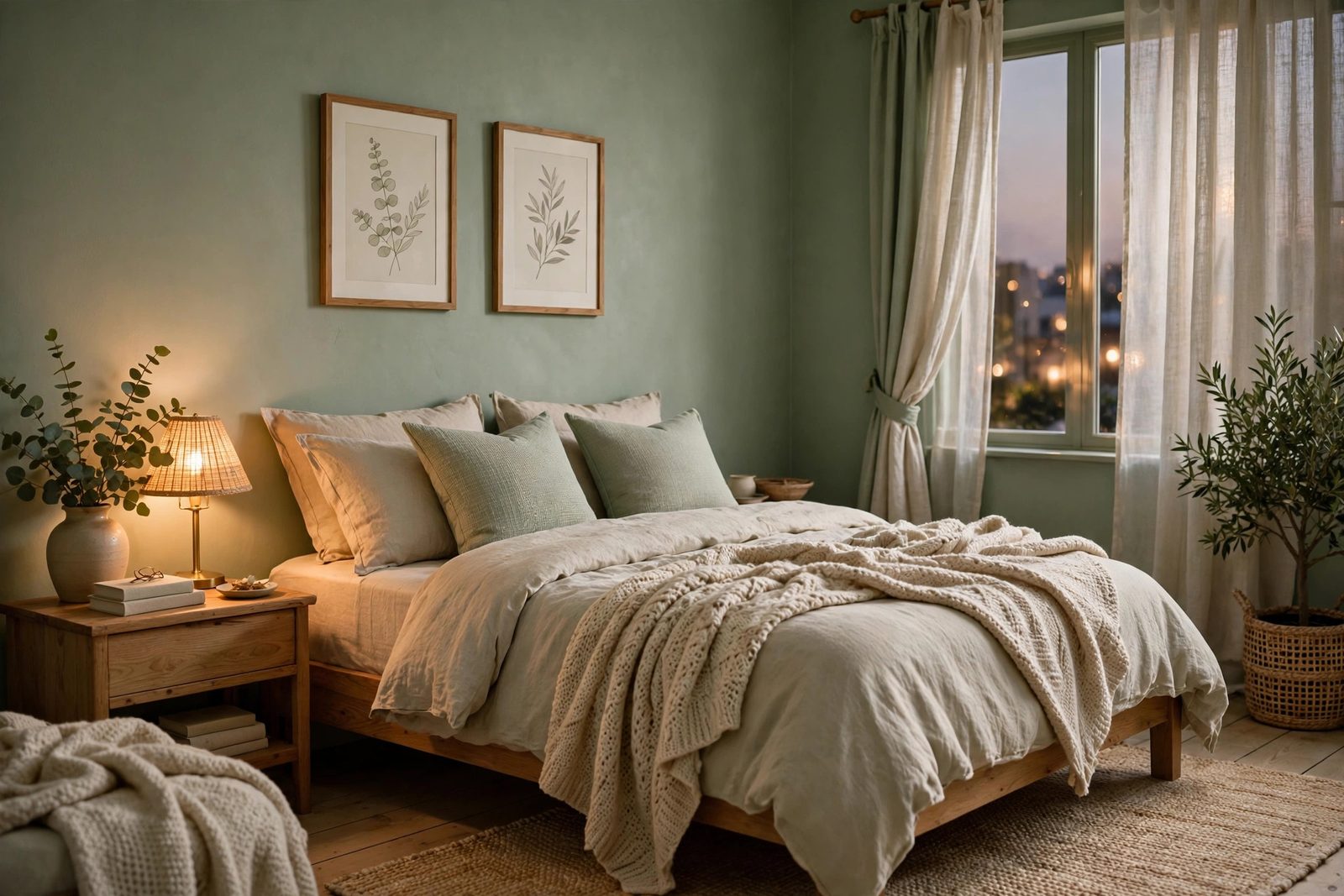
Why Is Sage Green the Calmest Drenching Choice?
Soft sage green is color drenching for the calm-seekers: a muted, gray-green that wraps a bedroom in quiet the way a garden does. It is one of the easiest drenches to live with long-term because it never shouts — it just sits there being peaceful. Paint walls, ceiling, trim, and doors the same sage, and if your headboard is wood, consider painting it sage too for the full seamless look.
Bedding in natural fibers — washed linen, cotton voile, a light quilt — in tones of sage, eucalyptus, and cream keeps the room breathing. This is the drench where plants truly shine: a trailing pothos, an olive tree in the corner, or eucalyptus stems on the nightstand extend the green story into something alive.
Sage drenching pairs beautifully with light woods and rattan, so a cane nightstand or oak bench fits right in. Keep lighting soft and warm; cool daylight bulbs will turn sage slightly minty, while 2700K bulbs keep it earthy. The result is a bedroom that feels like exhaling.
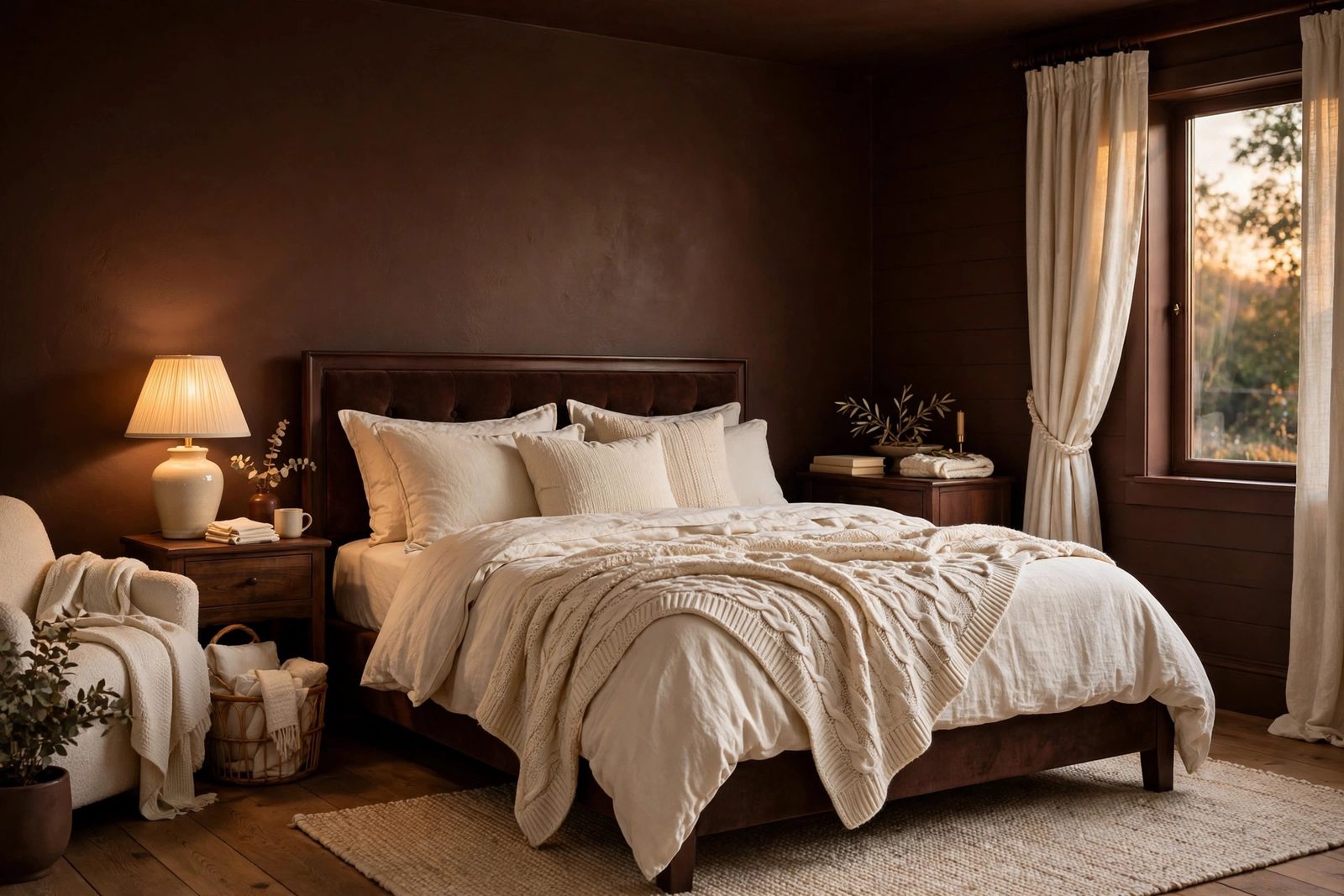
Can You Color Drench in Chocolate Brown?
Chocolate brown is the sleeper hit of color drenching ideas — richer than beige, warmer than gray, and unbelievably cozy once it is on all four walls and the ceiling. Choose a mid-to-deep cocoa rather than near-black espresso; you want the color to read as brown in daylight, not disappear into shadow. Drench walls, ceiling, trim, and the closet doors so the whole room melts into one warm mass.
Cream textiles are the essential counterpoint. A chocolate room with chocolate bedding can feel heavy, but cream or ivory sheets, a chunky cream knit throw, and natural-linen pillows lift the whole space — think hot cocoa with whipped cream. The contrast is what makes the brown feel luxurious instead of dark.
Natural textures keep chocolate drenching grounded: a jute rug, woven baskets, a leather bench, or rattan shades. Avoid black furniture here — it will vanish into the walls. Mid-tone woods and creams are your friends, and warm 2700K lighting is mandatory to keep the cocoa glowing instead of muddy.
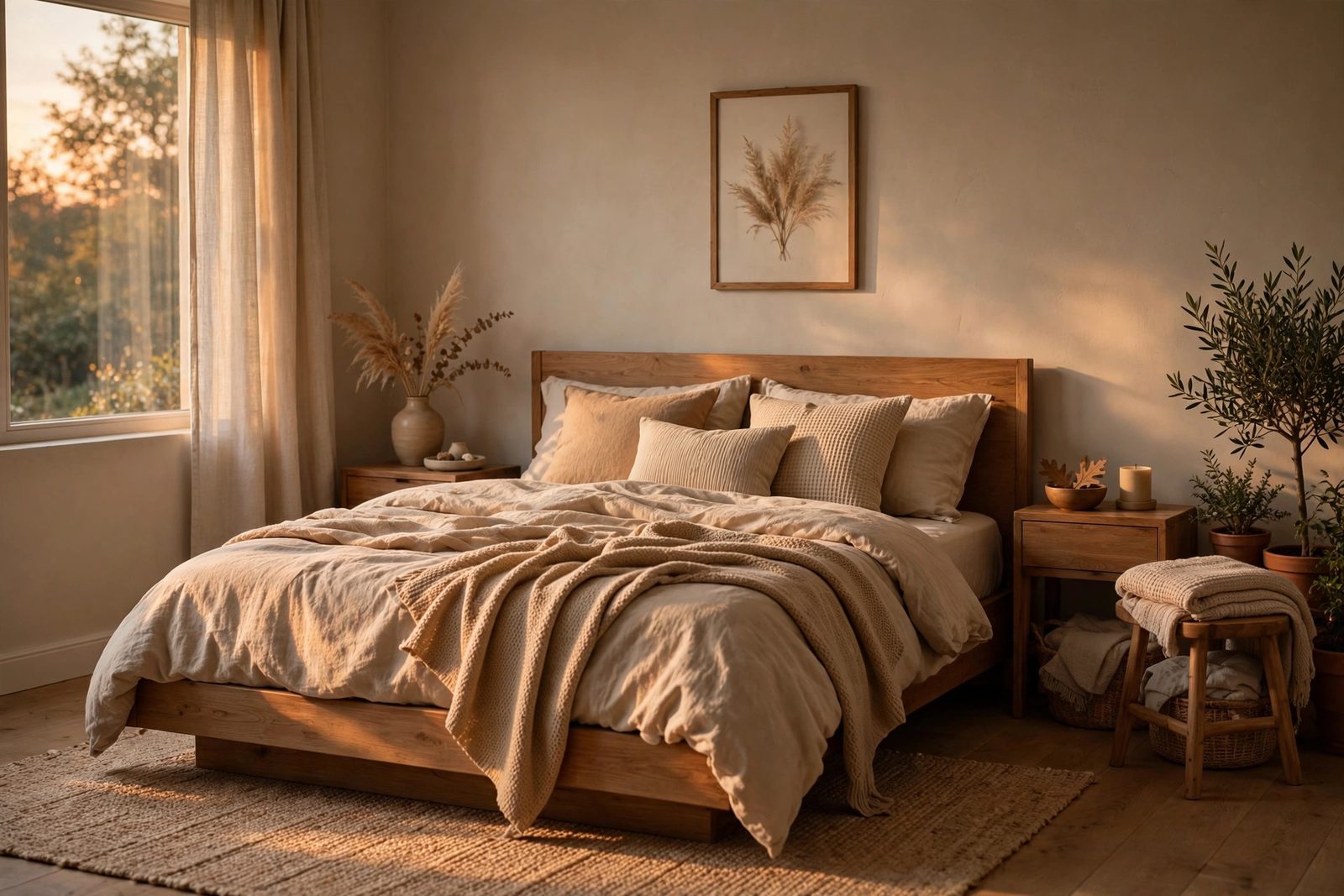
How Do You Drench a Room in Warm Greige?
Warm greige — that perfect midpoint between gray and beige — is the most versatile of the color drenching ideas, and the safest bet for a first drench. It has enough warmth to feel cozy and enough gray to feel modern, so it wraps a bedroom in calm without committing you to a strong color personality. Take it everywhere: walls, ceiling, trim, doors, and paint the baseboards the same so the floor line dissolves.
Natural wood accents are what make greige drenching sing. Light oak nightstands, a walnut bench, a teak-framed mirror — the wood grain provides the visual interest that the quiet color holds back, and the warmth of the wood keeps greige from tipping gray. Layer bedding in ivory, oatmeal, and warm white linen for a bed that looks like it belongs in a boutique hotel.
Because greige is light-reflective, this is the best drench for small or dark bedrooms — you get the cocooning envelope without losing brightness. It is also the easiest to accessorize seasonally: swap the throw and pillows from sage in spring to rust in fall, and the greige backdrop handles it all.
How to Pick Your Drench Color Without Regret
Start with undertone, not the color name. Every drenched color lives or dies by its undertone: a terracotta with pink undertones will read very differently from one with brown undertones once it covers a ceiling. Buy large peel-and-stick samples or paint big poster boards and move them around the room at different times of day — a color that looks perfect at noon can turn muddy under evening lamps.
Consider your light before your heart. North-facing rooms with cool light love warm drenches (terracotta, chocolate, warm greige); south-facing rooms with golden light can handle the cool drenches (forest green, navy, dusty blue) without them going cold. And be honest about your tolerance: if you get bored of colors quickly, drench in mushroom taupe or warm greige and let textiles carry the personality.
Commit to the ceiling and trim. The single most common color drenching mistake is painting the walls and stopping — white ceilings and white trim over drenched walls look unfinished and actually make the room feel smaller, because the contrast chops the space up. Same color, everywhere: that is the whole technique.
Sheen and Lighting Rules for Drenched Rooms
Sheen is your secret weapon in a monochrome room. Use the same color in different sheens to create depth without adding color: matte or flat on walls and ceiling, eggshell or satin on trim and doors, and maybe a semi-gloss on a painted piece of furniture. The light catches each surface differently, so the room has dimension even though it is one hue.
Layer your lighting, because a drenched room has nowhere to hide bad light. Overhead lighting alone will flatten a dark drench and wash out a light one — instead, build around two bedside lamps, one floor or table lamp in the darkest corner, and warm 2700K bulbs everywhere. Dimmers on every switch let you tune the mood from bright morning to cocooning evening.
Watch the finish on the ceiling: flat paint is essential up there, because any sheen on a ceiling shows every roller mark and imperfection. And if you are drenching a rental, check whether your lease allows painted trim — some landlords draw the line at woodwork, in which case drenching just walls and ceiling still gets you 80% of the effect.
Final thoughts
Color drenching looks daring in photos, but in real rooms it is one of the most forgiving decorating moves you can make. One color means no agonizing over what matches what; the paint does the designing, and you just layer in texture, wood, and warm light. A small bedroom wrapped in terracotta or forest green feels more intentional — and more expensive — than a bigger room with three competing accent colors.
If you are nervous, start with the most livable drenches: warm greige, mushroom taupe, or sage green. Live with the full envelope — ceiling included — for a month, and notice how the room feels at night with the lamps on. That cocooned, wrapped-up feeling is the whole point, and it is why this trend has real staying power beyond 2027.
Pick your color, buy the extra gallon for the ceiling, and drench with confidence. The boldest rooms are often the simplest ones.
FAQ
What is color drenching?
Color drenching is painting a room's walls, ceiling, trim, doors — and sometimes furniture — all in the same color (or very close tonal shades of it). Instead of the traditional white ceiling and contrasting trim, one enveloping hue blurs every boundary, making rooms feel cozier, more intentional, and often larger because the eye isn't interrupted by visual breaks.
Does color drenching make a small bedroom feel smaller?
Usually the opposite. A small bedroom drenched in one color feels cocooning rather than cramped, because there are no contrasting edges for the eye to trip over — corners and ceiling lines visually recede. Dark drenches (navy, forest green, charcoal) make boundaries disappear; light drenches (greige, sage, dusty blue) keep the room bright while still feeling wrapped.
Should the ceiling really be the same color in color drenching?
Yes — the ceiling is what separates true color drenching from just a bold wall color. A white ceiling over drenched walls chops the room in half visually and makes the space feel smaller. Paint the ceiling the same color in flat/matte finish; it's the single move that delivers the full cocooning effect.
What paint sheen should I use for color drenching?
Use the same color in different sheens for subtle depth: matte or flat on walls and ceiling (flat hides imperfections up top), eggshell or satin on trim, doors, and woodwork, and optionally semi-gloss on one painted furniture piece. The varying sheens catch light differently, giving a monochrome room dimension without adding any new color.
What colors work best for color drenching a bedroom?
Bedrooms do best with enveloping, restful hues: warm terracotta, deep forest green, midnight navy, warm mushroom taupe, charcoal gray, dusty blue, oxblood burgundy, soft sage, chocolate brown, and warm greige. Match the undertone to your room's light — warm colors for north-facing rooms, cooler saturated colors for sun-filled south-facing rooms.
Is color drenching renter-friendly?
It can be, with permission. Painting walls and ceilings is usually reversible with one coat of primer and landlord-approved paint, but many landlords prohibit painting trim and doors — check your lease first. If trim is off-limits, drenching just the walls and ceiling still delivers most of the effect, and you can extend the monochrome feel with tonal bedding, curtains, and rugs.