Laundry Room
Laundry Room Decor Ideas
12 practical laundry room decor ideas for better storage, a clear folding space, calm color, and an organized room that is easier to use every day.
A laundry room is primarily a working space, but that does not mean it has to feel cold or unfinished. Thoughtful storage, attractive materials, better lighting, and a few decorative details can make everyday chores feel more manageable while keeping the room organized.
The most effective laundry room decor ideas combine appearance with practical function. Shelves should hold items you actually use, containers should make supplies easier to reach, and work surfaces should remain clear enough for sorting and folding clothes. When decoration supports the way the room works, even a very small laundry area can feel polished and intentional.
You also do not need a large dedicated utility room to create a beautiful setup. Many of these ideas work in apartment laundry closets, hallway cupboards, narrow rooms, kitchen-adjacent laundry areas, and compact spaces with stacked machines. The goal is to use the available space carefully rather than forcing in unnecessary furniture or accessories.
Here are 12 laundry room decor ideas for creating a space that feels attractive, practical, and easier to maintain. If you are planning the full layout, these laundry room designs offer more built-in storage, sink, cabinet, and appliance layout inspiration.
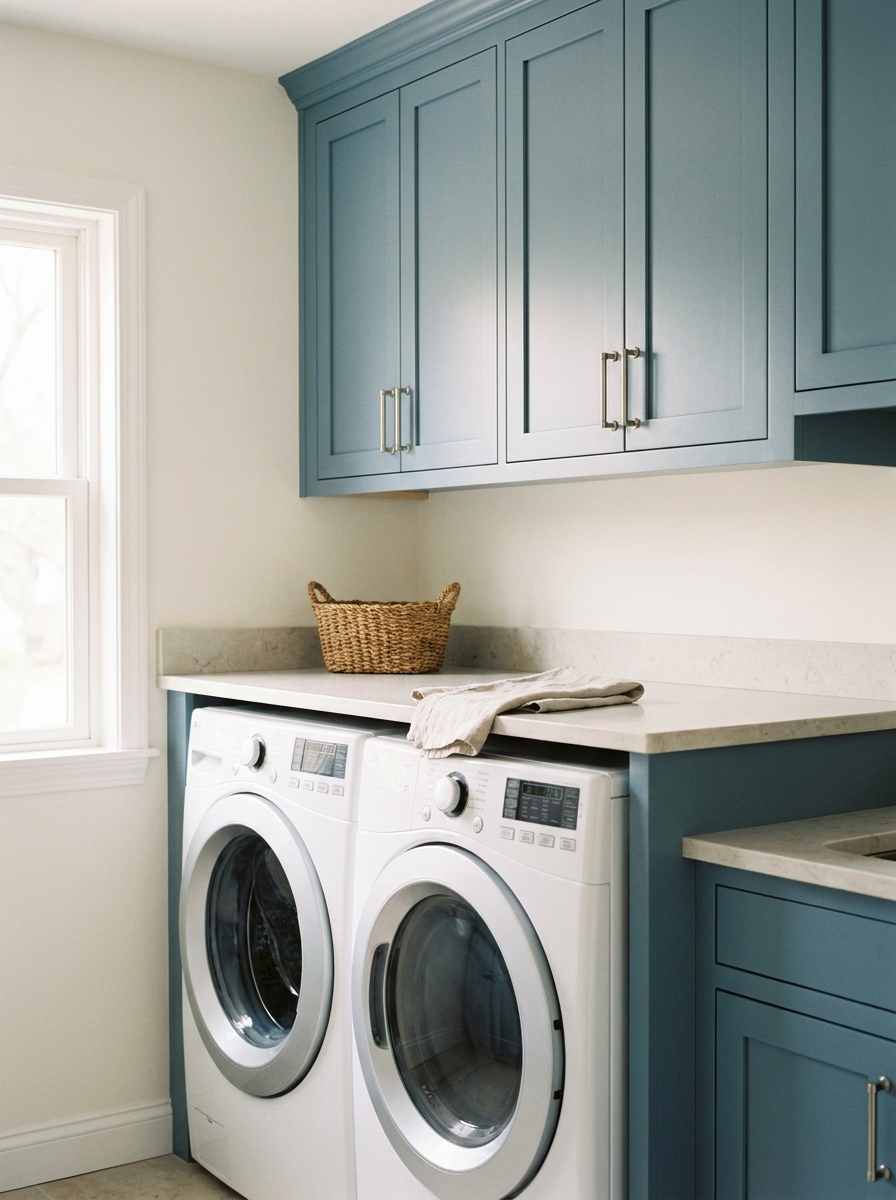
Add cabinets above the washer and dryer
Cabinets above the machines provide valuable concealed storage in an area that might otherwise remain unused. They are ideal for detergent refills, cleaning products, spare towels, stain treatments, and household supplies that do not need to remain visible.
Choose cabinets that fit the scale of the room. Full-height doors can make a narrow laundry wall feel clean and streamlined, while shorter cabinets with a shelf beneath them provide a mix of hidden storage and easy access. In a small room, matching the cabinet color to the walls can keep the upper half from feeling too heavy.
Cabinet color can also establish the style of the laundry room. Dusty blue or muted green-gray adds gentle color, warm white keeps the space bright, and pale wood creates a natural Scandinavian feel. Use simple hardware in brushed nickel, brass, or matte black to complete the look without adding visual clutter.
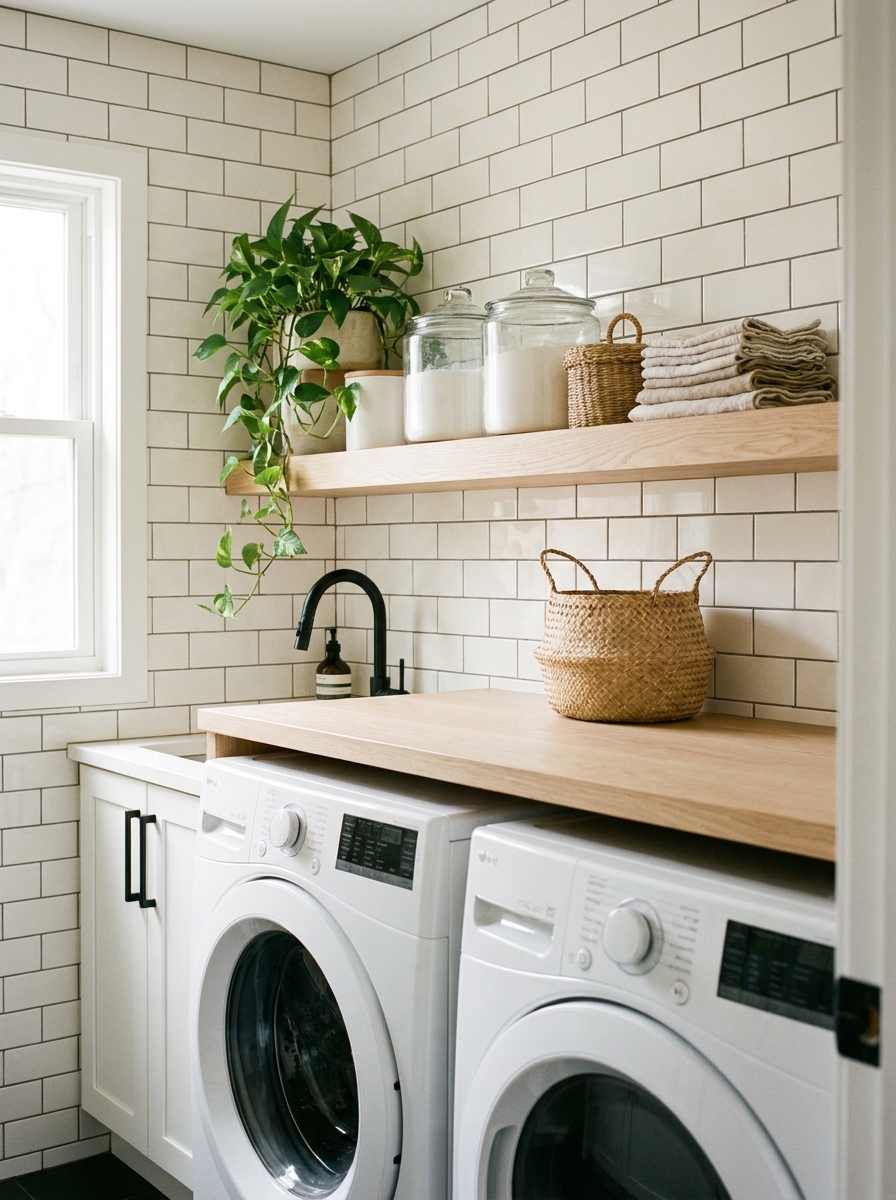
Install a floating shelf
A floating shelf is one of the simplest ways to add storage and decoration above a washer and dryer. It creates a convenient place for detergent, dryer sheets, cleaning brushes, and a few attractive containers without requiring a full cabinet installation.
Keep the shelf deep enough to hold practical supplies but not so deep that it becomes difficult to reach over the machines. Wood adds warmth to white or colored cabinetry, while a painted shelf can blend into the wall for a quieter appearance.
Avoid filling the shelf with decorative objects that have no purpose. A small plant, framed print, or ceramic container can soften the room, but most of the space should support the laundry routine. This guide on how to style floating shelves can help you keep the mix balanced.
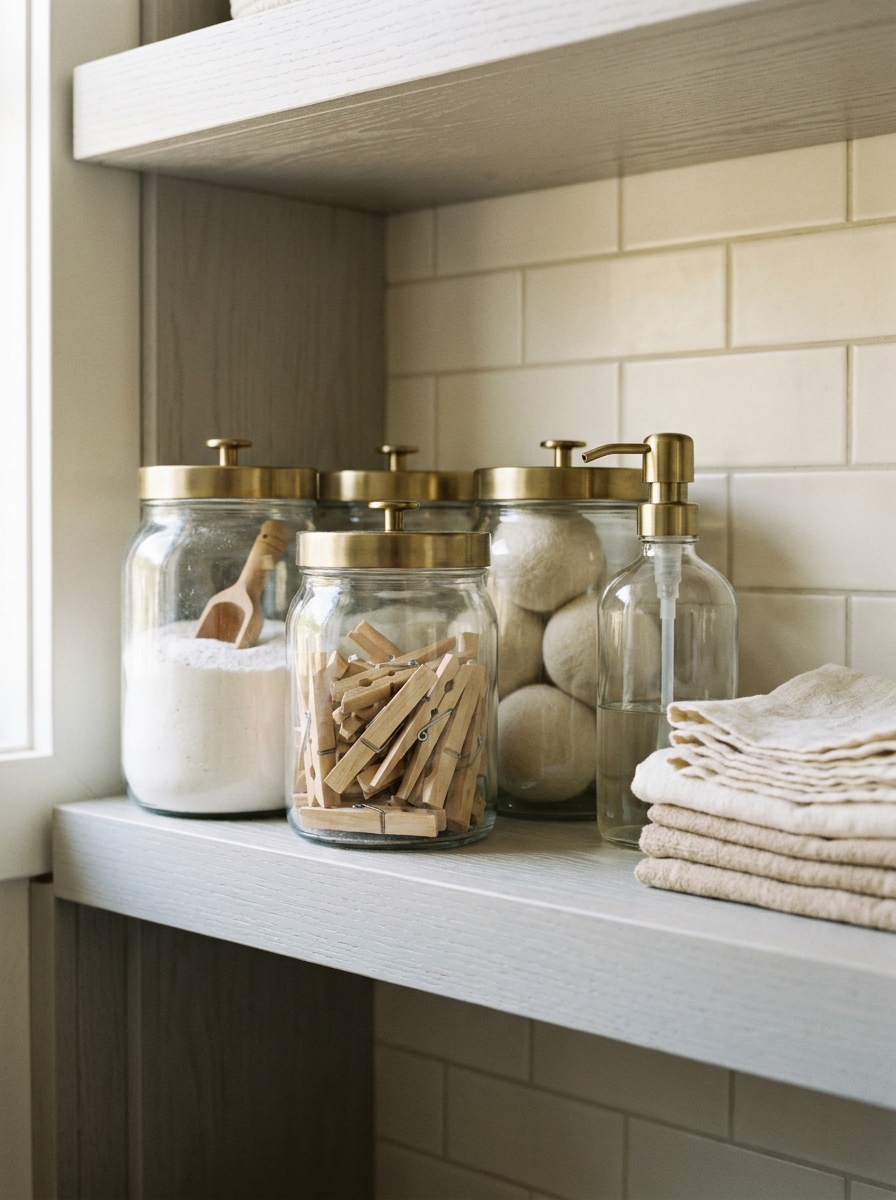
Use attractive containers for laundry supplies
Detergent packaging can make open shelves and counters look visually busy. Transferring frequently used supplies into coordinated containers creates a calmer appearance and makes it easier to see when something needs to be replaced.
Glass jars work well for powder detergent, scent boosters, clothespins, and dryer balls. Liquid products can be stored in simple dispensers, although the containers should always be clearly identifiable within the household and kept safely away from children and pets.
You do not need to decant every product. Keep everyday supplies accessible and store refills or less attractive packaging inside cabinets. This creates a neat appearance without turning the system into unnecessary extra work.
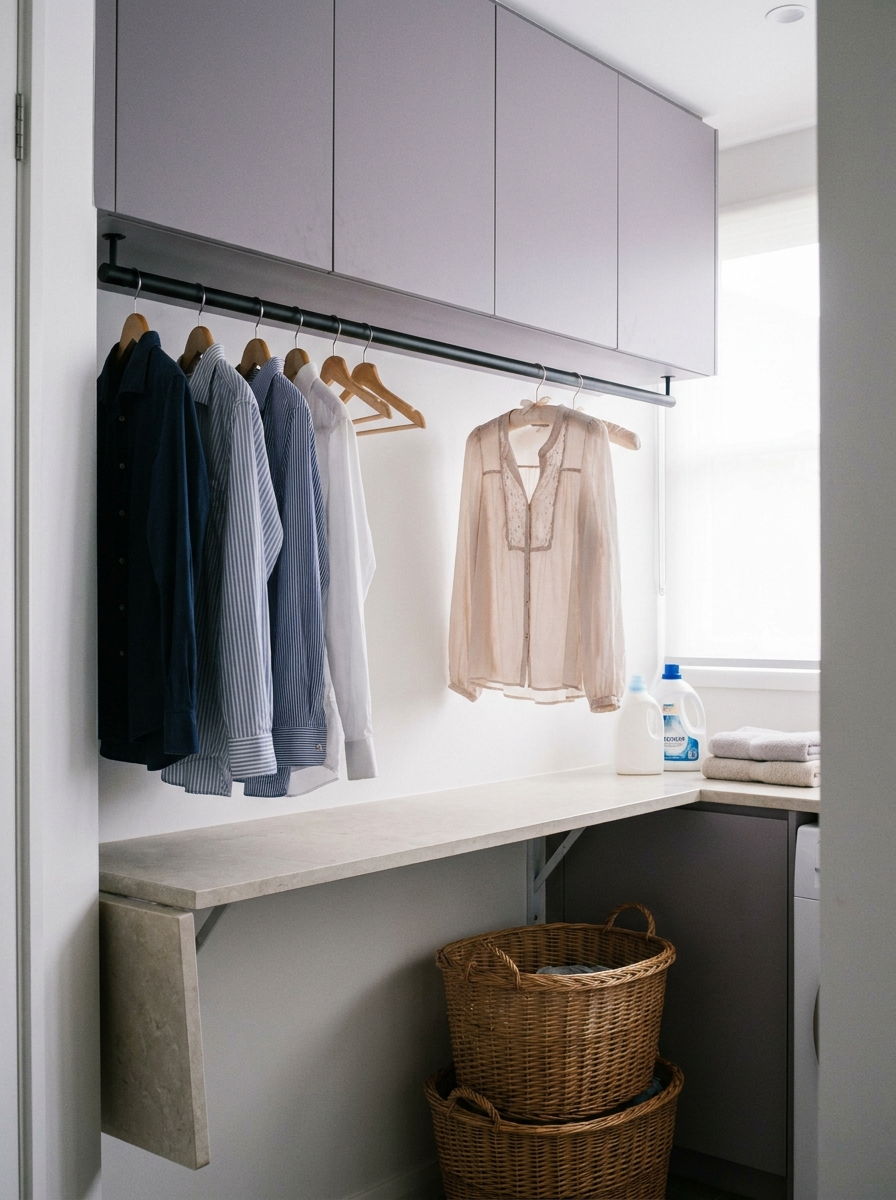
Add a hanging rail for clothes
A hanging rail provides a place for air-drying delicate clothing, hanging freshly ironed shirts, or keeping garments wrinkle-free before they are put away. It can be installed beneath cabinets, between two wall units, or across an unused section of the room.
Brass, black, chrome, and wooden rails can each create a different visual effect. Choose a finish that coordinates with the cabinet hardware and lighting so the rail looks like an intentional part of the design.
Make sure the rail is positioned where hanging clothes will not block the machines or walkway. In a small laundry room, a short rail over a counter or utility sink may be more practical than one extending across the entire room.
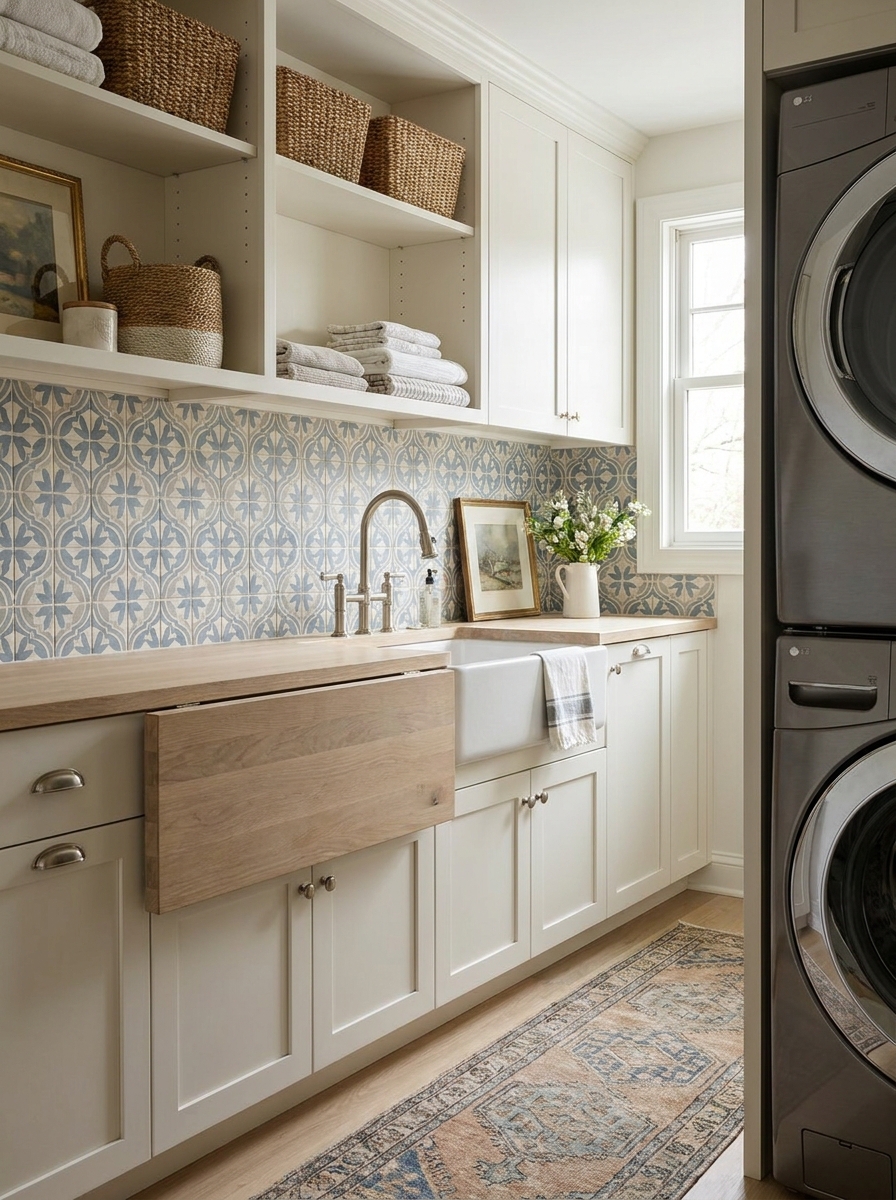
Introduce a patterned backsplash
A backsplash can bring color and character into a laundry room while protecting the wall behind a sink, counter, or machines. Because laundry areas are often smaller than kitchens, they offer an opportunity to use a pattern that might feel too strong in a larger room.
Small geometric tiles, checkerboard patterns, soft blue designs, handmade cream tiles, and muted botanical motifs can all work. The pattern should coordinate with the cabinetry rather than competing with it.
For a rental or lower-cost update, removable tile panels may provide a similar effect. Choose a design with a realistic finish and use it on one focused area rather than covering every wall.
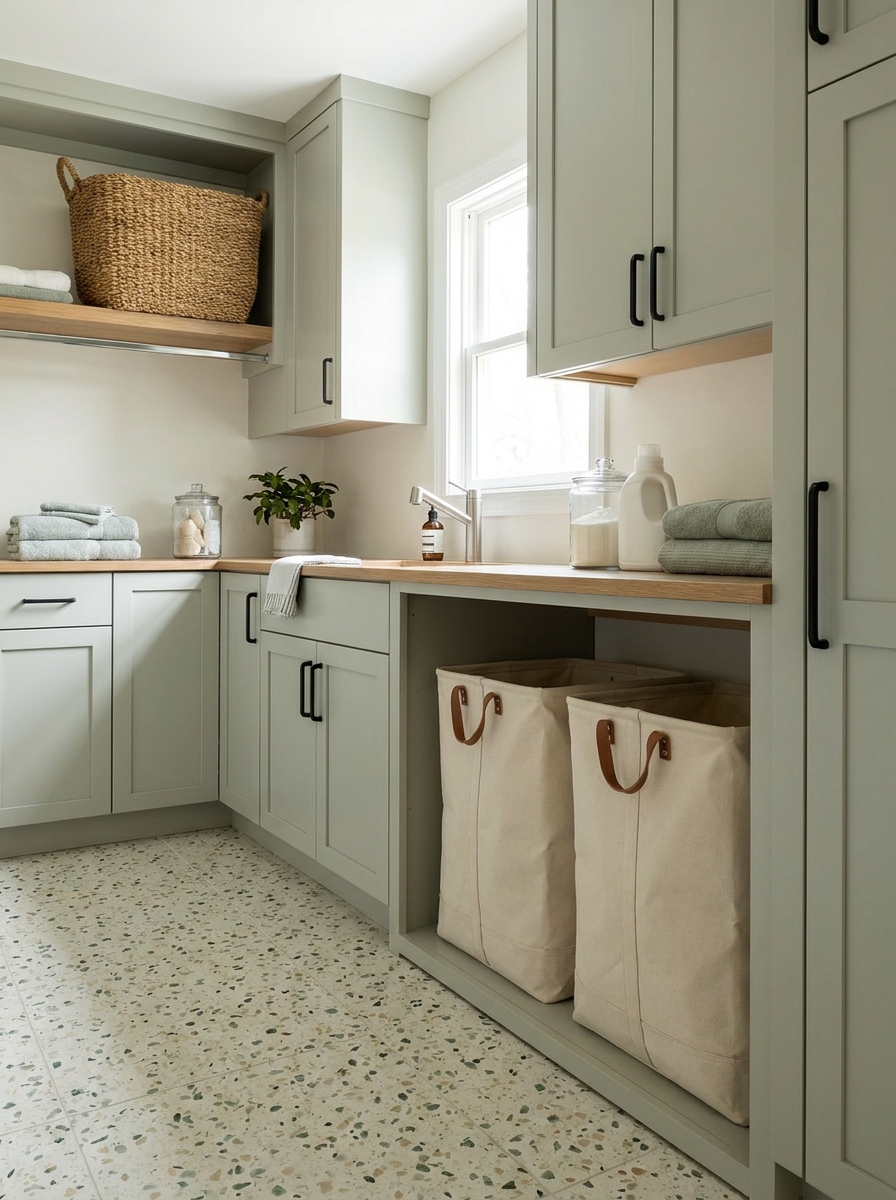
Use baskets for sorting and storage
Baskets can help separate lights, darks, towels, delicate clothing, and items waiting to be ironed. They also hide visual clutter and add texture to a room dominated by hard appliances and cabinetry.
Use woven baskets for open shelves, structured fabric hampers for floor-level sorting, or pull-out baskets inside cabinets. Choosing similar shapes or materials helps the room feel coordinated, even when the baskets serve different purposes.
The best storage system should be easy for everyone in the household to understand. Avoid creating too many categories. Two or three clear sorting areas are often more sustainable than an elaborate setup that is difficult to maintain. These small apartment storage ideas follow the same practical approach.
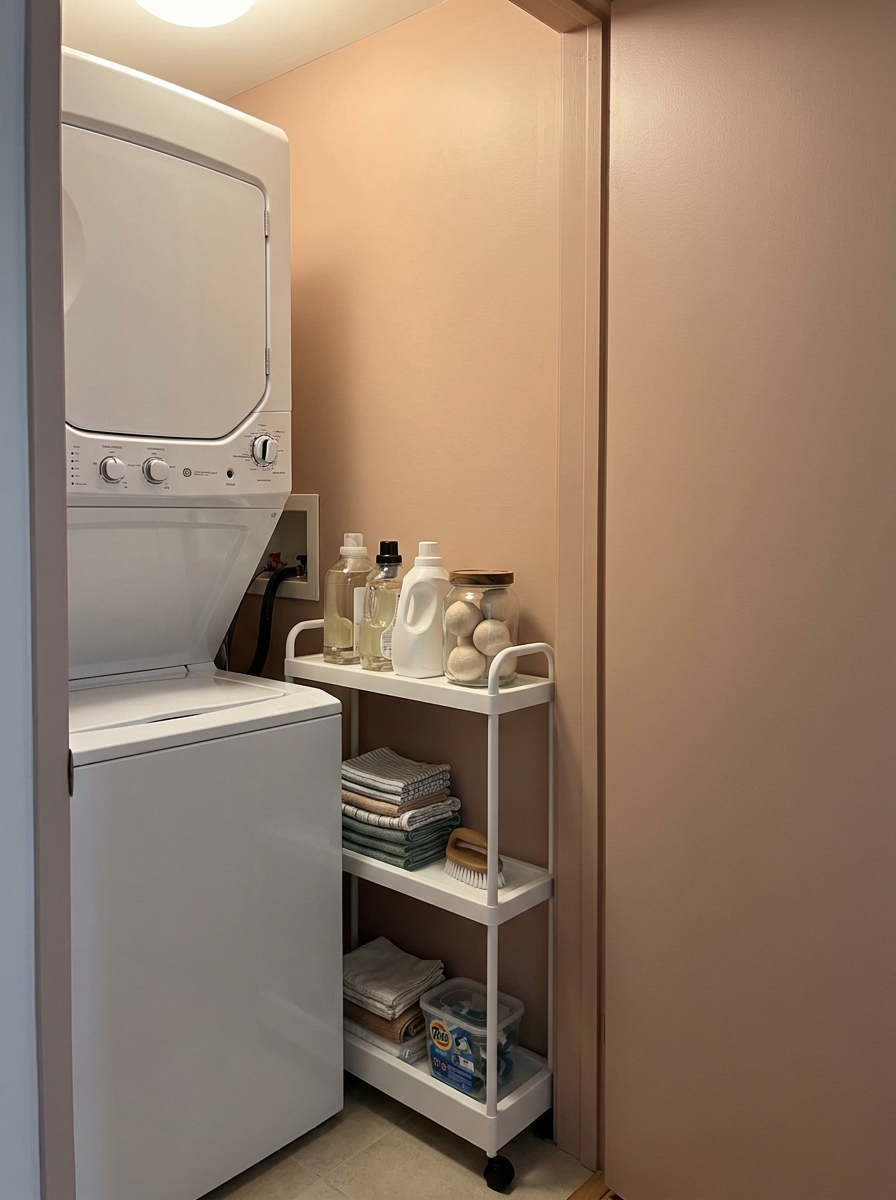
Add a slim rolling cart
The narrow gap beside a washer or dryer can often hold a slim rolling cart. This is an efficient place to store detergent, stain remover, cleaning sprays, brushes, and spare supplies without using counter space.
Choose a cart with raised edges so products remain secure when it is moved. Metal designs suit modern rooms, while a white or pale wood cart can blend into lighter surroundings.
Keep the most frequently used products on the easiest shelf to reach. Refills and less-used items can be placed lower down. This simple arrangement prevents the cart from becoming another disorganized storage area.
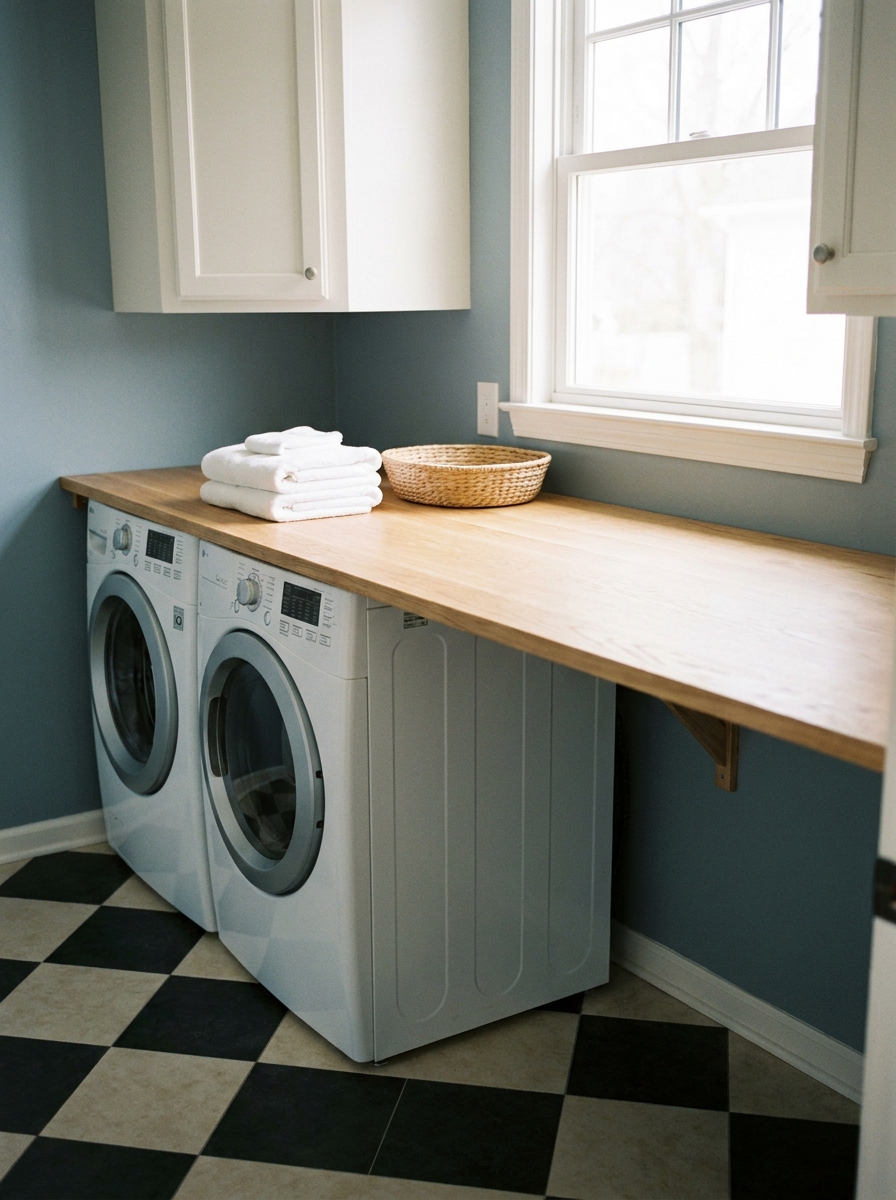
Create a folding counter
A counter above front-loading machines turns unused space into a practical surface for folding clothes, sorting laundry, and holding baskets. It also visually connects the washer and dryer, making the setup look more built-in.
Wood counters introduce warmth, while pale stone or durable laminate creates a cleaner contemporary appearance. The surface should be moisture-resistant and installed with enough clearance for the machines to operate safely.
Keep the counter mostly empty. One tray or small basket may be useful, but the main purpose should remain folding and sorting. A heavily decorated counter may look attractive initially but will quickly become frustrating during everyday use.
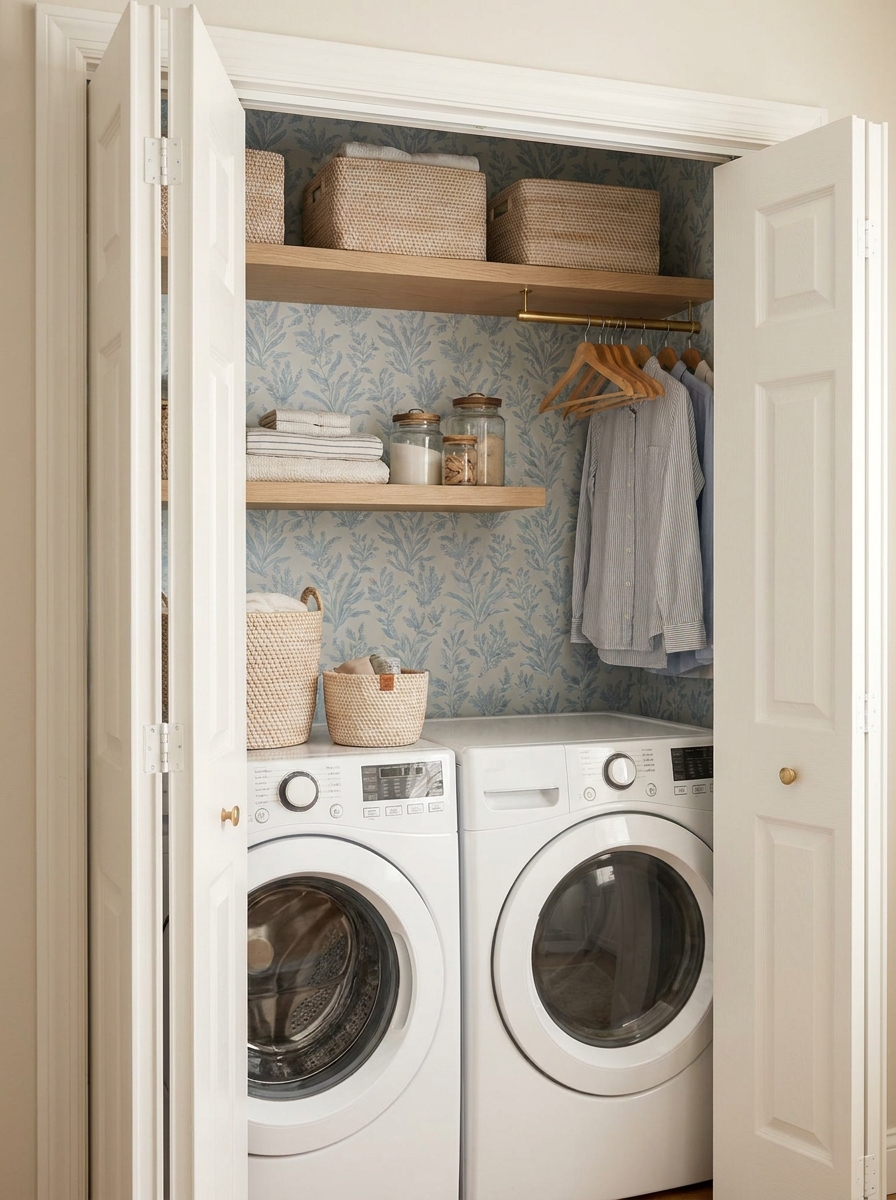
Make a small laundry closet feel intentional
A laundry closet can feel like a designed part of the home rather than an appliance cupboard. Matching shelving, coordinated containers, better lighting, and a thoughtful wall color can give the small area a clear identity.
Stacking the machines frees space for a narrow shelf, hanging rail, or storage cabinet. If the machines sit side by side, use the wall above them for shelves or shallow cabinets.
The doors can also contribute to the appearance. Louvered, paneled, sliding, or bifold doors can conceal the laundry area when it is not in use. Inside the closet, choose a slightly stronger paint or wallpaper to create a pleasant surprise when the doors are opened.
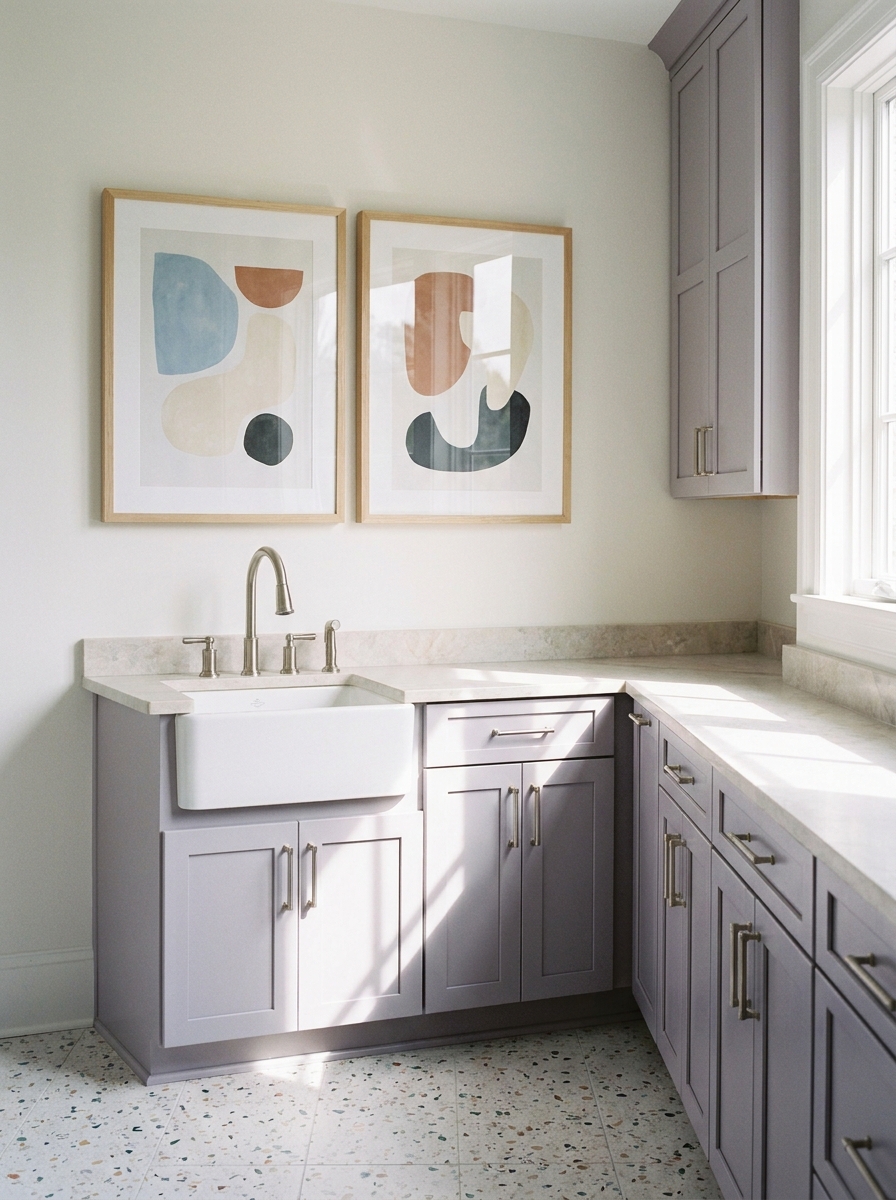
Add simple wall art
Laundry room wall art can make the space feel connected to the rest of the home. Choose artwork that suits your interior style instead of relying on novelty laundry signs or overly literal phrases.
Abstract prints, small landscapes, vintage botanical illustrations, photography, and simple graphic art can all work. Moisture-resistant frames are helpful in rooms that become humid.
One medium print above a counter or a pair of smaller pieces beside the machines is usually enough. Too many frames can make a functional room feel crowded, especially when shelves and storage already occupy much of the wall space.
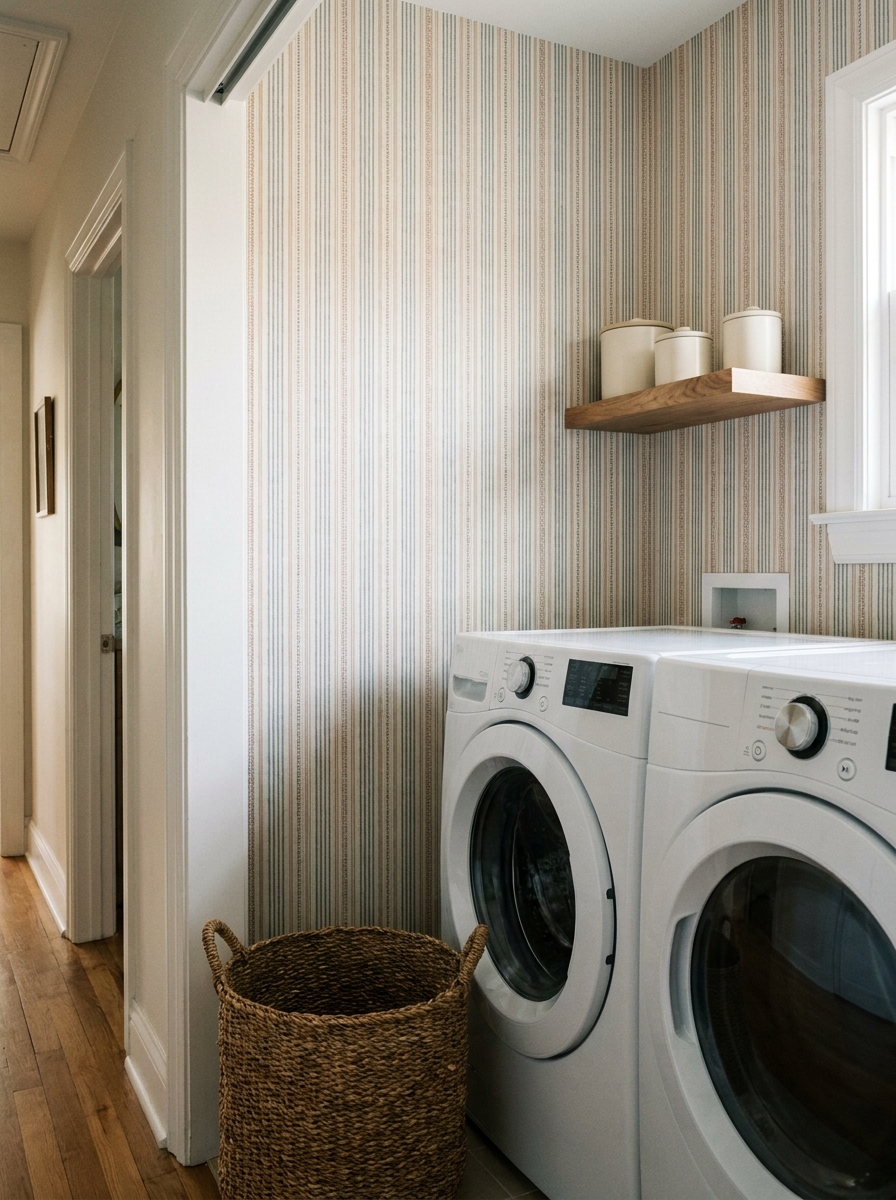
Use wallpaper in a laundry nook
Wallpaper can transform a laundry nook or closet without taking up any physical space. It is particularly effective behind open shelves or stacked machines, where it creates depth and gives the small area more personality.
Choose a pattern that complements the surrounding room. Fine stripes, small floral designs, geometric prints, and muted botanical patterns are easier to use in a compact space than very large or highly contrasting motifs.
Removable wallpaper is useful for renters or for testing a stronger design. Pair it with simple cabinetry and restrained accessories so the pattern remains the focal point.
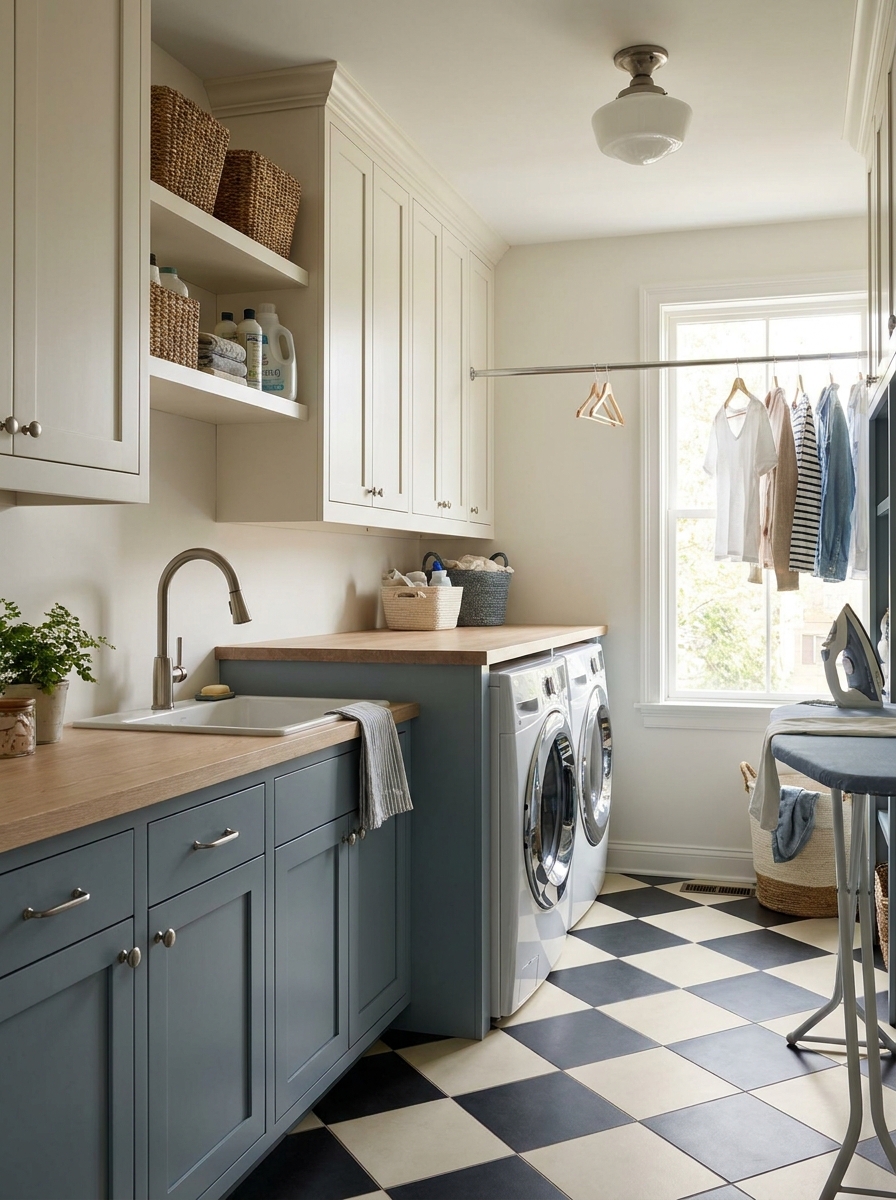
Choose a calm but distinctive color palette
A cohesive color palette can make a laundry room feel cleaner and more considered. Warm white and pale wood create an airy atmosphere, while dusty blue, lavender-gray, clay, or green-gray add personality without becoming overwhelming.
Limit the room to a few connected colors. One cabinet shade, one neutral wall tone, and one or two accent materials are usually enough. Repeating the same metal finish across the hardware, rail, faucet, and lighting will also make the room feel more unified.
A calm palette does not have to mean an all-beige room. Checkerboard flooring, patterned tile, blue cabinetry, or muted wallpaper can introduce interest while maintaining a practical and orderly appearance.
How to decorate a laundry room without losing function
- Plan storage around the laundry process, keeping detergent, baskets, and hanging space close to where they are used.
- Preserve at least one clear counter or shelf for folding and sorting clothes.
- Use open storage selectively, and hide refills, cleaning chemicals, and miscellaneous supplies in cabinets or baskets.
- Choose durable, easy-to-clean finishes that can handle water, lint, detergent, and damp clothing.
Decoration works best after the practical layout is in place. The same edited-storage approach used in kitchen organization ideas can keep a laundry room attractive without sacrificing the space you need to work.
Final thoughts
A beautiful laundry room should make everyday tasks easier rather than adding another space that requires constant styling. Useful cabinets, an accessible shelf, sorting baskets, a hanging rail, and a clear folding surface can significantly improve how the room works.
Once the practical layout is established, color, lighting, wallpaper, artwork, and attractive storage containers can make the space feel more connected to the rest of the home. Even a small laundry closet can feel intentional when every item has a clear place.
The strongest laundry room designs balance visual warmth with enough empty space to work comfortably. By choosing a few well-planned upgrades instead of filling the room with decoration, you can create a laundry area that feels organized, attractive, and realistic to maintain. The same principle makes apartment decor ideas feel thoughtful rather than crowded.
FAQ
How can I make a small laundry room look nicer?
Use coordinated containers, one useful shelf or cabinet, warm lighting, a simple color palette, baskets for sorting, and one clear work surface. A small amount of pattern or artwork can add personality without crowding the room.
What should be stored in a laundry room?
Keep frequently used detergent, stain treatment, dryer sheets, cleaning brushes, baskets, and a small supply of towels within easy reach. Store refills and less-used products in cabinets, baskets, or a rolling cart.
How do I decorate a laundry room on a budget?
Start with low-cost changes such as a floating shelf, baskets, coordinated containers, removable wallpaper, a simple wall print, and better lighting. Focus first on storage that improves how you use the room.