Reading Corner
Small Reading Nook Ideas
Small reading nook ideas with cozy chairs for bedrooms, narrow windows, apartments, under-stair spaces, dorm rooms, guest rooms, offices, bay windows, attics, closets, and minimal corners.
A small reading nook does not need a dedicated library, a large window seat, or an oversized armchair. Some of the most inviting reading spaces fit into corners that might otherwise remain unused: beside a bedroom dresser, beneath a staircase, near a bookshelf, or at the end of a narrow hallway.
The best small reading nooks are shaped around the available space rather than forced into it. A compact chair, focused light, and one accessible surface may be all that is needed. In especially tight rooms, wall-mounted lighting, floating shelves, storage benches, and built-in seating can make the nook functional without taking up too much floor area.
This article focuses on where and how to create a reading nook, rather than comparing different chair styles. The ideas include apartment corners, bedroom spaces, window alcoves, home offices, dorm rooms, attic areas, and even converted closets. Each layout is designed to feel realistic and achievable in a smaller home.
These 13 small reading nook ideas will help you turn an overlooked area into a cozy place for books, quiet breaks, and slower moments at home. If you are choosing the seat first, these cozy reading chair ideas can help you compare chair styles before styling the full nook.
Turn an empty bedroom corner into a reading nook
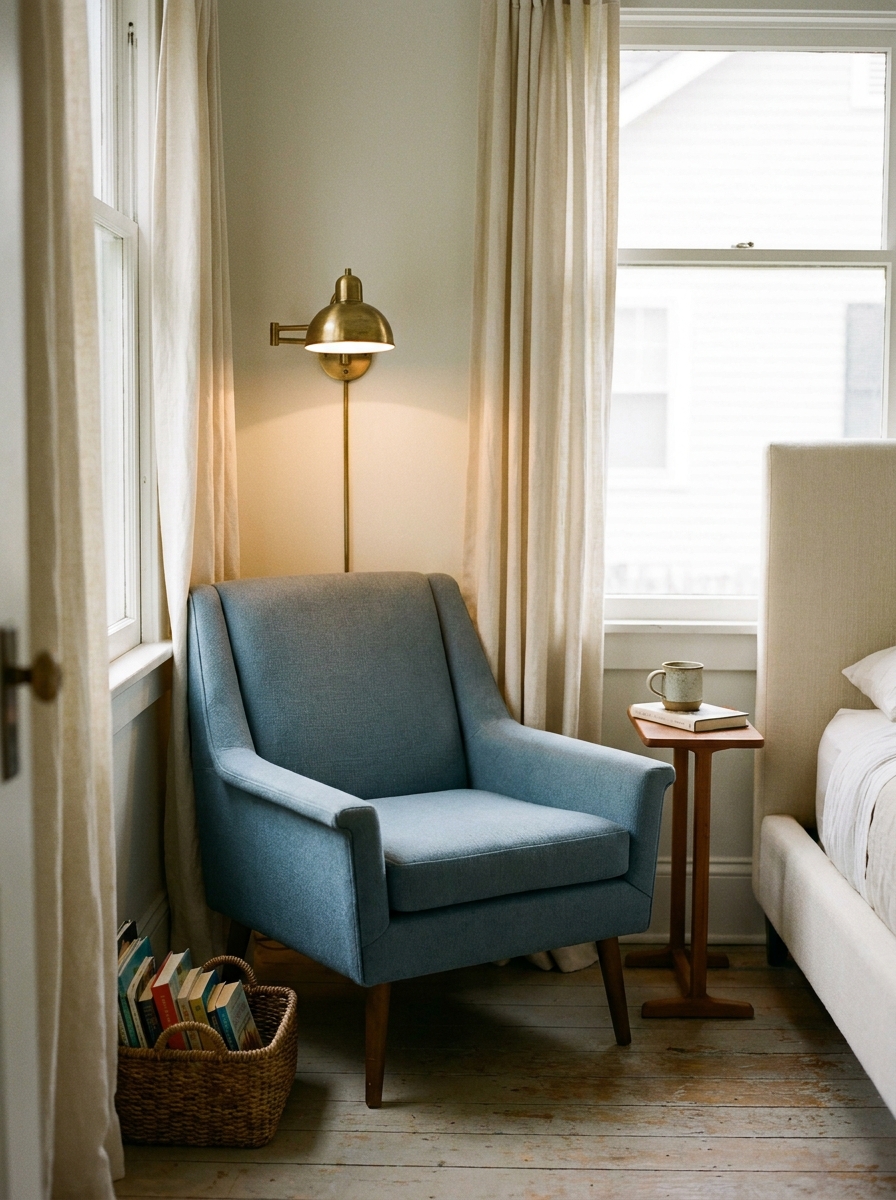
An empty bedroom corner is often the easiest place to create a small reading nook. The space may be too limited for a dresser or desk, but it can still hold a compact chair, a slim lamp, and a narrow table.
Choose a chair that fits comfortably without interfering with access to the bed, wardrobe, or curtains. Raised legs and slim arms can make the furniture feel visually lighter in a compact room.
Use the bedroom palette as a starting point, but avoid matching the chair to the bedding exactly. A dusty blue chair in a cream bedroom, for example, introduces quiet contrast while still feeling connected to the room.
A wall-mounted reading light can save more floor space than a standard lamp. Add a small basket for books or a floating shelf if there is no room for a full side table.
Create a narrow window reading nook
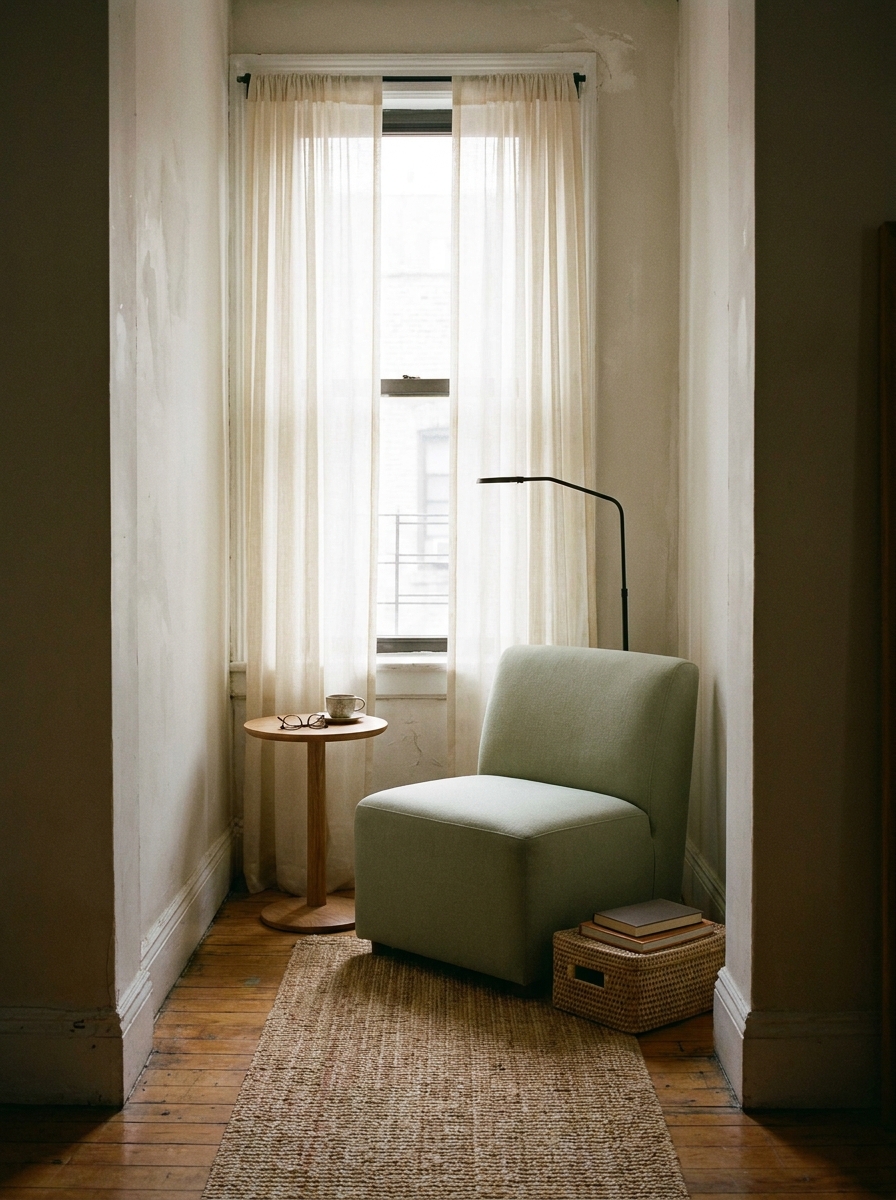
A narrow space beside a window can become an inviting reading area when the furniture is carefully scaled. Natural light makes this placement especially useful during the day.
Position the chair at a slight angle rather than facing directly into the room. This can make the nook feel more intentional and help preserve the main walkway.
Use a compact table or wall shelf for a book and drink. A floor lamp may still be necessary for evening reading, but choose a slim design that does not crowd the corner.
Sheer curtains can soften strong sunlight while keeping the nook bright. Avoid thick furniture or oversized baskets that block the window and make the area feel cramped.
Place a chair beside a bookshelf
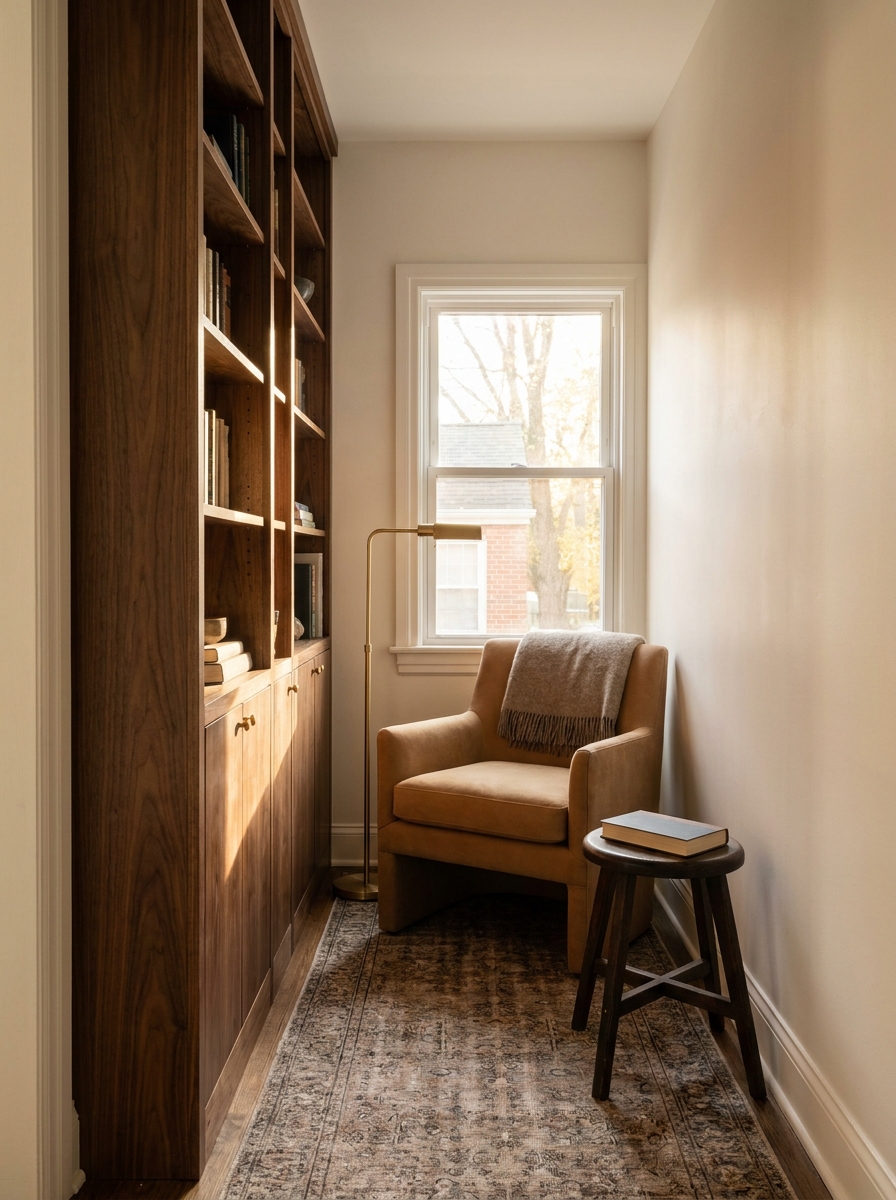
A chair beside a bookshelf creates a complete reading setup without requiring a separate room. It keeps books within reach and makes use of the space at the end of a shelving unit.
The chair should be positioned so the shelves remain accessible. Leave enough room to pull books out without moving the furniture.
A narrow floor lamp can fit between the chair and shelf, while a small stool or floating ledge can hold a drink. The bookshelf already adds visual detail, so the remaining styling can stay simple.
This arrangement works well in a living room, bedroom, office, or hallway with built-in storage. It is particularly useful when one side of the bookshelf would otherwise feel unfinished.
Style a small apartment reading corner
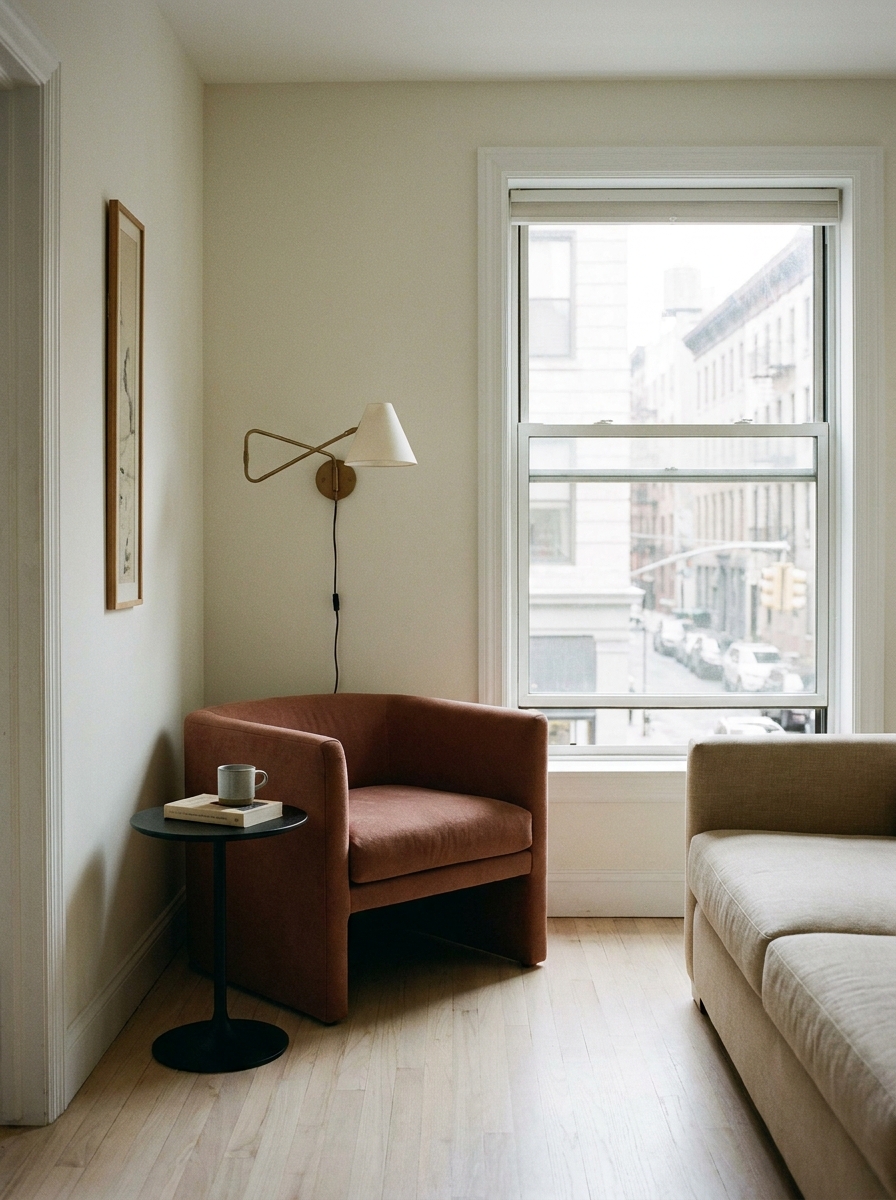
In a small apartment, the reading nook often needs to share space with the living room. The goal is to define the corner without adding so much furniture that the room feels crowded.
Use a compact chair and a small side table positioned near an existing wall or window. A rug is not always necessary if the nook already feels visually connected to the main room.
Choose a chair color or texture that relates to the living room while still giving the corner its own identity. A muted rust chair can warm up a neutral apartment without dominating the space.
Vertical elements are especially useful. A wall sconce, narrow art print, or tall plant can make the nook feel finished without using additional floor area. These small living room layout ideas can help if the nook needs to share a tight room with a sofa.
Use the space under the stairs
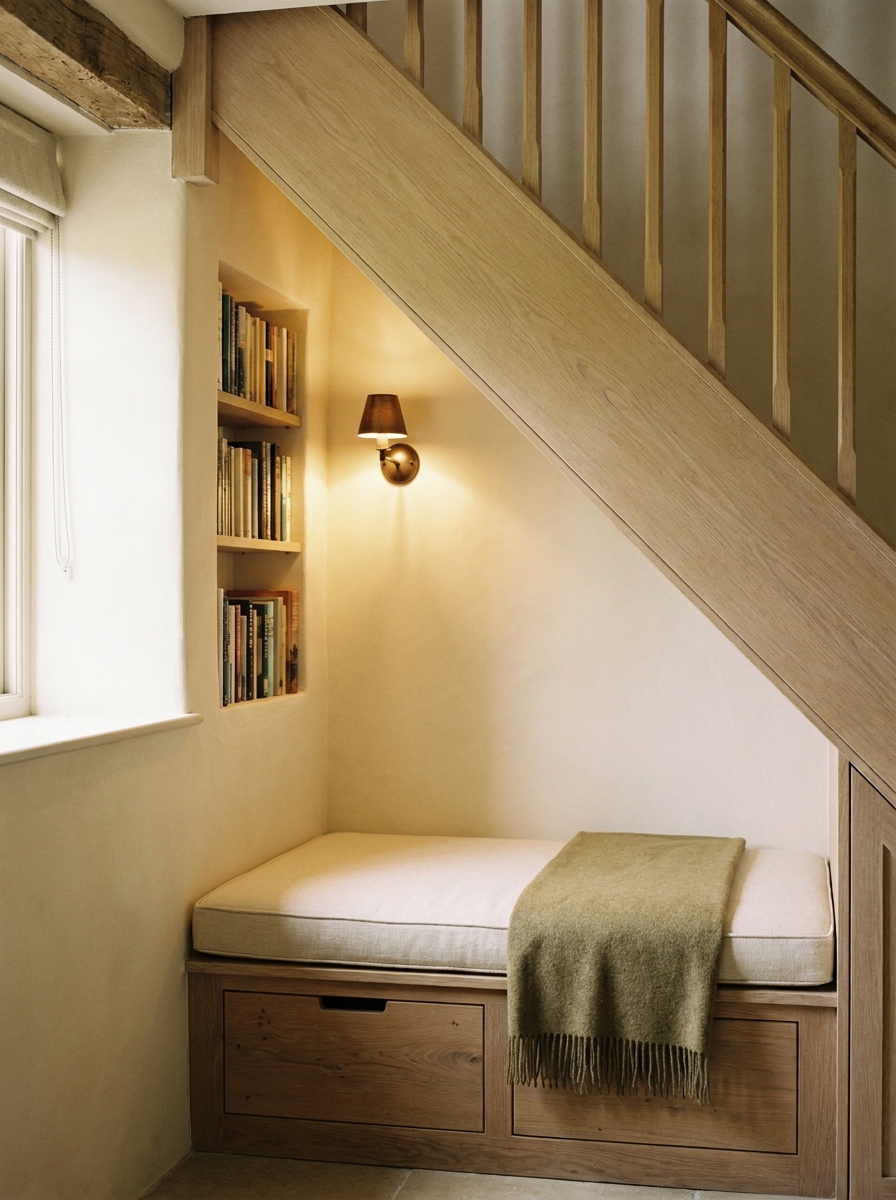
The area beneath a staircase is often difficult to furnish, but it can work well as a sheltered reading nook. The sloped ceiling naturally creates a sense of enclosure.
Depending on the height, use a low chair, cushioned bench, or built-in seat. The furniture should fit beneath the stairs without making the reader feel compressed.
Install a wall light or concealed lighting because under-stair spaces may receive limited natural light. A recessed shelf can hold books without extending into the walkway.
Use lighter colors on the walls and upholstery to prevent the nook from feeling dark. Wood details and a small rug can add warmth while preserving the compact appearance.
Add a reading nook to a dorm room
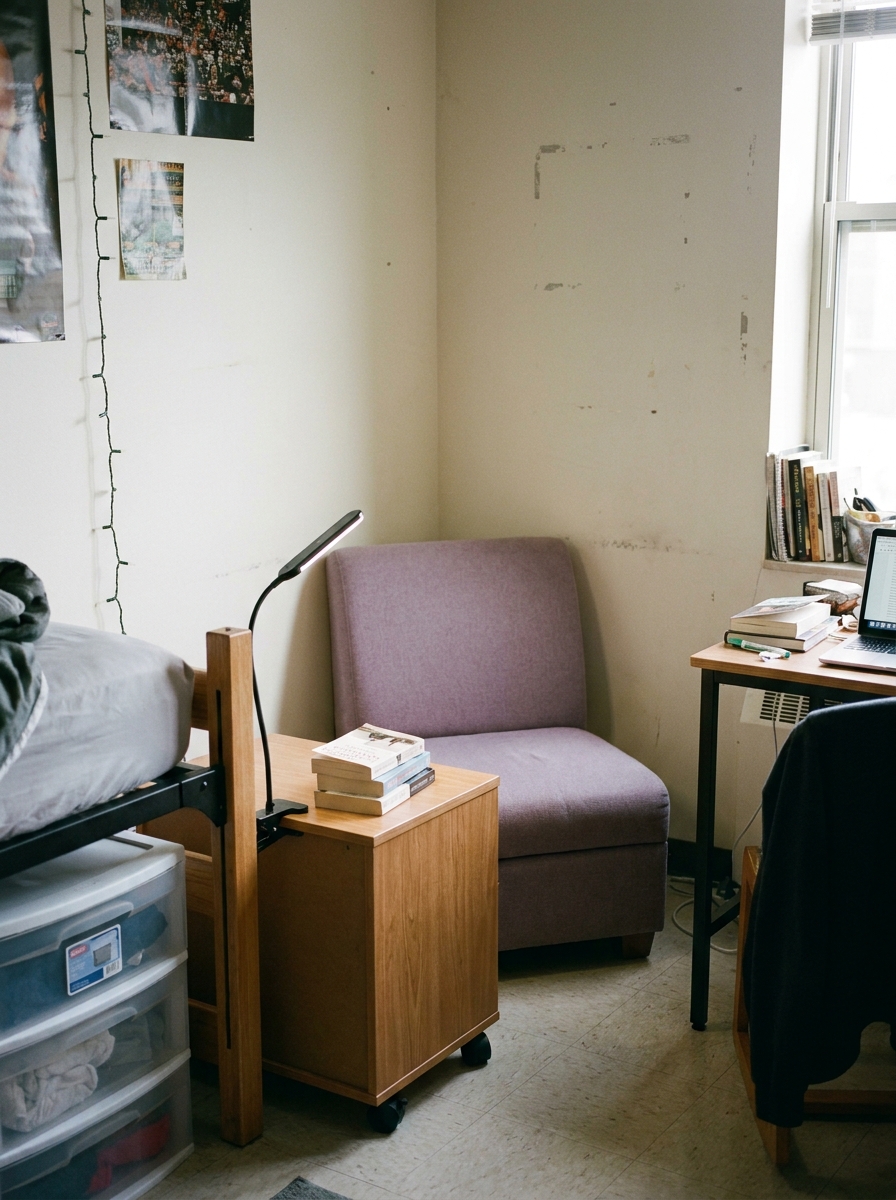
A dorm room reading nook needs to be especially compact and multifunctional. There may be only a small amount of space between the bed, desk, and storage.
Use a folding lounge chair, small slipper chair, or cushioned floor chair that can move when necessary. Avoid furniture that blocks drawers or the main path through the room.
A clip-on lamp or wall-mounted light can provide focused illumination without using desk space. A crate, storage cube, or rolling cart can function as both a side table and book storage.
Keep the setup simple and removable. Dorm-friendly hooks, lightweight textiles, and portable storage make it easier to adapt the nook without damaging the room. These dorm bedding ideas can help the rest of the room feel just as cozy.
Create a guest-room reading corner
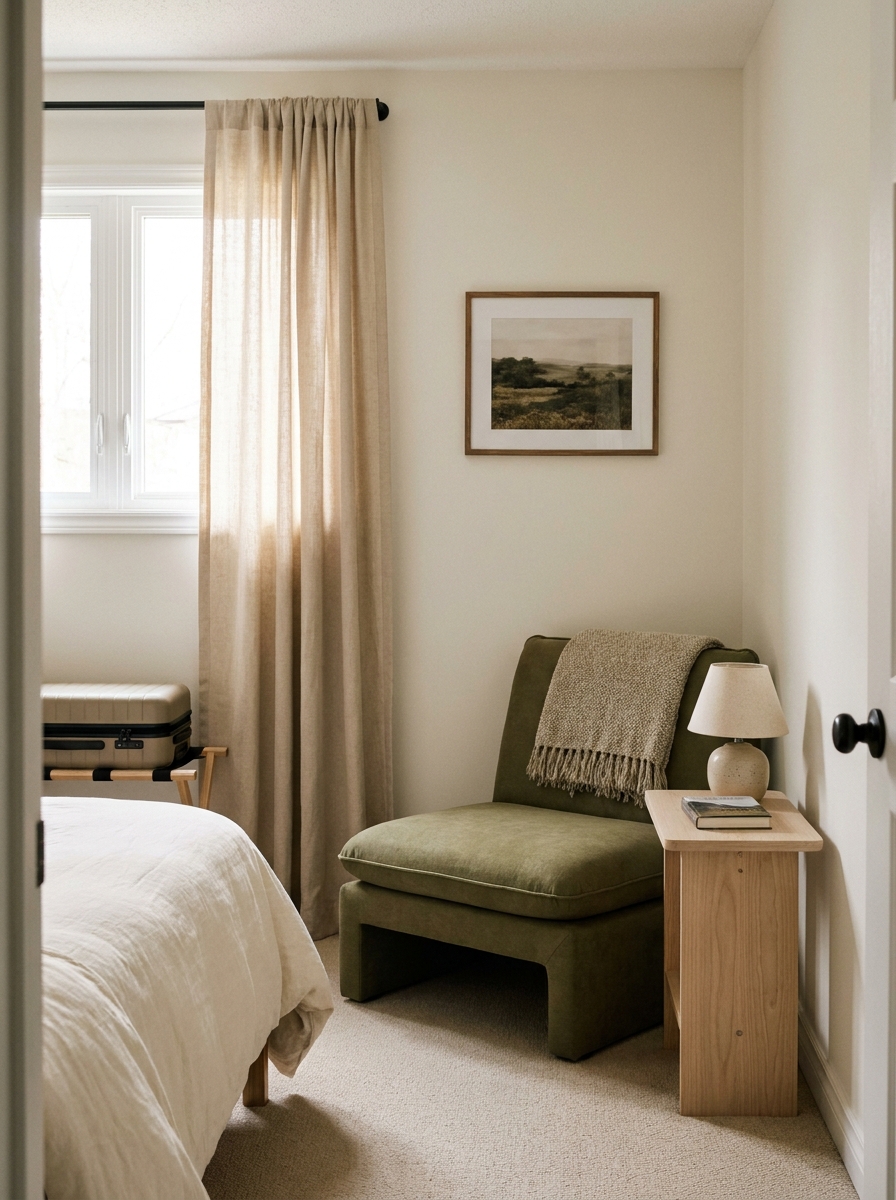
A guest room often has an unused corner that can accommodate a small reading area. This gives visitors somewhere to sit that is separate from the bed.
Choose a chair that is comfortable but not oversized. A small table or wall shelf can hold a book, phone, or glass of water.
Keep the styling simple and welcoming. A soft throw, one cushion, and a reading lamp are enough. The nook should not make the room feel crowded when luggage is present.
Use a palette that complements the guest room without making the setup look too formal. Soft green, warm beige, dusty blue, and oatmeal work well.
Turn a living-room corner into a book nook
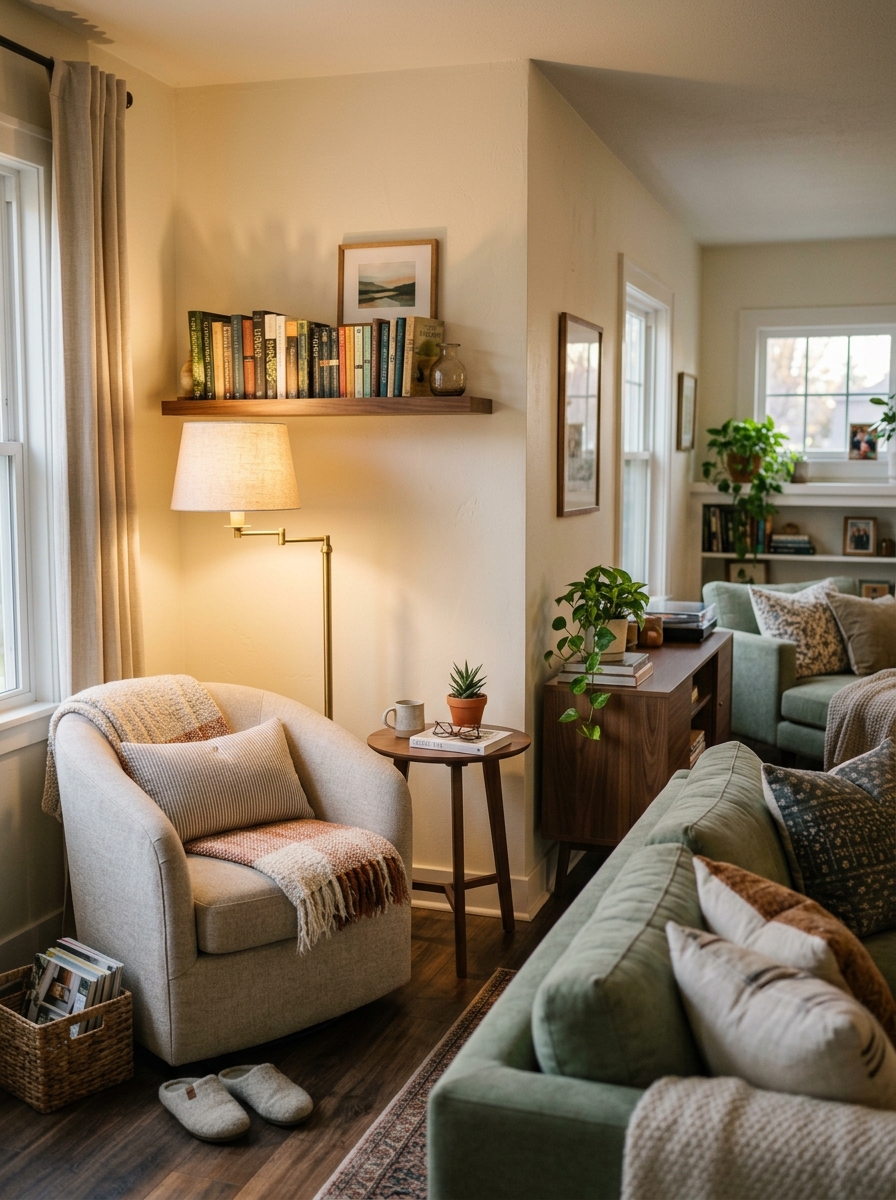
A living-room corner can support a reading nook without requiring a full second seating area. Positioning one chair near a lamp and shelf can create a distinct function while remaining visually connected to the room.
Use a chair with a different shape from the main sofa so the nook feels intentional. Keep the upholstery within the same broader palette to preserve cohesion.
A small round table works better than a large side table in a narrow corner. It should provide enough space for one book and a drink without interfering with movement.
A floor lamp can define the nook vertically. Place it so it provides focused light without shining directly into the rest of the seating area.
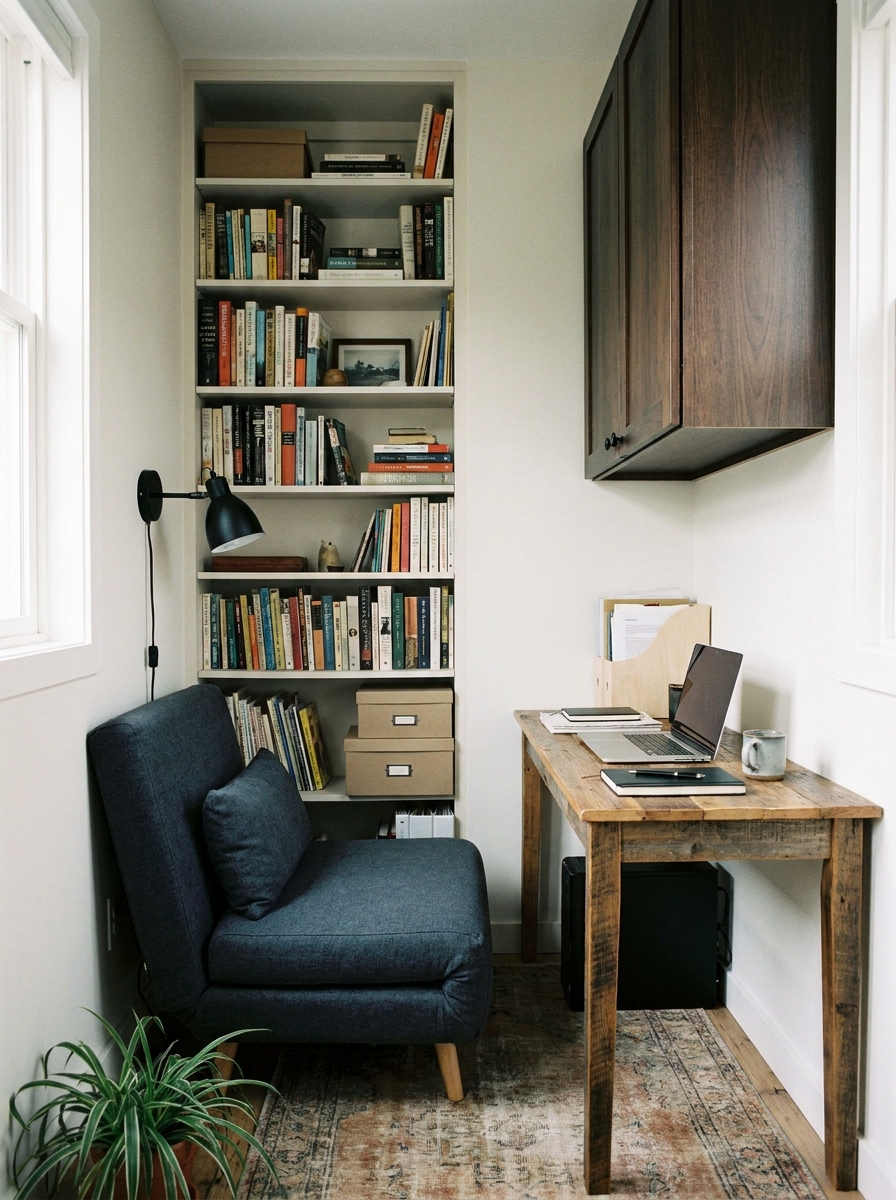
Add a reading chair to a tiny home office
A small home office can benefit from a reading chair when it is placed away from the desk. It creates a second posture for reviewing documents, reading, or taking a quiet break.
Choose a compact chair that does not interfere with the desk chair or storage. A corner near a window or bookcase is usually the best location.
Use the office shelving for book storage rather than adding another piece of furniture. A wall-mounted light can keep the floor area clear.
The reading chair should support the office palette without making the room feel like a living room. Structured upholstery and a simple shape can keep the space focused and professional. These cozy home office ideas can help if you want the whole workspace to feel warmer.
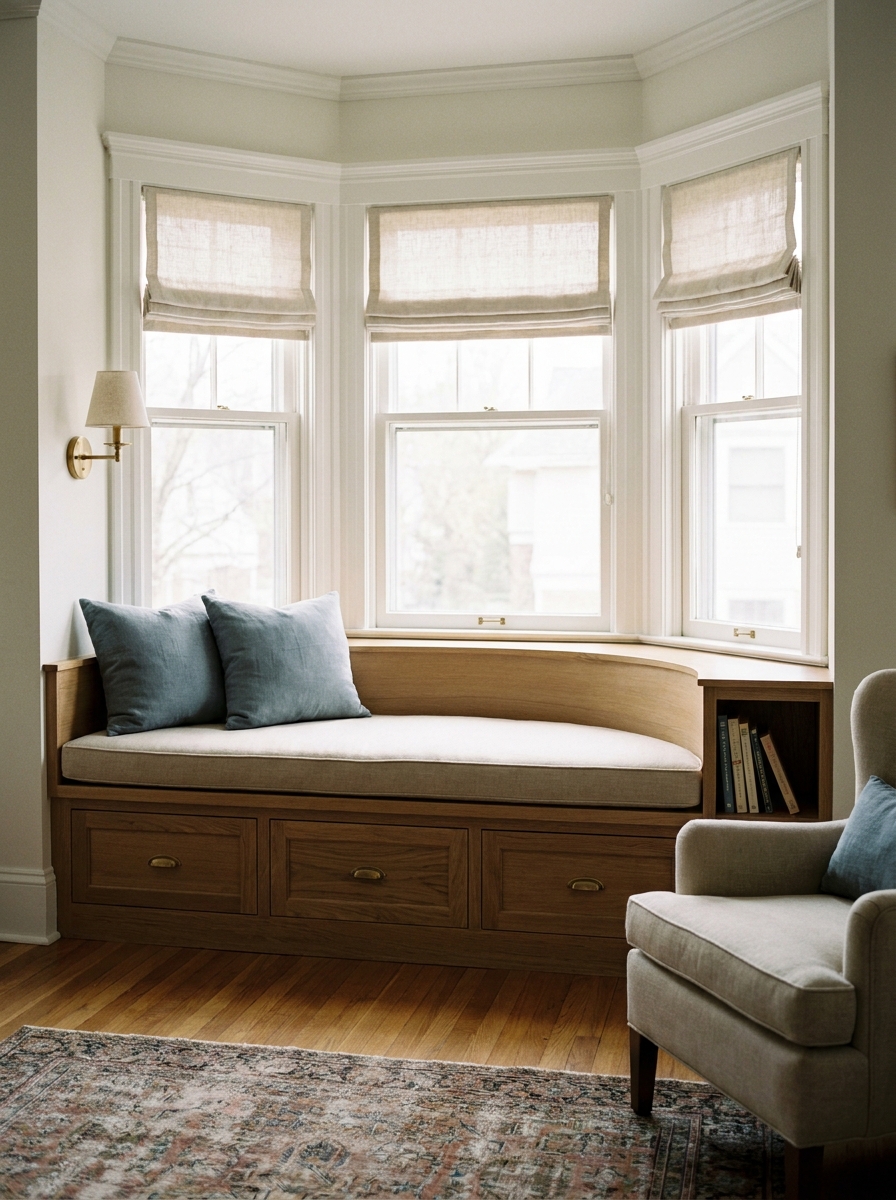
Use a bay window for reading
A bay window naturally creates a defined area that can become a small reading nook. Built-in seating is the most space-efficient option because it follows the shape of the window.
Add a firm bench cushion, a few supportive pillows, and concealed drawers beneath the seat. The storage can hold books, blankets, or seasonal items.
Window treatments should provide both privacy and light control. Roman shades or individual blinds can work better than heavy curtains in a narrow bay.
A wall light or small table lamp nearby will make the space usable in the evening. Avoid adding a large table that blocks access to the seat.
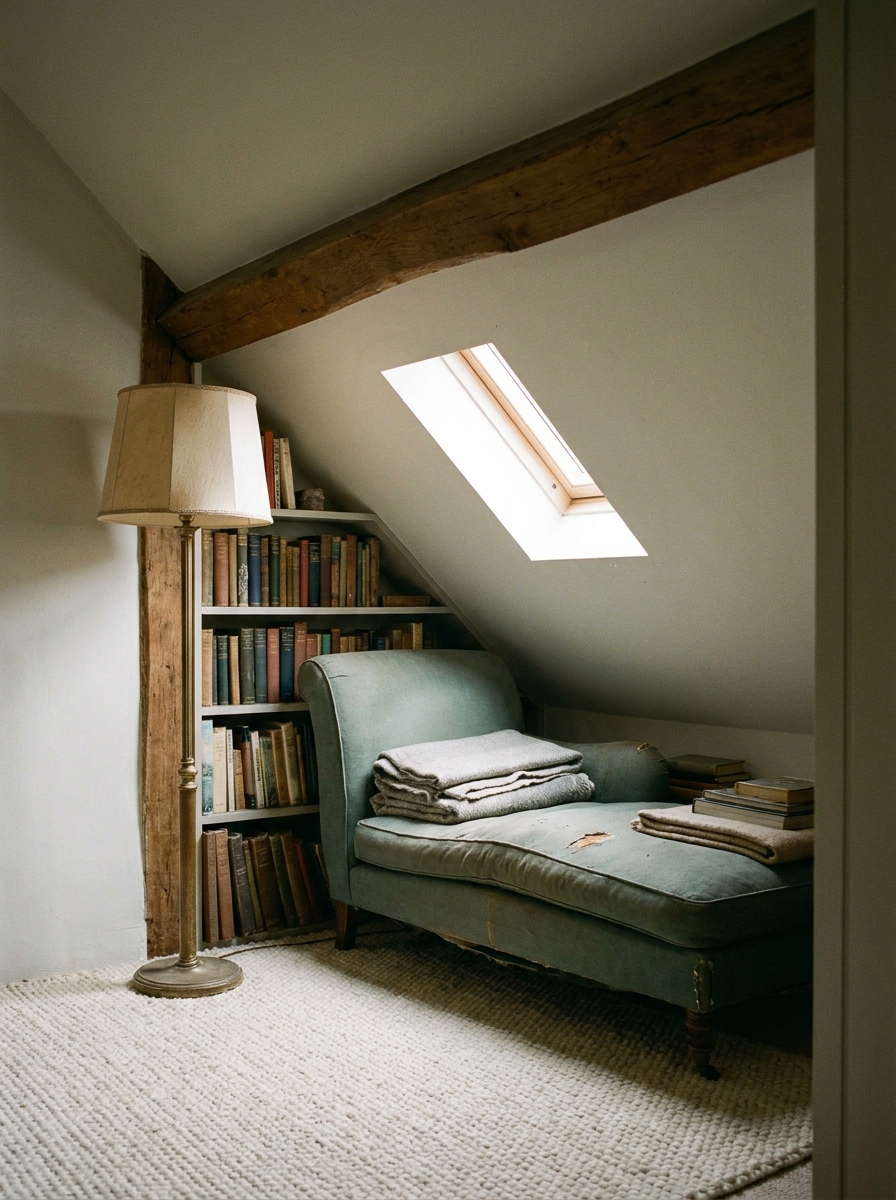
Build an attic reading nook
An attic corner can make a particularly cozy reading nook because sloped ceilings create natural enclosure. The challenge is finding furniture that works with the reduced height.
Place a low chair, floor cushion, or custom bench beneath the lowest part of the ceiling. Keep taller furniture and lighting closer to the full-height wall.
Built-in shelves can make use of awkward wall sections. Low drawers beneath the seating are also useful where a standard cabinet would not fit.
Use warm lighting and light wall colors so the area feels cozy rather than dark. Wood beams, soft textiles, and a small rug can add character without requiring much decoration.
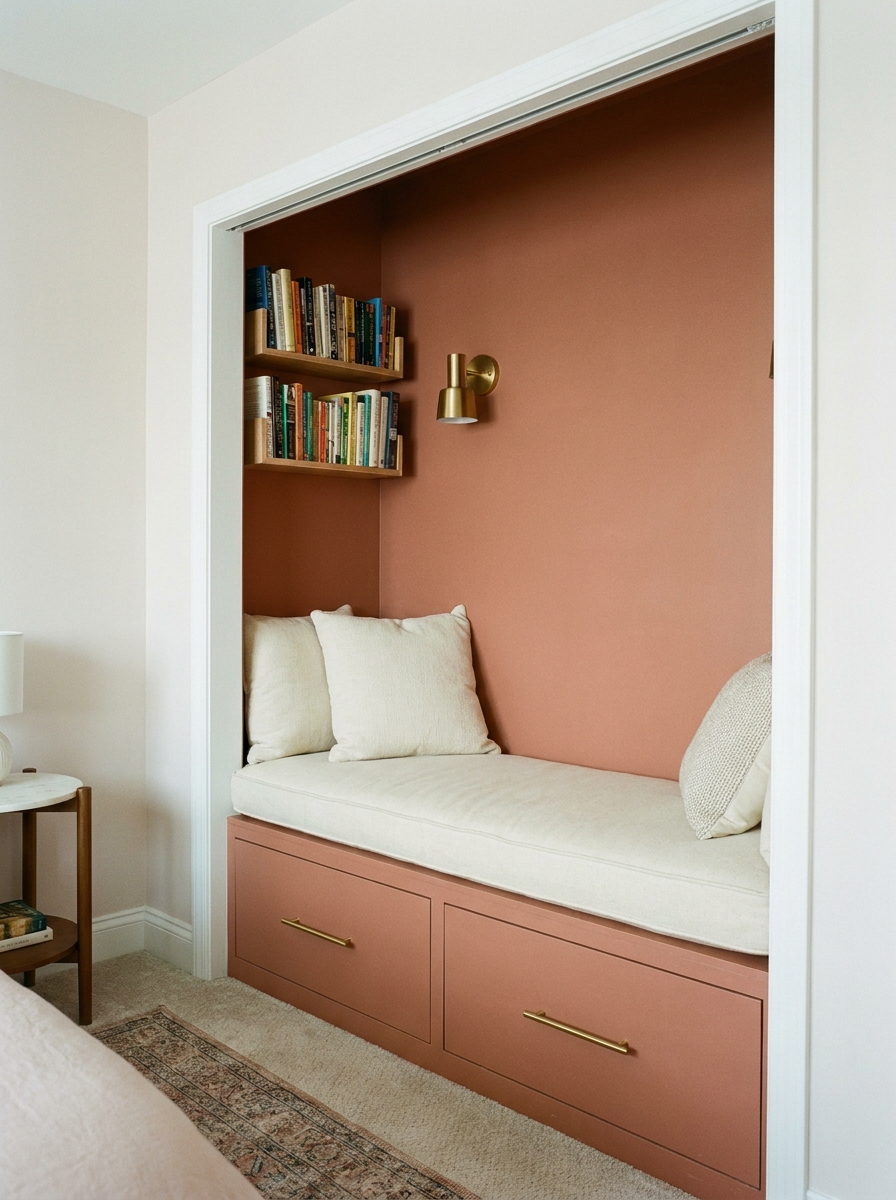
Convert a shallow closet into a reading nook
A shallow closet can be transformed into a reading nook when full hanging storage is not needed. Removing the doors creates a defined alcove that feels separate from the rest of the room.
Install a fitted bench across the width of the opening and add drawers or bins underneath. Use wall-mounted shelves above the seat for books, but leave enough headroom for comfort.
Paint or wallpaper the inside of the alcove to distinguish it from the surrounding room. A deeper color or small-scale pattern can make the nook feel intentional.
Use a wall sconce or recessed light so no floor lamp is required. The electrical work should be safely planned before building the seating.
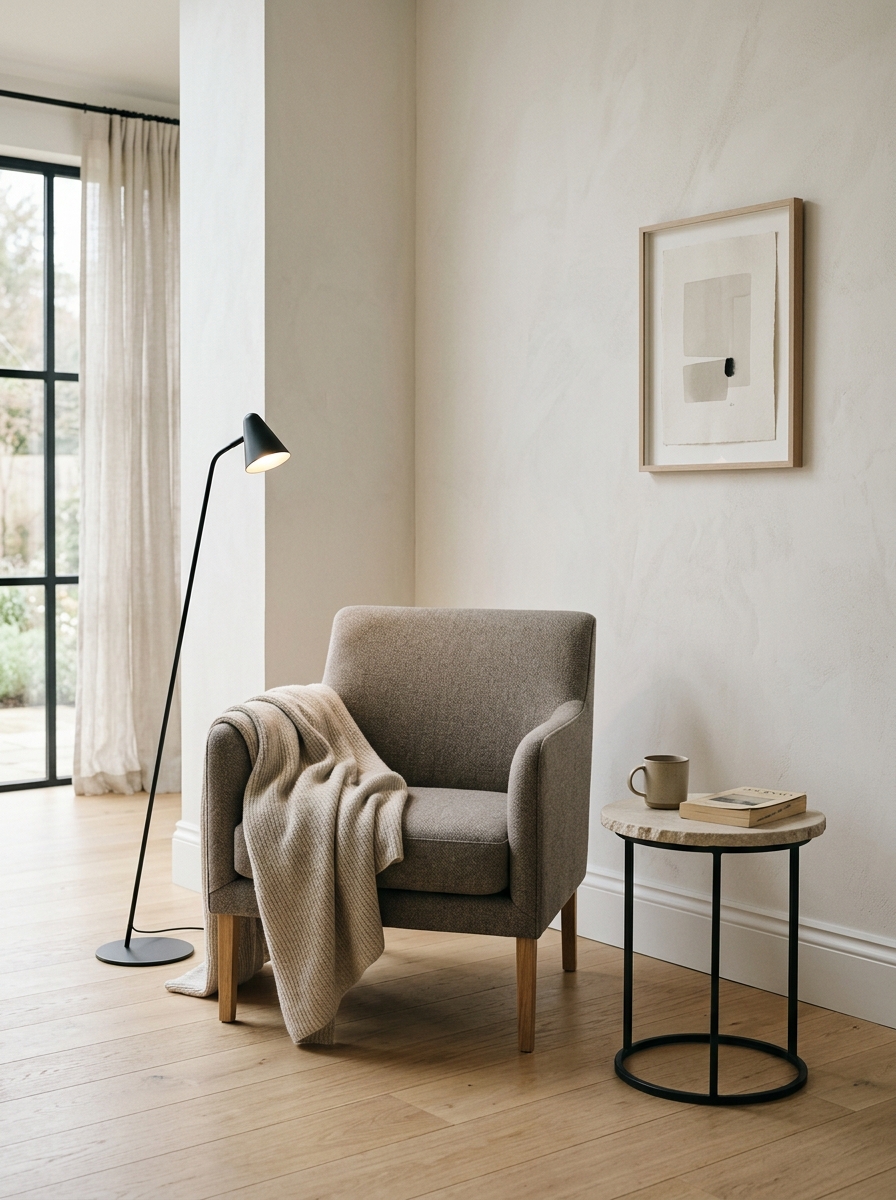
Keep a minimal reading corner simple
A small reading nook does not need multiple shelves, decorative objects, or layers of furniture. In many rooms, the most successful setup consists of only a chair, light, and small surface.
Choose one comfortable chair with a clear silhouette. Add a slim lamp and either a wall shelf, stool, or very small side table.
Keep the surrounding wall mostly empty. One artwork or a single small shelf may be enough to define the nook without making it feel crowded.
This approach works particularly well in modern apartments and bedrooms where the reading space needs to blend quietly into the room.
How to create a reading nook in a small space
Start by identifying an area that can hold seating without interrupting the main function of the room. Corners beside windows, shelves, staircases, desks, and wardrobes are often more useful than they first appear.
Measure the space before selecting furniture. Include the chair depth, space needed to sit down comfortably, and clearance around drawers, doors, curtains, and pathways.
Choose lighting early. A wall-mounted or clip-on light can be more practical than a floor lamp when the corner is narrow. Make sure the light falls onto the page rather than behind the reader.
Add only the supporting pieces the nook genuinely needs. A small surface, nearby book storage, and one soft textile are usually enough.
What chair works best in a small reading nook?
The best chair is compact but supportive. Slim arms, raised legs, and an upright or gently reclined back can provide comfort without creating a bulky footprint.
Armless chairs work well in very narrow corners, although they may be less comfortable for readers who rely on arm support. A compact armchair often offers the best balance.
Measure the seat as well as the outside dimensions. Some chairs look small but have shallow or narrow seats that are not comfortable for longer reading sessions.
Avoid buying an oversized chair simply because it appears cozy. A smaller chair that allows room for lighting and a table will usually create a more functional nook.
How to make a tiny reading corner feel cozy
Use focused warm lighting rather than relying only on the room's main ceiling light. A soft pool of light helps the corner feel more intimate.
Add texture through one throw, one cushion, or a small rug. Too many layers can make a tiny area feel crowded and reduce the usable seat space.
Place books within reach. A basket, floating shelf, built-in cubby, or nearby bookcase can provide storage without requiring a large piece of furniture.
Finally, preserve some empty space around the nook. A comfortable corner should feel sheltered, but it should not feel blocked in by too many objects.
Final thoughts
Small reading nooks work best when they respond to the shape and function of the room. An unused corner, narrow window space, stair alcove, dorm area, or shallow closet can all become inviting places to read.
The goal is not to copy the scale of a large library. A compact chair, reliable light, and accessible book storage can create a complete reading nook within only a few feet of space.
By choosing appropriately scaled furniture and keeping the styling controlled, you can create a reading corner that feels cozy, useful, and naturally integrated into your home.