Reading Corner
Cozy Reading Chair Ideas
Cozy reading chair ideas for the perfect book nook, including oversized armchairs, boucle chairs, velvet seating, swivel chairs, ottomans, chaise lounges, recliners, bedroom chairs, and library-style setups.
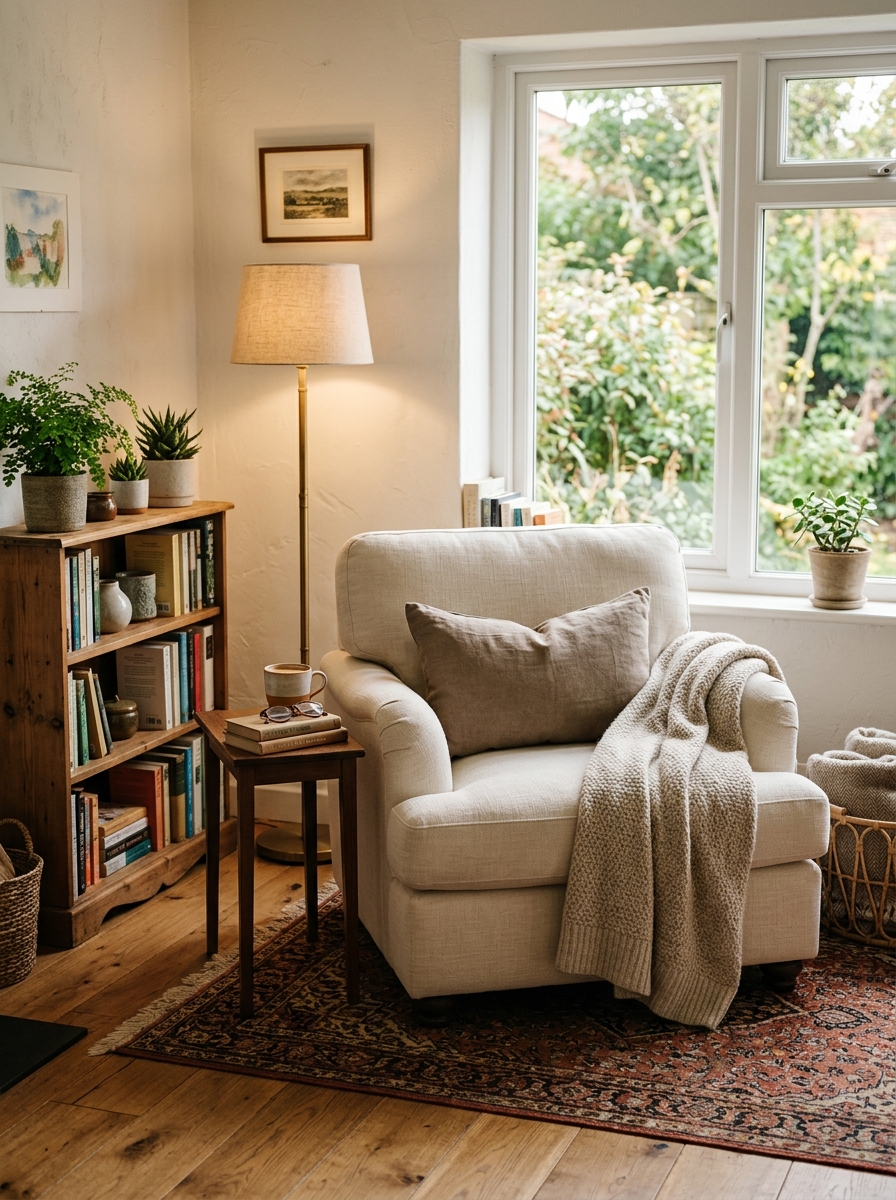
A cozy reading chair can transform an unused corner into one of the most inviting spots in the home. It creates a place to slow down, enjoy a book, drink tea, or simply sit quietly away from the busiest parts of the room.
The right chair should feel comfortable enough for longer reading sessions while still fitting naturally into the available space. Deep seats, supportive backs, soft upholstery, and room for a throw blanket all contribute to a more relaxing setup. The chair does not need to be oversized, but it should suit the way you prefer to sit, whether that means curling up, stretching out, or resting your feet on an ottoman.
Lighting, placement, and nearby storage matter too. A beautiful chair will not create a useful reading nook if the corner is too dark or there is nowhere to place a book. A floor lamp, side table, basket, and a few soft textiles can complete the area without making it feel cluttered.
These 15 cozy reading chair ideas include compact chairs, plush lounge seating, classic armchairs, swivel designs, chaise lounges, and bedroom-friendly options. Each one offers a different way to create a comfortable and attractive reading space. For full nook styling beyond the chair, these cozy reading corner ideas and reading corner ideas for small spaces are useful next steps.
Choose an oversized upholstered chair
An oversized upholstered chair is ideal for readers who like to curl up or change positions while reading. The wider seat provides more room than a standard armchair, while padded arms and a supportive back make the chair comfortable for longer periods.
This style works particularly well in a bedroom corner, family room, library, or spacious living room. It can also act as a quiet retreat in an open-plan home when positioned slightly away from the main seating area.
Choose upholstery that feels soft but durable. Textured linen blends, brushed cotton, performance velvet, and woven neutral fabrics all work well. A warm cream or taupe chair will blend easily into many rooms, while olive, rust, or dusty blue can create a stronger focal point.
Avoid filling the chair with too many pillows. One lumbar cushion and a soft throw are usually enough to make it inviting without reducing the usable seat space.
Add a soft boucle reading chair
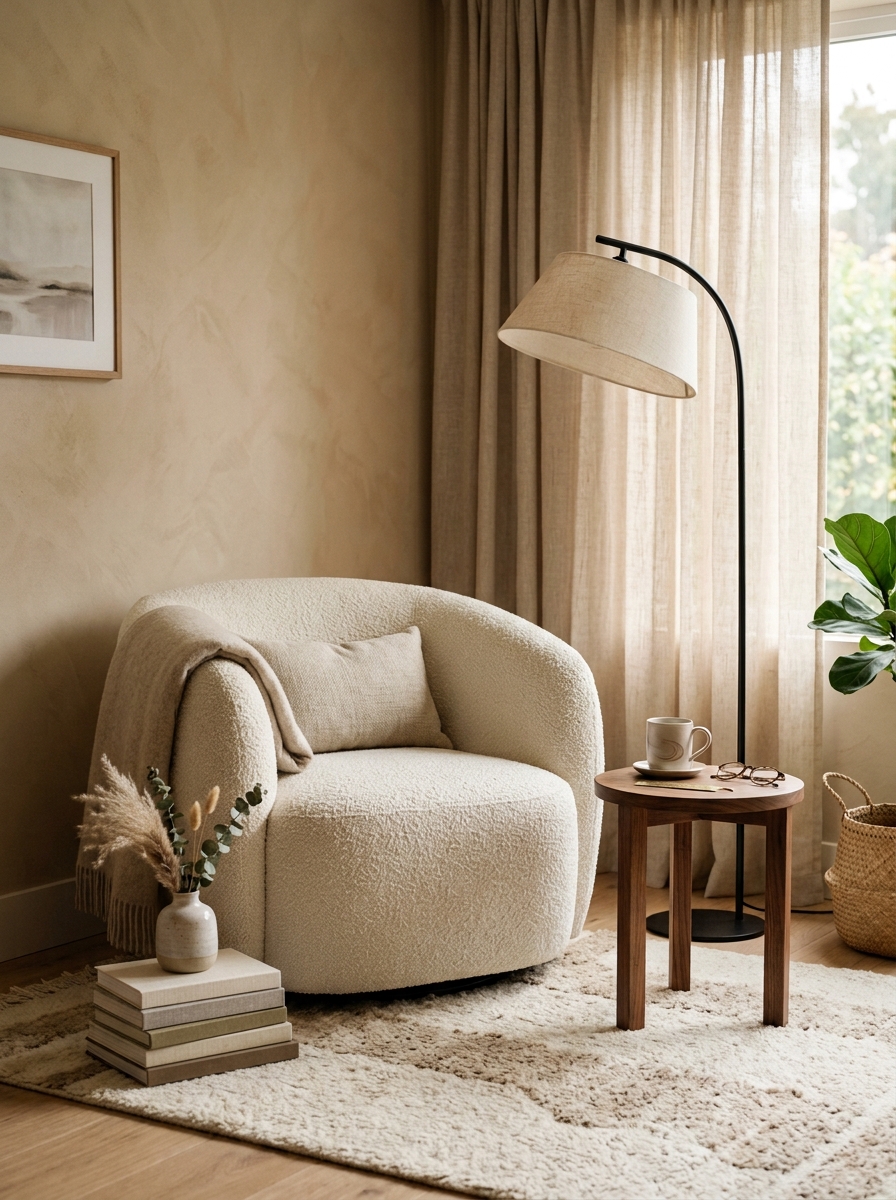
Boucle upholstery adds warmth and texture to a reading nook without requiring bold color or pattern. Its soft, looped surface makes a simple chair feel more tactile and inviting.
A rounded boucle chair works especially well in modern, minimalist, and warm-neutral interiors. Pair it with a small wood or stone side table to balance the softness of the fabric.
Cream and ivory boucle remain popular, but they are not the only options. Mushroom, camel, soft gray, and muted brown can create a richer look while remaining easy to coordinate.
Because light boucle can show dirt, consider a performance fabric if the chair will be used frequently or placed in a family room. A removable seat cushion can also make cleaning easier.
Use a velvet armchair for rich color
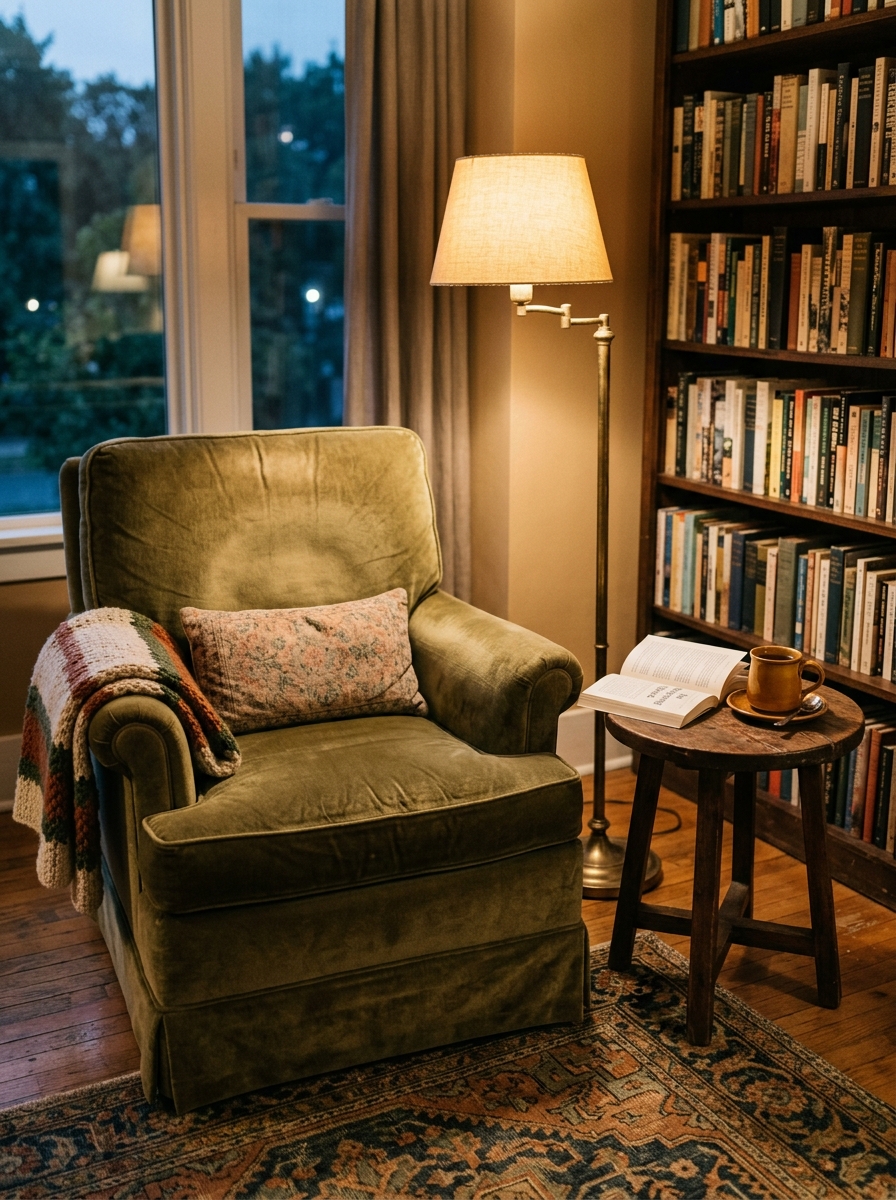
A velvet armchair can make a reading corner feel warm, elegant, and slightly more dramatic. The fabric reflects light softly, giving deeper colors a rich appearance without needing additional decoration.
Olive green, rust, deep blue, burgundy, and warm brown are especially effective in cozy reading spaces. These shades pair naturally with dark wood, brass lighting, patterned rugs, and bookshelves.
Choose a chair with enough back support and seat depth for comfort. Some velvet accent chairs look attractive but are too upright or shallow for long reading sessions.
Keep the surrounding decor controlled so the chair remains the focal point. A simple lamp, side table, and one neutral throw can provide everything the nook needs.
Try a swivel reading chair
A swivel chair is useful in a multipurpose room because it can turn toward a window, bookshelf, fireplace, or conversation area. This flexibility makes it practical for both reading and everyday living.
Choose a design with a deep seat and supportive curved back. Many modern swivel chairs have a compact footprint, making them suitable for bedrooms and smaller living rooms.
A hidden swivel base creates a cleaner appearance, while a visible wood or metal base can add more character. Make sure there is enough clearance around the chair so it can rotate without hitting the wall or nearby furniture.
A swivel chair works particularly well beside a large window. The reader can turn toward the daylight during the day and toward a lamp or fireplace in the evening.
Pair a chair with a matching ottoman
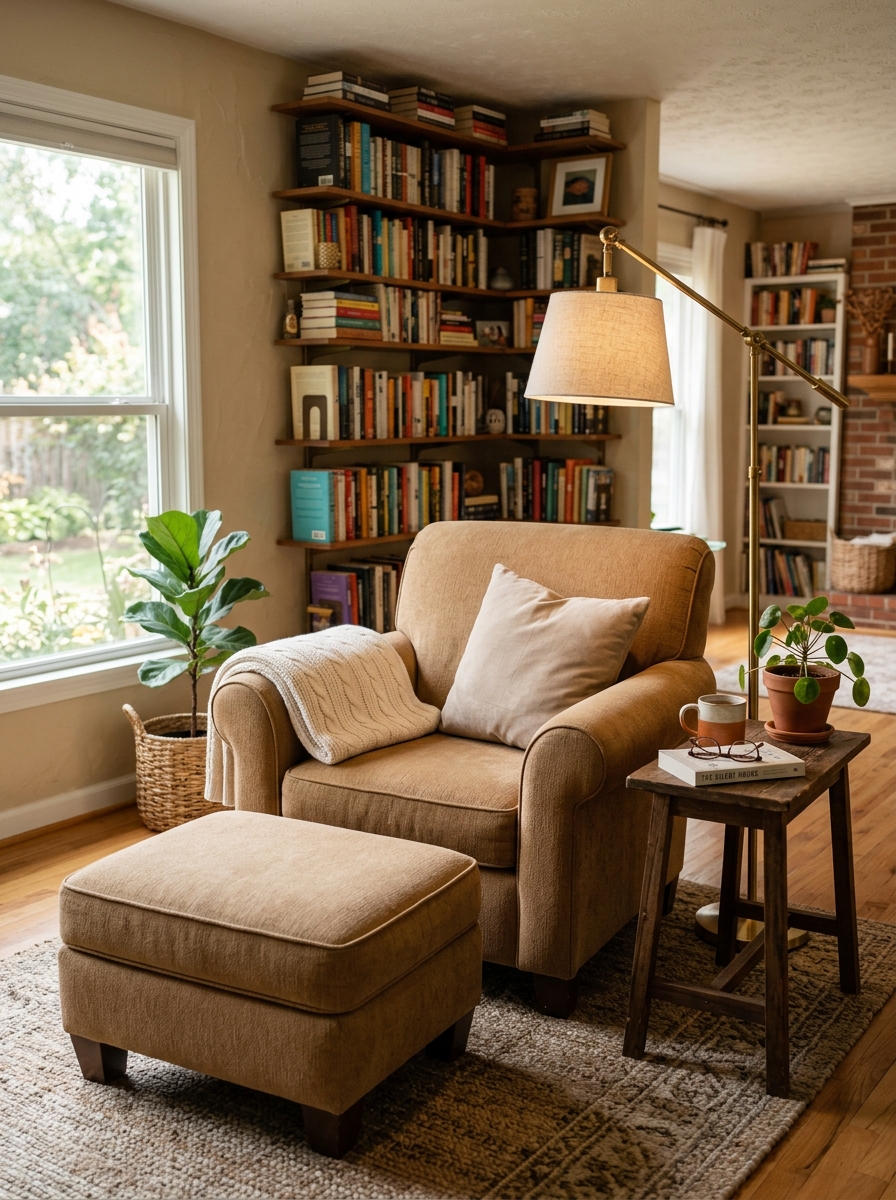
A chair-and-ottoman combination provides many of the benefits of a chaise while offering more flexibility. The ottoman can support the feet during reading, function as an extra seat, or move aside when more floor space is needed.
This setup is particularly comfortable for readers who prefer a more upright chair but still want to stretch their legs. Look for an ottoman at a height that aligns comfortably with the chair seat.
Matching upholstery creates a polished look, while a contrasting ottoman can introduce texture. For example, a linen chair can pair with a leather or woven ottoman if the shapes and colors coordinate.
Keep enough space between the chair and ottoman for easy movement. The setup should feel relaxing, not like an obstacle in the room.
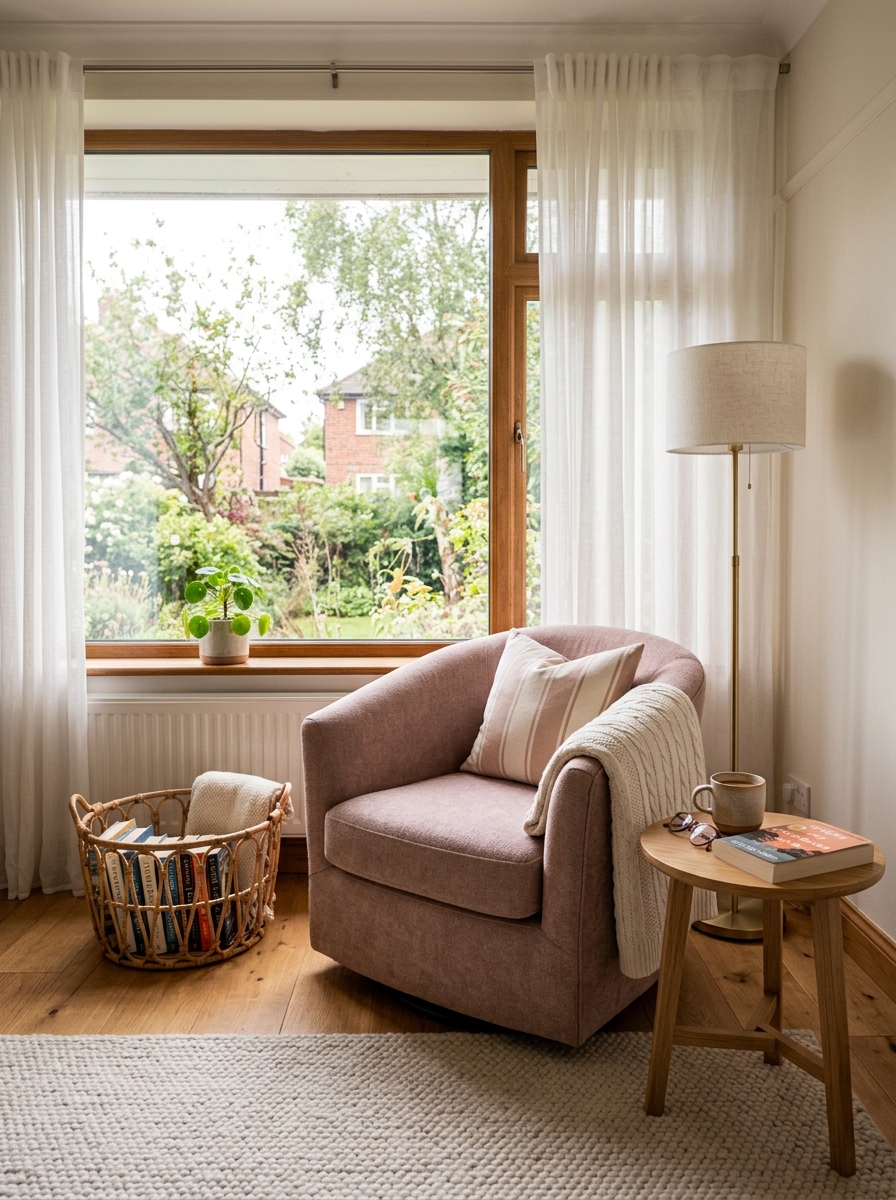
Use a deep-seat lounge chair
A deep-seat lounge chair is ideal for readers who like to sink into their seat. Its generous depth allows for relaxed positions, but the chair should still provide enough back support to prevent discomfort.
Look for a design with a loose back cushion, wide arms, and a medium-firm seat. A chair that is too soft may feel comfortable initially but become difficult to sit in for longer periods.
Deep lounge chairs work best in medium or large rooms because their proportions can overwhelm a narrow corner. In a smaller space, choose one with a low back and compact arms.
Add a lumbar pillow if the seat is especially deep. This makes the chair adaptable for readers of different heights.
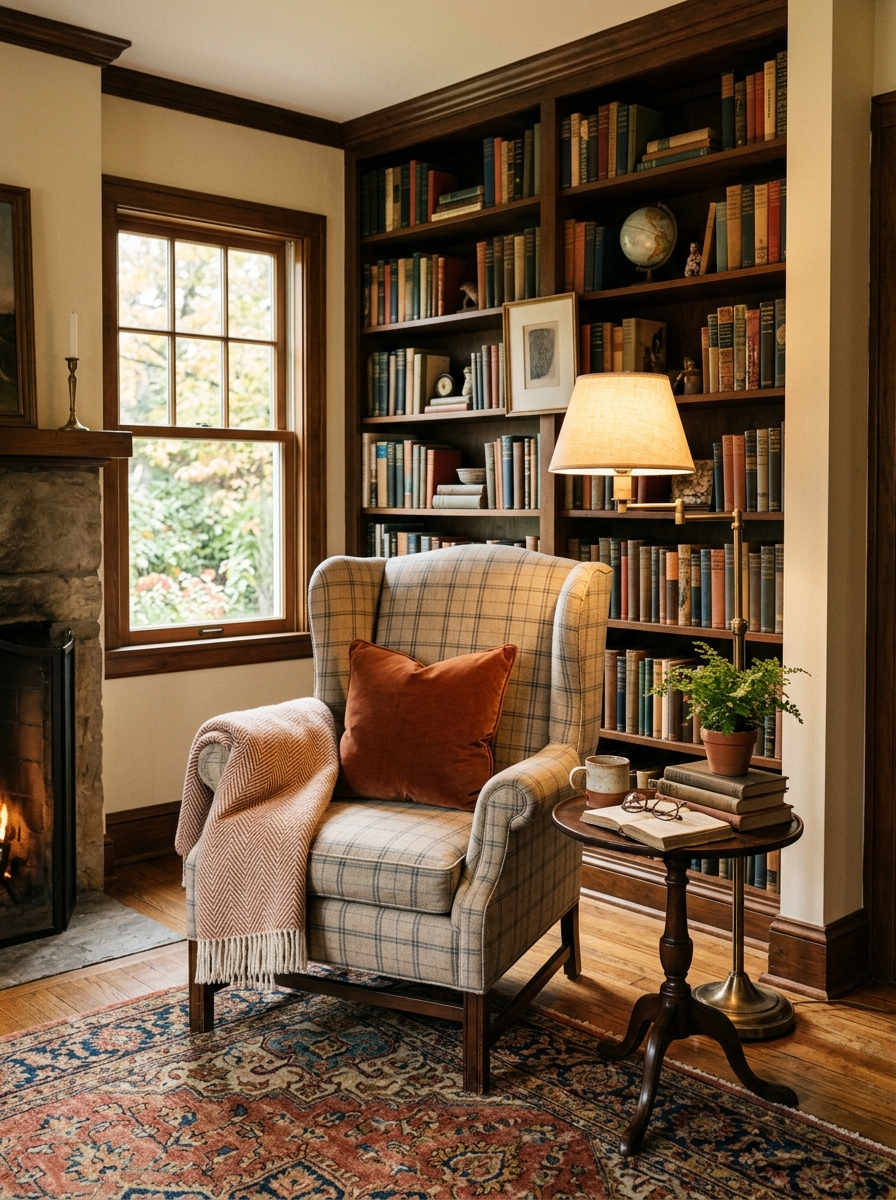
Choose a classic wingback chair
A wingback chair provides excellent support and creates a sense of enclosure around the reader. The high back and curved sides help make the nook feel more private, even when it sits within a larger room.
This chair style works in traditional, transitional, cottage, and modern interiors depending on the upholstery and leg shape. A solid neutral fabric creates a quieter appearance, while subtle plaid or small-scale pattern adds a classic library feeling.
Place the chair near a bookcase, fireplace, or paneled wall to emphasize its timeless character. A small round table and focused reading lamp complete the arrangement.
Make sure the seat is not excessively firm. Many traditional wingback chairs benefit from an added lumbar pillow or soft seat cushion.
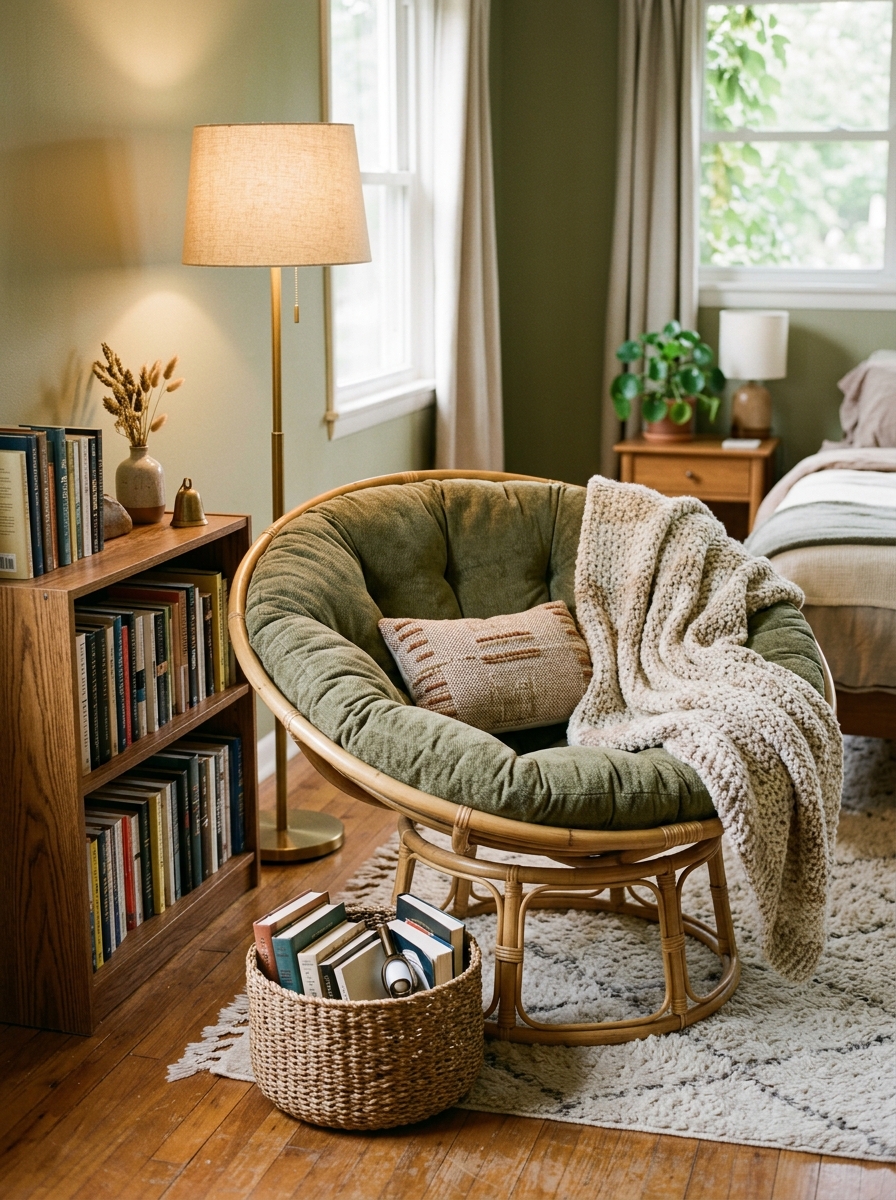
Create a relaxed papasan-style nook
A papasan-style chair creates a casual reading spot with a wide rounded seat and relaxed posture. It is especially suited to bedrooms, teen rooms, bohemian spaces, and informal family areas.
Choose a chair with a thick, supportive cushion rather than a thin pad that collapses into the frame. The chair should feel secure and stable when sitting down or changing positions.
Because papasan chairs have a wide footprint, place one in an open corner where it will not block circulation. A low lamp and small floor-level book basket complement the relaxed shape.
Keep the styling simple. One throw and one small pillow are enough, since the curved cushion already creates a soft and full appearance.
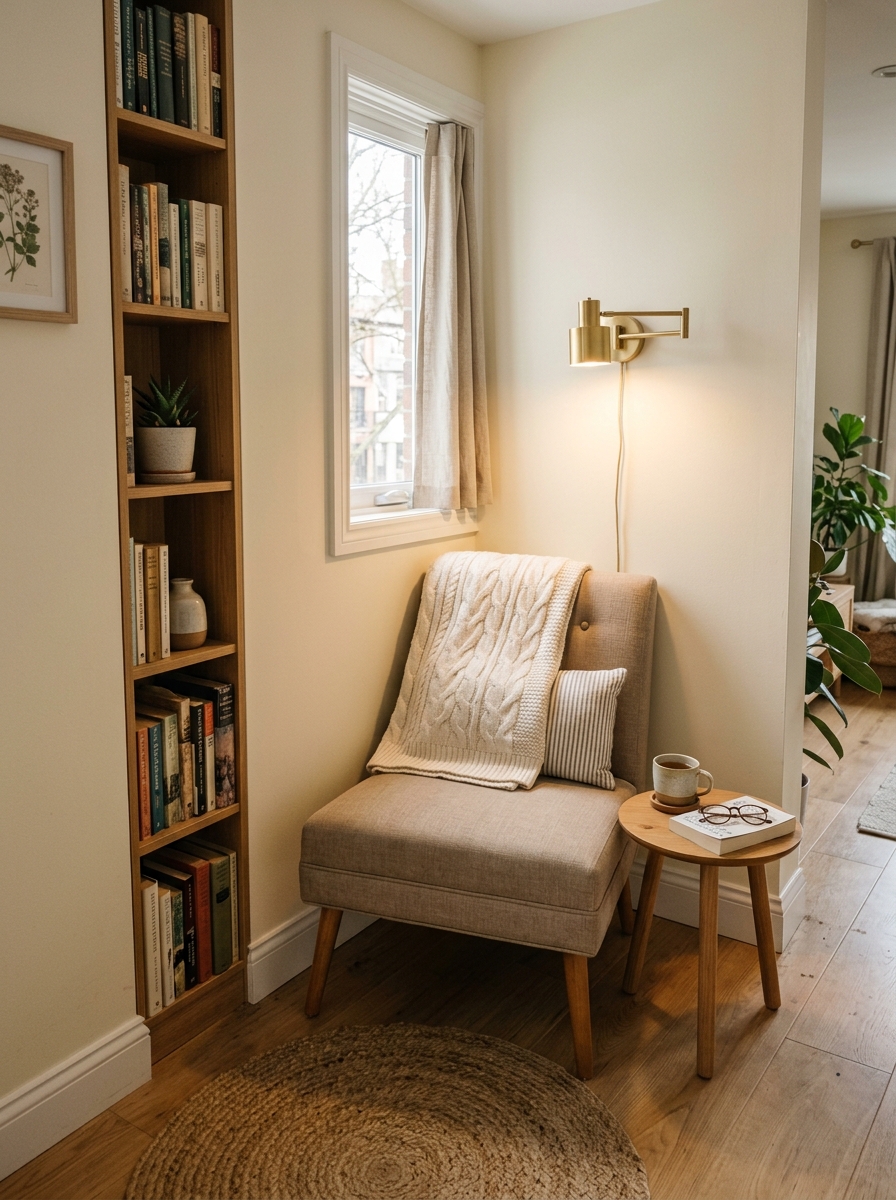
Choose a compact chair for a small corner
A small reading nook does not require an oversized chair. A compact armchair with a supportive back and slim arms can create a comfortable reading space without crowding the room.
Look for a chair that fits the corner while leaving enough room for a narrow side table or wall-mounted shelf. Raised legs can make the chair feel visually lighter and allow more of the floor to remain visible.
Compact chairs work well beside bedroom dressers, in apartment living rooms, or near a small bookshelf. The chair should still have enough seat depth to feel relaxing rather than like occasional dining seating.
Use a wall sconce or slim floor lamp when there is limited floor space. This keeps the nook practical without adding bulky furniture. These small living room ideas can help if your reading chair needs to share space with the main seating area.
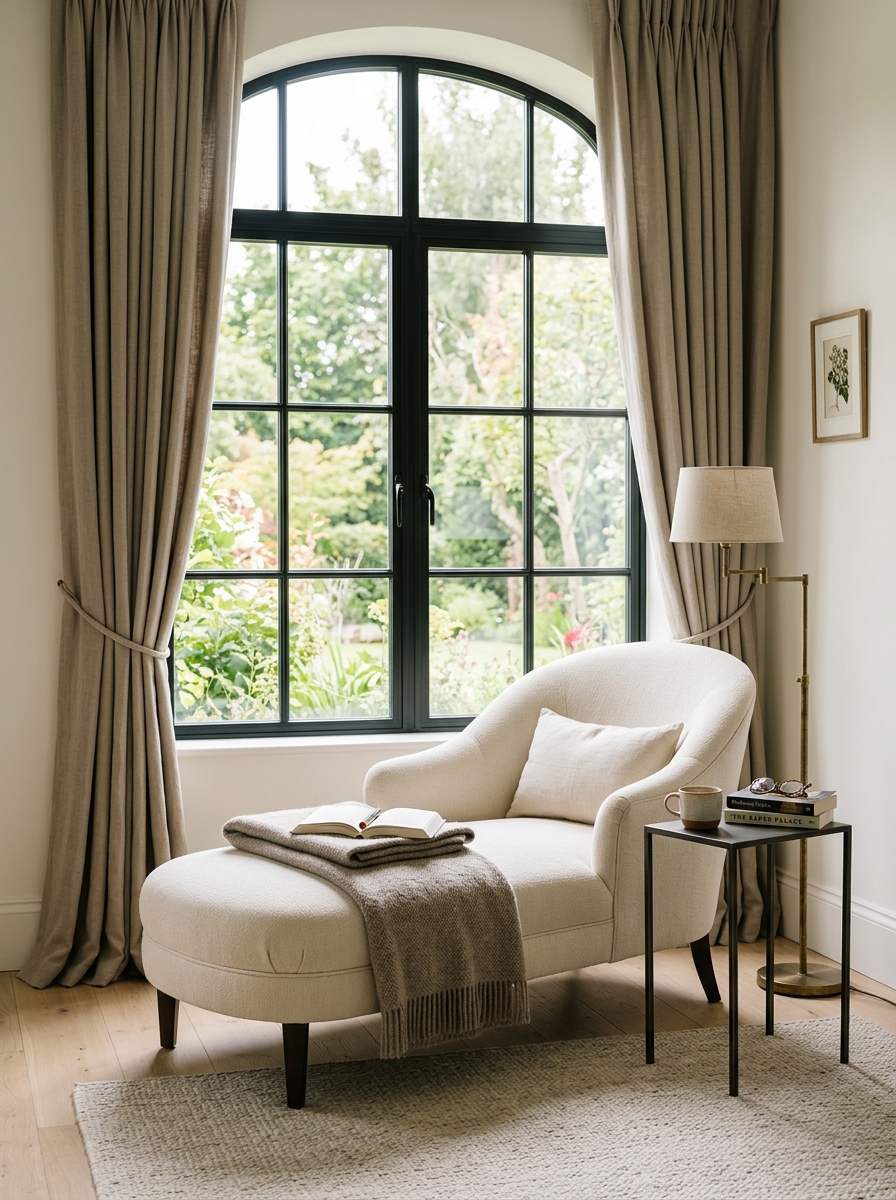
Stretch out on a chaise lounge
A chaise lounge creates a comfortable place to read with the legs fully supported. It works particularly well near a bedroom window, in a home library, or at one end of a spacious living room.
Choose a chaise with a supportive backrest rather than a completely flat design. Curved or asymmetrical shapes can feel sculptural, while a simple upholstered chaise creates a more timeless look.
Position the chaise so it receives natural light without blocking the main walkway. A small side table should remain within reach for books, glasses, and drinks.
Because the chaise already provides a strong visual feature, keep the surrounding decor restrained. One floor lamp and a soft throw may be all it needs.
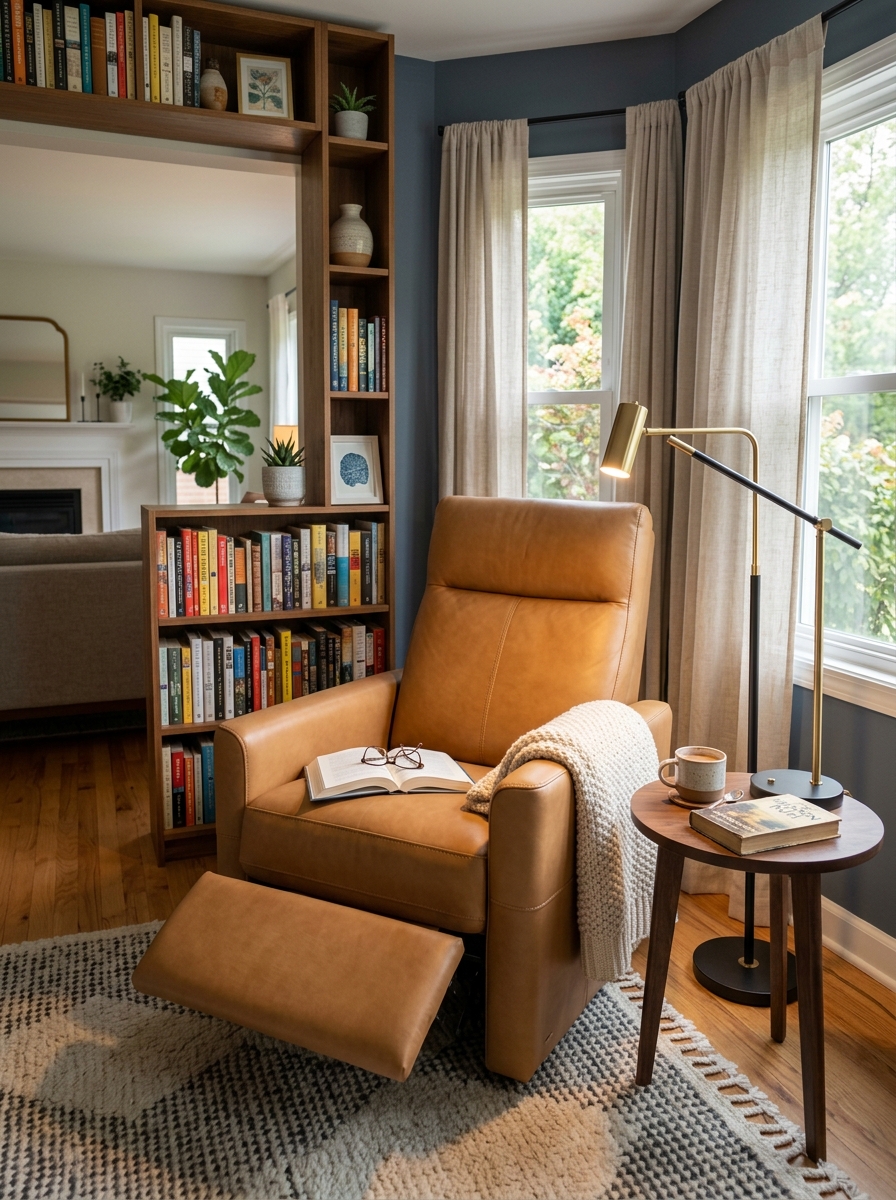
Add a reclining reading chair
A reclining chair can provide excellent support for readers who want adjustable comfort. Modern recliners are available in cleaner, more compact designs than traditional bulky models, making them easier to include in a stylish room.
Look for a chair with a high back, supportive headrest, and smooth reclining mechanism. The chair should remain comfortable in both upright and reclined positions.
Measure the space behind and in front of the chair before purchasing. Some designs require significant clearance, while wall-hugger recliners can operate closer to the wall.
Choose upholstery that connects with the rest of the room. Warm gray, camel, navy, olive, and cream can make the recliner feel integrated rather than purely functional.
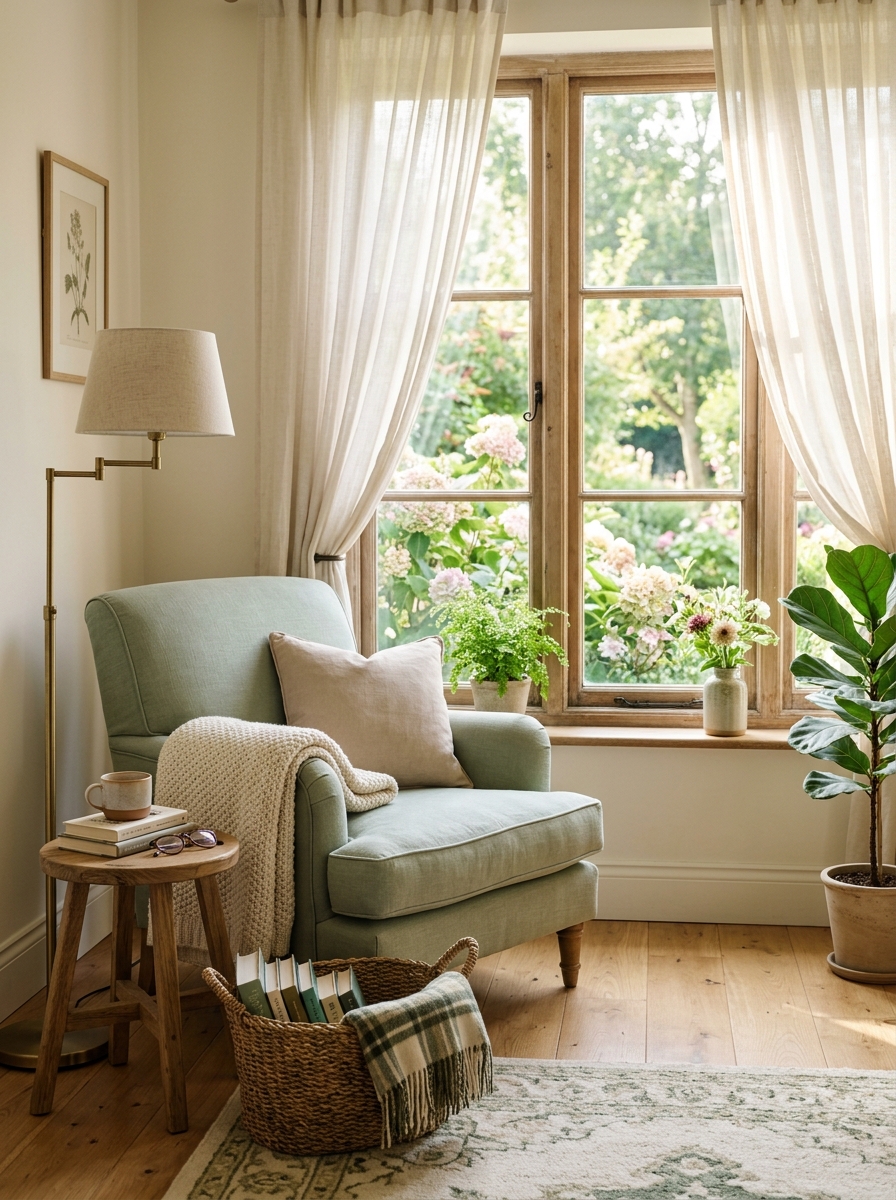
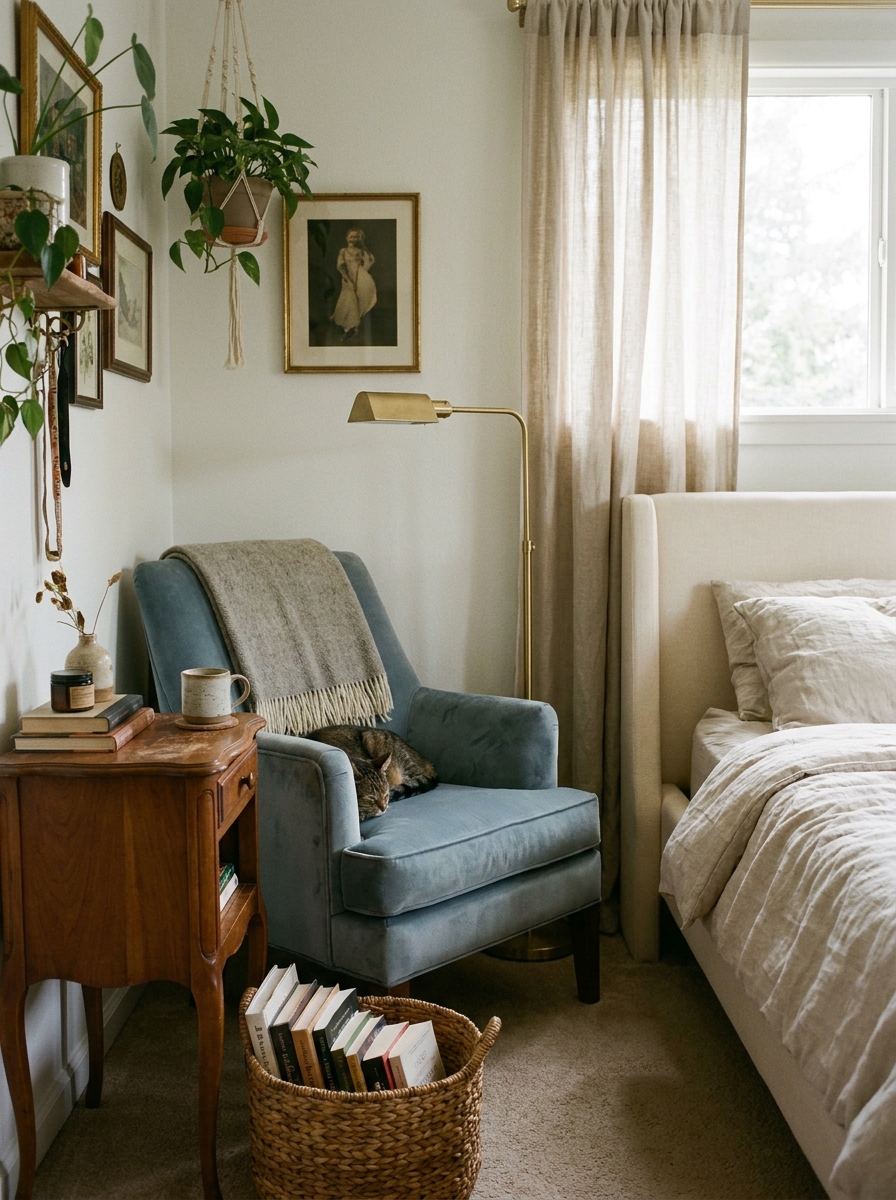
Add a reading chair to the bedroom
A bedroom reading chair creates a place to relax that is separate from the bed. It can make the room feel more complete while providing a useful spot for reading, dressing, or unwinding before sleep.
Place the chair near a window, beside a dresser, or in an otherwise unused corner. The size should suit the bedroom without narrowing the path around the bed.
Use upholstery that complements the bedding rather than matching it exactly. A dusty blue chair can add quiet color to a cream bedroom, while a taupe chair can support a warmer neutral palette.
Add focused lighting so the nook remains usable after dark. A small side table can also prevent books and cups from ending up on the floor. These cozy bedroom decor ideas can help the chair feel connected to the rest of the room.
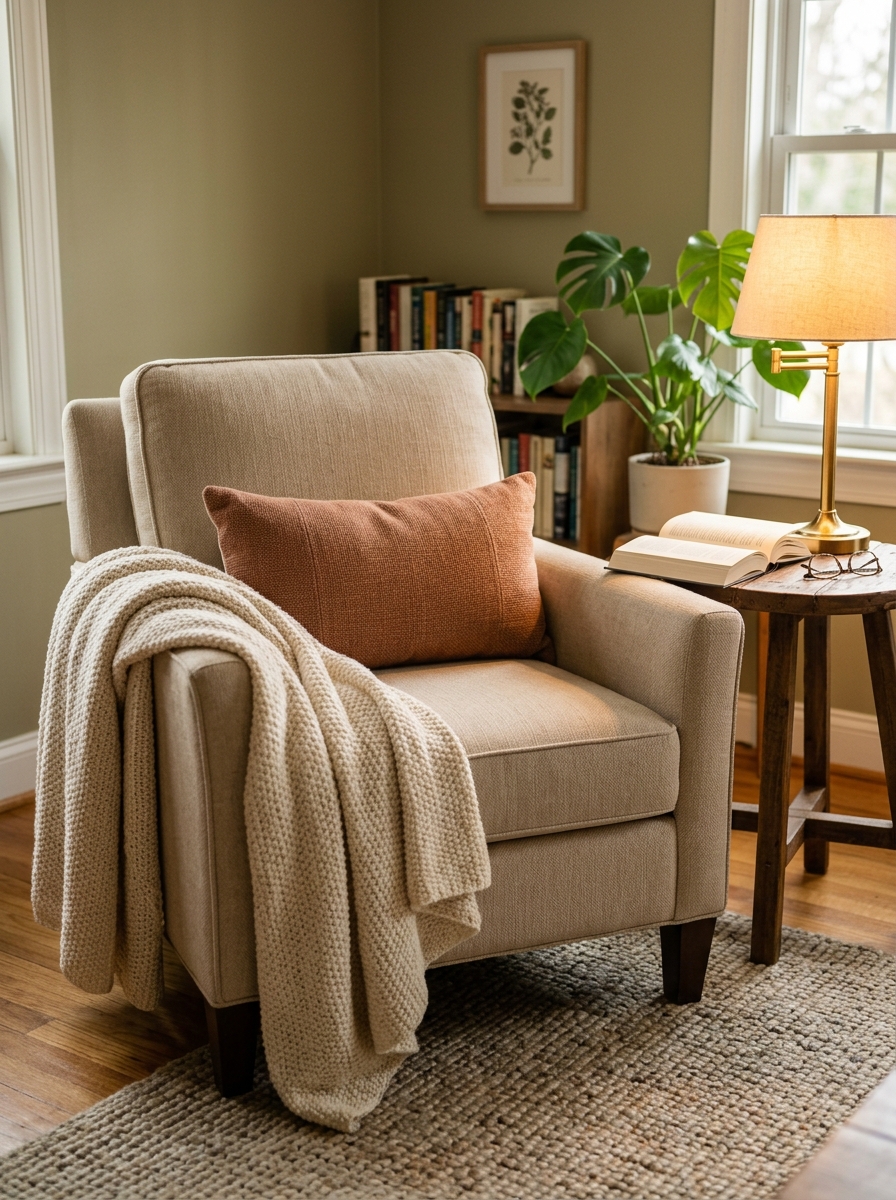
Position the chair beside a window
A window-side chair makes use of natural light and can turn an overlooked area into a comfortable reading space. This placement is especially appealing when the window overlooks a garden, courtyard, or quiet street.
Position the chair close enough to benefit from daylight but not so close that it blocks curtains, heating vents, or access to the window. A small table can sit on the opposite side to preserve the view.
Use sheer curtains to soften strong daylight and reduce glare on the page. A floor lamp is still useful for cloudy days and evening reading.
Keep the area visually open. A chair, lamp, table, and one basket may be enough to create a complete nook.
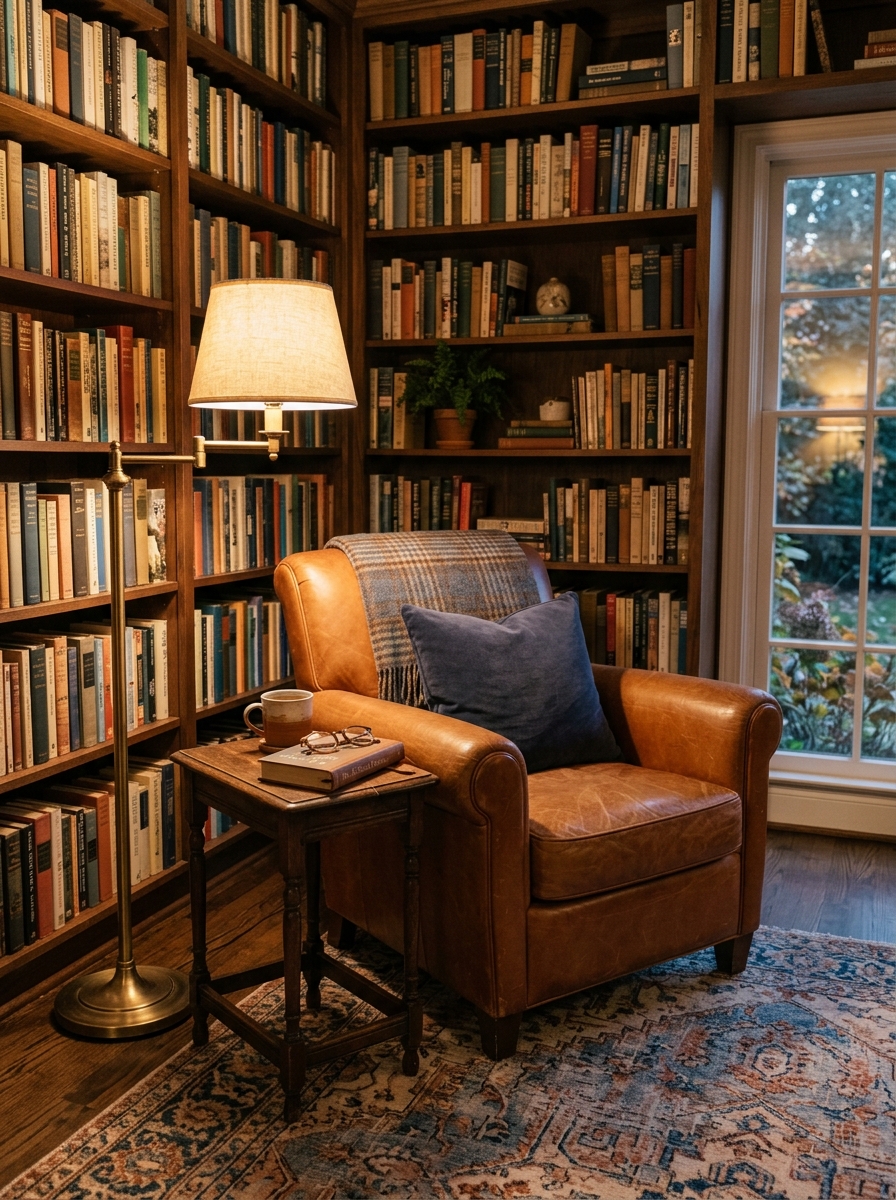
Create a library-style reading chair setup
A reading chair surrounded by bookshelves creates a classic library atmosphere and keeps favorite titles within easy reach. This setup can work in a dedicated home library, office, living room, or even along one bedroom wall.
Choose a chair with strong visual presence, such as leather, velvet, or a classic upholstered design. The chair should feel substantial enough to balance the shelves behind it.
Good lighting is essential because built-in shelves can make a corner darker. Use a focused floor lamp or wall-mounted picture-style light aimed toward the reading area.
Avoid overfilling the nook with additional decor. The books already provide color and texture, so the chair and lighting can remain simple. If the shelves need styling help, these living room shelf decor ideas can keep the surrounding wall from feeling too busy.
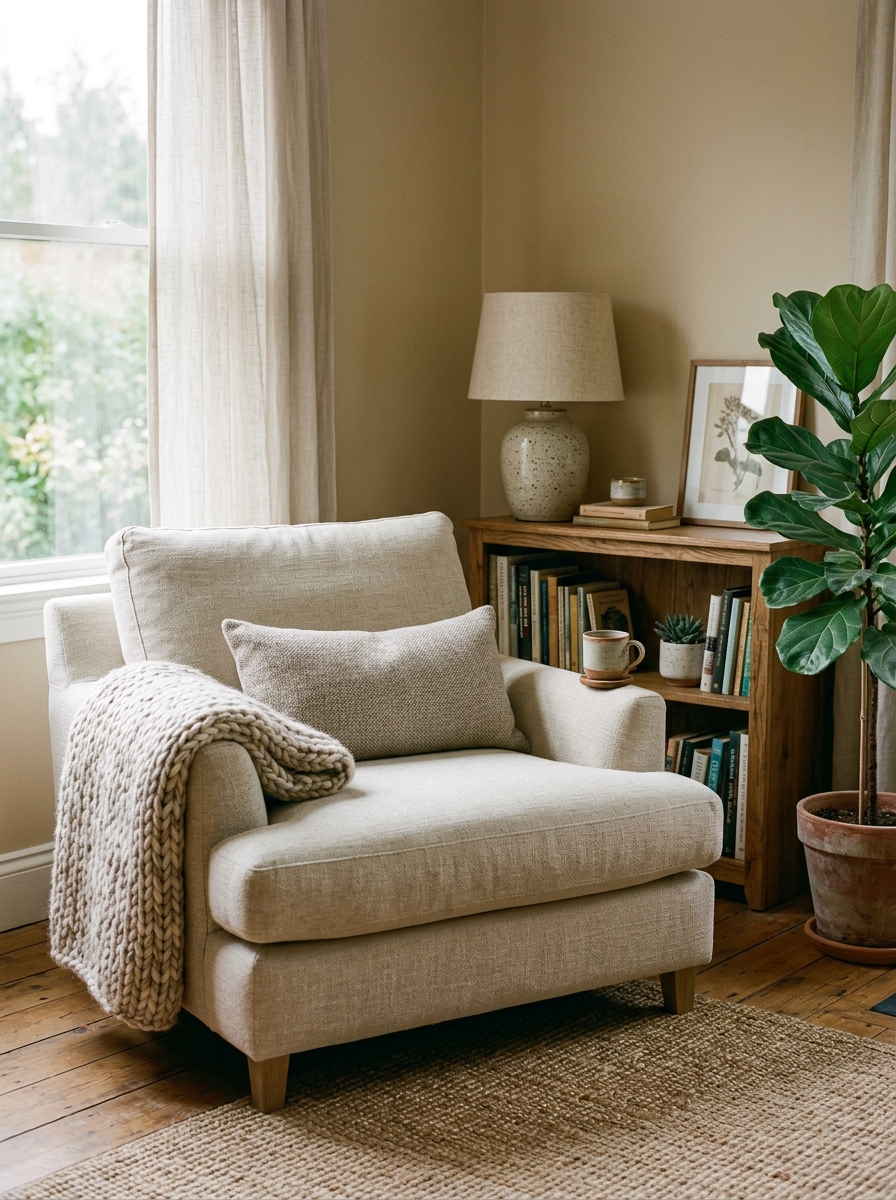
Finish the chair with a throw and supportive pillow
A throw blanket and pillow can make almost any reading chair feel more comfortable and visually complete. These accessories introduce softness, color, and texture without requiring a new piece of furniture.
Choose a lumbar pillow that supports the lower back rather than filling the entire chair. For the throw, use a breathable material such as cotton or linen in warmer weather and wool or knit during colder months.
The colors can relate to the room while introducing subtle contrast. A rust throw can warm up a cream chair, while an olive cushion can add depth to a beige nook.
Avoid piling several pillows and blankets onto the chair. The reader should not need to remove a large stack before sitting down.
How to choose the best reading chair
Begin with comfort rather than appearance. Consider how you naturally sit when reading. Some readers prefer an upright chair with strong back support, while others want a wider seat that allows them to curl up or stretch out.
Check the seat depth and height. A seat that is too deep may require a lumbar pillow, while a very high seat can be uncomfortable for shorter users. The arms should support the elbows without forcing the shoulders upward.
The chair also needs to fit the room. Measure the corner, including space for a side table, lamp, and comfortable circulation. Swivel chairs and recliners require additional clearance.
Finally, consider maintenance. Removable cushion covers, performance fabrics, medium-tone upholstery, and durable woven materials may be more practical for a chair used every day.
What every cozy reading nook needs
A reading chair is the foundation, but a few supporting pieces make the nook more useful. Place a light source beside or slightly behind the shoulder so it illuminates the page without creating glare.
Add a small table or shelf for a book, drink, reading glasses, or phone. The surface does not need to be large, but it should be easy to reach without leaving the chair.
A basket can hold extra books and a folded blanket. This keeps the corner organized while preserving the cozy appearance.
Use one pillow and one throw for comfort, then stop before the area becomes crowded. A successful reading nook should feel relaxing and easy to use, not heavily staged.
How to make a reading chair feel cozy
Texture and lighting have the greatest impact. A soft upholstered chair, woven rug, warm lamp, and simple throw can make even a small corner feel inviting.
Place the chair where it feels slightly sheltered. A window corner, space beside a bookcase, or area between a wall and curtain often feels more comfortable than a chair floating in the middle of a room.
Keep frequently used items within reach. A nook becomes more appealing when you can sit down with a book and have everything you need nearby.
The area should also remain uncluttered. A few carefully chosen pieces will feel calmer and more comfortable than many small decorations surrounding the chair.
Final thoughts
The best cozy reading chair is one that supports the way you actually like to read. An oversized chair may be ideal for curling up, while a wingback chair offers more structure and a chaise provides space to stretch out.
The surrounding setup matters just as much as the chair itself. Good lighting, an accessible table, a soft throw, and nearby book storage can turn an ordinary seat into a complete reading nook.
Whether you are working with a large home library or a small bedroom corner, a carefully chosen chair can create a peaceful place that encourages you to slow down and read more often.