Living Room
Nancy Meyers Living Room Ideas
14 Nancy Meyers living room ideas for a cozy, elegant home with cream sofas, pale blue cushions, wood furniture, bookshelves, flowers, and timeless layers.
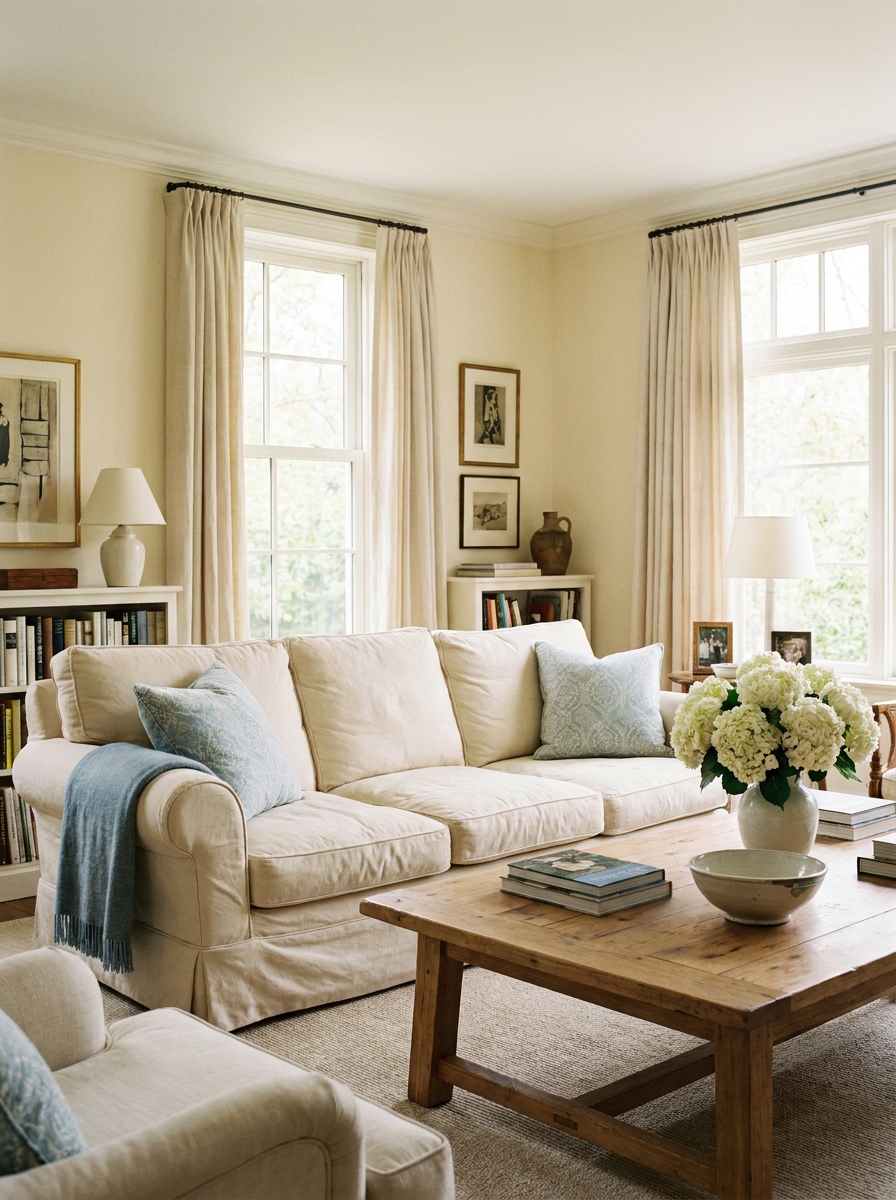
Nancy Meyers-inspired living rooms feel polished, comfortable, and unmistakably welcoming. They are elegant without appearing formal and layered without looking cluttered. Rather than following a strict decorating trend, these rooms feel as though they have developed naturally over many years.
The style usually begins with comfortable seating, a warm neutral backdrop, natural wood furniture, and generous daylight. Soft blue accents, substantial lamps, traditional artwork, built-in bookshelves, flowers, baskets, and stacks of books then bring the room to life. Each detail contributes to a home that feels beautiful but still genuinely usable.
What makes this aesthetic especially appealing is its balance. A traditional walnut side table may sit beside a relaxed slipcovered sofa. A carefully framed landscape may hang above cushions that are slightly rumpled. The room feels considered, but it does not feel protected from everyday life.
These 14 Nancy Meyers living room ideas will help you create a space that feels cozy, elegant, timeless, and comfortable enough to enjoy every day. For a full-home version of the look, these Nancy Meyers home aesthetic ideas show how the same warmth can extend into the kitchen, entryway, and beyond.
Start with a comfortable cream sofa
A comfortable cream sofa is one of the strongest foundations for a Nancy Meyers-inspired living room. Cream keeps the room bright and flexible, while a deep seat, relaxed cushions, and soft upholstery prevent the space from feeling cold or overly formal.
Look for a sofa with generous proportions and a classic shape. Rolled arms, subtle skirts, loose back cushions, and softly tailored slipcovers all suit the aesthetic. The sofa should look inviting enough for reading, conversation, or an afternoon nap rather than like a decorative piece that must remain untouched.
The fabric should also feel practical. Linen blends, textured cotton, washable slipcovers, and durable woven upholstery give the room a relaxed quality. A slightly imperfect surface often looks more appropriate than fabric that appears stiff or highly polished.
Pair the sofa with pale blue cushions, a soft throw, substantial side tables, and warm lamps. These layers will help the cream upholstery feel warm and connected to the rest of the room.
Add pale blue and faded denim cushions
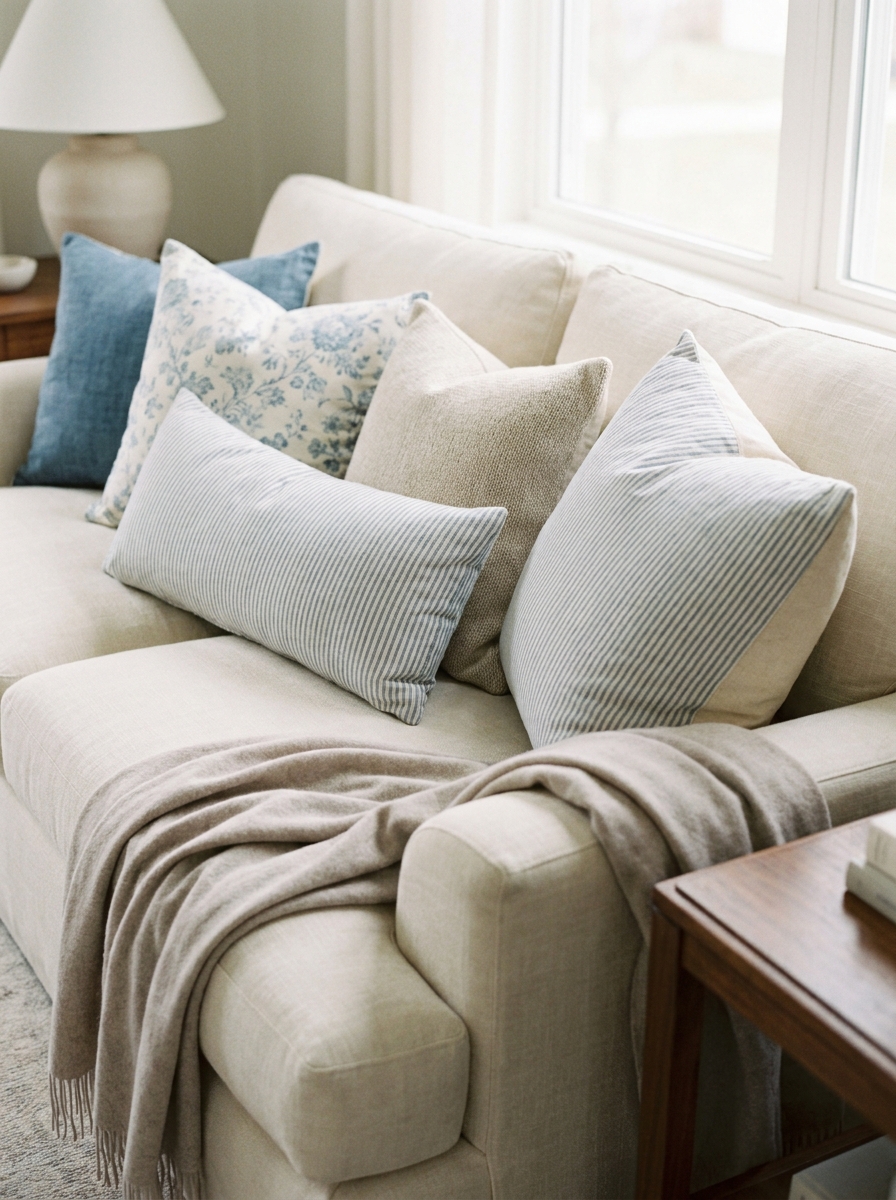
Soft blue is one of the defining colors of this style. Powder blue, faded denim, blue-gray, and muted cornflower shades bring freshness to a cream living room without making the space feel strongly themed.
Use cushions in several related shades rather than repeating one exact blue. A washed linen pillow can sit beside a small floral print, a narrow stripe, or a traditional block pattern. Mixing these details creates the sense that the room has been assembled gradually.
Include neutral cushions among the blue ones to keep the arrangement balanced. Oatmeal, cream, pale taupe, and soft gray help separate the stronger patterns and prevent the sofa from looking crowded.
The arrangement should remain relaxed. Avoid placing identical cushions in perfect symmetry. A slightly uneven mix looks more comfortable and better supports the lived-in feeling of the room.
Arrange the seating for conversation
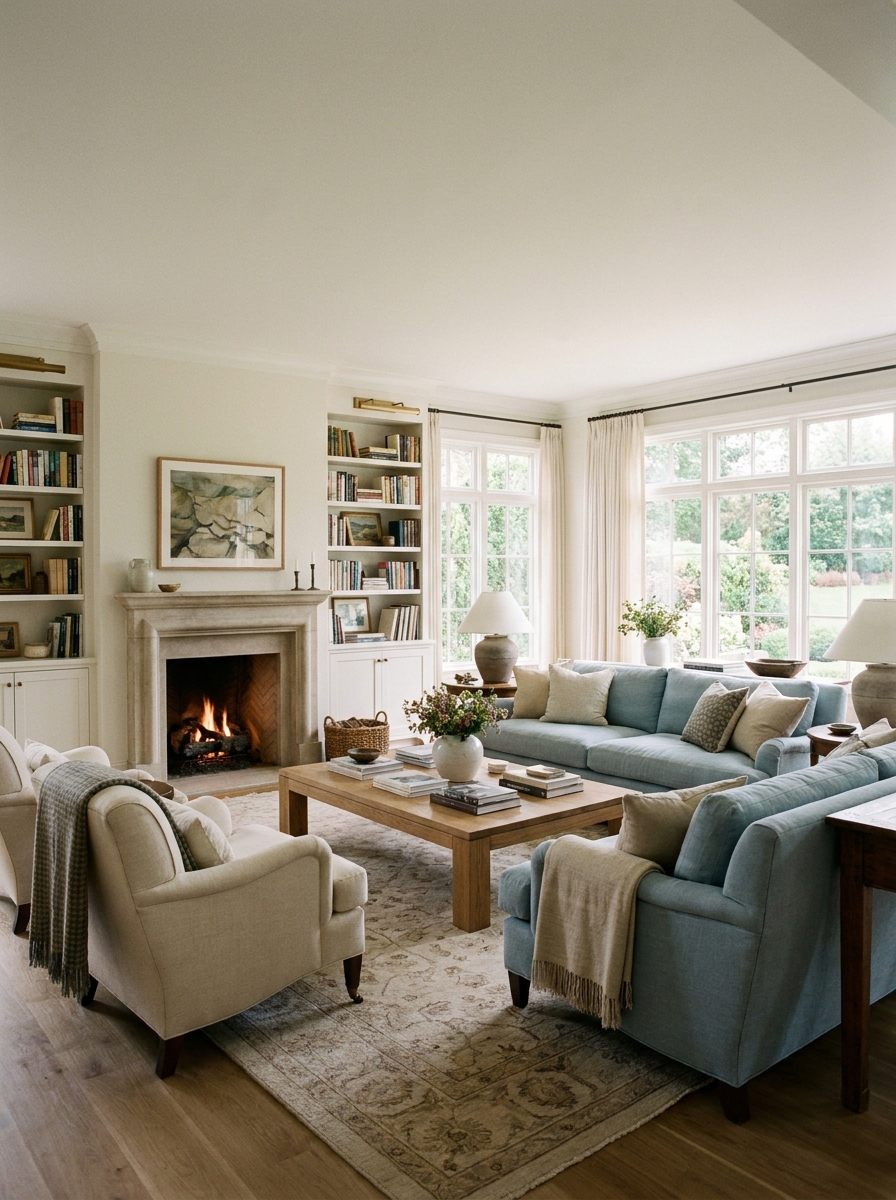
A Nancy Meyers living room should feel designed for people to gather. Instead of positioning every chair directly toward a television, arrange the furniture so family and guests can comfortably face one another.
Place a sofa opposite or perpendicular to two armchairs, with a substantial coffee table in the center. Angle the chairs slightly inward to soften the layout and create a more natural conversation area. Side tables and lamps should be easy to reach from each seat.
In a larger room, avoid pushing every piece against the walls. Floating part of the furniture closer to the center creates a more intimate arrangement and helps define the seating area. A large rug can visually connect the pieces and keep the layout feeling cohesive.
Even a smaller living room can use this principle. One sofa and a single armchair angled toward it may create a more welcoming arrangement than several pieces lined up rigidly around the room. These small living room ideas can help adapt the layout to a compact footprint.
Use a large natural wood coffee table
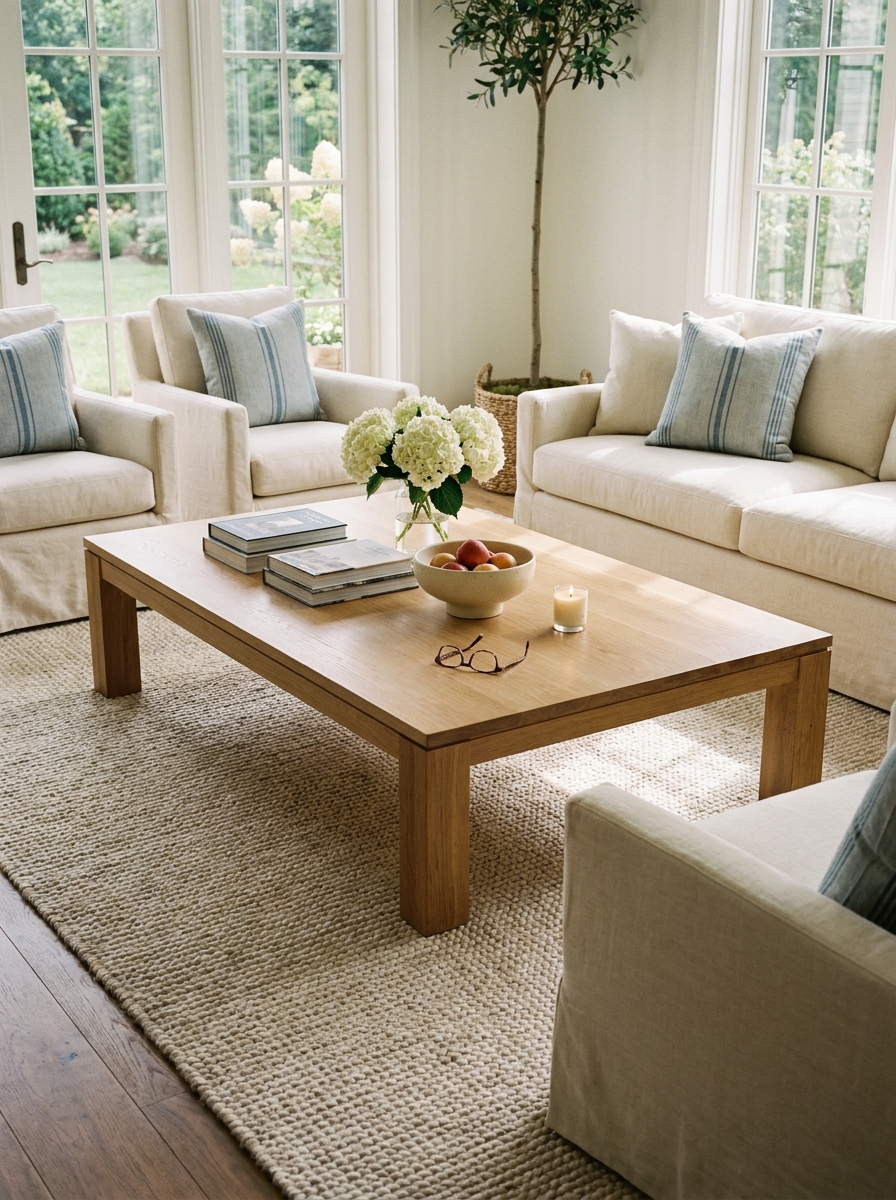
A substantial wood coffee table grounds a light living room and adds warmth to pale upholstery. Small delicate tables can feel out of scale beside deep sofas and generous armchairs, while a broader table provides both visual balance and practical surface space.
Oak, walnut, pine, and medium-toned reclaimed-looking wood all work well. The finish should reveal the natural grain and feel more matte than glossy. Rectangular, square, and softly rounded shapes can each suit the style, depending on the room's layout.
Style the surface with useful and meaningful objects rather than many tiny accessories. A stack of books, a low bowl, a vase of flowers, and a small tray usually provide enough interest. Leave part of the table empty so there is still room for drinks, reading material, or everyday use.
The table does not have to look new. Slight variation in the wood, visible grain, or an older furniture shape can make the room feel more established.
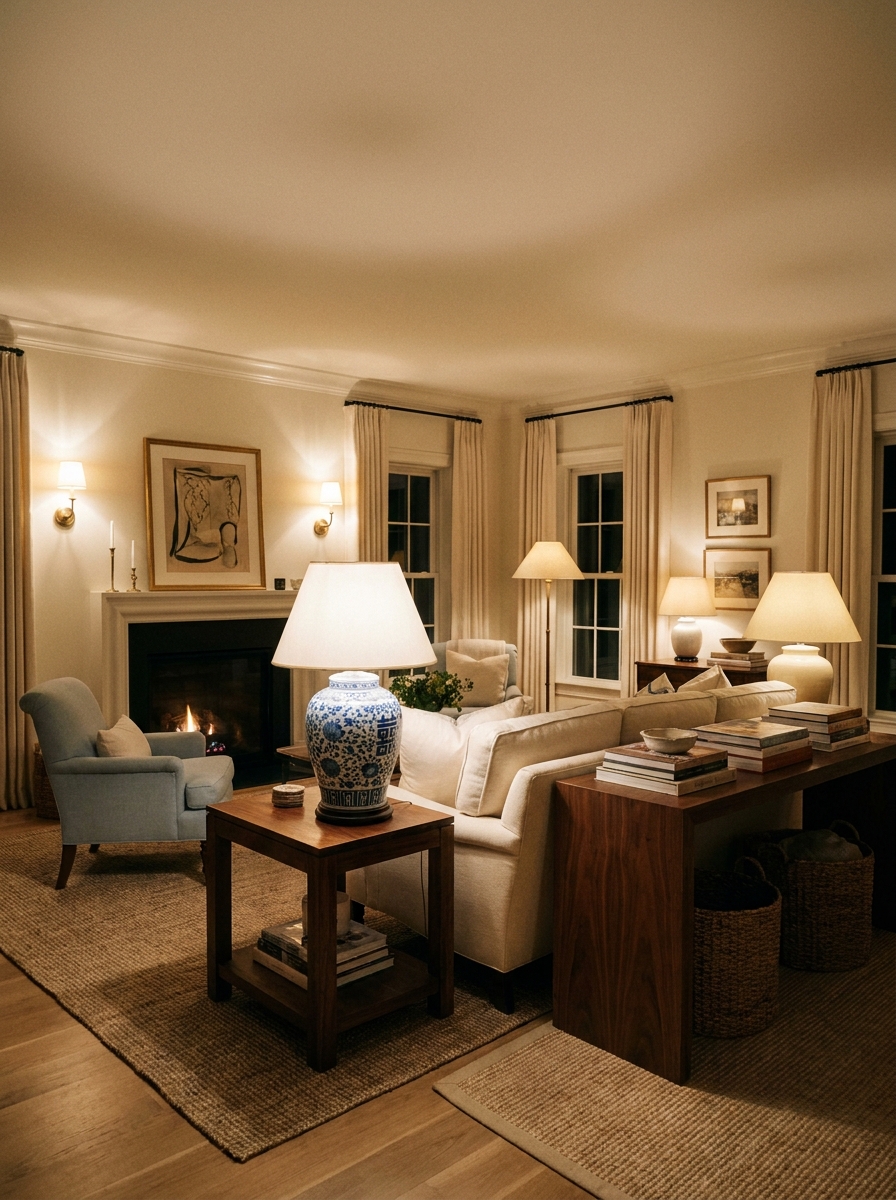
Include oversized table lamps
Substantial table lamps are a key part of the warm, established atmosphere associated with Nancy Meyers interiors. They provide soft pools of light, add visual height, and balance larger furniture pieces.
Choose ceramic, glass, brass, or painted bases with warm fabric shades. Pleated shades and softly tapered shapes bring a traditional quality, while simpler linen shades keep the room from feeling overly formal. Blue-and-white ceramic lamps are especially effective because they combine pattern, color, and function.
Use lamps throughout the room rather than relying on a single overhead fixture. A lamp beside the sofa, another on a console, and perhaps a floor lamp near a reading chair create a layered evening atmosphere.
The lamps should be large enough to feel intentional. A tiny lamp placed on a substantial side table can look out of proportion and may not provide enough useful light.
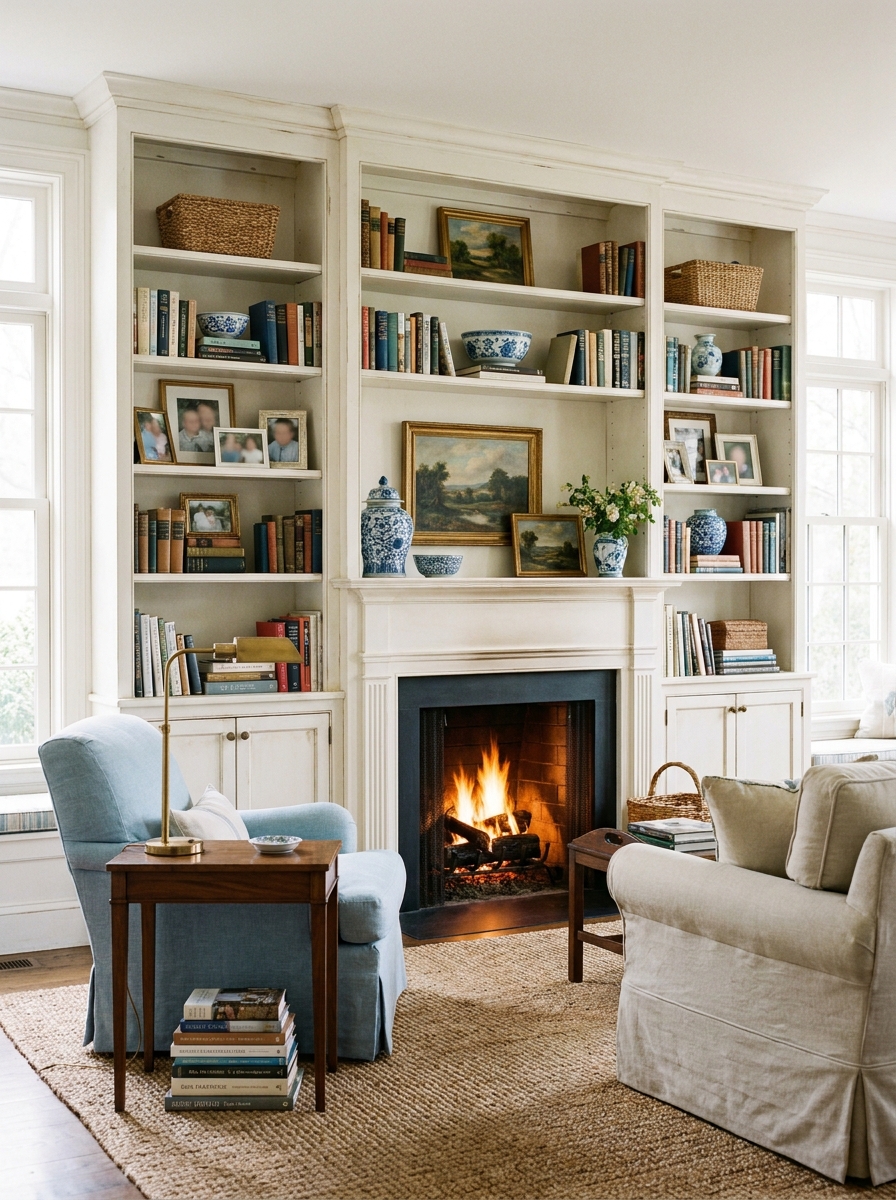
Add built-in bookshelves
Built-in bookshelves give a living room architectural character and reinforce the sense that the home is personal and established. They work especially well around a fireplace, beside a window, or across one full wall.
Fill the shelves with a balanced mix of books, framed photographs, ceramics, baskets, small artwork, and collected objects. Avoid arranging every shelf identically. Some sections can hold rows of books, while others may feature a larger vase or a leaning frame.
Leave a little empty space around key objects so the shelves remain visually calm. Overfilled shelves can feel chaotic, while shelves that are too sparse may lose the warm, lived-in quality that defines the aesthetic.
Painted warm white or cream built-ins blend naturally with the walls and allow the books and accessories to provide color. Wood shelving can create a richer library-like interpretation.
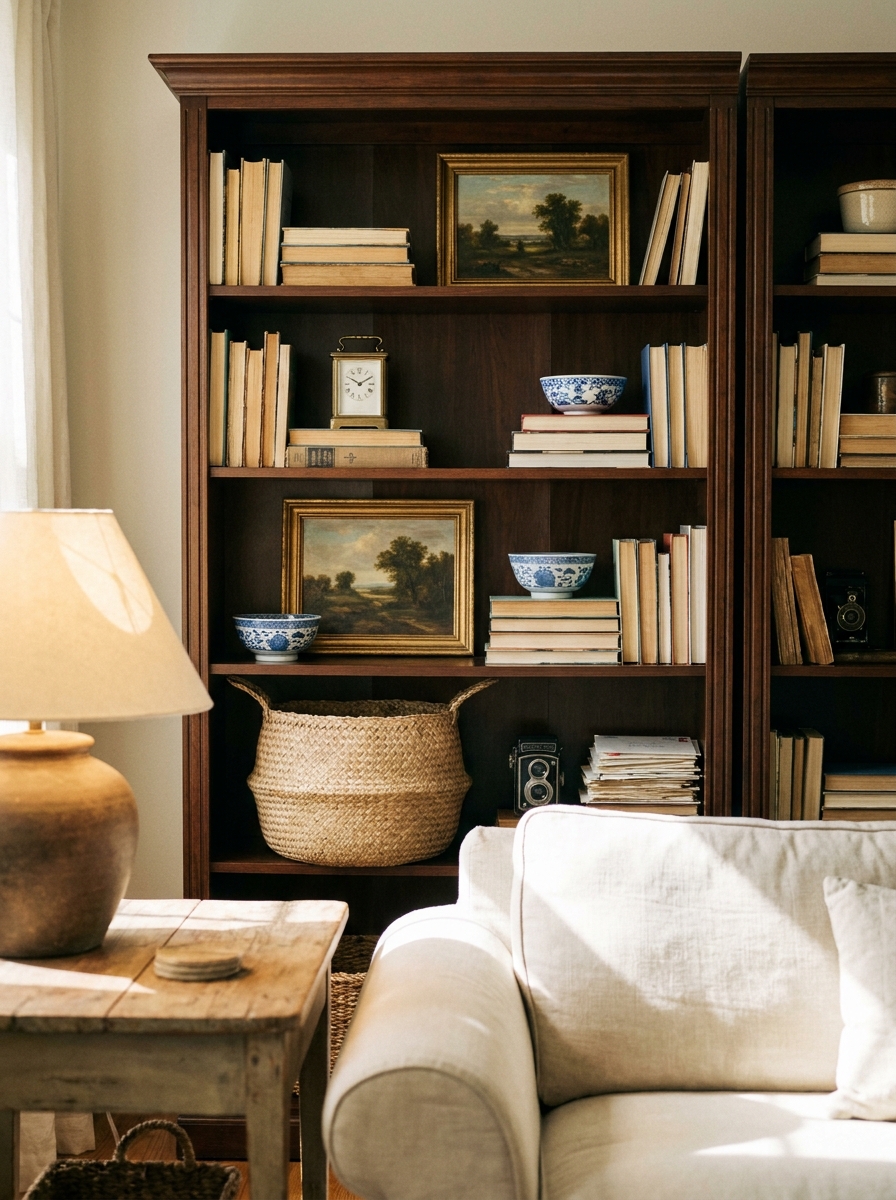
Style shelves with books and collected objects
Even without custom built-ins, shelving can add the same layered personality. A freestanding bookcase, antique cabinet, or pair of wall shelves can provide room for objects that suggest interests and memories.
Books should form the foundation. Arrange some vertically and others in short horizontal stacks. Use those stacks to support a small ceramic bowl, frame, or decorative box. Larger items such as a vase or basket can break up long rows of books.
Choose objects that feel varied but connected through color or material. Blue-and-white porcelain, wood frames, brass accents, woven textures, and muted artwork work especially well together.
Avoid filling the shelves with generic decorative sets. The styling should feel personal and developed gradually, even when the room is newly decorated. This guide on how to style floating shelves follows the same balanced approach.
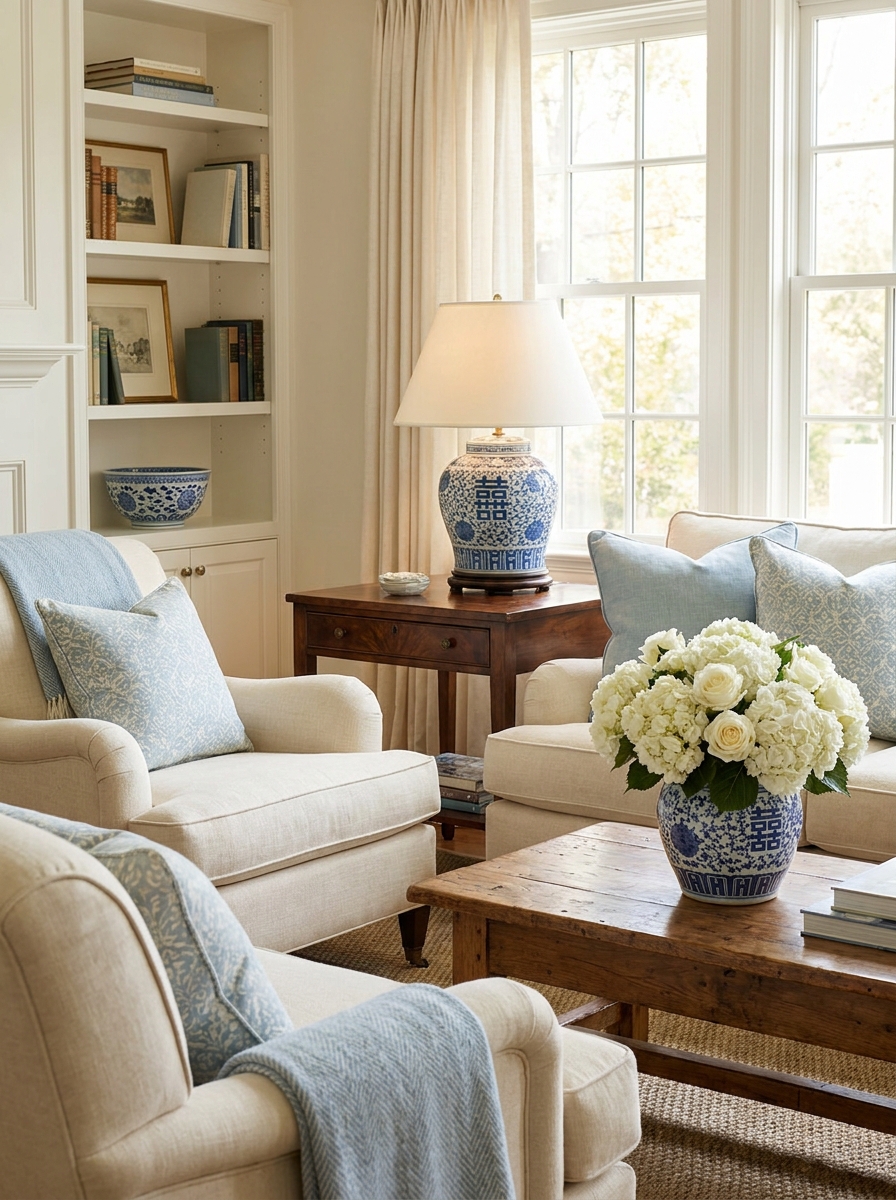
Bring in blue-and-white ceramics
Blue-and-white ceramics add classic color and pattern while connecting naturally with cream seating and warm wood furniture. They can appear as lamps, vases, bowls, jars, or smaller decorative pieces.
Use a few larger items rather than scattering many tiny ceramics around the room. A blue-and-white lamp on a side table or a substantial vase on the coffee table can become a memorable focal point.
Different patterns can be mixed as long as the blue tones feel related. Floral, geometric, and traditional porcelain motifs can coexist without looking overly coordinated.
Balance the ceramics with simpler objects. Books, fresh flowers, wood, and neutral textiles allow the patterned pieces to stand out without making the room feel too formal.
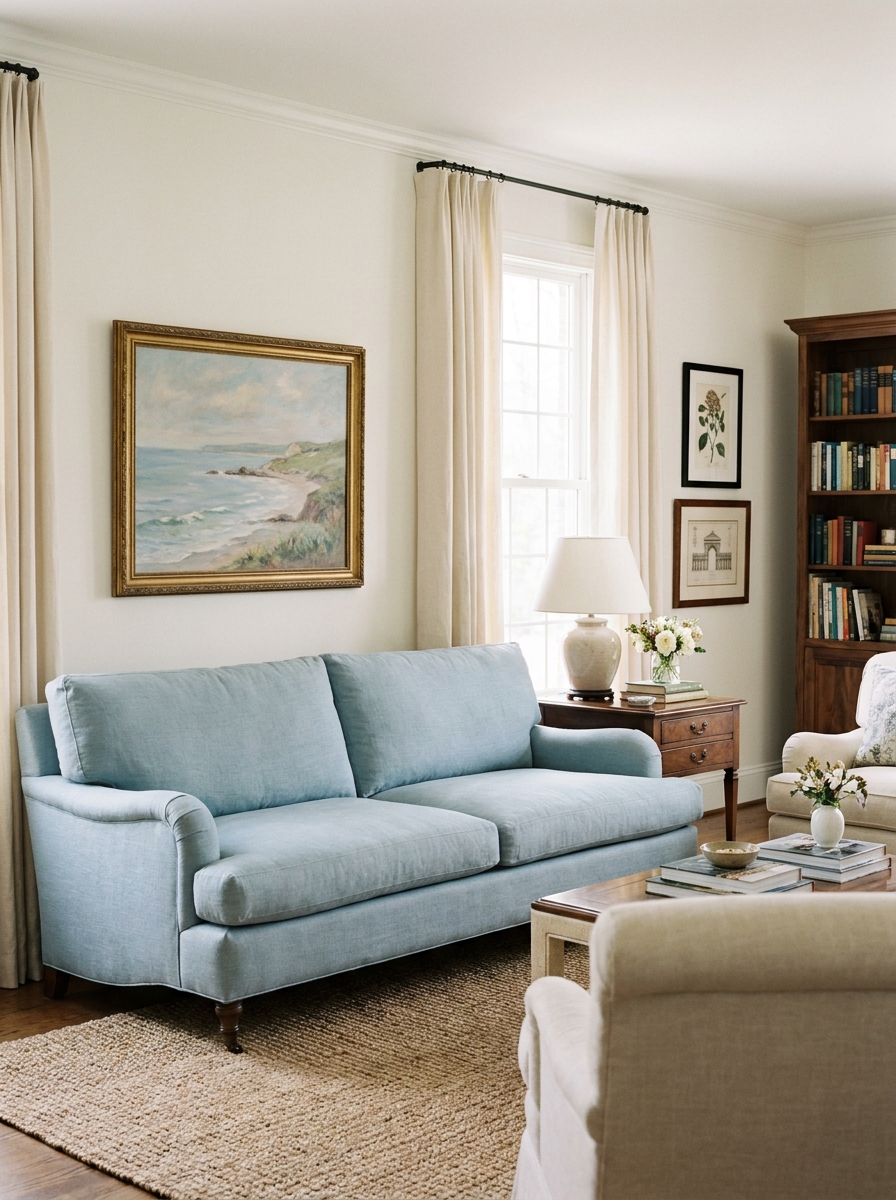
Display classic framed landscape art
Traditional artwork gives a neutral living room depth and identity. Landscapes, coastal scenes, botanical studies, still lifes, and architectural drawings all suit the aesthetic.
A single medium or large landscape above the sofa can create a calm focal point. Smaller works can be layered on shelves, arranged beside a bookcase, or grouped in a modest gallery wall. The artwork does not need to match perfectly.
Use frames in walnut, antique gold, black, or painted wood. Mixed frames often feel more collected than a set of identical ones. Cream or off-white mats can help connect the pieces to the room's neutral palette.
Artwork containing faded blue skies, soft greenery, warm earth tones, and water views can subtly repeat the room's colors without looking overly planned. These living room wall decor ideas can help you choose the right scale and placement.
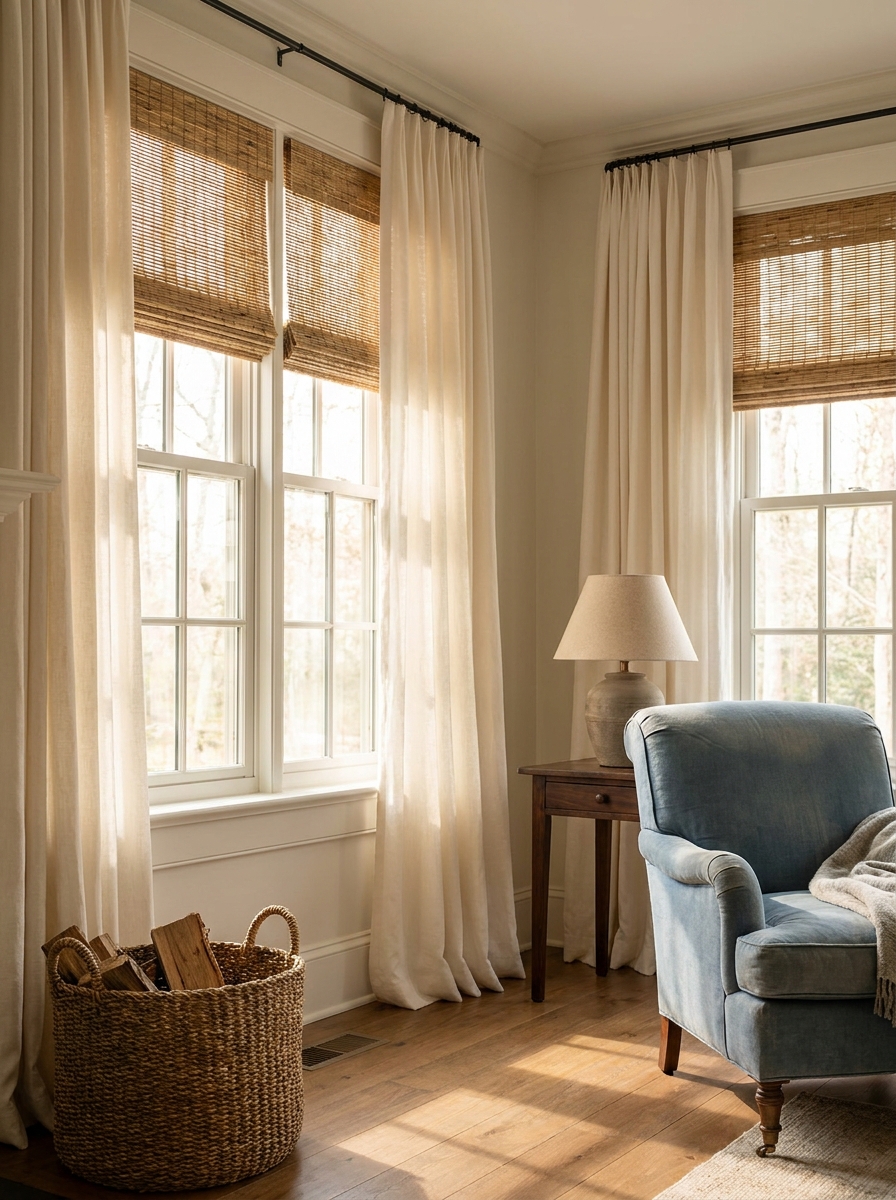
Layer linen curtains with woven shades
Window treatments should soften the room while allowing natural light to remain central. Linen curtains in warm white, ivory, oatmeal, or pale blue-gray create gentle movement and a relaxed elegance.
Hang the curtains higher than the top of the window and allow them to reach the floor. This gives the room better proportions and makes the windows appear taller. Natural fabric wrinkles support the lived-in quality of the style.
Layer woven shades beneath the curtains for privacy and additional texture. Bamboo, rattan, and natural fiber shades bring warmth and balance the lighter fabric.
Avoid heavy, shiny, or overly ornate treatments. The room should feel bright and graceful rather than formal or enclosed.
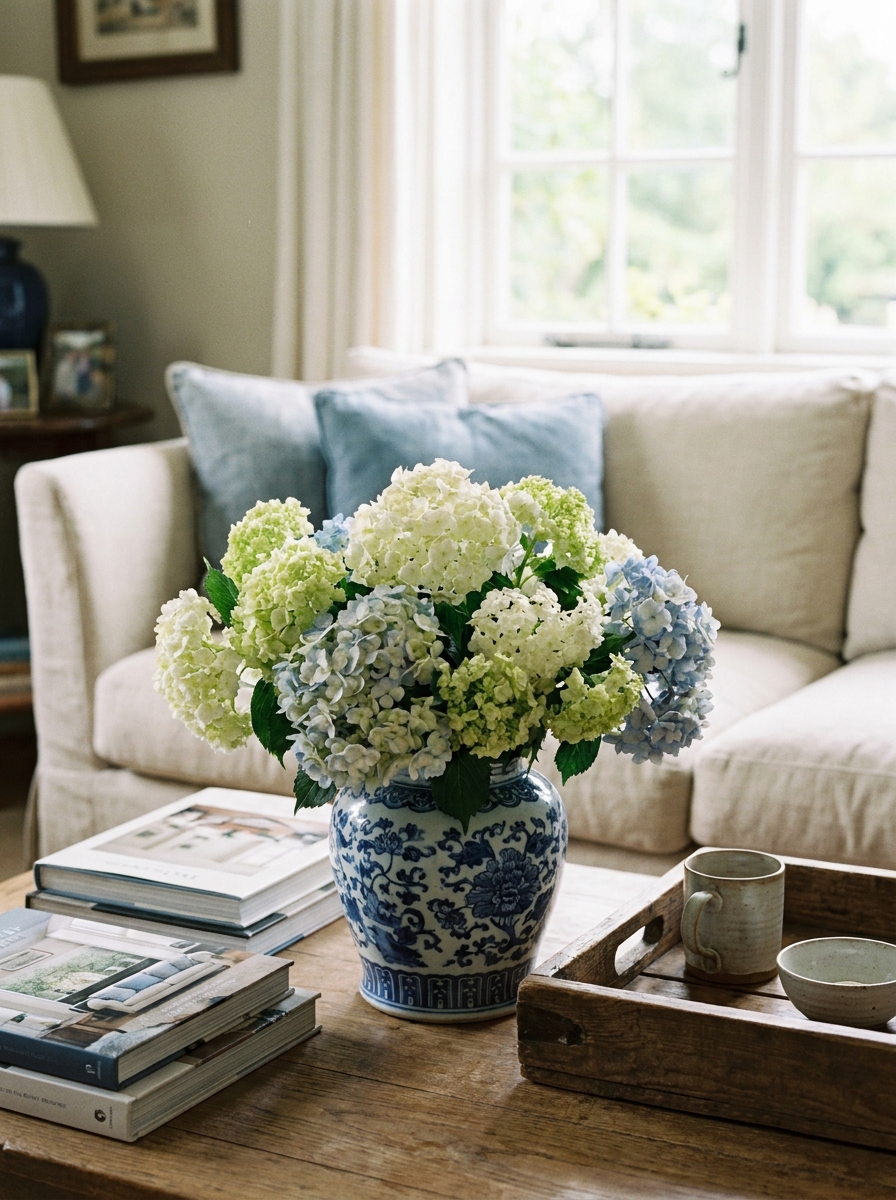
Add fresh hydrangeas or garden flowers
Fresh flowers introduce softness, color, and a sense of daily care. Hydrangeas are especially associated with this look because their full shape works beautifully in casual ceramic or glass containers.
White, pale green, blue, blush, and soft lavender flowers all complement the typical palette. The arrangement should feel loose and natural rather than formal. Garden-style flowers with visible leaves and irregular stem heights often look most appropriate.
Place flowers where people would genuinely enjoy them, such as the coffee table, a console, a side table, or a nearby dining surface. Avoid filling every surface with arrangements.
The vase can support the aesthetic as well. Blue-and-white porcelain, clear glass, a ceramic pitcher, or an older metal vessel can each create a slightly different interpretation.
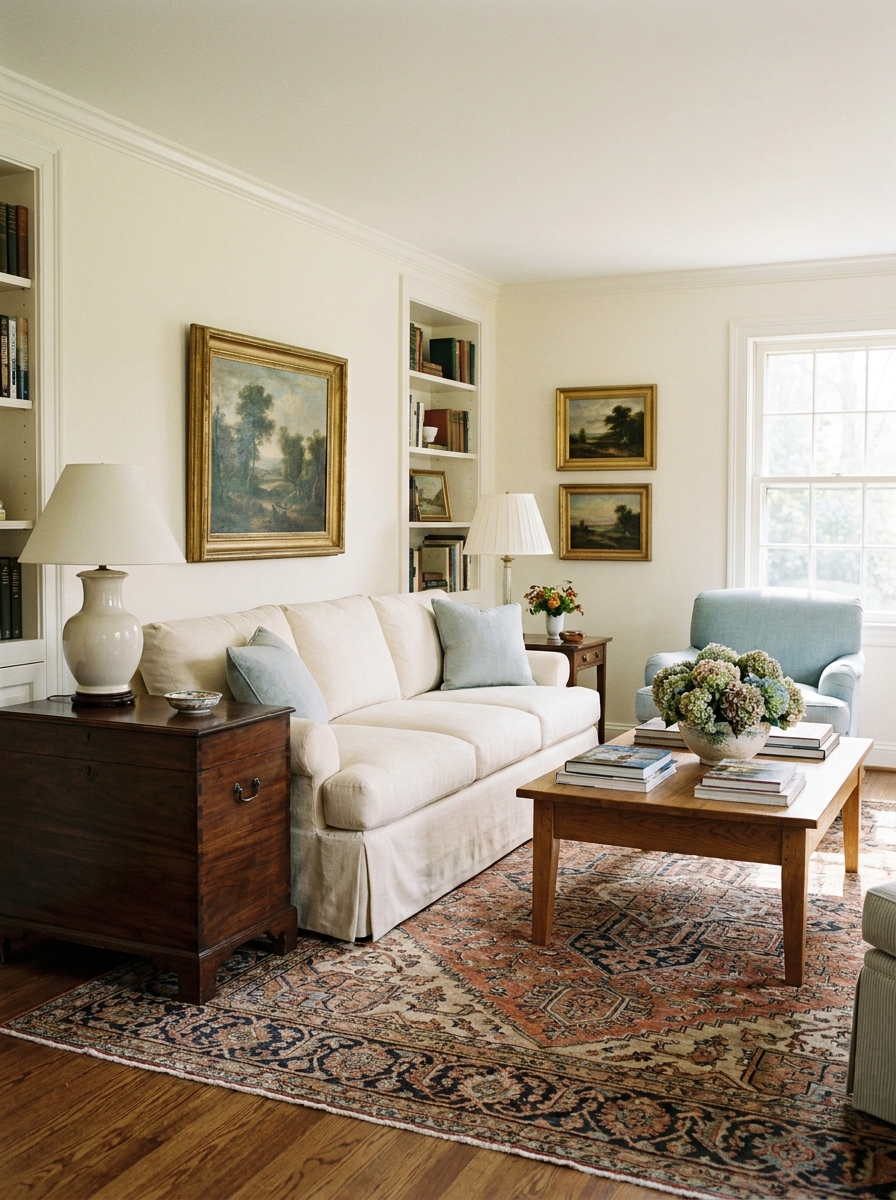
Mix traditional wood furniture with relaxed upholstery
This aesthetic works because it combines polished, traditional pieces with upholstery that feels soft and approachable. A dark walnut chest, turned-leg side table, or antique-style console can add structure beside a relaxed sofa or slipcovered chair.
The contrast prevents the room from leaning too far toward casual cottage style or formal traditional decor. Warm wood gives the lighter textiles weight, while soft upholstery keeps the darker furniture from making the room feel severe.
Do not worry about matching every wood tone. Medium walnut, oak, cherry, and painted finishes can coexist when repeated thoughtfully. A dark frame may connect with a side table, while an oak coffee table relates to the flooring.
Choose furniture that looks useful. Chests can provide storage, consoles can support lamps, and side tables should be large enough for books and drinks.
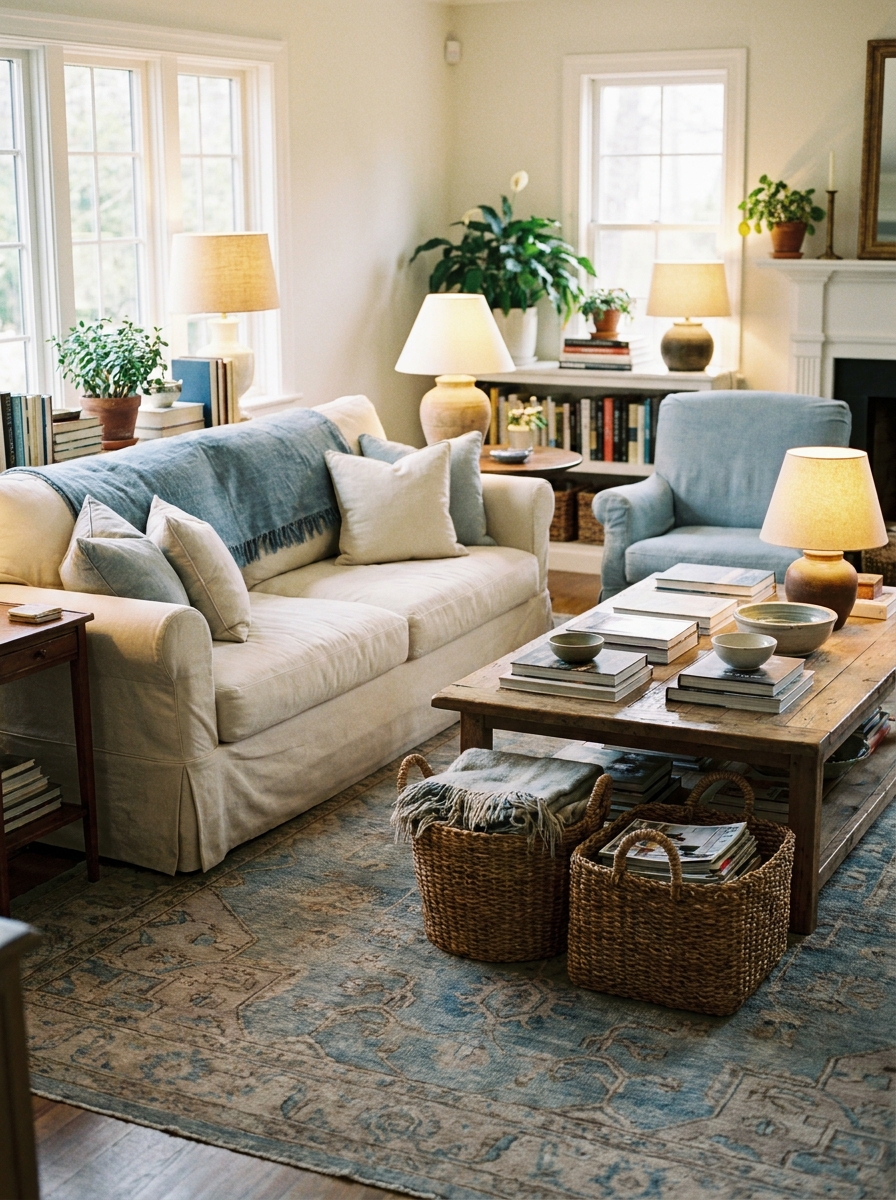
Layer rugs, throws, and woven baskets
Textural layering makes a neutral living room feel warm and complete. Rugs soften the floor, throws make seats look inviting, and baskets add natural texture while providing practical storage.
Use a large rug that connects the main furniture pieces. A faded traditional pattern, soft geometric design, or subtle blue-and-cream motif can introduce interest without dominating the room. The rug should extend beneath at least the front legs of the seating.
Drape throws loosely rather than folding every textile into a perfect rectangle. Linen, wool, cotton, and lightweight woven fabrics all work well. Choose muted blue, cream, taupe, or soft gray tones.
Place baskets beside seating, under a console, or near the fireplace. They can hold blankets, magazines, toys, or extra cushions while making everyday storage feel decorative.
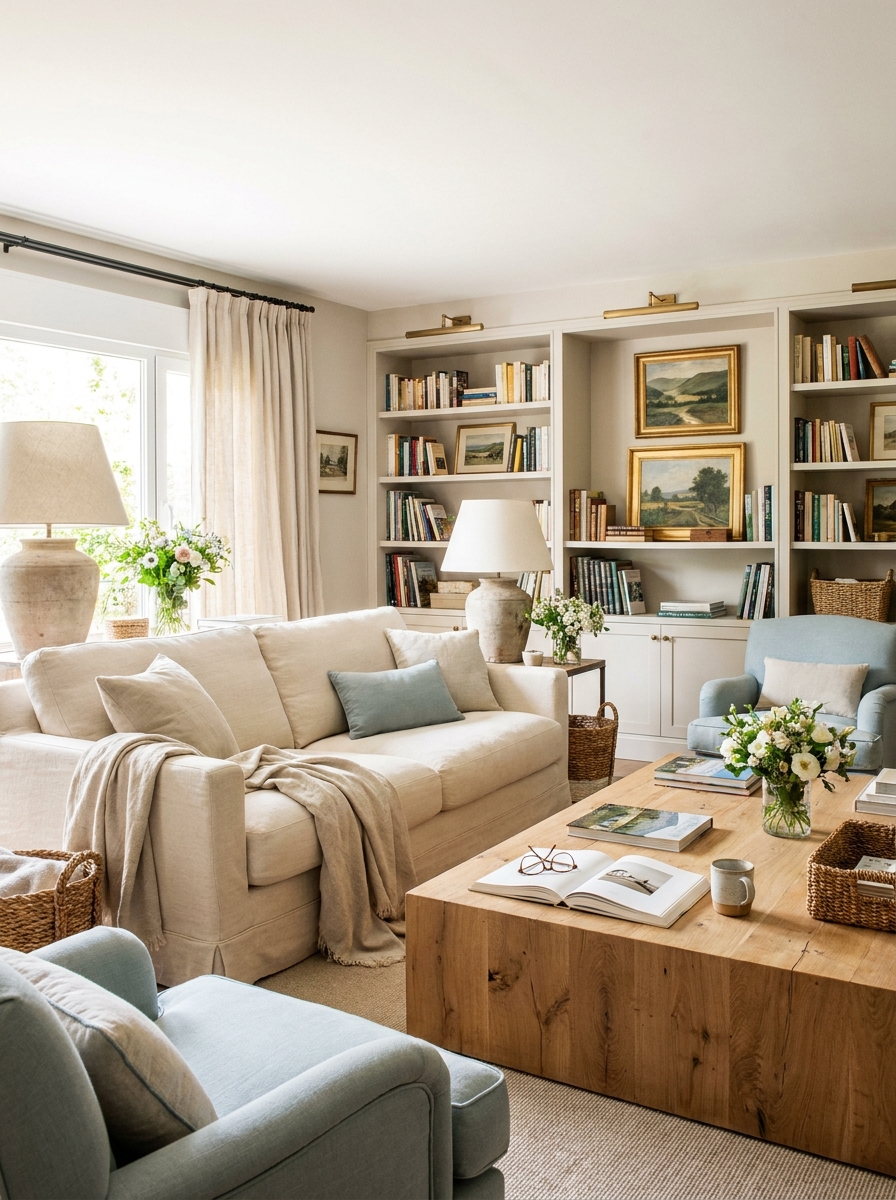
Keep the room polished but genuinely lived in
The defining quality of a Nancy Meyers living room is that it looks beautiful without feeling untouchable. The furniture is substantial, the colors are thoughtful, and the decor is layered, but there are also clear signs that people use the space.
A book may remain open on the coffee table. Reading glasses can sit beside a lamp. A throw may be loosely draped across a chair, and a basket may hold items that are used regularly. These details make the room feel warm rather than staged.
Lived-in does not mean cluttered. Everyday items should still have logical places, and the main surfaces should remain calm. The room should suggest activity without looking disorganized.
Focus on comfort first. When the seating is inviting, the lighting is warm, and the decorative objects feel personal, the room naturally begins to capture the Nancy Meyers aesthetic. A nearby chair and lamp can also become one of those cozy reading corner ideas that makes the room feel used every day.
How to recreate the Nancy Meyers living room look
- Begin with comfortable seating arranged for conversation, a properly sized rug, and a substantial coffee table.
- Build the palette around cream, warm white, pale blue, faded denim, taupe, and natural wood.
- Add functional layers through bookshelves, curtains, lamps, tables, and artwork rather than relying on decorative accessories alone.
- Finish gradually with flowers, ceramics, books, throws, and personal objects instead of buying one matching collection.
A room that feels slightly varied and developed over time will look more authentic than one filled with perfectly coordinated pieces.
Final thoughts
A Nancy Meyers-inspired living room should feel as comfortable as it looks. Cream seating, pale blue textiles, warm wood furniture, classic lamps, bookshelves, flowers, and traditional artwork create the foundation, but the room's true appeal comes from its relaxed atmosphere.
You do not need a large home or custom architecture to use these ideas. A small living room can capture the same mood with one inviting sofa, a substantial lamp, a wood coffee table, linen curtains, a few books, and soft blue accents.
The goal is not to reproduce a movie interior perfectly. It is to create a room that feels timeless, personal, well cared for, and ready for real life.
FAQ
What makes a living room feel like a Nancy Meyers interior?
Use comfortable cream seating, pale blue textiles, natural wood furniture, large table lamps, bookshelves, fresh flowers, classic artwork, linen curtains, and relaxed everyday details.
What colors work best in a Nancy Meyers living room?
Warm cream, ivory, oatmeal, taupe, faded denim, pale blue, soft gray, and natural wood tones create the gentle, elegant palette associated with this style.
How do I make a living room feel elegant but comfortable?
Choose substantial, usable furniture; layer in warm lighting, books, baskets, flowers, and textiles; and leave some everyday details visible while keeping the main surfaces calm.