Decor & Styling
Nancy Meyers Home Aesthetic Ideas
15 Nancy Meyers home aesthetic ideas for a warm, timeless interior with cream tones, pale blue, natural wood, books, flowers, and relaxed traditional style.
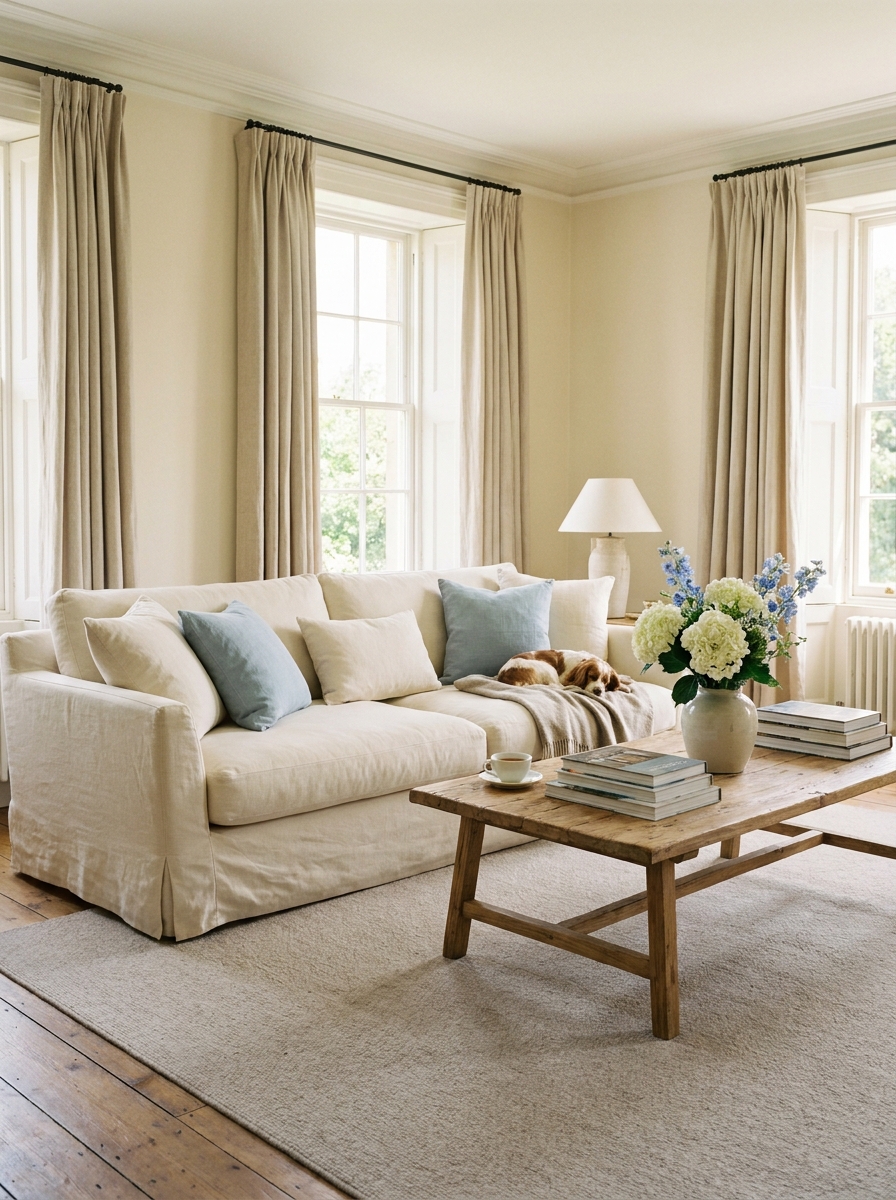
The Nancy Meyers home aesthetic is known for interiors that feel elegant, comfortable, and genuinely lived in. These are not rooms designed only to look impressive in photographs. They feel like places where someone could read by the window, prepare dinner for friends, leave a stack of books on the coffee table, or spend a slow Sunday morning with a cup of coffee.
The style usually combines light-filled rooms, warm neutral colors, traditional furniture, soft blue accents, natural wood, layered textiles, fresh flowers, and shelves filled with meaningful objects. Nothing feels too perfect or overly coordinated. The rooms appear collected gradually, which gives them warmth and personality.
One of the reasons this aesthetic remains so appealing is that it avoids both extremes. It is more polished than casual farmhouse decor, but softer and more approachable than formal traditional interiors. It can work in a large house, a modest apartment, or even one carefully styled room.
You do not need to copy a movie set exactly to create the look. The key is to understand the balance between comfort, timeless materials, useful furniture, and relaxed styling. These 15 Nancy Meyers home aesthetic ideas will help you bring that feeling into your own space. For a deeper old money version of classic layered interiors, these Ralph Lauren-inspired home decor ideas lean into dark wood, leather, plaid, brass, and traditional rugs. For smaller homes, these apartment decor ideas can help you translate the same warm mood with fewer pieces, while these Nancy Meyers living room ideas focus on the room where the look often begins.
Begin with a warm cream color palette
Warm cream is one of the most recognizable foundations of the Nancy Meyers aesthetic. It brightens a room without creating the cold or clinical feeling that can come from using sharp white everywhere. Cream walls, ivory upholstery, pale stone, and soft beige textiles create a welcoming background that allows wood furniture, artwork, and blue accents to stand out.
The most successful rooms usually include several related neutral shades rather than one flat color. Warm white walls can sit beside a cream sofa, oatmeal curtains, a light taupe rug, and slightly deeper beige cushions. These subtle differences give the room depth while preserving a calm overall appearance.
Natural light is especially important with this palette. Sunlight brings out the warmth in cream and ivory, while lamps create a gentle golden atmosphere in the evening. If the room lacks natural light, choose neutrals with warmer undertones and avoid gray-white shades that may appear dull.
Choose comfortable, generously sized seating
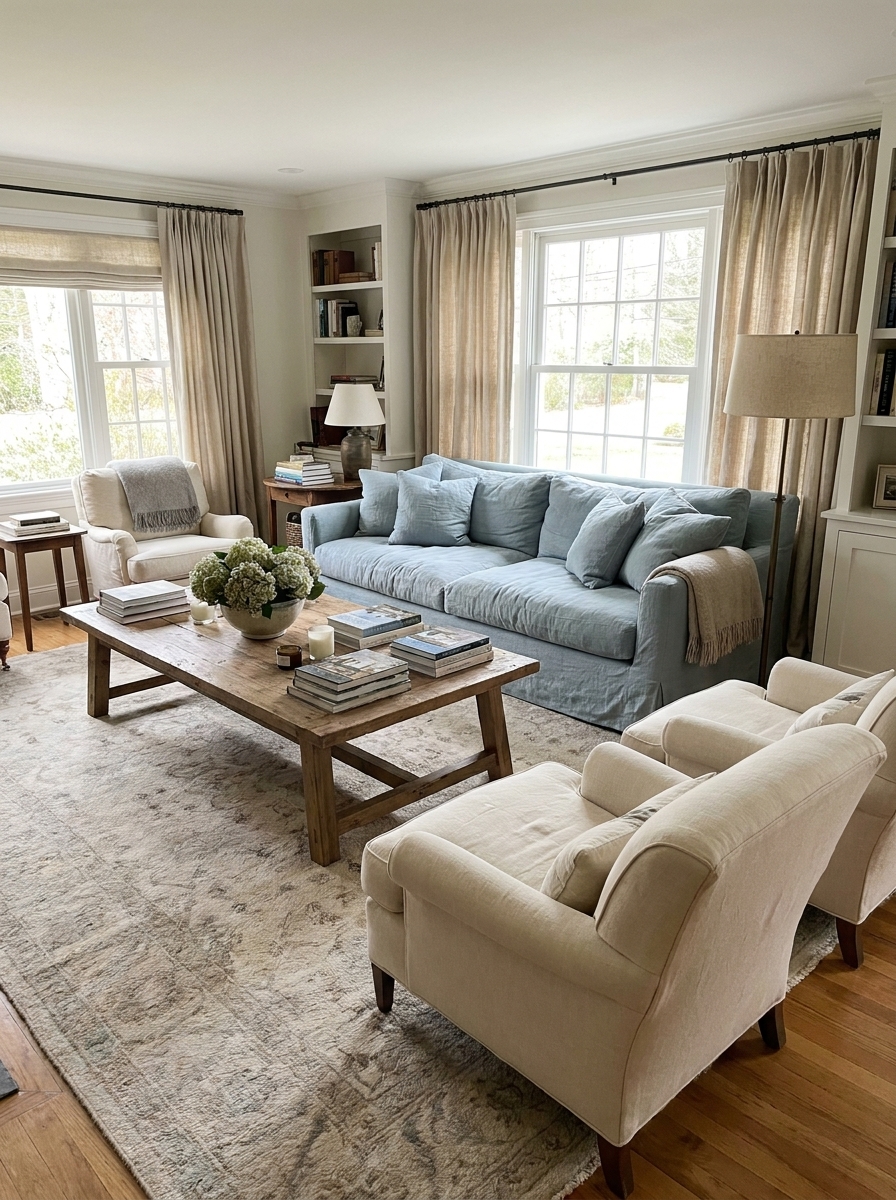
Comfort is central to this aesthetic. Sofas and armchairs should look inviting enough to sit in for hours, with deep seats, soft upholstery, and cushions that are slightly relaxed rather than perfectly arranged. The furniture may be elegant, but it never appears too precious to use.
A large cream or pale blue sofa creates a strong foundation for a living room. Pair it with one or two substantial armchairs instead of filling the space with many small pieces. Skirted sofas, rolled arms, slipcovers, and classic upholstery shapes all work well when balanced with lighter contemporary details.
Arrange the seating for conversation rather than positioning everything around a television. Chairs angled toward the sofa, a central coffee table, and a nearby lamp can make the room feel more social and welcoming. These cozy living room ideas can help refine the rest of the arrangement.
Layer pale blue and neutral cushions
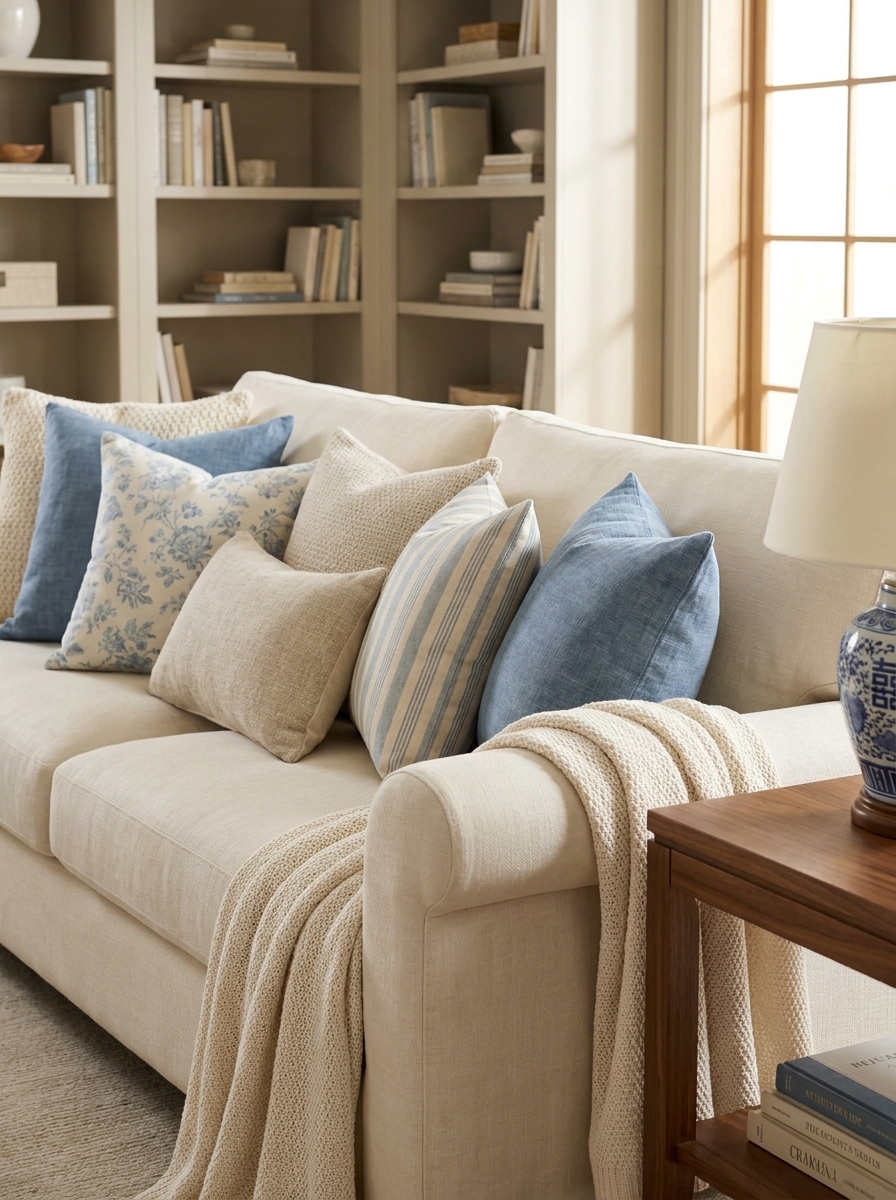
Soft blue is one of the easiest ways to make a neutral room feel distinctive without becoming overly colorful. Powder blue, faded denim, blue-gray, and muted cornflower tones work especially well with cream, white, taupe, and natural wood.
Use cushions with different fabrics and understated patterns. A solid linen pillow can sit beside a small floral, subtle stripe, or traditional block print. The pieces should coordinate without looking like they were purchased as a matching set.
Avoid arranging the cushions too perfectly. A slightly relaxed mix feels more authentic and comfortable. The goal is to add softness and color while preserving the room's calm, collected character.
Mix traditional furniture with relaxed pieces
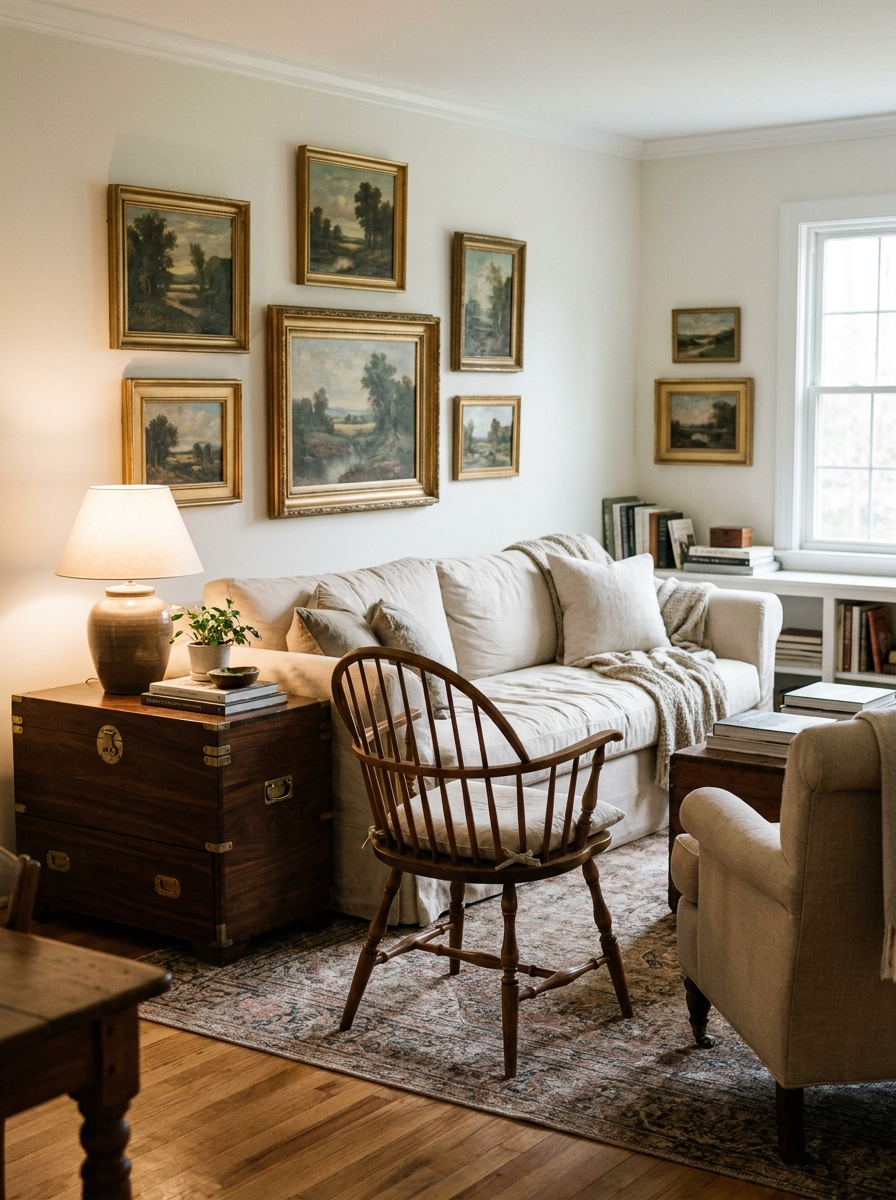
Nancy Meyers-inspired rooms often include traditional furniture, but they rarely feel formal. A classic wooden chest, spindle chair, turned-leg table, or antique-style console may be paired with a relaxed slipcovered sofa or a simpler modern lamp.
This mixture prevents the room from looking like a coordinated furniture showroom. Pieces with different histories and finishes create the feeling that the home has developed over time. Medium walnut, cherry, oak, and painted furniture can all work together when the overall palette remains consistent.
Do not worry about making every piece match. Instead, repeat materials and colors in small ways. A dark wood picture frame can connect with a traditional side table, while cream upholstery can soften heavier furniture.
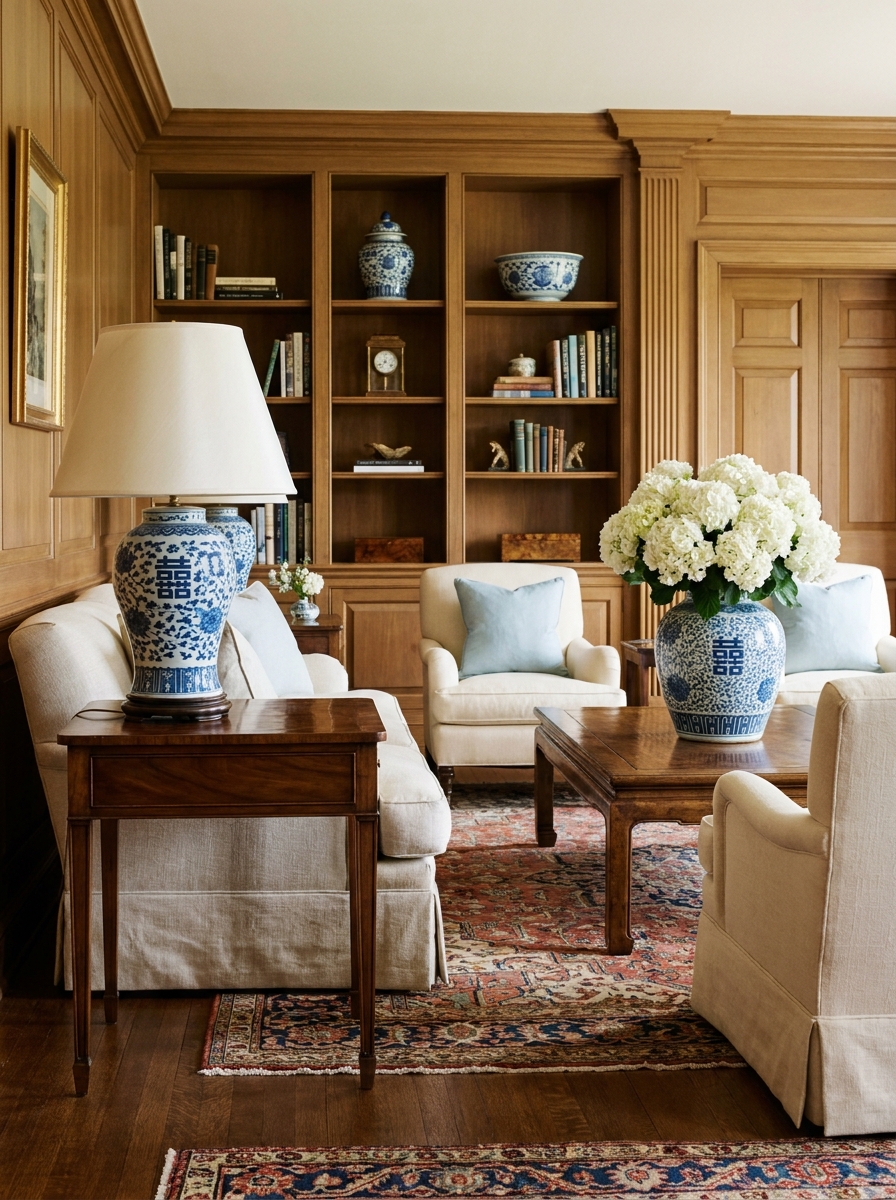
Add blue-and-white ceramic decor
Blue-and-white ceramics bring color, pattern, and traditional character into a room without overwhelming it. Ginger jars, patterned vases, bowls, lamps, and small dishes can appear on shelves, side tables, kitchen counters, or entryway consoles.
Use these pieces selectively. One larger lamp or vase can make a stronger statement than many tiny objects. Mixing different patterns is fine as long as the blue tones feel related and there is enough empty space around each item.
These ceramics work particularly well with warm wood, fresh flowers, and cream upholstery. They introduce a slightly classic coastal feeling while remaining timeless enough for many different interiors.
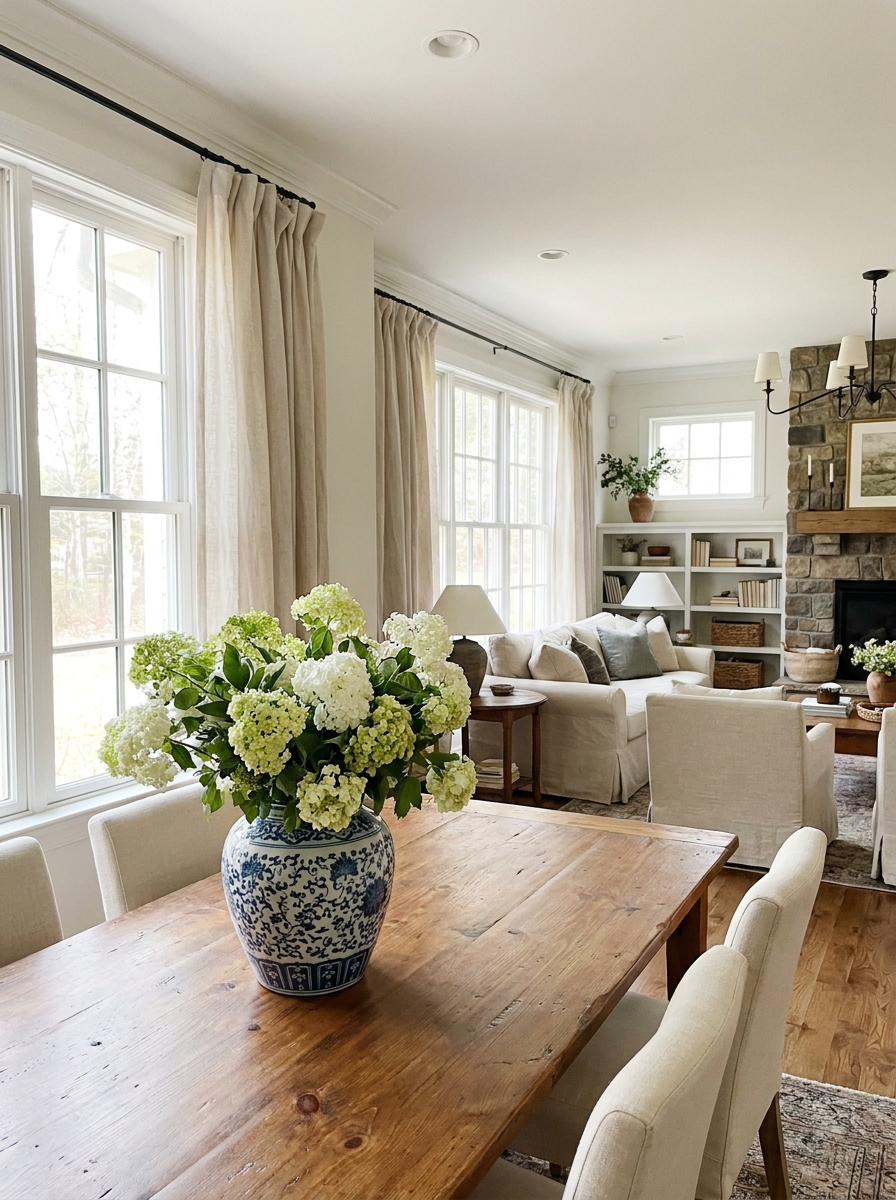
Style rooms with fresh flowers
Fresh flowers help these interiors feel cared for and alive. Hydrangeas, roses, tulips, peonies, and loose garden arrangements are especially suitable because they feel elegant without becoming too formal.
Place flowers where they would naturally be enjoyed: on a kitchen island, dining table, entry console, bedside table, or living room coffee table. The container can be as important as the flowers. A ceramic pitcher, glass vase, blue-and-white jar, or simple bowl can reinforce the room's character.
The arrangement should feel full but relaxed. Stems at slightly different heights and natural foliage create a more believable look than a perfectly symmetrical bouquet.
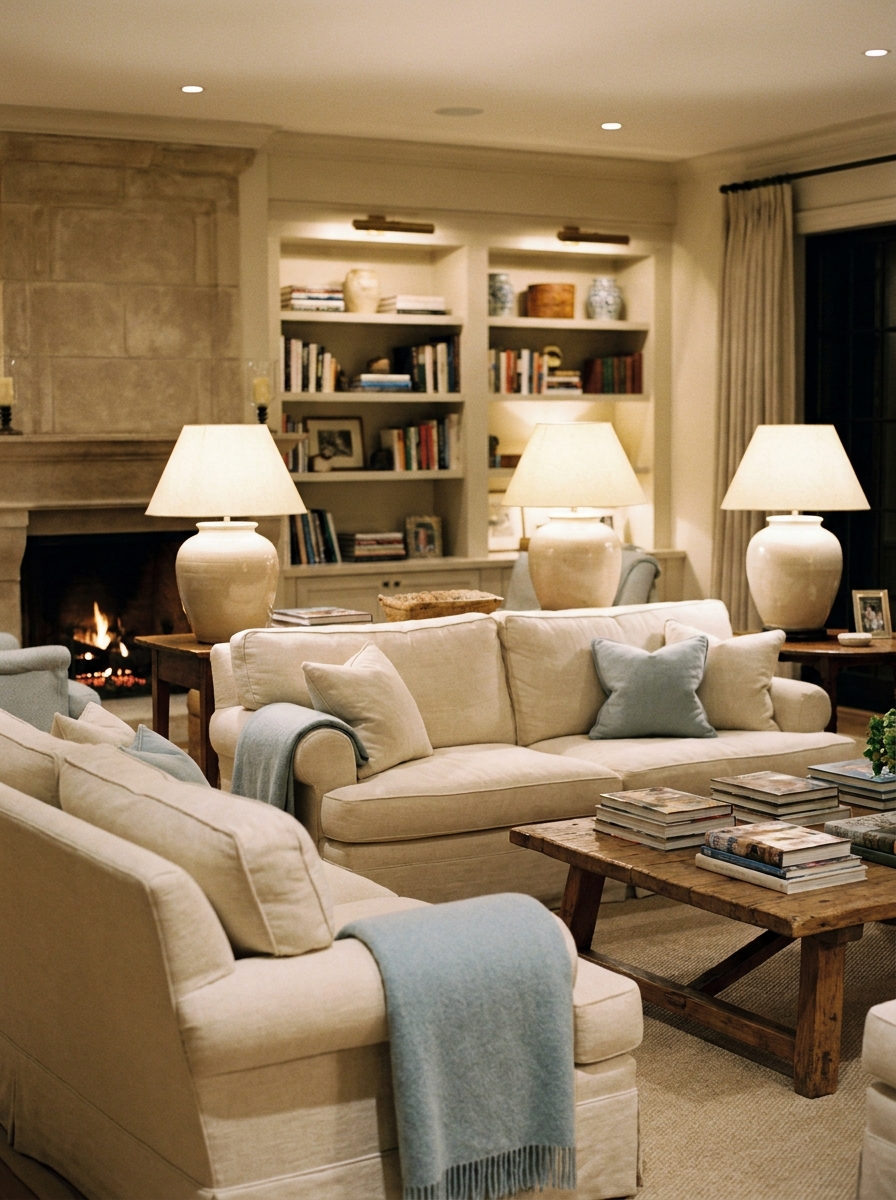
Use oversized table lamps
Large table lamps create warmth and visual balance, especially in rooms with substantial sofas, wide consoles, and tall ceilings. They also make an interior feel more established than a collection of very small decorative lights.
Ceramic, glass, brass, and painted bases can all work. Pleated, tapered, and softly flared fabric shades add traditional character and produce flattering ambient light. Blue-and-white ceramic lamps are particularly well suited to the aesthetic.
Place lamps on side tables, consoles, desks, and dressers to create several pools of light rather than relying only on a ceiling fixture. This layered approach makes the home feel especially comfortable in the evening.
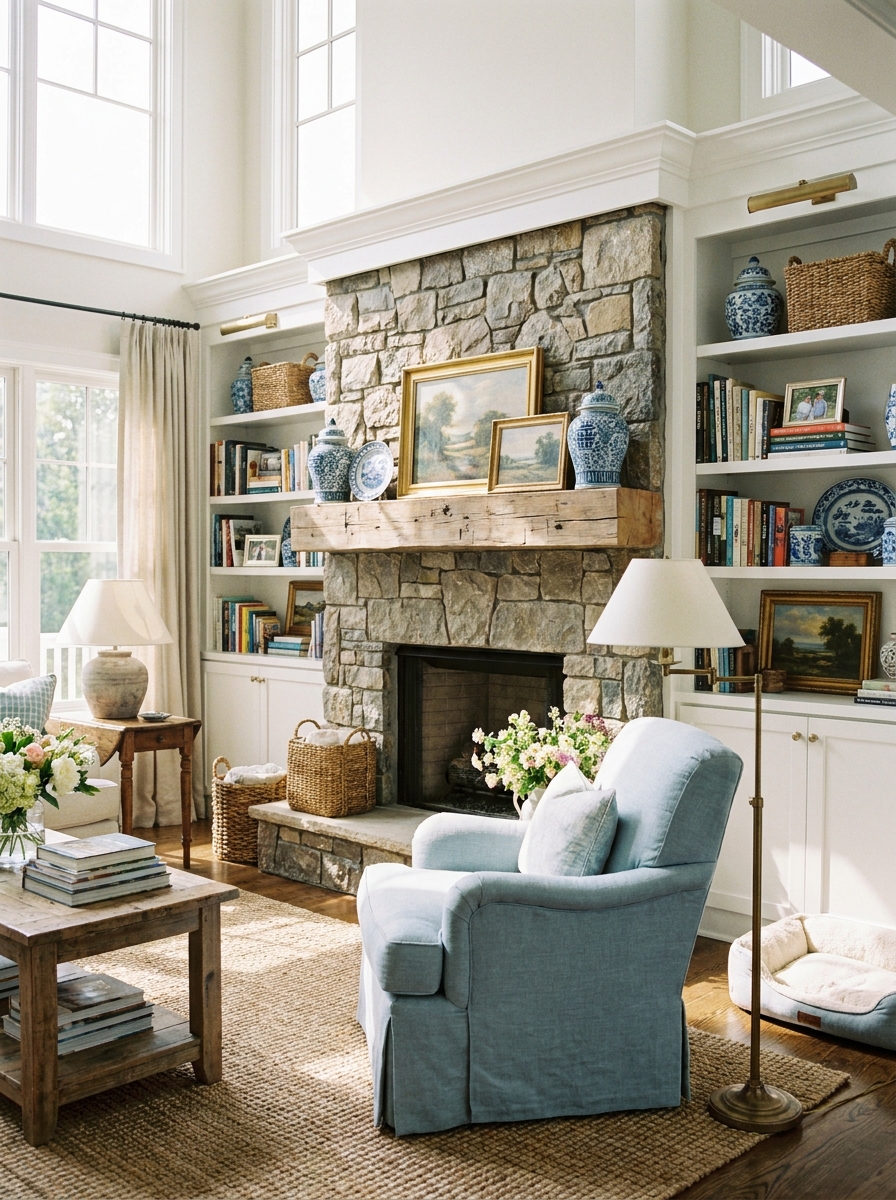
Include built-in bookshelves
Bookshelves are an important part of the lived-in quality of this aesthetic. They suggest that the home is used for reading, collecting, and displaying meaningful objects rather than simply following a decorative trend.
Built-ins can frame a fireplace, fill an unused wall, or surround a reading nook. Style them with a mixture of books, framed photographs, ceramics, baskets, small artwork, and personal objects. Not every shelf needs to be full.
Arrange some books vertically and others in short horizontal stacks. Leave breathing room around larger objects so the shelves feel layered but not chaotic. For a smaller version of this approach, this guide on how to style floating shelves can help.
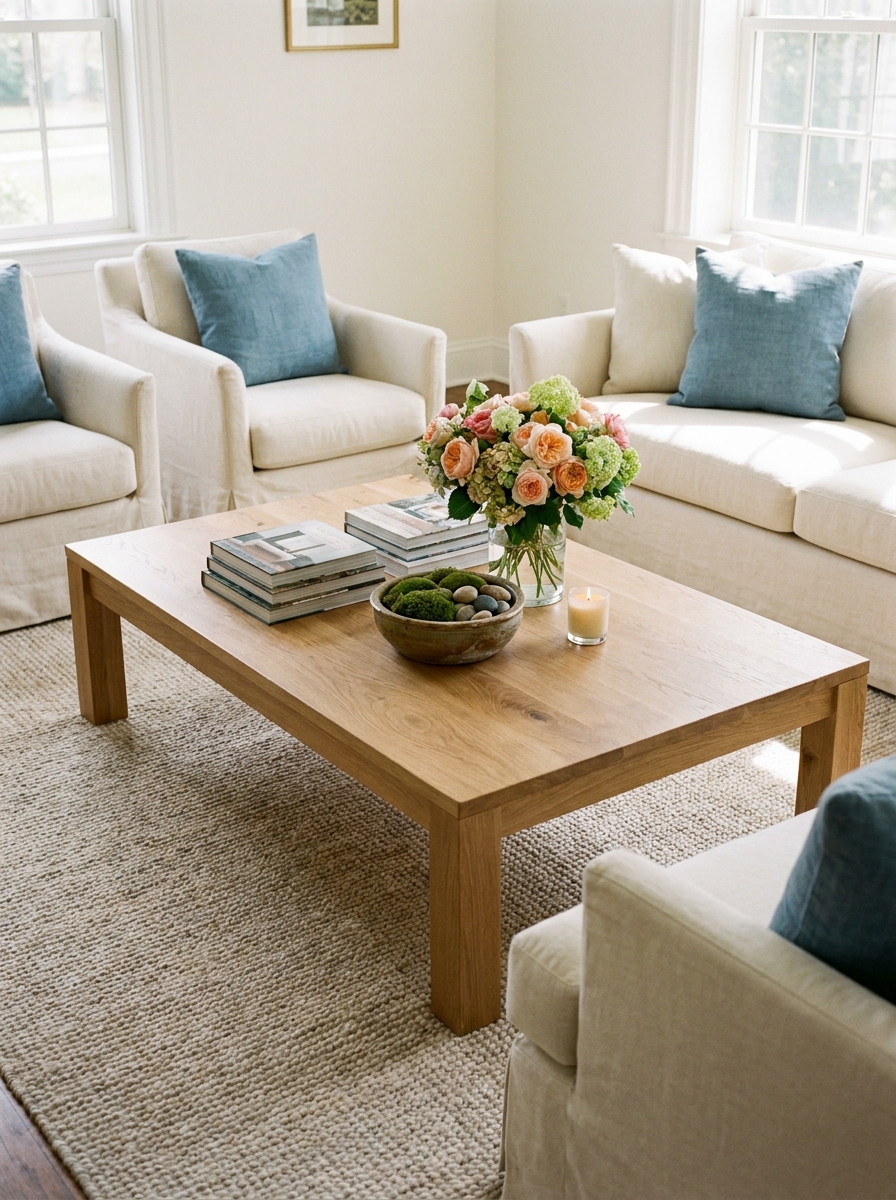
Choose natural wood coffee tables
A substantial wood coffee table adds warmth and helps ground a room filled with pale upholstery. Oak, walnut, pine, and reclaimed-looking wood can all work as long as the finish feels natural rather than overly glossy.
The table should be large enough to suit the seating arrangement. Small decorative tables can look lost in front of a deep sofa. A broad rectangular, square, or softly rounded table provides room for books, flowers, trays, and everyday items.
Keep the styling useful. A stack of books, one bowl or tray, flowers, and perhaps a candle are usually enough. Leaving open space makes the arrangement feel more realistic.
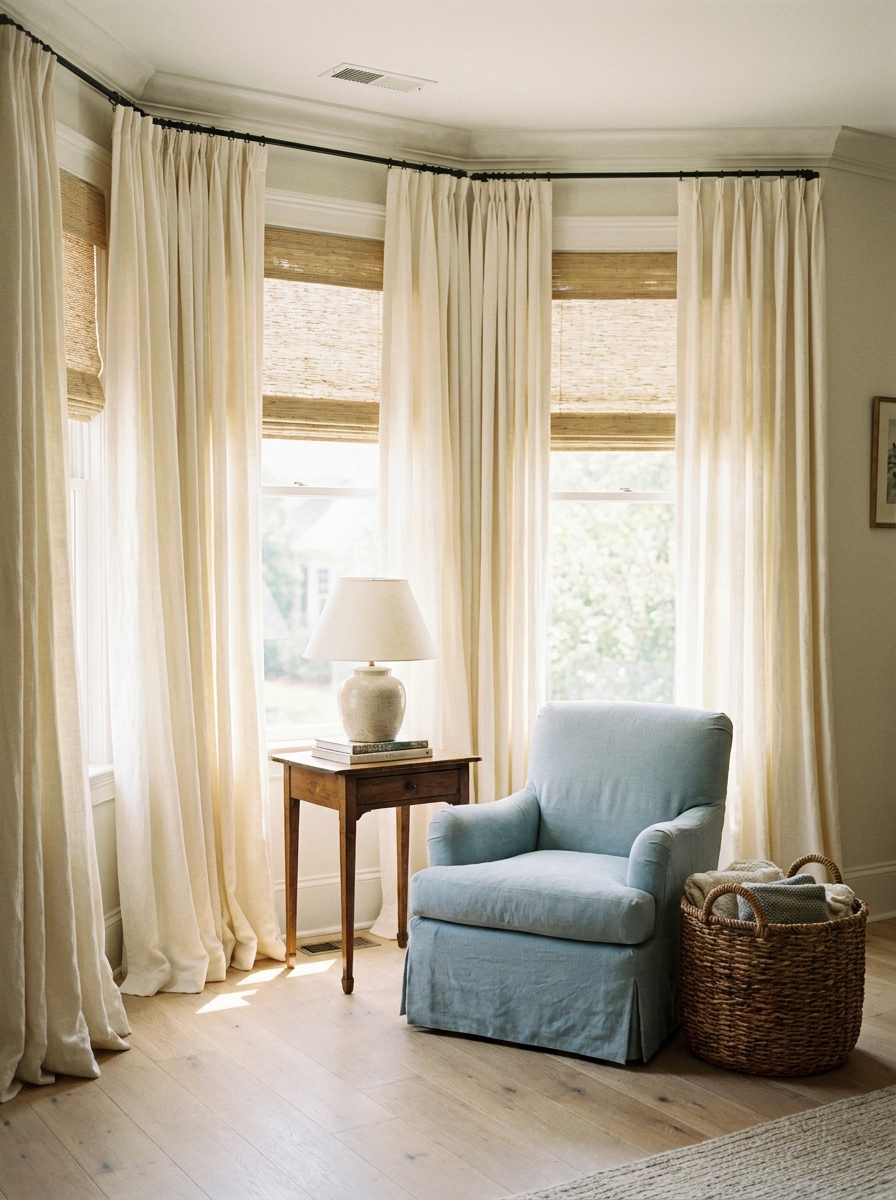
Add soft linen curtains
Linen curtains soften windows and filter light without making rooms feel heavy. Warm white, ivory, oatmeal, and pale blue-gray curtains all suit the aesthetic.
Hang the curtains high and allow them to fall close to the floor. This makes the windows appear taller and gives the room a more graceful proportion. The fabric can have natural wrinkles, which support the relaxed quality of the space.
Avoid overly shiny or stiff curtains. The best window treatments feel light, breathable, and slightly informal. Roman shades, woven blinds, or simple bamboo shades can be layered underneath for privacy and texture.
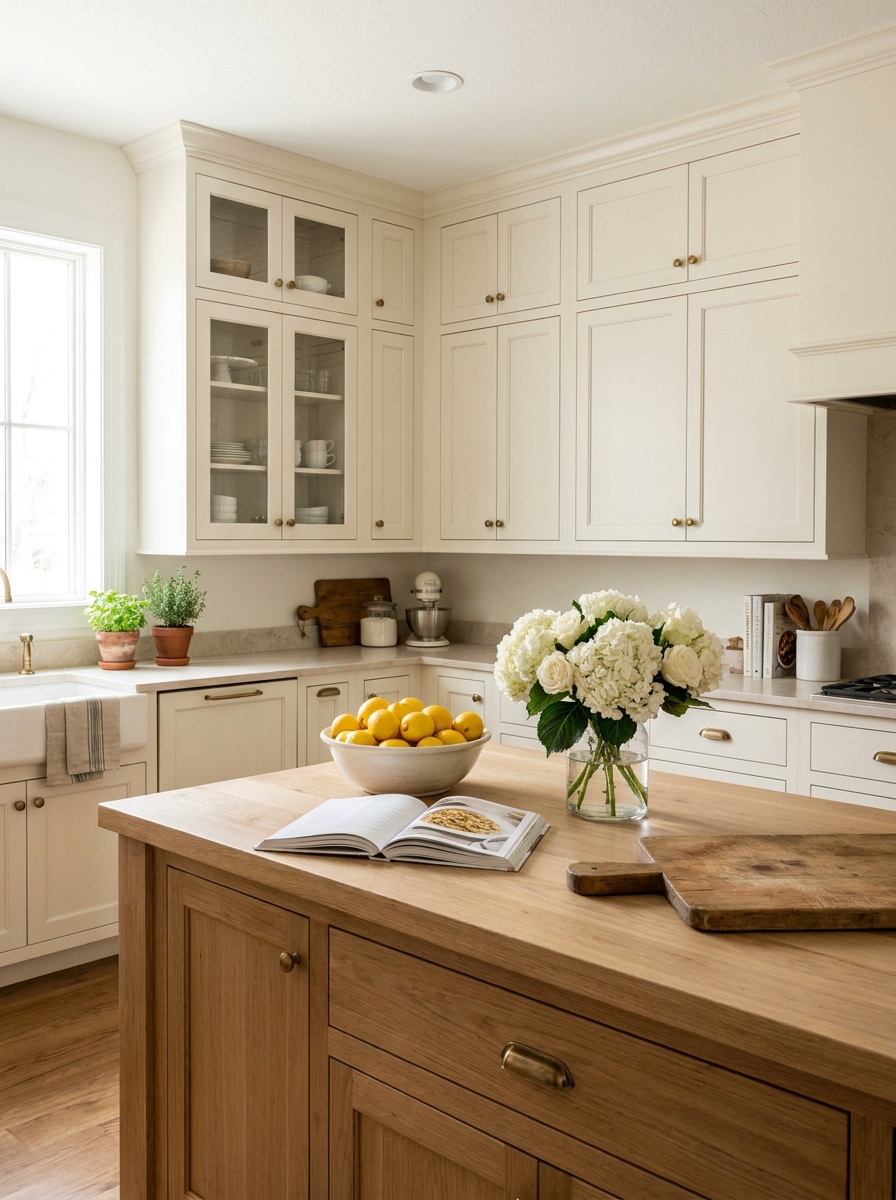
Create a welcoming cream kitchen
The kitchen is often the emotional center of a Nancy Meyers-inspired home. It should feel bright, generous, and ready for everyday cooking rather than pristine and untouched.
Cream or warm white cabinetry creates a timeless base. Pair it with natural stone counters, warm wood floors, classic hardware, glass-front cabinets, open shelving, and a central island or worktable. Bowls of fruit, cookbooks, cutting boards, and fresh flowers make the room feel active.
Avoid overloading the counters, but do not leave them completely empty. A few useful objects should remain visible so the kitchen feels genuine and welcoming. These kitchen cabinet color ideas can help you choose the same warm foundation.
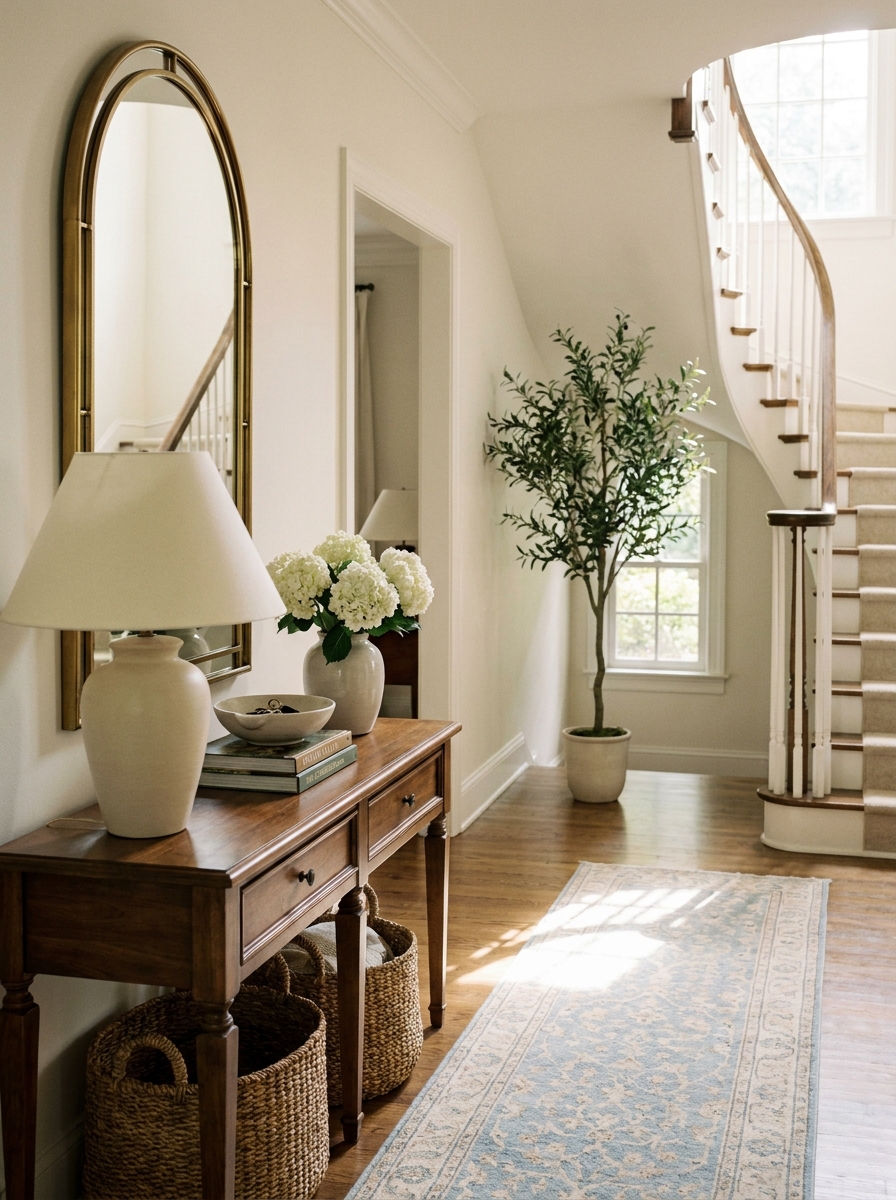
Style an elegant entryway console
An entryway sets the tone for the rest of the home. A traditional console table, large mirror, lamp, flowers, baskets, and framed artwork can create a welcoming introduction without requiring a large foyer.
Choose a console with some age or character. A medium or dark wood finish brings warmth against light walls. Place one substantial lamp on the table, then balance it with flowers, books, a bowl, or a small framed piece.
The styling should look attractive but remain useful. Leave enough room for keys, mail, or a handbag. Baskets beneath the console can provide practical storage while adding texture. These entryway decor ideas offer more ways to keep the space both practical and welcoming.
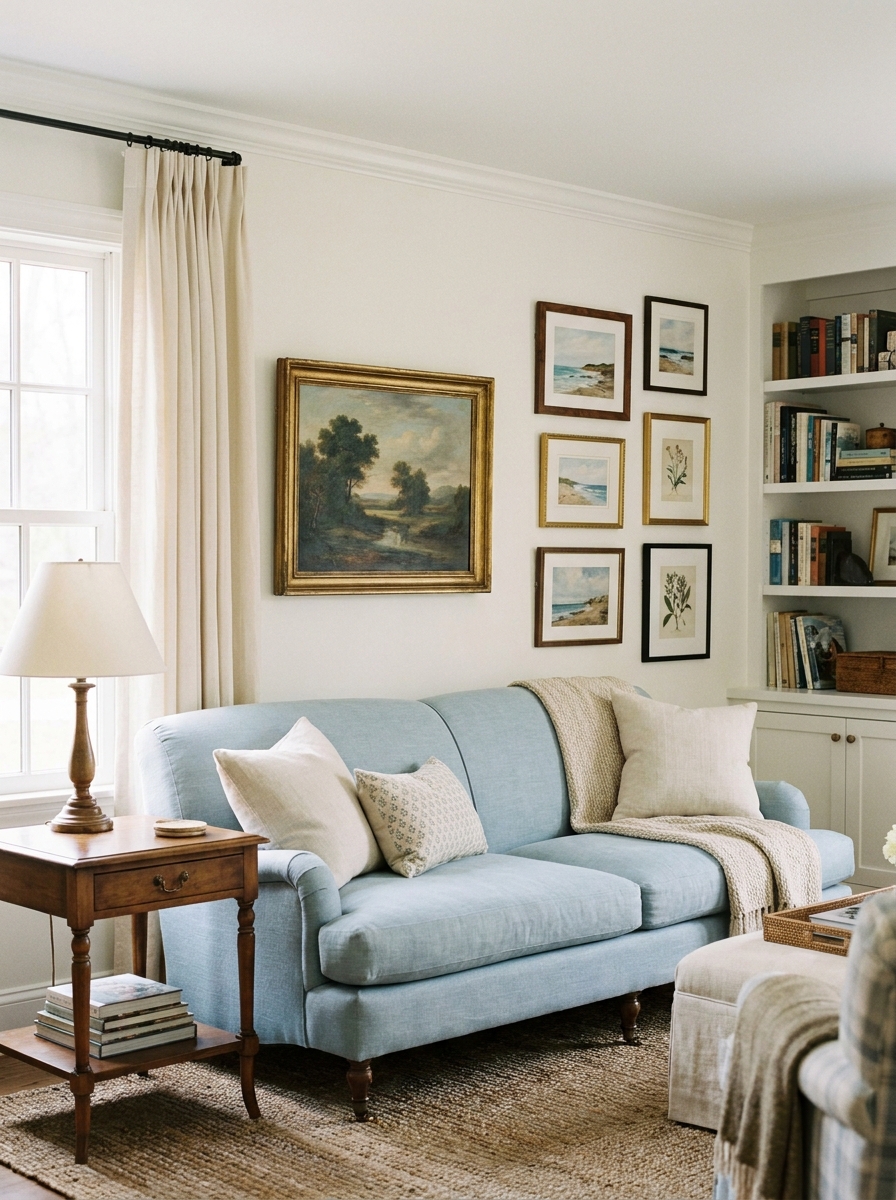
Display framed landscapes and classic artwork
Artwork helps prevent a neutral home from feeling generic. Landscapes, coastal scenes, still lifes, botanical prints, and traditional drawings all fit naturally into this aesthetic.
Choose pieces that feel personal rather than overly coordinated. Different frame materials can work together, including walnut, gold, black, and painted wood. A single landscape above a sofa may create a calmer focal point, while smaller works can be layered on shelves or arranged as a modest gallery wall.
The colors in the artwork can also connect different parts of the room. Soft blue skies, green foliage, cream matting, and warm brown frames repeat the palette without making the decor feel too deliberate. These living room wall decor ideas can help you find the right scale for the rest of the room.
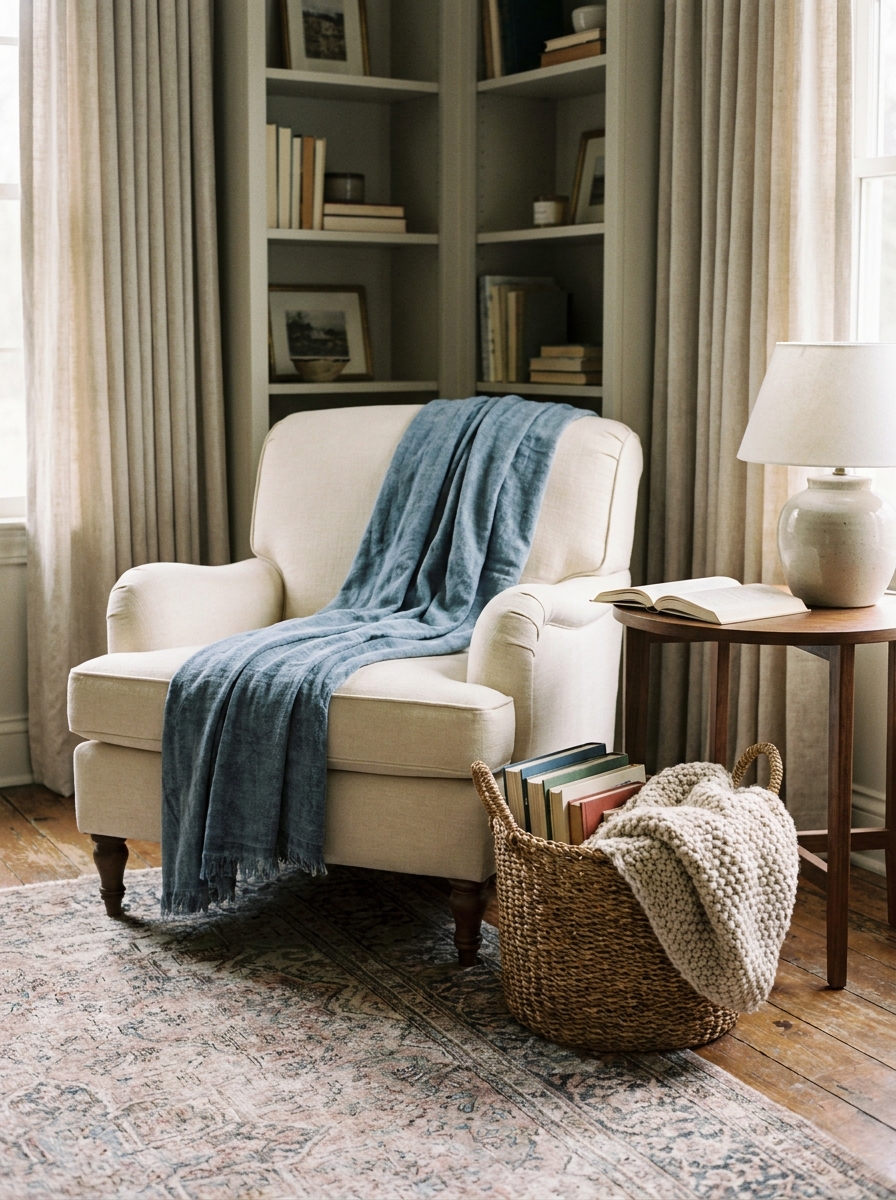
Layer rugs, throws, books, and baskets
Layering is what makes this aesthetic feel warm rather than formally decorated. Rugs soften the floor, throws make seating more inviting, books suggest real interests, and baskets provide useful storage.
Use texture rather than strong contrast to create depth. A wool rug, linen throw, woven basket, cotton cushion, and wooden table can all sit within a quiet neutral palette while making the room visually rich.
The layers should not feel overly arranged. A throw can be loosely folded, a book can remain open on a side table, and a basket can hold extra cushions or magazines. Small signs of daily life make the room more believable. These cozy reading corner ideas use the same welcoming approach on a smaller scale.
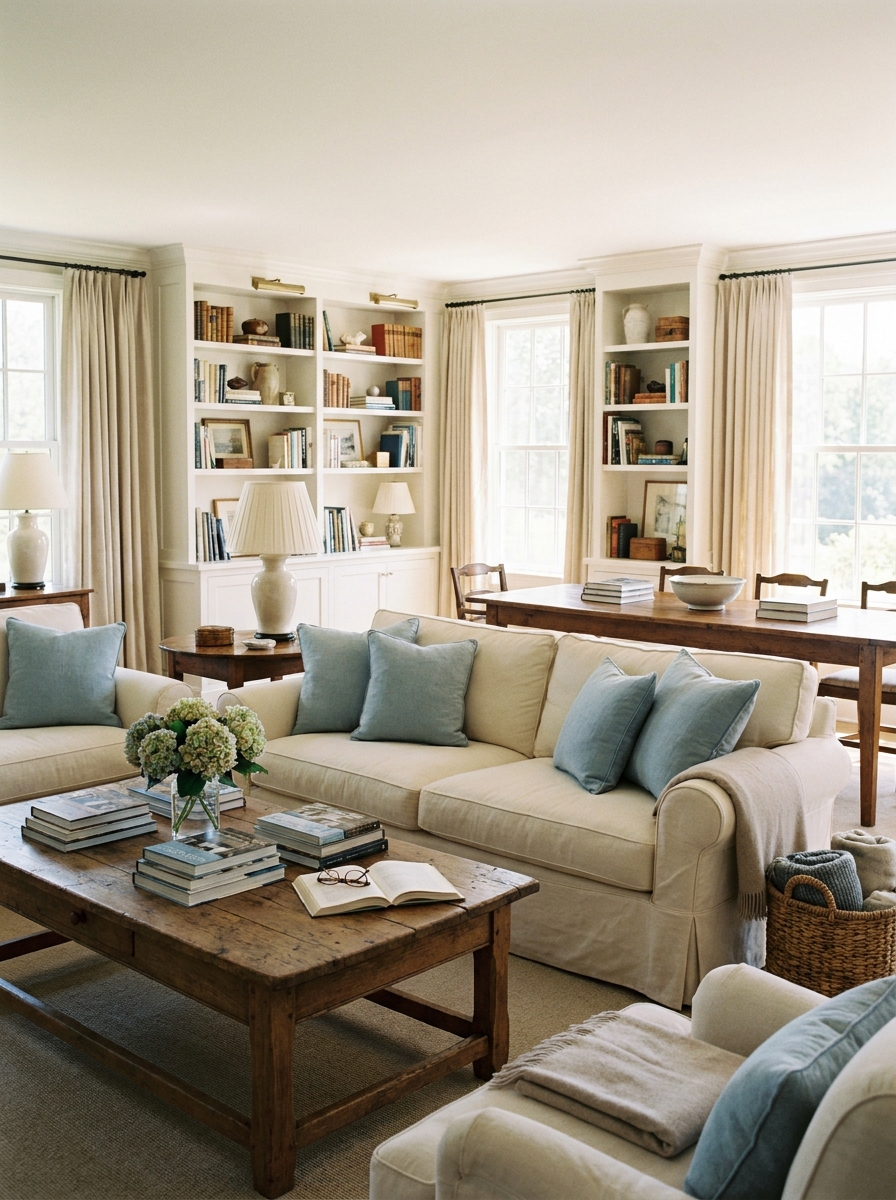
Keep the home polished but lived in
The most important element of the Nancy Meyers home aesthetic is the balance between elegance and everyday life. The rooms are beautiful, but they are not empty. Books are stacked on tables, flowers sit in casual arrangements, cushions are relaxed, and kitchens contain useful objects.
Avoid making every surface perfectly symmetrical or completely bare. A room can include a folded newspaper, reading glasses, a half-filled bookshelf, or a basket near the sofa without looking messy. These details give the interior warmth and personality.
At the same time, lived-in does not mean cluttered. Everyday objects should have logical places, and the overall layout should remain calm. The goal is a home that feels cared for, comfortable, and ready to be used.
How to create the Nancy Meyers aesthetic without copying a movie set
- Start with the atmosphere: light, comfort, traditional character, warm neutrals, natural materials, and layered lighting.
- Build the room gradually with a relaxed sofa, classic wood table, traditional lamp, and an older piece rather than a matching furniture set.
- Use decor that reflects real interests and routines, including books, framed photographs, flowers, ceramics, baskets, and useful kitchen tools.
- Let cushions, curtains, and a few everyday objects stay relaxed so the room feels polished but comfortable.
The charm comes from the balance of polish and ease, not from finding exact replicas. Choose a few timeless materials and make room for the objects you genuinely use and enjoy.
Final thoughts
The Nancy Meyers home aesthetic is less about following a strict decorating formula and more about creating a particular feeling. The rooms are warm, bright, timeless, and designed around everyday comfort.
Start with a soft cream foundation, then introduce faded blue, natural wood, classic furniture, layered textiles, large lamps, books, flowers, and blue-and-white ceramics. These elements can be adapted to almost any home, regardless of size.
The strongest result will not look newly decorated or overly coordinated. It will feel as though the home has grown naturally over time, with comfortable rooms, meaningful objects, and spaces that invite people to stay.
FAQ
What is the Nancy Meyers home aesthetic?
It is a warm, elegant, lived-in interior style that combines cream and soft blue tones, natural wood, traditional furniture, generous seating, books, flowers, layered textiles, and comfortable everyday details.
What colors work best for this style?
Warm cream, ivory, oatmeal, taupe, pale blue, faded denim, soft green, warm brown, and natural wood tones create the classic calm palette associated with this look.
How do I make a room feel elegant but lived in?
Use a few timeless furniture pieces, then layer in books, fresh flowers, baskets, relaxed cushions, lamps, and useful objects. Keep surfaces edited but not empty, and avoid making every item perfectly symmetrical.