Bathroom
Earth Tone Bathroom Ideas
Earth tone bathroom ideas with warm beige walls, wood vanities, terracotta, travertine, taupe cabinetry, olive accents, handmade tile, woven baskets, bronze fixtures, and organic styling.
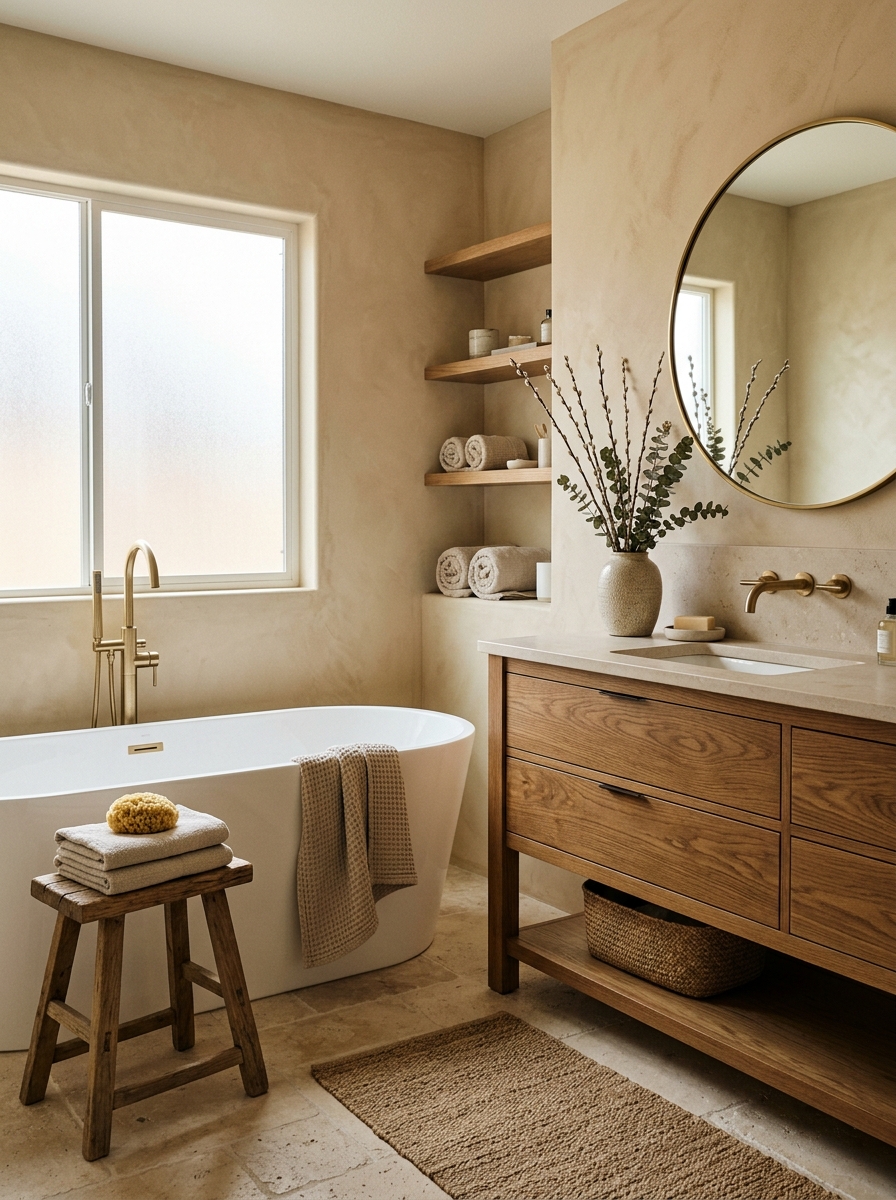
Earth tone bathrooms feel calm, grounded, and naturally inviting. Instead of relying on bright white surfaces or cool gray finishes, these spaces use colors inspired by clay, sand, stone, wood, soil, and greenery. The result is a bathroom that feels warmer, softer, and more connected to nature.
This style can work in many different types of homes. A modern bathroom may use beige stone and flat-panel wood cabinetry, while a more traditional room might combine warm cream walls with a dark walnut vanity and aged brass hardware. Even a small apartment bathroom can capture the look through paint, towels, baskets, and natural accessories. These apartment bathroom decor ideas are helpful if you want renter-friendly ways to add that warmth.
The key is to use several related tones rather than covering every surface in one shade of beige. Warm ivory, taupe, terracotta, mushroom, walnut, olive, caramel, and soft charcoal can create depth without making the room visually busy. Texture is equally important. Stone, wood, linen, plaster, handmade tile, woven materials, and matte ceramics keep the palette from feeling flat.
These 15 earth tone bathroom ideas will help you create a space that feels warm, organic, comfortable, and timeless. If you prefer a lighter palette, these warm neutral bathroom ideas are a calm companion. If you prefer a more relaxed natural style, these boho bathroom ideas use many of the same earthy textures.
Begin with warm beige walls
Warm beige walls create a soft foundation that immediately makes a bathroom feel less cold. Unlike cool beige or gray, a shade with sandy, creamy, or lightly golden undertones works naturally with wood, stone, terracotta, and brass.
This color is especially useful when the bathroom already contains white fixtures. The warmer walls soften the contrast around a white bathtub, sink, or toilet while preserving a bright and clean appearance. Beige can also help a small bathroom feel more spacious when it reflects enough natural or artificial light.
Choose the finish according to the room's conditions. A moisture-resistant bathroom paint is practical for general walls, while polished plaster, limewash-style finishes, or microcement can create a more textural appearance in suitable areas.
To avoid an overly monochromatic result, introduce darker accents through a wood vanity, black fixtures, a woven basket, or a patterned towel. These details help define the room without disrupting the calm atmosphere.
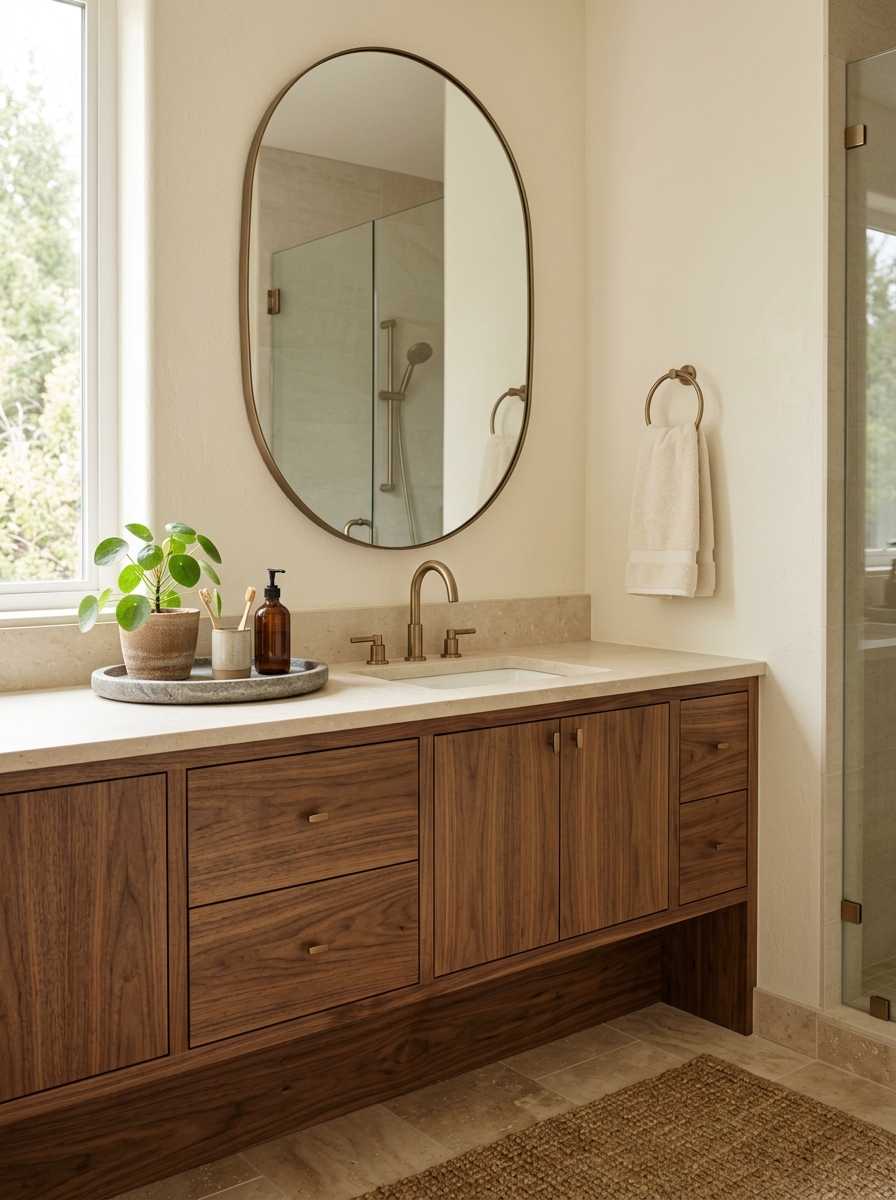
Use a natural wood vanity
A natural wood vanity adds immediate warmth to a bathroom dominated by tile, glass, and ceramic. Oak creates a lighter and more relaxed look, while walnut brings deeper contrast and a more refined atmosphere.
Choose a finish that allows the grain to remain visible. Highly glossy or orange-toned wood can feel dated, while matte or low-sheen finishes tend to look more organic and contemporary. Flat-panel cabinetry creates a clean modern style, whereas framed or shaker doors suit transitional and traditional bathrooms.
The countertop should balance the wood rather than compete with it. Cream quartz, pale limestone, travertine, and softly veined stone all work well. Darker counters can create a dramatic look, but they may make a compact vanity feel heavier.
Repeat the wood tone once or twice elsewhere through a mirror frame, shelf, stool, or small accessory. This creates continuity while preventing the room from becoming overly wood-heavy.
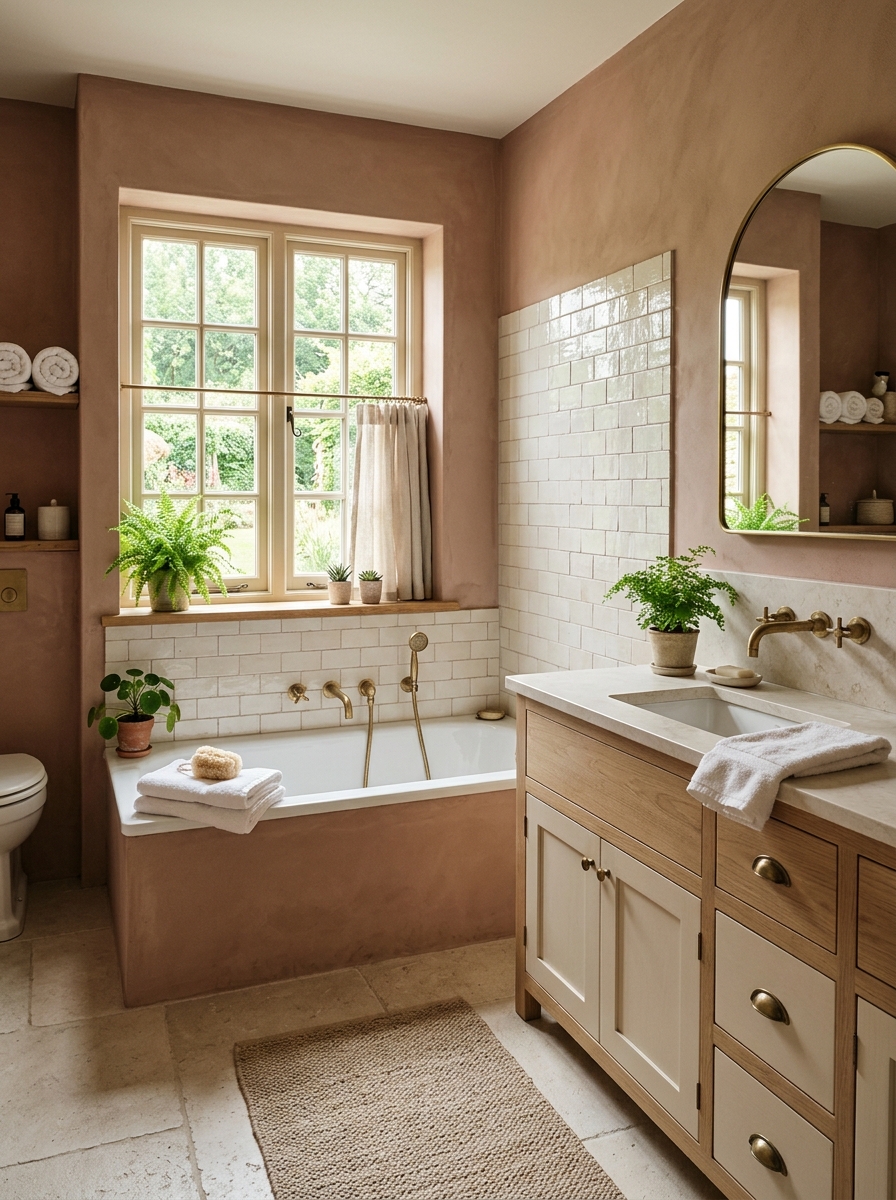
Introduce terracotta through paint or tile
Terracotta brings the warmth of natural clay into a bathroom. It can range from soft peachy clay to deeper burnt orange and earthy red, making it flexible enough for both subtle and dramatic designs.
In a larger bathroom, terracotta paint can cover an entire wall or surround a bathtub. In a smaller room, use it on the vanity, lower half of the walls, backsplash, or floor. This allows the color to create a focal point without making the bathroom feel enclosed.
Terracotta pairs especially well with cream, pale stone, oak, walnut, olive green, and aged brass. White fixtures provide useful contrast and keep the overall room feeling clean.
Choose a muted clay shade rather than a highly saturated orange. A dusty or softened terracotta feels easier to live with and connects more naturally to the broader earth tone palette.
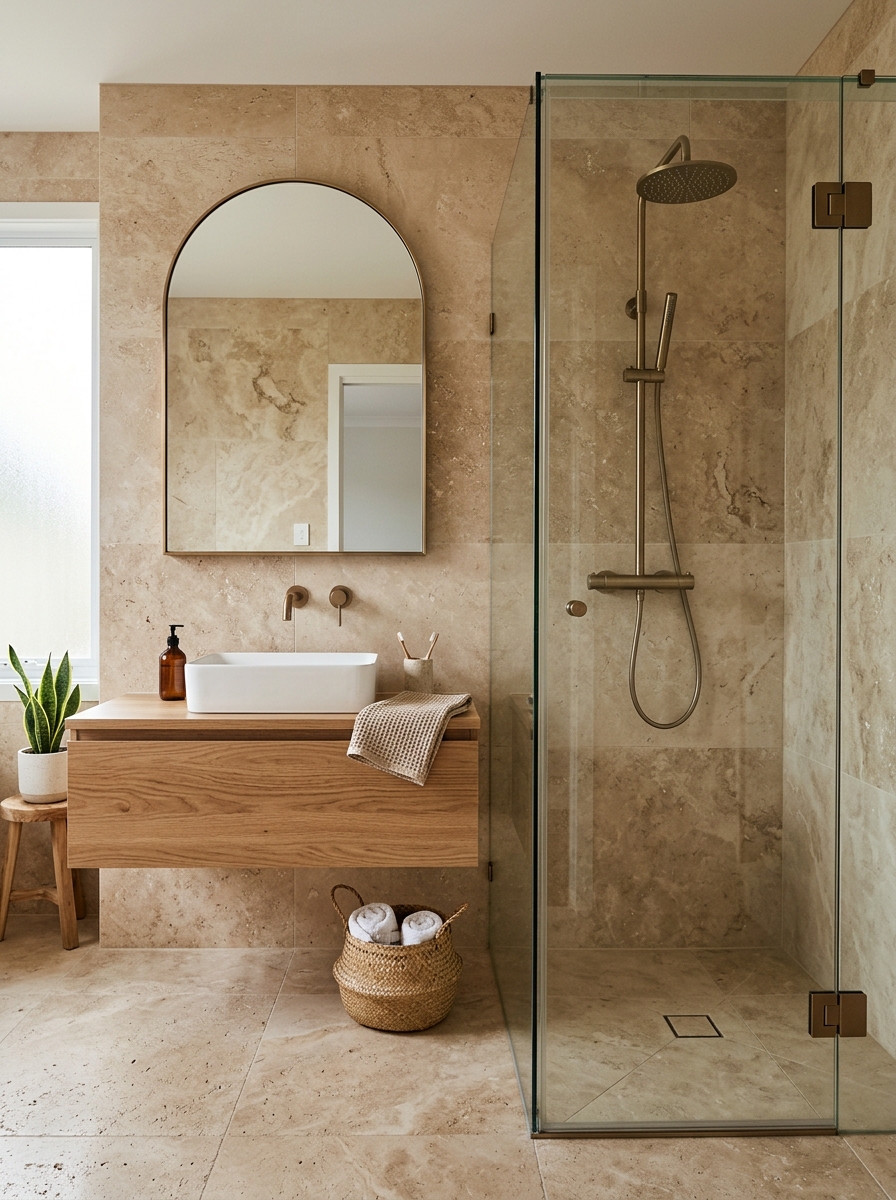
Choose travertine or limestone surfaces
Travertine and limestone bring natural variation, warmth, and subtle texture into an earth tone bathroom. Their soft beige, cream, taupe, and sandy shades create a calm look without relying on strong decorative patterns.
These stones can be used on floors, shower walls, vanity backsplashes, or even throughout the entire room. Large-format slabs or tiles create a quieter, more contemporary look, while smaller tiles introduce more visible grout lines and texture.
Because natural stone can require sealing and maintenance, porcelain tiles designed to resemble travertine or limestone may be a practical alternative. High-quality versions can provide a similar atmosphere while being easier to care for.
Balance extensive stone with warmer or softer materials. A wood vanity, linen towel, woven basket, or plaster wall can prevent the bathroom from feeling hard or overly uniform.
Add mushroom and taupe cabinetry
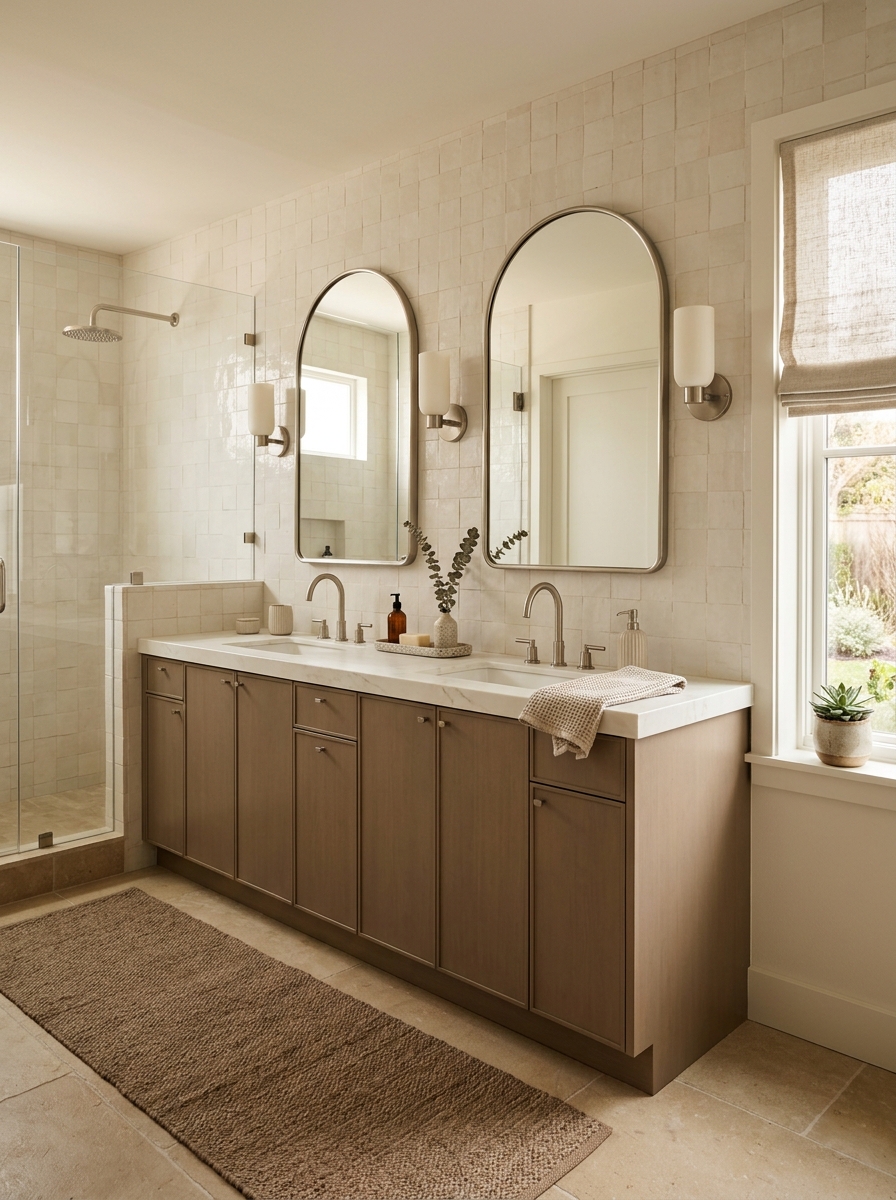
Mushroom and taupe are useful alternatives to white or wood cabinetry. These shades sit between beige, gray, and brown, giving the vanity a soft but clearly defined appearance.
Warm taupe works well in bathrooms with cream tile, oak flooring, brass hardware, and walnut details. A slightly grayer mushroom shade can create a more modern look when combined with black fixtures and pale stone.
The undertone matters. Test samples beside the existing tile and countertop, since a taupe that looks warm in isolation may appear pink, purple, or gray against other finishes.
Keep the surrounding walls a little lighter or darker so the vanity does not disappear completely. Subtle contrast will help the cabinetry feel intentional while maintaining the calm palette.
Mix earth tones with warm white
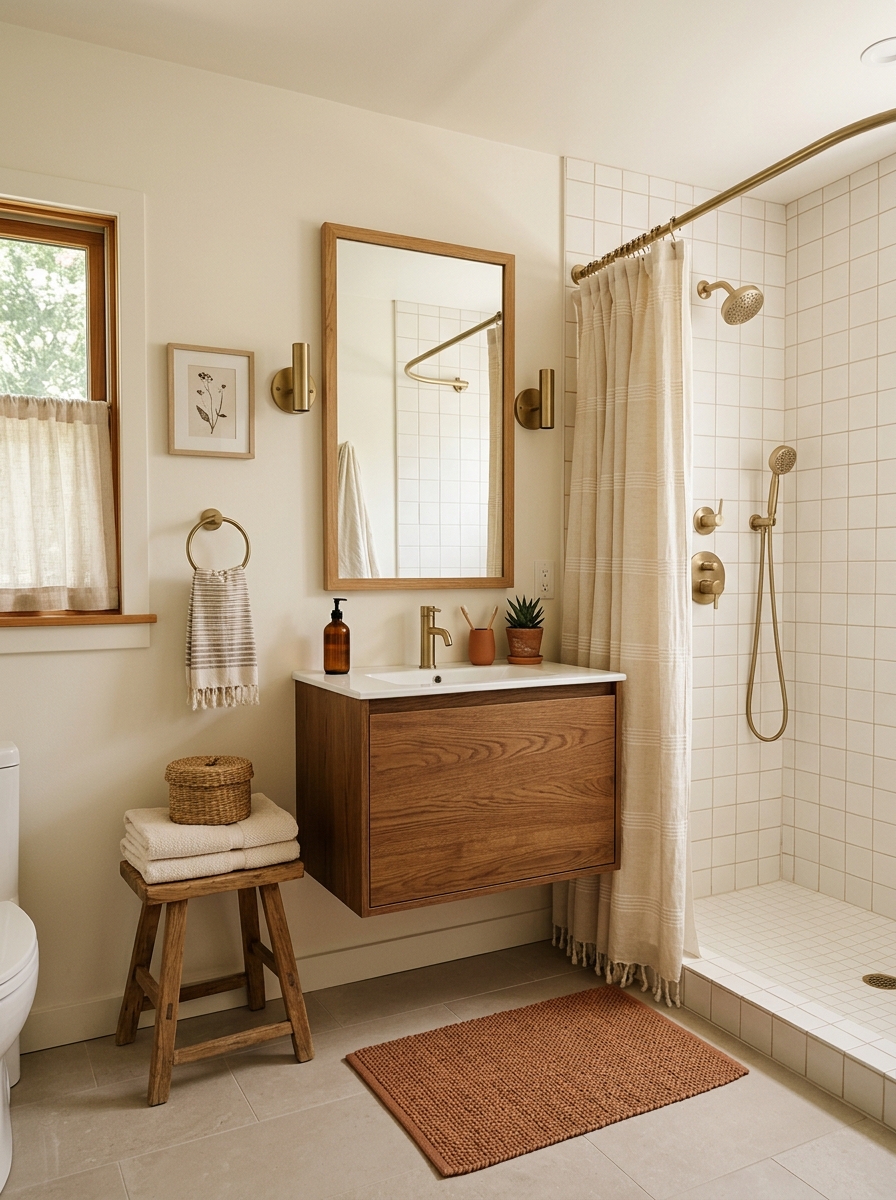
Warm white keeps an earth tone bathroom feeling bright and prevents deeper shades from becoming too heavy. It works especially well on ceilings, upper walls, tubs, sinks, and larger tile surfaces.
The white should contain a cream or ivory undertone rather than a sharp blue base. This allows it to connect naturally with beige stone, terracotta, walnut, and brass.
Use earth tones on the lower cabinets, floor, textiles, and accent walls, then allow warm white to provide breathing room. This balance can make a smaller bathroom feel open while still giving it character.
Repeating the warm white through towels, shower curtains, or ceramic accessories can help the room feel cohesive without making every item match exactly.
Bring in olive and muted green accents
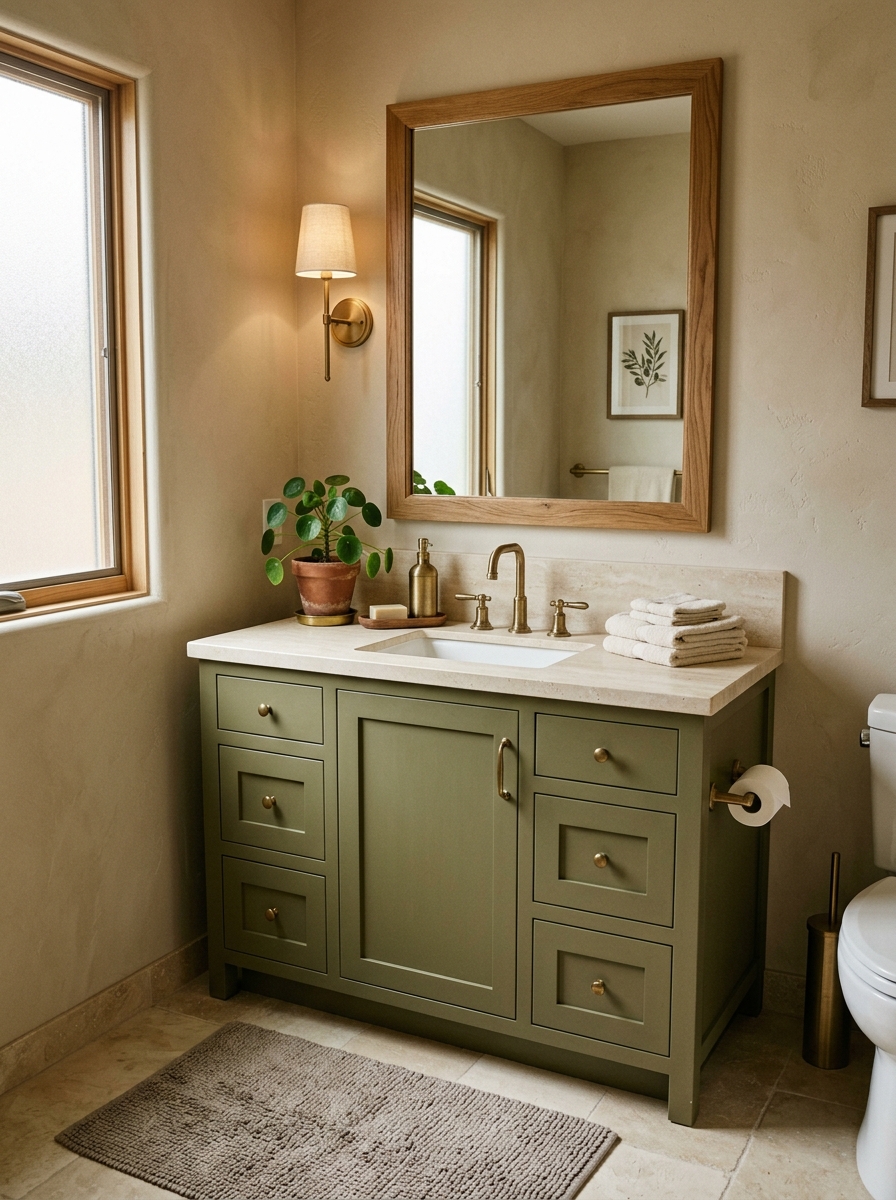
Muted green introduces a direct connection to nature while remaining easy to combine with warm neutral colors. Olive, moss, eucalyptus, and sage-green tones work particularly well with wood, stone, cream, and clay.
Green can appear through painted cabinetry, towels, a shower curtain, wall tile, or a small amount of decor. In a compact bathroom, one olive vanity or set of moss-green towels may provide enough color.
Plants can reinforce the palette, but they are not the only way to use green. A textured olive bath mat or muted green wall can create a more controlled and permanent effect.
Avoid using too many different green shades at once. One main green tone supported by warm neutrals usually feels calmer and more intentional.
Use handmade-look tile
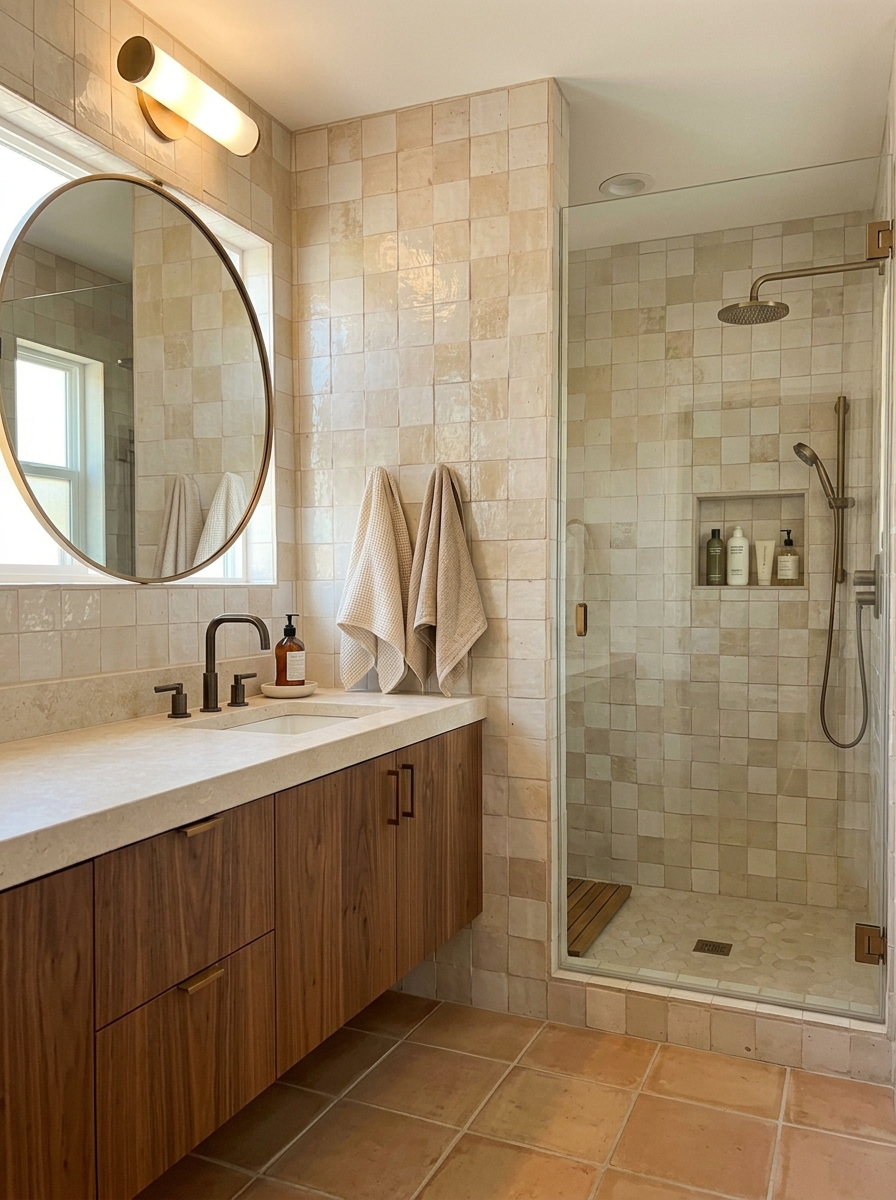
Handmade-look tiles add subtle irregularity that makes an earth tone bathroom feel more organic. Their slightly uneven edges, varied glaze, and imperfect surface catch light differently from mass-produced flat tile.
Cream, sand, clay, olive, muted brown, and warm gray tiles all suit this style. Zellige-inspired squares, elongated subway tile, small mosaics, and textured rectangular tiles can each create a different effect.
Use handmade-look tile on one focused area such as the vanity backsplash or shower walls. Covering every surface with highly textured tile may make the room feel visually crowded.
Keep the grout color close to the tile for a quieter look, or choose a slightly darker warm grout when you want the individual shapes to remain visible.
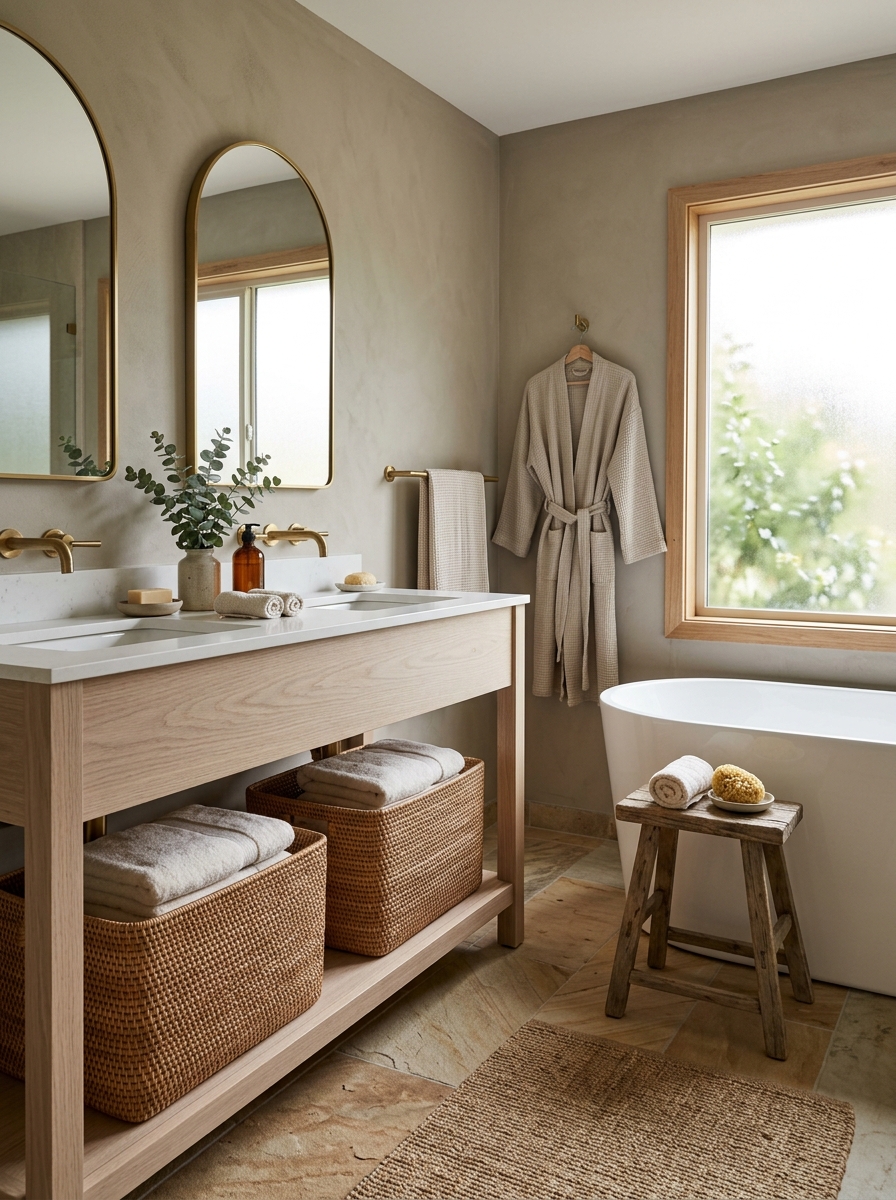
Add woven baskets and natural storage
Woven baskets soften the hard surfaces commonly found in bathrooms and provide practical storage for towels, toilet paper, laundry, and extra toiletries.
Choose baskets made from water-resistant or bathroom-suitable materials when they will sit near a shower or sink. Natural seagrass and rattan work best in well-ventilated areas, while resin-wicker alternatives may handle moisture more reliably.
Use one or two larger baskets rather than many small ones. A basket beneath an open vanity, beside the tub, or on a lower shelf can provide storage without creating visual clutter.
The woven texture looks especially good with limestone, plaster walls, warm white towels, and medium-toned wood. It adds depth without introducing another strong color.
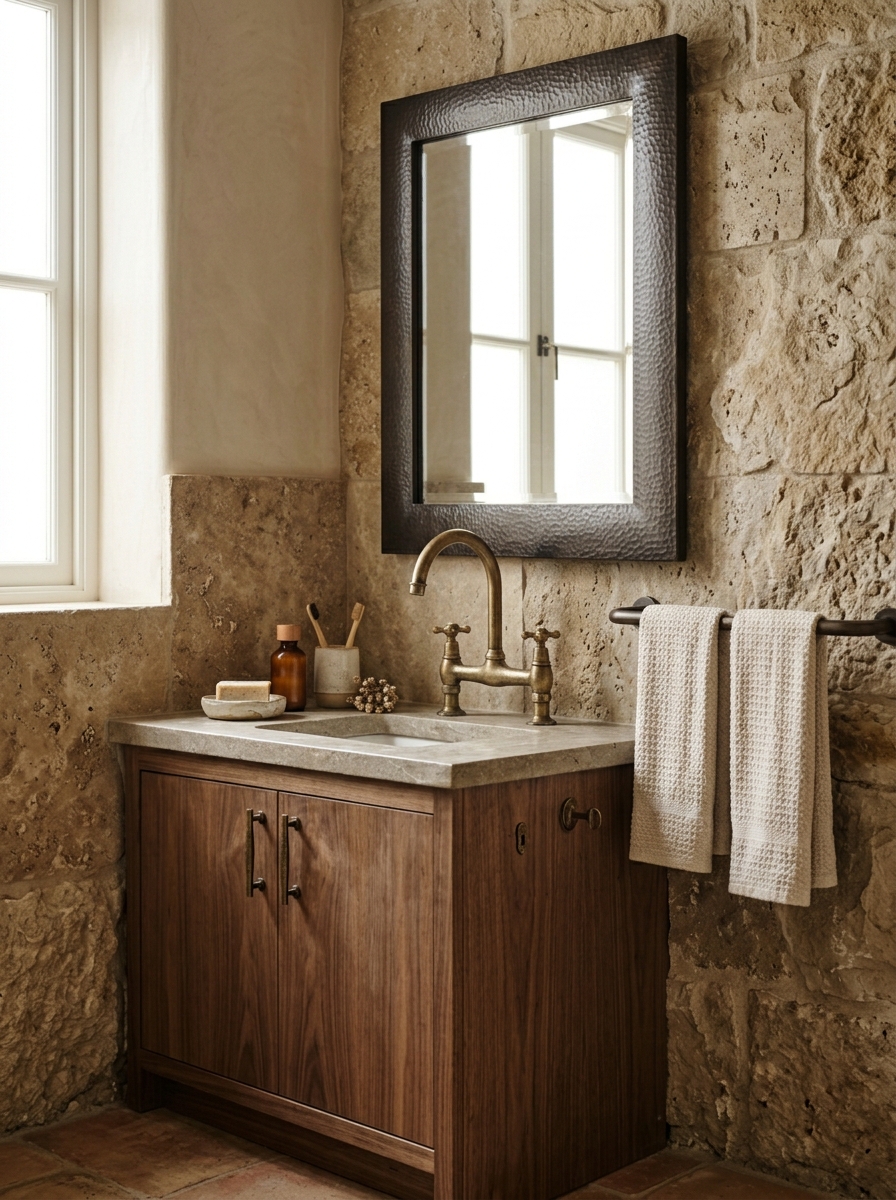
Use bronze or aged brass fixtures
Warm metal finishes complement earth tones more naturally than highly reflective cool chrome in many bathrooms. Aged brass, bronze, and softly brushed gold add depth without creating a glamorous or overly polished effect.
Use one consistent finish for the faucet, shower hardware, mirror frame, towel rail, and cabinet handles. Slight variation is acceptable, but mixing several very different metals can make a small bathroom feel less cohesive.
Bronze creates a darker and more grounded appearance, especially against cream tile and beige stone. Aged brass feels lighter and works beautifully with terracotta, walnut, and olive.
Choose finishes with a muted sheen. Highly yellow or mirror-like gold can distract from the natural quality of the room.
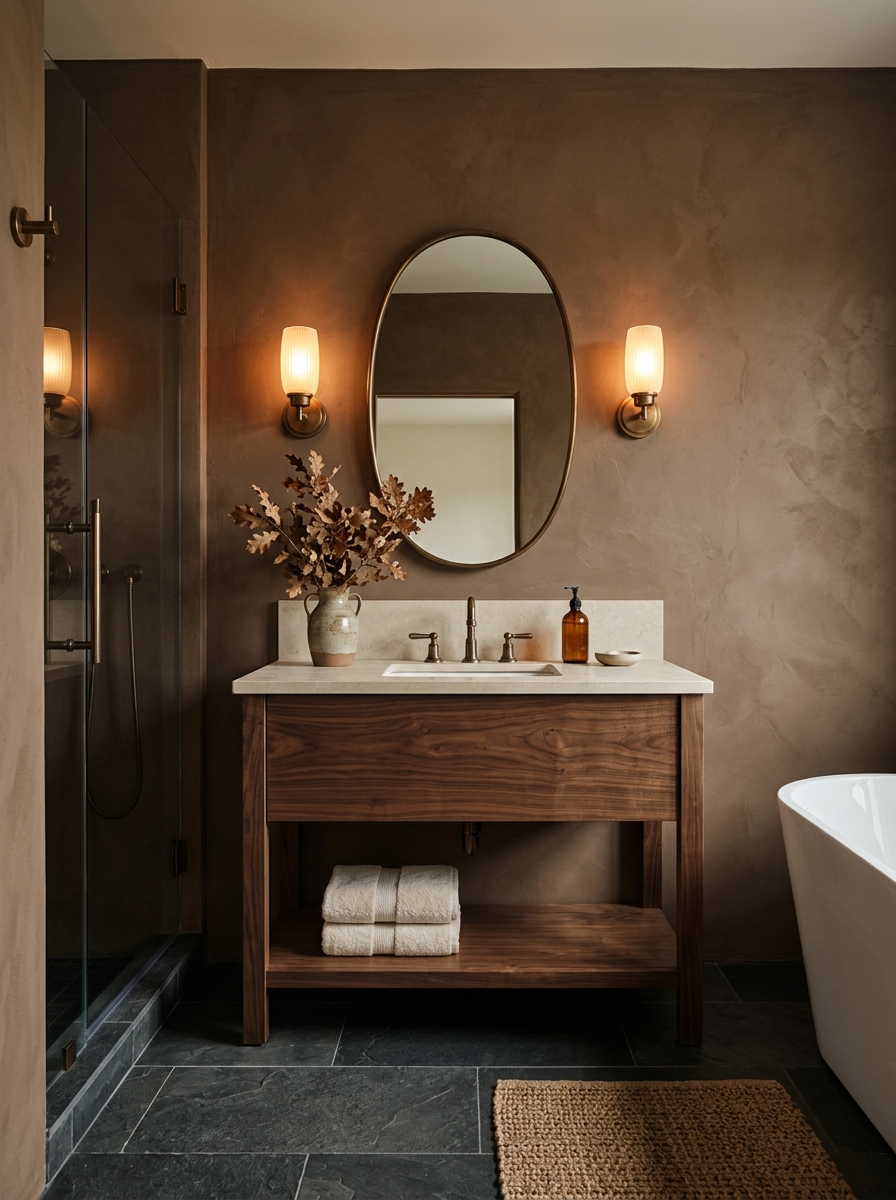
Create a darker moody earth tone bathroom
Earth tone bathrooms do not have to be light. Deep brown, charcoal, walnut, clay, and bronze can create a richer, more intimate atmosphere, especially in a powder room or bathroom with carefully layered lighting.
Use darker tones selectively. A walnut vanity, charcoal tile floor, and deep clay wall may provide enough drama without covering every surface in darkness. Warm white ceilings and lighter stone counters can preserve contrast.
Lighting becomes especially important in a moody bathroom. Wall sconces, mirror lighting, and warm overhead fixtures should provide enough visibility while supporting the calm atmosphere.
Add texture through plaster, stone, fluted wood, or handmade tile so the dark surfaces do not appear flat.
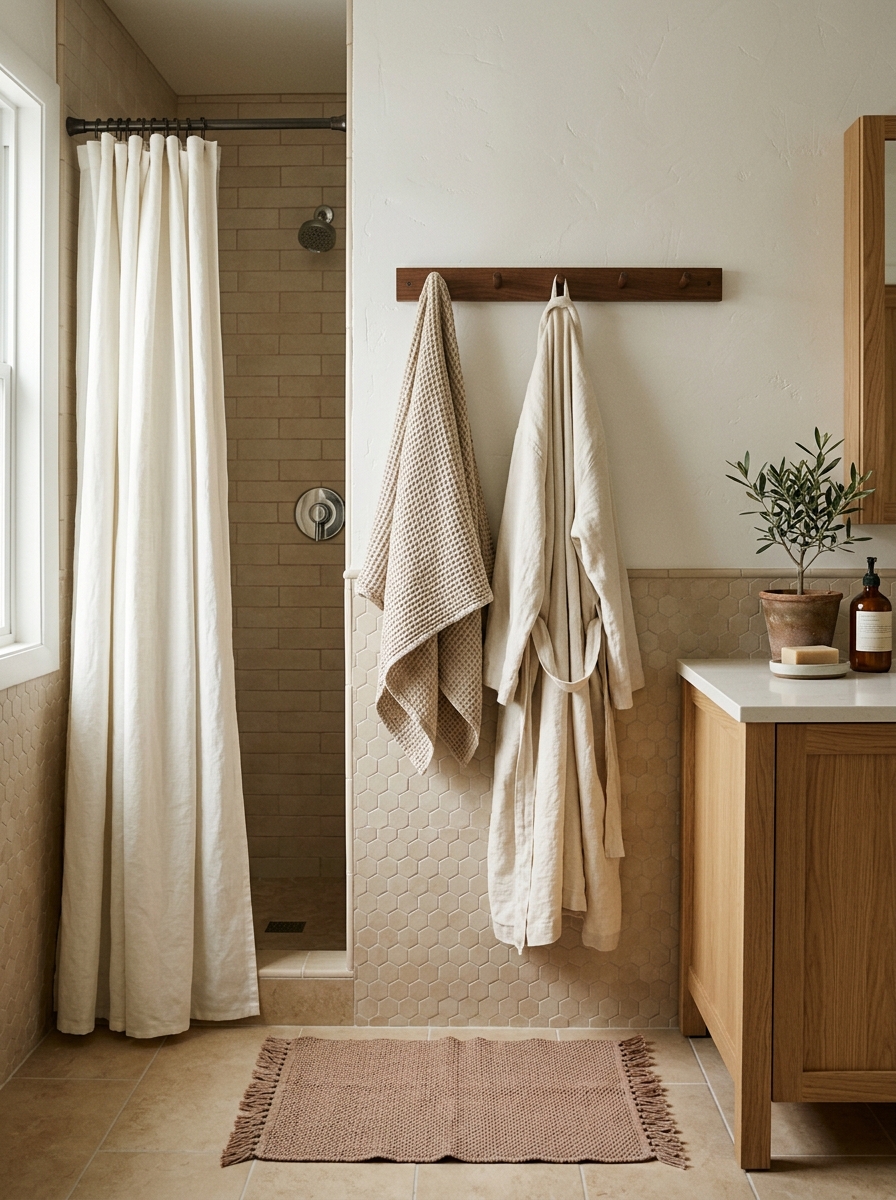
Add linen and textured towels
Textiles help soften an earth tone bathroom and introduce subtle color without permanent renovation. Linen shower curtains, waffle towels, woven bath mats, and cotton robes can make even a simple bathroom feel warmer.
Use several related tones such as cream, oatmeal, taupe, muted clay, and olive. The variation in texture will create depth even when the colors remain quiet.
Avoid filling every rail and shelf with decorative towels. Keep enough textiles visible to support the palette while preserving practical access and a clean appearance.
Natural-looking fabrics work best when they are slightly relaxed. Perfectly stiff folds may make the room feel staged, while gentle wrinkles create a more comfortable atmosphere.
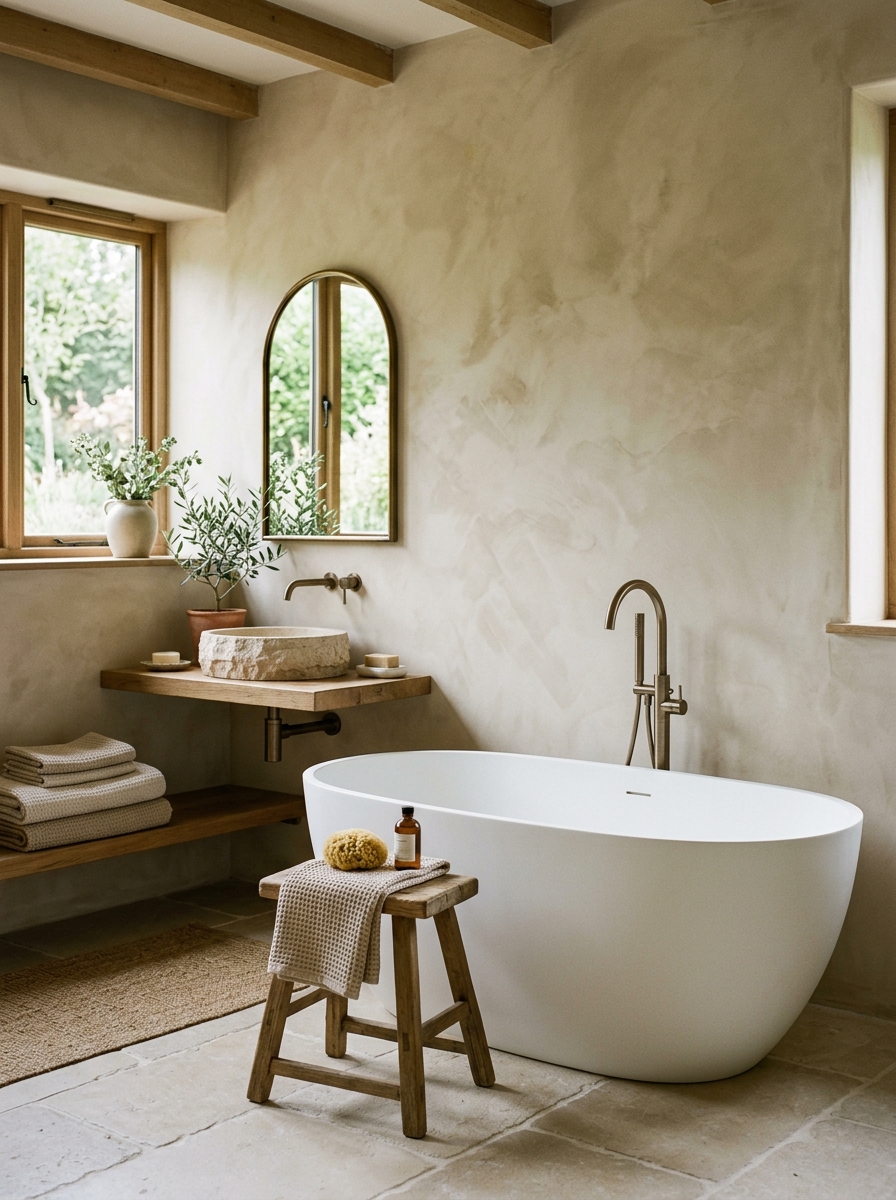
Use plaster or limewash-style walls
Plaster and limewash-style finishes create soft movement and depth across bathroom walls. Their cloudy variation makes a neutral color feel more interesting than flat paint.
Warm beige, putty, clay, muted mushroom, and sandy gray all work well. These finishes pair naturally with stone basins, wood cabinetry, bronze fixtures, and simple mirrors.
Not every decorative wall finish is appropriate for constant water exposure. Use a bathroom-compatible product and follow the manufacturer's requirements, especially near showers and tubs.
Even one plaster-style accent wall can change the room's atmosphere. It works particularly well behind a vanity or freestanding bathtub where the texture can remain visible.
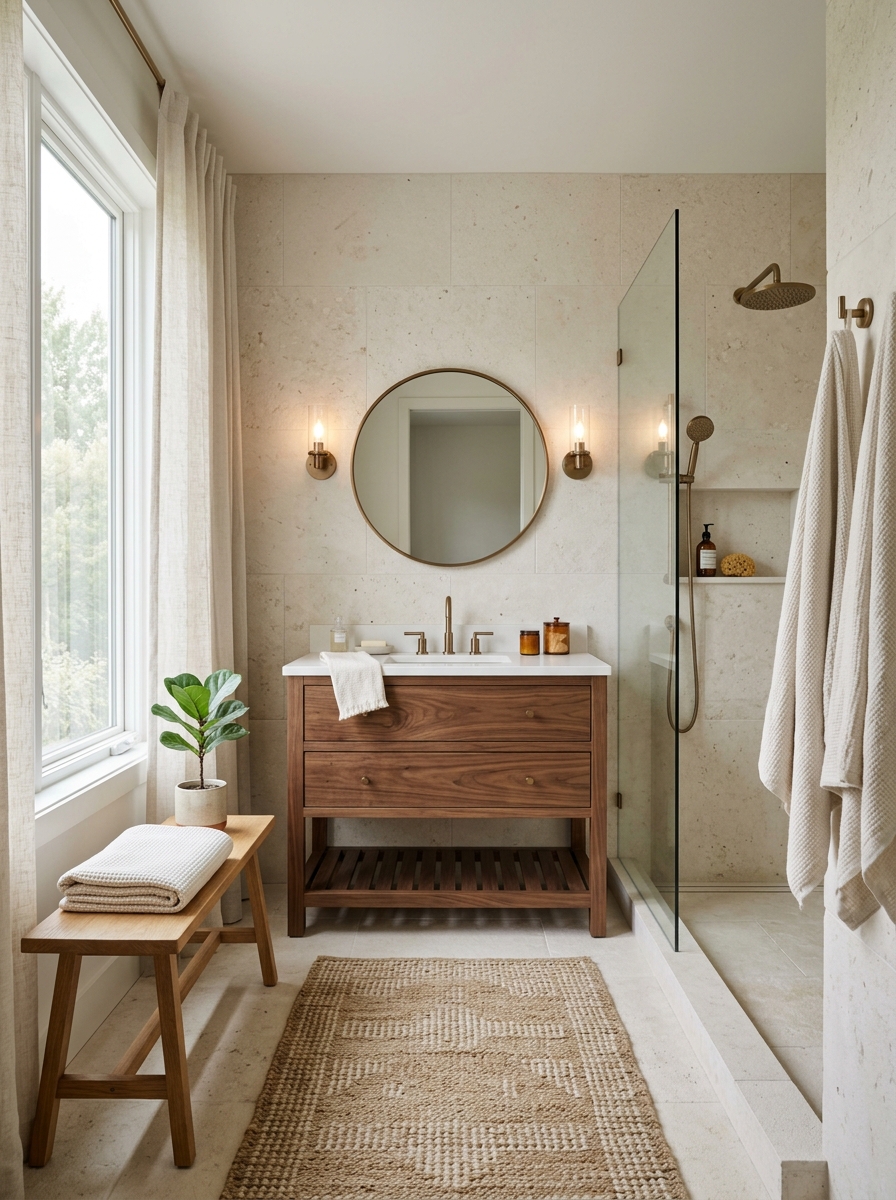
Combine stone, wood, and soft textiles
The most convincing earth tone bathrooms use several natural-looking materials together. Stone provides structure, wood adds warmth, and textiles soften the room.
These materials should not compete for attention. If the stone has strong veining or texture, choose a quieter wood grain and simple towels. If the vanity is dark walnut, use lighter stone and cream fabrics to create balance.
Repeat each material in small ways. A stone counter can relate to the floor, while the vanity wood may reappear in a shelf or stool. The textile colors can then connect all the harder surfaces.
This layered approach creates a richer room than relying on paint color alone. It also helps the bathroom feel timeless because the materials are not tied to one short-lived decorative trend.
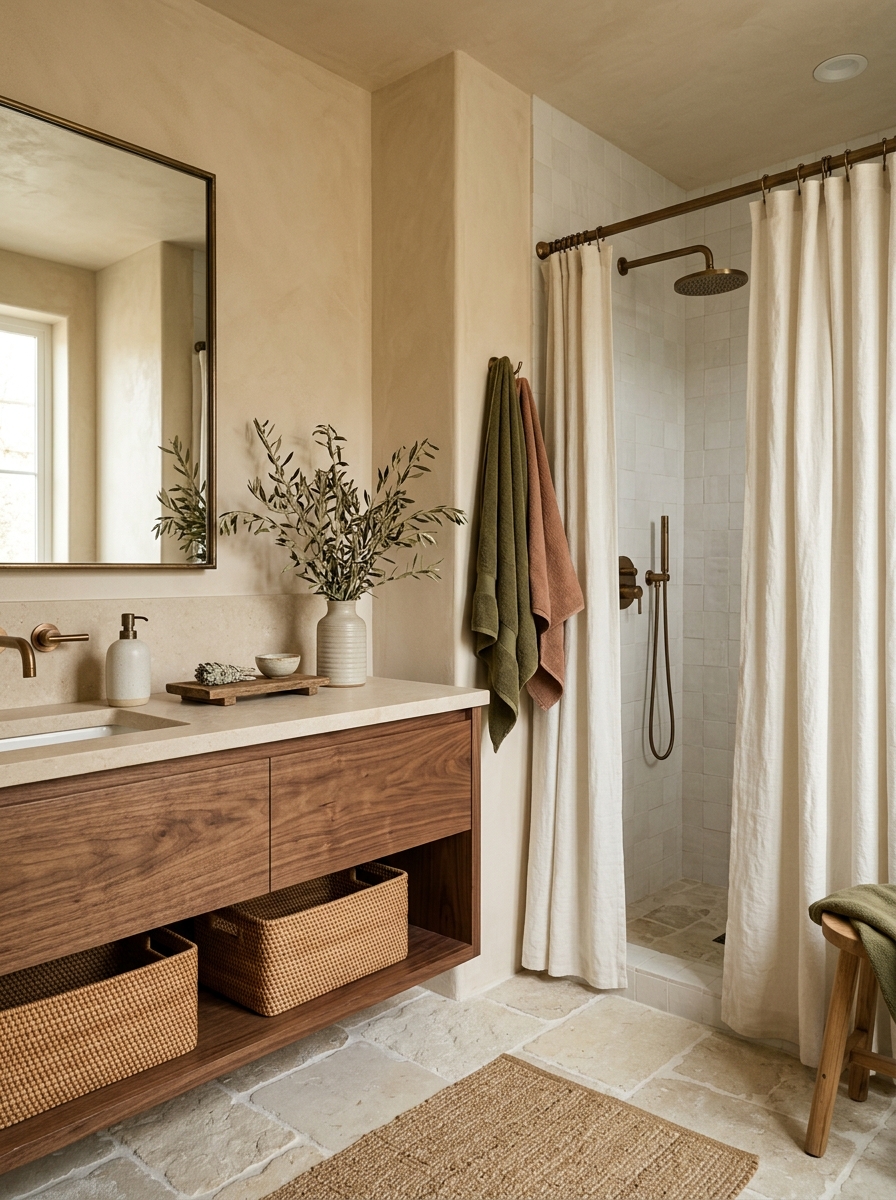
Keep the styling simple and organic
Earth tone bathrooms feel most successful when the materials and colors remain the focus. Too many decorative objects can make the room feel cluttered and distract from the calm palette.
Use a few functional pieces with attractive shapes: a ceramic soap dispenser, a wood tray, a woven basket, folded towels, or a small branch arrangement. These details can make the room feel cared for without filling every surface.
Leave some counter and shelf space empty. Bathrooms need room for everyday items, and a design that only works when nothing is in use will be difficult to maintain.
The final result should feel warm and collected rather than heavily decorated. A restrained arrangement also makes natural textures such as wood grain, stone variation, linen, and handmade tile more visible. If your bathroom includes open shelves, this guide on how to style floating shelves can help keep the display balanced.
How to choose an earth tone bathroom palette
Begin with the finishes that will remain in the room. Existing tile, flooring, fixtures, and countertops will influence which earth tones look natural. A warm beige wall may work beautifully with cream tile but appear too yellow beside a cool gray floor.
Choose one light base, one medium supporting color, and one deeper accent. For example, combine warm ivory walls with an oak vanity and bronze hardware, or use sandy stone with taupe cabinetry and muted olive towels.
Look at samples throughout the day. Natural light may reveal pink, green, gray, or yellow undertones that are not obvious in a store. Bathroom lighting can also change the appearance of clay and beige shades significantly. If you are also updating built-ins in another room, these kitchen cabinet color ideas follow a similar sample-first approach.
Texture should be considered alongside color. A room containing cream, beige, and brown can still feel rich when it includes plaster, wood grain, stone, woven baskets, and linen.
How to keep an earth tone bathroom from looking too beige
Contrast is essential. Use a deeper wood vanity, darker fixture finish, muted green textile, terracotta detail, or patterned tile to break up a pale neutral room.
Vary the materials rather than adding many unrelated colors. Cream stone, beige plaster, pale oak, and oatmeal linen may share a similar palette, but their different surfaces keep the room visually interesting.
Include some crisp elements. Warm white fixtures, a glass shower screen, a defined mirror frame, or dark hardware can keep the room from appearing blurry or overly soft.
Finally, allow natural materials to remain visible. Wood grain, stone variation, and handmade tile provide subtle pattern without moving away from the calm earth tone atmosphere.
Final thoughts
Earth tone bathrooms combine warmth, natural texture, and a sense of calm. Beige, clay, taupe, walnut, olive, cream, and bronze can create a room that feels softer and more inviting than a cool white or gray bathroom.
The style does not require a complete renovation. Warm paint, textured towels, woven baskets, a wood mirror, and a few clay-colored accessories can begin shifting the atmosphere. Larger changes such as a wood vanity, travertine tile, or terracotta wall can create a stronger transformation.
The best results use contrast and texture rather than relying on one neutral shade. By balancing stone, wood, textiles, warm metals, and simple styling, you can create an earth tone bathroom that feels organic, comfortable, and timeless.