Kitchen
Kitchen Cabinet Color Ideas
17 kitchen cabinet color ideas, from warm white and soft cream to sage green, navy, terracotta, burgundy, natural wood, and two-tone combinations.
Kitchen cabinet color has a major influence on how the entire room feels. Cabinets take up a large amount of visual space, so changing their color can make a kitchen appear brighter, warmer, moodier, more modern, or more inviting without completely changing the layout.
The best kitchen cabinet color is not always the most popular shade. It should work with the amount of natural light in the room, the flooring, countertops, backsplash, hardware, and the overall atmosphere you want to create. A pale color may make a small kitchen feel more open, while a deeper tone can add depth and character to a larger or well-lit space.
It is also important to consider how the color will look throughout the day. A cabinet shade that appears cool in morning light may look warmer under evening lighting. Testing a painted sample on more than one cabinet door or wall area can help you understand how the color responds to changing light.
Whether you prefer calm neutrals, rich greens, deep blues, natural wood, or more unexpected colors, these kitchen cabinet color ideas offer plenty of inspiration for creating a kitchen that feels personal and thoughtfully designed.
Warm white kitchen cabinets
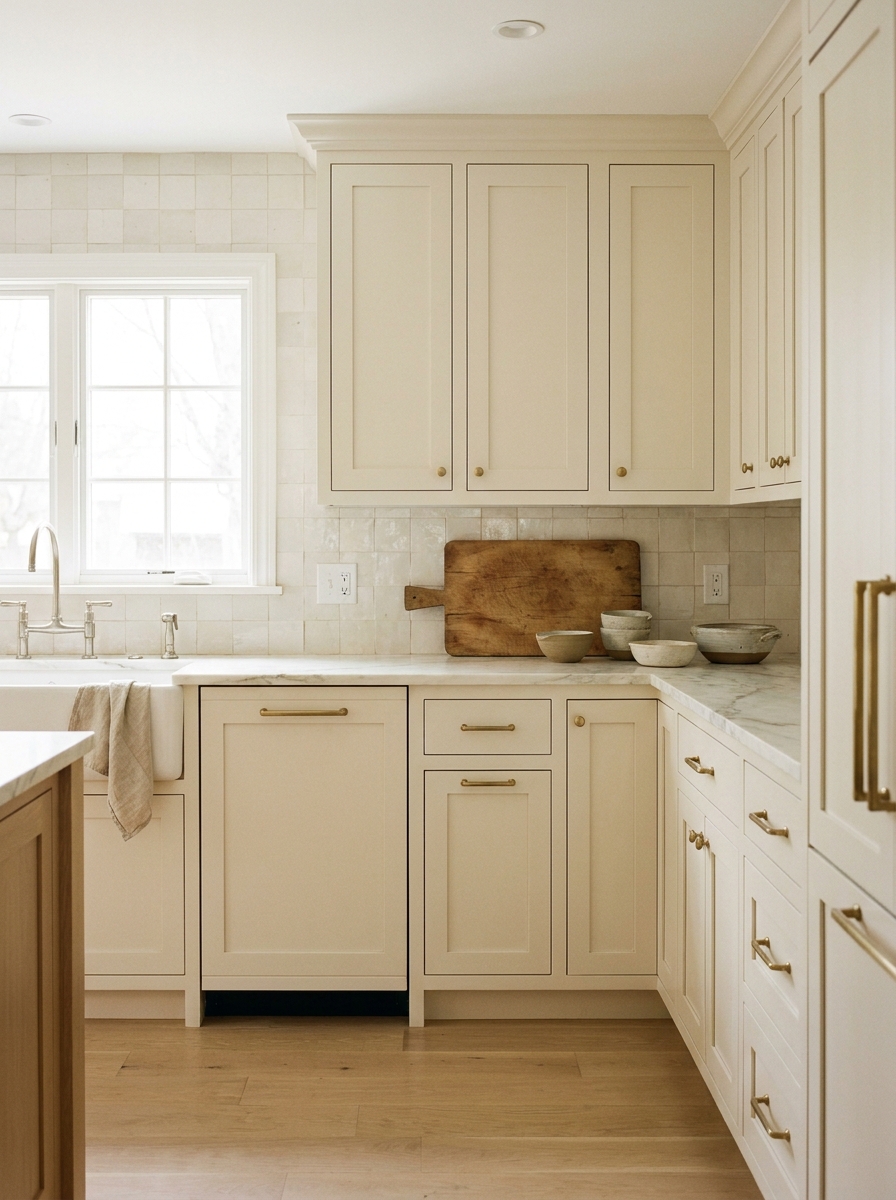
Warm white cabinets create a bright kitchen without the sharp or clinical appearance that some pure whites can have. Shades with subtle cream, beige, or ivory undertones feel softer and pair naturally with wood, stone, brass, and warm metals.
This color is especially useful in small kitchens or rooms with limited natural light. It reflects light and helps the cabinetry blend into the walls, making the kitchen feel more open. Warm white also works across many design styles, from modern and Scandinavian to traditional and cottage-inspired.
To prevent the room from looking flat, introduce contrast through the countertops, backsplash, hardware, or flooring. Walnut shelves, veined stone, handmade tiles, and black or brass hardware can all add depth while preserving the light atmosphere. If your kitchen is compact, these small apartment kitchen ideas can help you use light cabinets without losing storage or function.
Soft cream kitchen cabinets
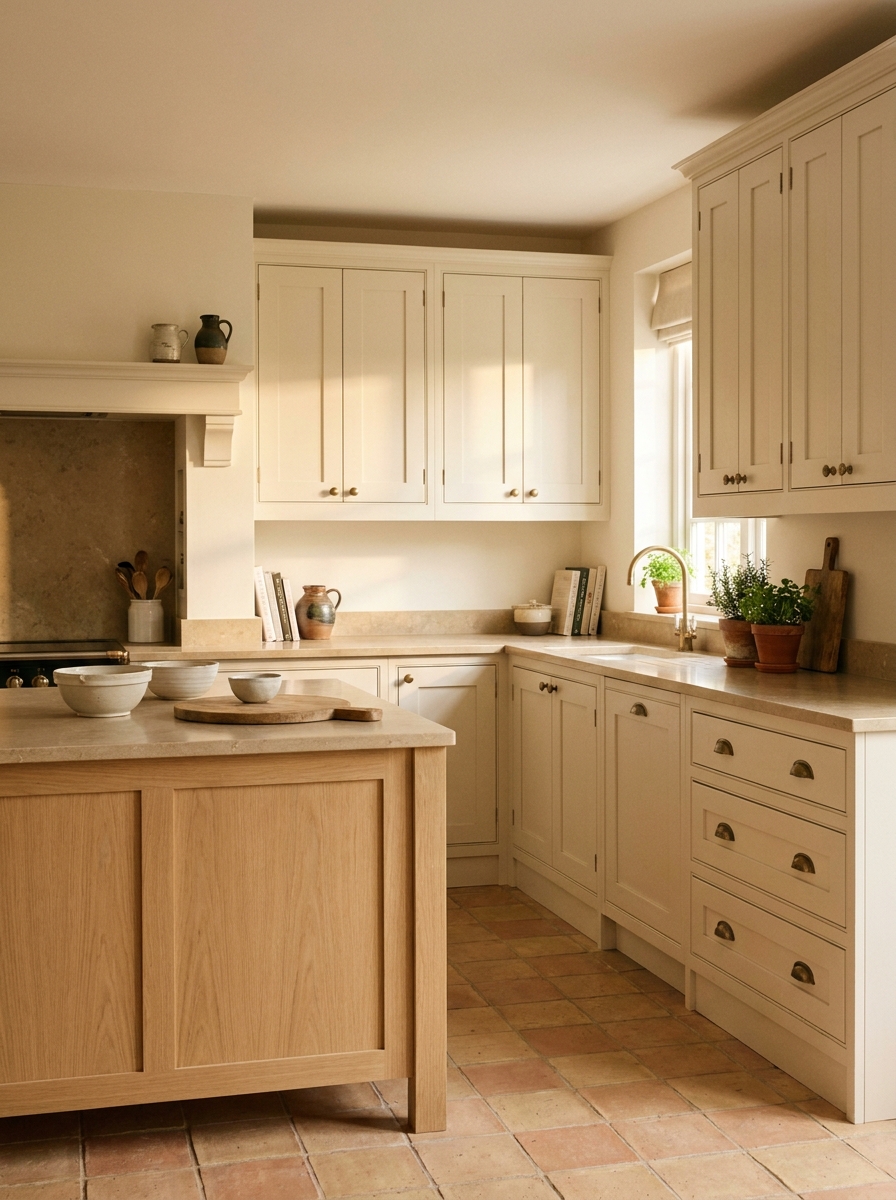
Soft cream cabinets bring more visible warmth than white while still keeping the kitchen light. The color works particularly well in rooms that contain natural wood, aged brass, terracotta, or warm stone.
Cream cabinetry can make a new kitchen feel more established and comfortable. It suits traditional panelled doors, but it can also look modern when used on simple flat-front cabinets with clean hardware.
Be careful when pairing cream with cooler white surfaces. A bright blue-white countertop or backsplash may make the cabinets appear yellow. Warm marble, beige stone, oak, and muted tiles usually create a more balanced combination.
Muted sage green cabinets
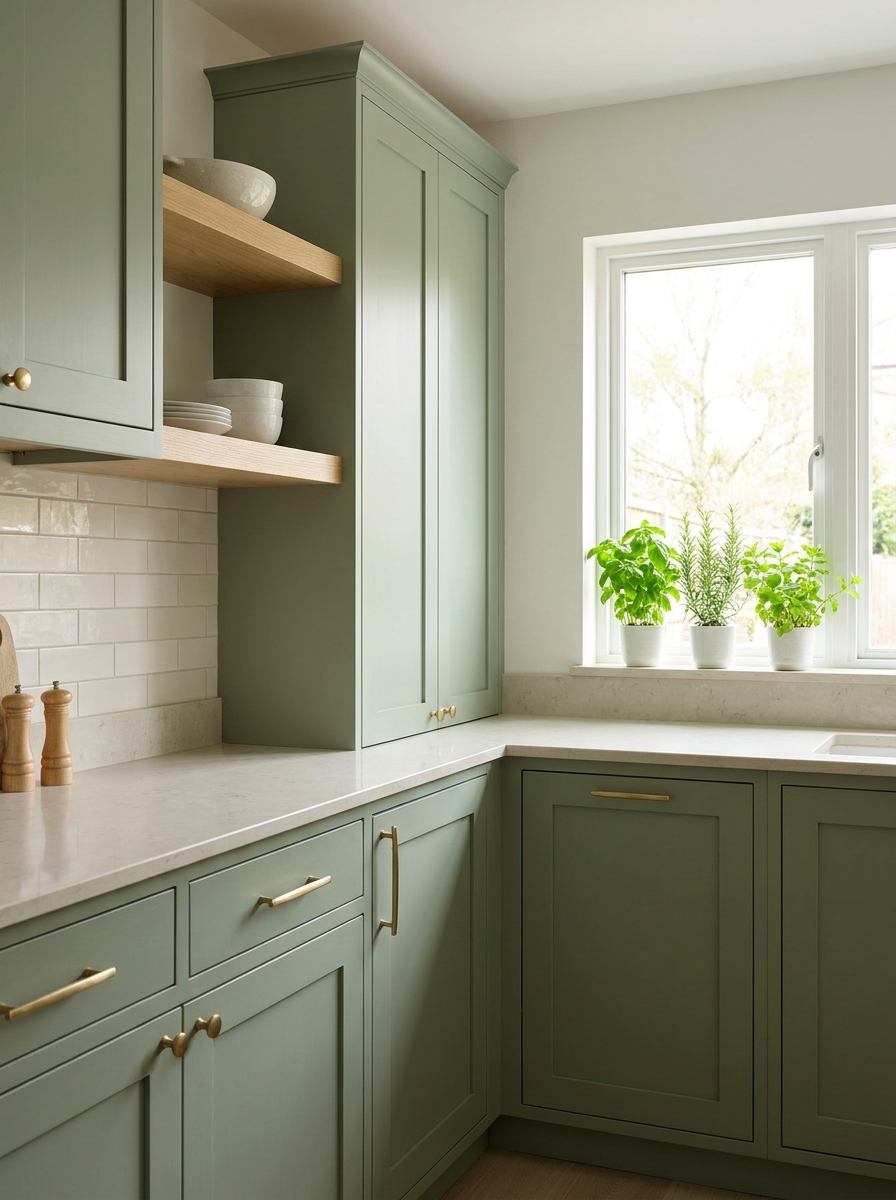
Muted sage green has become a popular kitchen color because it introduces personality while remaining calm and easy to live with. Its gray undertones help it function almost like a neutral, allowing it to work with wood, stone, cream, and metal finishes.
Sage cabinets look especially natural with pale oak shelves, white or cream counters, and brushed brass hardware. For a cooler interpretation, pair them with chrome or nickel and a light gray backsplash.
This color can work on all cabinetry or only on the lower cabinets and island. Using sage selectively is a good option if you want color without making the entire kitchen feel green. For more ways to use this palette, these green kitchen ideas go deeper into sage, olive, and natural green finishes.
Deep forest green cabinets
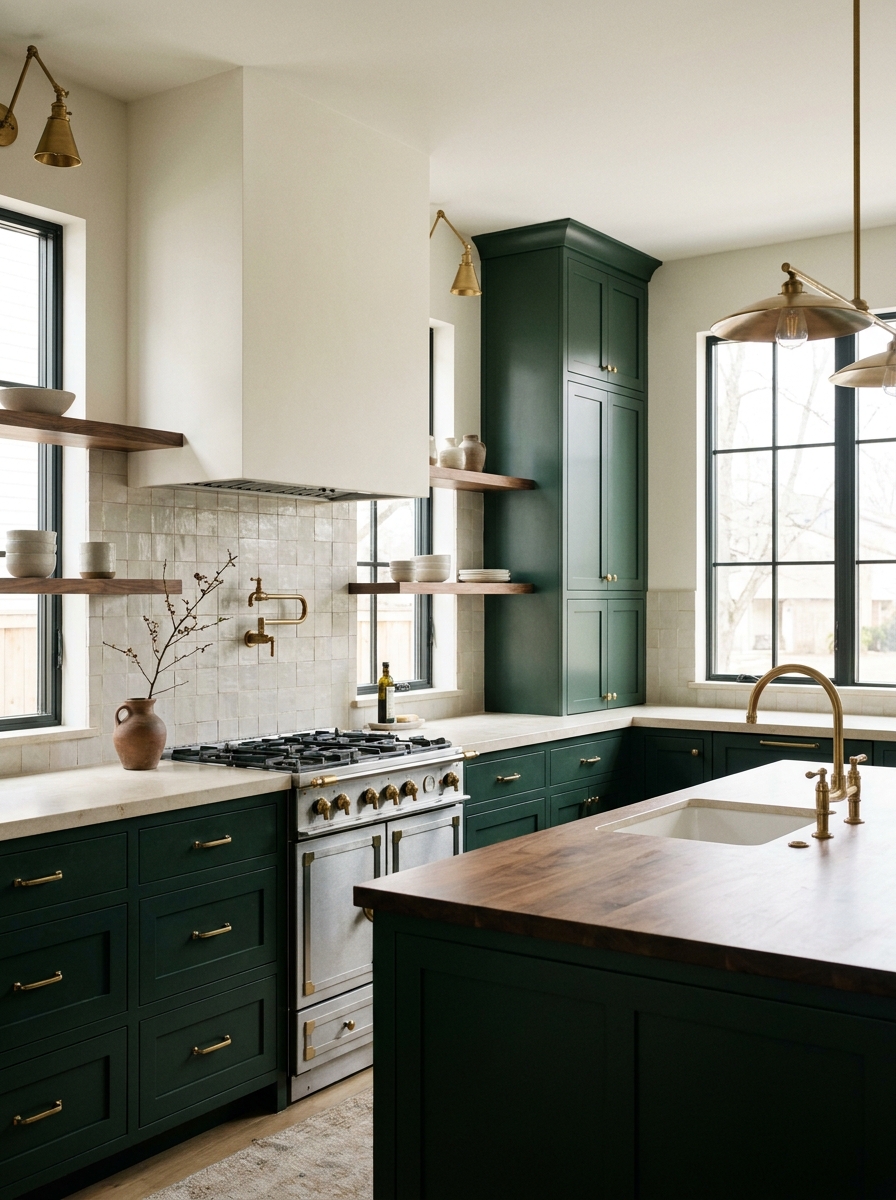
Forest green cabinetry creates a richer and more dramatic kitchen. The depth of the color can make simple cabinets feel more substantial, especially when paired with warm metals and natural stone.
This shade works best in kitchens with good natural light or a carefully planned lighting scheme. In a darker room, using forest green only on lower cabinets or a central island can give you the character of the color without making the space feel enclosed.
Pair deep green with cream walls, walnut accents, marble, or pale stone to create contrast. Brass adds warmth, while black hardware creates a more modern and restrained effect.
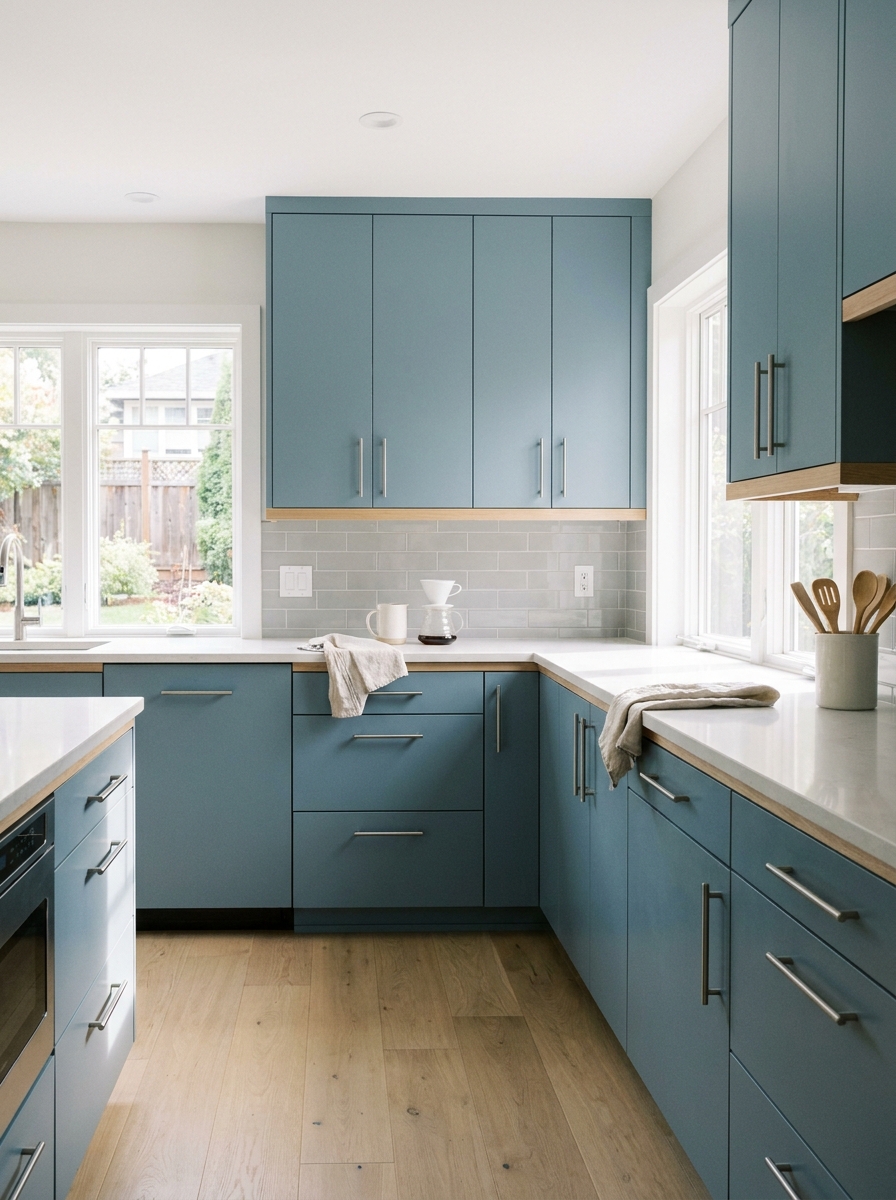
Dusty blue kitchen cabinets
Dusty blue cabinets add color in a gentle, relaxed way. Unlike brighter blues, dusty shades contain enough gray to feel refined and adaptable, making them suitable for both modern and traditional kitchens.
The color pairs well with white stone, soft gray tile, light oak, and brushed nickel. Brass hardware can introduce warmth, while chrome keeps the room feeling crisp and slightly cooler.
Dusty blue is especially attractive in kitchens with plenty of daylight, where the changing light can reveal subtle variations in the shade. It can also be used on an island to add contrast to cream or white perimeter cabinets.
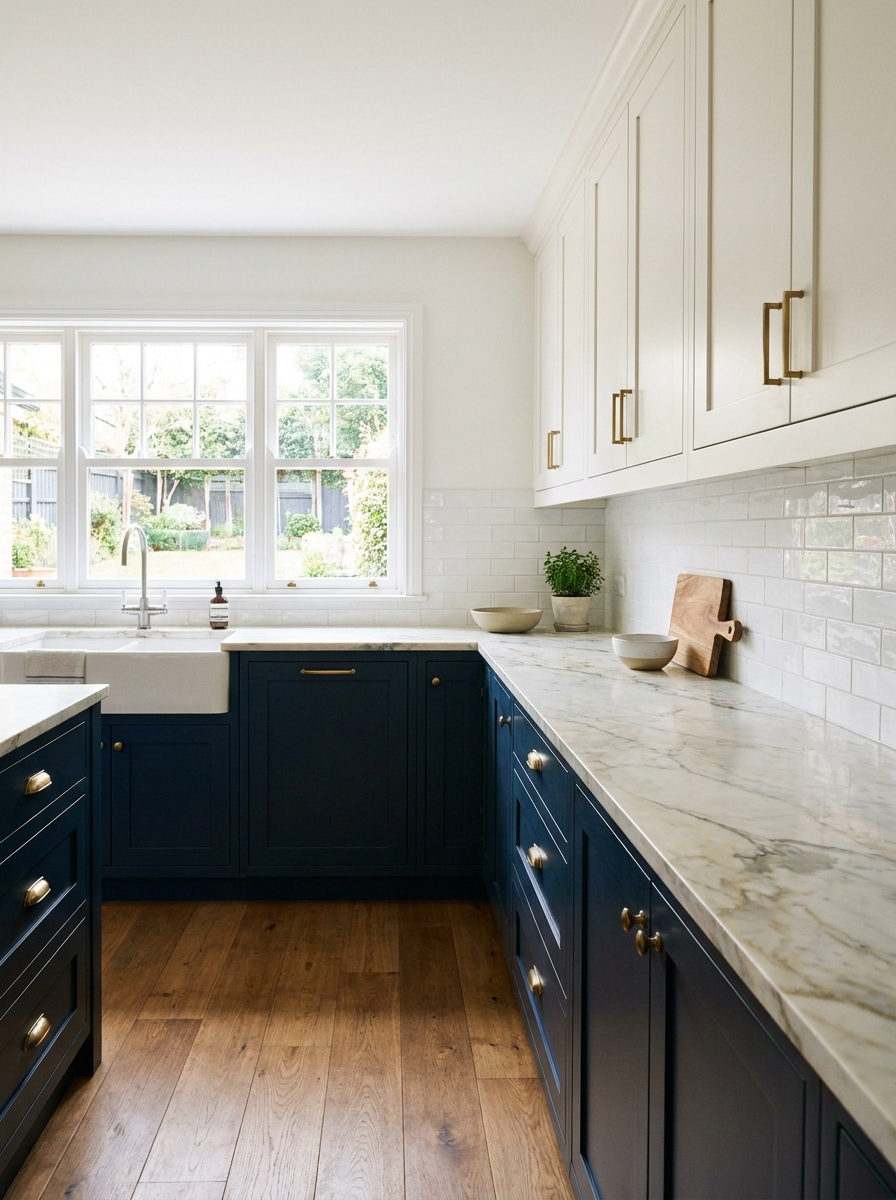
Navy blue kitchen cabinets
Navy blue creates a strong, tailored look that can make a kitchen feel more architectural. It is deeper and more formal than dusty blue, but it still offers more color than charcoal or black.
In smaller kitchens, navy works well on lower cabinets while the upper cabinets remain white or cream. This grounds the room while preserving brightness at eye level. In larger spaces, full navy cabinetry can feel dramatic and sophisticated.
Light countertops and backsplash materials help balance the depth of the color. Brass hardware offers a classic contrast, while polished nickel or chrome creates a cleaner contemporary finish.
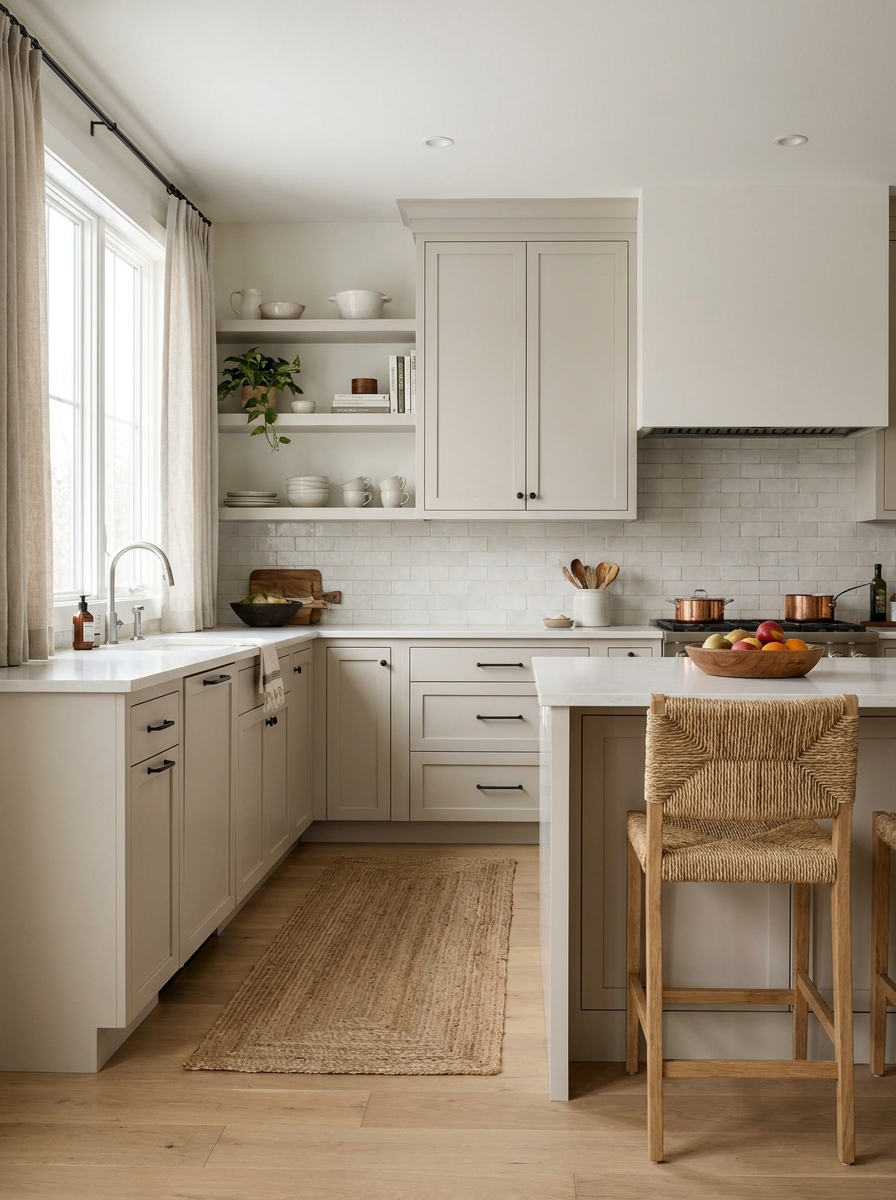
Pale gray kitchen cabinets
Pale gray cabinetry provides a softer alternative to white. It can make the kitchen feel light and calm while giving the cabinets enough contrast to remain visually distinct from the walls.
The undertone of the gray matters. Warm gray pairs naturally with beige stone and oak, while cooler gray works well with white counters, blue accents, and silver-toned hardware.
Because pale gray can sometimes appear flat, use texture to add interest. Handmade tile, natural stone, wood grain, woven stools, and subtle veining can make the room feel layered without introducing strong color.
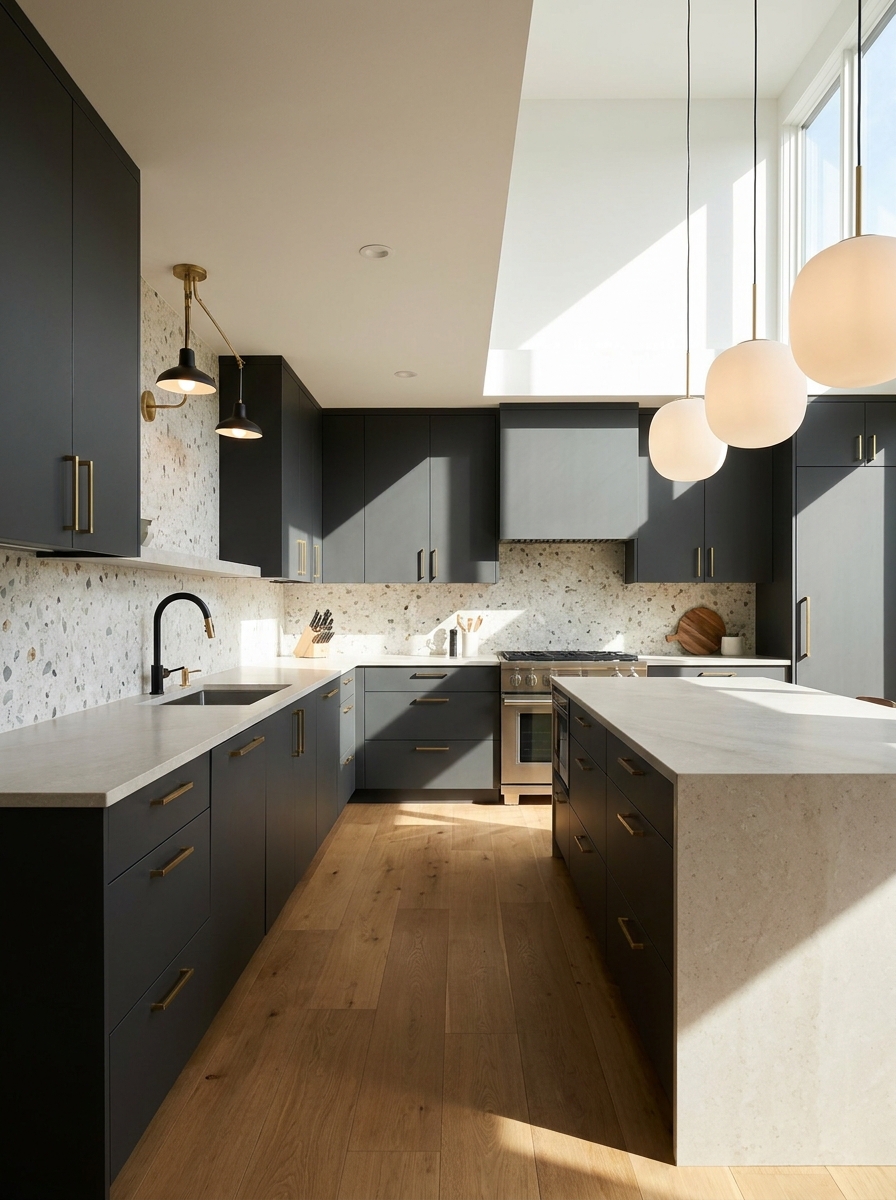
Charcoal kitchen cabinets
Charcoal cabinets bring drama to a kitchen while remaining softer than pure black. They can create a refined backdrop for pale stone, warm wood, metallic hardware, and statement lighting.
This color is particularly effective on flat-panel cabinets in contemporary kitchens, although it also works on traditional doors when balanced with warmer finishes. A charcoal island can provide a strong focal point in an otherwise light kitchen.
Since the cabinets absorb more light, include enough contrast through the walls, countertops, backsplash, and floor. Warm under-cabinet lighting can also prevent the room from feeling too dark in the evening.
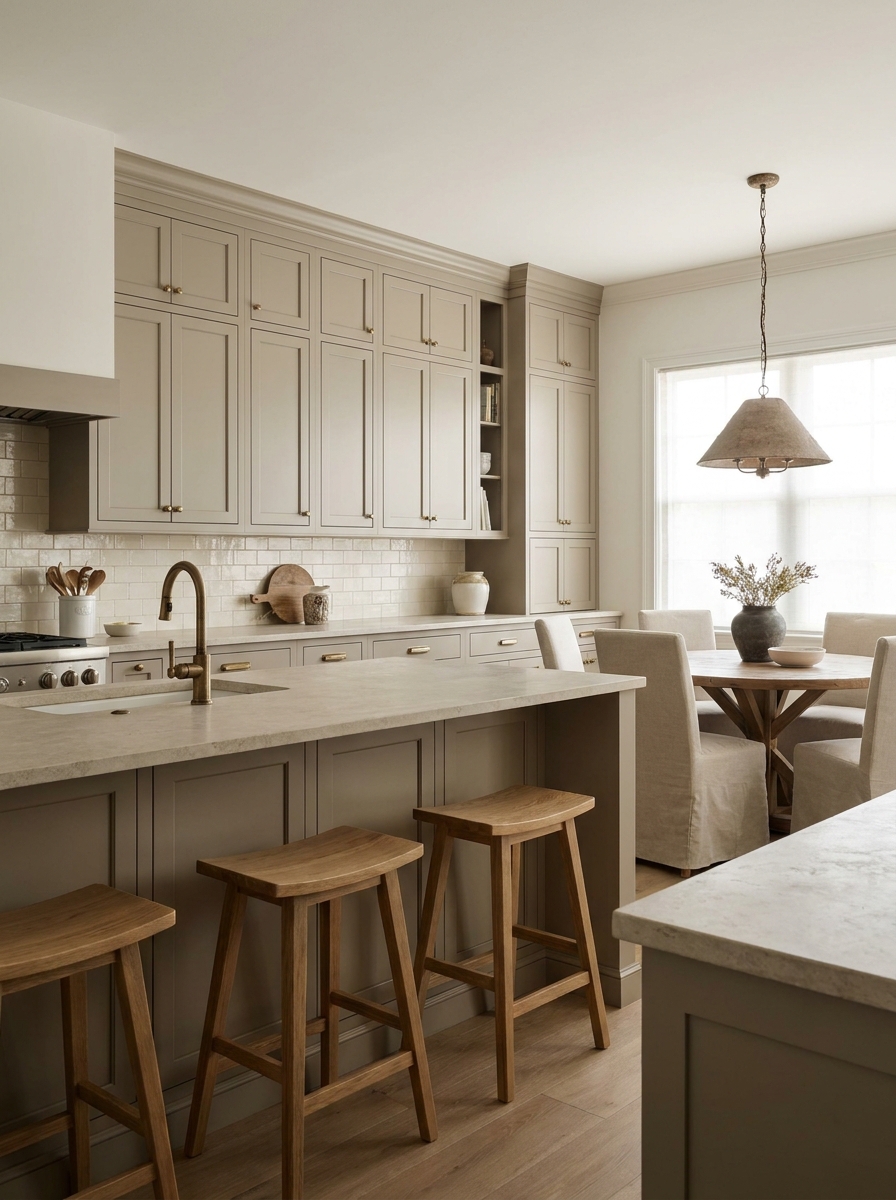
Warm greige kitchen cabinets
Greige combines the softness of beige with the structure of gray, making it one of the most versatile kitchen cabinet colors. It is neutral enough to work with many materials but more interesting than plain white.
Warm greige looks beautiful with natural oak, limestone, cream tile, and aged brass. It can also create a quiet background for darker accents such as black lighting, walnut furniture, or a deep-colored island.
This shade is useful in open-plan homes because it connects easily with nearby living and dining areas. It offers warmth without pulling too strongly toward yellow or brown.
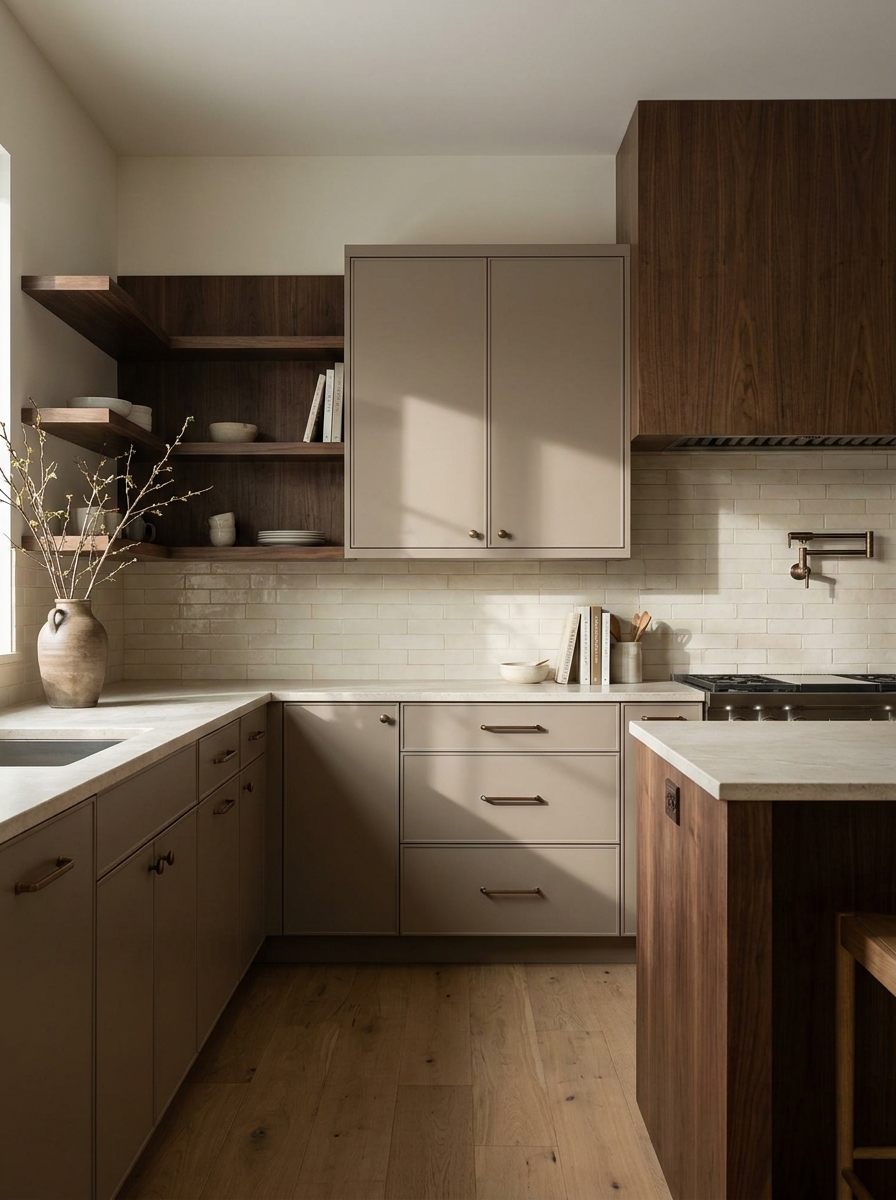
Taupe kitchen cabinets
Taupe cabinetry has more visible warmth and earthiness than greige. Depending on the undertone, it can lean toward mushroom, clay, brown, or muted mauve, giving the kitchen subtle character.
This color works especially well with pale stone, creamy walls, dark wood, and bronze hardware. It can make a modern kitchen feel warmer without creating a traditional or rustic appearance.
To keep taupe cabinets from blending too heavily into the room, use a countertop or backsplash with clear contrast. A light stone surface, black fixtures, or a darker floor can define the cabinetry and make the color feel intentional.
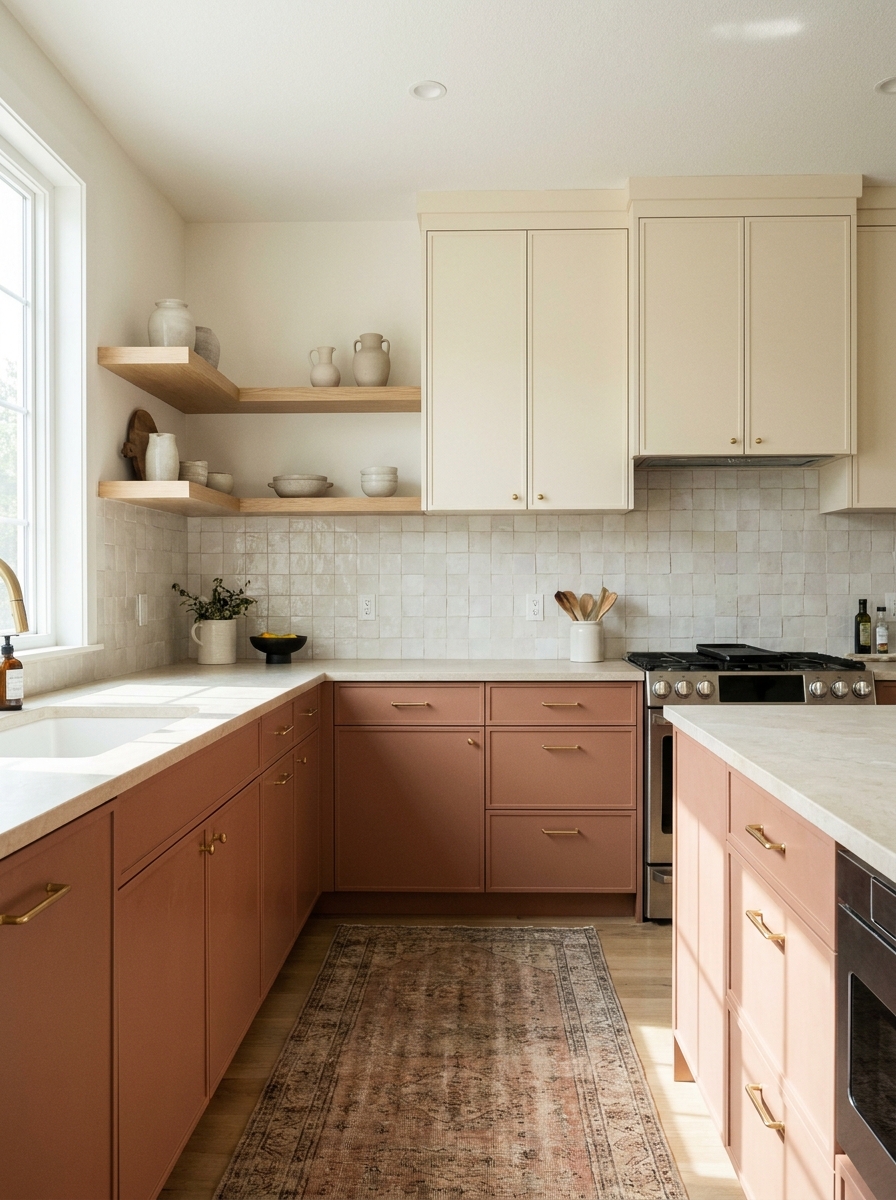
Terracotta kitchen cabinets
Terracotta cabinets create a warm and expressive kitchen. The color brings in the earthy richness of clay and works particularly well in rooms with stone, wood, cream, and handmade tile.
Because terracotta is a stronger shade, it often works best on lower cabinets, a pantry wall, or an island. This creates a focal point while allowing lighter surfaces to keep the room balanced.
Choose a muted, dusty terracotta rather than a bright orange. A subdued version feels more sophisticated and is easier to coordinate with the rest of the home.
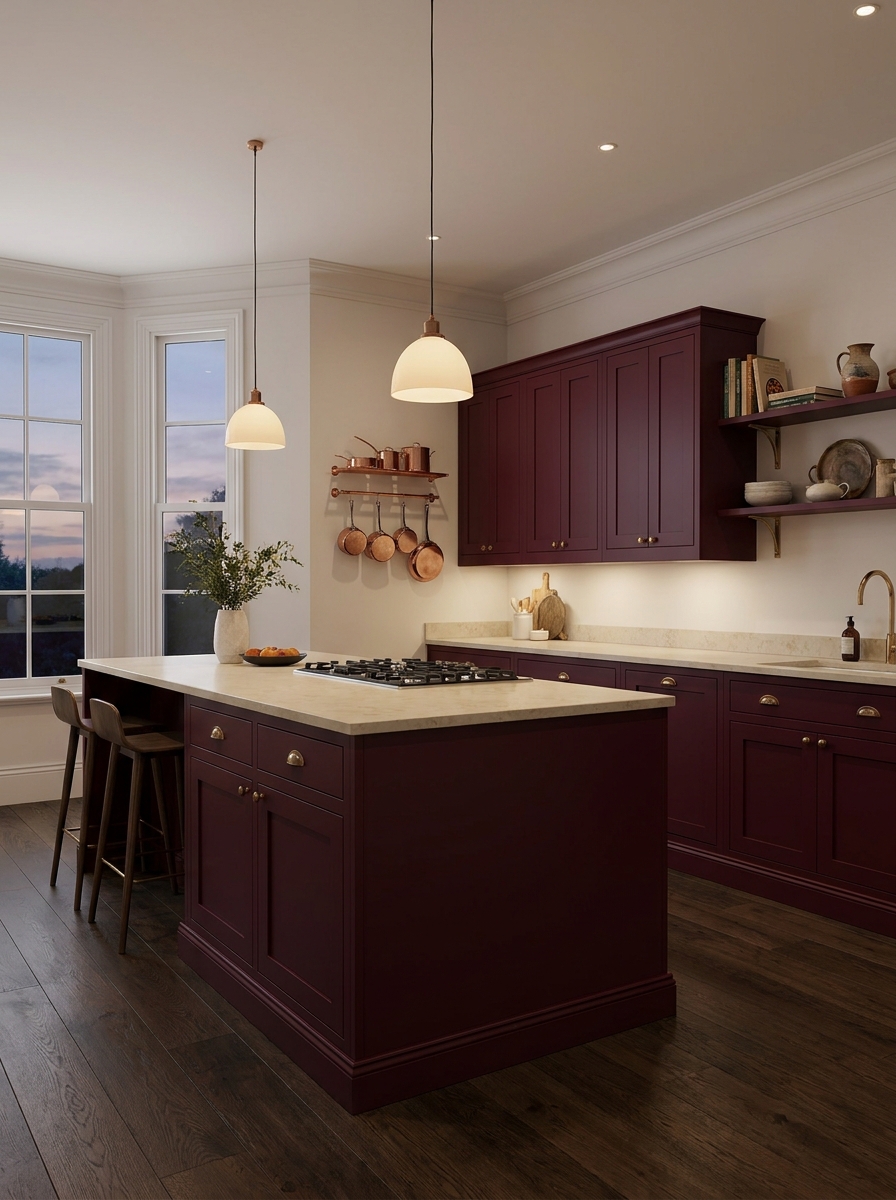
Burgundy kitchen cabinets
Burgundy is an unexpected cabinet color that can make a kitchen feel rich, intimate, and highly distinctive. Deep wine and oxblood tones work particularly well in rooms with warm lighting and classic materials.
Use burgundy with pale stone, cream walls, dark wood, or brushed metal to keep the look balanced. A burgundy island or lower cabinet run can be easier to introduce than full-height cabinetry.
This color suits both modern flat-panel doors and more traditional cabinetry. The surrounding finishes determine whether the result feels contemporary, vintage-inspired, or formal.
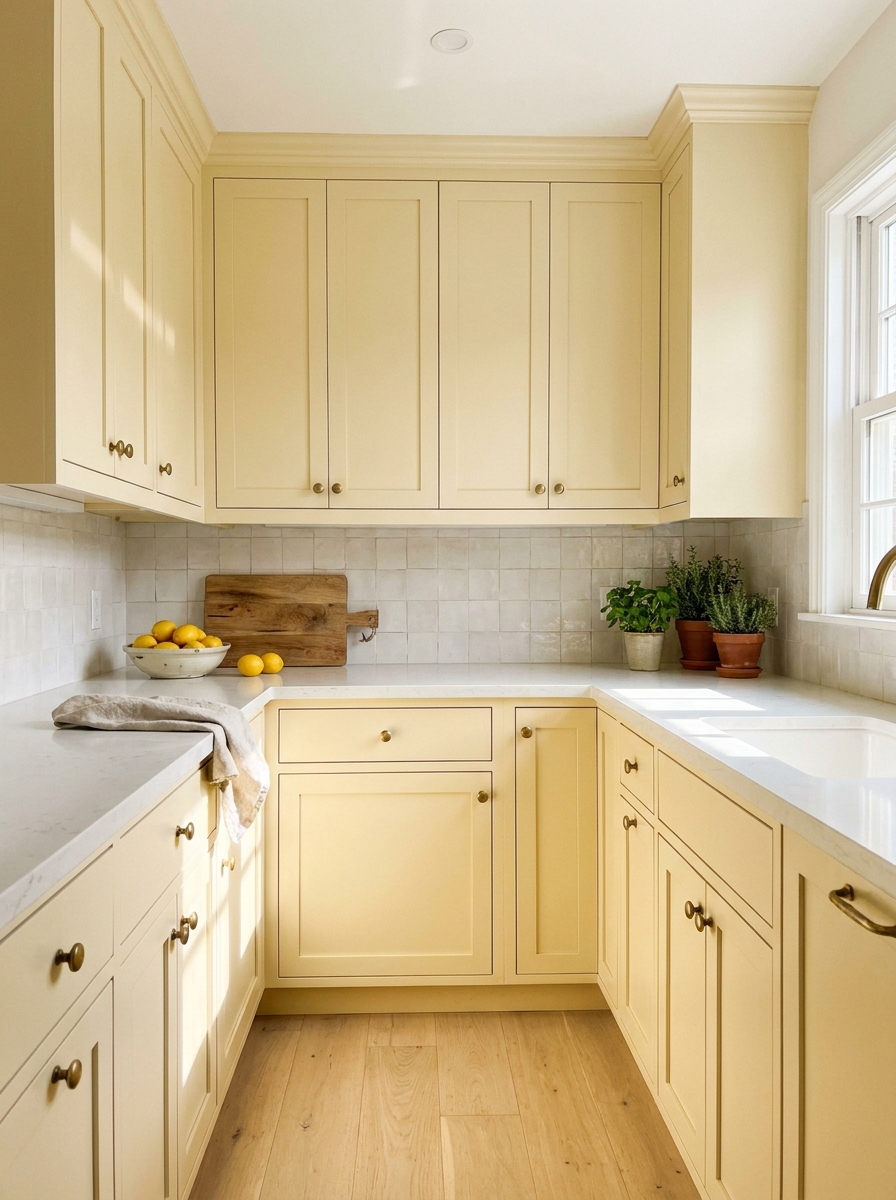
Soft butter yellow cabinets
Butter yellow cabinets can make a kitchen feel cheerful and welcoming without becoming overly bright. The best shades are soft and creamy, with enough warmth to create character but enough restraint to remain timeless.
This color works naturally with white tile, pale oak, cream stone, and aged brass. It can suit a small kitchen particularly well because it reflects light while offering more personality than white.
Keep the rest of the room simple so the yellow remains the main feature. Too many additional colors may make the kitchen feel overly playful or themed.
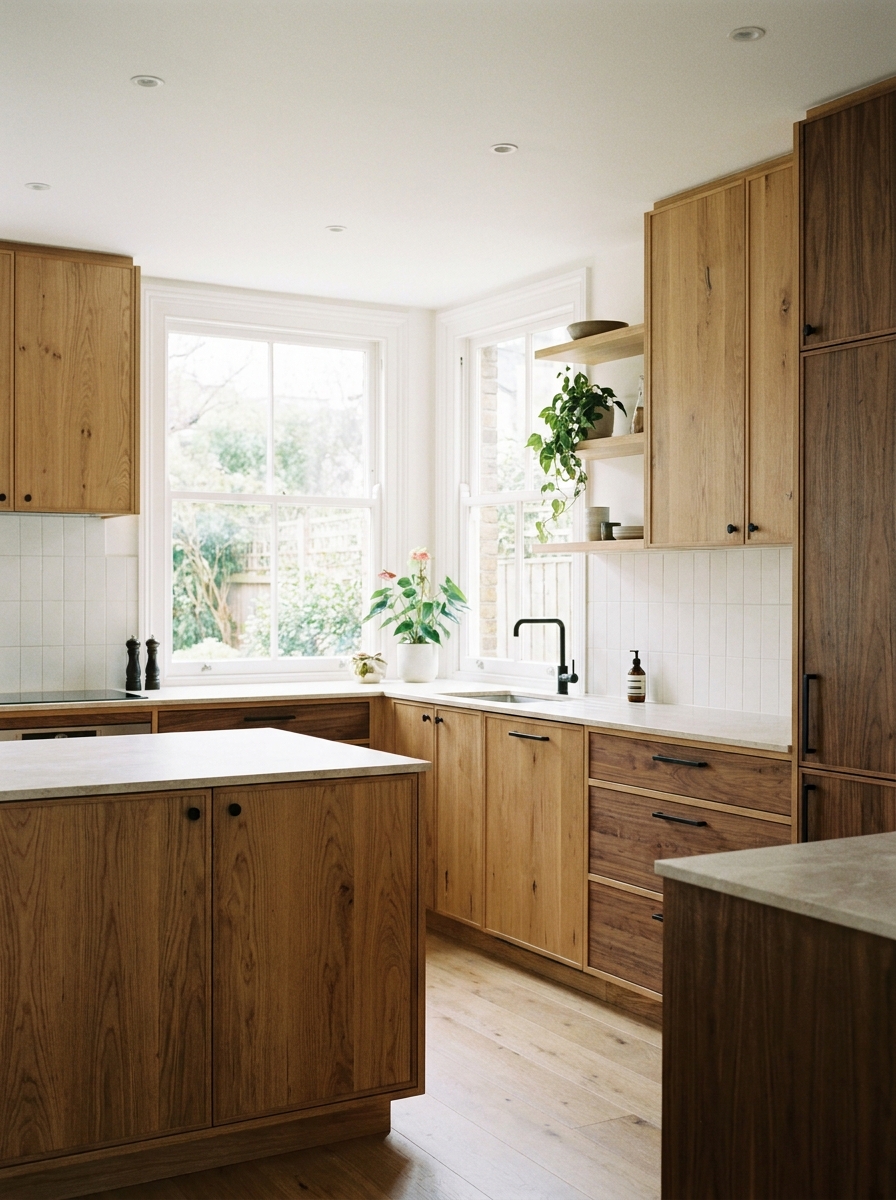
Natural wood kitchen cabinets
Natural wood cabinets bring warmth, grain, and organic texture into the kitchen. Oak, walnut, ash, and maple can each create a different atmosphere, from light Scandinavian simplicity to rich contemporary elegance.
The finish is important. Matte or low-sheen wood usually looks more natural than highly glossy cabinetry. Keeping the grain visible allows the material itself to become part of the design.
Natural wood works beautifully with stone, terrazzo, white tile, and muted painted surfaces. In a kitchen with extensive wood cabinetry, use lighter countertops and walls to prevent the room from becoming visually heavy. Open wood storage can also pair with kitchen shelf decor ideas if you want the cabinetry and styling to feel connected.
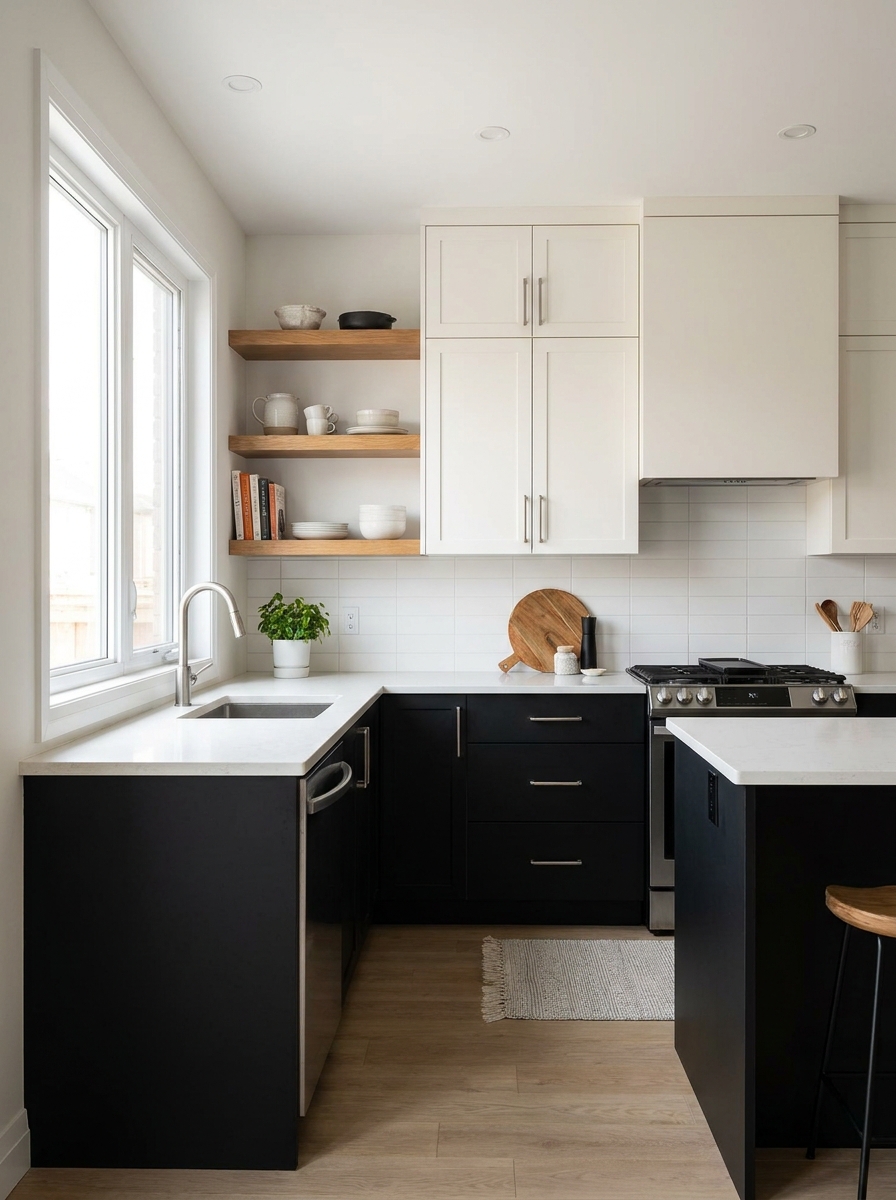
Black lower cabinets with light upper cabinets
Combining black lower cabinets with white or cream uppers creates strong contrast while keeping the upper half of the kitchen visually light. It is a practical way to use a dark color without overwhelming a small or medium-sized room.
The darker lower cabinets can also hide everyday marks more easily than pale finishes. Light upper cabinetry reflects more light and helps prevent the room from feeling enclosed.
Use a shared countertop, backsplash, or hardware finish to connect the two colors. Warm wood flooring or shelves can soften the contrast and make the kitchen feel more inviting.
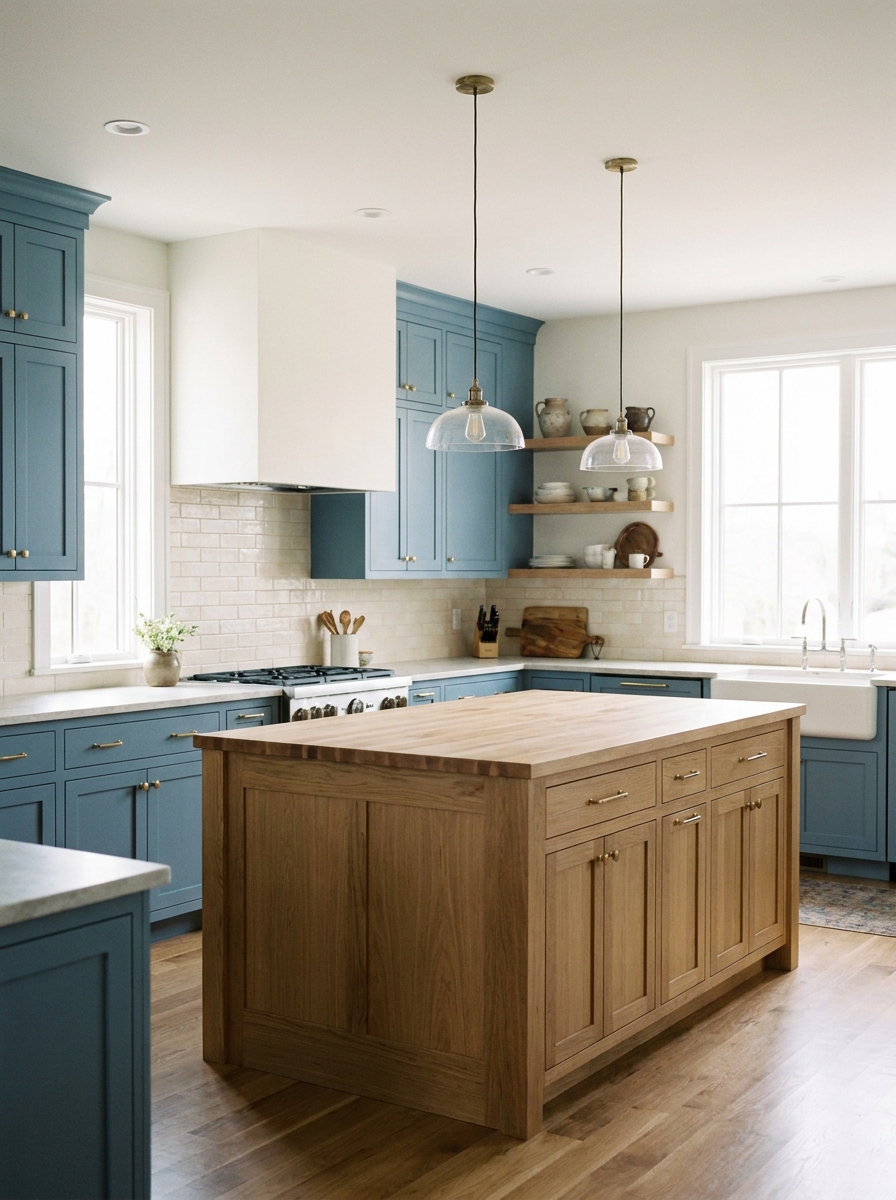
Two-tone blue and wood cabinets
Blue and natural wood create a balanced combination of color and warmth. Dusty blue or muted navy cabinets can be paired with an oak island, wood upper cabinets, or a pantry wall to create visual variety.
The key is to give each finish a clear role. For example, blue perimeter cabinets can frame a natural wood island, or wood upper cabinets can soften darker blue lower cabinets.
Keep the countertop and backsplash relatively simple so the two cabinet finishes remain the focus. Pale stone, cream tile, and subtle terrazzo all work well.
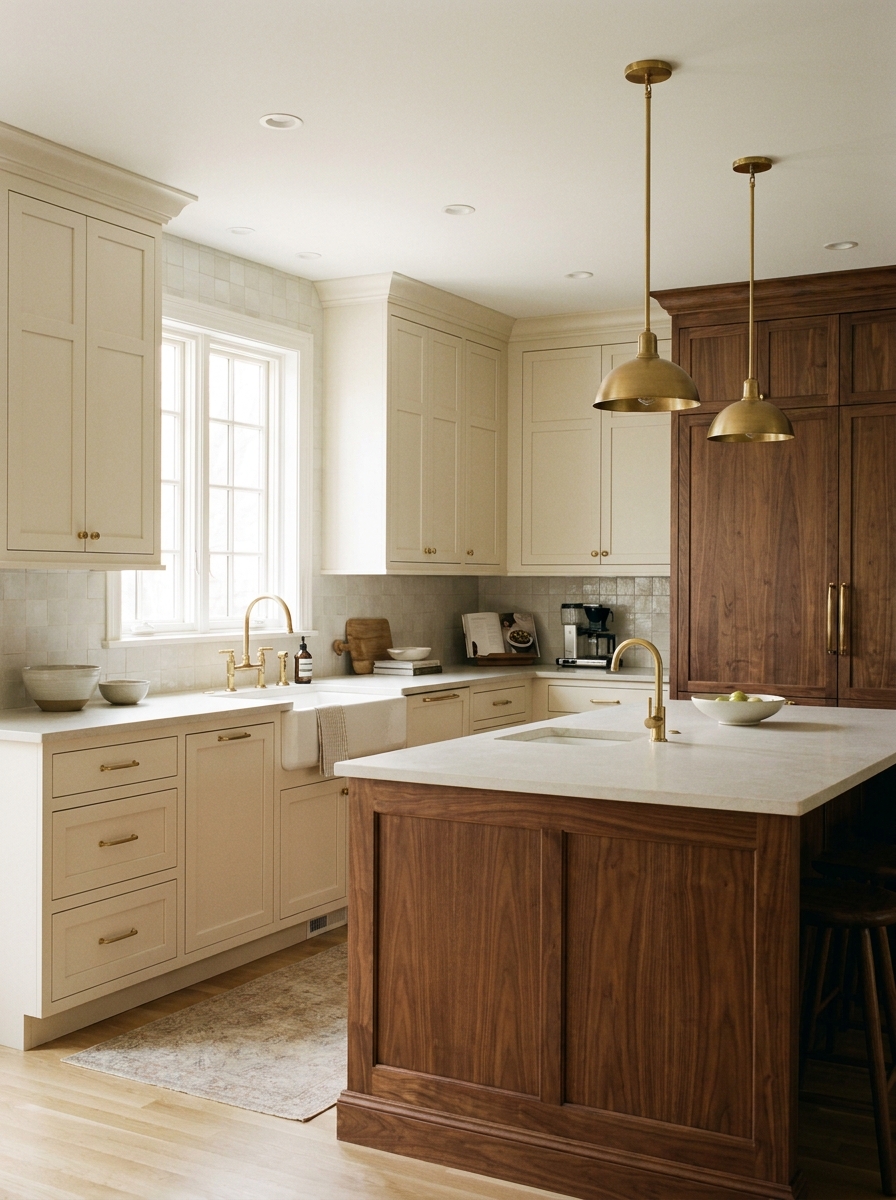
Cream and walnut kitchen cabinets
Cream and walnut create a timeless combination that feels warm, refined, and easy to adapt. Cream cabinetry keeps the room bright, while walnut adds depth and creates natural focal points.
Use walnut on the island, tall pantry cabinets, open shelving, or lower cabinetry. This prevents the wood from dominating the room while still allowing its grain and color to make an impact.
The combination works well with pale stone, warm metals, and off-white tile. It is especially suitable for open-plan kitchens because it connects naturally with wood furniture in nearby living or dining areas. If your dining space uses walnut too, these mid-century modern dining room ideas can help the rooms feel related without matching exactly.
How to choose the right kitchen cabinet color
- Look at the finishes that will stay, including flooring, countertops, backsplash tile, appliances, and wall color.
- Test large samples in morning, afternoon, and evening light before making a final decision.
- Decide how much contrast you want: cream, greige, and pale gray feel calmer, while navy, black, and forest green feel stronger.
- Choose a shade you genuinely like instead of picking a color only because it is popular right now.
A beautiful cabinet color should work with the whole kitchen, not just look good on a paint chip. Pair the color decision with practical kitchen organization ideas and simple kitchen counter decor ideas so the finished room feels both polished and usable.
Final thoughts
Kitchen cabinet color can completely reshape the atmosphere of a room. Warm white and cream create brightness, sage and dusty blue introduce gentle color, while forest green, navy, charcoal, and burgundy offer a richer and more dramatic effect.
Natural wood and two-tone combinations provide another way to add interest without relying on one painted shade. Mixing walnut with cream, blue with oak, or black lowers with light uppers can make the kitchen feel more layered and thoughtfully designed.
The best result will balance color with the room's light, materials, and proportions. By testing samples and considering the whole kitchen rather than the cabinets alone, you can choose a color that feels beautiful, practical, and personal.
FAQ
What kitchen cabinet color is most timeless?
Warm white, cream, greige, natural wood, and soft gray are among the most timeless cabinet colors because they work with many countertops, floors, hardware finishes, and decor styles.
What cabinet color makes a small kitchen look bigger?
Warm white, soft cream, pale gray, butter yellow, and light wood cabinets can help a small kitchen feel brighter and more open, especially when paired with light counters and good lighting.
Are dark kitchen cabinets a good idea?
Dark cabinets can look beautiful if the kitchen has enough natural light, contrast, and warm materials. Navy, charcoal, forest green, and burgundy work especially well with pale stone, cream walls, wood, and brass.