Living Room
Minimalist Luxury Living Room Ideas
Minimalist luxury living room ideas with warm neutrals, sculptural sofas, low-profile layouts, stone coffee tables, layered textures, dark wood contrast, oversized art, soft lighting, and refined styling.
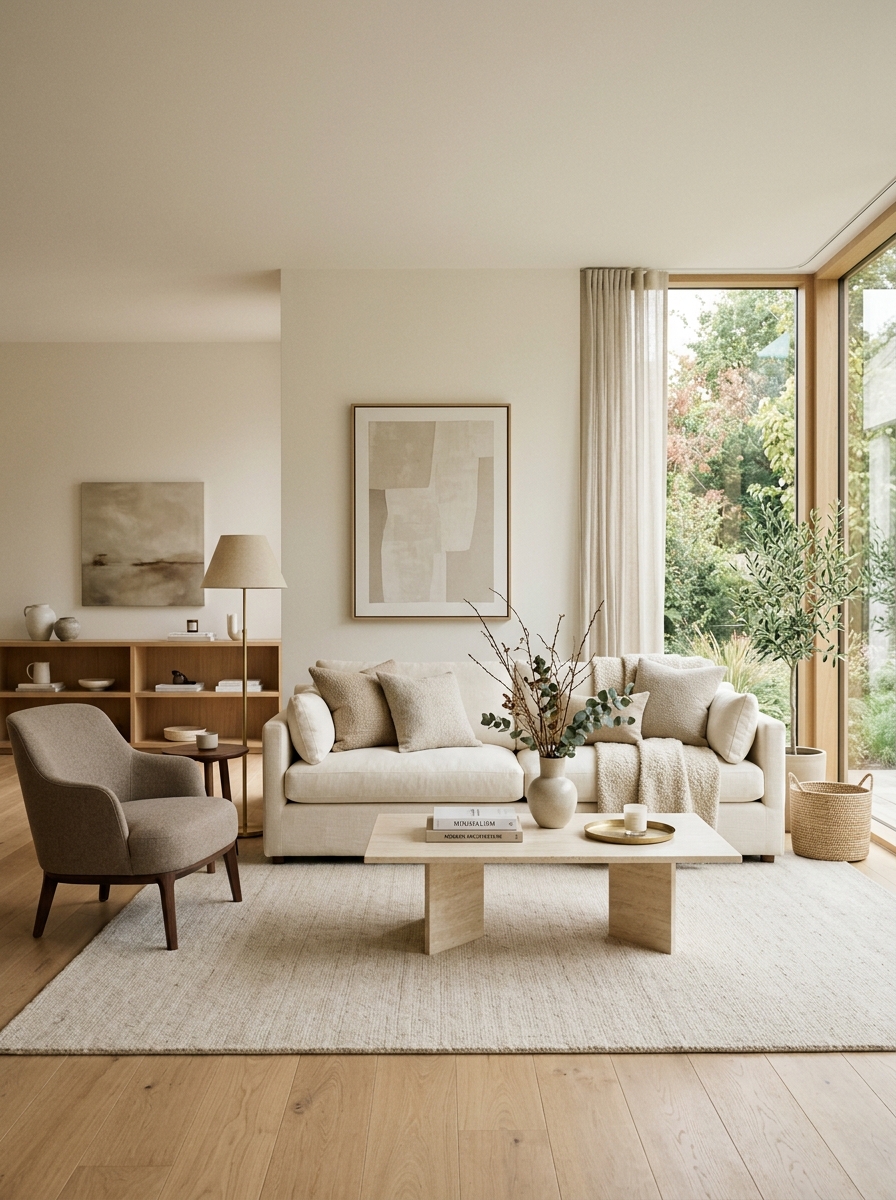
Minimalist luxury living rooms prove that a space does not need to be filled with furniture or decoration to feel impressive. In fact, the most elegant rooms often rely on restraint. Clean lines, carefully chosen materials, and a calm layout can create an atmosphere that feels expensive, sophisticated, and easy to live in at the same time.
The key difference between plain minimalism and minimalist luxury is intention. A basic minimalist room may simply remove clutter, but a luxurious one uses texture, proportion, lighting, and quality finishes to make the room feel refined. Instead of many small decorative choices, the focus shifts toward a few beautiful elements that work together. A sculptural sofa, a stone coffee table, a large piece of art, or rich drapery can shape the whole room without making it feel crowded.
This style works especially well in modern homes because it creates a peaceful backdrop for everyday life. It also adapts easily to different room sizes. A compact apartment living room can still feel high-end with the right color palette and furniture choices, while a larger open-plan space can feel warm and elegant without becoming overwhelming.
If you want your home to feel polished, current, and quietly luxurious, these minimalist luxury living room ideas will help you build that look in a way that feels timeless rather than trendy.
Start with a warm neutral palette
A warm neutral palette is one of the easiest ways to create a minimalist luxury look. Shades like ivory, cream, soft beige, mushroom, taupe, sand, and warm gray make a room feel calm and elevated without looking stark. These tones give the eye room to rest, which is essential in a minimalist interior, but they also create a soft and inviting atmosphere that feels more luxurious than a cold all-white scheme.
The benefit of warm neutrals is that they allow materials and shapes to stand out. When the walls, rug, and larger furniture pieces stay within a subtle range, details like wood grain, boucle texture, stone surfaces, or sculptural lighting become more noticeable. This layered effect gives depth to the room without relying on bright color or busy patterns.
To keep the palette from looking flat, combine slightly different tones instead of using the exact same beige everywhere. A cream sofa, oatmeal rug, and taupe accent chair will feel richer than a room where every piece matches perfectly. A few dark accents in black, bronze, or walnut can then ground the space and add balance.
Choose one sculptural sofa as the focal point
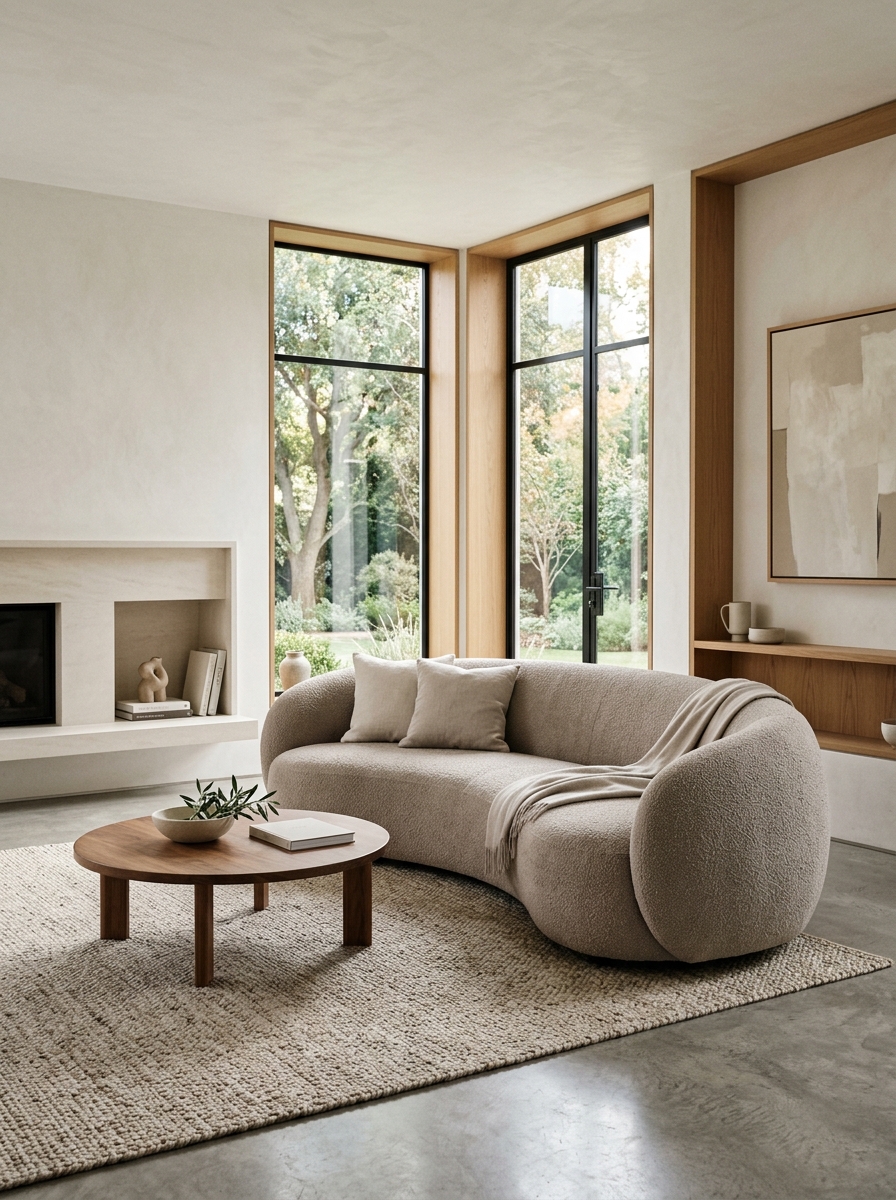
In a minimalist luxury living room, the sofa should do more than fill space. It should act as the visual anchor of the room. A sculptural sofa with soft curves, generous proportions, or a beautifully tailored silhouette can give the space a more elevated feel even before you add any styling.
Instead of using several smaller seating pieces, it often works better to choose one statement sofa that feels substantial and comfortable. Low-profile sectionals, rounded sofas, and clean-lined deep-seat designs all work well in this style. The goal is not to make the sofa flashy, but to choose a shape that feels refined and intentional.
Fabric matters just as much as form. Upholstery in linen-blend, velvet, boucle, or high-quality woven fabric can make a simple design feel much more luxurious. Keep the color soft and versatile so the shape remains the focus. Once the sofa is strong enough visually, you can reduce the need for extra decorative furniture and let the room breathe.
Use a low-profile furniture layout
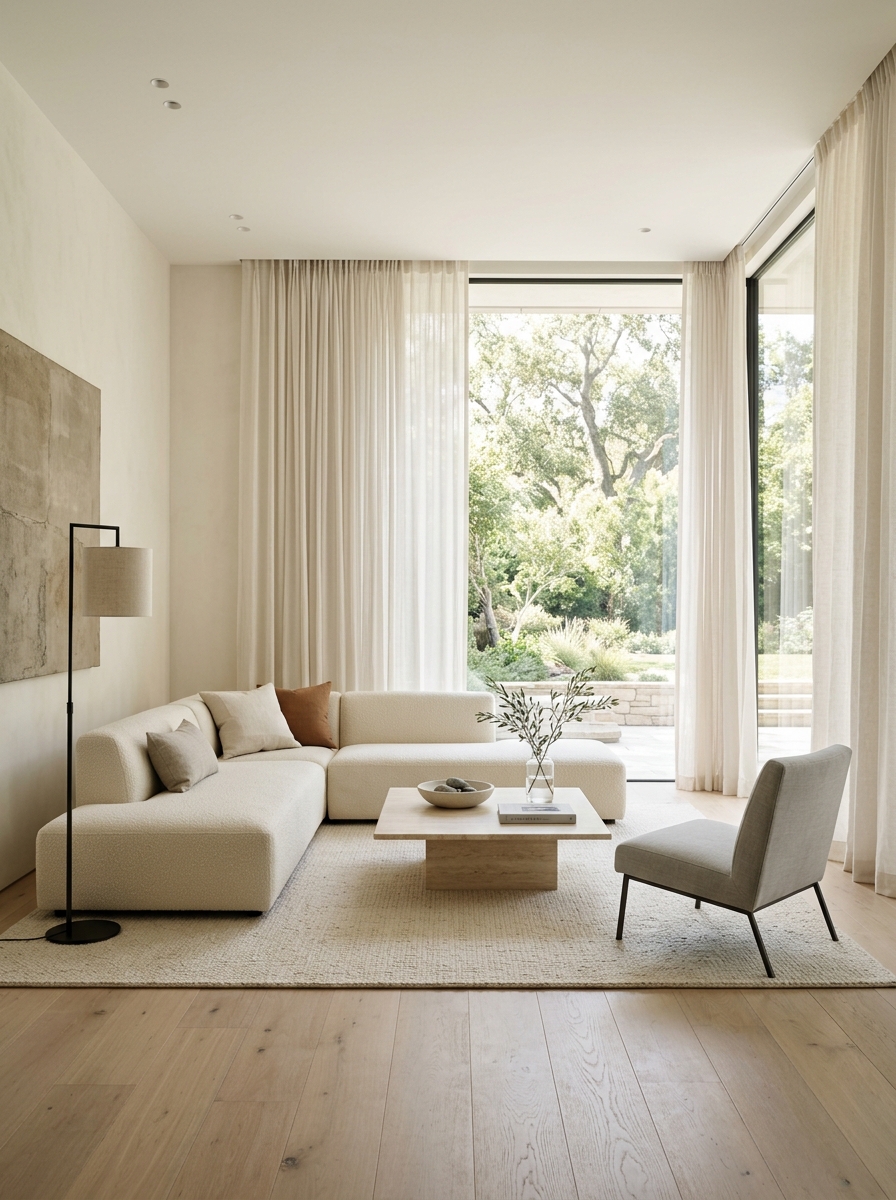
A low-profile furniture layout instantly makes a room feel more modern and refined. Sofas, chairs, and tables that sit lower to the ground create a sense of visual openness and allow architectural features, windows, and artwork to stand out. This approach also helps the room feel calmer because the furniture does not dominate the space.
Low-profile furniture works especially well in minimalist luxury interiors because it supports the idea of restraint. The room feels intentional and curated instead of overly filled. A low sofa, slim lounge chair, and understated coffee table can define the seating area without blocking light or making the layout feel heavy.
This is also a useful trick in smaller homes. Even if the square footage is limited, low furniture can make the living room feel wider and more breathable. To keep the room from feeling too flat, vary the height in other ways through a floor lamp, tall branches in a vase, or long drapery panels that draw the eye upward. These small living room layout ideas use the same principle in more compact spaces.
Add a statement stone coffee table
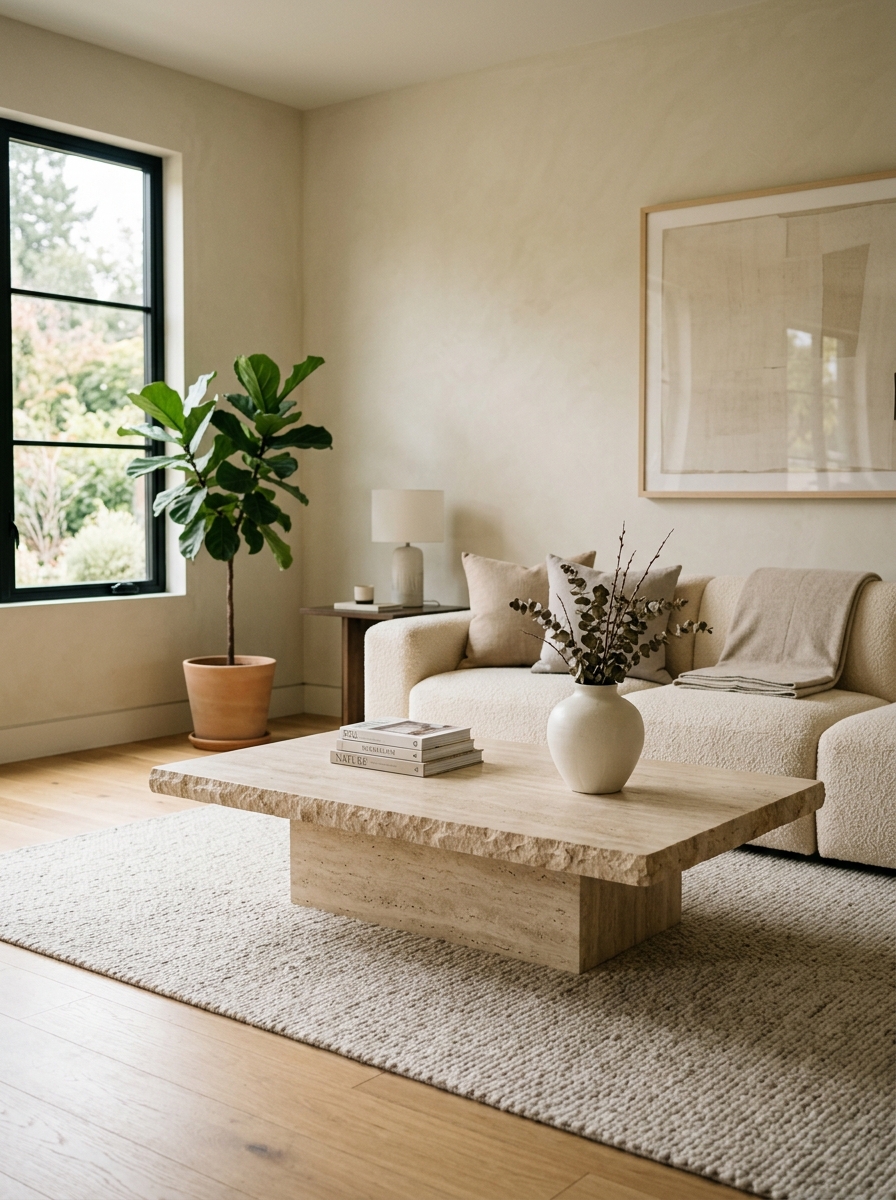
A stone coffee table is one of the best ways to introduce quiet luxury into a minimalist living room. Materials like travertine, marble, limestone, or honed quartz immediately add weight and sophistication, even when the shape of the table stays very simple. Because minimalist rooms have fewer competing objects, a beautiful coffee table can become a major design feature.
The most successful stone tables in this style are usually clean-lined and sculptural rather than ornate. A blocky travertine design, a round pedestal table, or a long low slab-style table can all look elegant depending on the room. The stone brings texture and subtle pattern, which helps break up soft neutral upholstery.
If a full stone table feels too heavy for the space, consider a mixed-material version with a stone top and wood base. That combination can soften the look while still giving the room a more expensive feel. Keep the styling minimal so the table remains visible and does not disappear under too many objects.
Layer boucle, linen, and velvet for texture
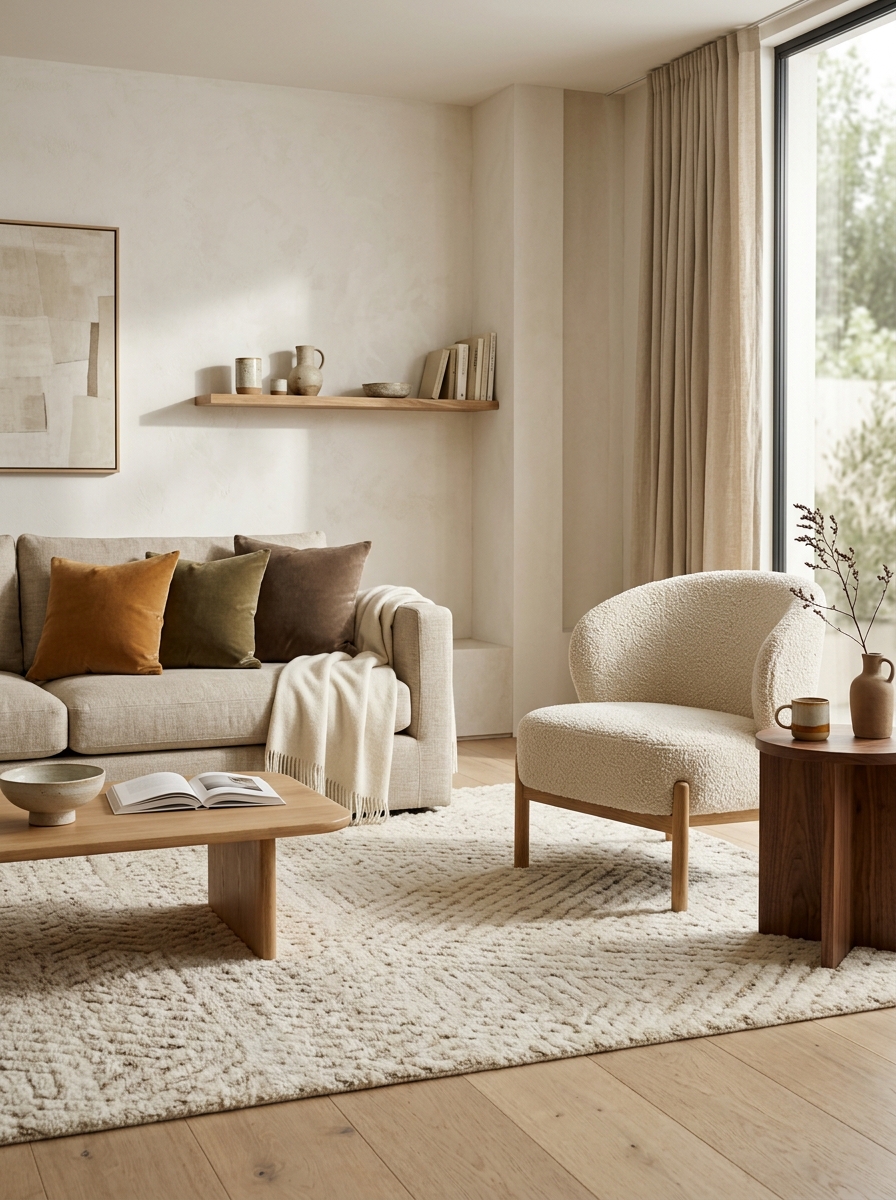
Minimalist interiors need texture to feel luxurious. Without it, the room can quickly become flat or sterile. One of the easiest ways to make a neutral living room feel more sophisticated is to layer a few high-quality textiles with distinct surfaces. Boucle adds softness and dimension, linen keeps the space relaxed and organic, and velvet introduces a smoother, richer contrast.
These textures do not need to appear everywhere. A boucle chair, linen drapery, and two velvet accent pillows can be enough to create the layered look. What matters is the balance between matte and soft finishes. When everything is too smooth, the room can feel cold. When everything is too textured, the space loses its minimalist clarity.
Sticking to a close tonal range helps the mix feel elegant rather than busy. Cream, ivory, taupe, and soft brown all work beautifully together. The result is a living room that feels subtle from across the room but rich and inviting once you notice the details.
Bring in dark wood for contrast
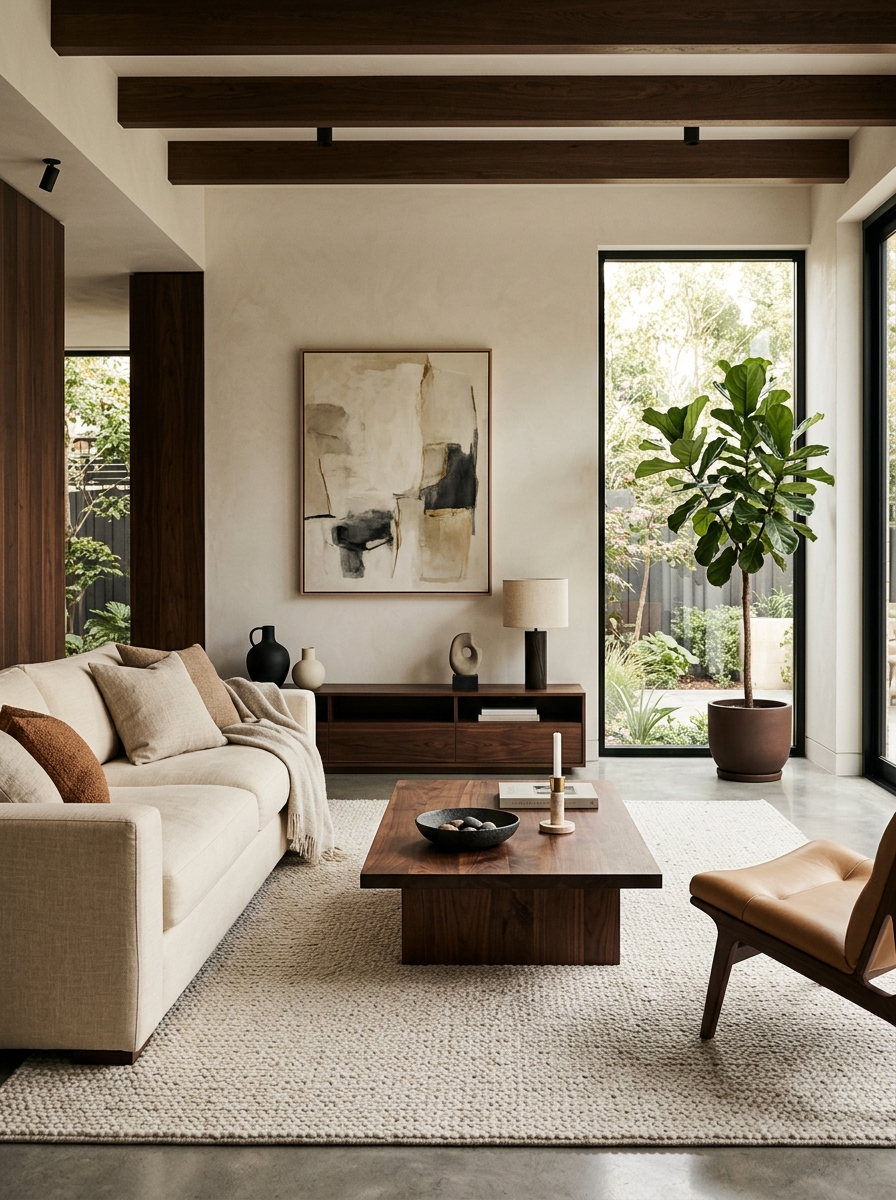
Dark wood is an excellent way to keep a minimalist luxury living room from feeling washed out. While many neutral rooms rely heavily on pale finishes, introducing walnut, espresso oak, or smoked wood can create contrast and depth. It adds richness without requiring bright color or strong pattern.
This contrast works especially well in coffee tables, media units, side tables, shelving, and architectural details like wall paneling or ceiling beams. Even a single dark wood piece can anchor the space and help lighter furniture feel more intentional. It also adds warmth, which is important in minimalist rooms where too many pale tones can feel overly delicate.
The key is to use dark wood in a controlled way. It should feel deliberate rather than scattered. Pairing dark wood with cream upholstery, soft stone, and matte black or bronze details creates a very balanced high-end look.
Use oversized minimalist artwork
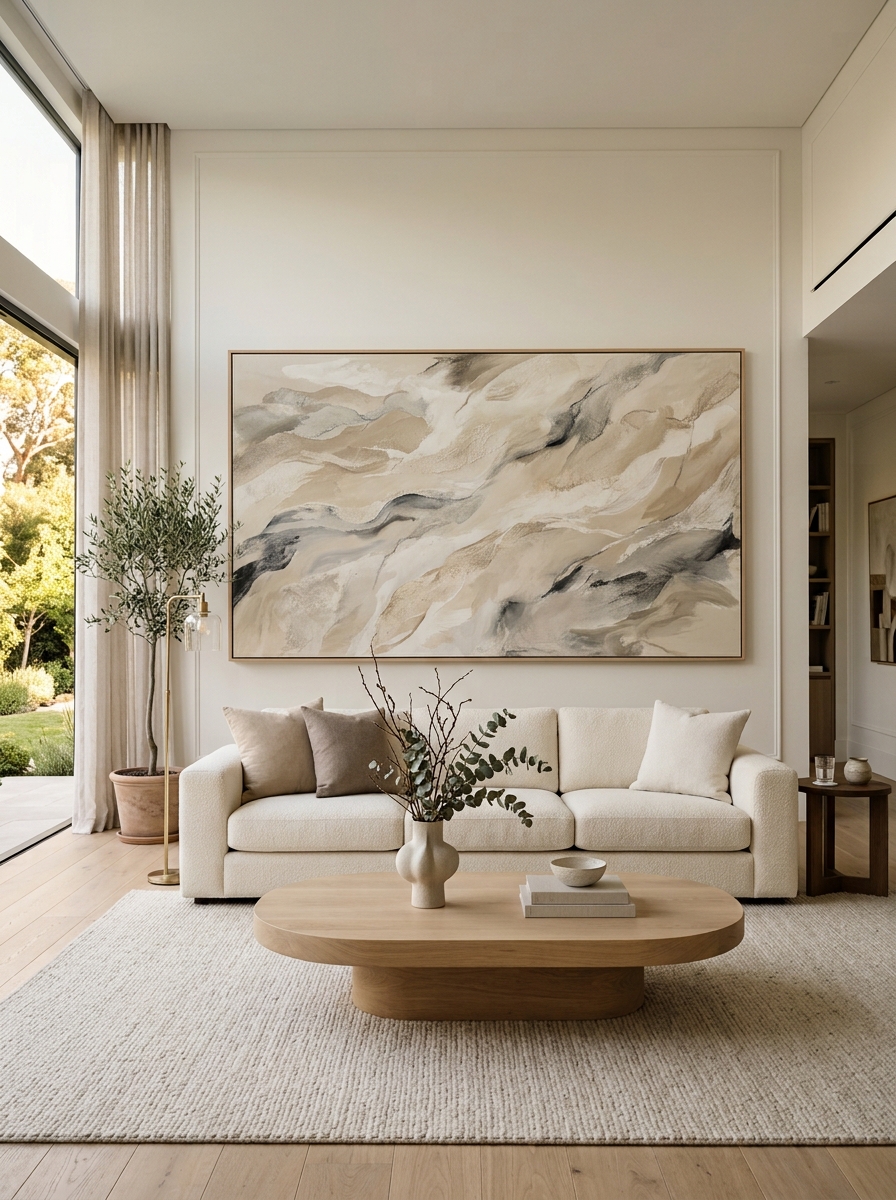
Artwork plays an important role in minimalist luxury interiors because it helps fill visual space without adding clutter. Instead of using multiple small frames or busy gallery walls, choose one oversized artwork or a pair of large pieces with a calm, understated look. Abstract forms, tonal landscapes, and softly textured neutral art work especially well.
Large-scale art gives the room a more curated feeling and makes the space look thoughtfully designed. It can sit above the sofa, fireplace, or console and become a focal point without competing with the furniture. This approach also helps minimalist rooms feel finished. Sometimes a clean room looks incomplete simply because the wall space has not been addressed well.
To maintain the luxurious feel, choose artwork with presence but not excessive brightness. Subtle black, beige, terracotta, warm white, or muted olive can all work beautifully. Thin frames in wood, black, or champagne bronze keep the presentation polished. For more ways to finish blank walls, these living room wall decor ideas are a helpful companion.
Layer soft lighting instead of relying on one source
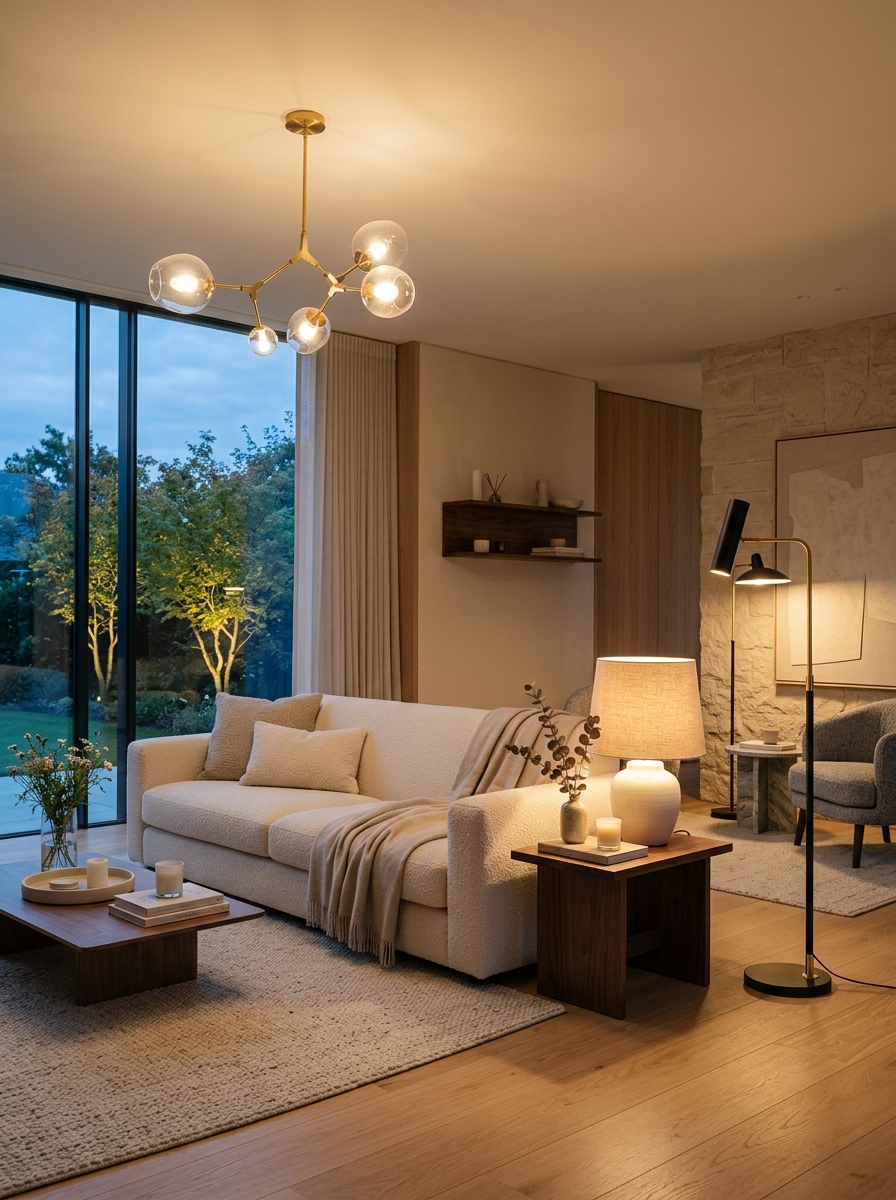
Luxury is often felt through atmosphere, and lighting shapes that atmosphere more than most people realize. A minimalist luxury living room should never depend only on one harsh overhead light. Instead, use layered lighting to make the room feel softer, more dimensional, and more comfortable in the evening.
A combination of a statement ceiling fixture, a sculptural floor lamp, a table lamp, and even subtle wall lighting can transform the space. These layers allow you to create different moods throughout the day. The room feels more intimate, more considered, and more expensive because the light is controlled rather than flat.
Lighting choices should also support the style of the room. Simple linen shades, rounded plaster fixtures, bronze or black metal details, and sculptural contemporary forms all work well. Keep the glow warm, not cold, so the room feels inviting rather than clinical.
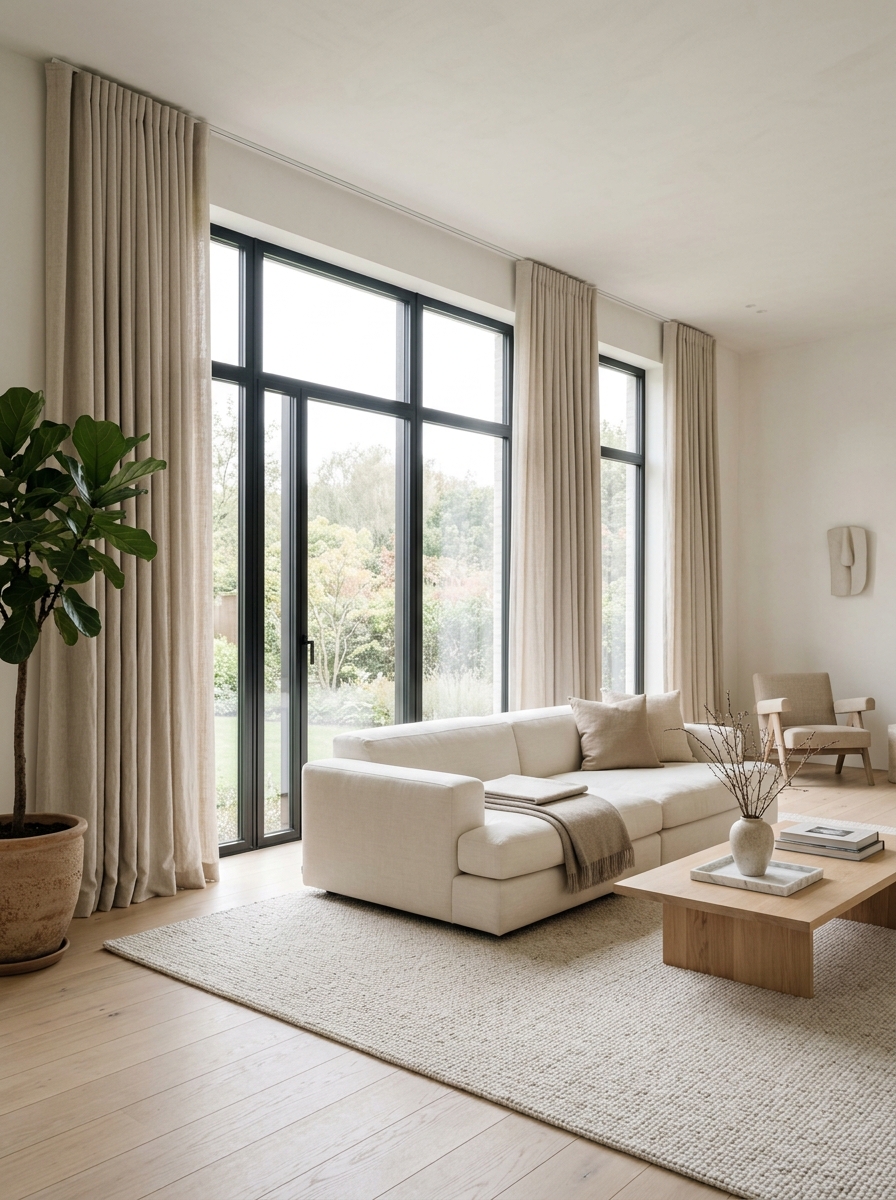
Keep window treatments long and simple
Window treatments can either elevate a room or make it feel cluttered. In a minimalist luxury living room, long, full-height drapery panels are often the best choice. They add softness and elegance while keeping the lines of the room clean. When hung high and wide, curtains can also make the room look taller and more generous.
Choose fabrics like linen, linen-blend, or softly textured neutral drapery that filter light beautifully. Heavy patterns or excessive trim usually work against the minimalist look, so it is better to focus on fabric quality and proportion instead. Roman shades in a simple material can also work in more compact rooms.
The goal is to make the windows feel finished without drawing too much attention to them. Soft ivory, warm white, greige, and oat-colored drapery can frame the room and enhance the luxurious feel without introducing visual noise.
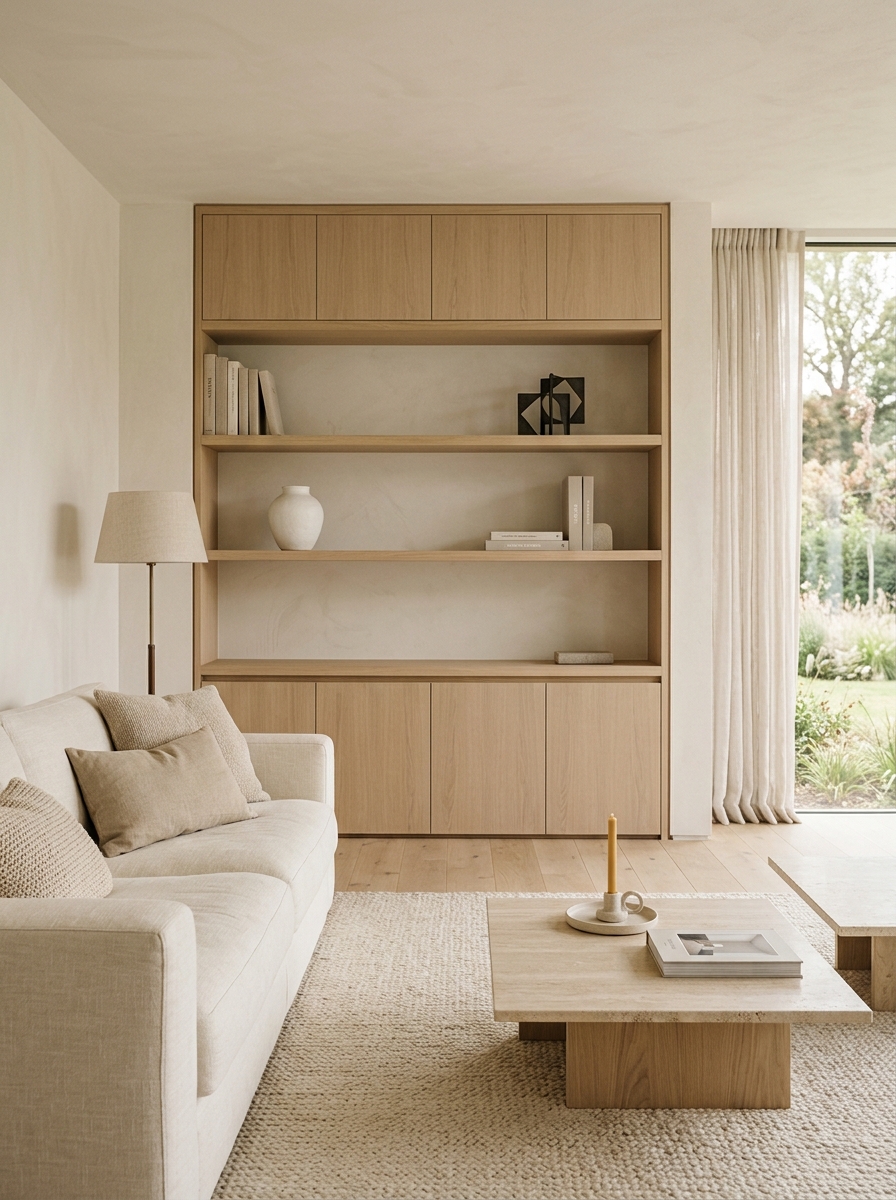
Add built-in storage that blends in
One of the reasons luxury spaces feel calm is that visual clutter is reduced. Built-in storage helps achieve this by giving books, media equipment, and decorative objects a home without overcrowding the room. When designed well, built-ins look like part of the architecture instead of an added piece of furniture.
Minimalist luxury built-ins often feature clean cabinet fronts, open shelving with wide spacing, and a restrained mix of closed and open storage. They can flank a fireplace, frame a television wall, or stretch along one side of the room. Painted built-ins in the wall color create a seamless effect, while wood built-ins can add warmth and richness.
The styling should stay sparse. A few books, one ceramic object, a small sculpture, or a branch arrangement are enough. The point is not to fill every shelf, but to let the room feel organized, elevated, and visually quiet.
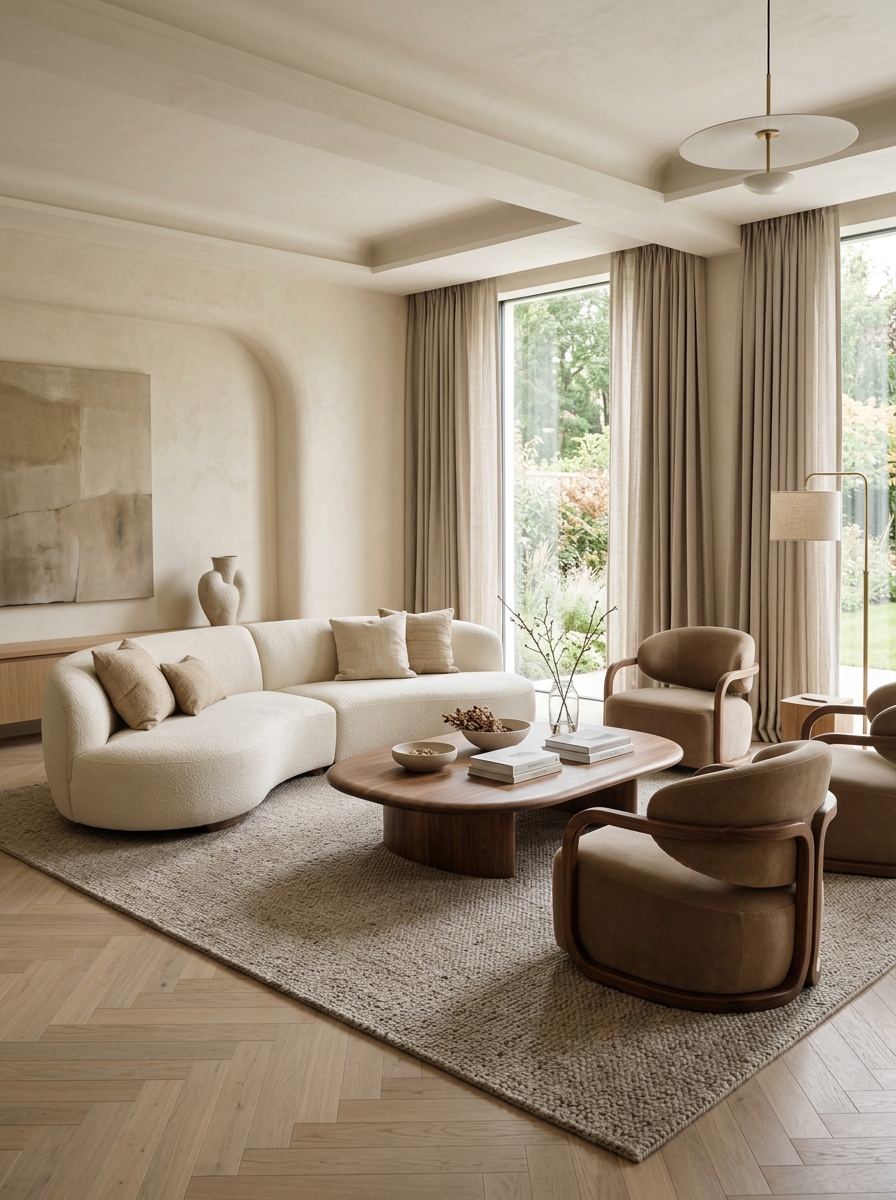
Use curved furniture to soften the space
Minimalist interiors often rely on simple lines, but too many sharp edges can make the room feel rigid. Curved furniture helps soften the space and adds a more relaxed sense of luxury. Rounded sofas, curved chairs, arched mirrors, and circular tables create flow and visual comfort without making the room feel decorative.
Curves work especially well in neutral rooms because they become part of the design language. A rounded coffee table or softly curved sofa can make the room feel more custom and less standard. This effect is subtle, but it has a big impact on how the room feels.
The key is not to make everything curved. One or two rounded pieces are usually enough. Pair them with clean-lined elements so the room still feels structured and modern rather than overly soft.
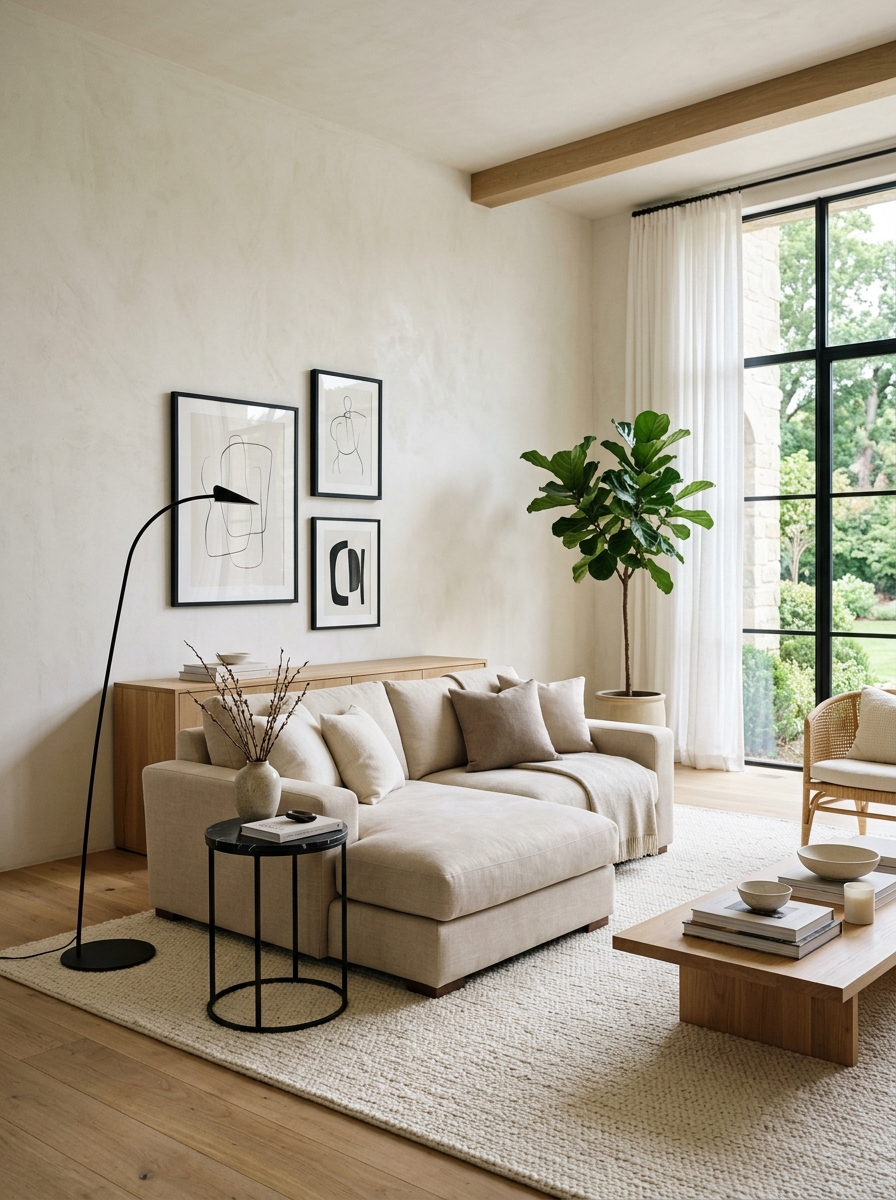
Use black accents sparingly for definition
A minimalist luxury room often benefits from a little contrast, and black accents are one of the most effective ways to create it. The key word is sparingly. A black floor lamp, slim side table, picture frame, or window trim can sharpen the room visually and keep all the neutral tones from blending together too much.
Used in small amounts, black feels modern and confident. It adds definition without overwhelming the room. This is especially useful if your palette is mostly cream, beige, and light wood. A few dark accents will give the eye structure and make the other materials look even more refined.
Keep the finishes matte or softly brushed rather than glossy. The room should still feel understated. When black is used with restraint, it adds clarity and elegance while preserving the calm mood of the space.
Style with fewer but larger decor pieces
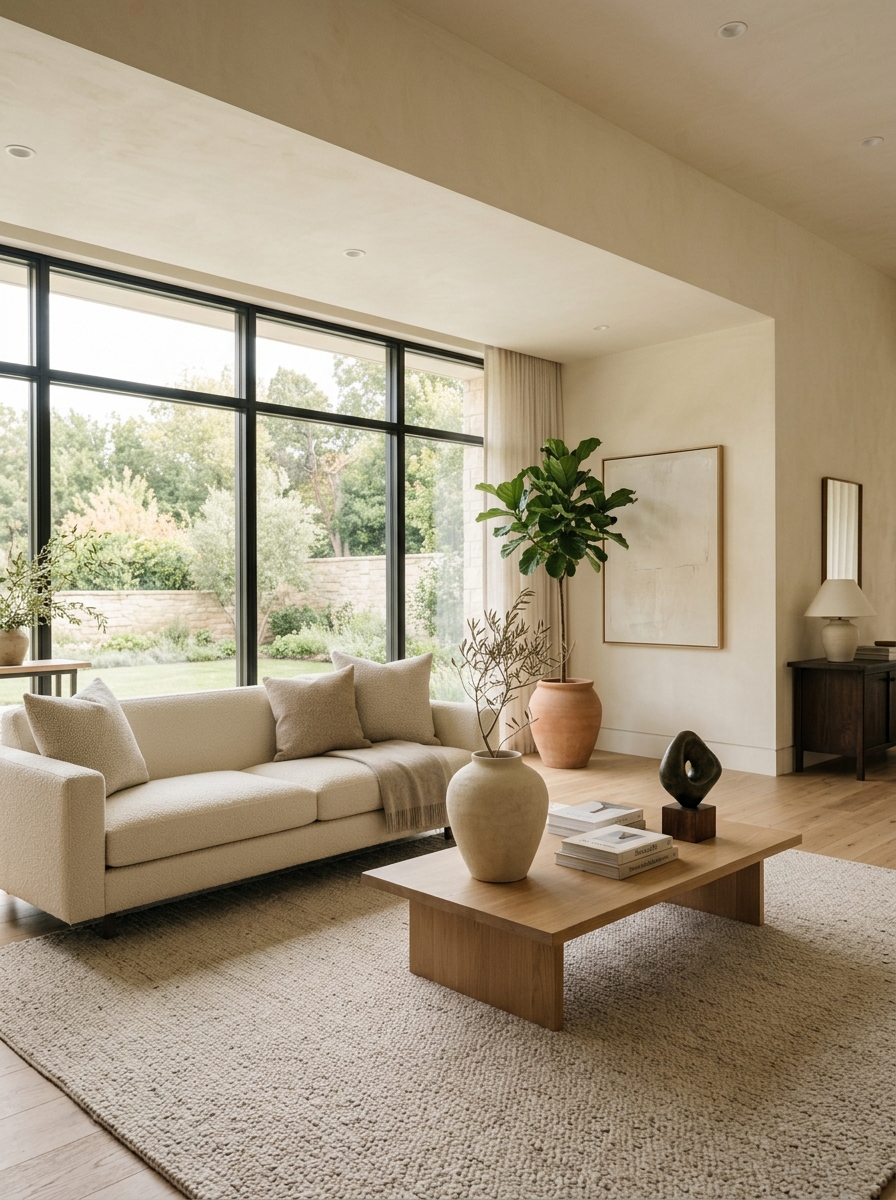
Luxury styling is often about editing. Instead of using many small objects, choose fewer decorative pieces with more visual presence. A single oversized vase, a large stack of art books, one sculptural bowl, or a statement branch arrangement can look more sophisticated than many tiny accessories spread around the room.
This approach supports both minimalism and luxury. The room feels cleaner because there is less clutter, but it still feels styled because each object has enough impact to matter. Larger objects also tend to photograph better and read more clearly across the room.
Try to keep surfaces mostly open. Coffee tables, consoles, and shelves should have breathing room. Each chosen item should feel intentional and aligned with the palette and texture of the room.
Make a small living room feel luxurious
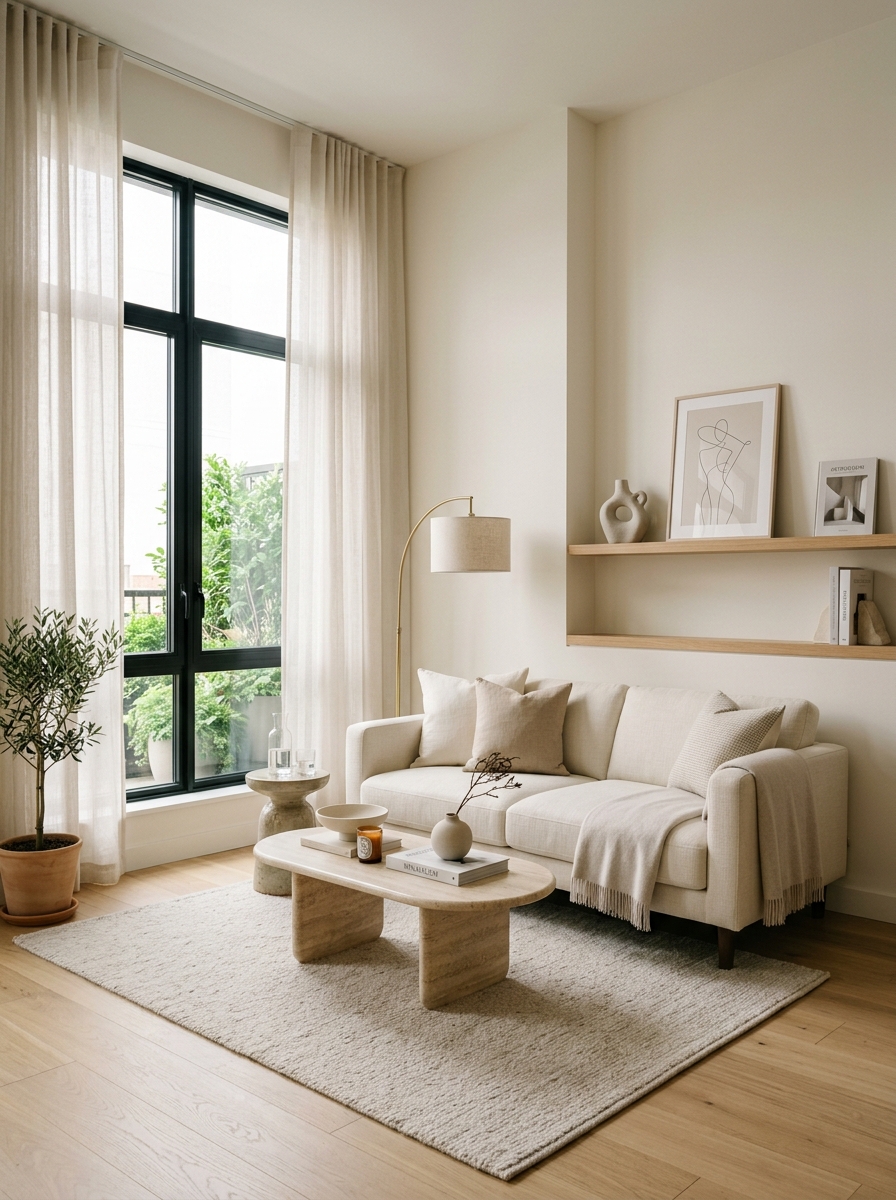
A small living room can still feel luxurious when the design stays thoughtful and restrained. In fact, minimalist luxury is particularly effective in smaller spaces because it prevents the room from feeling crowded. The focus should be on fewer better pieces, smart proportions, and a calm palette.
Choose a sofa that fits the room properly, use a slim or visually open coffee table, and avoid filling every corner with furniture. Mirrors, long curtains, tonal layering, and good lighting can all help a smaller room feel brighter and more spacious. Built-in storage or concealed storage is especially valuable in compact spaces because it reduces visual clutter.
Luxury in a small room comes from polish, not size. Well-made textiles, beautiful lighting, and a few high-impact materials can make even a modest living area feel elegant and elevated. These small living room ideas are useful if you want the same polished feeling in tighter square footage.
Balance minimalism with warmth
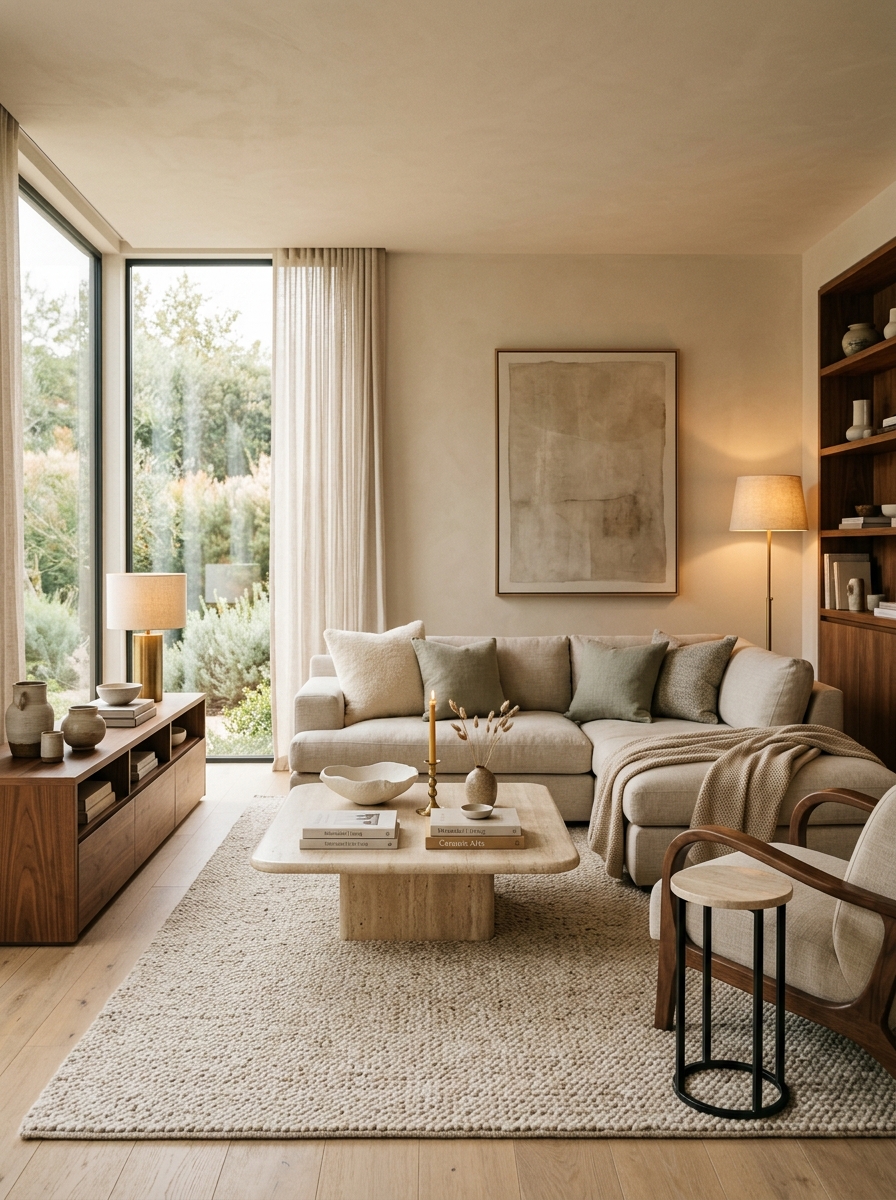
The most successful minimalist luxury living rooms never feel cold. They are clean and restrained, but they still feel livable, soft, and welcoming. That warmth usually comes from the materials and mood rather than extra decoration. Wood, linen, wool, boucle, warm metal finishes, ambient lighting, and soft-toned upholstery all help a minimalist room feel more human.
This balance is what makes the style timeless. A room that is too bare may look stylish in photos but can feel uncomfortable in daily life. A room that is too decorated loses the clean elegance that makes minimalist luxury appealing in the first place. The sweet spot is a room that feels carefully edited yet comfortable enough to enjoy every day.
If you keep asking whether each item adds beauty, function, or calm, it becomes easier to shape the room with intention. That is where minimalist luxury truly works best. For a softer everyday version of this feeling, these cozy living room ideas use many of the same warm materials with a more relaxed mood.
How to make minimalist luxury work in your own home
If you want to bring this look into your own living room, start by editing before adding. Remove anything that feels unnecessary, overly small, or disconnected from the overall look. Once the room is calmer, it becomes much easier to see what is actually missing. Often the answer is not more decor, but better texture, better lighting, or one stronger furniture piece.
Next, focus on the biggest visual elements first. The sofa, rug, coffee table, wall color, and window treatments shape the entire mood of the room. If those elements feel cohesive, the rest becomes much easier. Choose materials that feel rich but not overly ornate. Linen, wool, boucle, stone, and warm wood are especially useful because they add depth without making the room visually noisy.
Finally, do not rush to fill every surface. Minimalist luxury depends on space as much as objects. Leaving breathing room around furniture and decor helps the room feel calm, confident, and finished. The goal is not emptiness, but clarity.
Final thoughts
Minimalist luxury living rooms are appealing because they blend simplicity with comfort and elegance. Instead of relying on excess, they use proportion, material, texture, and atmosphere to create a space that feels polished and restful. That makes them not only beautiful to look at, but also enjoyable to live in every day.
Whether you begin with a sculptural sofa, a warm neutral palette, a stone coffee table, or better lighting, even a few thoughtful changes can shift the feel of your space. The best minimalist luxury rooms are not the ones with the most expensive objects. They are the ones where everything feels intentional, balanced, and quietly refined.
If you want a living room that looks elevated without feeling busy, this style offers a timeless direction that can work in both small homes and larger modern spaces. For the same refined feeling in a sleep space, these minimalist luxury bedroom ideas are a natural next step.