Dining Room
Mid-Century Modern Dining Room Ideas
15 mid-century modern dining room ideas with walnut tables, sculptural lighting, teal chairs, brass accents, sideboards, rugs, and timeless vintage-inspired details.
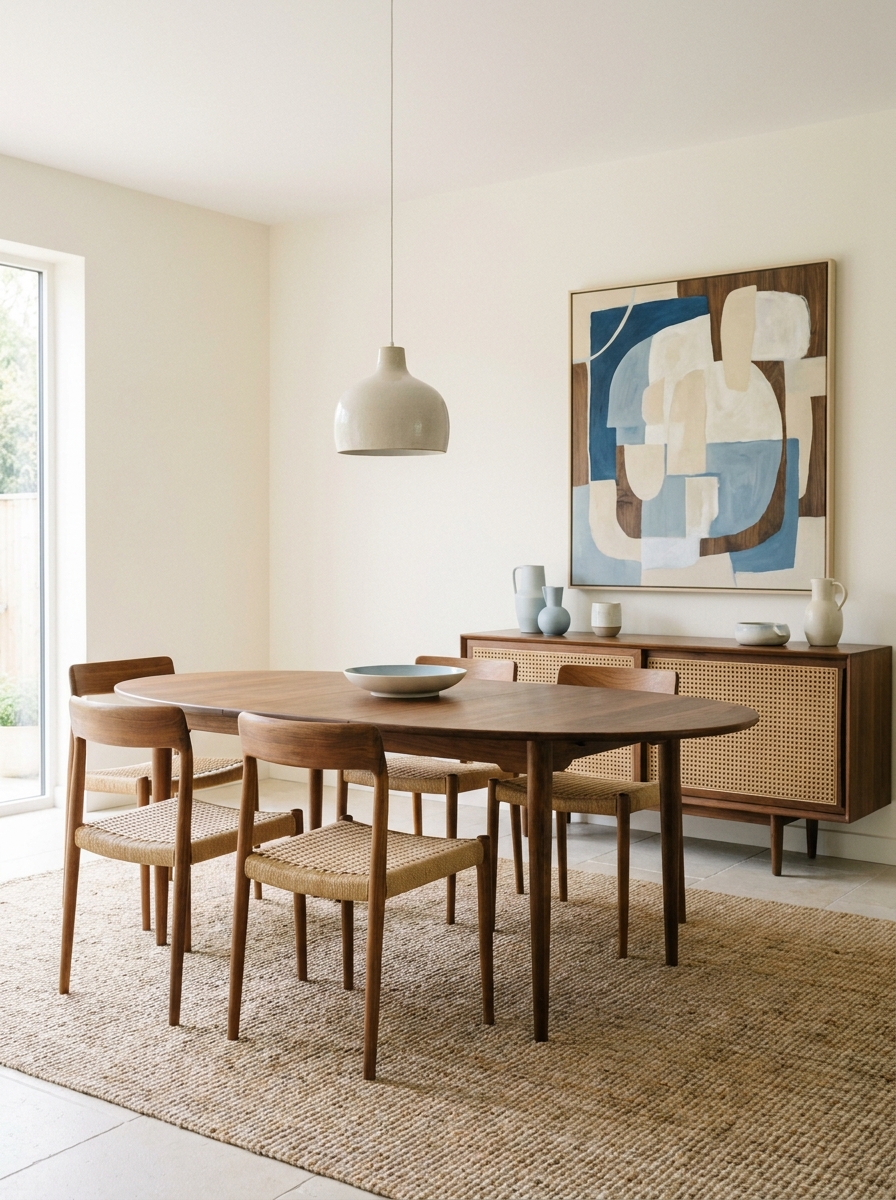
Mid-century modern dining rooms have a way of feeling warm, polished, and effortless at the same time. The look is rooted in clean lines, beautiful wood tones, functional furniture, and a balance between comfort and simplicity. What makes it so appealing is that it never feels overly ornate, but it also never feels cold. A well-styled mid-century dining room can look refined, welcoming, and lived-in all at once.
If you want to bring this style into your own home, the key is not to copy one exact formula. Instead, it helps to focus on the elements that define the look: sculptural lighting, walnut furniture, tapered legs, low-profile storage, soft upholstery, and a color palette that feels rich but controlled. For this article, the visual direction leans slightly different from the last two posts, with more deep teal, muted navy, dusty blue, walnut, soft ivory, pale stone, cognac leather, and brushed brass.
Below, you'll find 15 mid-century modern dining room ideas that can help you create a space that feels timeless, stylish, and full of character. If you love this era throughout the home, these mid-century modern living room ideas and mid-century modern bedroom ideas pair naturally with the same design direction.
Start with a walnut dining table
A walnut dining table is one of the easiest ways to anchor a mid-century modern dining room. The warm wood tone instantly adds depth and gives the room that classic vintage-inspired foundation without feeling heavy. Look for clean lines, gently rounded corners, or slim tapered legs to keep the silhouette true to the style. Even in a bright room, walnut helps the space feel grounded and intentional.
Once you have the table in place, the rest of the room becomes much easier to build around. You can pair it with upholstered chairs, a statement pendant, or a sleek sideboard, and the wood will tie everything together. If you want the room to feel more current, balance the rich wood with pale walls, soft fabrics, and a few cooler accents like dusty blue artwork or deep teal seating. In open homes, this same edited approach also works well with apartment decor ideas because each piece has to feel useful and intentional.
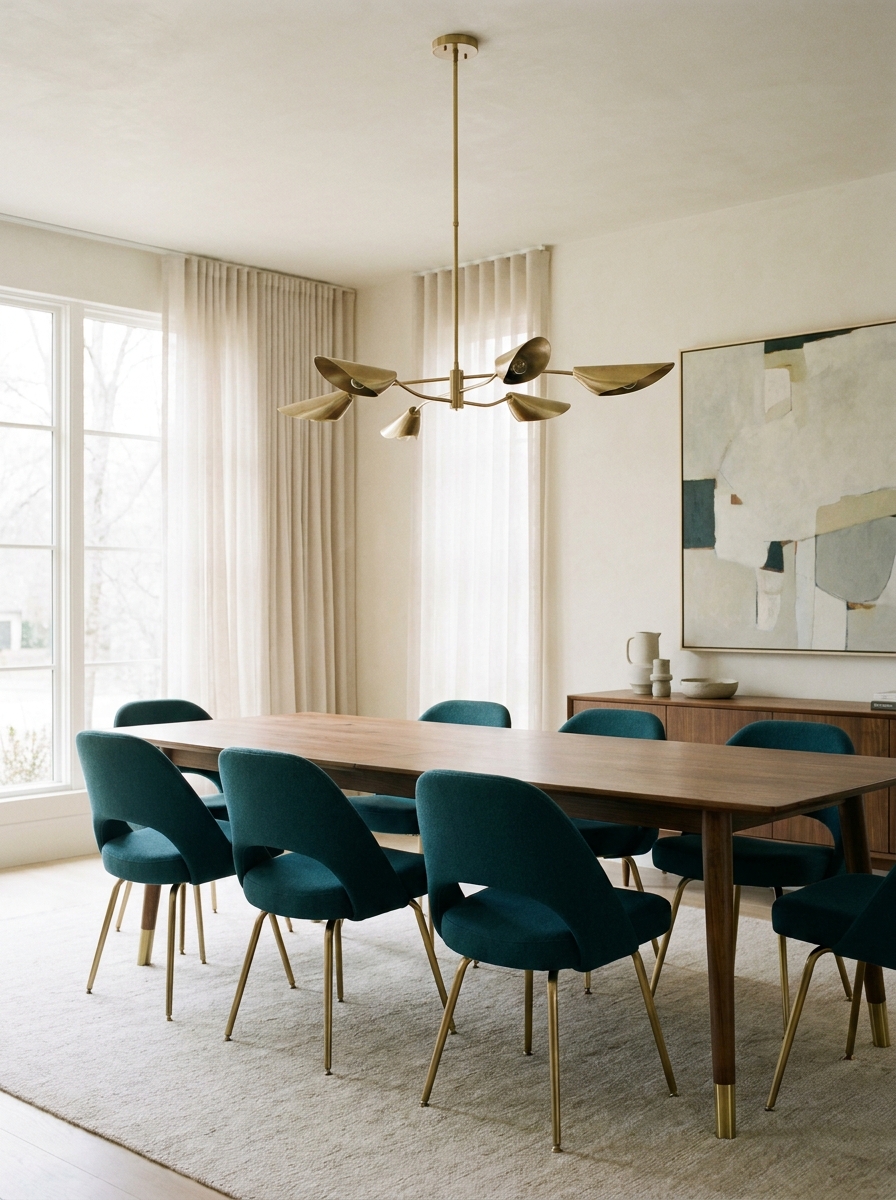
Add deep teal upholstered chairs
If you want a fresher twist on mid-century modern style, deep teal dining chairs are a great way to do it. They bring in color without overpowering the room, and they look especially striking against walnut wood. Upholstered chairs also soften the look of the space, which is useful in dining rooms that might otherwise feel too angular or structured.
To make this work, keep the rest of the palette relatively calm. A walnut table, ivory walls, and a brass pendant light create the perfect setting for deeper tones like teal. The result feels richer and more layered than a neutral-only space, but still clean and classic. This is a good choice if you want your dining room to feel a little moodier while staying sophisticated.
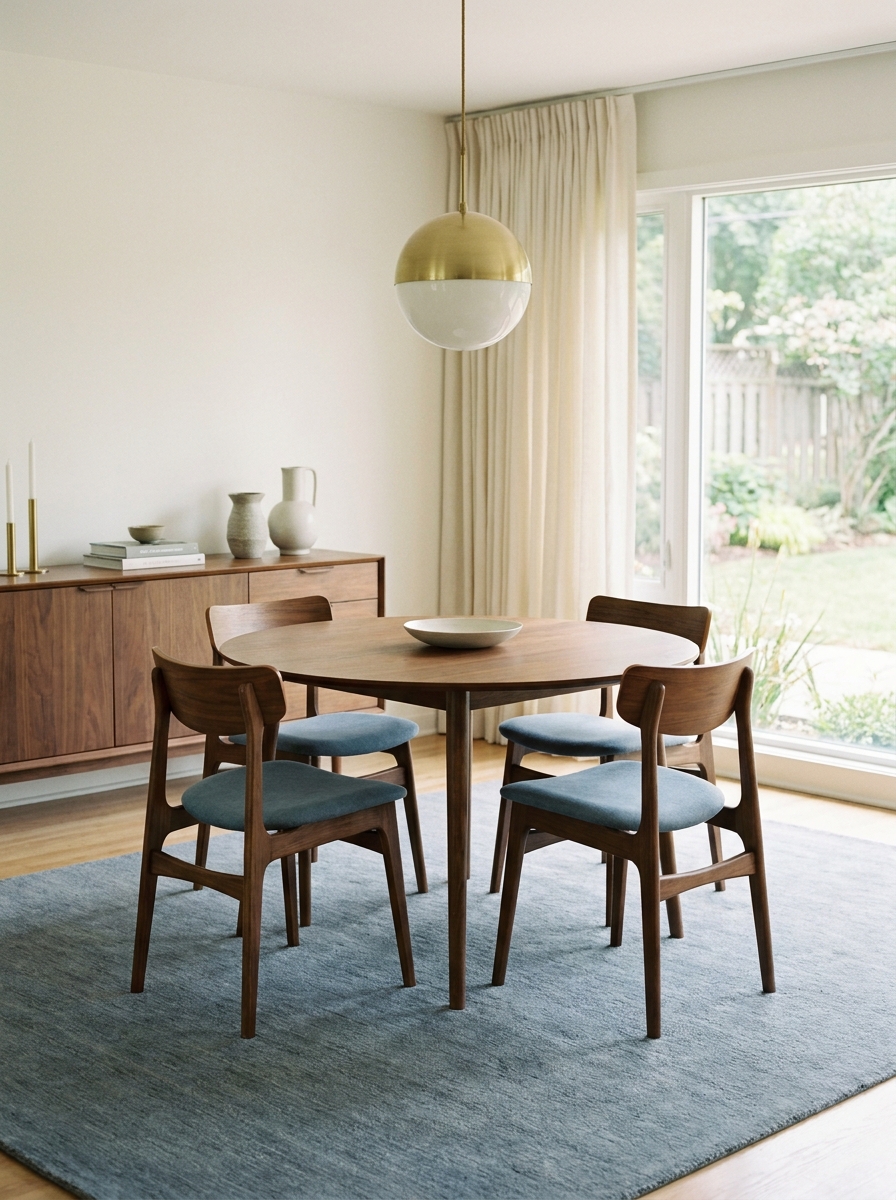
Use a round table for a softer layout
A round dining table works beautifully in mid-century spaces because it softens all the clean lines and makes the room feel more relaxed. It's also a smart choice for smaller dining rooms or open-plan layouts where you want better flow. A round pedestal table or one with simple tapered legs keeps the style on point while creating a more social, intimate setup.
This kind of layout feels especially inviting when paired with curved chairs, warm lighting, and a layered rug underneath. Mid-century rooms can sometimes lean a little rigid if everything is too angular, so a round table introduces balance. It also looks less formal, which can help the room feel more natural and usable day to day.
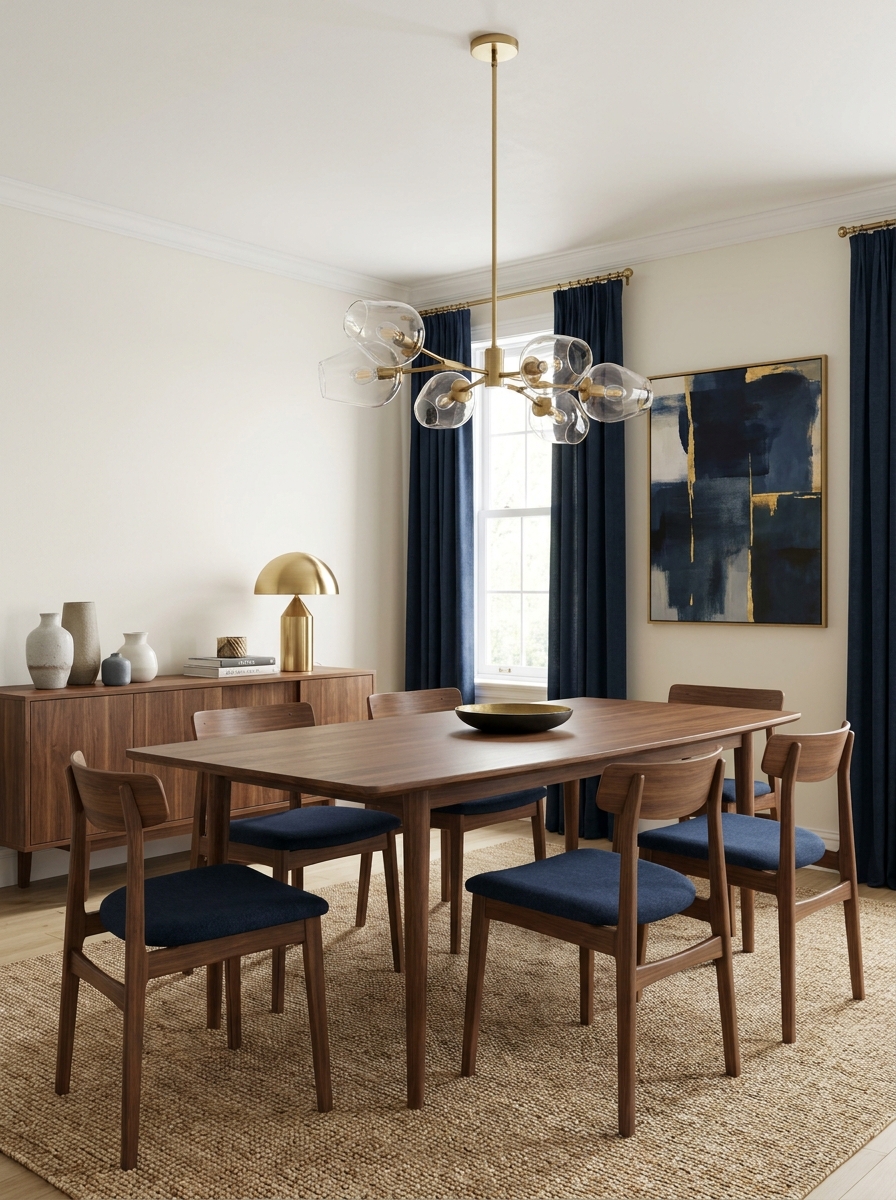
Bring in a sculptural pendant light
Lighting is one of the most defining details in a mid-century modern dining room. A sculptural pendant instantly gives the space character and helps create that iconic design-forward feel. Think globe lights, starburst-inspired forms, or clean geometric fixtures in brass or blackened metal. The right light can act like jewelry for the room without making it feel overly decorated.
A statement pendant works especially well over a simple table because it creates contrast. If your furniture is minimal, the lighting becomes the focal point. This helps the room feel more complete and considered, even if the overall styling stays fairly restrained. It is one of the easiest ways to make a dining room look more high-end.
Style a low mid-century sideboard
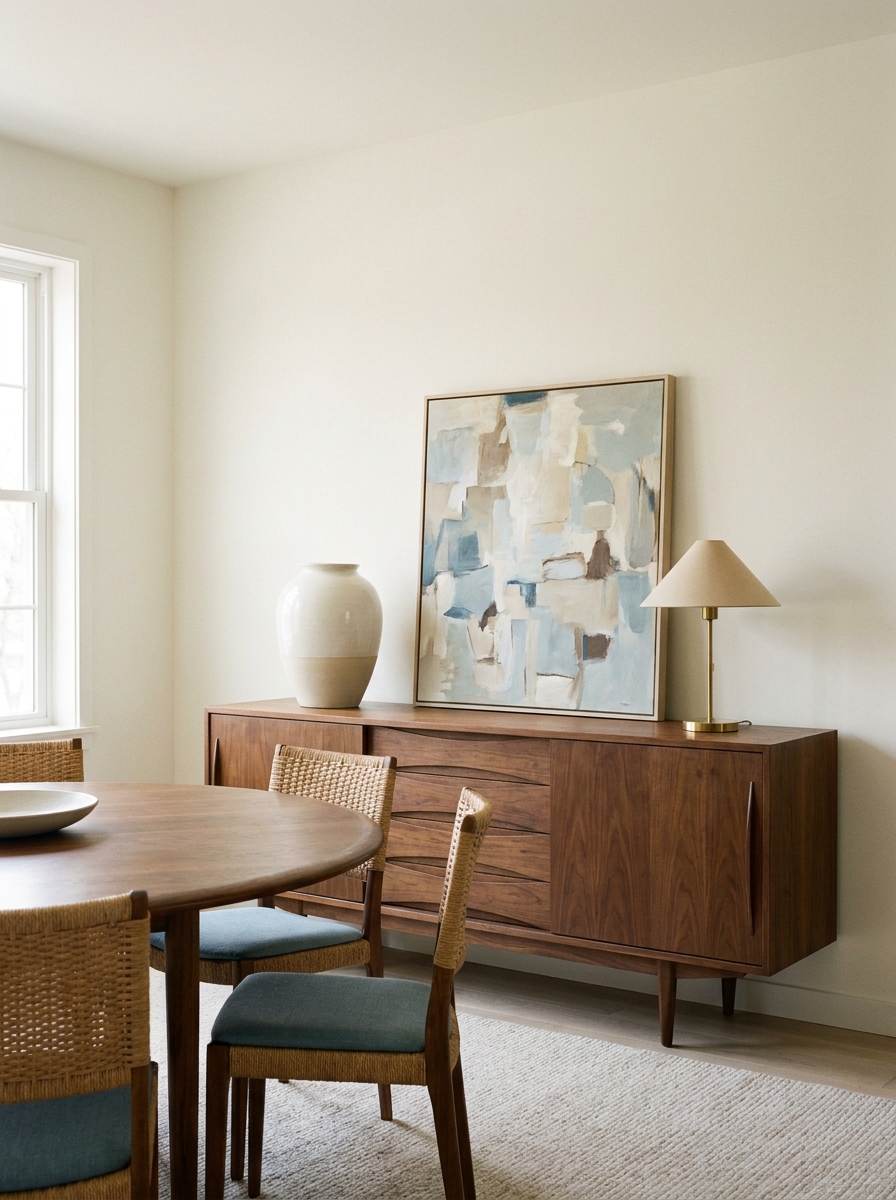
A low sideboard is both practical and visually important in this style. It gives you a place to store dinnerware, linens, or serving pieces while also adding another strong mid-century furniture shape to the room. Look for walnut finishes, sliding doors, cane fronts, or slim legs to get that clean vintage-inspired look.
The top of the sideboard is also an easy place to style the room without clutter. A ceramic vase, a framed abstract print, and a small lamp are often enough. When styled well, a sideboard helps the entire dining room feel more complete. It adds horizontal balance and reinforces the calm, curated look that mid-century spaces do so well. The same simple-surface styling approach works beautifully for kitchen counter decor ideas nearby.
Mix walnut with cognac leather
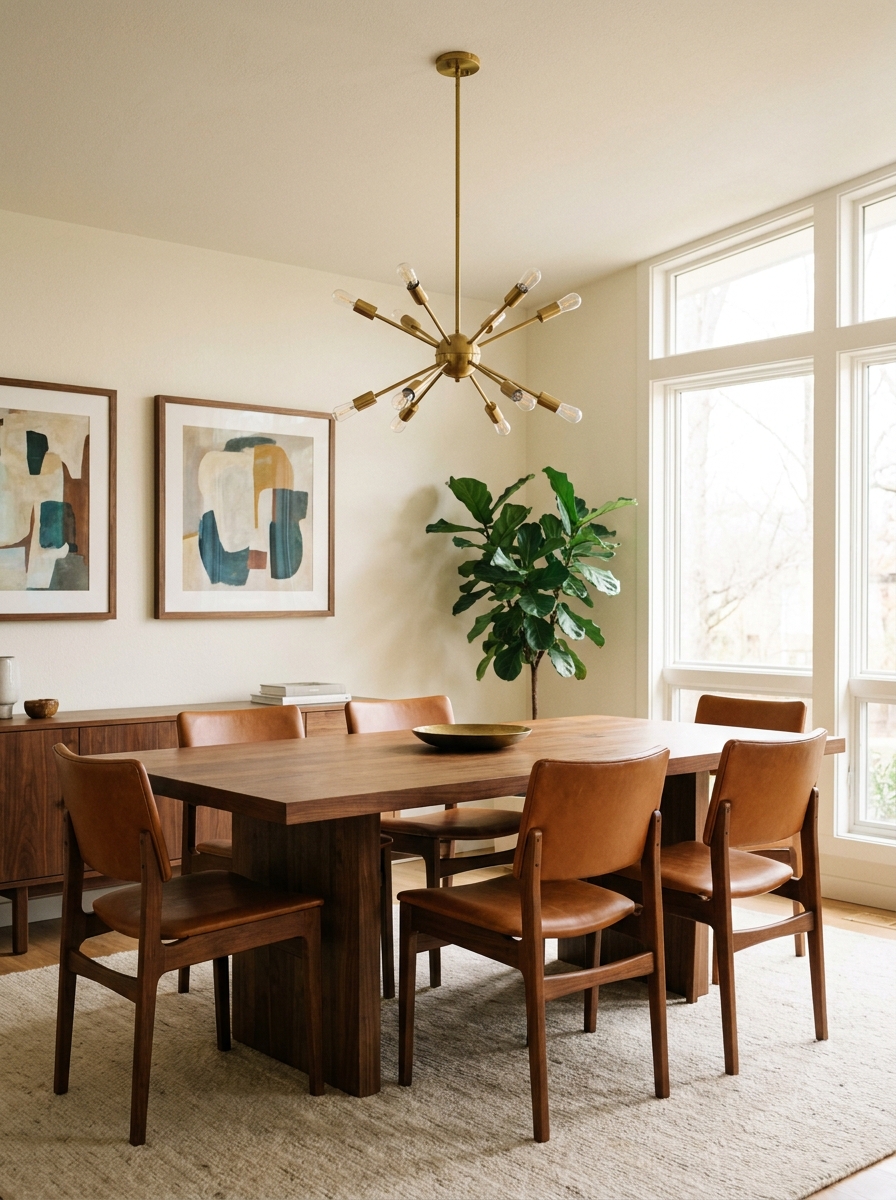
Walnut and cognac leather are one of the most timeless combinations in mid-century interiors. The wood adds depth, while the leather brings warmth and a slightly more relaxed, collected feel. In a dining room, cognac leather chairs can keep the space from feeling too polished or too flat. They add texture and a richer tonal contrast without needing much extra decoration.
This combination works especially well if you want the room to feel warm and grown-up. Add cream walls, a soft rug, and a brass light fixture, and the whole room starts to feel both classic and welcoming. It is a strong choice for anyone who wants a mid-century dining room that feels stylish but not overly formal.
Try a navy accent wall
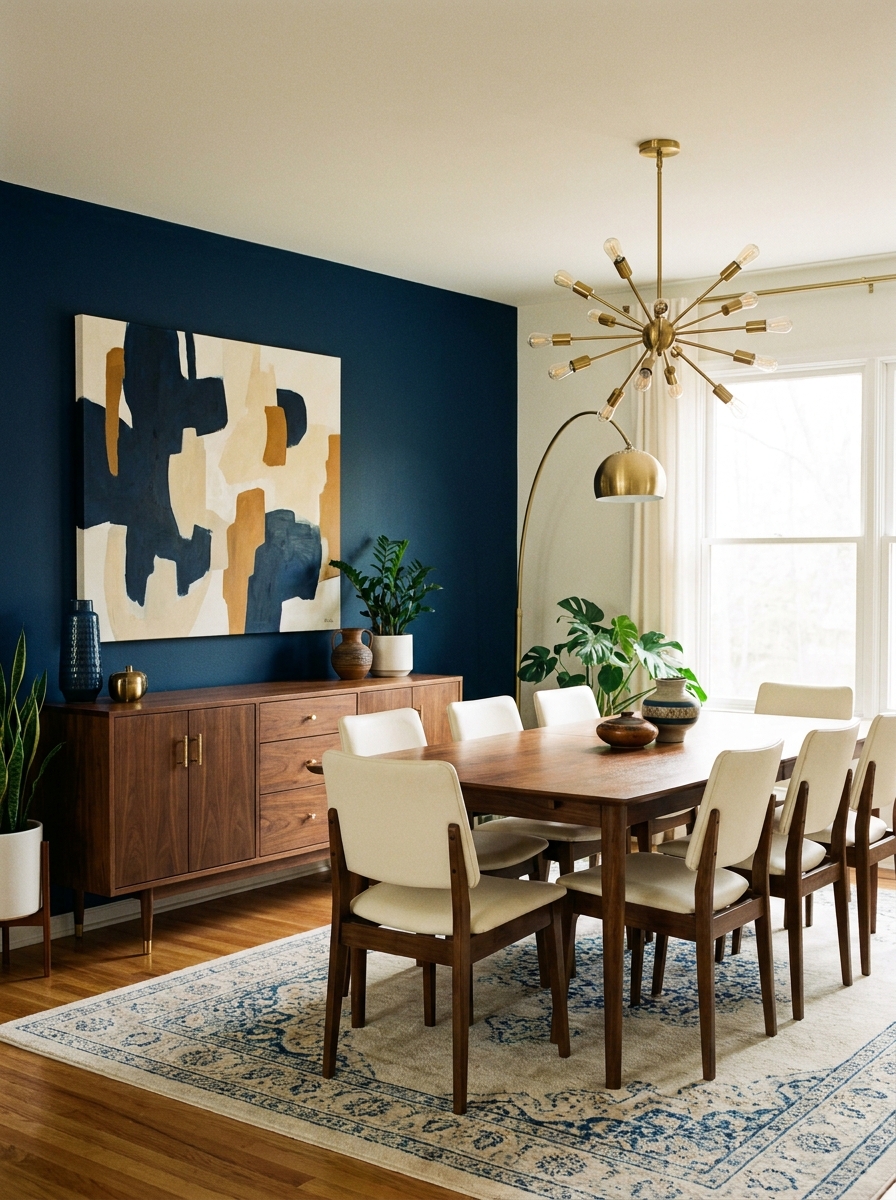
A navy accent wall can make a mid-century dining room feel more architectural and dramatic without losing its clean, timeless feel. Because mid-century furniture usually has warm wood tones, darker wall colors create strong contrast and help the furniture stand out beautifully. Navy works especially well when balanced with ivory seating, walnut finishes, and brass lighting.
The key is to use the darker color deliberately rather than throughout the whole room unless the space has a lot of light. In most homes, one wall is enough to add impact. This is a good option if you want your dining room to feel more elevated and tailored, while still keeping the rest of the room calm and uncluttered.
Use abstract art with retro influence
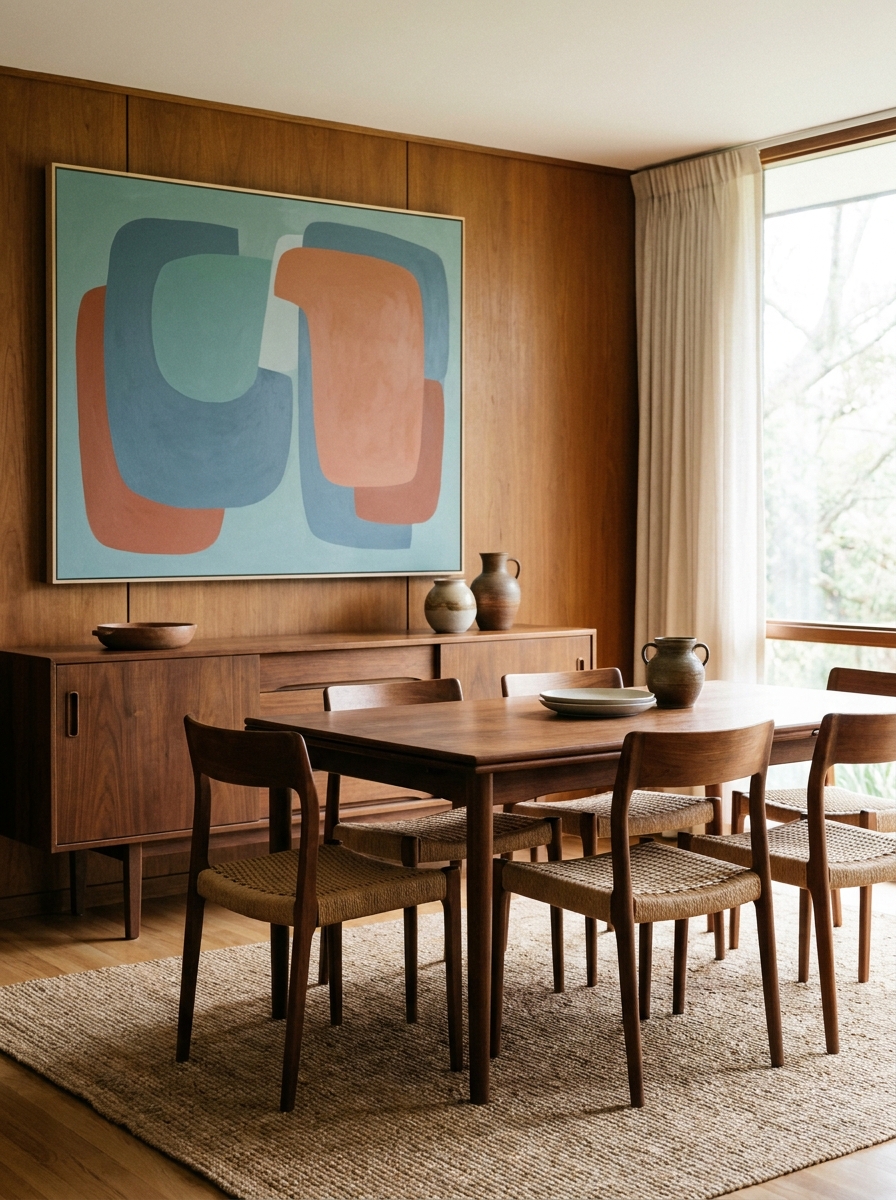
Artwork plays a big role in making a mid-century dining room feel finished. Abstract prints with geometric shapes, earthy curves, or retro-inspired color blocking add personality without making the space feel busy. They also reinforce the time period in a subtle way, especially when you choose tones like rust, teal, navy, ochre accents, or warm neutrals.
A dining room does not need a gallery wall to make an impact. Often, one larger piece above a sideboard or a pair of framed prints is enough. The goal is not to overcrowd the space, but to give it a distinct point of view. The right art can make even a simple room feel layered and memorable. If you are choosing art for connected spaces too, these living room wall decor ideas can help keep the whole home feeling cohesive.
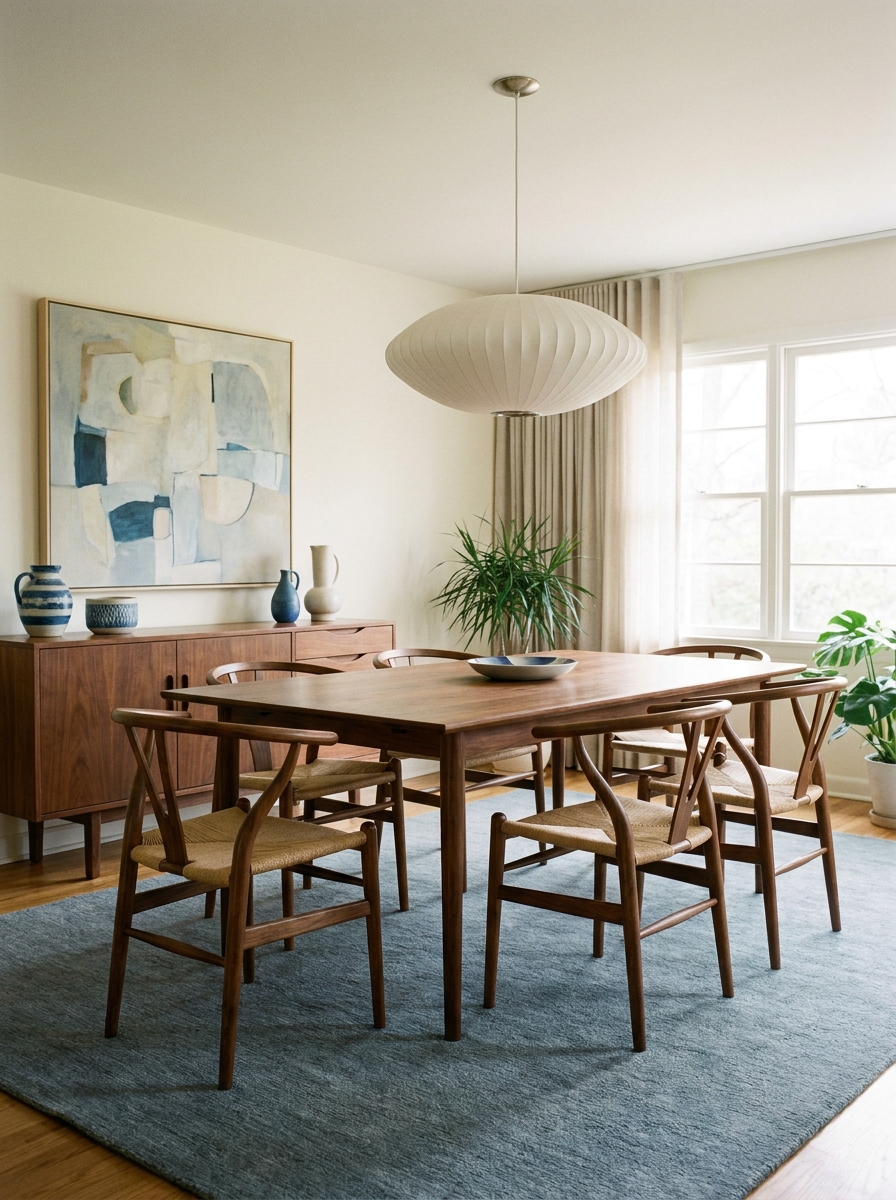
Layer in a blue-gray rug
A rug helps define the dining area and softens the overall look of the room. In a mid-century space, a blue-gray rug is a great choice because it adds quiet color while still feeling elegant and grounded. It also creates a nice contrast with walnut furniture and can make the room feel more layered, especially in open-plan homes.
Choose a design that feels subtle rather than overly traditional. Low-pile rugs with muted patterns, geometric touches, or faded texture work especially well here. The rug should support the furniture, not compete with it. This kind of detail is small, but it makes the room feel far more complete and thoughtfully styled.
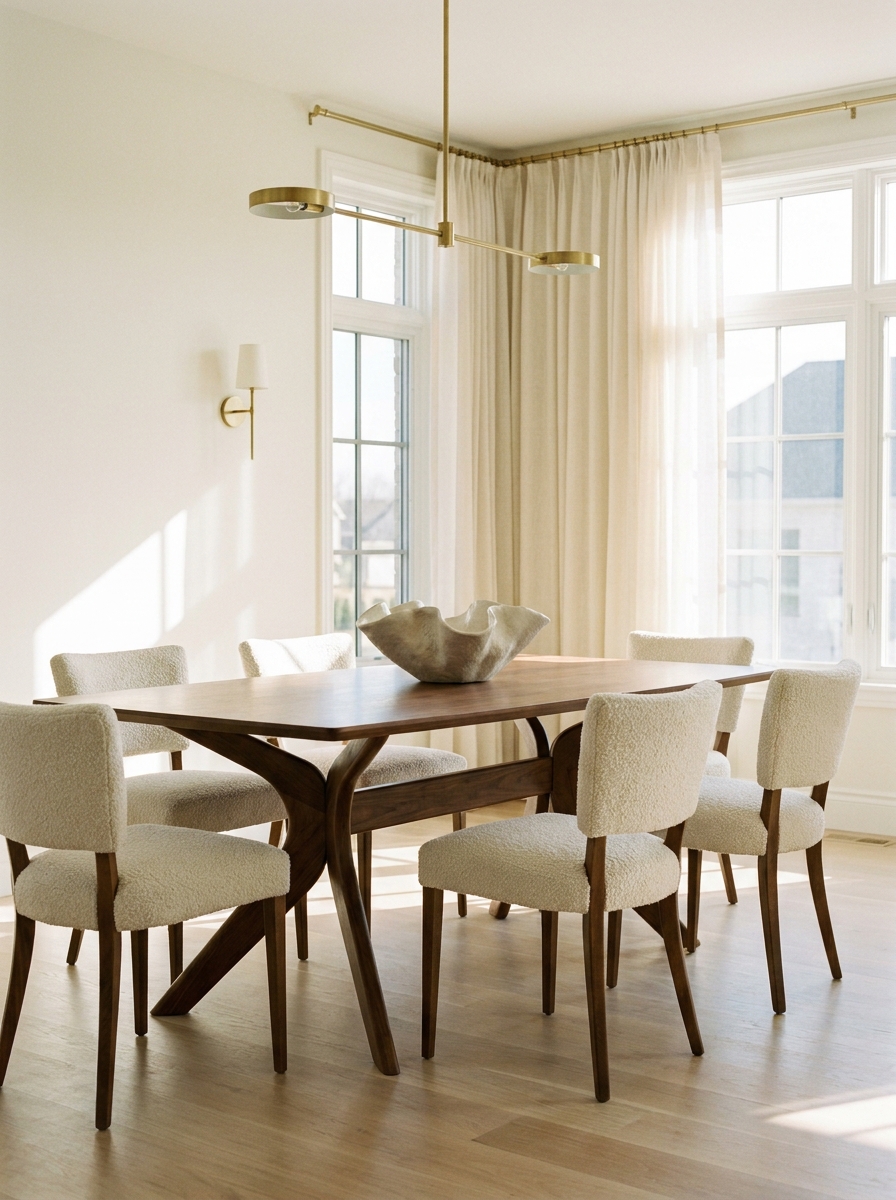
Create a bright ivory and walnut look
Not every mid-century room has to feel moody. A brighter version of the style can be just as beautiful, especially if you like airy interiors. Ivory walls, pale flooring, and streamlined walnut furniture create a clean and timeless backdrop that still feels warm. This approach keeps the room looking fresh while allowing the mid-century details to shine through clearly.
To keep it from feeling flat, add a few layered textures such as boucle chairs, linen curtains, or a softly patterned rug. Small brass accents and a simple ceramic centerpiece help bring the look together. This is ideal if you want mid-century style that feels light, calm, and very easy to live with.
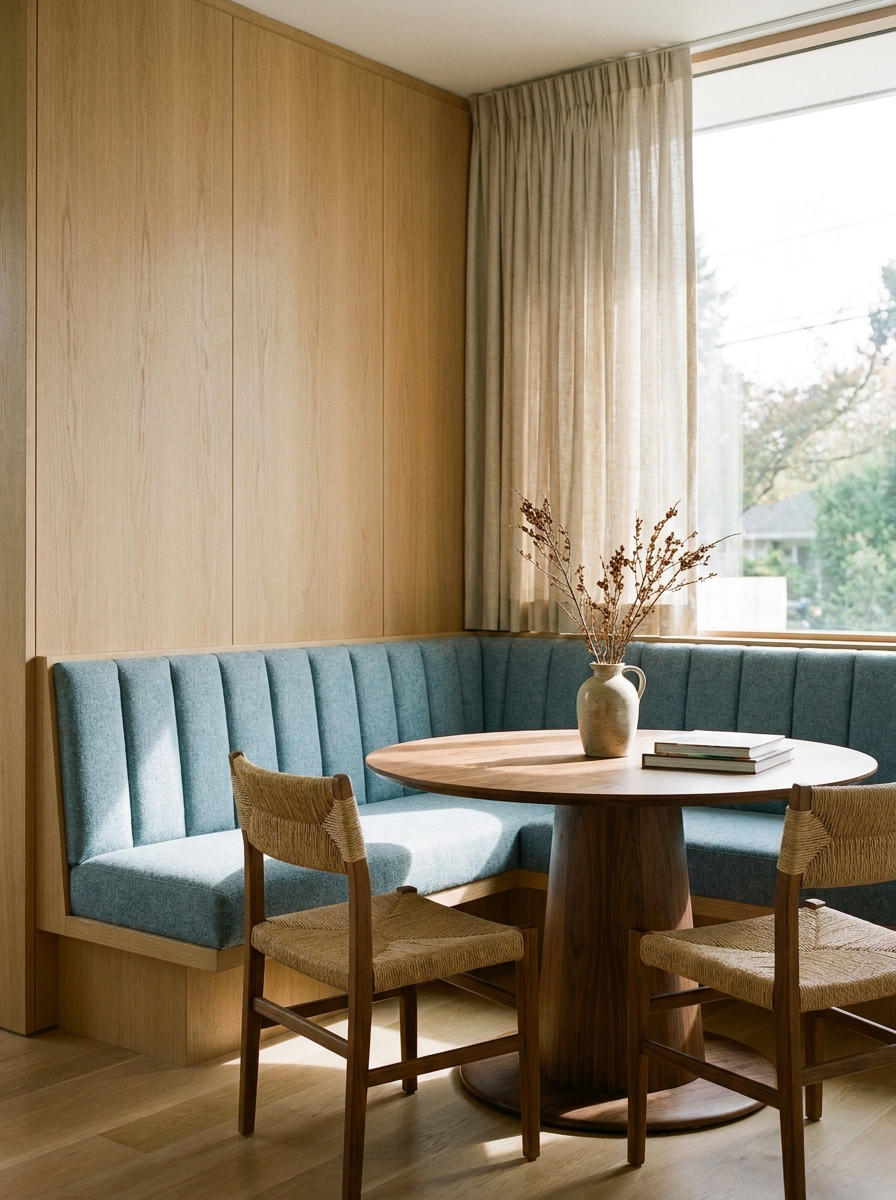
Add a built-in banquette for a modern nook
A dining banquette can give a mid-century dining room a custom feel while making the space more comfortable and efficient. This works especially well in breakfast areas, apartment dining corners, or open-plan homes where you want to make the most of the footprint. A built-in bench with tailored upholstery and a walnut table looks stylish without feeling overly formal.
To keep the look in line with mid-century design, focus on clean shapes and understated materials. A banquette in muted blue or soft stone fabric paired with simple wood furniture feels both current and timeless. It also gives the dining room a more intimate, relaxed personality, which can be perfect for everyday use.
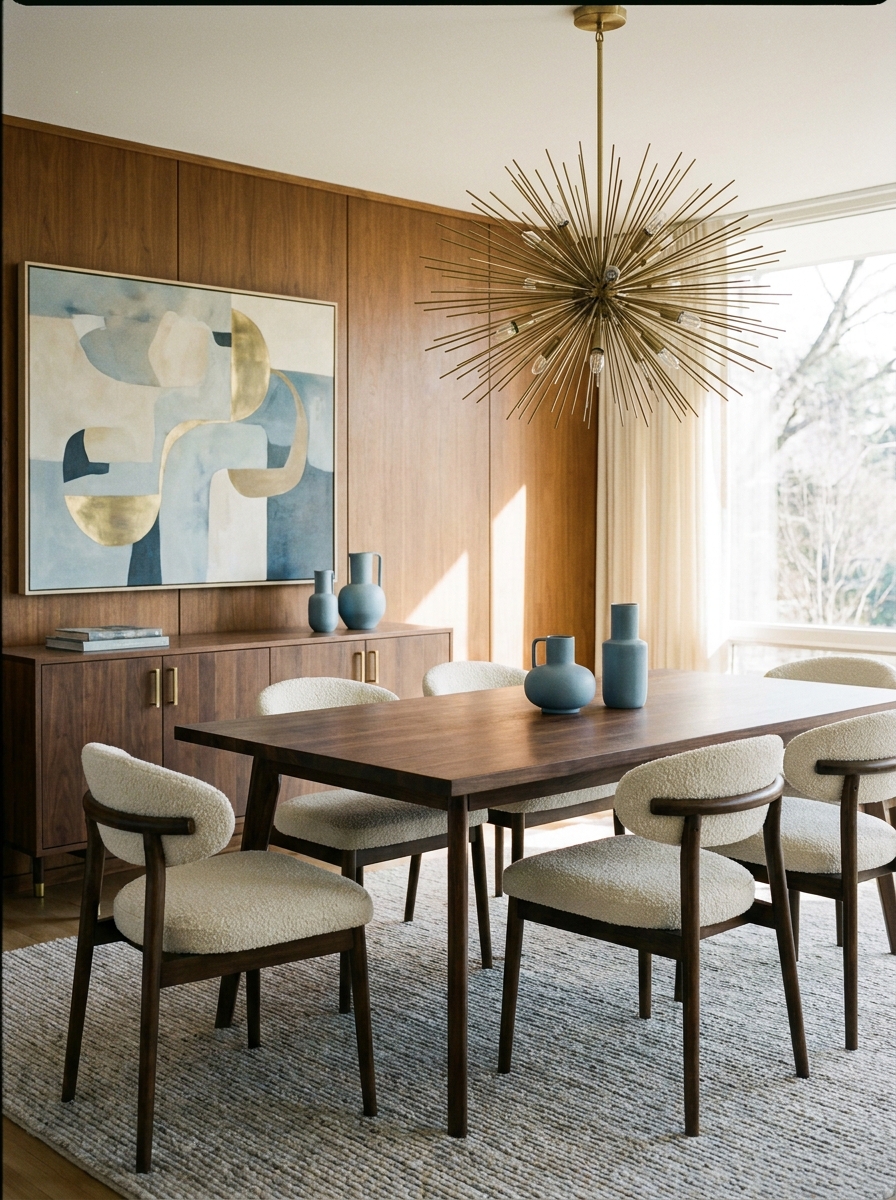
Mix dark wood with cream boucle seating
If you want the room to feel both vintage-inspired and current, pairing dark wood with cream boucle seating is a strong direction. The boucle brings softness and visual texture, while the darker table or sideboard keeps the room grounded. This mix feels elevated but not fussy, and it works especially well in homes that lean warm and minimal.
Because the materials are already doing a lot of the visual work, the styling can stay simple. A sculptural vase, a pendant light, and one piece of art may be all you need. This approach is a reminder that mid-century rooms do not need a lot of decor. Good furniture and a few thoughtful details can carry the whole space.
Use a slatted wood feature for texture
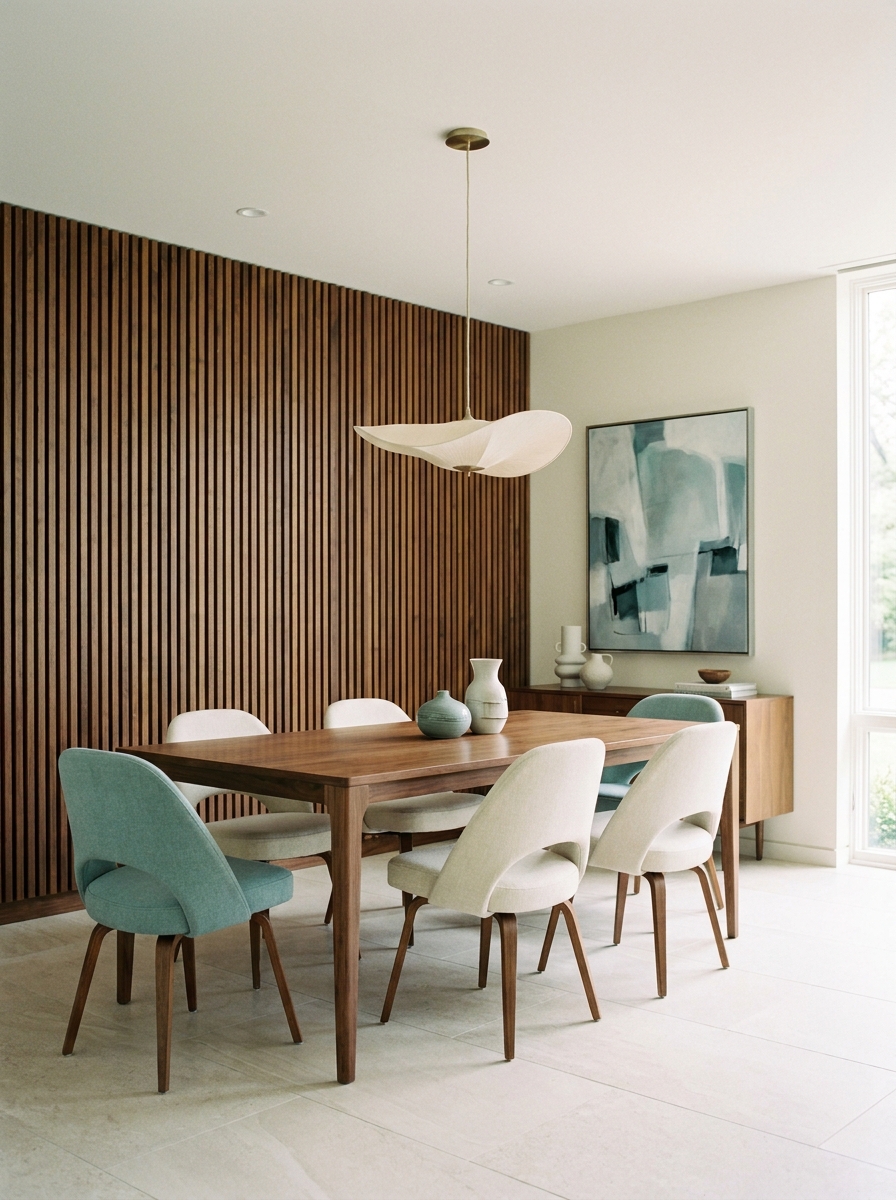
Slatted wood details are a great way to bring architectural character into a mid-century dining room. Whether used on a wall panel, sideboard detail, or divider, this kind of texture adds warmth without cluttering the room. It reinforces the handcrafted, material-focused quality that makes mid-century spaces feel so enduring.
This works especially well in dining rooms that feel a bit plain or overly modern. A wood slat feature introduces depth and visual rhythm while still keeping the room clean. Pair it with simple furniture and restrained colors so the texture stands out. Done right, it gives the room a more designed, high-end feel.
Keep decor minimal but intentional
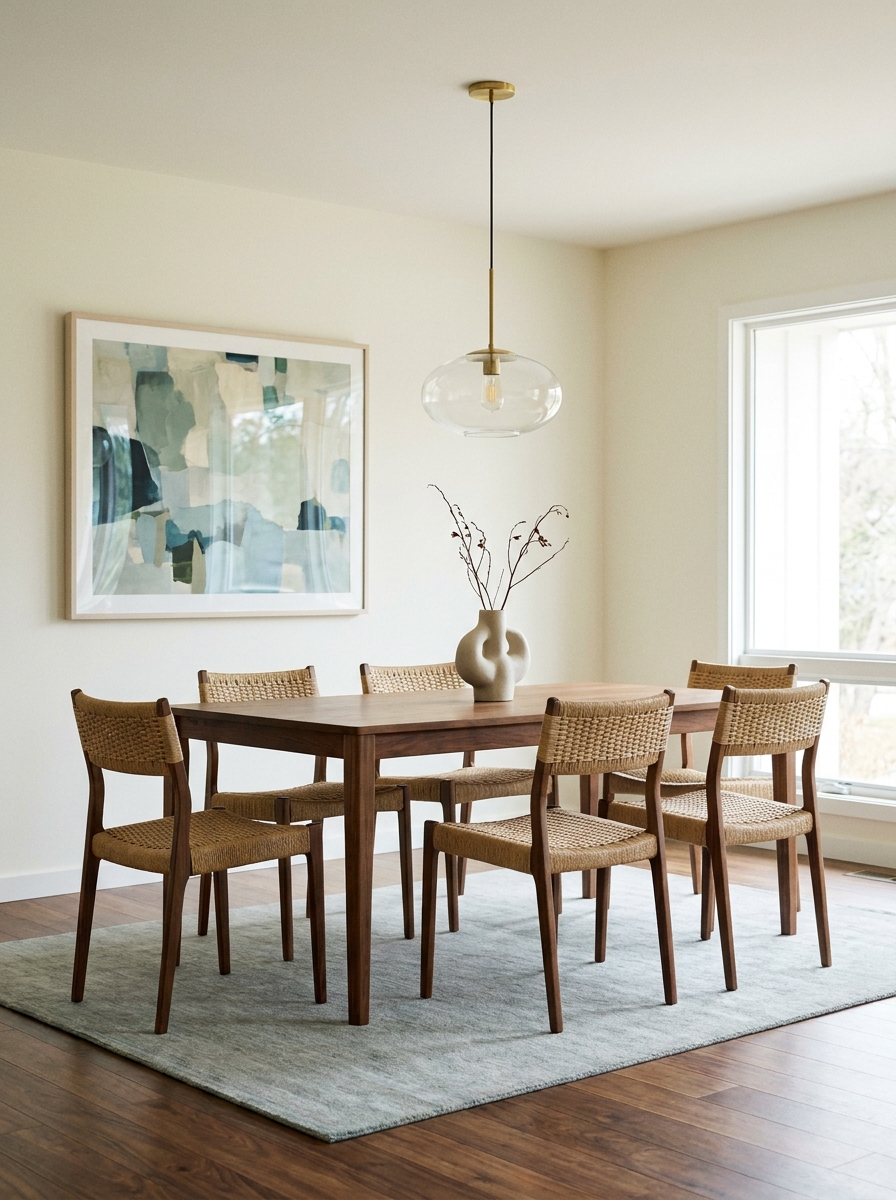
One of the biggest strengths of mid-century design is that it does not rely on excess. A dining room can feel beautiful with just a few carefully chosen pieces: a striking pendant light, a well-made table, a low sideboard, a vase, and art. Minimal styling helps the furniture breathe and makes the space feel more timeless.
This approach also makes the room easier to maintain. Instead of filling every corner, let the materials and shapes do the work. The result feels calm, collected, and more sophisticated than a space loaded with decor. If you love clean interiors but still want warmth, this idea captures the heart of mid-century modern style.
Mix vintage character with modern simplicity
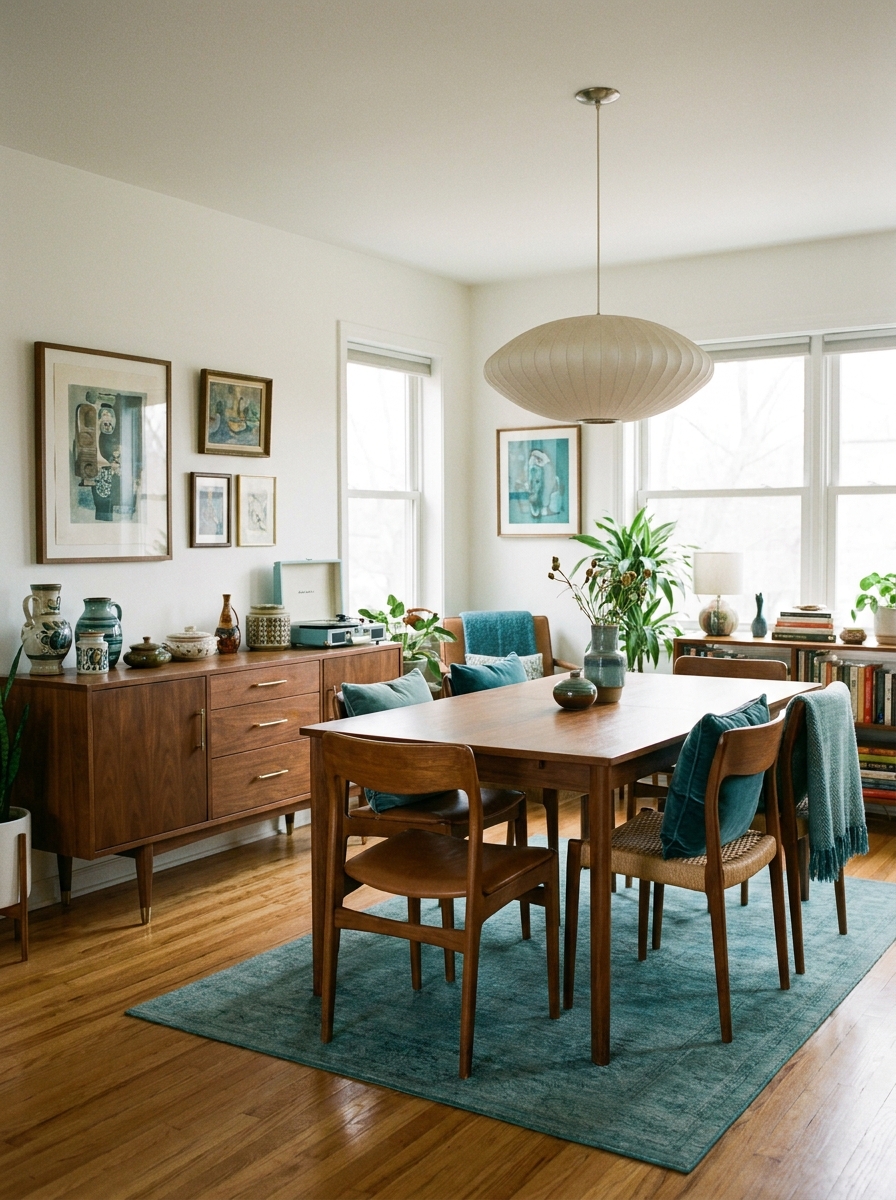
The best mid-century dining rooms often feel collected rather than staged. Mixing one or two vintage-inspired pieces with simpler modern elements keeps the room from looking like a theme set. For example, you might pair a classic walnut sideboard with newer upholstered chairs, or combine a retro-style light fixture with a very minimal table setting.
This balance makes the room feel more personal and current. It honors the mid-century look without becoming too literal. The result is timeless, comfortable, and easier to adapt to your own home. If you want a dining room that feels stylish for years, this is probably the smartest approach of all. Nearby kitchen shelf decor ideas can also echo the same clean, useful styling if the dining room connects to the kitchen.
Final thoughts
A mid-century modern dining room does not need to be complicated to feel striking. The strongest spaces usually come down to a few simple things done well: warm wood, clean silhouettes, thoughtful lighting, comfortable seating, and a color palette that feels balanced. Whether you lean bright and airy or a little moodier with deeper tones, this style gives you plenty of room to create something timeless.
If you are decorating from scratch, start with one anchor piece like a walnut table or sideboard and build outward from there. If you are refreshing an existing dining room, even smaller updates like a new pendant light, better chairs, or a more cohesive rug can make a big difference.
The goal is not perfection. It is creating a dining space that feels stylish, welcoming, and easy to enjoy every day.
FAQ
What colors work best in a mid-century modern dining room?
Walnut, ivory, cream, deep teal, navy, cognac, brass, dusty blue, olive, rust, and warm neutrals all work well. Keep the palette focused so the room feels stylish rather than busy.
What furniture makes a dining room feel mid-century modern?
A walnut dining table, tapered-leg chairs, a low sideboard, cane or leather details, sculptural lighting, and clean silhouettes are the easiest furniture choices for this style.
Can mid-century modern dining rooms feel cozy?
Yes. Use warm wood, comfortable upholstered chairs, a rug, soft lighting, and a few natural textures. The clean lines stay stylish, while the softer materials keep the room inviting.