Bedroom
Boys' Bedroom Paint Ideas
21 boys' bedroom paint ideas for a cool and colorful room, including forest green, navy, slate blue, charcoal, olive, two-tone walls, stripes, color blocking, sage, terracotta, and bold accent combinations.
A great paint color can completely change the feel of a boy's bedroom. It can make a small room feel calmer, give a plain builder-grade space more personality, or help tie together furniture, bedding, wall art, and storage. Paint is also one of the easiest ways to create a room that feels age-appropriate without needing a full renovation.
The best boys' bedroom paint ideas do more than add color. They help shape the mood of the room. Some shades feel playful and energetic, while others feel cozy, sporty, clean, or modern. The right choice depends on the age of the child, the amount of natural light in the room, and how the space is actually used for sleeping, homework, reading, and relaxing.
You do not have to stick with just one idea either. A boys' room can look much more interesting when paint is used intentionally through accent walls, stripes, panel details, color blocking, or two-tone combinations. Even simple neutral walls can feel more designed when paired with the right trim color and a few strong accent shades. If you are planning a nearby play area too, these playroom inspiration ideas can help the kids' spaces feel useful and connected.
If you are looking for fresh boys' bedroom paint ideas, these 21 looks will help you create a room that feels stylish, practical, and full of personality. For rooms that are compact, many of the same layout principles from small bedroom ideas can help the color choice work harder too.
Deep forest green accent wall
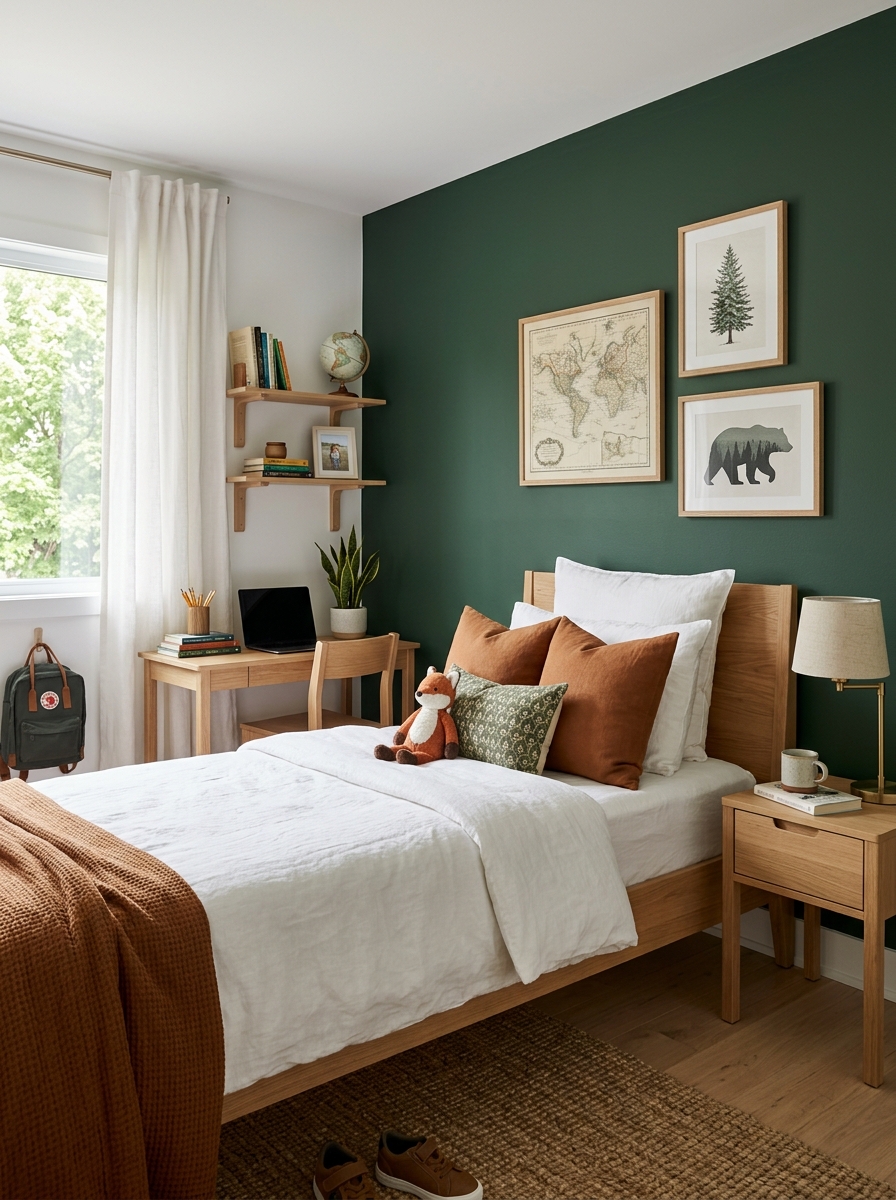
A deep forest green accent wall gives a boys' bedroom a grounded and confident look without feeling too dark when used on just one wall. It works especially well behind the bed, where it creates a strong focal point and makes light wood furniture, crisp white bedding, and warm leather accents stand out beautifully.
This color works for a wide age range, from younger kids to preteens, because it feels classic rather than childish. Add simple framed art, a plaid throw, and black metal lighting to make the room feel clean and slightly outdoorsy without becoming overly themed.
Navy blue walls with crisp white trim
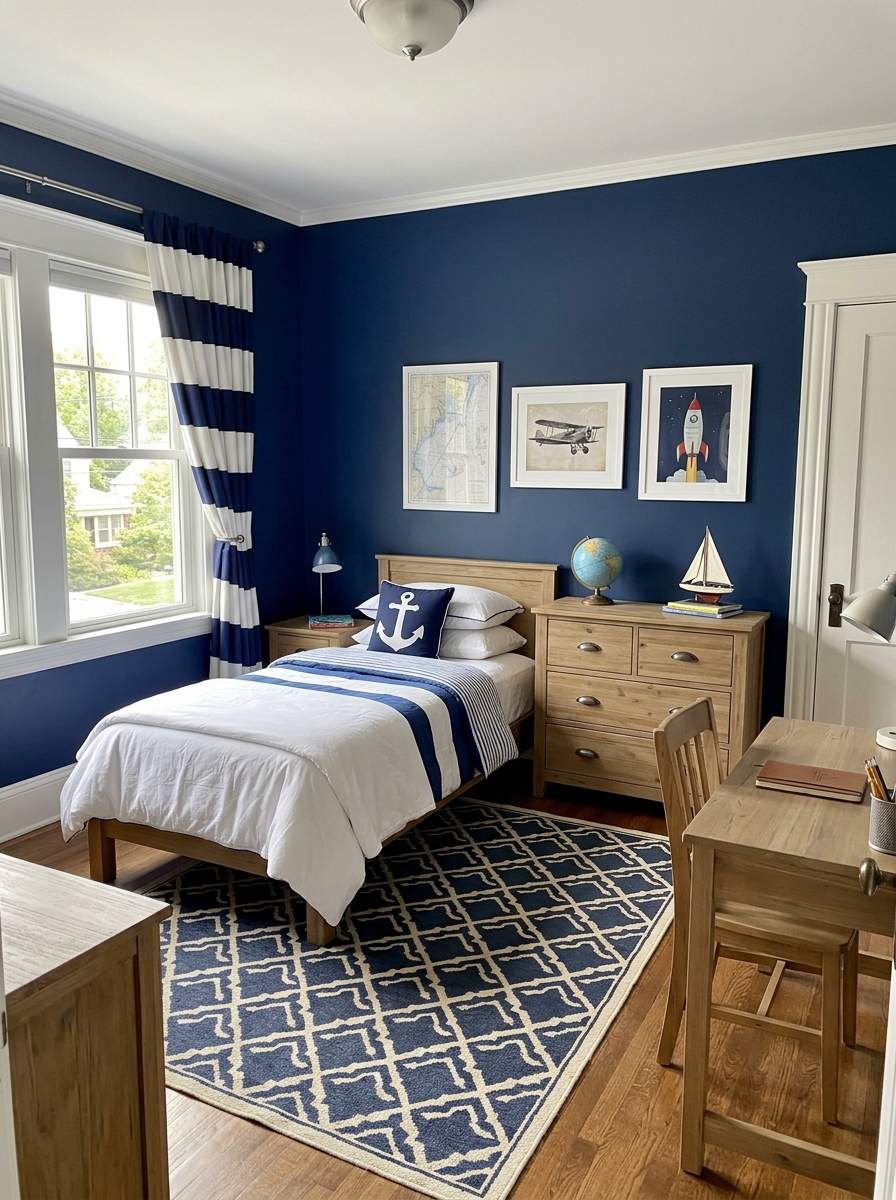
Navy blue is one of the most reliable boys' bedroom paint colors because it feels timeless, clean, and easy to decorate around. When paired with bright white trim, a navy room feels polished and crisp, especially in rooms with good natural light.
This is a strong choice if you want a bedroom that can grow with the child over time. Navy works well with striped bedding, wood furniture, brass or black lighting, and sporty or coastal accents. It creates enough personality on its own without needing busy wall decor.
Soft slate blue for a calm everyday room
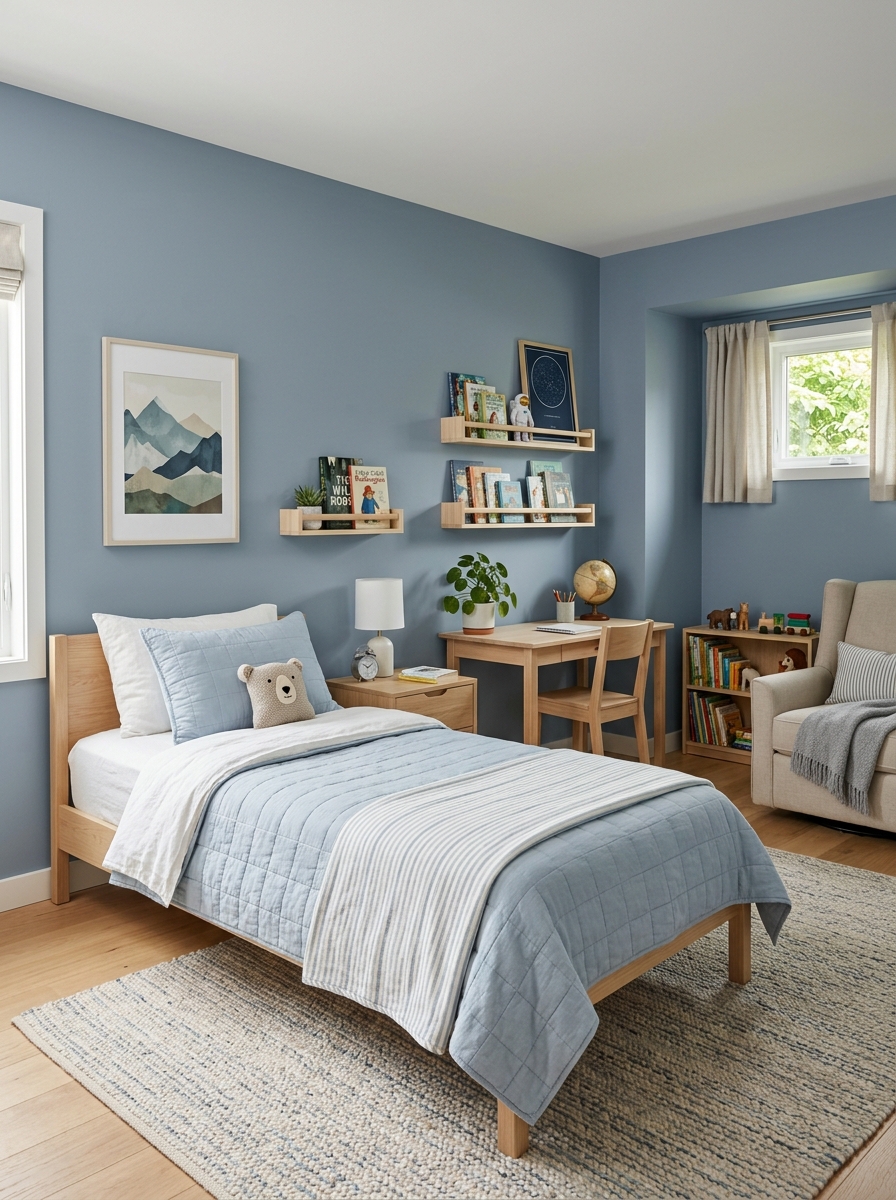
Slate blue has a softer and more relaxed feel than navy, which makes it a great choice for a bedroom that should feel restful but still have personality. It is ideal for boys who want color without the room feeling too bold or too dark.
This paint color pairs beautifully with white, warm beige, pale gray, and natural wood. It also works in smaller rooms because it adds interest while keeping the overall mood light and comfortable. Add open shelves and a reading chair to make the room feel especially inviting.
Charcoal gray for a modern look
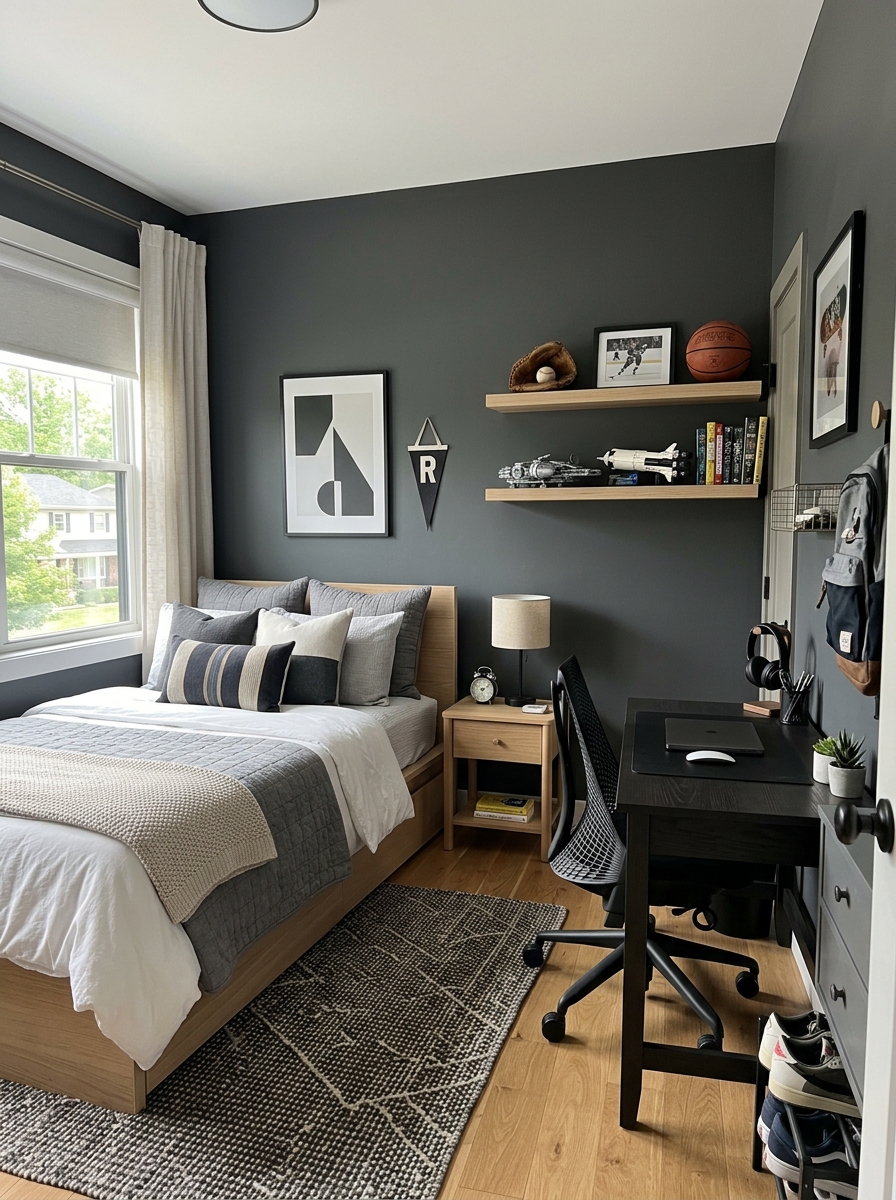
Charcoal gray creates a cooler and more modern mood in a boys' room. It works especially well in preteen or teen-friendly bedrooms where you want something that feels mature and bold without being flashy.
To keep charcoal from feeling heavy, balance it with white bedding, lighter flooring, and a few warm accents like tan leather, medium wood, or brushed brass. This color also works well with gaming setups, black shelving, and graphic wall art if you want the room to lean more contemporary.
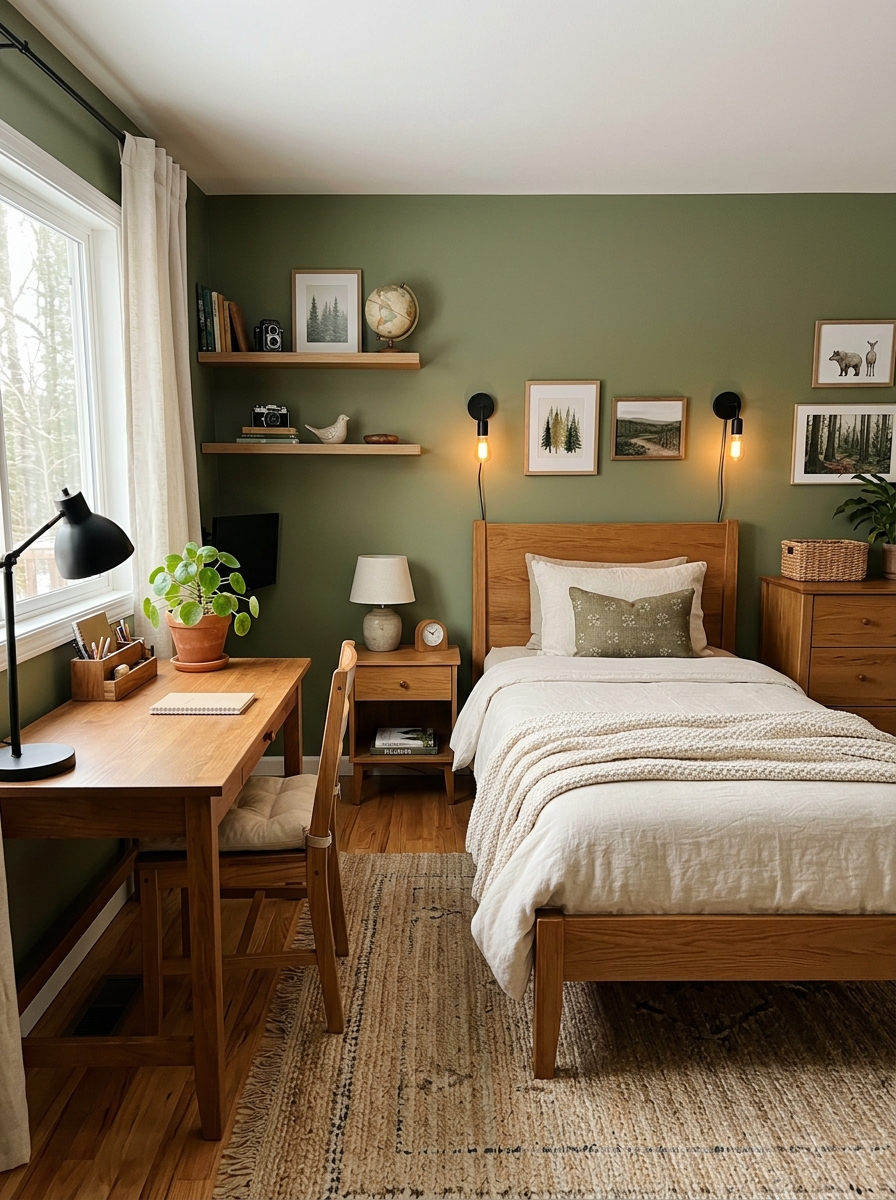
Olive green with warm wood accents
Olive green is a great alternative to standard blue if you want boys' bedroom paint ideas that feel current and slightly unexpected. It brings in color while still feeling earthy, calm, and easy to style.
This shade looks best when paired with warm wood furniture, cream bedding, woven textures, and black hardware. It can work in both smaller and medium-sized rooms, especially when only the main walls are painted and the ceiling stays bright white.
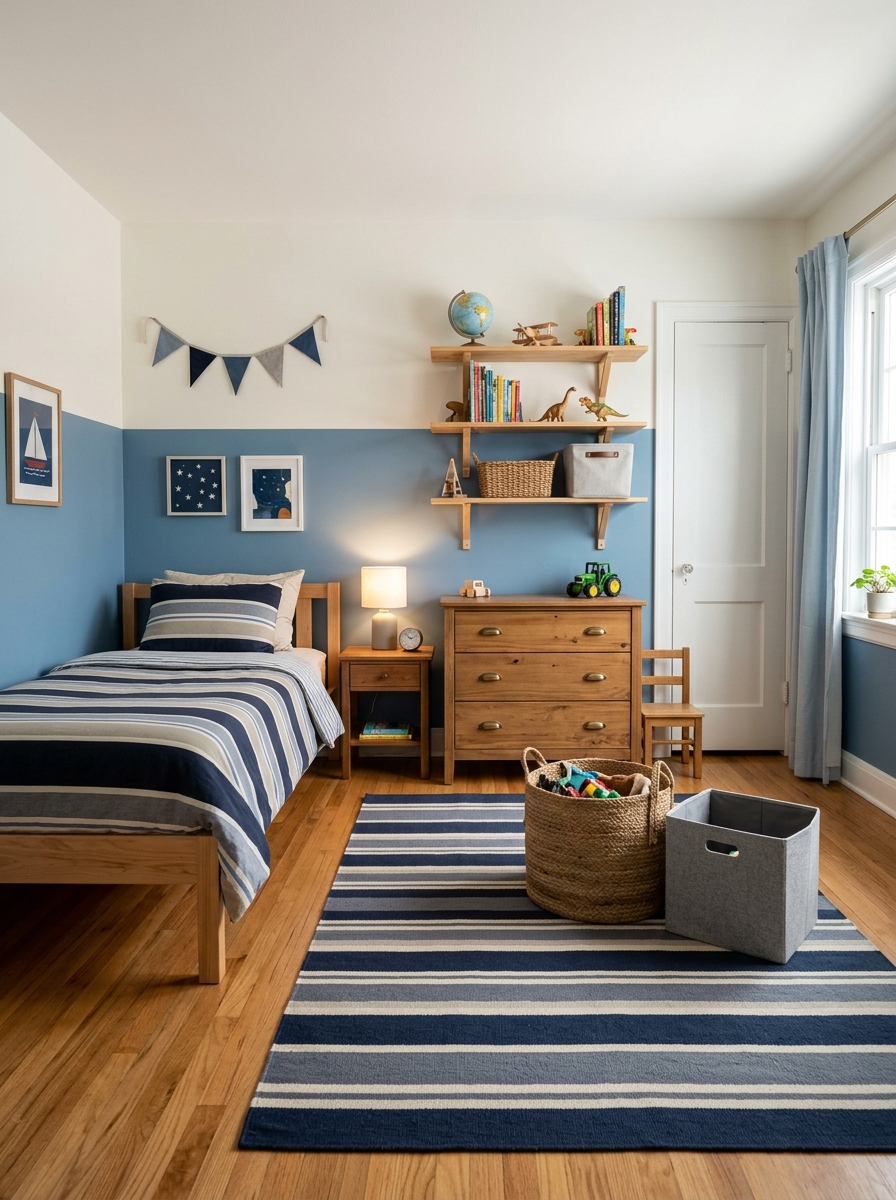
Two-tone walls for extra personality
Two-tone painted walls can make a boys' bedroom feel much more custom without requiring expensive built-ins or wallpaper. The lower half of the wall can be painted in a stronger color while the upper section stays white, soft gray, or pale beige.
This kind of paint treatment works especially well in younger boys' rooms because it feels playful but still neat. It can also visually anchor the room, especially if the lower color connects to the bedding or rug. Add a slim picture ledge or simple molding line to finish the look neatly.
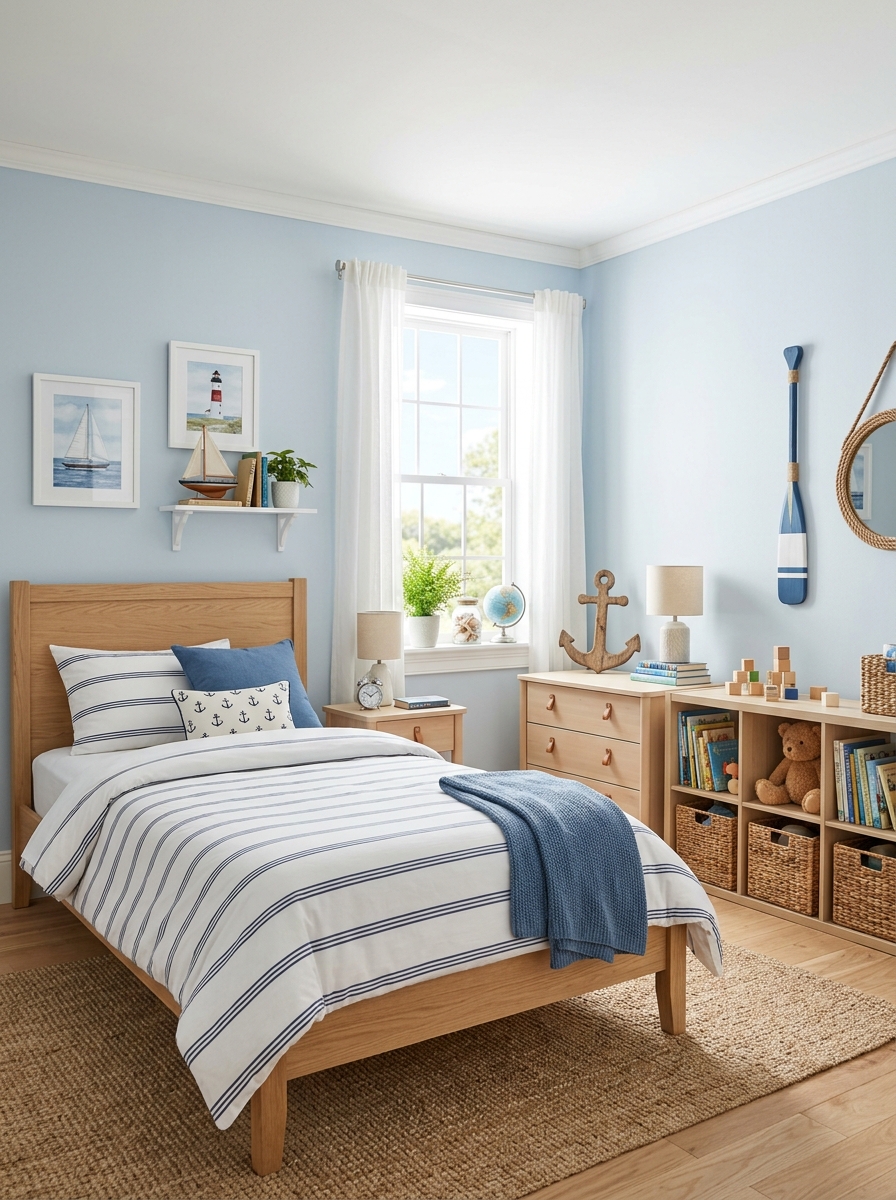
Blue and white coastal-inspired paint palette
If you want a fresh and airy room, a blue and white palette is always a strong option. Instead of going full nautical theme, keep it subtle with soft blue walls, white trim, and just a few coastal touches like striped textiles, woven storage, or simple beach-inspired art.
This approach feels bright and timeless and works especially well in sun-filled rooms. It is a good choice for kids who like blue but want the room to feel easy and open rather than dark or heavily decorated.
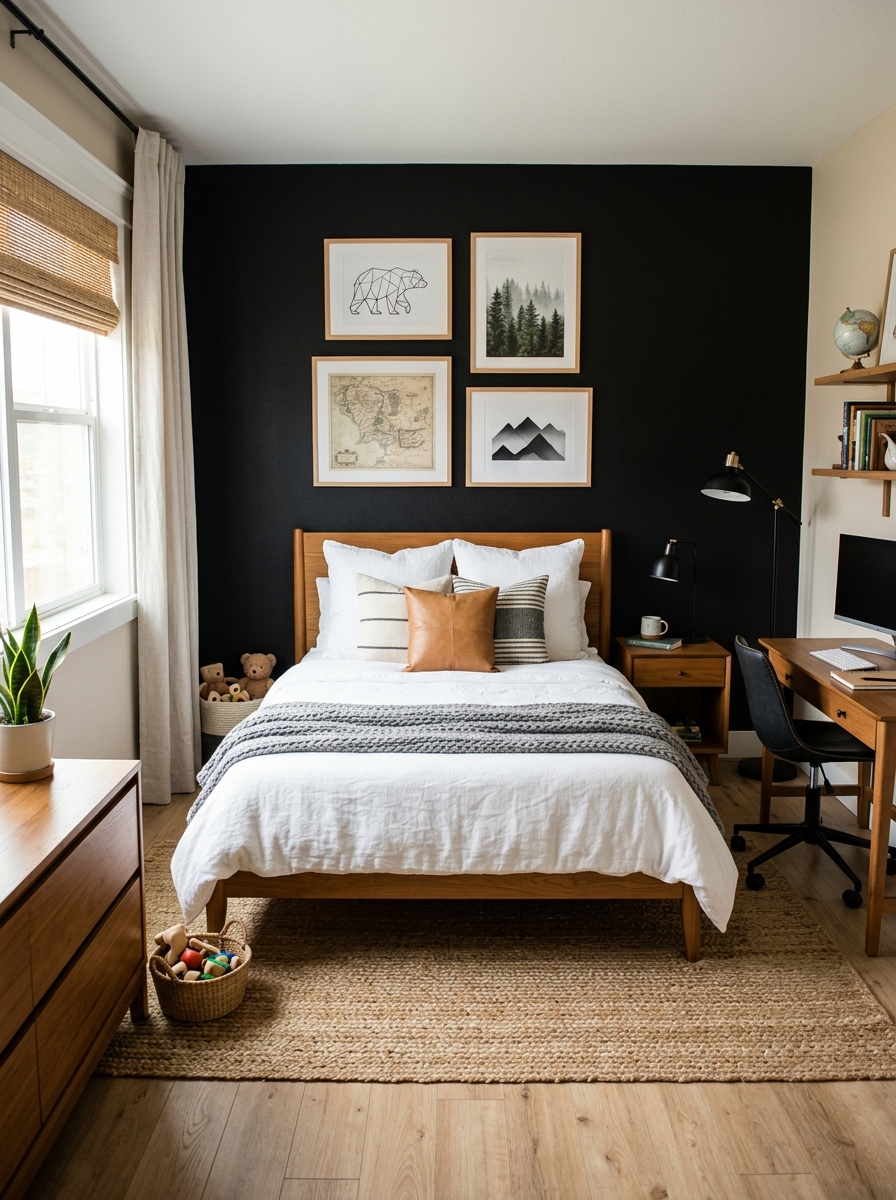
Black accent wall behind the bed
A black accent wall sounds dramatic, but it can look surprisingly stylish in a boys' room when handled well. Used on one wall only, it creates contrast and helps lighter bedding, framed art, and wood furniture stand out clearly.
This works best in rooms with plenty of light or with lighter flooring and furniture to keep the space balanced. It is especially effective in preteen bedrooms where you want a cooler, more graphic style. White, tan, olive, mustard, and rust accents all look strong against black.
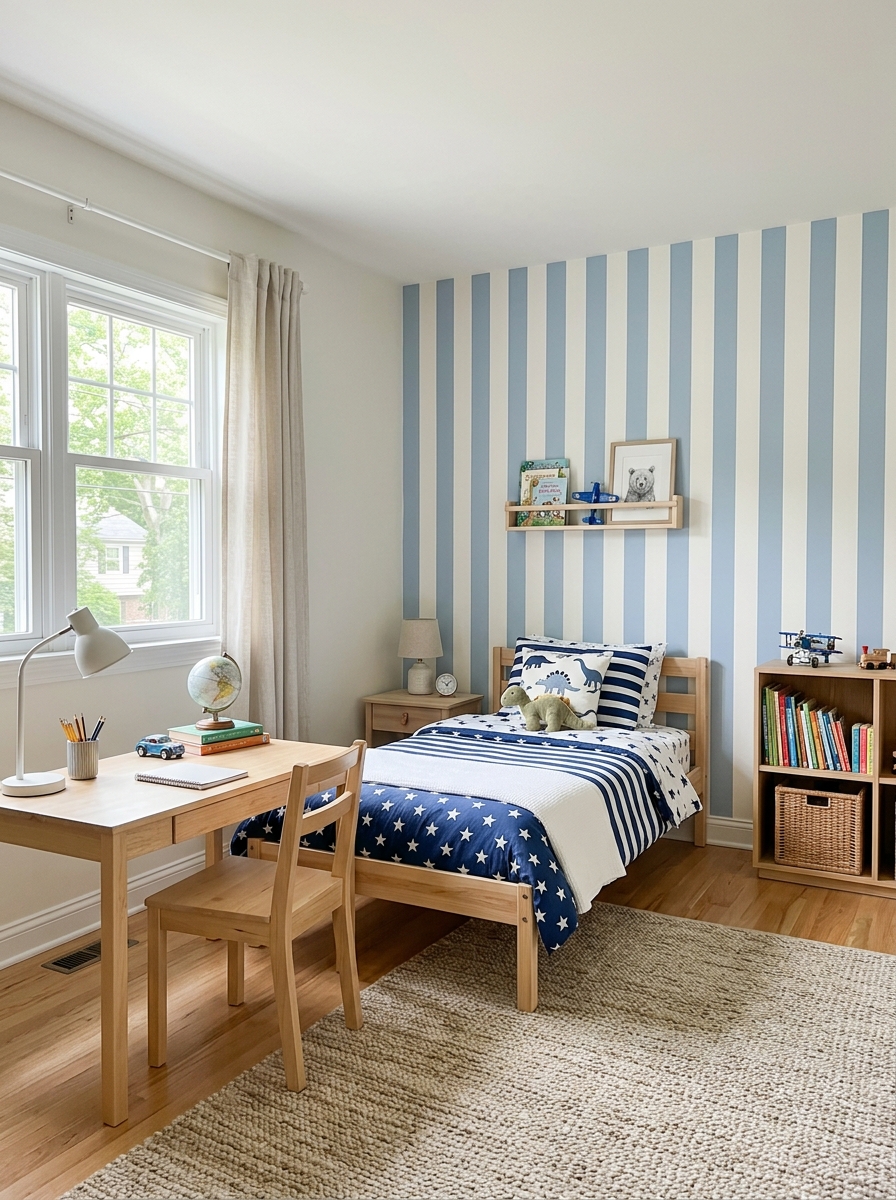
Painted vertical stripes for a playful feature wall
Painted stripes are a great way to add pattern without wallpaper. Vertical stripes can make the room feel taller and more playful, especially in a child's bedroom. Use two soft tones, such as pale blue and white or sage and cream, for a look that stays easy on the eyes.
This is a fun idea when the rest of the room is kept simple. Stripes work best on one wall only so the bedroom does not start to feel visually busy. Pair them with clean-lined furniture and solid bedding to let the painted pattern be the main feature.
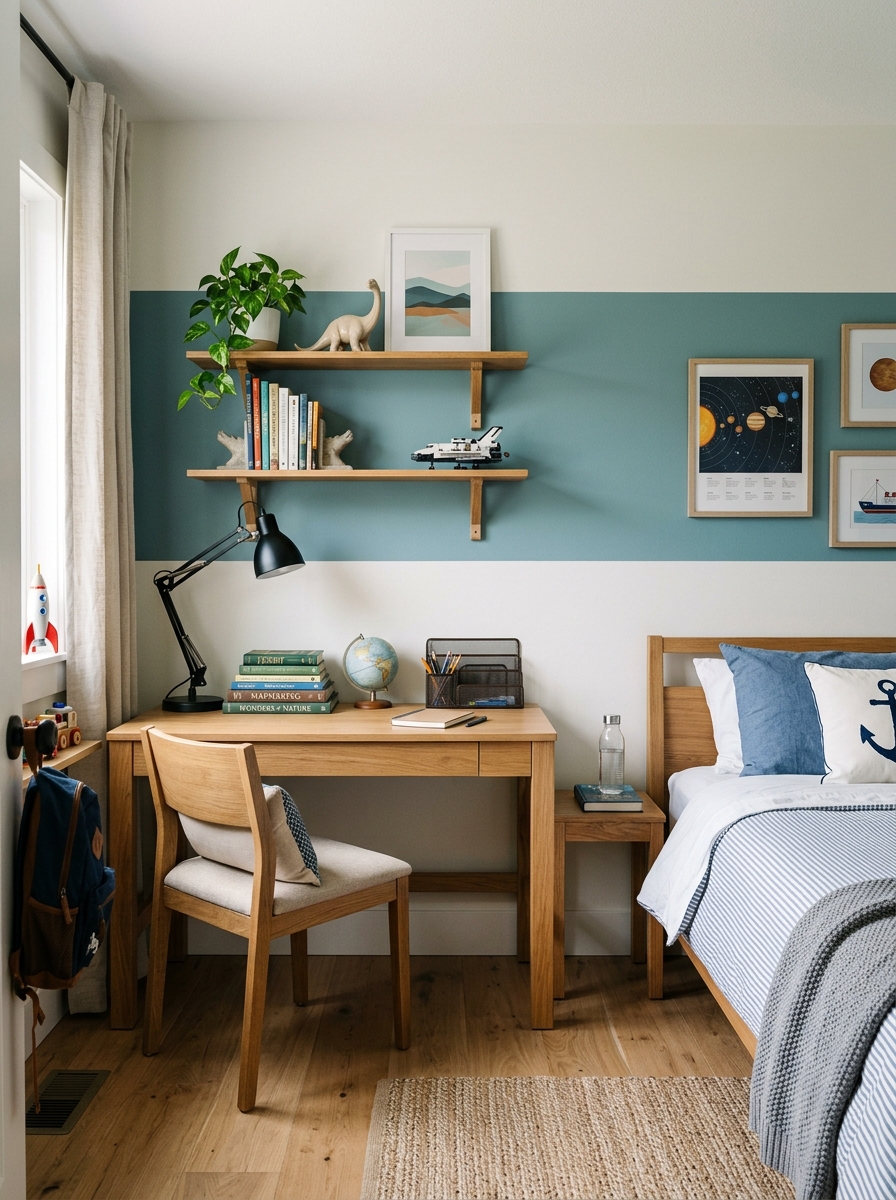
Color-blocked study corner
Paint can be used to visually define different zones in a boys' bedroom, especially in small rooms where sleep, schoolwork, and hobbies all happen in one space. A color-blocked study corner is a smart way to make the desk area feel intentional.
You can use a painted rectangle or half-arch behind the desk in a strong but manageable color like navy, olive, rust, or muted teal. This adds personality while helping the room feel more organized. It also photographs beautifully for home decor content and Pinterest pins.
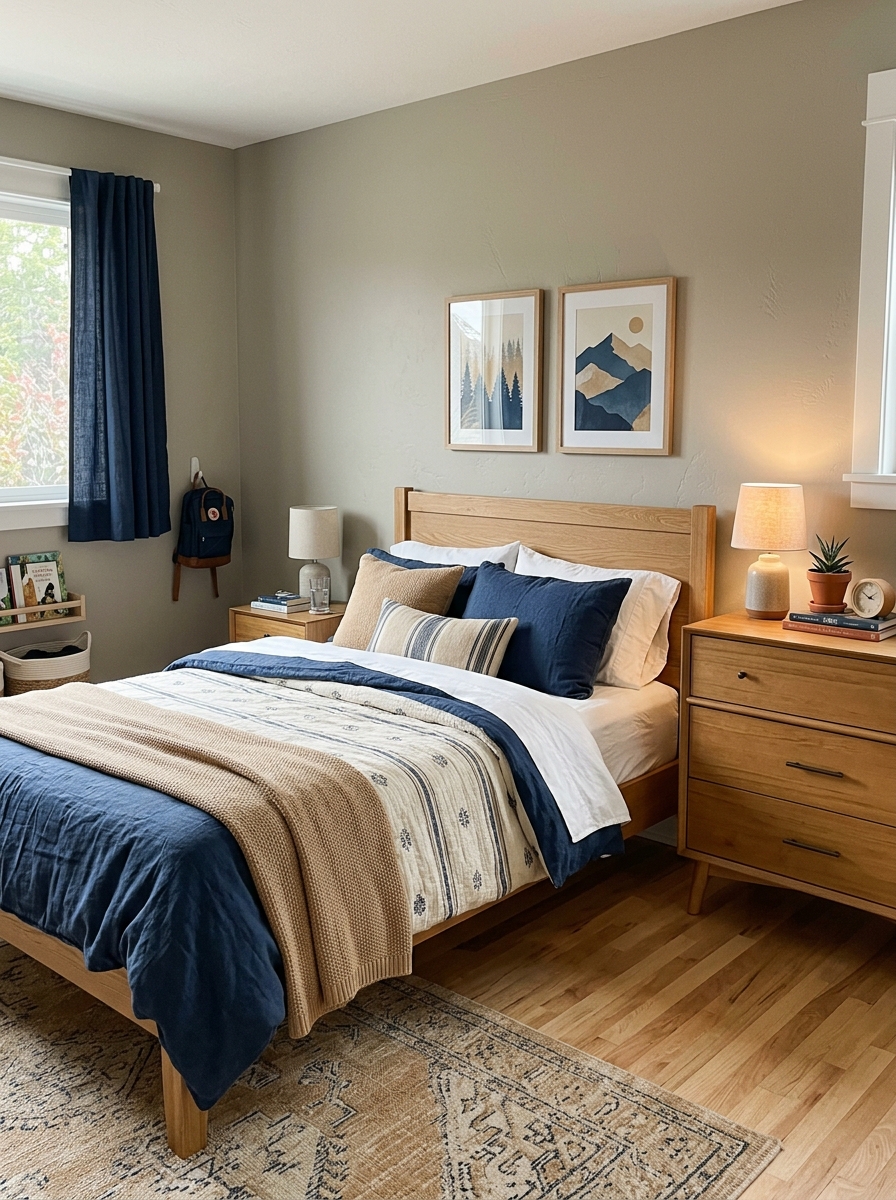
Warm greige for a more grown-up feel
Greige, a mix of gray and beige, is a great option for a boys' room when you want something understated and flexible. It creates a warm, neutral backdrop that allows bedding, artwork, and storage details to stand out without making the walls the main focus.
This can be especially useful in shared family homes where you want bedrooms to feel cohesive with the rest of the house. Add navy, forest green, black, or rust accents to keep the room from feeling flat. It is a strong pick for a more mature kid or preteen space.
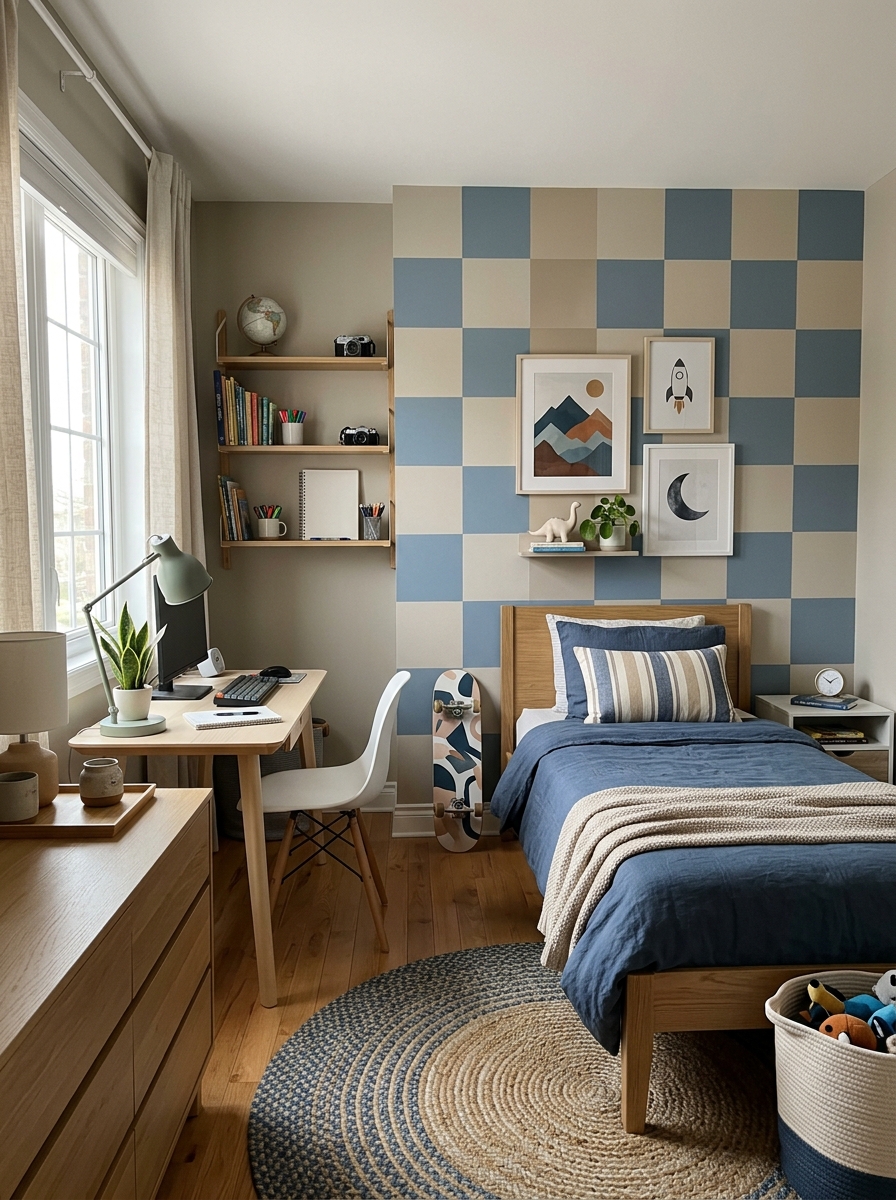
Checkered painted wall for a bold trendy look
A painted checkered wall is a playful trend that can give a boys' room a lot of personality. It works best in a more modern or youthful bedroom and should usually be limited to one feature wall or one section of the room.
You can create the pattern with muted tones for a softer look or use stronger contrast for more energy. This style works particularly well with simple bedding and furniture because the wall itself already brings so much visual movement to the room.
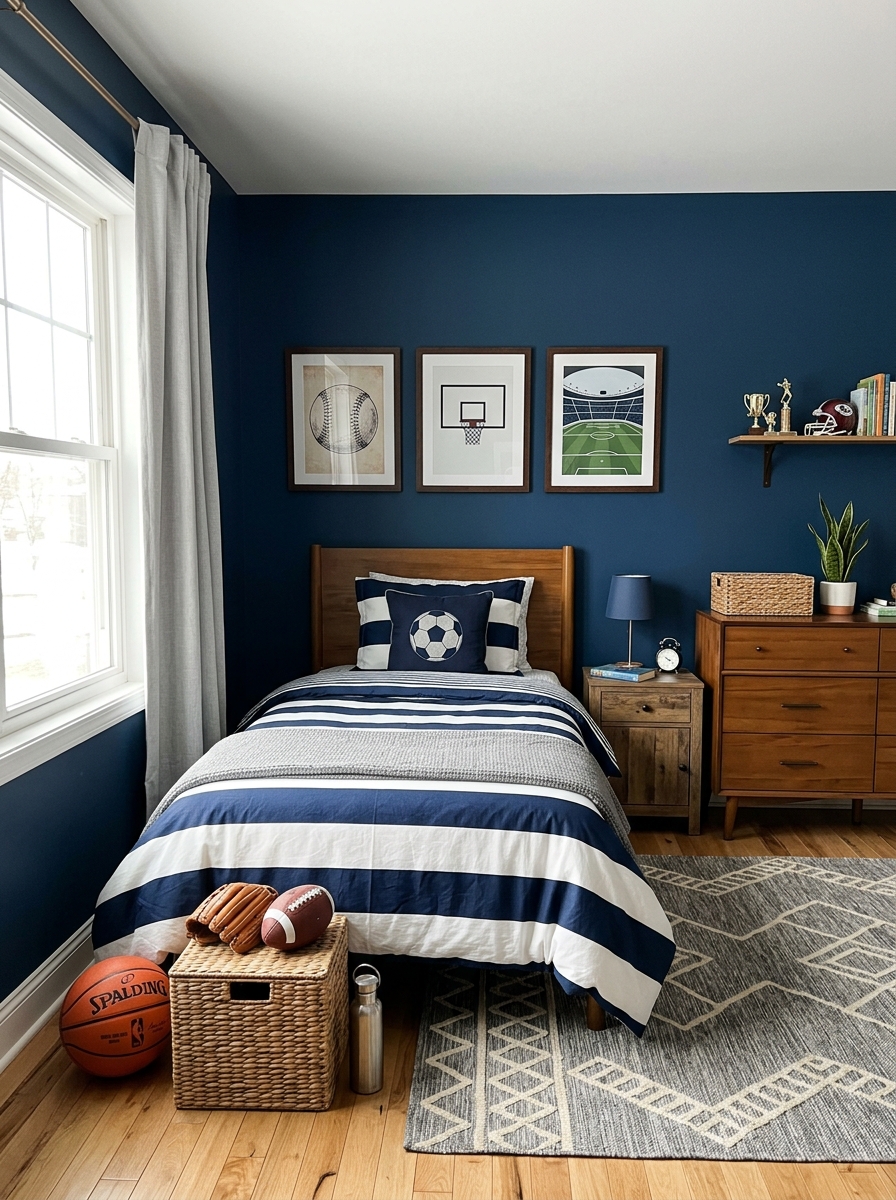
Sports-inspired wall color with simple decor
A sports-inspired bedroom does not need murals or oversized logos to feel fun. A strong wall color like deep blue, dark green, or charcoal can set the mood, while subtle sports touches in bedding, framed prints, or accessories keep the room feeling personal.
This is a good way to create a themed room that will not feel outdated too quickly. The paint acts as the foundation, while the decor can be changed more easily as interests evolve over time.
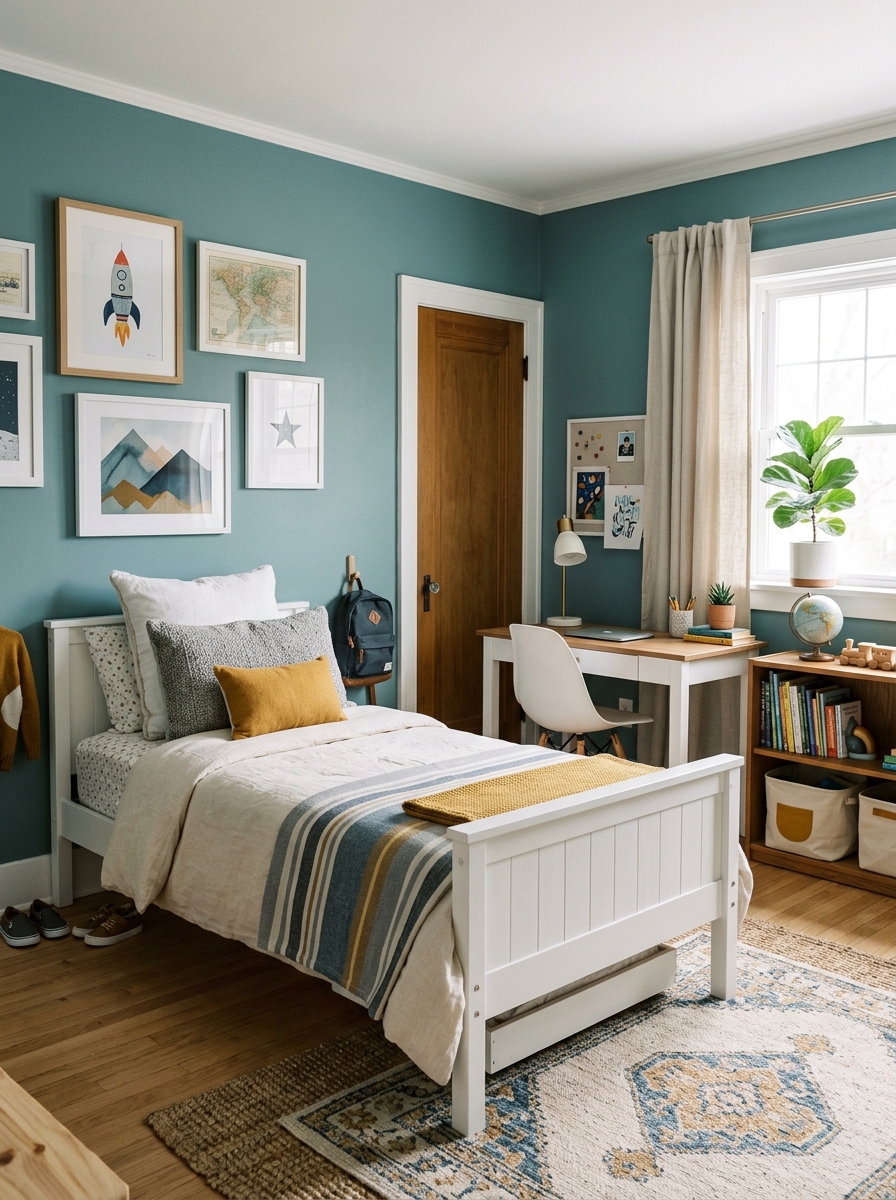
Muted teal for a fresh pop of color
Muted teal brings in more personality than standard blue but still feels easy to live with. It is a great paint color for boys who want something fun and colorful without going overly bright or juvenile.
This shade works especially well with white furniture, light oak, black accents, and touches of mustard or rust. It can make the room feel creative and fresh while still staying polished enough for a kid-to-preteen transition.
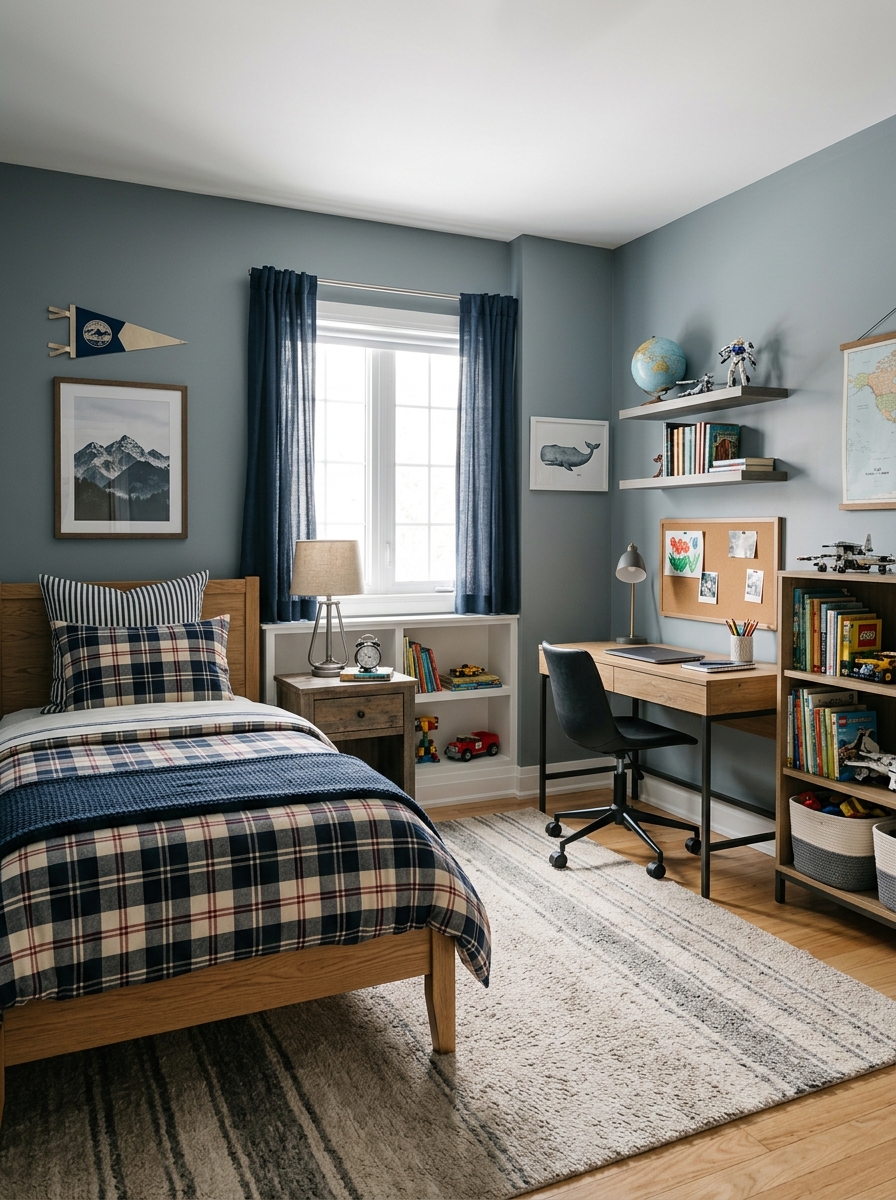
Classic gray-blue for a versatile room
A gray-blue paint color sits right between color and neutral, which makes it one of the most versatile boys' bedroom wall colors. It feels softer than navy, less cool than true gray, and more adaptable than many stronger shades.
This kind of paint color works beautifully with white bedding, plaid textiles, storage baskets, and simple wood furniture. It is especially good if you want a room that looks polished in photos but still practical for everyday life.
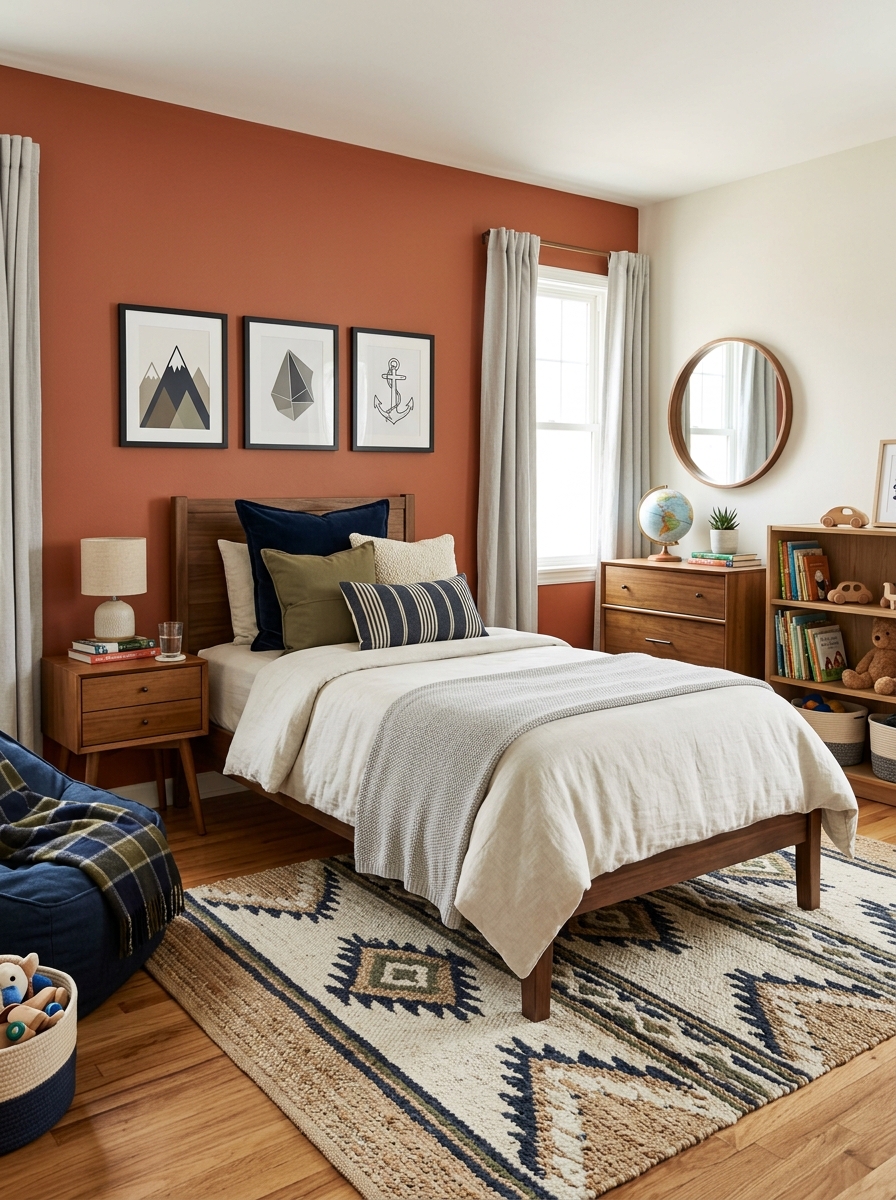
Earthy terracotta accent for warmth
Terracotta might not be the first paint color that comes to mind for a boys' room, but used thoughtfully, it can create a warm and modern space. It works especially well as an accent wall paired with white, sand, olive, or navy details.
This color brings energy without looking too loud. It is a strong option if you want a room that feels a bit more design-forward and different from the usual all-blue palette. Keep the rest of the room simple so the wall color stays the main statement.
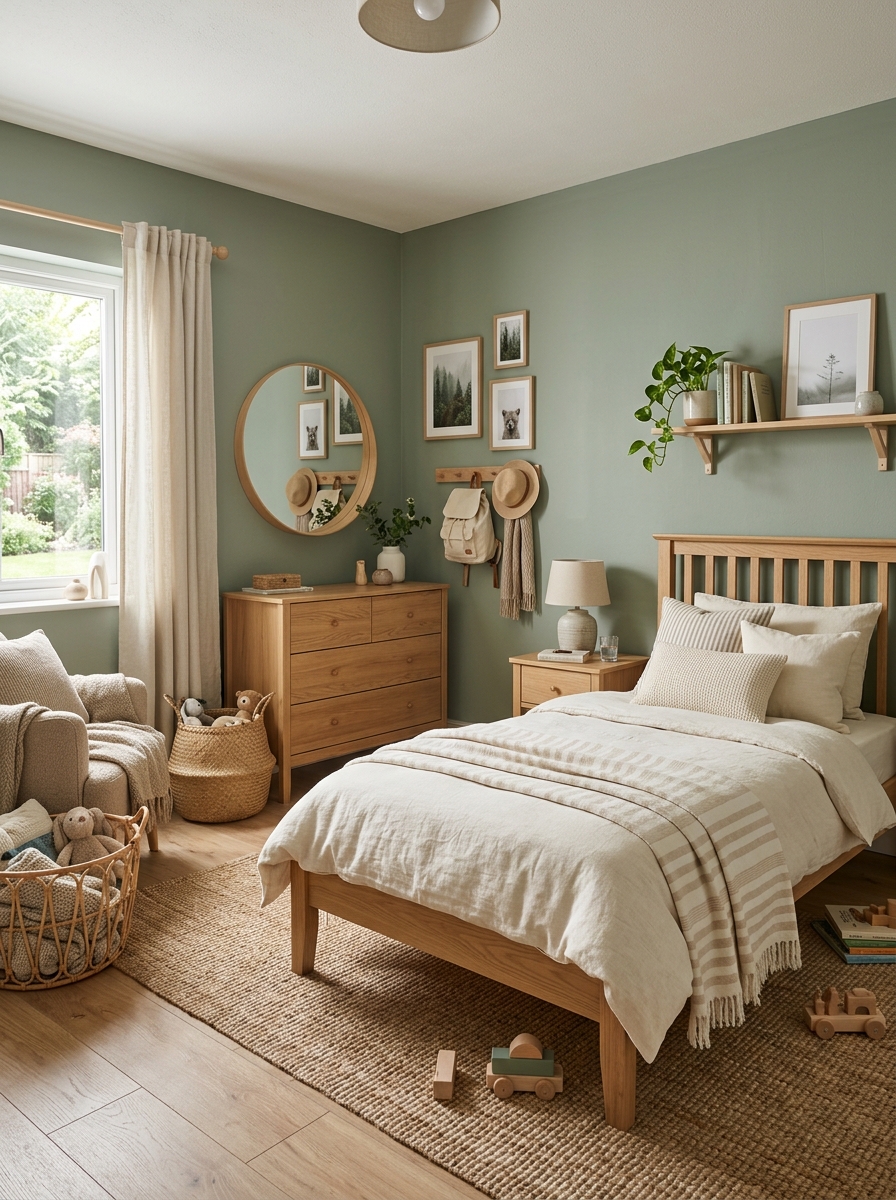
Sage green for a softer look
Sage green is a softer, lighter alternative to olive and forest green. It creates a calm bedroom that still feels fresh and current. This is a good option for smaller rooms or spaces where you want color without strong visual weight.
Sage pairs beautifully with light wood, cream bedding, and woven accents. It can lean modern, slightly nature-inspired, or even a little Scandinavian depending on the furniture and decor choices.
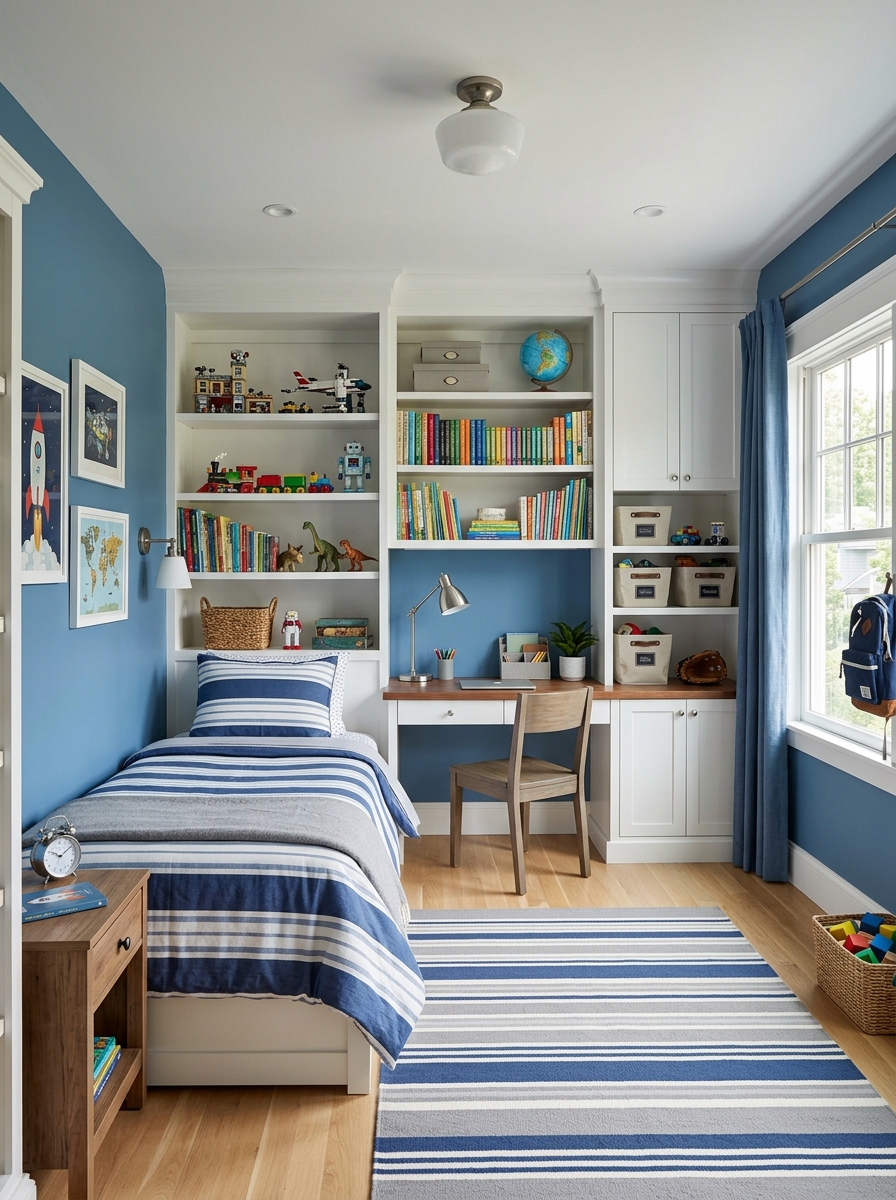
Mid-blue walls with white built-ins
A medium blue wall color is cheerful, practical, and familiar, but it looks much more elevated when paired with white built-ins or painted shelving. This approach gives the room both color and structure, making it feel more complete.
It is especially useful in bedrooms that need more storage. The painted walls add personality, while the lighter built-ins keep the room from feeling overwhelmed by furniture. Use simple bedding and a few accent colors to pull everything together.
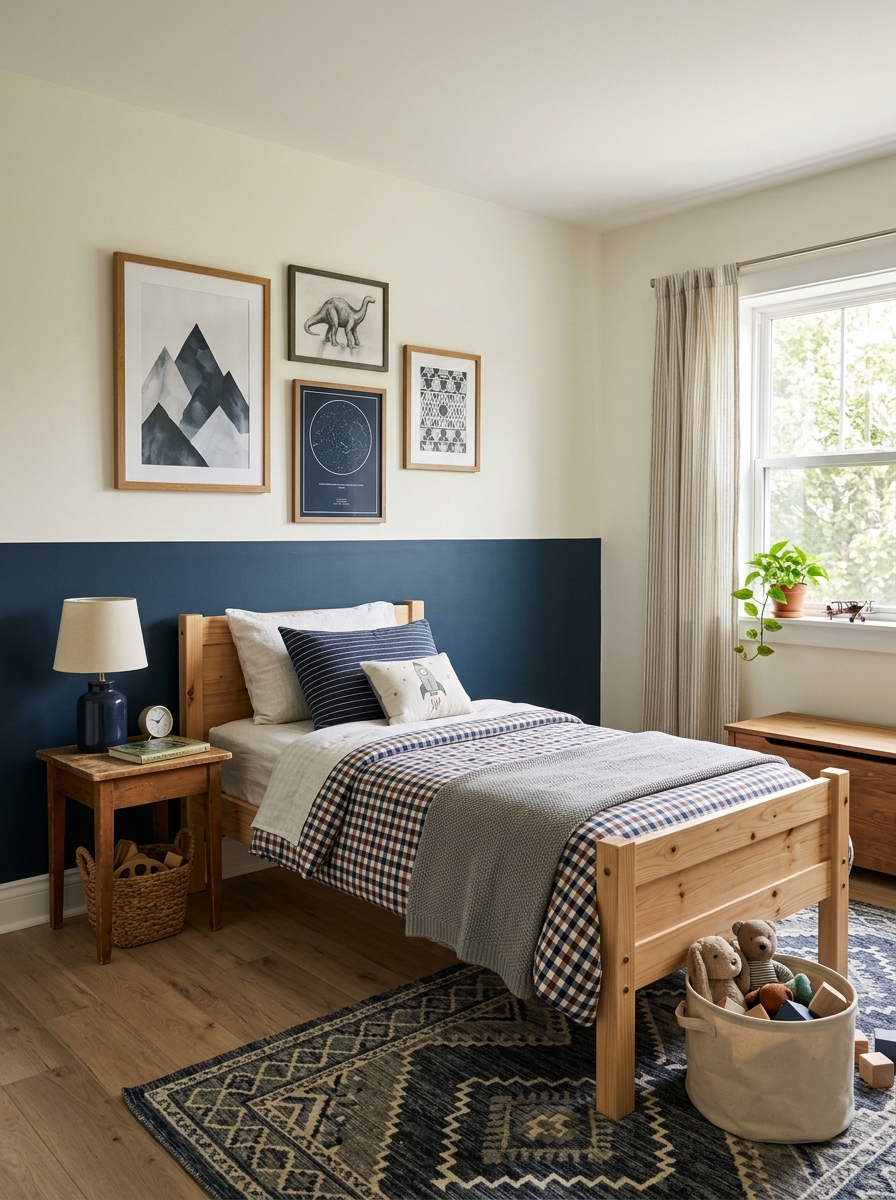
Half-painted wall behind the bed
A half-painted wall is an easy way to give a boys' room a slightly custom feel without doing a full accent wall. The lower section can be painted in a darker tone while the upper half remains white or pale neutral. This also visually anchors the bed area.
This idea works especially well in simple rooms with basic furniture because the paint treatment adds structure and interest. It is also easier to update later than more detailed painted patterns or murals.
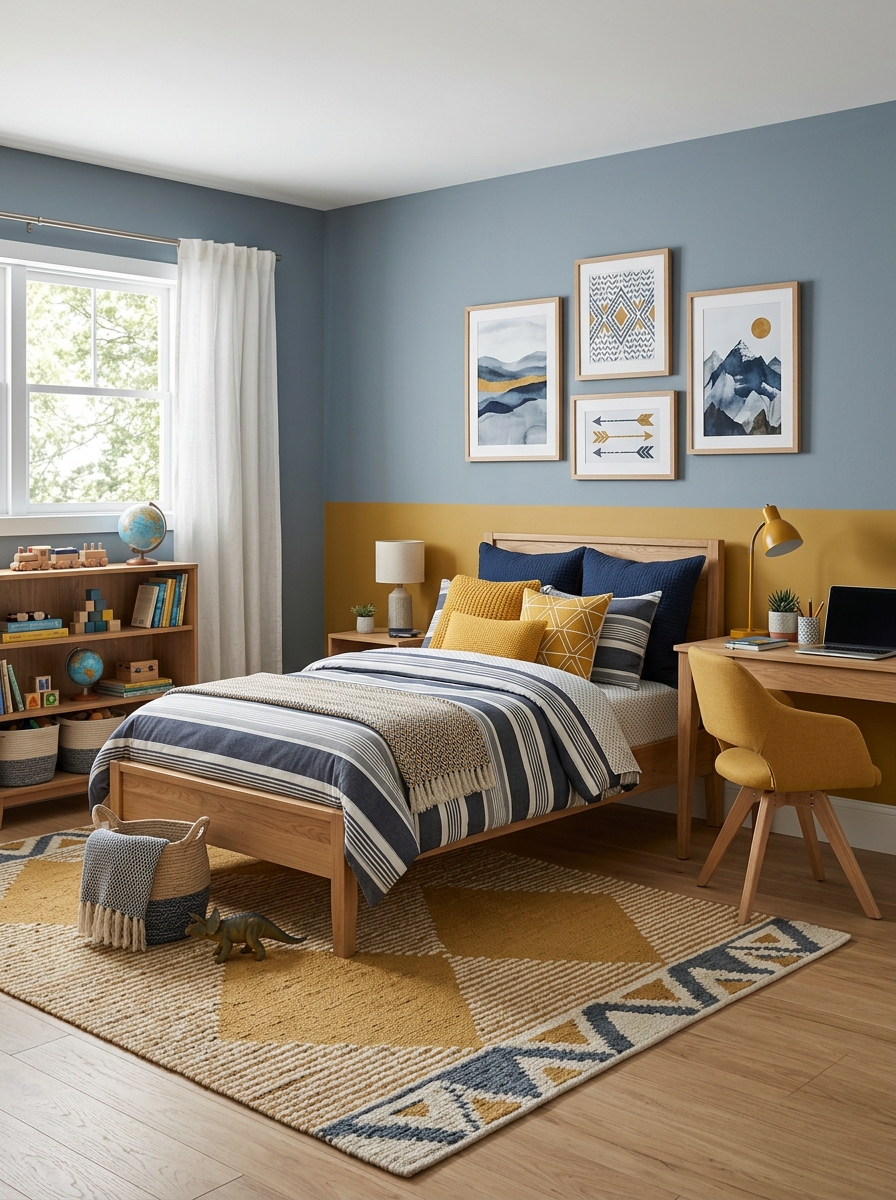
Bold mustard and blue accent combination
For a more energetic room, combine a stable wall color like blue, gray, or greige with small mustard-painted accents or mustard accessories. This creates a fun and modern palette that feels playful without making the room look too busy.
This works especially well for older kids who want personality in the room but do not want something too babyish. The mustard adds warmth and energy, while the main wall color keeps the space grounded.
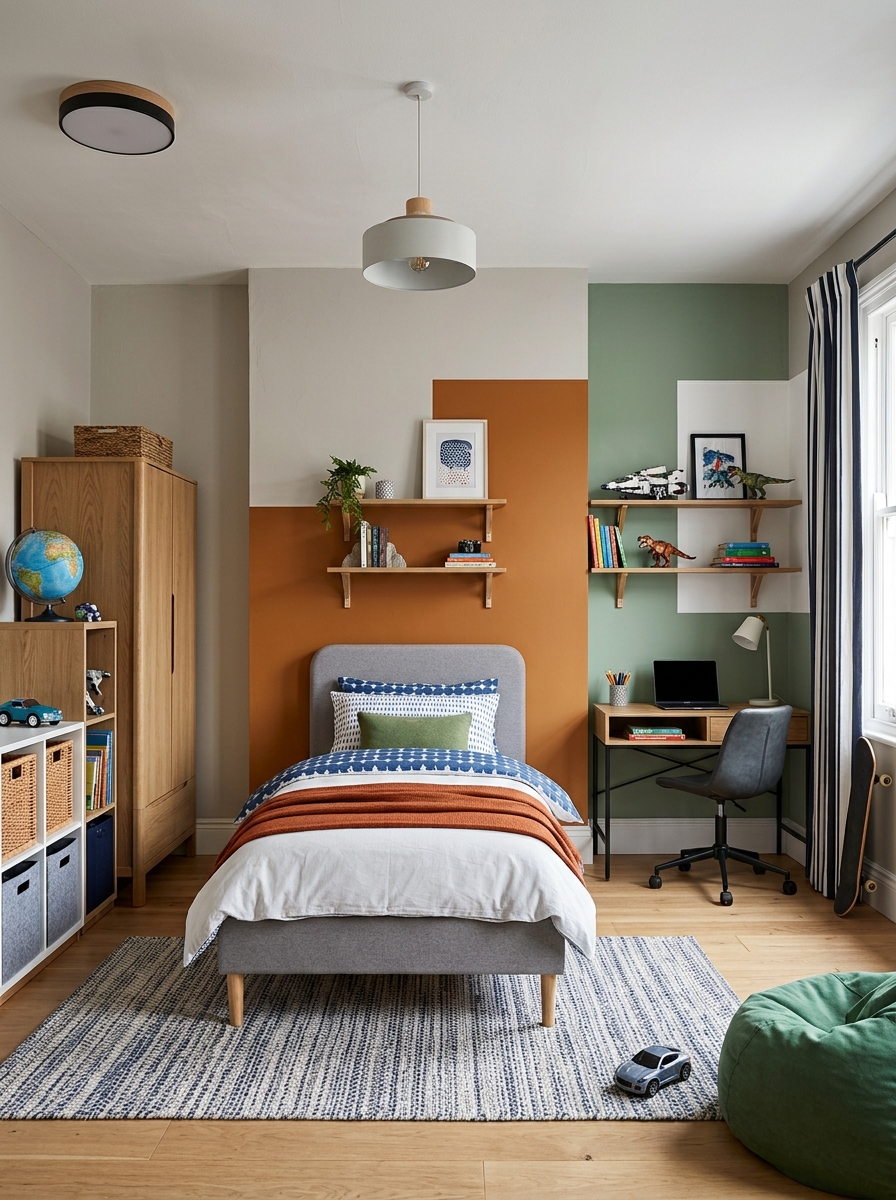
Colorful modern room with multiple painted accents
If you want the room to feel especially creative, you can use more than one paint idea in a controlled way. This might mean a neutral base color with a painted headboard shape, a bold study-corner block, or painted trim in a contrasting shade.
The key is to keep the palette limited so the room still feels cohesive. A combination of blue, green, white, and one warmer accent color can give the room lots of personality while remaining easy to style. This approach is great when you want a fun, customized look.
How to choose the right boys' bedroom paint color
The best paint color depends on more than just trend appeal. Start by looking at the amount of natural light the room gets. Darker colors like charcoal, navy, and forest green can look rich and beautiful in bright rooms, while lighter shades such as slate blue, sage, or greige work especially well in spaces that do not get much sun.
It also helps to think about how long you want the room to feel current. A younger child may enjoy a more playful feature like stripes, a checkered wall, or color blocking, while a preteen may prefer something more mature such as olive, navy, or gray-blue. If you want the room to last longer without frequent changes, choose a versatile wall color and bring in personality through bedding and decor.
Consider the furniture too. White furniture tends to pop against deeper paint colors, while warm wood furniture looks especially good with greens, blues, and earthy tones. If the room already has a lot going on visually, a quieter paint color may work best.
Tips for making boys' bedroom paint ideas look better
Before painting, test a few samples directly on the wall and view them at different times of day. Colors can look much cooler, darker, or more muted once they are actually in the room. This is especially true for blue and green tones.
Think about where to use color strategically. Accent walls, lower wall panels, painted desk zones, and half walls often look more intentional than simply covering every wall in a bold shade. These techniques also make it easier to update the room later.
Finally, keep the styling balanced. If the wall color is bold, simplify the bedding and decor. If the wall color is more neutral, you have room to add more personality through textiles, art, shelving, and lighting. A boys' bedroom looks best when the paint works with the rest of the room rather than competing with it.
After the paint is set, cozy bedroom decor ideas can help you layer bedding, lighting, shelves, and rugs so the room feels finished instead of just freshly painted.
Final thoughts
The right boys' bedroom paint color can make the room feel cooler, calmer, brighter, or more personal without requiring a full makeover. Whether you like timeless navy, earthy green, modern charcoal, soft slate blue, or playful painted details, there are plenty of boys' bedroom paint ideas that can help the space feel more thoughtfully designed.
The best results usually come from choosing a color that fits the room's light, furniture, and daily use. Once that foundation is in place, even a simple bedroom can feel much more polished and full of character.
If you want a room that grows well over time, focus on a strong paint idea first and build the rest of the design around it. That approach makes the room easier to update while still giving it a clear and memorable style.