Kids Spaces
Playroom Inspiration Ideas
21 playroom inspiration ideas for a fun and functional kids' space, including low storage, reading nooks, art stations, soft play corners, toy rotation shelves, dress-up areas, book ledges, play kitchens, rugs, hooks, canopies, and smart storage.
If you are looking for playroom inspiration, the best spaces usually do two things at once: they feel exciting for kids and manageable for adults. A well-designed playroom should give children room to imagine, build, read, draw, and move around freely, but it also needs enough structure that the room does not feel chaotic by the end of the day.
That balance is what makes a playroom truly useful. Bright colors and playful decor can make the space feel inviting, but the layout matters just as much. Low shelves, easy-access bins, soft rugs, activity corners, and flexible furniture help turn an ordinary room into a space that supports real everyday use.
The good news is that a beautiful kids' room does not need to be huge or expensive. Some of the best playroom inspiration comes from simple ideas that make the room easier to use. A reading nook by the window, a low art station, baskets for toys, and a child-friendly table can completely change how the space feels.
These 21 playroom inspiration ideas will help you create a room that looks cheerful, stays practical, and works for different ages and activities.
Build a low storage wall with open cubes
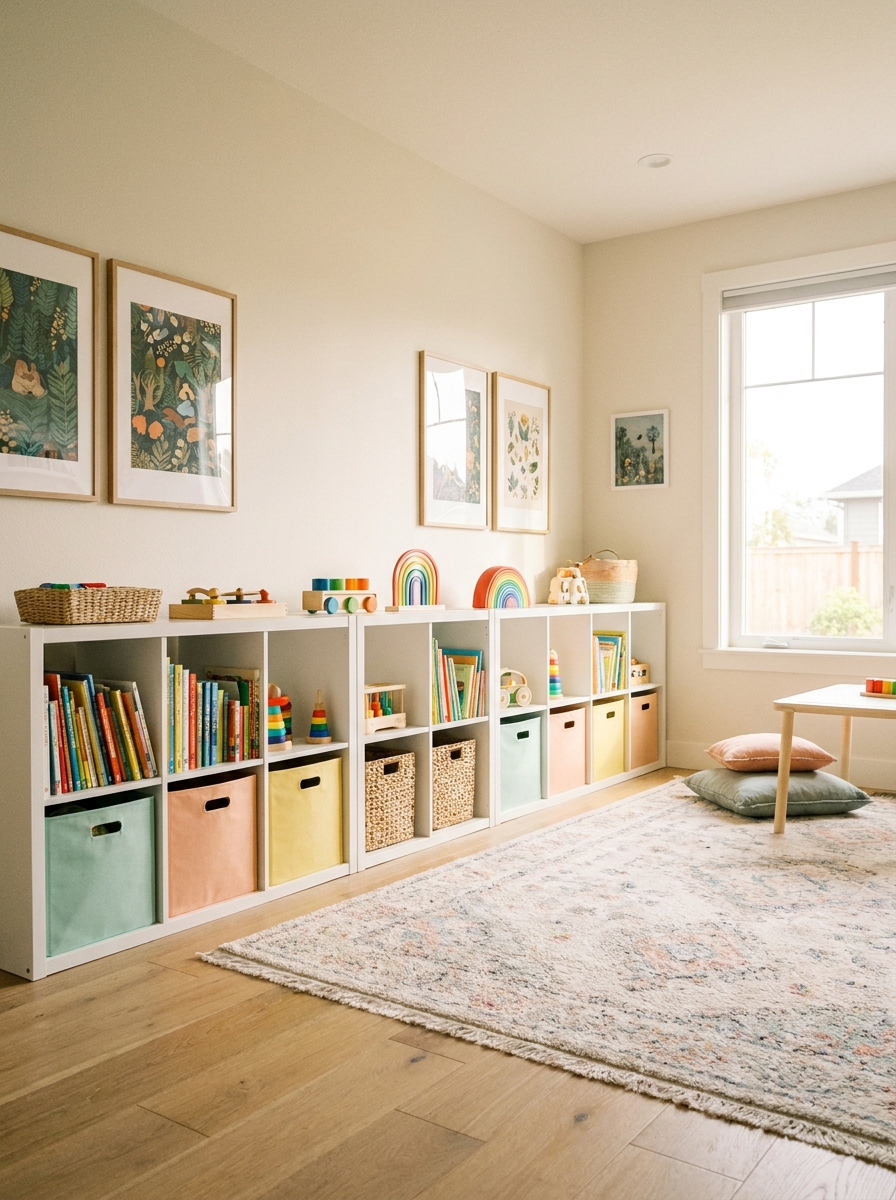
A low storage wall is one of the easiest ways to make a playroom feel more organized without making it look overly structured. Open cube shelves keep toys visible and easy for children to reach, which encourages more independent play and makes cleanup feel less intimidating. When toys have an obvious place to go, the whole room tends to stay calmer.
This layout works especially well in family homes where the playroom needs to feel neat even when it is actively used. Use a mix of open cubes, woven baskets, and soft fabric bins so the room feels warm rather than too plastic or classroom-like. Keep the top of the shelf simple with a few books, framed prints, or small toys to avoid visual clutter.
Add a window reading nook
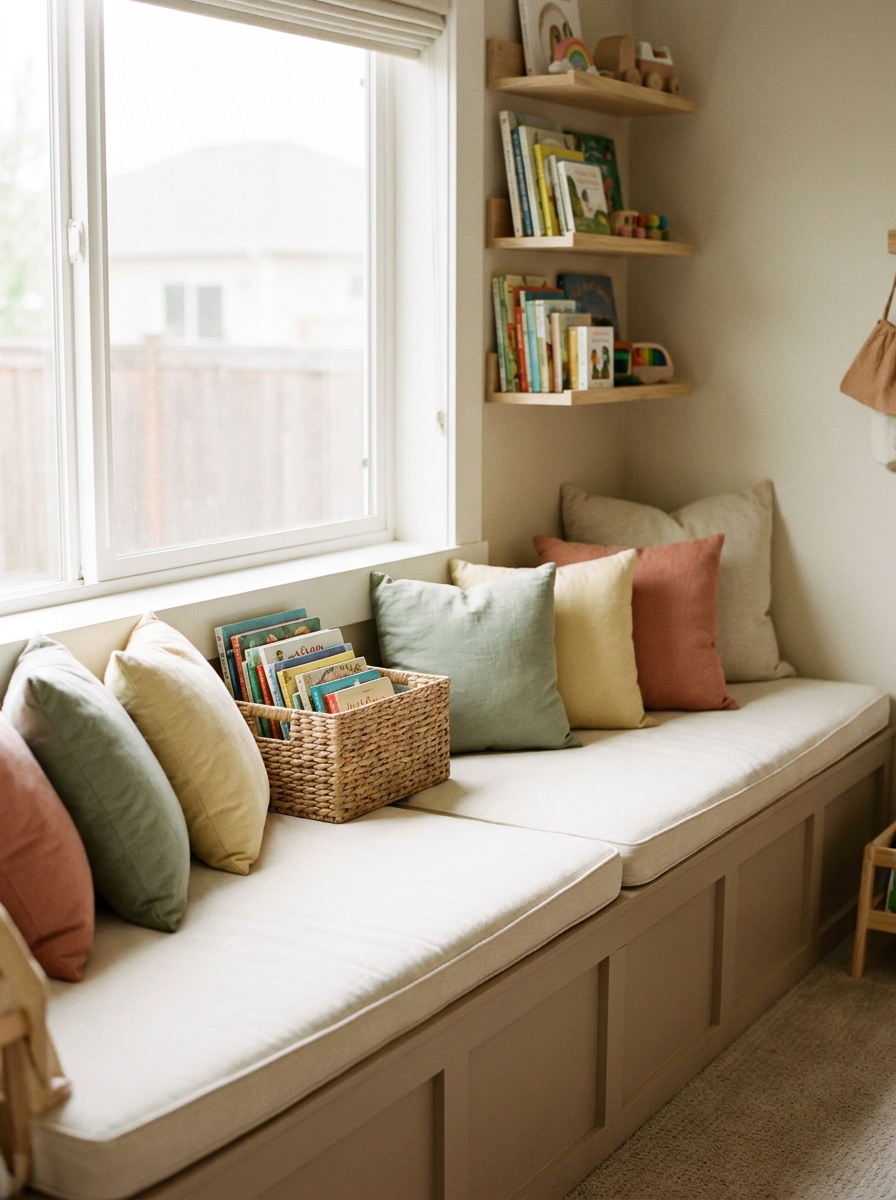
A window reading nook instantly makes a playroom feel more thoughtful and cozy. It gives the room a quiet zone that balances out louder and more active play areas. Even in a colorful playroom, a reading corner can help create a slower, softer atmosphere where children can settle down with books or simply rest for a while.
Built-in benches look beautiful, but you can get a similar effect with a padded bench, floor cushions, or a low seat placed under a window. Add a few cushions, a small blanket, and nearby book storage so the nook feels complete. Soft natural light makes this corner especially inviting, and these window reading nook ideas can help if you want the space to feel even more intentional.
Create a dedicated art station
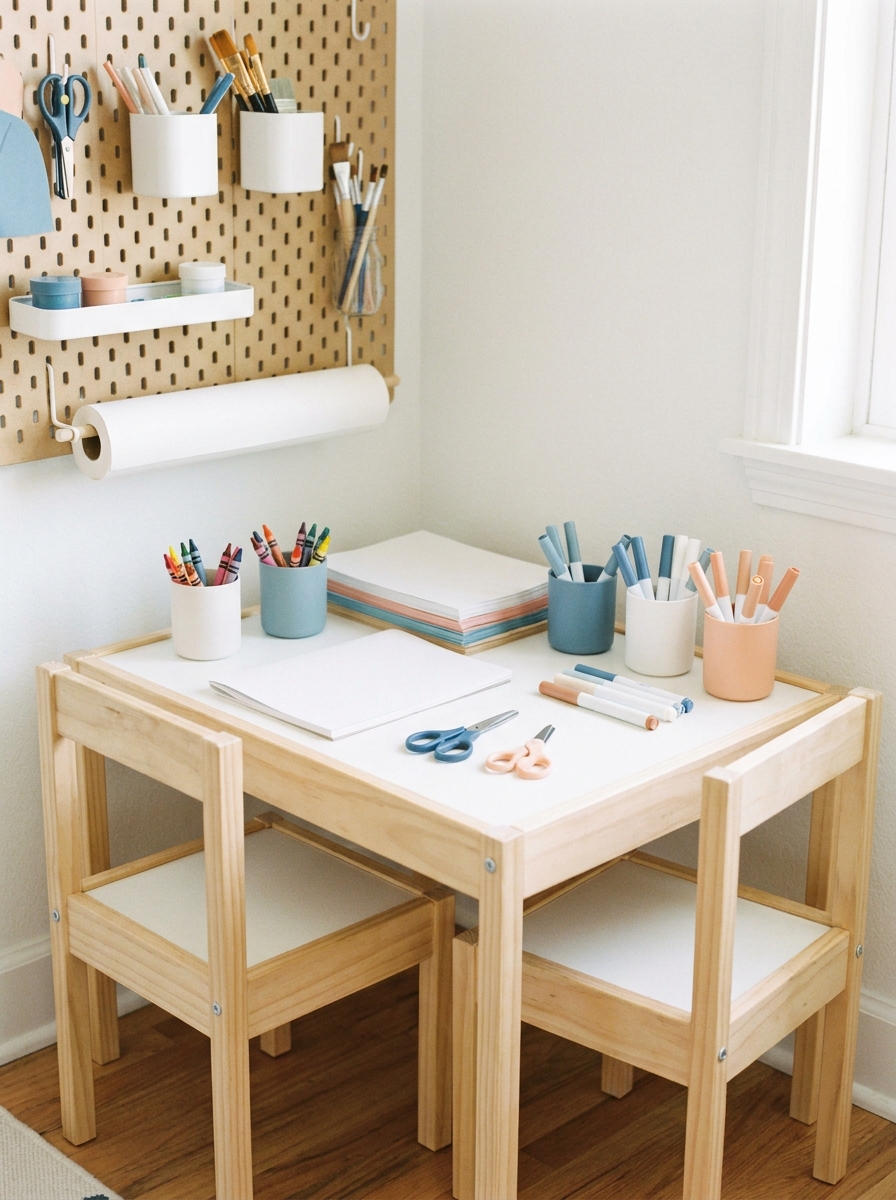
An art station is one of the most useful pieces of playroom inspiration because it gives children a clear place to draw, color, cut, and create. Instead of art supplies drifting across the house, they stay in one area that feels intentionally set up for creativity. This can help keep messes more contained while still encouraging hands-on play.
A child-sized table and chairs work well here, along with cups for crayons, paper trays, and wall storage for supplies. If possible, place the art station near natural light. Use wipeable surfaces and easy-access containers so the space remains functional and easy to maintain.
Use a soft play corner for younger kids
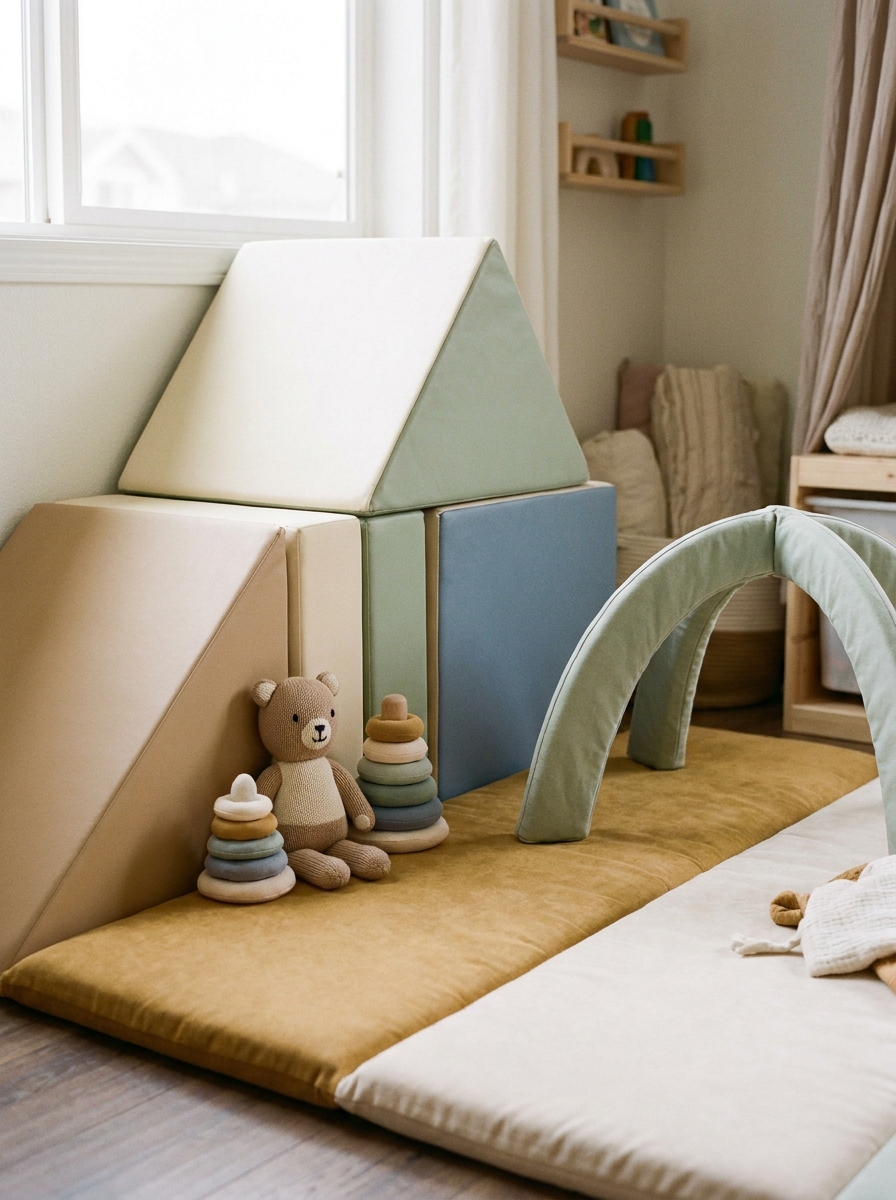
A soft play corner works especially well for toddlers and younger children who need a safe area to climb, roll, and explore. Instead of filling the whole room with bulky equipment, a dedicated soft zone gives the space a playful function while keeping the rest of the room open for other activities.
Use padded mats, a few foam shapes, a small arch, or a mini slide if space allows. Keep the look simple and cohesive so the room still feels like part of the home. This setup works best in one defined corner, especially when paired with nearby toy storage.
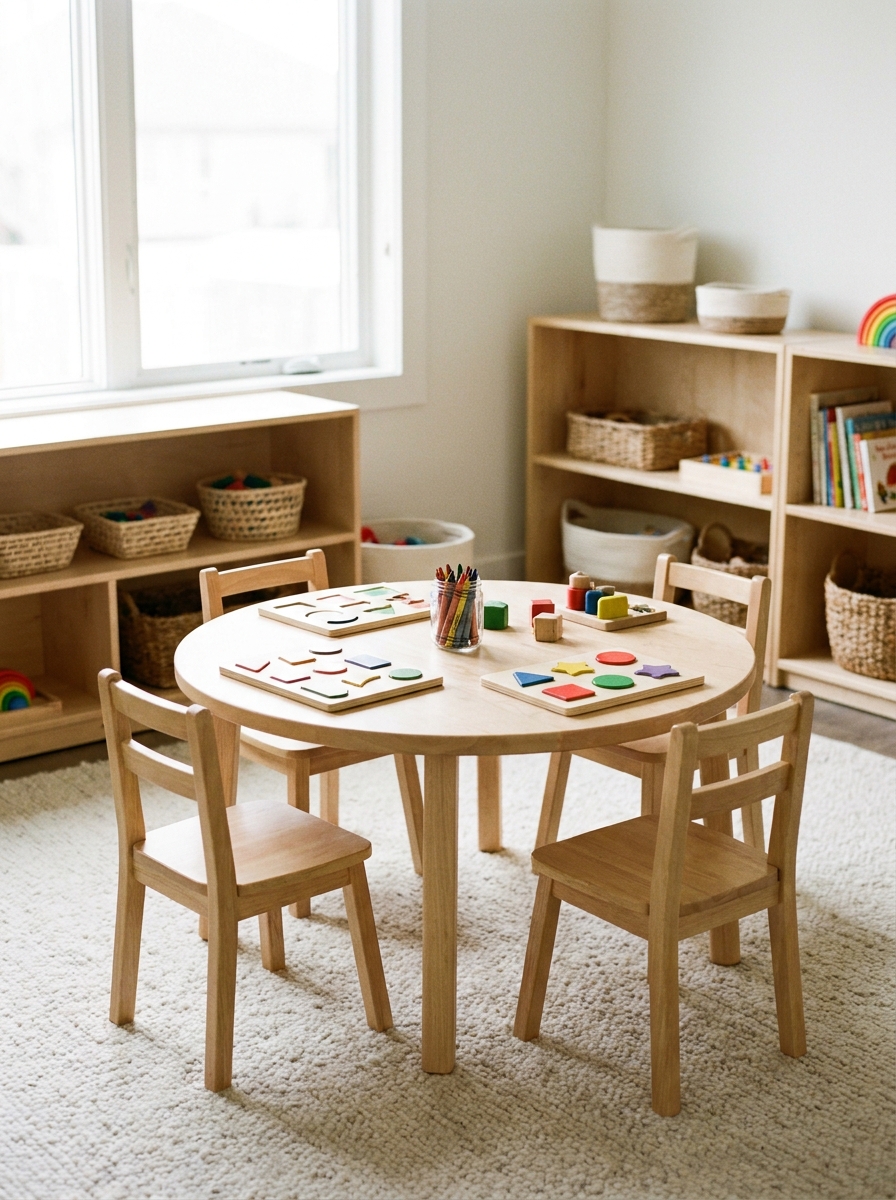
Add a child-sized table for everyday activities
A small table is one of the most flexible features you can include in a playroom. It can be used for puzzles, coloring, building blocks, snack time, board games, and pretend play. Because it supports so many types of activity, it often becomes the most-used part of the room.
Round tables soften the look and work well in smaller spaces, while rectangular tables are useful when multiple children use the room together. Choose chairs that are sturdy and easy to wipe clean. Leave enough open space around the table so the room still feels breathable.
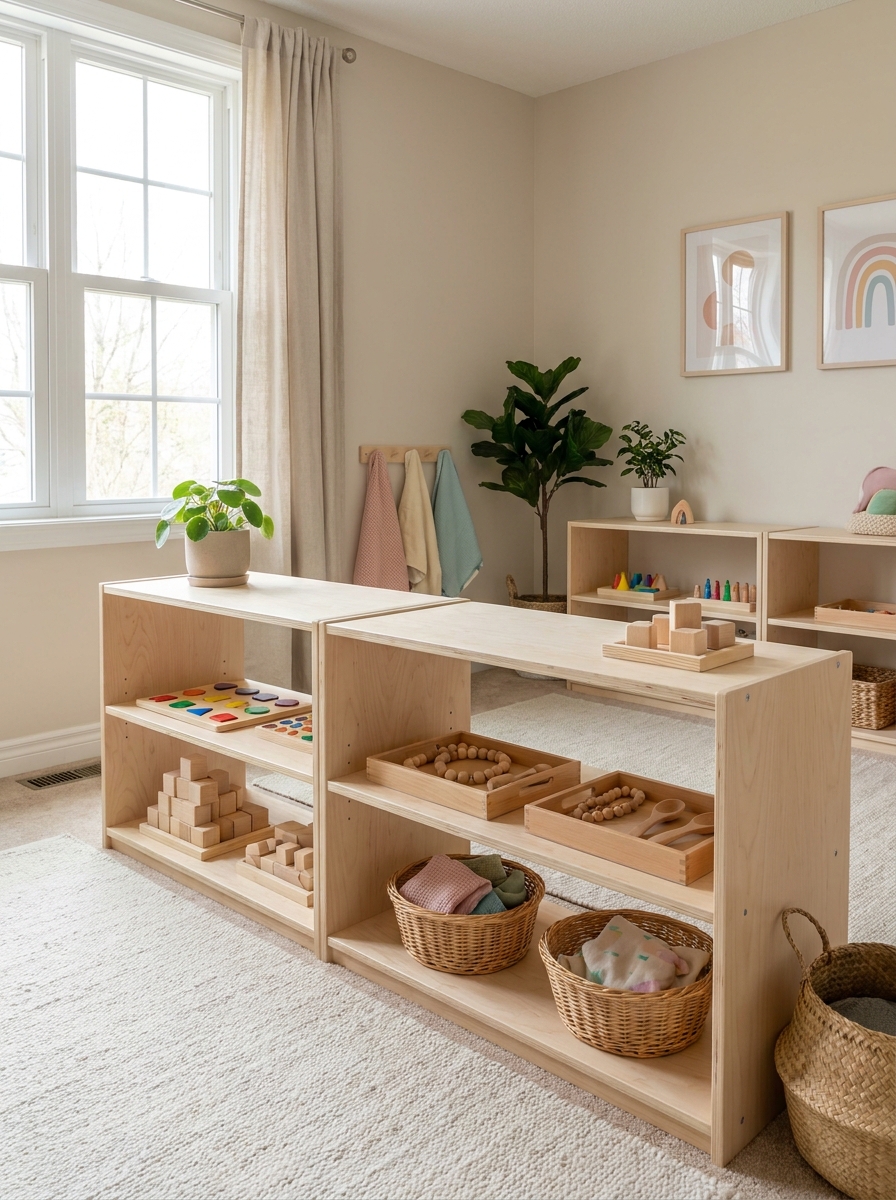
Try toy rotation shelves
Toy rotation is a smart idea when a playroom feels too crowded or overstimulating. Instead of displaying every toy at once, use shelves to show only a smaller selection while storing the rest away. This makes the room feel calmer and often encourages more focused play because children are not overwhelmed with choices.
Open shelves are best for this approach because they allow each item to be seen clearly. A few wooden toys, puzzles, baskets, and activity trays are enough to create a thoughtful setup. This kind of playroom inspiration works particularly well in Montessori-style rooms.
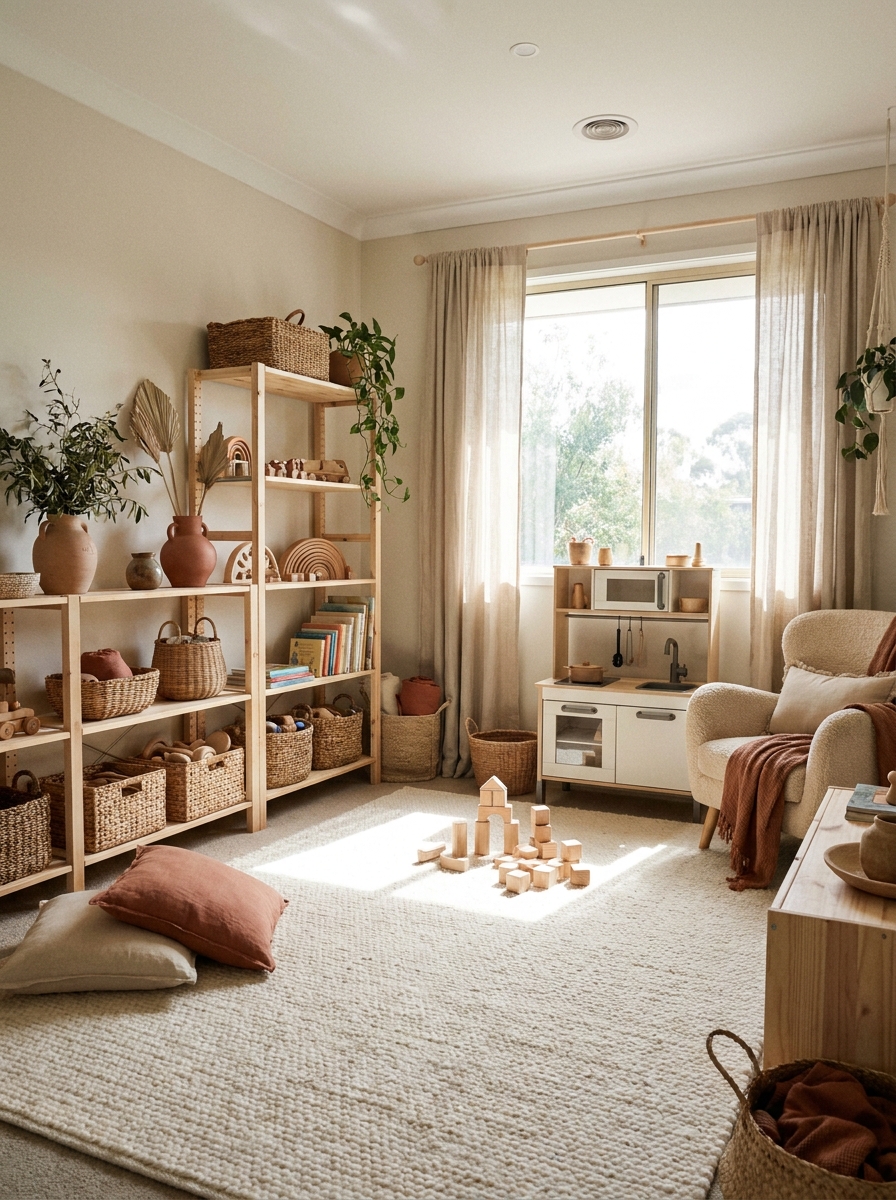
Use a neutral playroom with warm earthy accents
Not every playroom has to be brightly saturated to feel playful. A neutral room with earthy accents can still feel warm, interesting, and child-friendly while blending more naturally into the rest of the house. This approach is especially appealing if the playroom is visible from shared family spaces.
Use cream walls, natural wood, soft tan, muted terracotta, or sage green. Then bring in personality through textures, baskets, printed rugs, and a few subtle playful details. The result feels calmer and more timeless than a highly themed room.
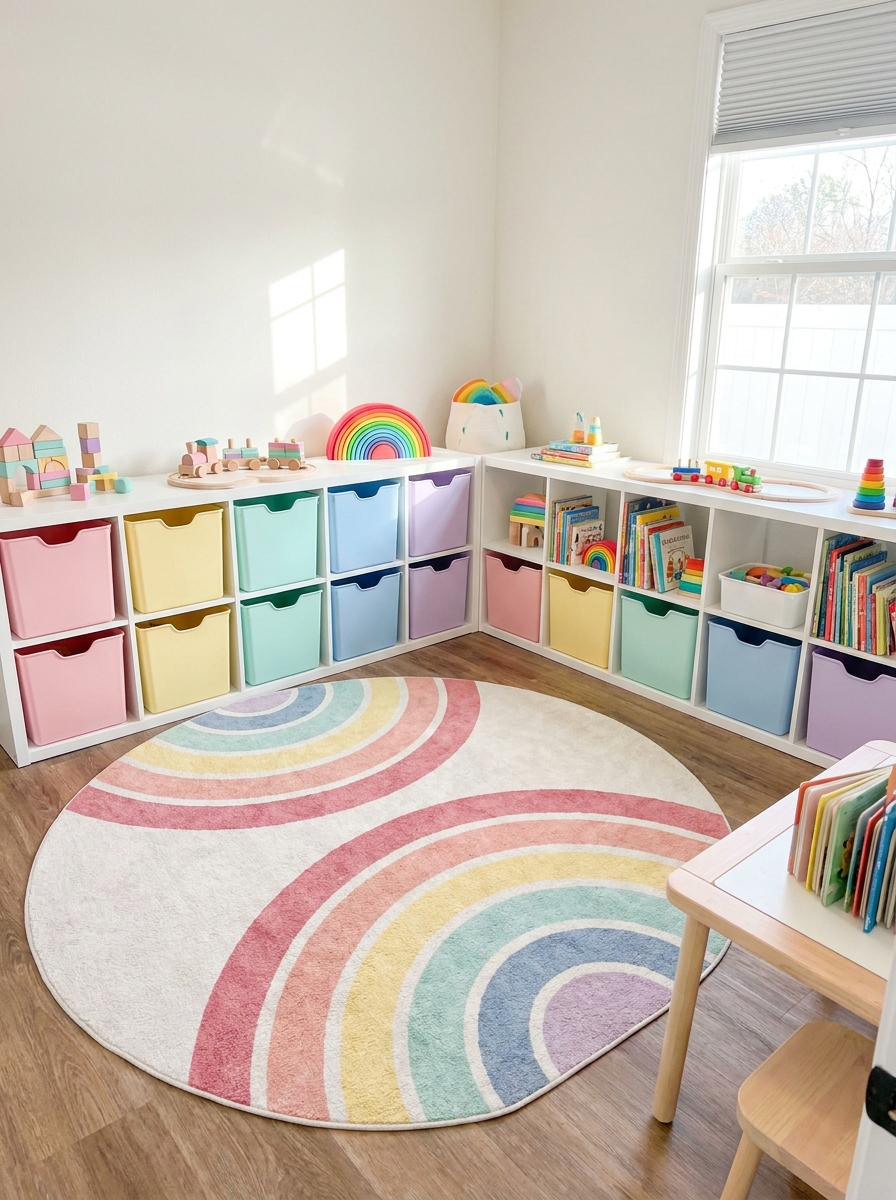
Go for a colorful rainbow storage setup
If you want a room that feels upbeat and energetic, colorful storage can become the star of the playroom. This works especially well when the rest of the room stays fairly simple. Instead of covering every surface with color, use the shelves, bins, and decor details to bring life into the space.
Rainbow-inspired bins, pastel drawers, and multi-colored books create a fun visual impact without making the room feel overwhelming. Keep the floor and major furniture neutral so the colorful pieces stand out more clearly.
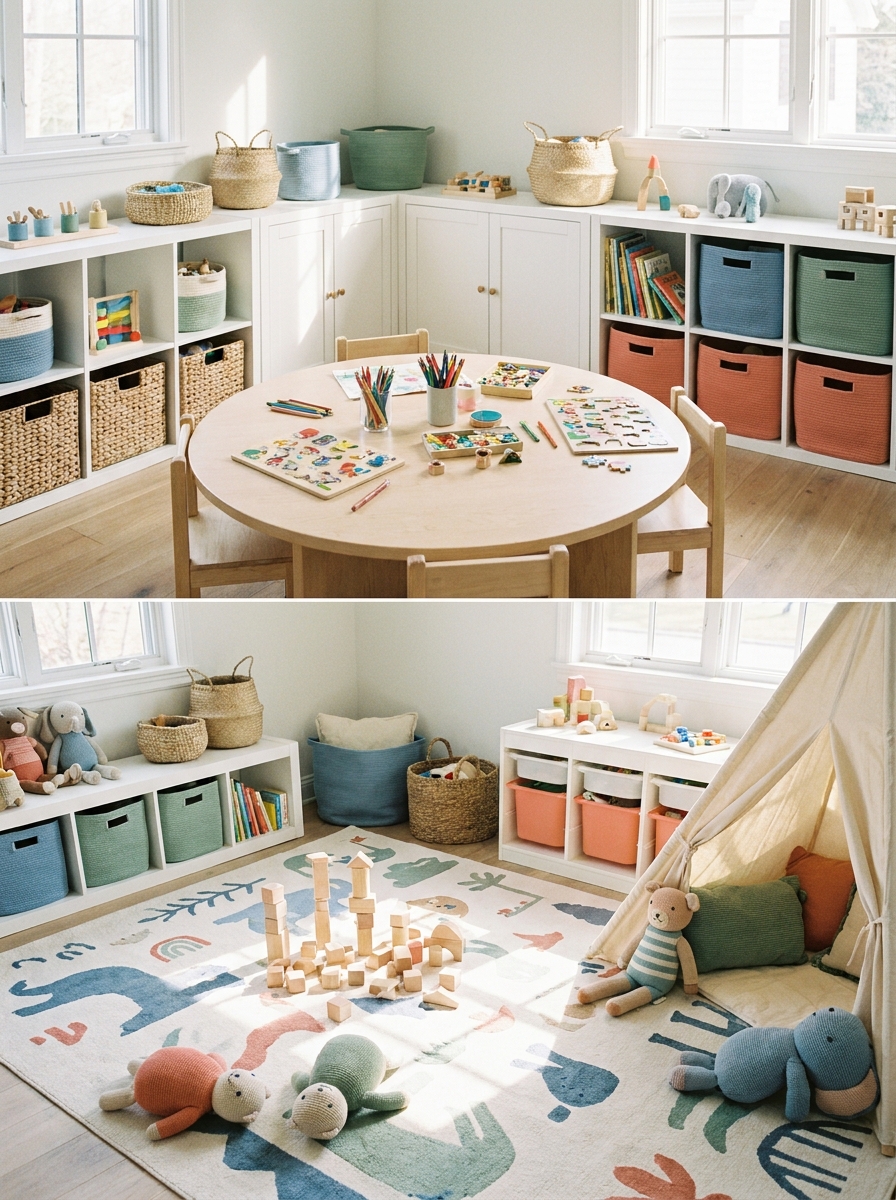
Design a shared playroom for siblings
When more than one child uses the playroom, zoning becomes even more important. A shared room works best when it includes common play areas as well as enough structure that different activities can happen at the same time. One child might want to draw while another builds or reads.
Use a central table, a floor play area, and storage divided by toy type rather than by child. This keeps the room from feeling overly segmented. If the age range is wide, keep small-piece toys in higher baskets while placing more general-use items lower down.
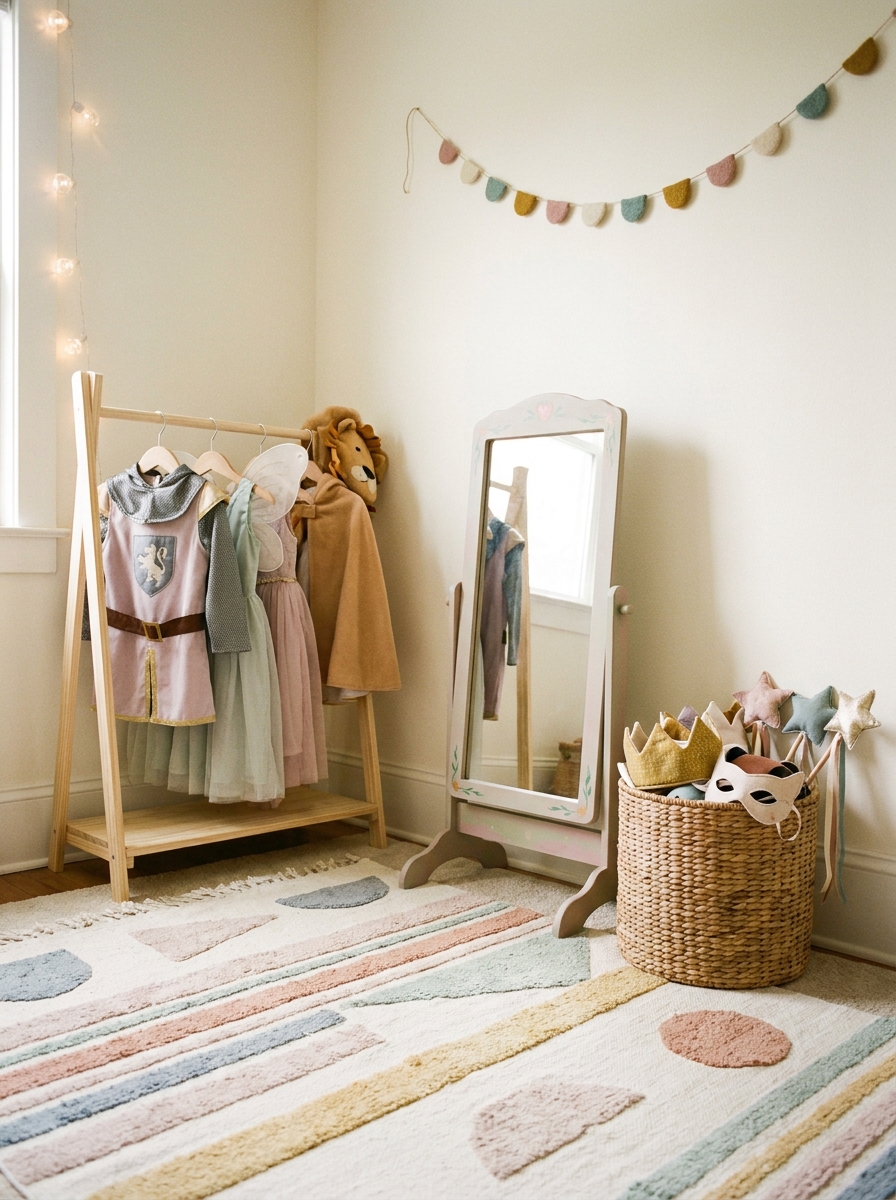
Include a dress-up corner
A dress-up corner adds a lot of personality to a playroom and gives children a clear place for pretend play. It can be as simple as a small clothing rack, a mirror, and a basket of costumes, or it can include a bench, hooks, and themed accessories.
This part of the room is visually fun and works especially well near a reading or imaginative play area. Keep the setup low enough for children to reach easily, and avoid stuffing too many items into one rack so it stays inviting instead of chaotic.
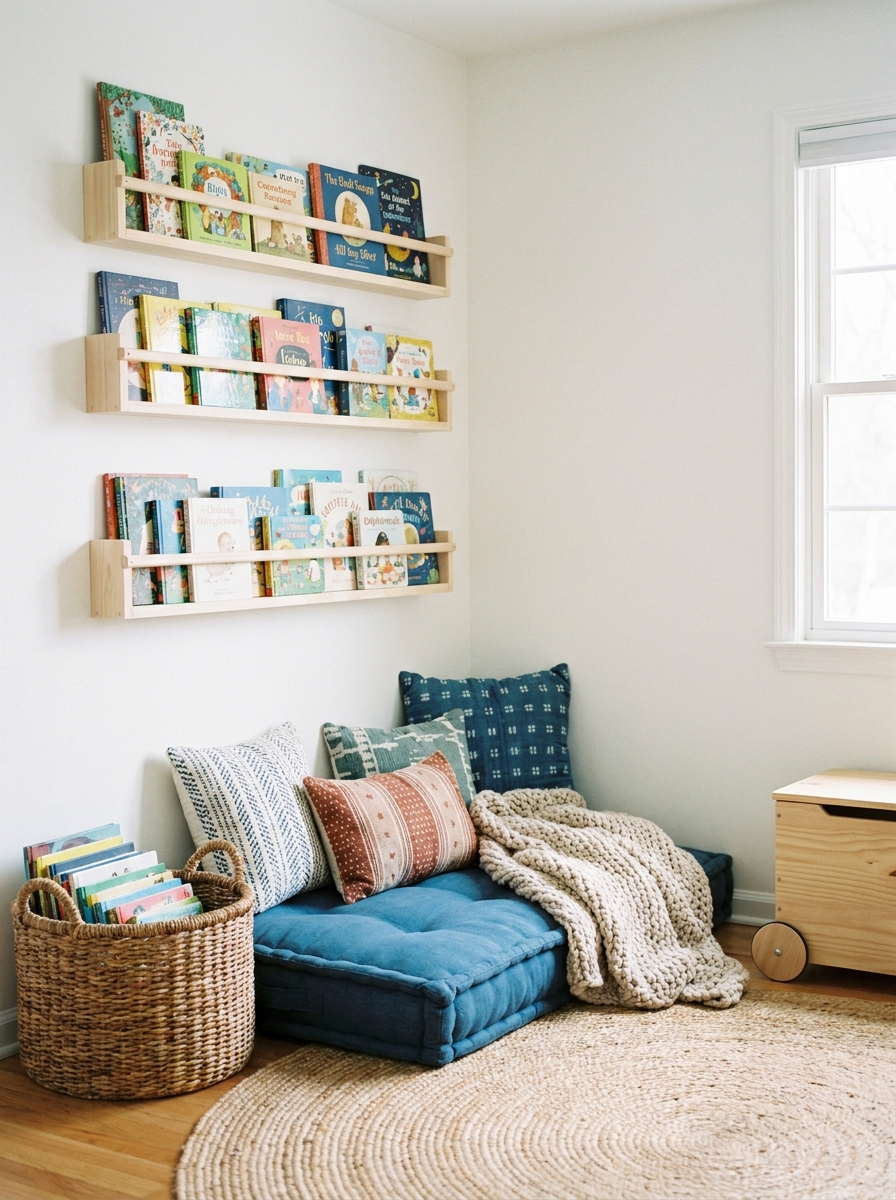
Add front-facing book ledges
Books are often easier for children to choose when the covers are visible. Front-facing book ledges create a mini library feel and make books part of the room's decor. They also help encourage independent reading because children can browse visually rather than pulling out random spines from a packed shelf.
Place a few ledges at child height and rotate the books regularly. This keeps the wall looking fresh and prevents the room from feeling overloaded. It is a simple feature, but it can make a huge difference in how the playroom is used. If you like this wall-storage approach, the same balance ideas from how to style floating shelves can help the ledges look tidy without feeling too arranged.
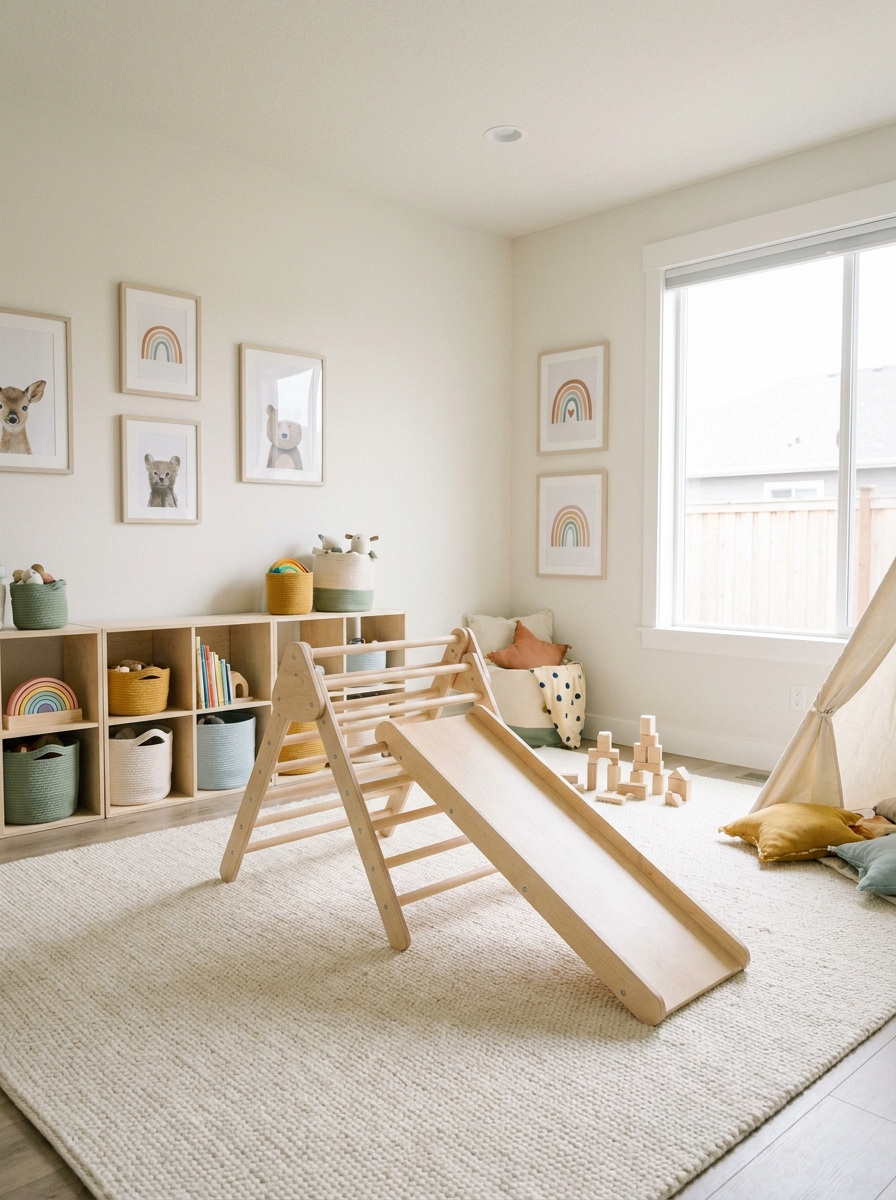
Try a climbing or movement feature
A movement feature can make a playroom feel truly special. Depending on the room size, this could be a small climbing wall, an indoor arch, a climbing triangle, wall bars, or a mini slide. It gives the room a more active function and is especially useful during bad weather when kids cannot play outside as much.
The key is to keep it scaled to the room and age group. It should feel integrated rather than taking over the whole space. Pair it with mats and keep the surrounding area open enough to remain safe.
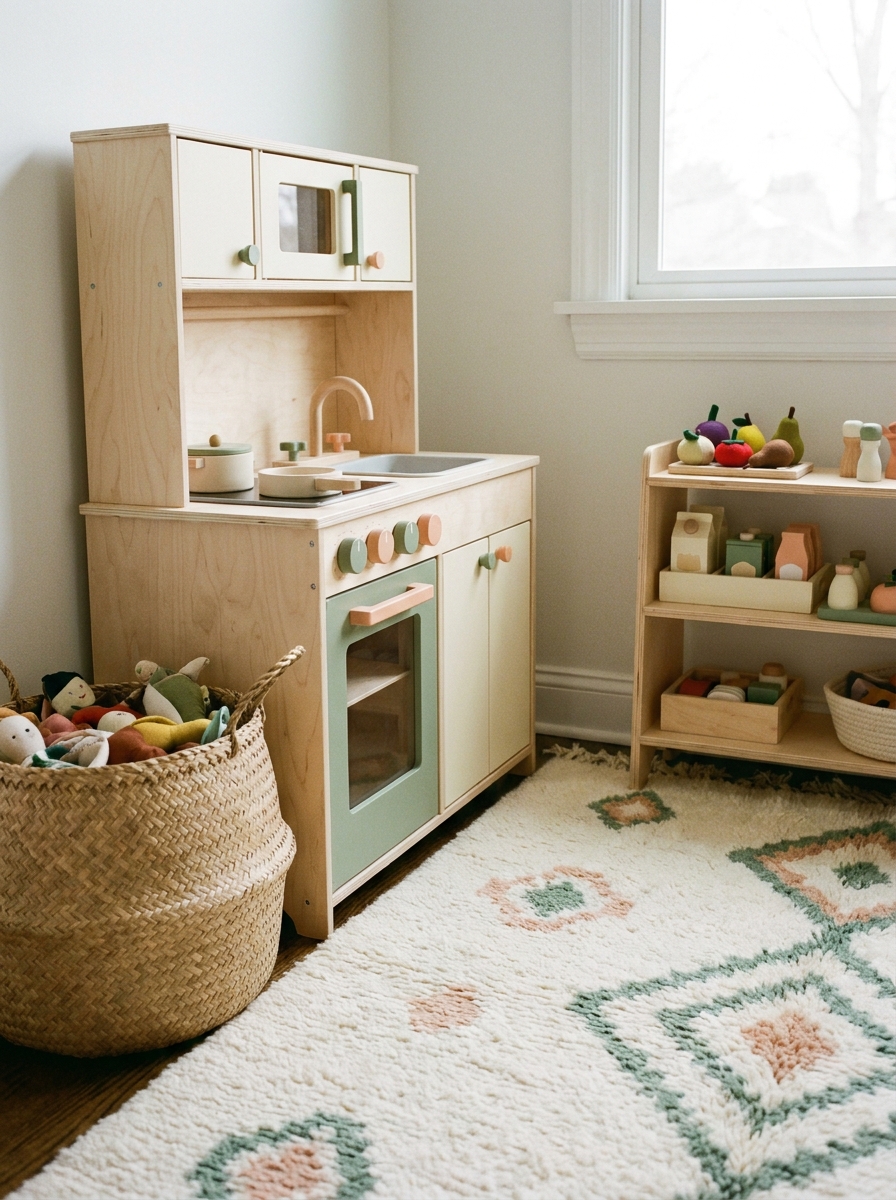
Use a play kitchen corner
A play kitchen is one of the most popular features in modern playrooms because it supports imaginative play without creating much visual mess. It also looks charming when styled well. Pairing it with a few accessories, a shelf, or a small market stand can turn one corner into a full pretend-play zone.
Keep the accessories fairly edited so the space does not become cluttered. A few baskets, toy food pieces, and small shelves are enough to make it feel complete. This idea works beautifully in both colorful and neutral rooms.
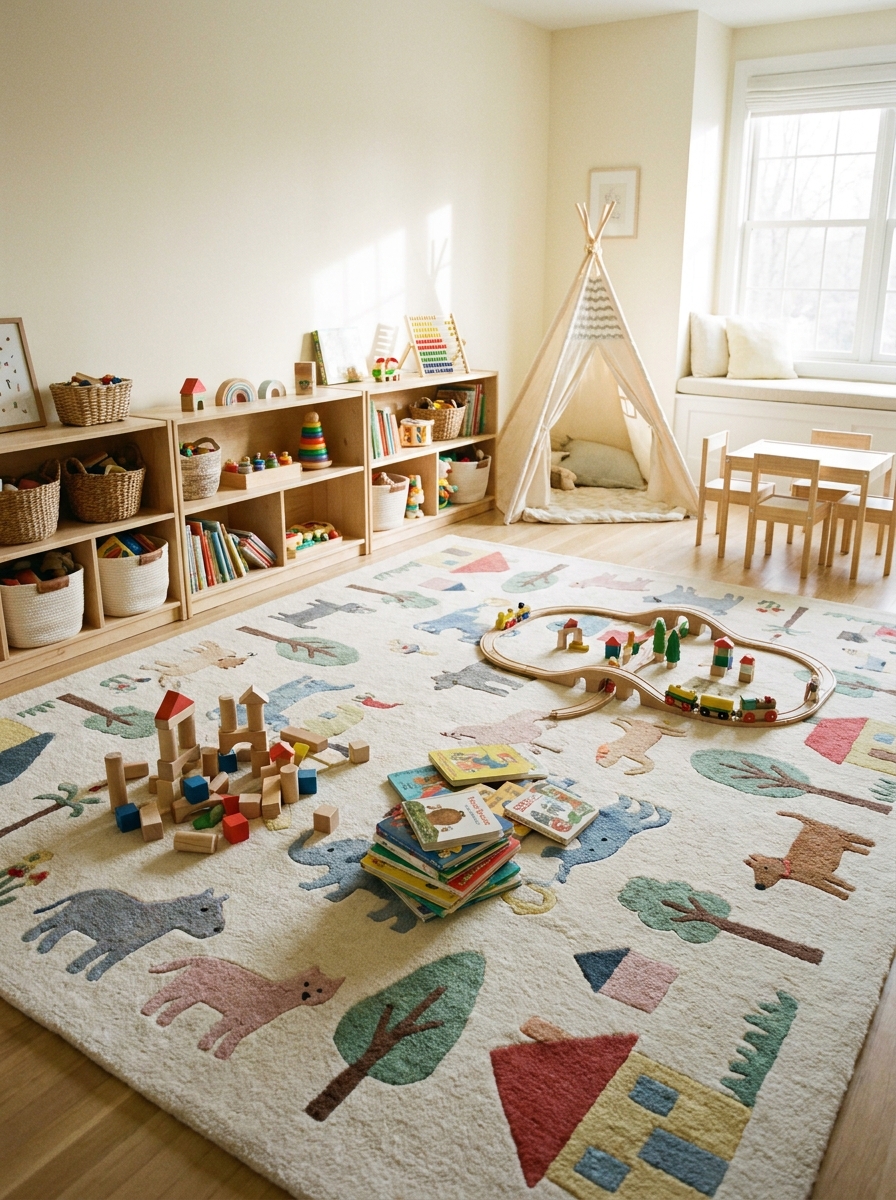
Create a floor play zone with a large rug
A large rug helps define the central play area and makes the room feel anchored. It gives children a comfortable place to sit, build, spread out toys, and move between activities. In many playrooms, the rug ends up being the visual center of the whole design.
Choose a washable or easy-care rug with enough softness for daily use. It can be subtle or playful, but it should feel connected to the rest of the room rather than visually fighting with the storage, walls, and decor.
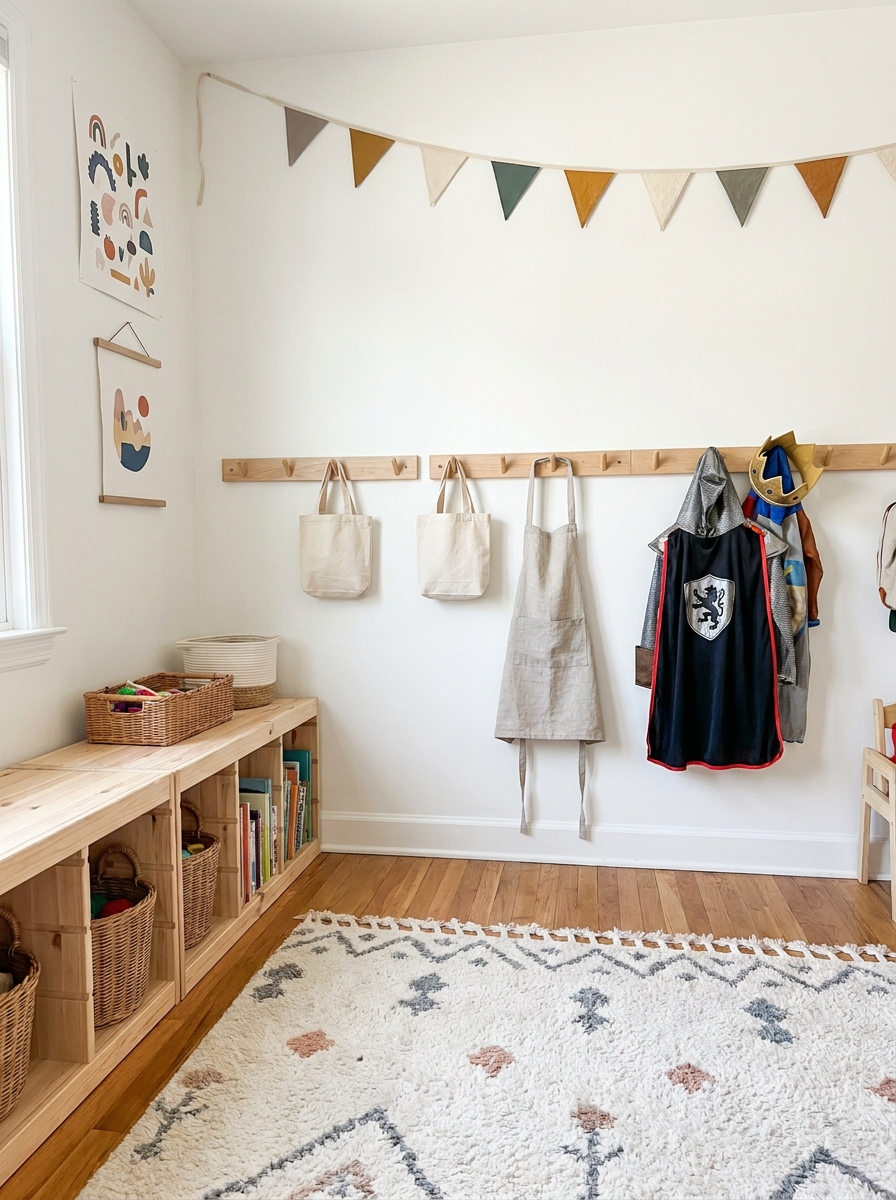
Use wall hooks for bags and dress-up pieces
Small functional details can make a playroom much easier to maintain. Wall hooks are perfect for hanging backpacks, costumes, headphones, play aprons, or toy bags. They use vertical space well and help keep the floor from feeling cluttered.
Choose simple hooks in a child-friendly height and group them near the entrance or by a pretend-play area. Even a short row of hooks can make the room feel more intentional and practical.
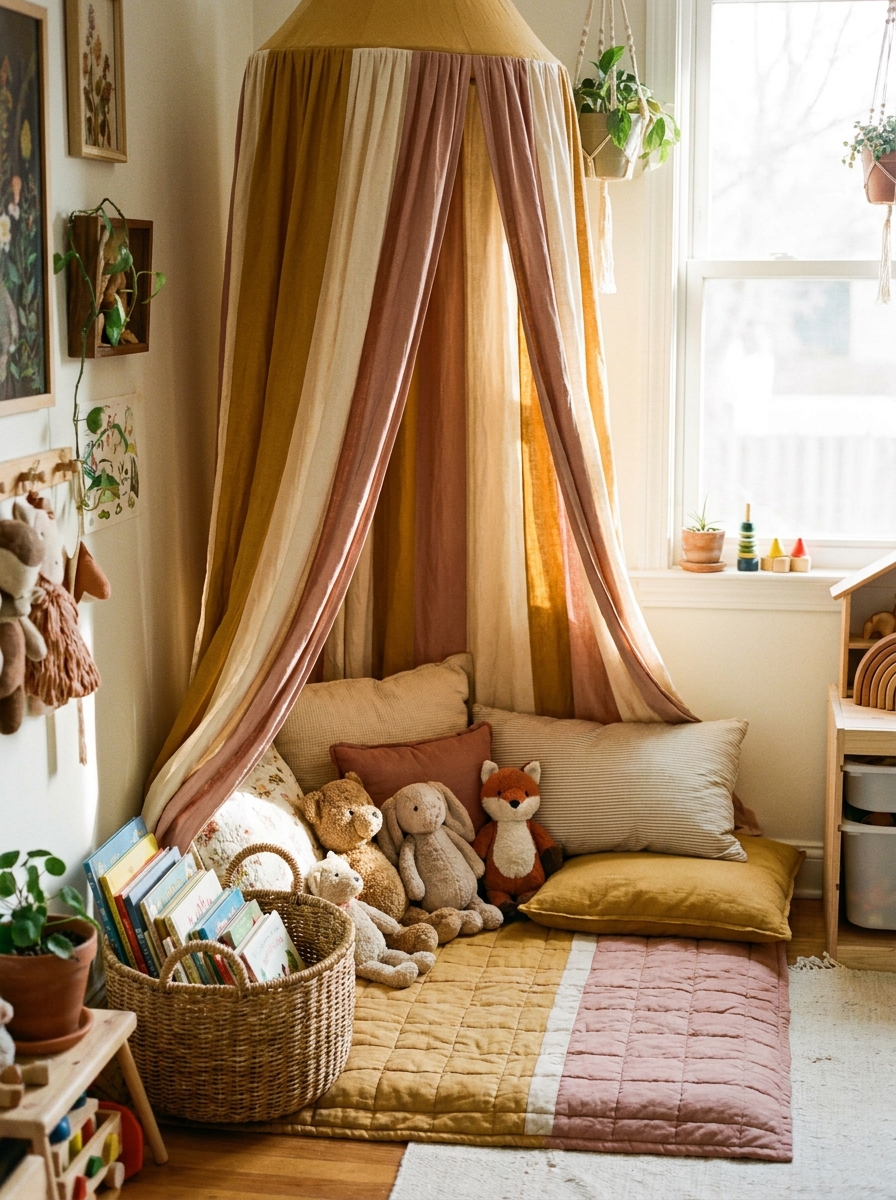
Add a cozy tent or canopy nook
A tent or canopy corner brings softness and imagination into the room. It works well for quiet play, reading, resting, or pretend adventures. This kind of detail often becomes a favorite space because it feels slightly separate from the rest of the room without requiring much floor area.
Use floor cushions, a padded mat, and perhaps a small basket of books or stuffed animals. Soft lighting can make the nook feel even more magical, especially in the evening. For a quieter version of the same idea, cozy reading corner ideas can help shape a calm little retreat.
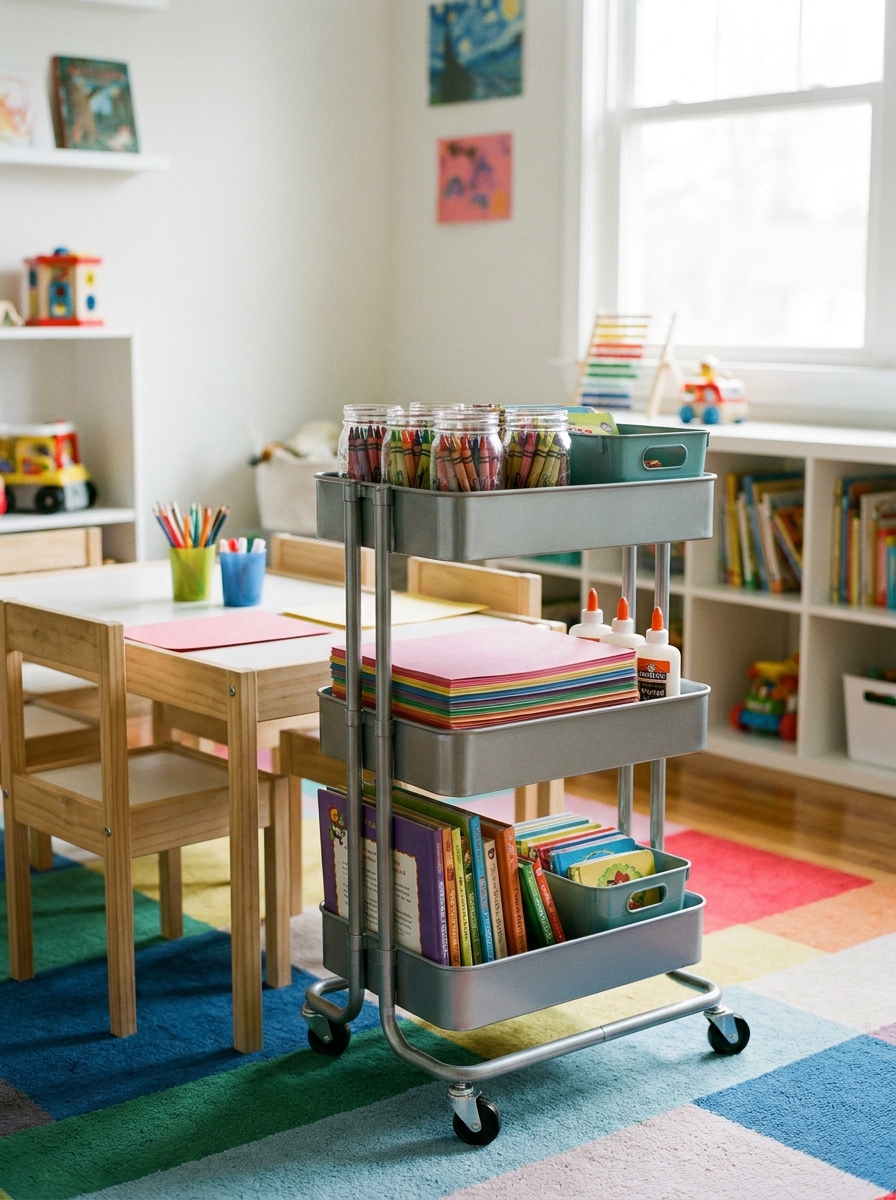
Use a rolling cart for crafts and small supplies
A rolling cart is useful in playrooms where supplies need to stay mobile or be tucked away quickly. It works especially well for art materials, puzzles, sticker books, or sensory-play items. Instead of spreading these supplies across several storage areas, the cart keeps them together in one easy-to-access place.
Choose a cart with a clean design and a manageable size. It should feel helpful, not bulky. This is especially practical in smaller playrooms or multipurpose family rooms.
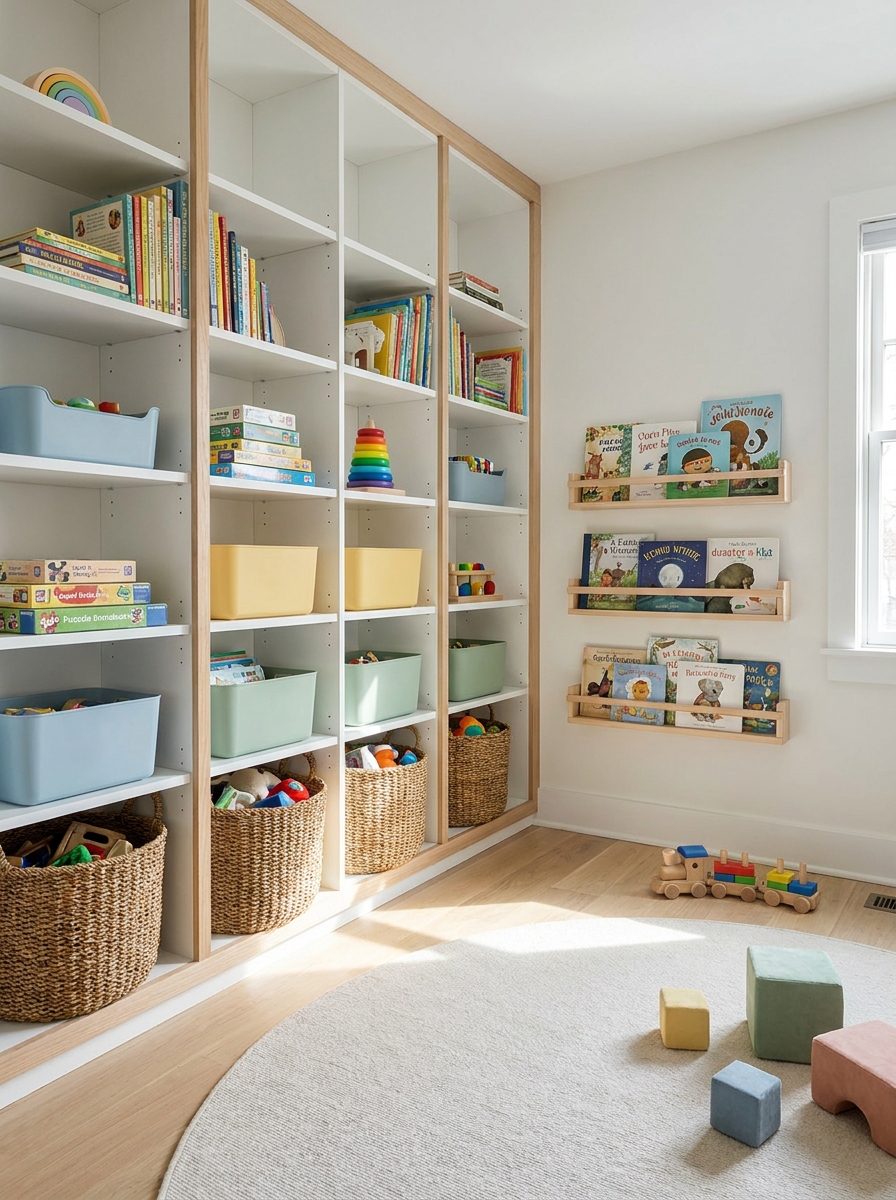
Make a small playroom feel bigger with vertical storage
In a smaller room, vertical storage can completely change the layout. When the walls do more work, the floor stays more open for actual play. Tall shelving, wall ledges, and mounted storage allow you to fit more into the space without making it feel cramped.
The trick is to keep the lower level accessible for children while placing less-used items slightly higher. Avoid overfilling every shelf. A little breathing room visually helps the space feel larger, and these small apartment storage ideas have more space-saving logic that translates well to compact playrooms.
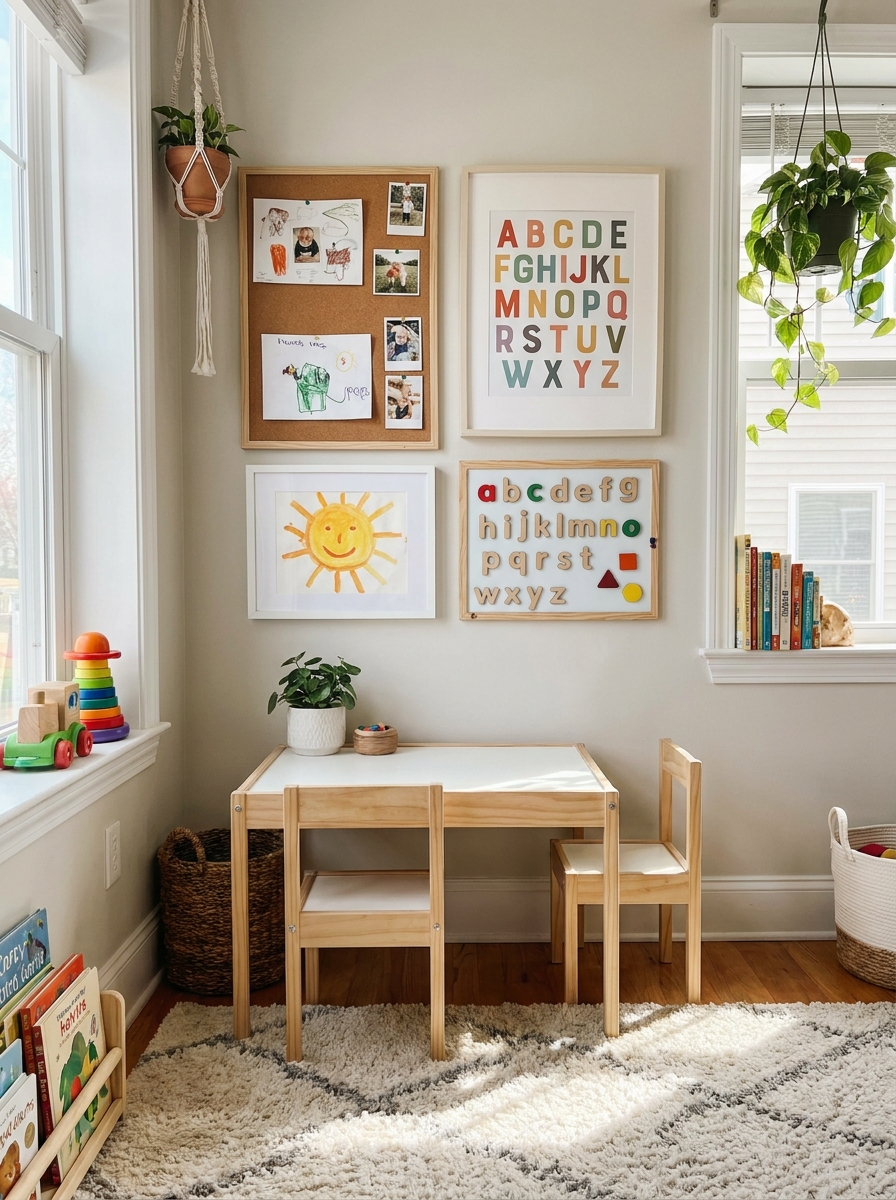
Add a learning wall
A learning wall can bring structure into a playroom without making it feel too school-like. It might include an alphabet print, corkboard, magnetic board, number chart, calendar, or simple rotating artwork display. The goal is to create a wall that feels engaging and useful rather than overly busy.
Keep it visually light. One or two framed elements and one interactive feature are often enough. This idea works well near a table or a quiet corner where children already spend focused time.
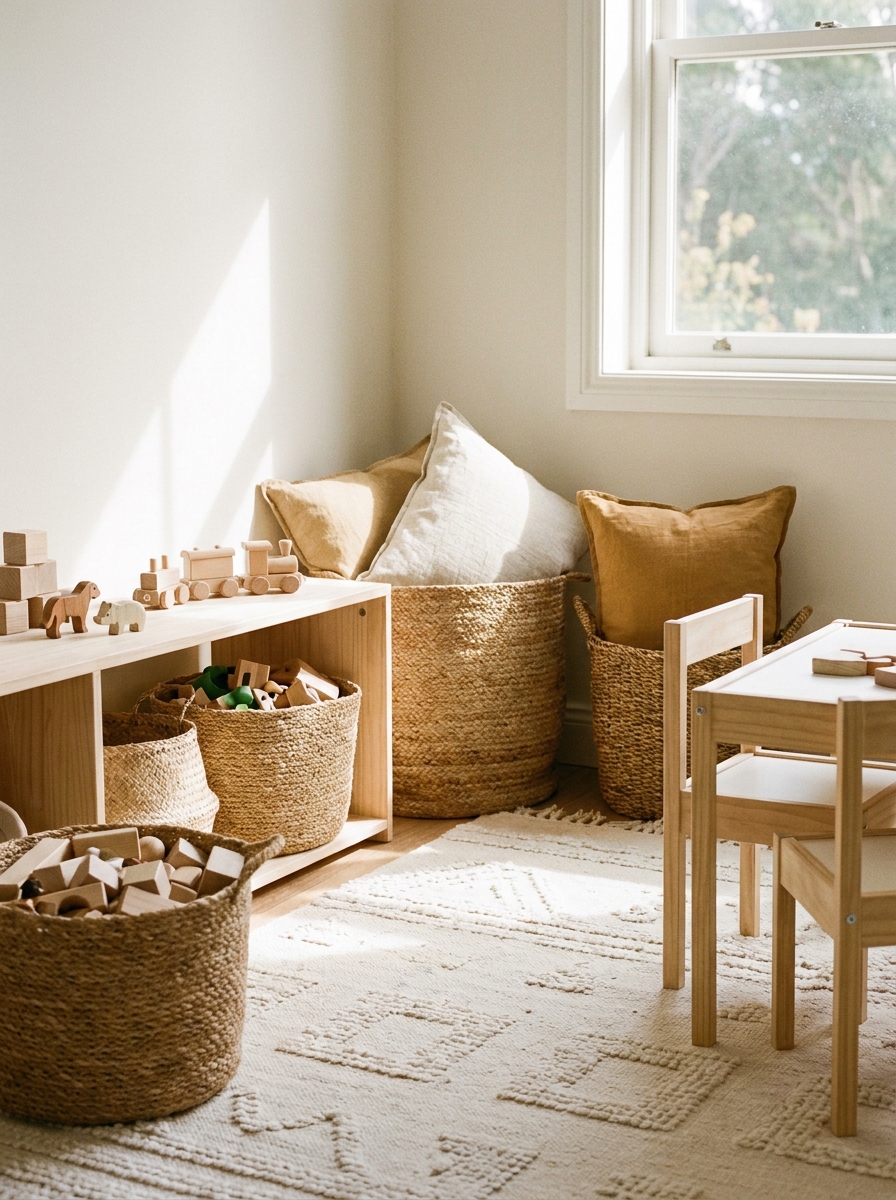
Use natural materials for a softer look
Natural materials help a playroom feel grounded and more connected to the rest of the home. Woven baskets, wooden toys, cotton rugs, linen cushions, and pale wood furniture can soften the visual noise that children's rooms often accumulate.
This does not mean the room has to be dull. Color can still appear through books, art, or a few accent pieces. The main benefit of this approach is that it makes the playroom feel calmer and more timeless.
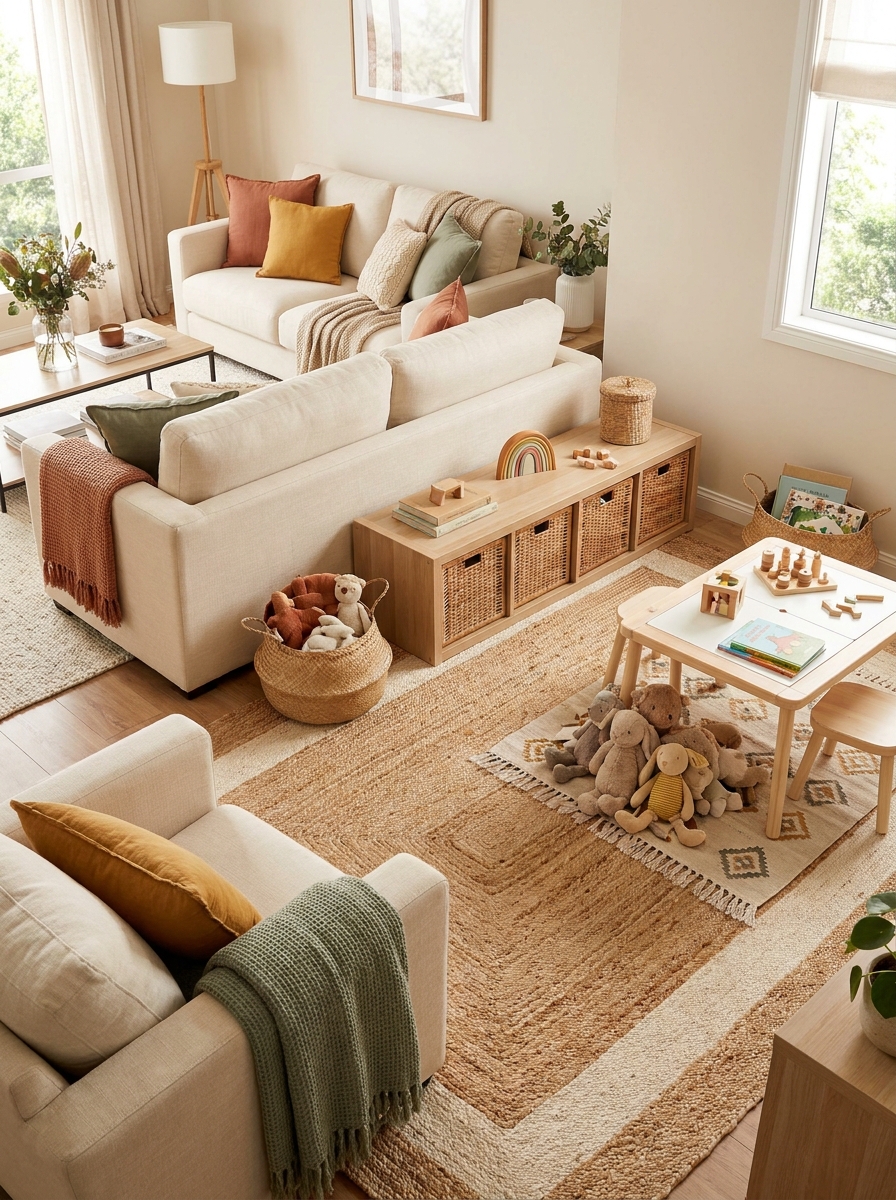
Blend the playroom into a family living space
Sometimes the best playroom inspiration is not a separate room at all. A play zone can be created inside a family room, bonus room, or open-plan area by using storage, rugs, and furniture placement to define the space. This works well in smaller homes or when parents want children nearby during the day.
The key is choosing storage that looks good enough to be part of the main home. Closed baskets, low shelves, and a few coordinated colors help the area feel designed rather than temporary. It becomes a playroom without losing the comfort of a shared living space.
How to make playroom inspiration work in real life
When choosing from different playroom inspiration ideas, start with how the room will actually be used. A toddler-heavy room may need more floor space and soft play elements, while a room for older kids may benefit more from art storage, reading areas, or a homework-friendly table. The best playroom is not the one with the most decor, but the one that fits your daily routine.
It also helps to think in zones. Most playrooms work better when they include a few clear activity areas instead of one large undefined space. A reading corner, a central play rug, a creative table, and some storage can go much further than trying to cram every possible toy into one room.
Storage should always support the room, not dominate it. Low shelves, baskets, and visible toy categories make the room easier for children to use independently. If the system is too complicated, the room will not stay organized for long.
Final thoughts
Good playroom inspiration is not just about making a room look cute. It is about creating a space that feels inviting, organized, and flexible enough for real childhood. A playroom should support creativity and fun while still feeling manageable for everyday family life.
Whether you prefer a bright colorful room, a calm neutral setup, or a mixed style with both playful and practical details, the best ideas are usually the ones that make the room easier to use. Low storage, cozy reading corners, art stations, and open floor space all help turn a simple room into a place kids genuinely enjoy.
If you build the room around how your children actually play, your playroom will feel both beautiful and useful.