Dining Room
10 Breakfast Nook Ideas for a Cozy Corner
10 breakfast nook ideas for a cozy corner: corner banquettes, small round tables, window nooks, warm lighting, and storage that make mornings better.
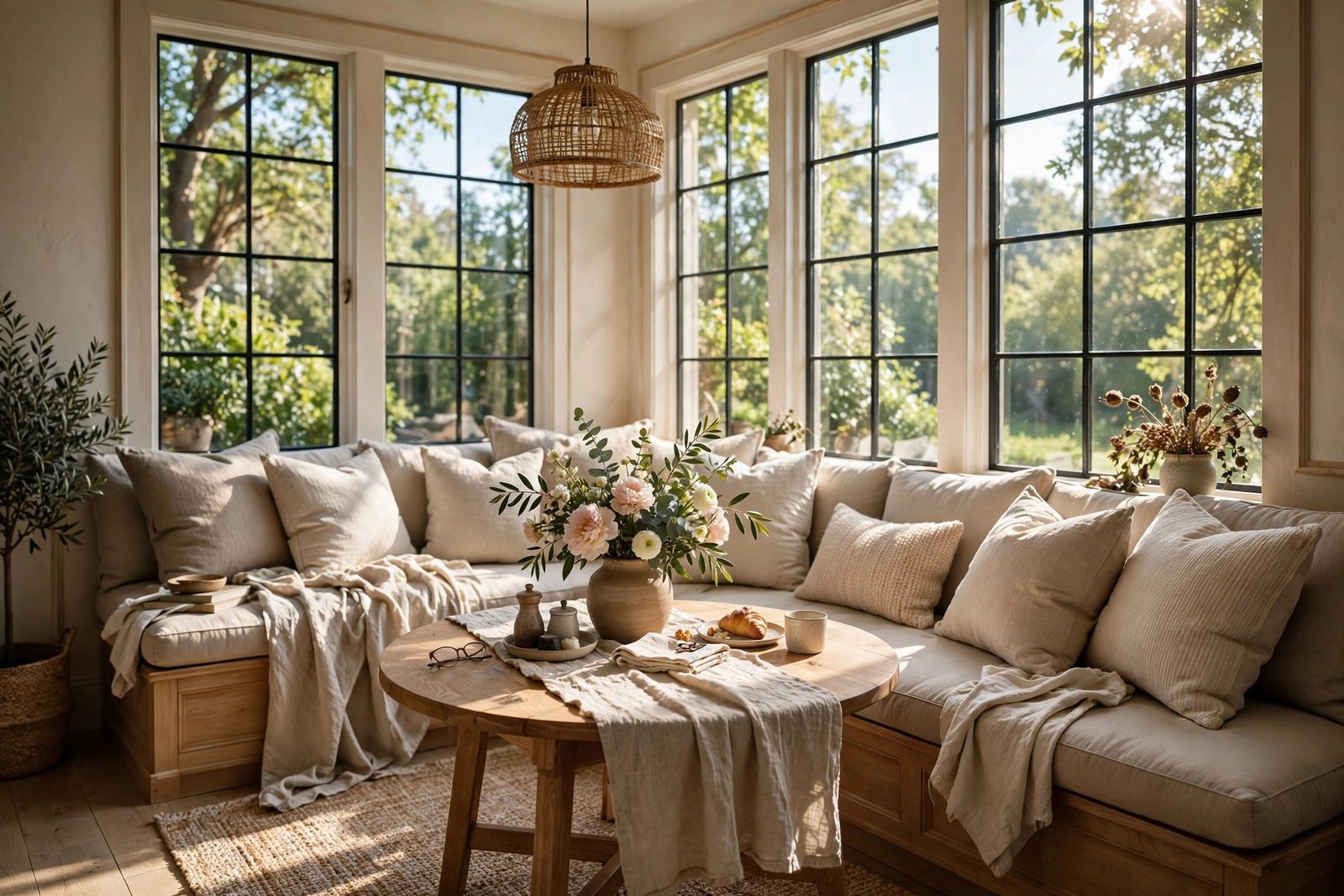
These breakfast nook ideas are all about one thing: giving your mornings a place that feels like a hug. The dining table is quietly becoming the center of the home again — a spot for slow coffee, school-morning toast, weekend puzzles, and the conversations that never seem to happen over the kitchen counter.
A breakfast nook does not need much space to do this job. An unused corner, the stretch of wall beside a window, or a sunny bay can become the most-used seat in the house with the right combination of seating, a table that fits the footprint, and lighting that flatters both pancakes and people.
Below are ten breakfast nook ideas that cover every angle — built-in banquettes, freestanding setups for renters, small-space tables, window nooks, lighting, storage, and seasonal styling. Pick the corner you have and build the nook you want.
What Makes a Breakfast Nook the Coziest Corner of Your Home?
A breakfast nook earns its coziness from enclosure: seating on two or three sides creates a pocket that feels sheltered in a way an open dining set never does. That is why the corner banquette is the classic — an L-shaped bench tucked into two walls wraps people in, holds cushions and throw pillows beautifully, and turns a wasted corner into the most fought-over seat in the house.
The table is the second half of the equation. A round or oval table suits a nook best because there are no corners to bump when you slide in and out of the banquette, and everyone can reach the middle without stretching. Size it so the tabletop is about eighteen to twenty-four inches deep per person — a forty-two-inch round comfortably seats four tucked into an L-banquette.
Light is the finishing layer. Position the nook at your best window if you have any choice in the matter, and layer a pendant overhead so the corner glows after dark. Warm-toned bulbs (2700K) keep the morning light feeling soft rather than clinical, and a simple linen runner plus one low floral arrangement make the table feel set even on an ordinary Tuesday.
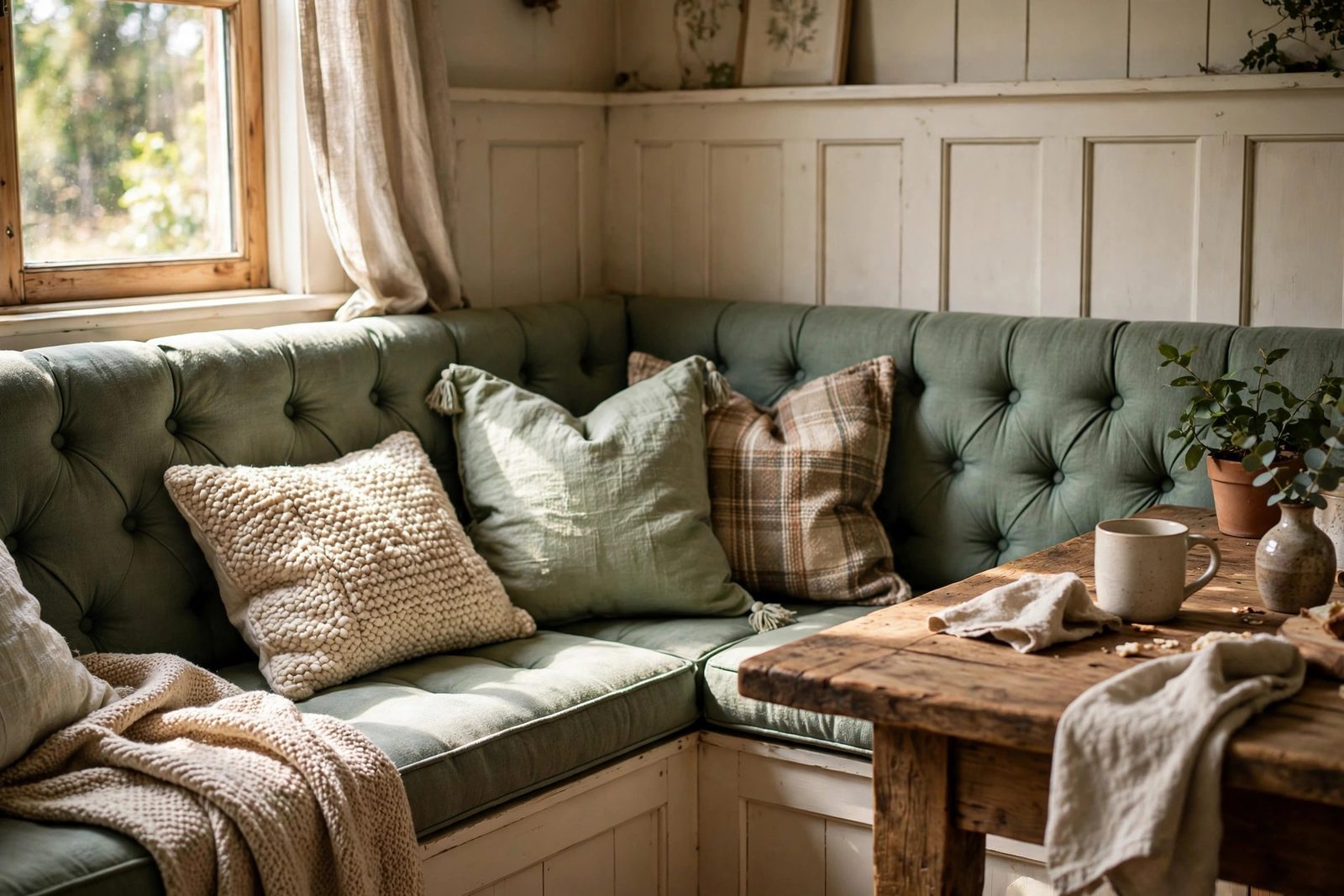
How Do You Build a Corner Banquette on a Budget?
A DIY corner banquette is simpler than it looks: two plywood bench boxes, an L of 2x4 framing, and a seat height of eighteen inches from floor to cushion top — the same as a dining chair. Build each bench box from three-quarter-inch plywood with a front face that can open (hinged seat tops are the storage secret), and join the two boxes in the corner with pocket screws for a rock-solid L.
The cushion makes or breaks the comfort. A four-inch-thick high-density foam seat with a half-inch layer of softer foam on top gives you support without the board-hard feel of cheap benches, and a washable slipcover in performance fabric keeps it family-proof. Budget-wise, expect the lumber and hardware to run well under two hundred dollars, with the foam and fabric as the biggest line item.
The classic mistake is building the banquette too deep or too tall. Keep the seat depth at eighteen to twenty inches — deeper and you cannot reach the table comfortably — and leave at least twelve inches between the table edge and the cushion front so knees slide in. Anchor the boxes to the wall studs so the whole thing feels built-in, then add a row of pillows in two heights for back support.
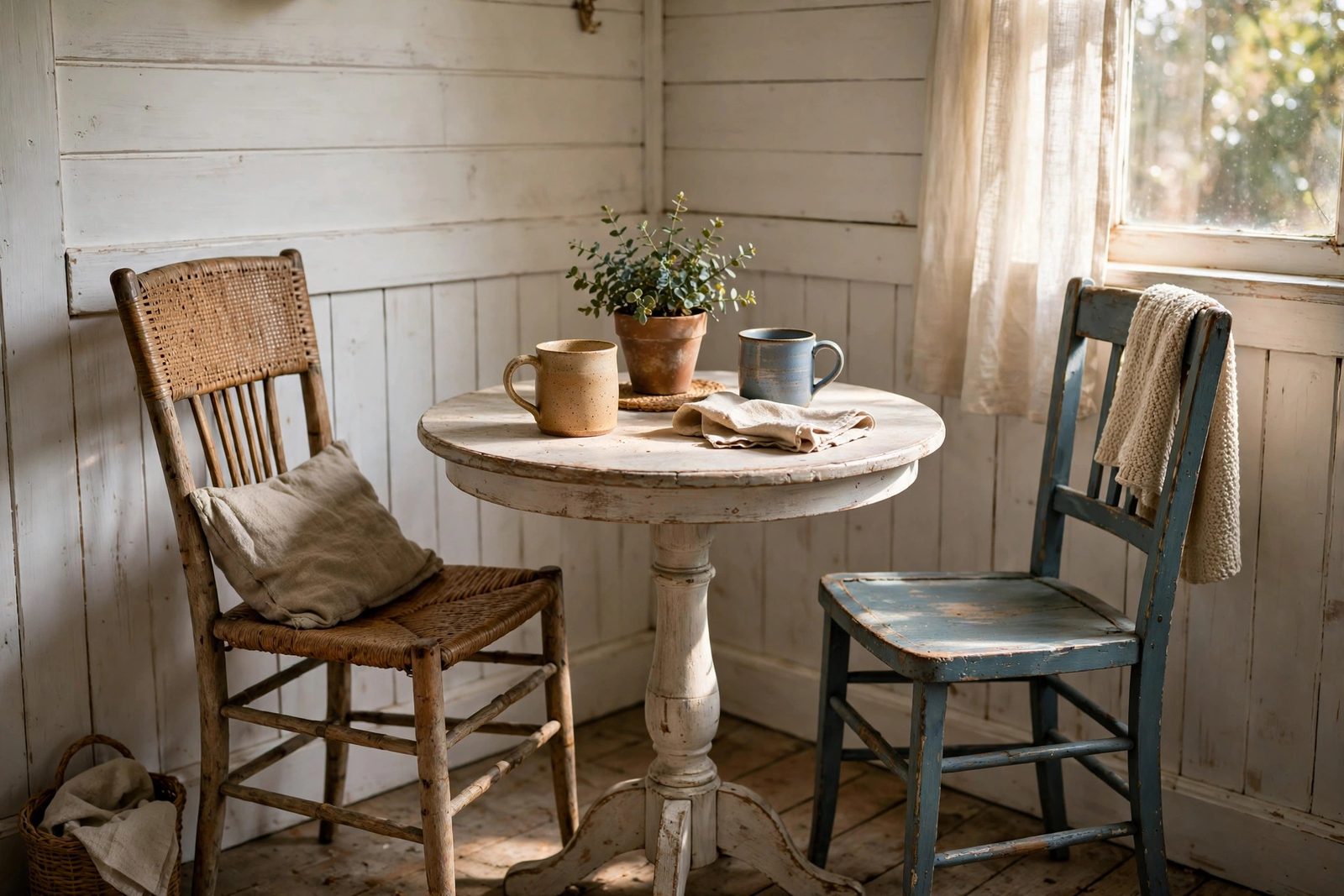
What Table Works Best in a Tiny Breakfast Nook?
In a truly tiny nook, the pedestal table is the hero. A single center post leaves every inch of legroom free — nobody is bumping a table leg when they slide around a banquette or tuck a chair in. A twenty-eight to thirty-two-inch round pedestal fits two people with real elbow room and squeezes into corners that would laugh at a rectangular table.
If you prefer a rectangle because it pushes flush against the wall, keep it narrow: a thirty-by-thirty-six-inch table against one wall seats two to three and reads as intentional rather than cramped. Look for drop-leaf or gateleg tables if the nook doubles as a workspace — fold the leaves down for homework and homework-only space, fold them up when guests stay for dinner.
Height matters more than people expect. Standard dining height is twenty-eight to thirty inches; pair it with seating at eighteen inches so the lap-to-table gap is a comfortable ten to twelve inches. Mismatched chairs actually suit a small nook — two vintage chairs in different finishes look collected and charming, and narrow side chairs tuck in tighter than chunky upholstered ones.
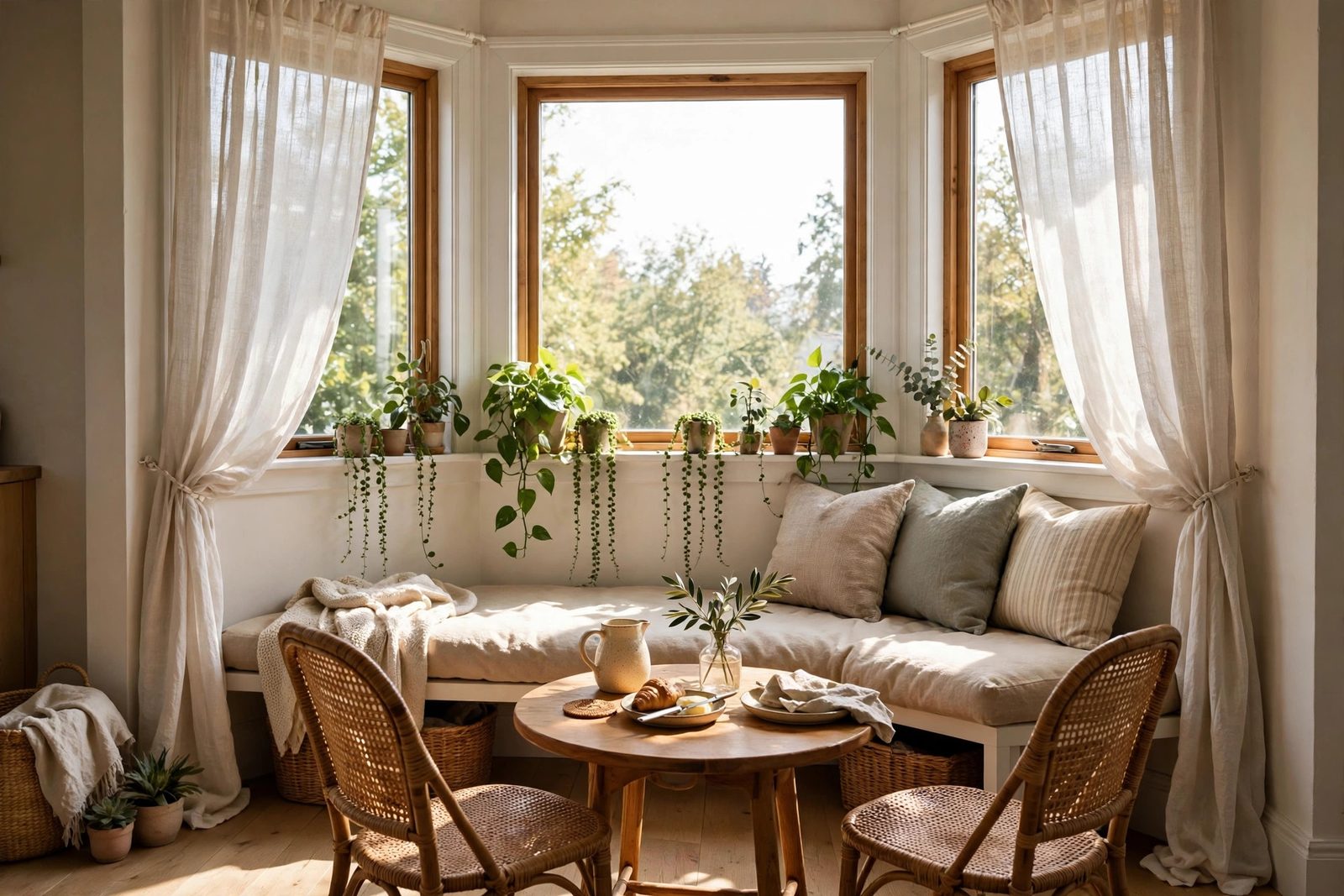
How Do You Turn a Window Into a Breakfast Nook?
A window nook starts with the view: place a low bench or window seat directly under the brightest window you have, then pull a small round cafe table up to it. The bench doubles as the banquette — at fourteen to sixteen inches deep it works for perching with coffee — and a pair of lightweight chairs opposite completes seating for three without crowding the glass.
Sheer linen curtains are the styling move that makes a window nook sing: they soften the daylight, hide nothing of the view, and add the fabric softness that makes corners feel furnished. Mount the rod wide — four to six inches past the window frame on each side — and high, just under the ceiling, so the window reads bigger and the light floods in.
Watch the practical details. A bench with a hinged top hides placemats and napkins, a low-pile washable rug under the table survives crumbs, and a sill lined with trailing plants gives the nook a garden-cafe feel. Avoid heavy upholstered chairs that block the window; rattan, cane, or slim wood chairs keep sightlines open and the corner feeling airy.
What Lighting Makes a Breakfast Nook Feel Cozy?
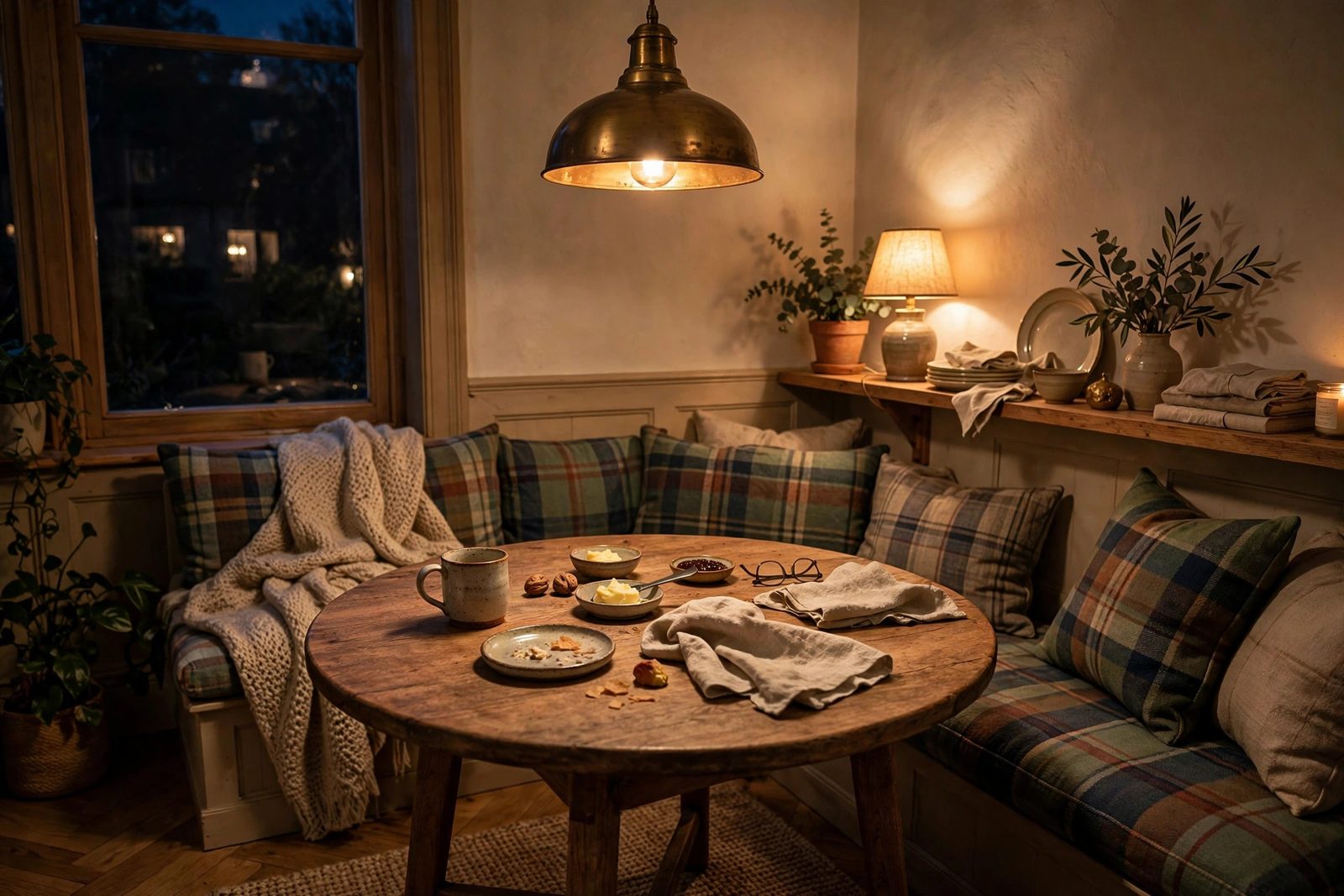
One pendant, hung low, does more for a nook than any other single change. Hang it so the bottom of the shade sits twenty-eight to thirty-two inches above the tabletop — low enough to pool warm light over the food and faces, high enough that nobody bonks their head sliding into the banquette. A woven rattan, brass, or linen shade all read cozy; glass is prettier but glare-prone.
Layer a second, smaller light source for evenings: a plug-in wall sconce, a tiny table lamp on a nearby shelf, or even a battery candle cluster on the sill. Breakfast nooks earn their keep long after breakfast — homework, puzzles, late-night tea — and a single overhead fixture alone feels flat after dark.
The bulb is the unsung hero. Choose warm white at 2700K and, if your fixture allows, go dimmable so mornings can be bright and evenings can sink low. The mistake to avoid is a cool daylight bulb (5000K+), which turns a charming nook into a fast-food counter at night. Warm light is the cheapest coziness you can buy.
Can You Make a Breakfast Nook Without Built-Ins?
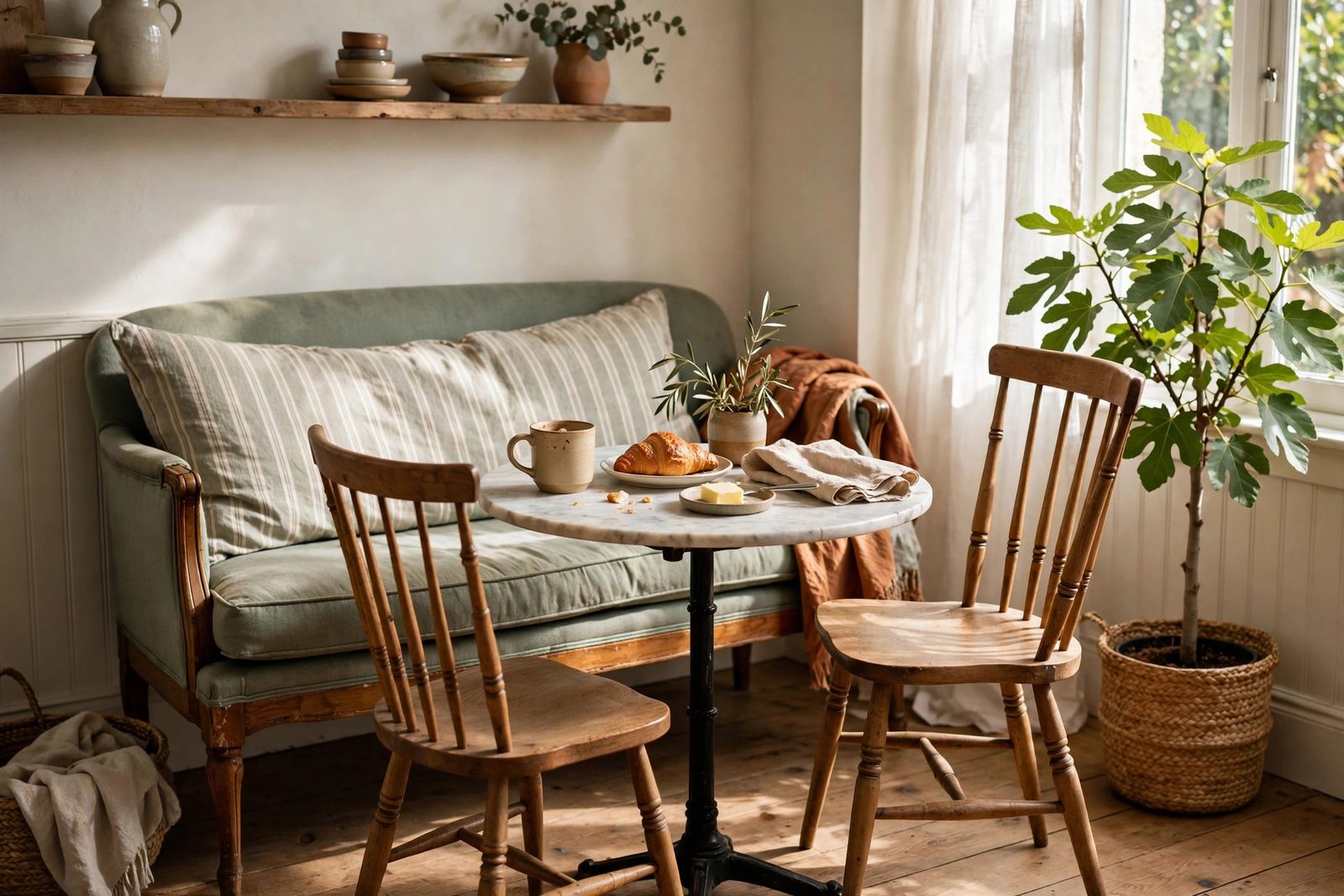
Absolutely — and renters should. A vintage settee or loveseat pushed against the wall does everything a built-in banquette does: it seats two or three, takes cushions beautifully, and creates that wrapped-in feeling. Look for one with wooden legs so the floor shows beneath; that sliver of visible floor keeps a small corner from feeling blocked and heavy.
Pair the settee with a small round bistro table — marble-top or wood, twenty-eight to thirty-two inches — and two slim chairs opposite. Because nothing is attached to the wall, you can shift the whole arrangement for parties, pull it out for cleaning, and take it with you when you move. Add a floor lamp behind the settee instead of wiring a pendant, and you have a complete nook with zero holes in the wall.
Style it so it reads as a nook, not a waiting room: a washable rug anchoring the footprint, two layers of pillows (square backs plus a lumbar), and a small side table or wall shelf for the lamp and a plant. The trick is treating the settee as furniture-in-a-spot rather than furniture-against-a-wall — the rug and lighting create the room-within-a-room.
How Do You Add Storage to a Breakfast Nook?
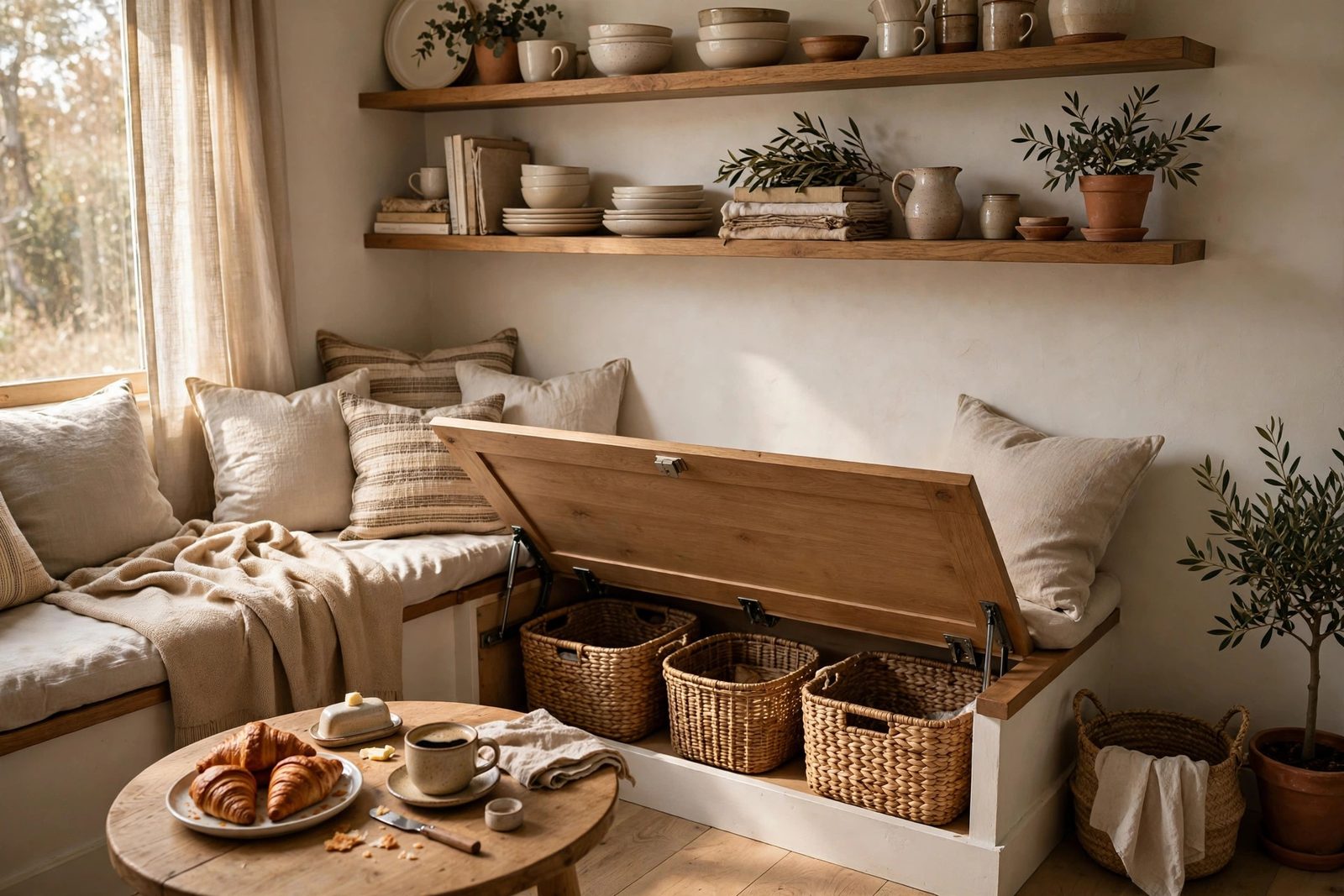
The banquette itself is your biggest storage opportunity. Build the bench boxes with hinged seat tops (piano hinges are cheap and sturdy) and you gain a cavern of hidden storage per bench — enough for table linens, placemats, board games, and the kids' art supplies that migrate to the table. Add a finger groove or a leather pull to the seat front so the lid lifts without a visible handle.
Go up the wall next. Two floating shelves above the banquette hold everyday dishes, mugs, and cookbooks within arm's reach, which turns the nook into a genuine extension of the kitchen. Keep shelves at least twenty-four inches above the seat cushion so nobody cracks their head, and limit depth to ten inches so plates feel secure but the shelves stay shallow enough for easy grabbing.
Finish with baskets, not cabinets. Woven baskets slid under the bench front or stacked beside it swallow the unsightly stuff — device chargers, dog leashes, homework folders — while looking like decor. Label nothing; the nook's storage works best as open-ended zones. The one thing to skip is drawers under the bench, which jam against chair legs and rarely get used.
What Makes a Farmhouse Breakfast Nook Feel Warm?
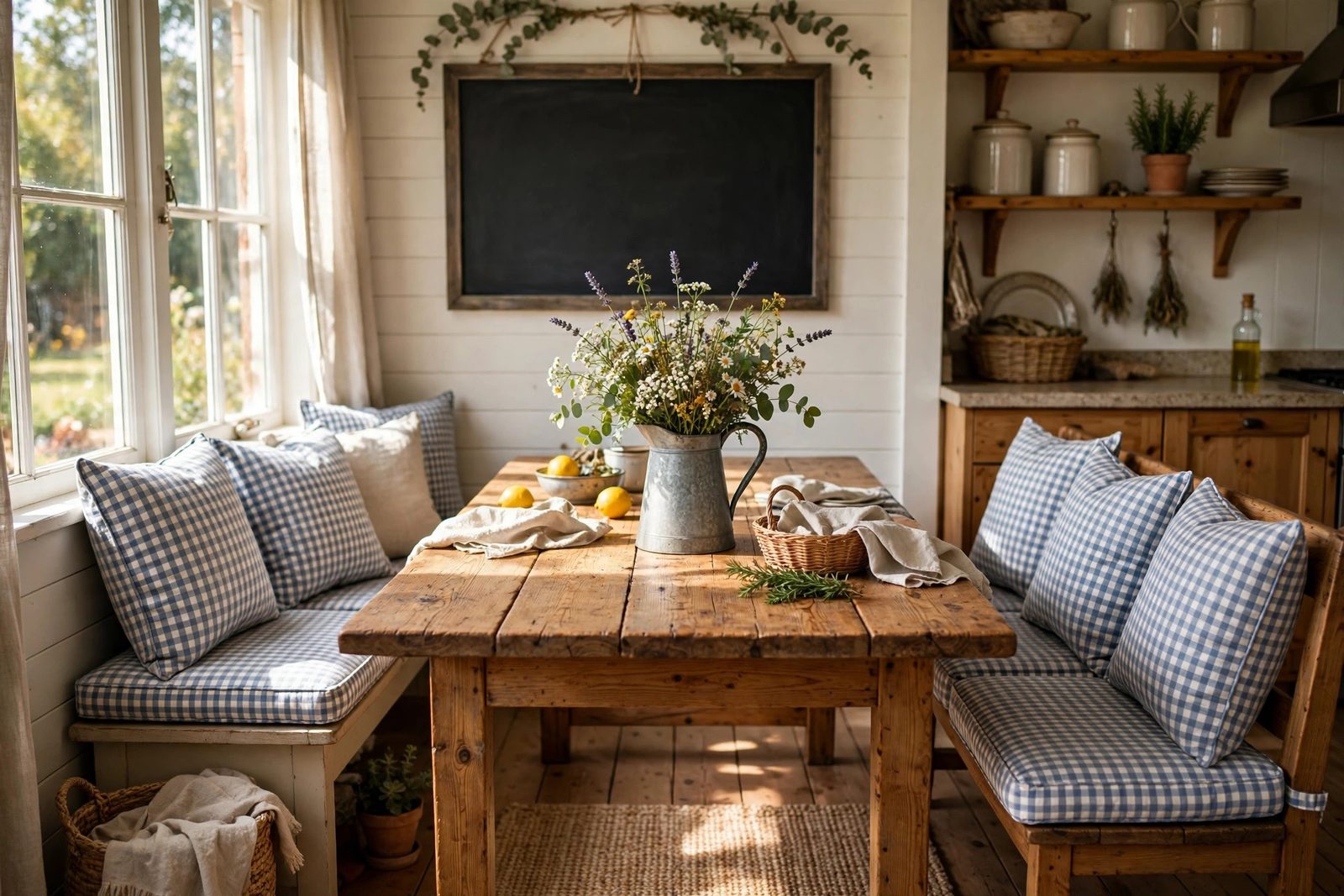
Farmhouse nooks lean on honest materials: a pine or reclaimed-wood table with visible grain, bench seating with simple cushions, and textiles with pattern — gingham, ticking stripe, or buffalo check. The wood does the heavy lifting on warmth; choose a honey or natural finish over gray-washed tones, which photograph trendy but read cold in person.
The styling is deliberately un-fussy. A galvanized pitcher of wildflowers or grocery-store eucalyptus as the centerpiece, a stack of ironstone bowls on the table, a chalkboard menu on the wall — these are working items that happen to look charming. Keep the color palette to warm white, wood, one checked pattern, and one green from the plants, and the nook stays calm instead of cluttered.
Watch two farmhouse traps. First, the all-beige nook: without one saturated accent (navy gingham, a deep green wreath, copper mugs) the corner washes out. Second, the table that's too precious: farmhouse style invites family life, so seal the tabletop with a hardwax oil or matte polyurethane and actually use it — a few water rings sanded out are cheaper than a dining set you're afraid to eat on.
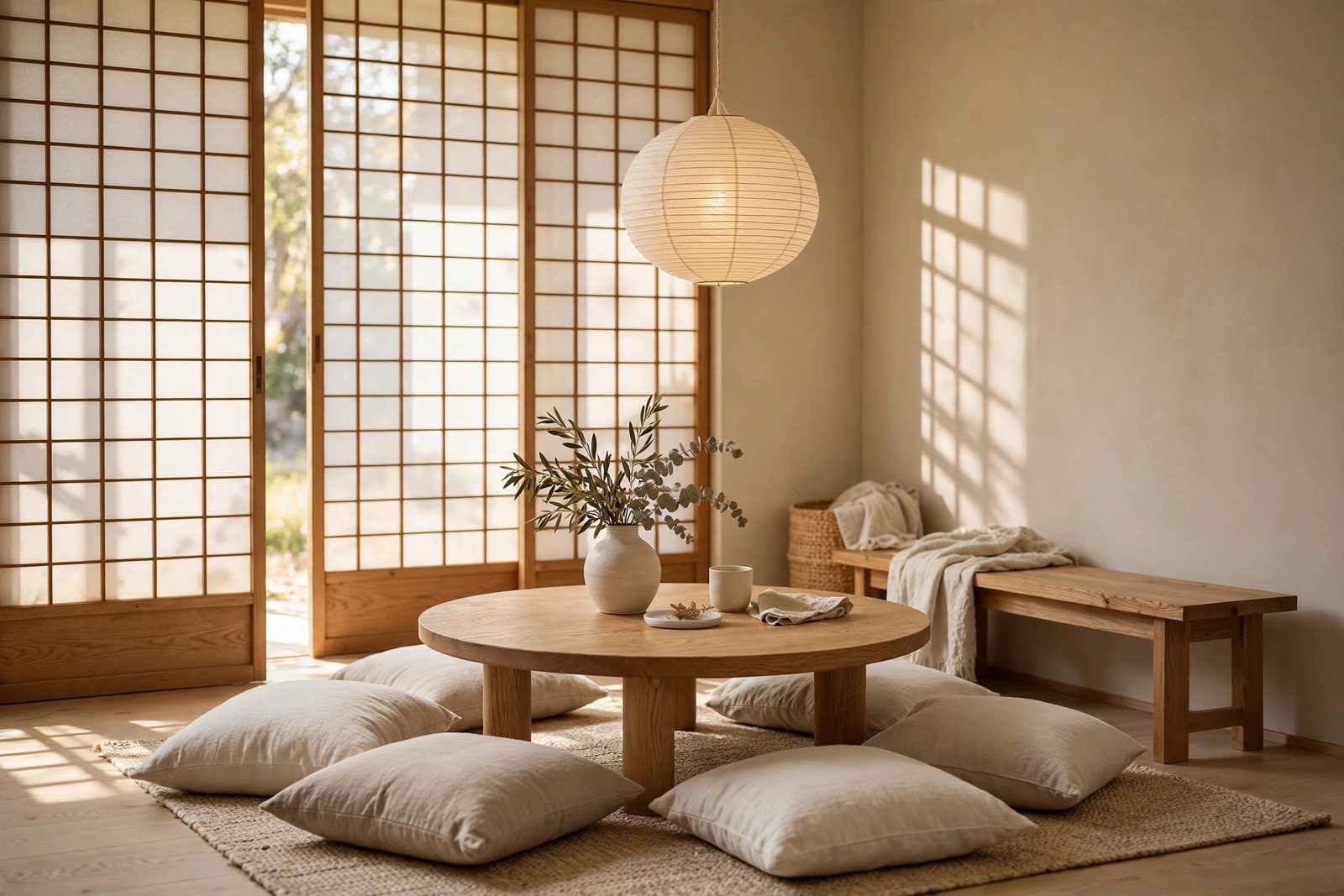
How Do You Style a Modern Minimalist Breakfast Nook?
A minimalist nook works through restraint: one low round oak table, seating in a single material, and a palette of no more than three tones — think warm white, pale oak, and one soft neutral like greige. The japandi-inflected version adds low seating — floor cushions or a backless bench — which drops the sightline and makes even a small corner feel expansive and serene.
The pendant is the sculpture. A single oversized paper lantern or a sculptural ceramic dome in warm white becomes the nook's focal point, replacing the visual interest that busier styles get from textiles and color. Keep the table styling equally edited: one low vessel with a branch or a few stems, one small tray, and nothing else living on the surface permanently.
Minimalist does not mean uncomfortable — it means deliberate. Choose a seat cushion at least three inches thick in a nubby natural fabric, add one lumbar pillow per person rather than a mountain of throws, and use a washable rug in a flat weave to soften the floor without adding visual noise. Every piece should earn its footprint; if it does not serve the morning, it leaves the nook.
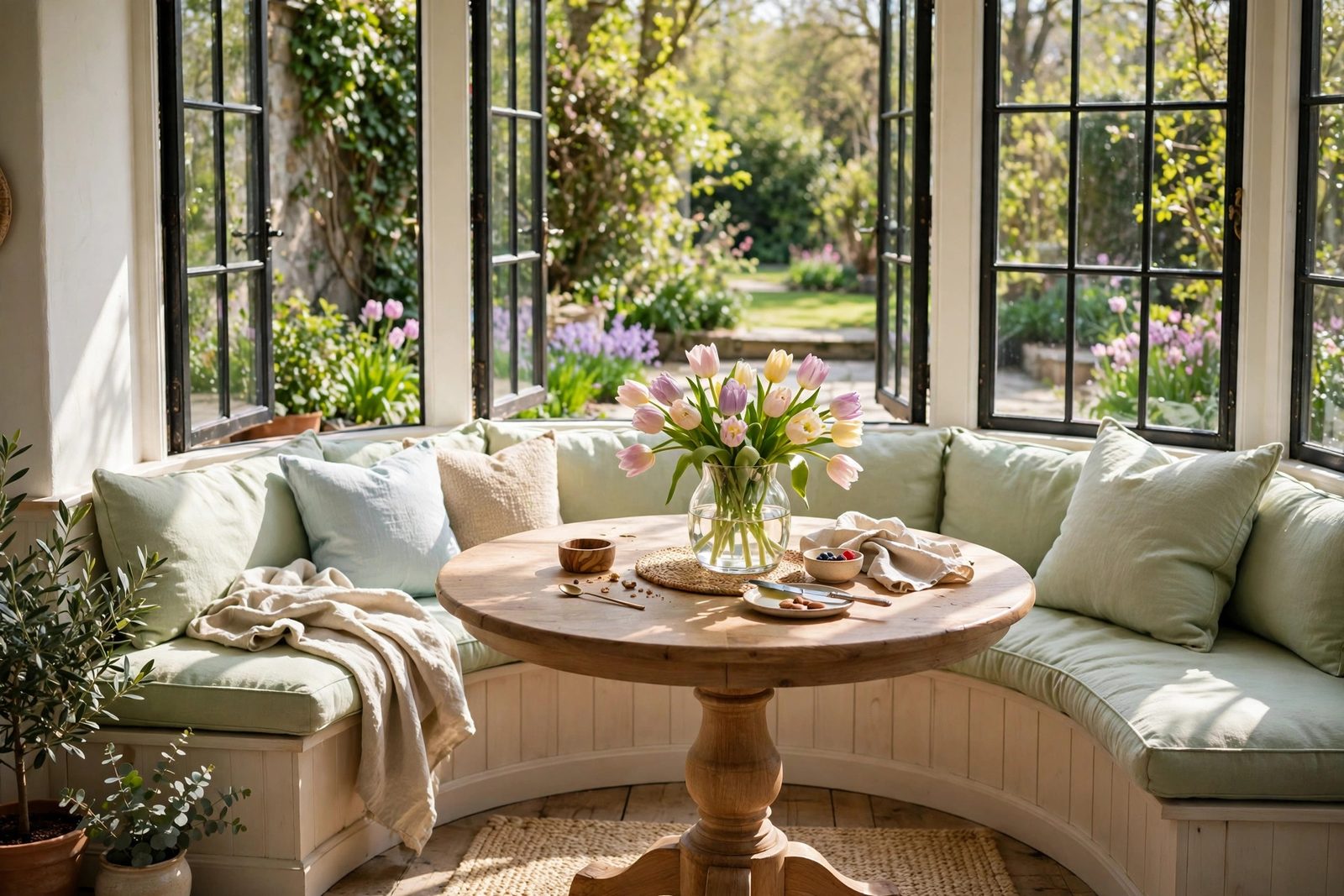
How Do You Freshen Up a Breakfast Nook for Spring?
Spring in a nook is a swap, not a renovation. Trade the heavy winter throw for a lightweight linen one, switch dark pillow covers for pale green or butter yellow, and put a bunch of tulips or daffodils in a simple glass vase on the table. These three changes take twenty minutes and read as a completely new room.
Open the connection to outside if you can. Pull back heavy curtains in favor of sheers, and if your nook sits near french doors or a slider, leave them open on fair mornings so the corner breathes into the garden. A small herb pot — basil, mint, or chives — on the table or sill does double duty as decor and as garnish for actual breakfasts.
Keep one cozy element so the nook does not feel staged: the knit lumbar pillow, the favorite mug, the runner that stays year-round. Spring styling works best as a light layer over your permanent cozy base, which also means the whole refresh reverses in October with one basket of swaps. Store the off-season textiles in the banquette bench you already built.
Breakfast Nook Measurements That Get It Right
The numbers that matter most: seat height eighteen inches (floor to cushion top), table height twenty-eight to thirty inches, and a ten-to-twelve-inch gap between your lap and the tabletop. For banquette depth, eighteen to twenty inches is the sweet spot — deep enough to sit back, shallow enough to reach the table — with at least twelve inches of knee room between the cushion front and the table edge.
Plan eighteen to twenty-four inches of table width per person, and size the footprint to your wall: a forty-eight-inch bench against each wall of a corner gives a four-person L-nook, while a single sixty-inch bench plus two chairs seats five around a thirty-six-by-sixty table. Keep a clear thirty-inch path behind any freestanding chairs so people can walk past the nook without turning sideways.
Lighting heights: a pendant bottom should hang twenty-eight to thirty-two inches above the tabletop, and wall sconces land at about sixty inches from the floor. Tape these positions on the wall and floor before you drill — five minutes with painter's tape saves you from a pendant that blocks the window view or a banquette that traps the chair.
A Weekend Plan: Building Your Nook in Two Days
Saturday is build day. Morning: measure the corner, buy three-quarter-inch plywood, 2x4s, screws, and piano hinges, and cut the bench boxes — two boxes, each with a hinged top for storage, joined into an L. Afternoon: assemble with pocket screws, anchor to wall studs, and sand. By evening you have a sitting-height bench box; order the four-inch foam and slipcover fabric while the paint dries, since foam is the longest-lead item.
Sunday is finish and style day. Morning: one coat of paint or wood stain on the bench boxes, then mount the pendant at its taped height and swap in the 2700K dimmable bulb. Afternoon: drop in the foam cushions (cut to the box tops with an electric knife for clean edges), lay the washable rug, and style the table with the runner, one low arrangement, and the everyday mugs. Finish with the two floating shelves above the bench if you want the storage-and-display layer from day one.
Final thoughts
The breakfast nook is proof that the best rooms are not the biggest ones — they are the ones designed around a daily ritual. Every idea in this list serves the same small ceremony: coffee poured, someone sits close, the morning slows down. That is why the nook keeps winning against the formal dining room — it was built for real life, not special occasions.
Start with the corner you have, not the one you wish for. A settee and a bistro table count. So does a bench under a window. Pick one idea, tape the measurements, and build this weekend — by next Saturday, breakfast will taste better, and that is not an exaggeration.
FAQ
How much space do you need for a breakfast nook?
A two-person nook fits in a corner as small as three by four feet with a small pedestal table and a bench or settee. A classic four-person corner banquette needs roughly a six-by-six-foot corner. The key measurements are eighteen-inch seat height, twelve inches of knee room, and a thirty-inch clear path behind freestanding chairs.
What is the best table shape for a breakfast nook?
Round or oval tables are best for nooks because they have no corners to bump when sliding in and out of a banquette, and everyone can reach the middle. A forty-two-inch round seats four comfortably. If you need to push the table against a wall, a narrow rectangular or drop-leaf table is the practical alternative.
How deep should a banquette bench be?
Eighteen to twenty inches deep is the sweet spot: deep enough to lean back with a pillow, shallow enough to reach the table without stretching. The seat height should be eighteen inches from floor to cushion top, matching a standard dining chair, and the bench should sit at least twelve inches from the table edge for knee room.
Can I make a breakfast nook in a rental?
Yes — skip built-ins entirely. Use a vintage settee or loveseat against the wall, a small round bistro table, and two chairs, with a floor lamp behind the settee instead of a wired pendant. A washable rug defines the footprint with zero wall damage, and the whole arrangement moves with you.
How do I light a breakfast nook without overhead wiring?
Plug-in wall sconces, a floor lamp positioned behind the banquette, or a battery-operated picture light on a shelf all work well. You can also use a swag pendant — a plug-in pendant hung from a ceiling hook with the cord draped to the nearest outlet. Use 2700K warm bulbs for a cozy feel.
What cushions are best for a breakfast nook bench?
A four-inch high-density foam base with a half-inch softer foam topper gives support without feeling board-hard. Cover it in a washable performance fabric or a removable slipcover, since breakfast nooks meet coffee, kids, and pets daily. Two heights of throw pillows add back support and the cozy look.