Kitchen
10 Spring Kitchen Decor Ideas for a Light, Fresh Look
10 spring kitchen decor ideas for a light, fresh look: linen textiles, open-shelf styling, herb gardens, botanical touches, and fresh-green accents.
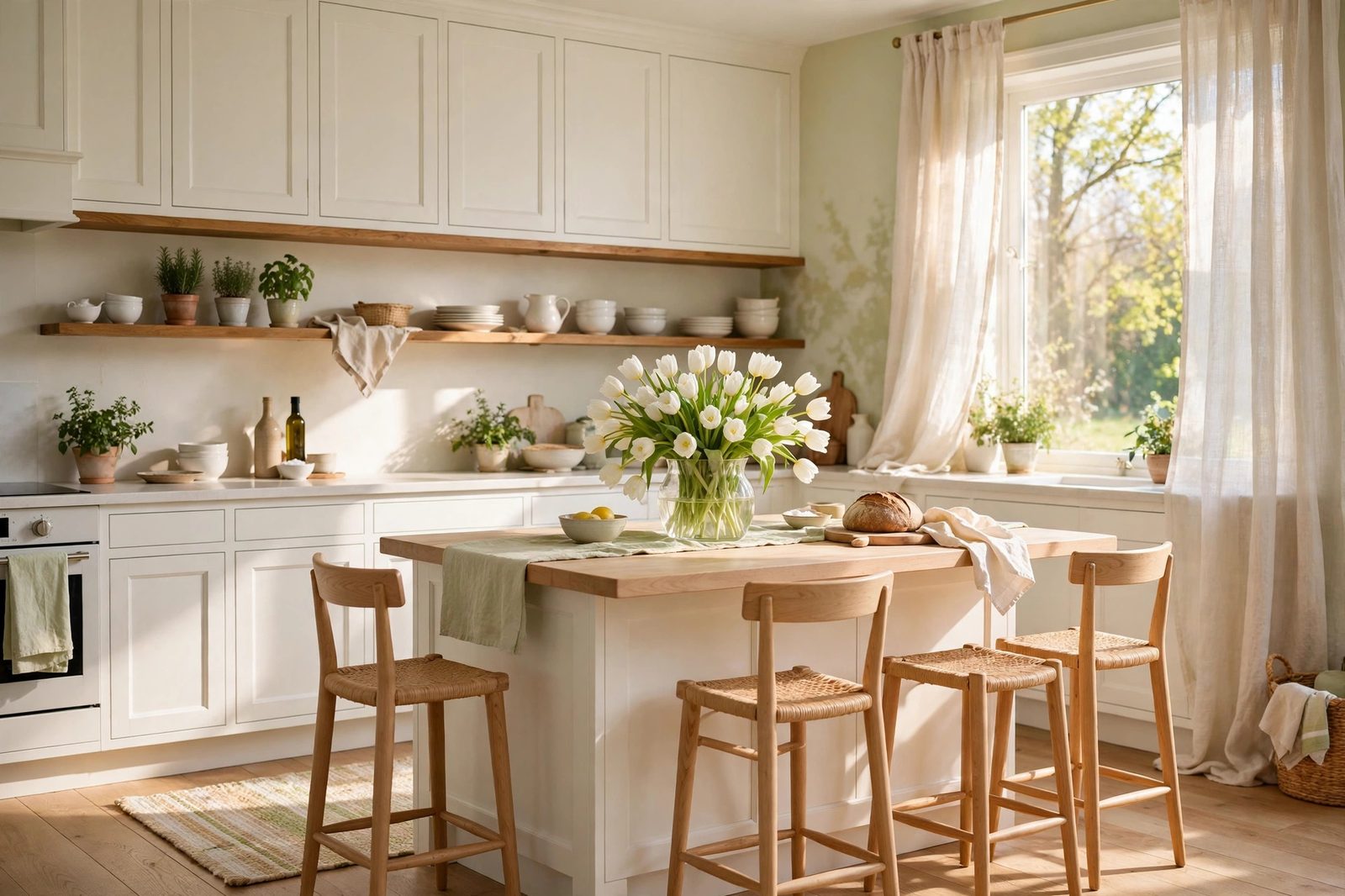
These spring kitchen decor ideas are about light — literally and figuratively. After months of dark mornings and heavy layers, the kitchen is the first room that benefits from a seasonal reset: brighter textiles, living greenery, and a lighter color story that makes the whole house feel awake again.
The formula is simpler than it looks. Spring kitchens lean on three things: breathable fabrics like linen and cotton that replace heavy winter layers, botanical styling in the form of herbs, branches, and seasonal blooms, and a fresh-green palette — sage, eucalyptus, and citrus tones — that reads as new growth without repainting a single wall.
Below are ten spring kitchen decor ideas that cover the whole room, from open shelves and the island to the window, the nook, and the small countertop swaps that make the biggest difference. Pick three or four, spend a weekend, and the kitchen will feel like a different room.
How Do You Give a Kitchen a Light, Fresh Spring Reset?
A spring reset starts with subtraction, not shopping. Pull out the dark winter runners, the heavy plaid towels, and the dense countertop clutter, and let the kitchen breathe for a day before you add anything back. Most kitchens feel instantly lighter with nothing but clear counters, clean windows, and daylight — the empty room tells you what it actually needs instead of what you are used to seeing.
Work in zones so the job stays manageable: the island and main counters first, then open shelves and the windowsill, then textiles and small corners like the breakfast nook. In each zone, decide what stays, what gets swapped for something lighter, and what goes back into storage until fall. A spring kitchen is not minimal — it is edited, with every visible item earning its place through color, texture, or life.
Add back in this order: greenery first, then textiles, then color accents. A pot of basil, a pitcher of eucalyptus stems, and a bowl of lemons will do more for a spring feeling than any decorative object, because living things bring the season with them. Once the greenery is in place, linen runners and lighter dishware fall into place around it, and the room reads fresh instead of decorated.
What Fresh Greens Work Best in a Spring Kitchen?
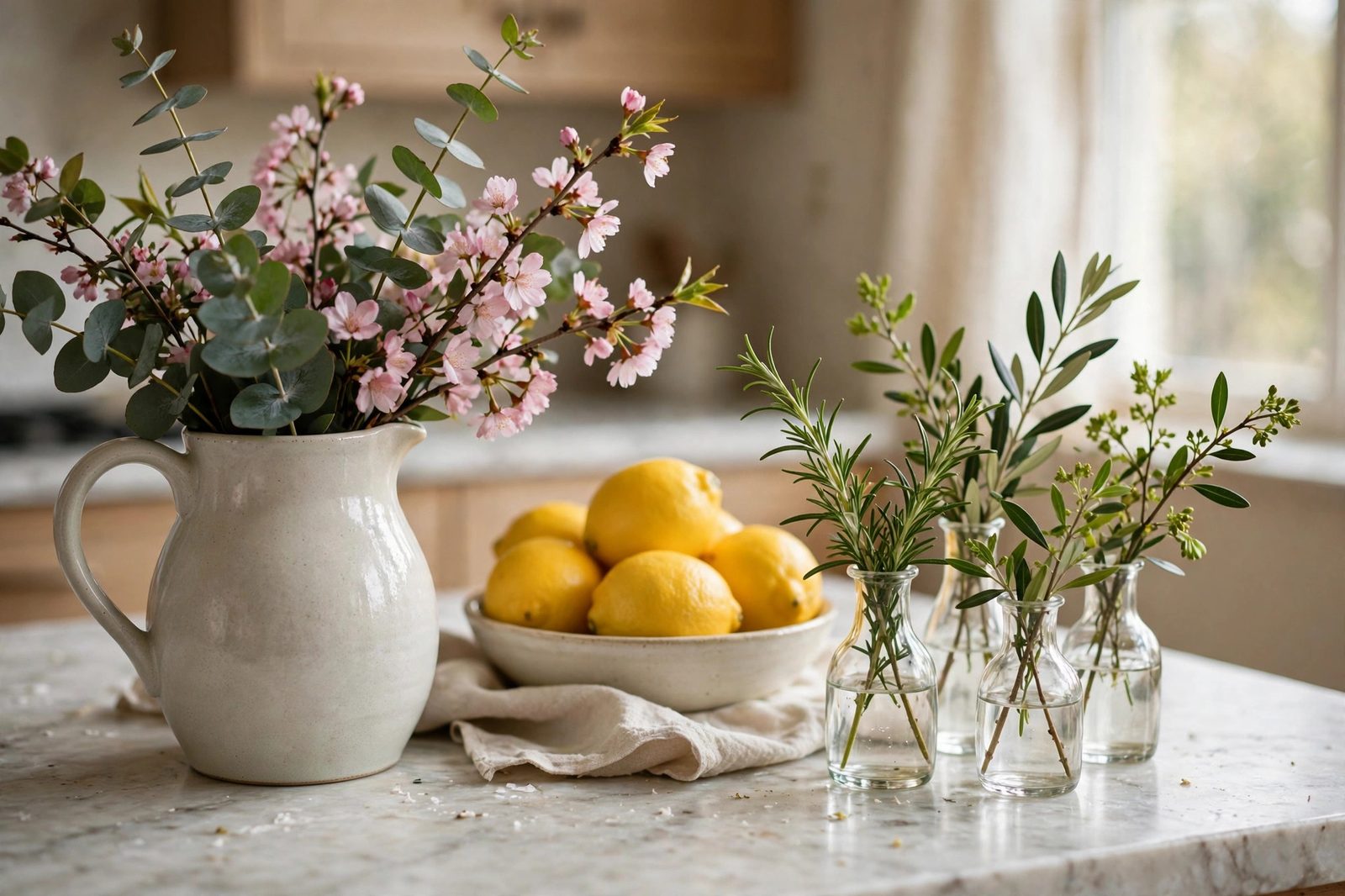
Botanical styling is the heart of spring kitchen decor, and fresh greenery beats flowers for longevity. Eucalyptus stems last two to three weeks in water and cost a fraction of a florist bouquet; olive branches and pussy willow keep even longer and look architectural in a tall pitcher. For color, one bunch of tulips, daffodils, or ranunculus in the entry week of spring sets the tone, then hand off to greenery for the rest of the season.
Style your botanicals at three heights for a professional look: a tall arrangement on the island or counter end, a medium pot of herbs on the open shelf, and tiny bud vases scattered where you actually work — by the sink, beside the stove, on the windowsill. This repetition is what makes a kitchen feel styled rather than accidentally green, and it takes less than fifteen minutes once you know the pattern.
The mistake to avoid is the single lonely plant. One small succulent on an otherwise bare counter looks like an afterthought; three or four green touches at different heights look like a design decision. Grocery-store herbs in their plastic pots count — tuck the pot into a ceramic cachepot or wrap it in linen and nobody will know it cost three dollars.
How Do You Style Open Shelves for Spring?
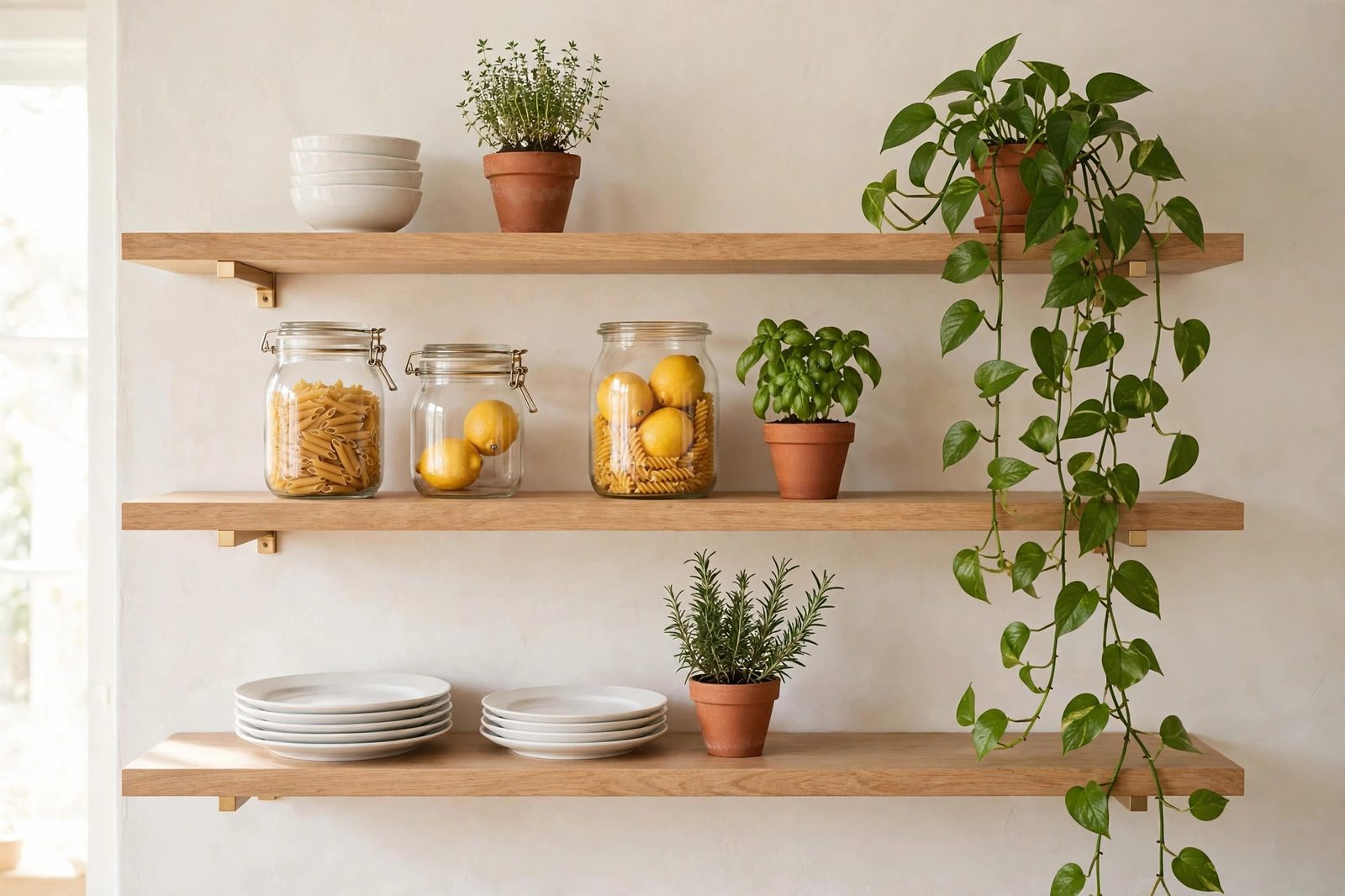
Open shelves are the fastest spring win in any kitchen because they are seen constantly and restyle in minutes. Strip each shelf down to the bones, then rebuild with a light-color foundation: white and cream dishes, clear glass jars, and pale wood. These light materials reflect daylight and immediately read as spring, especially if winter had darker mugs, stoneware, and heavy wood cutting boards on display.
Add one living element per shelf — a small potted herb, a trailing pothos at the end, or a bud vase with a blossoming branch — and leave about a third of each shelf empty. That breathing room is what separates styled shelves from cluttered ones; the air between objects lets the light pieces stand out. Glass jars filled with lemons, white beans, or dried pasta double as both storage and decor in this scheme.
The classic mistake is restyling shelves with objects you would never use, which means the styling collapses the first time you cook. Keep your everyday dishes and glasses in the rotation and only retire pieces to closed cabinets if their color fights the spring palette. Shelves you actually use stay styled; shelves of pure decoration get messy within a week.
What Linen Touches Lighten a Kitchen for Spring?
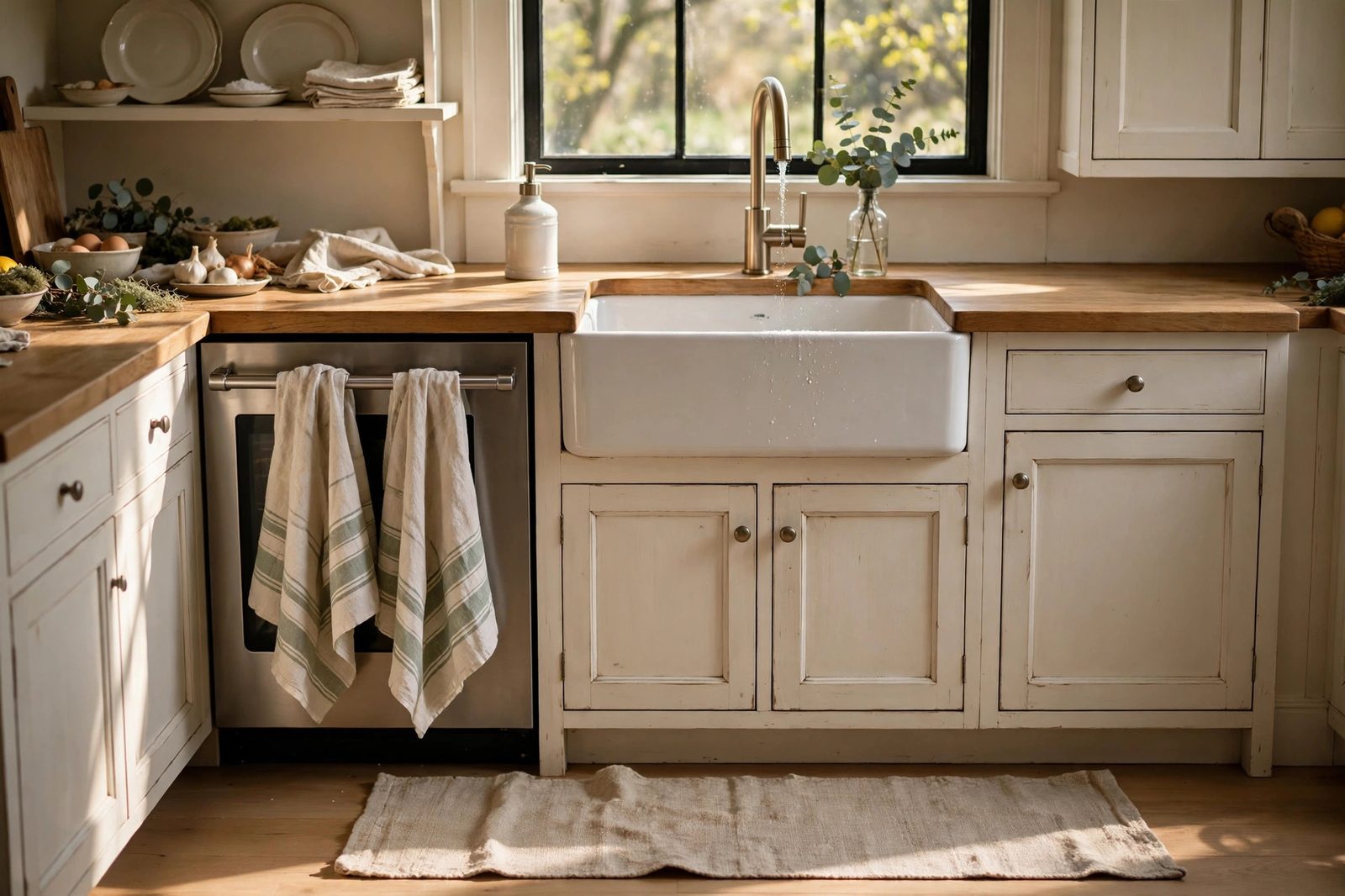
Linen is the single fastest textile swap for spring because its loose weave and natural slub catch daylight and look airy even in neutral tones. Replace dark winter runners with a natural or oatmeal linen runner in the sink zone, swap thick bath-style hand towels for slim linen ones in cream, sage, or thin stripes, and choose a linen cafe curtain or sheer panel over any heavy window treatment.
The rule of thumb is to touch linen in three spots so it reads as a theme rather than a stray item: underfoot (runner), at hand (hand towels and an apron on its hook), and at the window (curtain or shade). Natural, cream, and pale sage linen all sit comfortably in a spring palette, and the slight wrinkles are the point — perfectly pressed linen looks corporate, while soft wrinkles look like spring.
Buy linen with the machine in mind. True linen gets softer and better with every wash, so choose pieces you can toss in on a normal cycle and skip anything that demands dry cleaning — kitchen textiles live a rough life. Washable linen runners with a cotton backing stay put on hard floors, which matters when the prettiest textile in the room is also the one you stand on while washing dishes.
How Do You Decorate a Kitchen Island for Spring?
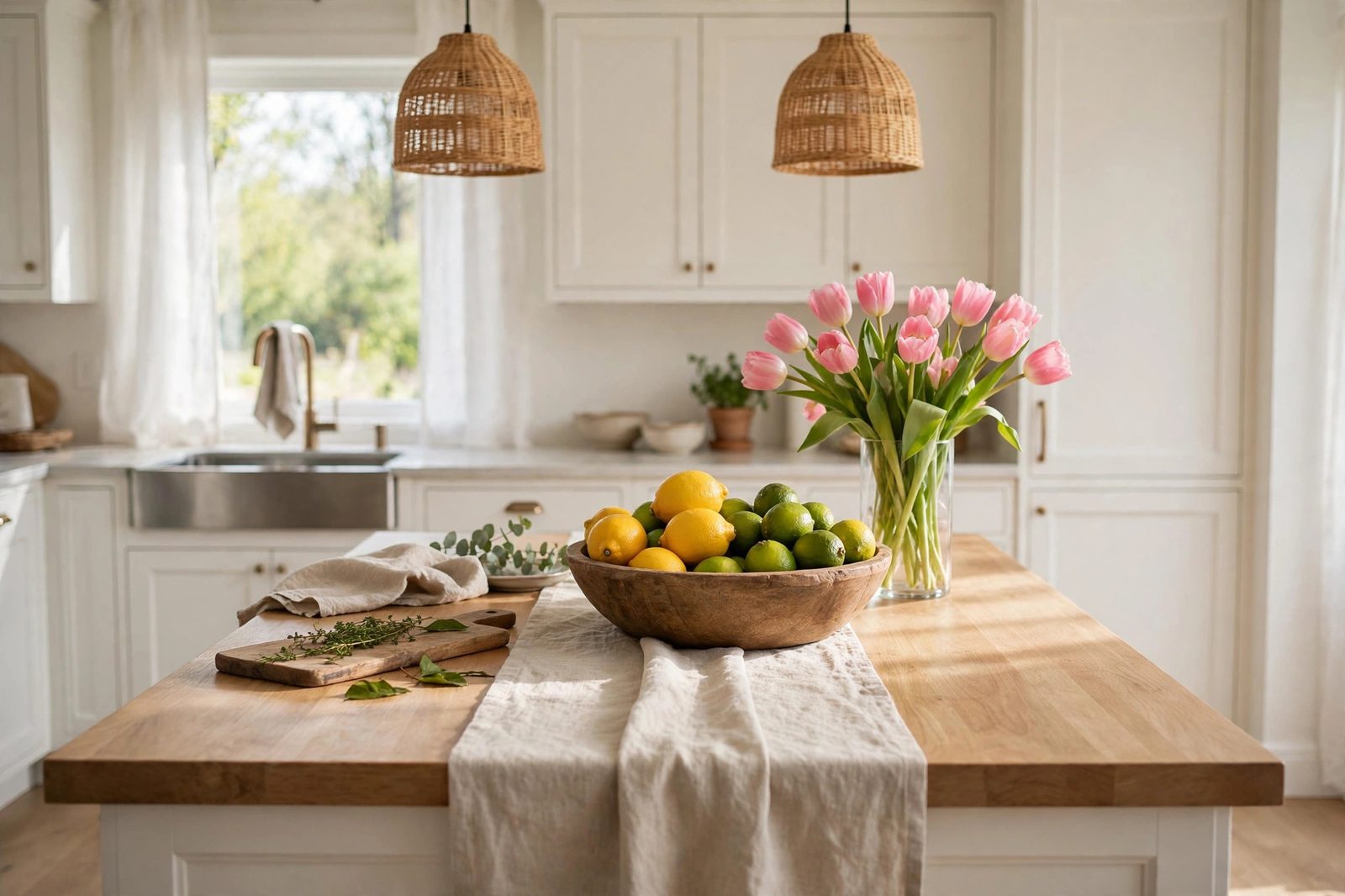
The island is the visual center of the kitchen, so one composed vignette here carries the whole room. Anchor it with a long, low runner in natural linen down the center, then build on it: a wooden bowl of lemons and limes for citrus brightness, a tall vase of seasonal blooms like tulips or daffodils, and one low element like a small stack of bowls or a ceramic dish. Keep everything on the runner so the rest of the island stays clear for actual use.
Citrus is the spring island's secret weapon — lemons, limes, and oranges bring saturated color that reads as fresh rather than decorative, and they are cheap, replaceable, and edible. A big wooden or ceramic bowl holding a dozen lemons costs less than one bunch of flowers and looks intentional for weeks; refresh the top layer as they soften. This is one of the highest-impact, lowest-cost spring kitchen decor ideas there is.
The mistake to avoid is crowding the island with tall pieces on both ends, which makes it feel like a mantel rather than a workspace. One tall element is enough — let the vase of tulips be the height moment, and keep everything else below eight inches. You need the island to still work for breakfast and meal prep, or the styling will get shoved aside within a day.
How Do You Work Fresh Green Into a Kitchen Without Paint?
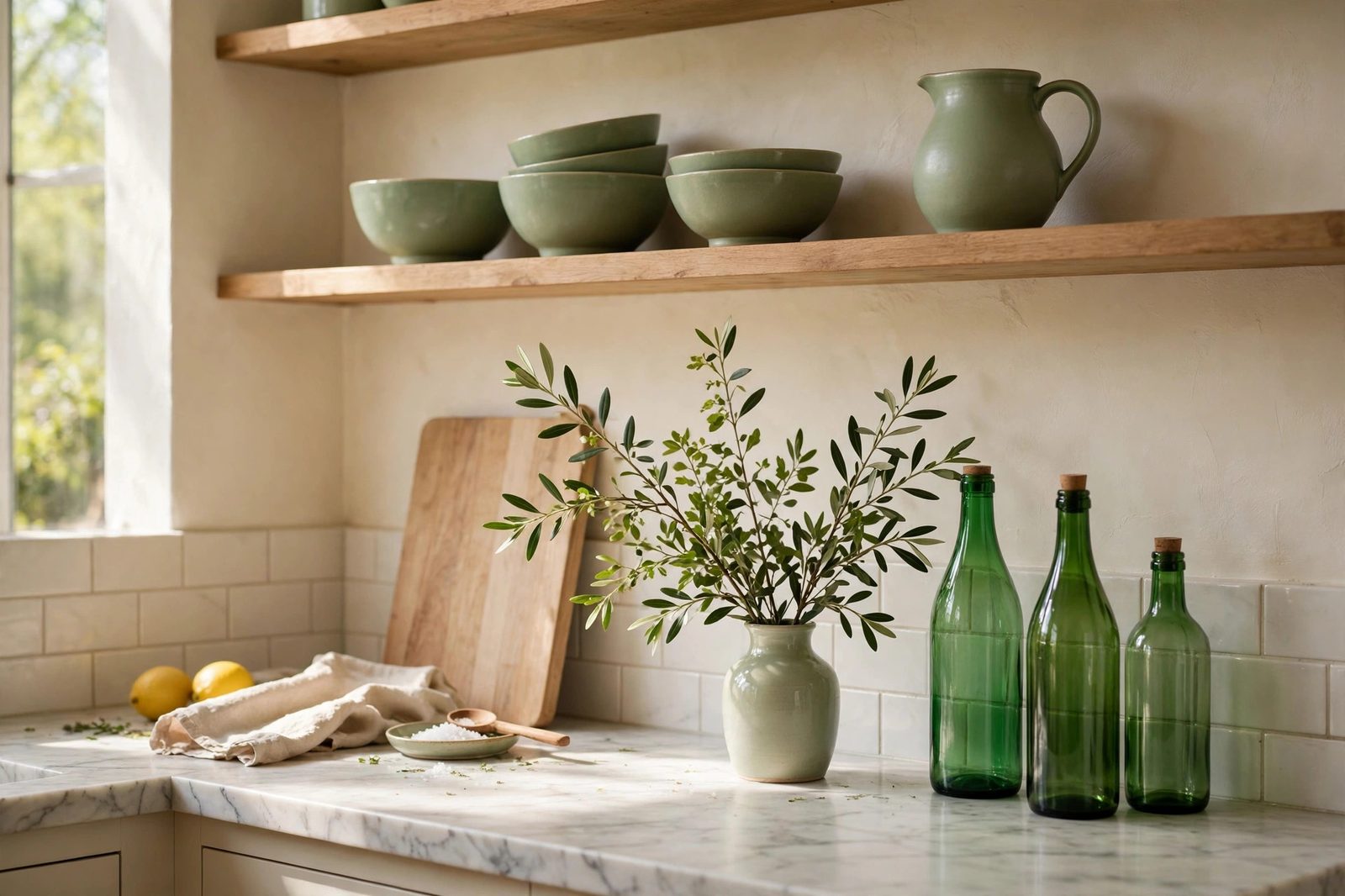
The 2027 spring palette is fresh green in all its forms — sage, eucalyptus, pea, and soft moss — and you can bring it in entirely through accessories. Start with ceramics: a sage-green pitcher, a set of moss-colored bowls, or a single green serving platter on the open shelf. Green glass bottles and recycled-glass vases catch the light beautifully and cost little, and they look right at home next to both white cabinets and warm wood.
Layer green through textiles and living things for depth. A folded sage linen napkin stack on the counter, a green striped hand towel, and the actual green of herbs and eucalyptus stems all count toward the palette, and mixing these textures keeps the color from feeling flat. Aim for five to seven green touches scattered across the room — enough to register as a color story, not so many that the kitchen feels themed.
Keep the greens cool and gray-leaning rather than bright emerald, which skews Christmas in a kitchen. Sage and eucalyptus tones harmonize with the natural linen and white ceramics that carry the rest of the spring look, while neon or kelly green fights them. If you already own green pieces in the wrong shade, cluster them with real greenery — plants make any green look deliberate.
How Do You Set Up a Spring Herb Garden on the Counter?
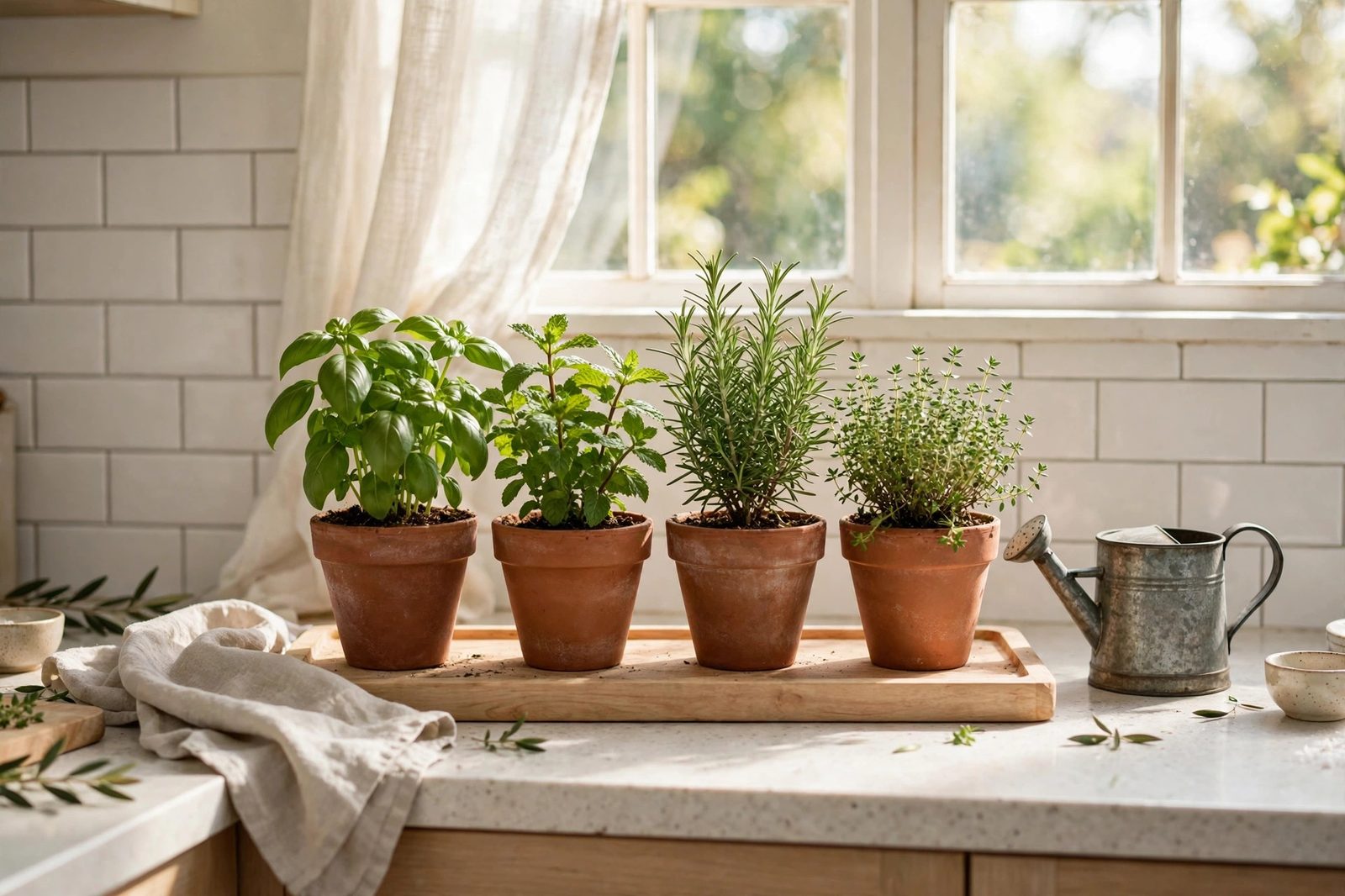
A countertop herb garden is spring decor that pays for itself in cooking. Group four to six small pots — basil, mint, chives, parsley, thyme, and rosemary are the forgiving starters — on a wooden tray or board near the brightest window or your main prep area. The tray corrals watering drips and turns separate pots into one composed arrangement, which is the difference between a garden and a cluttered windowsill.
Match the pots for a styled look: identical small terracotta pots are classic and cheap, while matching white ceramic cachepots disappear into a bright kitchen and let the green take over. Keep one small watering can nearby and water in the morning so foliage dries before night — most indoor herbs die from soggy roots, not neglect, so err on the dry side and make sure every pot has drainage.
Place the garden where you will actually snip from it, because a herb garden you never touch becomes decoration that guilts you. Right beside the cutting board or the stove-side counter is ideal; a pretty tray six feet from where you cook is a still life, not a garden. When the herbs are thriving, they become part of your spring styling automatically — nothing says the season like cooking with basil you cut yourself.
What Is the Best Way to Style a Kitchen Window for Spring?
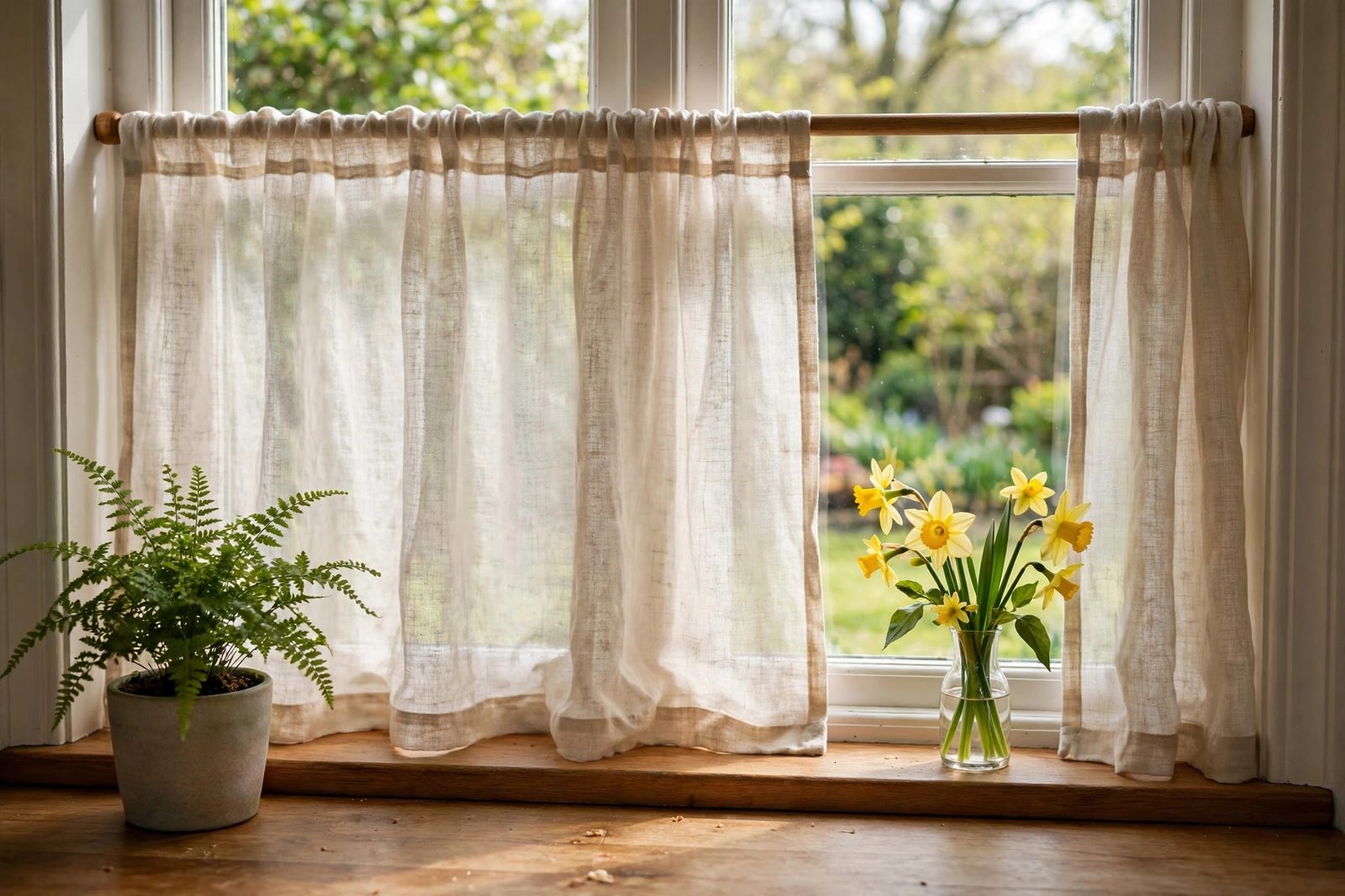
The kitchen window is where spring literally comes in, so treat it as a focal point. Swap heavy curtains or blinds for a sheer linen cafe curtain that covers the lower half — it softens the light, adds privacy where you need it, and lets the top of the window stay open to the sky and greenery. A tension rod makes this a renter-friendly, drill-free change that takes ten minutes.
Style the sill like a shelf: one trailing plant such as a fern or pothos at one end, a bud vase or two of daffodils or blossoming branches, and leave the middle mostly clear so the view does the work. Keep the sill shallow in depth — no more than four to six inches of objects — so it never blocks light or interferes with the window hardware you actually use.
Clean the glass inside and out as part of the spring styling, because no decor compensates for hazy windows and daylight is the whole point of this season's kitchen. If the view is not inspiring, layer the sheer curtain with a light-filtering shade and let the sill styling carry the scene — you control what the eye lands on, and a styled sill beats a bleak view every time.
How Do You Refresh a Breakfast Nook for Spring?
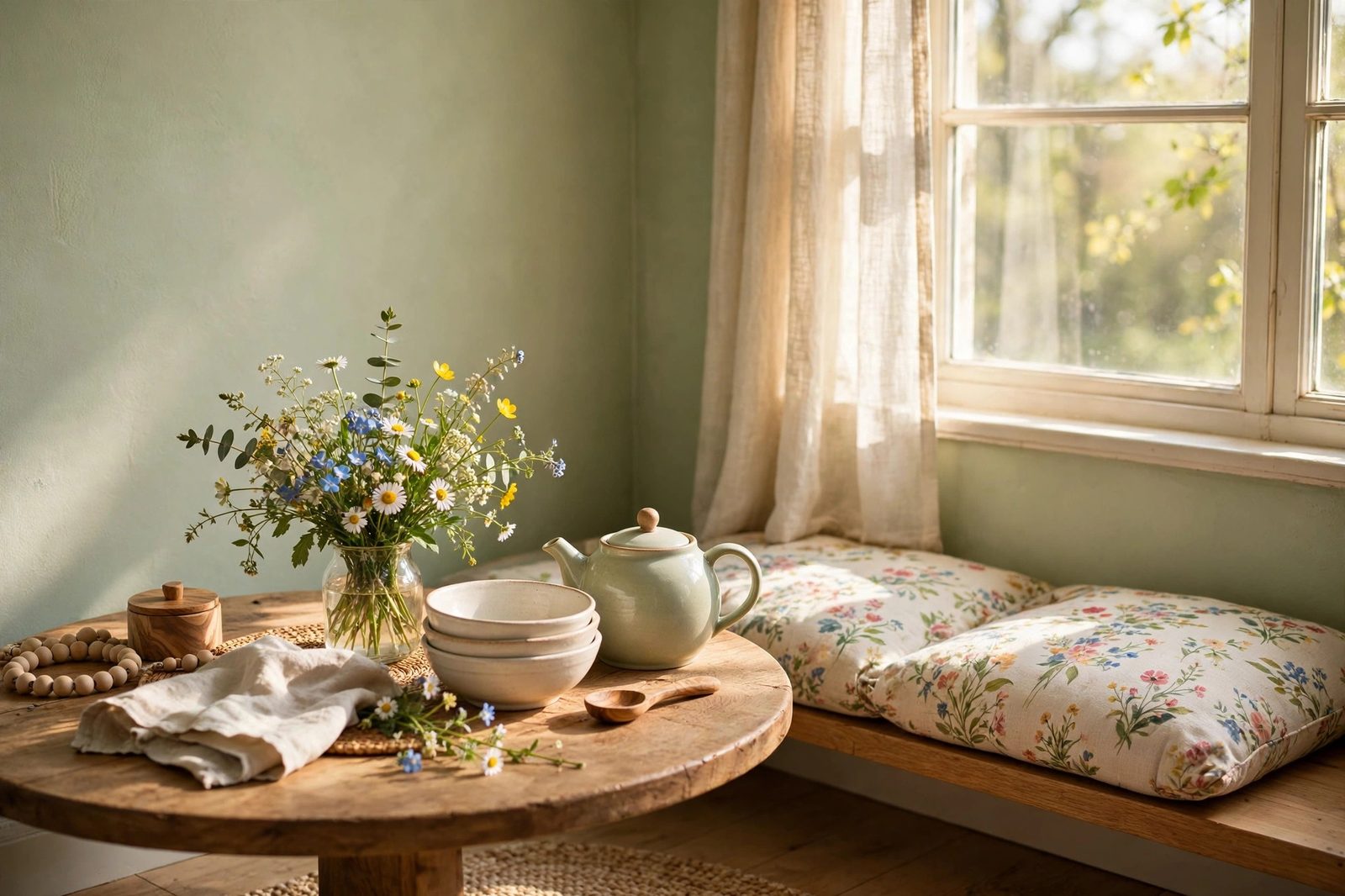
The breakfast nook is where spring mornings actually happen, so make it the coziest spot in the kitchen. Start with the seating: a fresh bench cushion or new seat pads in a floral, ticking stripe, or light botanical print instantly re-dates the whole corner. Add one lumbar pillow in a spring green or blush, and the nook goes from leftover winter to morning destination.
The table itself needs only two things: a small vase of something fresh — wildflowers, garden clippings, or a few tulips — and clear space around it. Breakfast nooks fail as decor when the table becomes a mail station and charging dock, so commit to keeping it clear and corral the daily clutter in a basket on the bench or a nearby shelf. A clear table with one vase reads styled; a cluttered table with three vases reads busy.
Tie the nook to the kitchen's spring palette with one shared element — the same linen runner folded across the table corner, the same sage napkins, or the same eucalyptus stems in the vase. Repetition of two or three materials between the kitchen and the nook is what makes them feel like one designed room instead of a kitchen with a table attached.
What Small Spring Swaps Make the Biggest Difference?
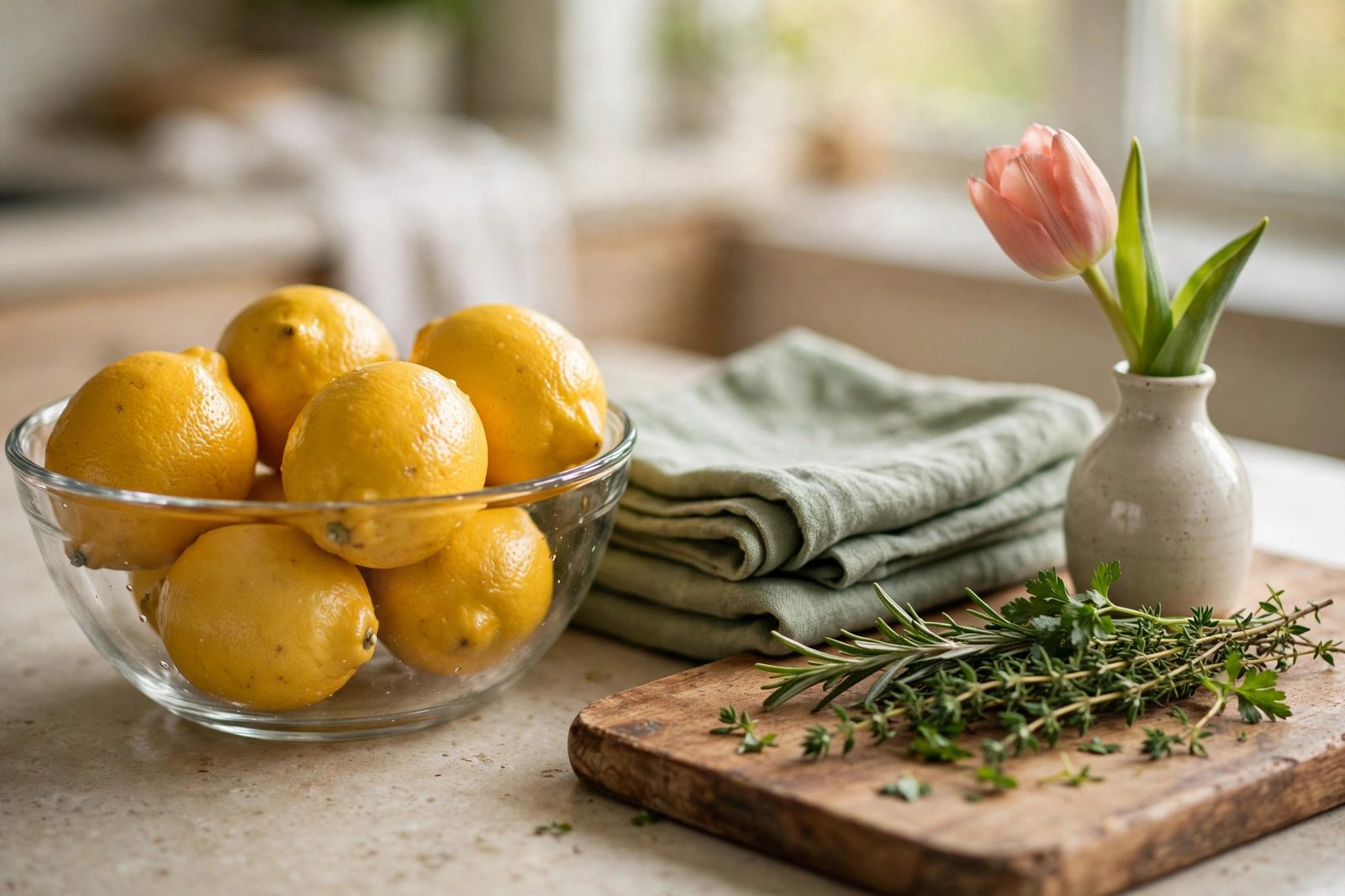
If you only have an hour, spend it on the small swaps that eyes actually register. Change the dish soap to a bottle in a pretty dispenser, fold a stack of sage or cream linen napkins on the counter, put a bowl of lemons where the winter candle cluster sat, and switch the hand towel at the sink. Four tiny changes, ten minutes each, and the kitchen reads spring before anyone can name why.
Focus your effort on the three spots guests actually see: the sink area, the island or main counter, and the entry sightline into the kitchen. These are the same zones you see every morning, so they pay double. The back corners, the pantry interior, and the top of the fridge can wait — styling effort is wasted wherever eyes do not land.
The rule for small swaps is one-for-one: every new spring item replaces a winter one rather than joining it, or you end up with seasonal layers that read as clutter. Bag the retired pieces together and label them for fall, so next season's swap takes minutes. Spring decorating is really just confident editing plus a few living things.
The One-Weekend Spring Kitchen Refresh Plan
Do the whole refresh in one weekend by splitting it into two halves: Saturday is the edit, Sunday is the style. Saturday morning, strip every visible surface — counters, island, shelves, windowsill — and clean them properly. Then sort what came off into stays, stores, and donates, being honest about the winter pieces that have earned a season off. Shop Saturday afternoon with a short list: linen runner and towels, one bunch of seasonal blooms, a few herbs, a bowl of citrus, and at most two new accessories.
Sunday, restyle zone by zone in the order that builds momentum: open shelves first because they are the most visible win, then the island vignette, then the windowsill, then textiles everywhere, and finally the breakfast nook. End the day by standing in the doorway and looking in — the entry sightline is the test, and if it reads light and fresh from there, the room works.
Budget about one hundred to one hundred fifty dollars for the whole refresh if you already own basics: most of the cost is plants, flowers, and linen, while the styling itself is free. The real investment is the Saturday edit — skipping the subtraction and just adding spring on top of winter is why most seasonal decorating looks cluttered by week two.
Keeping Spring Styling Alive Through June
Spring kitchen styling dies fastest at the greenery, so build a two-minute weekly routine: deadhead the tulips, trim the eucalyptus stems, water the herbs, and swap any tired citrus. This takes less time than unloading the dishwasher and it is the entire difference between a kitchen that stays fresh for months and one that fades by mid-April. Keep a small pair of scissors and the watering can near the herb tray so the routine has no friction.
Rotate the seasonal star as the months move: tulips and daffodils in early spring, peonies and garden roses in May, hydrangeas and wildflower bunches in June. The underlying structure — linen, light ceramics, fresh-green accents — stays the same all season, so you are only refreshing one vase of flowers every week or two. This is how spring kitchens look effortless: the framework is permanent and only the flowers change.
Final thoughts
A spring kitchen is not a renovation — it is a mindset shift toward light. Linen instead of plaid, eucalyptus instead of pine, sage instead of burgundy, daylight instead of lamplight. Every idea in this list works because it removes weight and adds life, and the kitchens that feel freshest in spring are the ones that were edited hardest, not decorated most.
Start with the edit, add greenery at three heights, restyle the shelves and the island, and let the linen and fresh-green accents tie it together. By the time the breakfast nook is refreshed and the windowsill is blooming, the kitchen will feel like the season finally arrived — because in your house, it has.
FAQ
How do I make my kitchen feel like spring?
Start with subtraction: clear heavy winter textiles and countertop clutter so daylight can do its work. Then add three things — living greenery like eucalyptus and herbs, light linen textiles in natural or sage tones, and fresh color through citrus and spring blooms. A kitchen with greenery at three heights, clear counters, and linen almost always reads as spring.
What are the best spring colors for a kitchen?
The fresh spring palette centers on cool, gray-leaning greens — sage, eucalyptus, pea, and soft moss — paired with cream, natural linen, and white. Add saturated citrus tones from lemons and limes for contrast. Keep greens cool rather than neon; bright emerald can skew toward Christmas in a kitchen setting.
How do I decorate my kitchen island for spring?
Run a natural linen runner down the center and build one composed vignette on it: a wooden bowl of lemons and limes, a tall vase of tulips or daffodils, and one low element like a small stack of bowls. Keep everything below eight inches except the vase, and leave the rest of the island clear for daily use.
What should I put on open kitchen shelves in spring?
Rebuild shelves with a light foundation — white and cream dishes, clear glass jars, pale wood — then add one living element per shelf like a potted herb, a bud vase, or a trailing plant. Leave about a third of each shelf empty so the pieces breathe, and keep your everyday dishes in the rotation so the styling survives real cooking.
How do I style a small kitchen for spring?
In a small kitchen, spend your effort on the three zones eyes land on: the sink area, the main counter, and the entry sightline. Use vertical space — shelves and windowsills — for greenery instead of counter space, choose one light linen runner rather than several textiles, and keep the island or counter clear except for a single bowl of citrus and one vase.
When should I decorate my kitchen for spring?
Late February through March is the sweet spot — early enough to enjoy the season before it arrives, late enough that spring blooms and fresh herbs are widely available. A full refresh takes one weekend: Saturday for the edit and shopping, Sunday for restyling, with a two-minute weekly greenery routine to keep it alive through June.