Outdoor
10 Patio Decor Ideas for Small Outdoor Spaces
10 small patio decor ideas that make tiny outdoor spaces feel cozy: defined zones, bistro sets, outdoor rugs, string lights, vertical gardens and more.
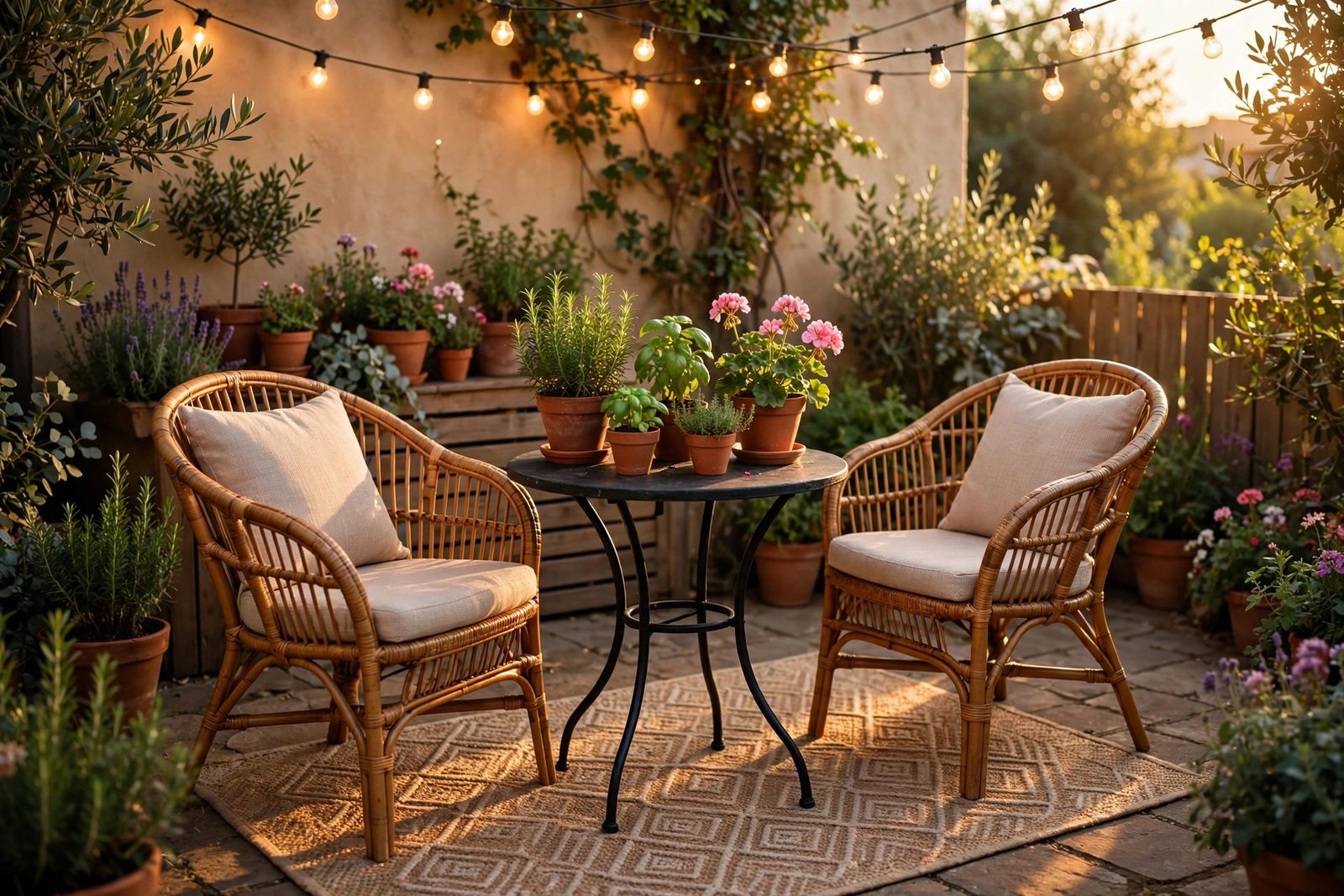
A small patio can feel like the best room in the house — if you decorate it with intention. These small patio decor ideas prove you do not need a sprawling backyard to enjoy outdoor living: with the right furniture, lighting, and layout, even a six-by-eight-foot slab becomes a coffee spot, a dinner corner, and a little green retreat all at once.
The secret is thinking of your patio like a tiny room. Define what happens where, choose furniture that earns its footprint, and let the walls and air above you do the decorating work the floor cannot. Overhead string lights, vertical planters, and one great rug do more for a small patio than a dozen accessories ever will.
Every idea below is built for tight spaces — balconies, side yards, and apartment patios included — and most cost little or nothing to start. Here are ten ways to make your small outdoor space feel bigger, cozier, and completely yours.
How Do You Define Zones in a Tiny Patio?
Even a tiny patio works better when it has jobs assigned to corners. Mentally divide the space into two zones: a seating zone where you will actually sit, and a green zone where plants do the decorating. The seating zone gets your rug, chairs, and lights; the green zone gets the planter clusters, the vertical garden, or the herb pots.
Use the rug as the zone boundary. Lay it under your seating and let the bare patio surface around it become the walking lane and plant zone. This one move makes a small patio feel designed rather than crowded, because every piece suddenly has a reason to be where it is.
Keep the middle of the patio empty. Walkways that cut straight from the door to the far edge make the space read larger, and pulling furniture toward one side or corner leaves a clear path. A small patio feels cramped when you have to squeeze past things — give yourself one honest walkway and the whole space breathes.
Should You Choose a Bistro Set or a Built-In Bench?
A bistro set is the classic small-patio answer: a round table twenty-four to thirty inches across with two chairs tucks into corners, seats two comfortably, and leaves enough room to walk around. Round shapes are forgiving in tight quarters — no corners to bump, no sharp edges eating into your walkway.
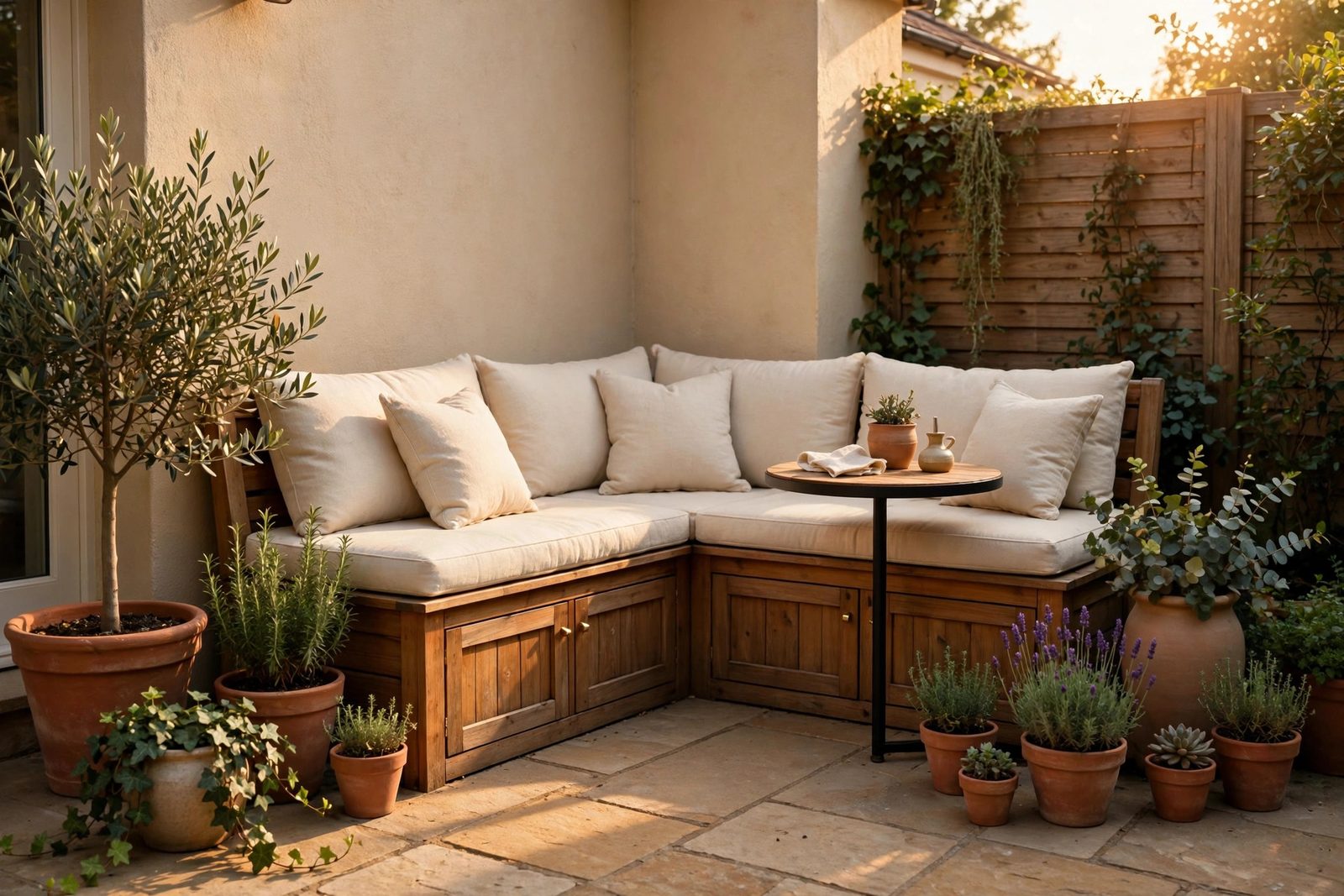
But a built-in style corner bench wins on storage and seating density. A simple L-shaped bench along two edges of the patio seats three or four where chairs would seat two, and the base doubles as hidden storage for cushions, plant tools, and the outdoor toys that otherwise pile up. Top it with a deep cushion and it is as comfortable as any chair.
The deciding question is flexibility. Renters and frequent rearrangers should go with the bistro set — it moves in minutes. If the patio is yours and you want maximum seating plus storage, build or buy the bench; it is the single most space-efficient seating choice a small patio can have.
How Can an Outdoor Rug Make a Small Patio Feel Bigger?
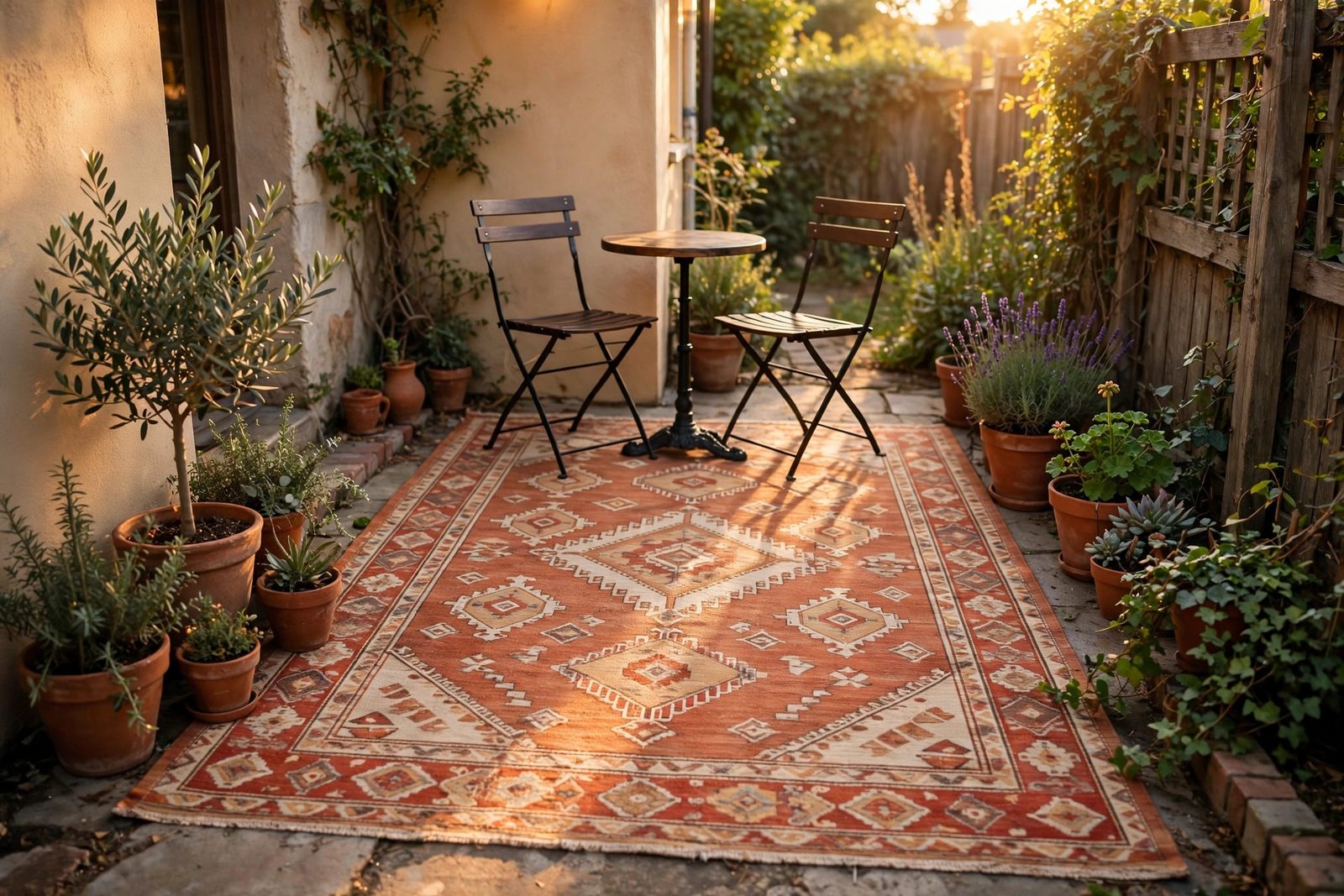
An outdoor rug is the fastest transformation a small patio can get. It does what rugs do indoors: defines the seating area, softens hard surfaces, and pulls scattered pieces into one composed picture. A concrete slab with a rug on it reads as a room; without one it reads as a slab.
Go bigger than you think. A rug that fits entirely under your table and chairs — all four legs on the rug — makes the seating group feel grounded and generous. A too-small rug that the chairs half hang off of makes the same space feel cramped. For a bistro set, a five-by-seven-foot rug is usually the sweet spot on a small patio.
Choose polypropylene or recycled-plastic rugs made for outdoors; they shake off rain, hose clean, and resist mildew. A low, flat weave dries fastest and will not trip anyone. Pattern helps too — a stripe or border in a warm tone hides dust and pollen far better than a solid pale rug.
What's the Best Way to Add Greenery Without Losing Floor Space?
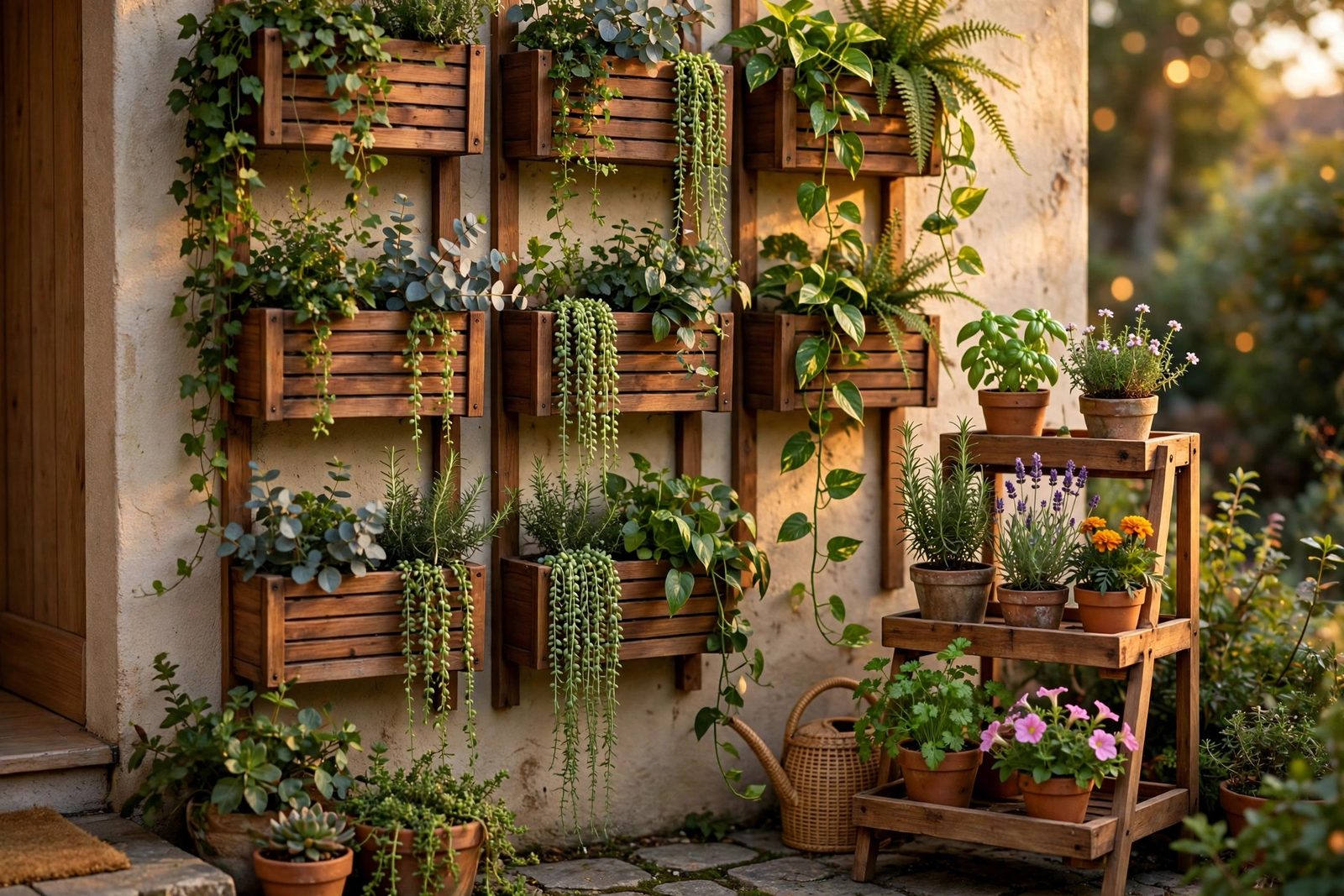
When the floor is full, grow upward. Wall-mounted planters, a wooden slat trellis with climbing plants, and a narrow tiered plant stand give you a garden's worth of green in about two feet of depth. A tiered stand alone can hold a dozen pots in the footprint of one floor planter.
Match plants to your light and your habits. Trailing pothos and ferns soften wall planters with almost no effort; herbs like basil, mint, and rosemary love sunny tiers and earn their keep in the kitchen. If you forget to water, choose forgiving options — succulents, snake plants, and ornamental grasses forgive a lot of neglect.
Cluster, don't scatter. Three pots grouped tightly together read as one lush arrangement; three pots spread across the patio read as clutter. Set your biggest pot at the back, medium pots in the middle, and a trailing plant at the front for a layered look that makes the whole corner feel abundant.
How Do You Hang String Lights Over a Small Patio?
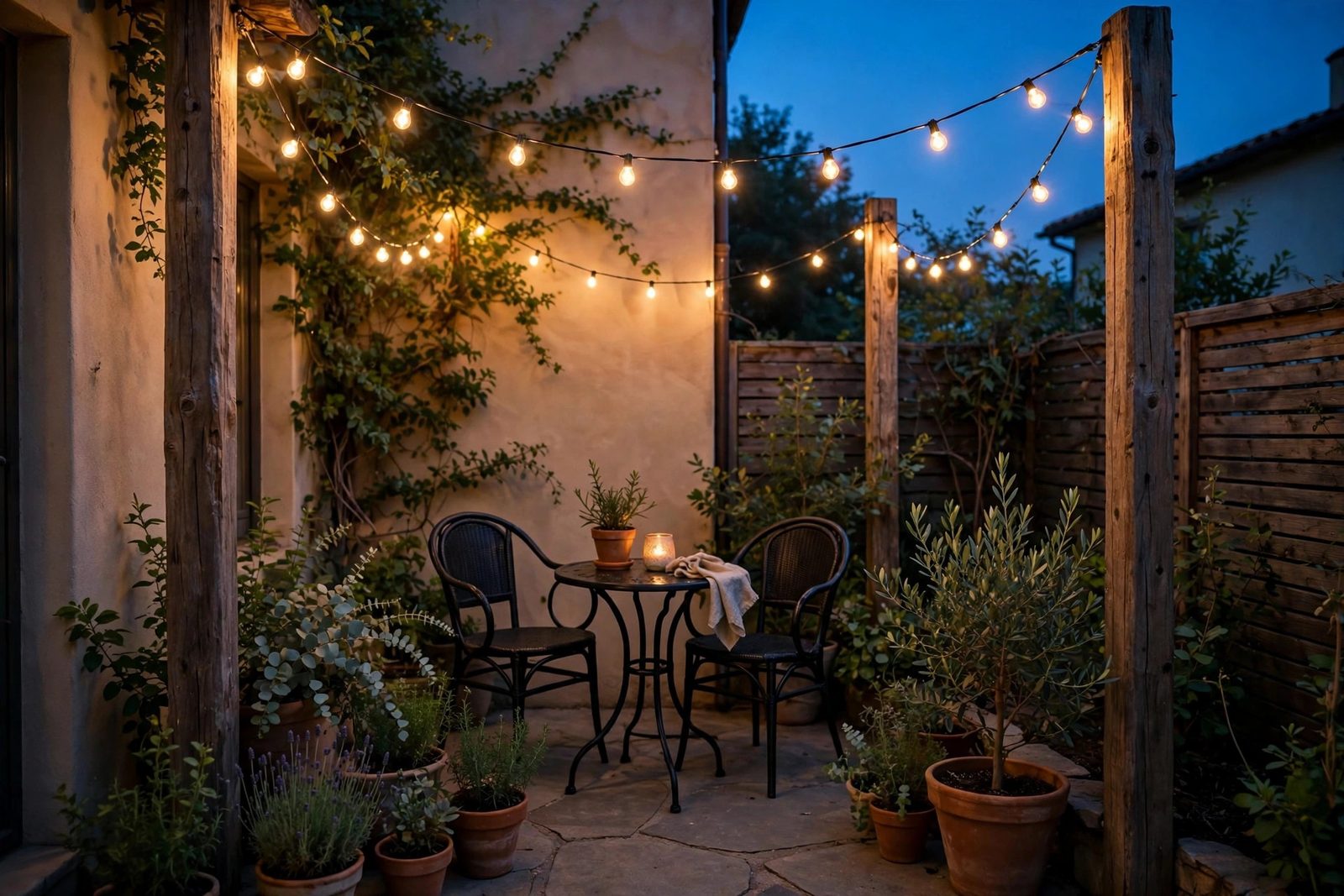
String lights are the single highest-impact upgrade for a small patio, and they cost almost nothing. They create a ceiling of light where you have none, pull the eye upward so the space feels taller, and make an ordinary Tuesday evening feel like an occasion. Hang them first and build everything else underneath.
You need two anchor points. Screw heavy-duty hooks into the house wall or fence on one side and use a tall shepherd's hook, a weighted umbrella base with a pole, or a freestanding wooden post on the other. Let the strands swag gently — about six to twelve inches of drop per span — rather than pulling them drum-tight, which looks stiff and risks snapping.
Choose warm-white LED strands rated for outdoor use; they sip electricity and stay cool. Solar strings work for renters who cannot run an extension cord, but plug-in strands with a timer are brighter and more reliable — the timer means your patio glows every evening without you touching a switch.
How Can You Add Privacy to a Small Patio?
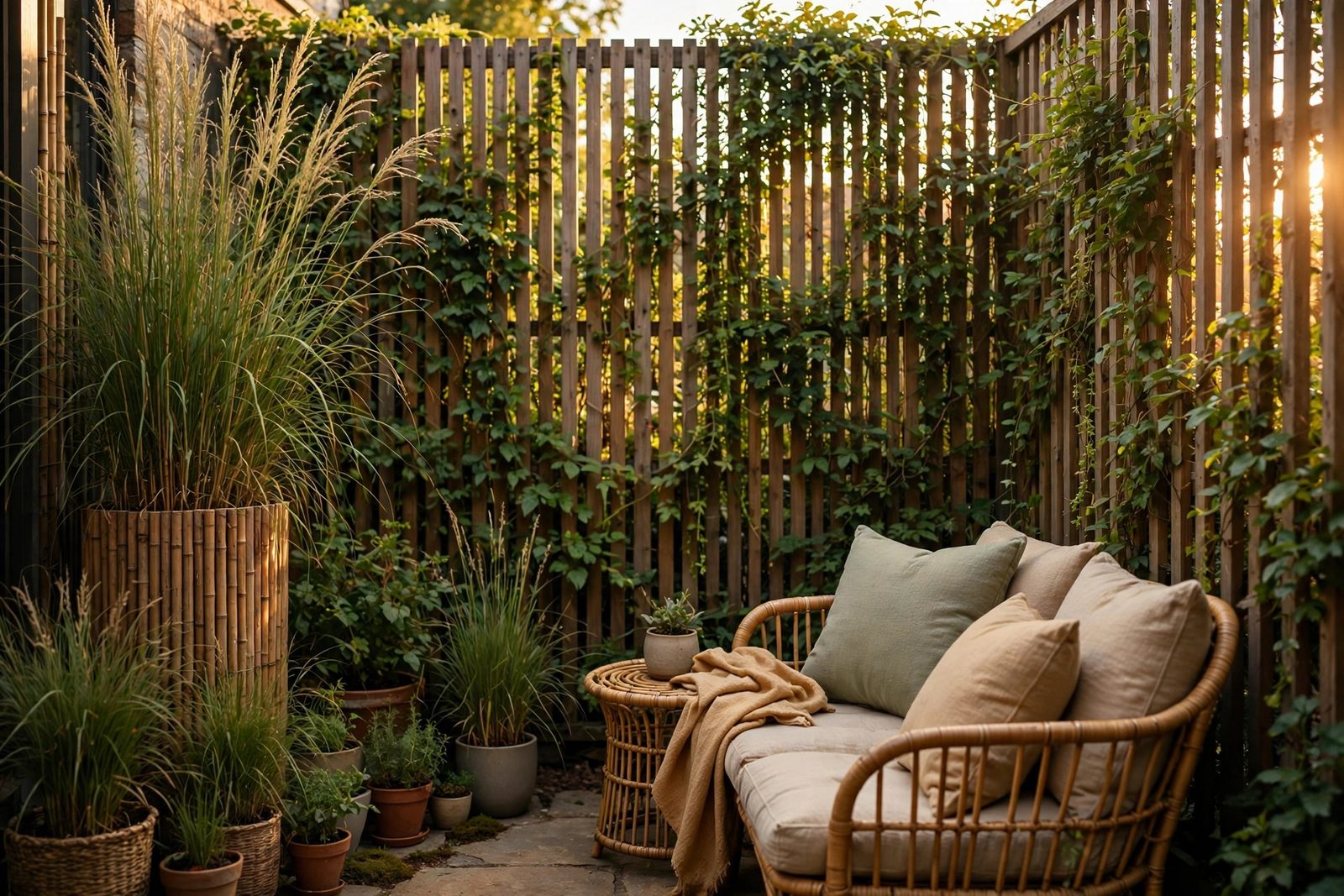
Privacy is what turns a patio from a thoroughfare into a retreat, and small patios need it most — you are always close to the neighbors. A wooden slat screen or a freestanding lattice panel along the exposed side blocks sightlines while still letting air and light through, so the space feels sheltered rather than boxed in.
Plants are the prettiest privacy tool. Tall grasses like pampas or fountain grass in large pots, a row of bamboo in rectangular planters, or a climbing jasmine on a trellis all create a living screen that softens the boundary. Plant screens also absorb sound a little, which matters when patios sit close together.
Renters can get privacy without drilling. Freestanding planter boxes on casters, a tension-mounted outdoor curtain on a weighted frame, or tall folding screens all move with you. Whatever you choose, leave one side open — a patio that is enclosed on all four sides stops feeling like outdoors.
What Furniture Works Best in a Really Small Outdoor Space?
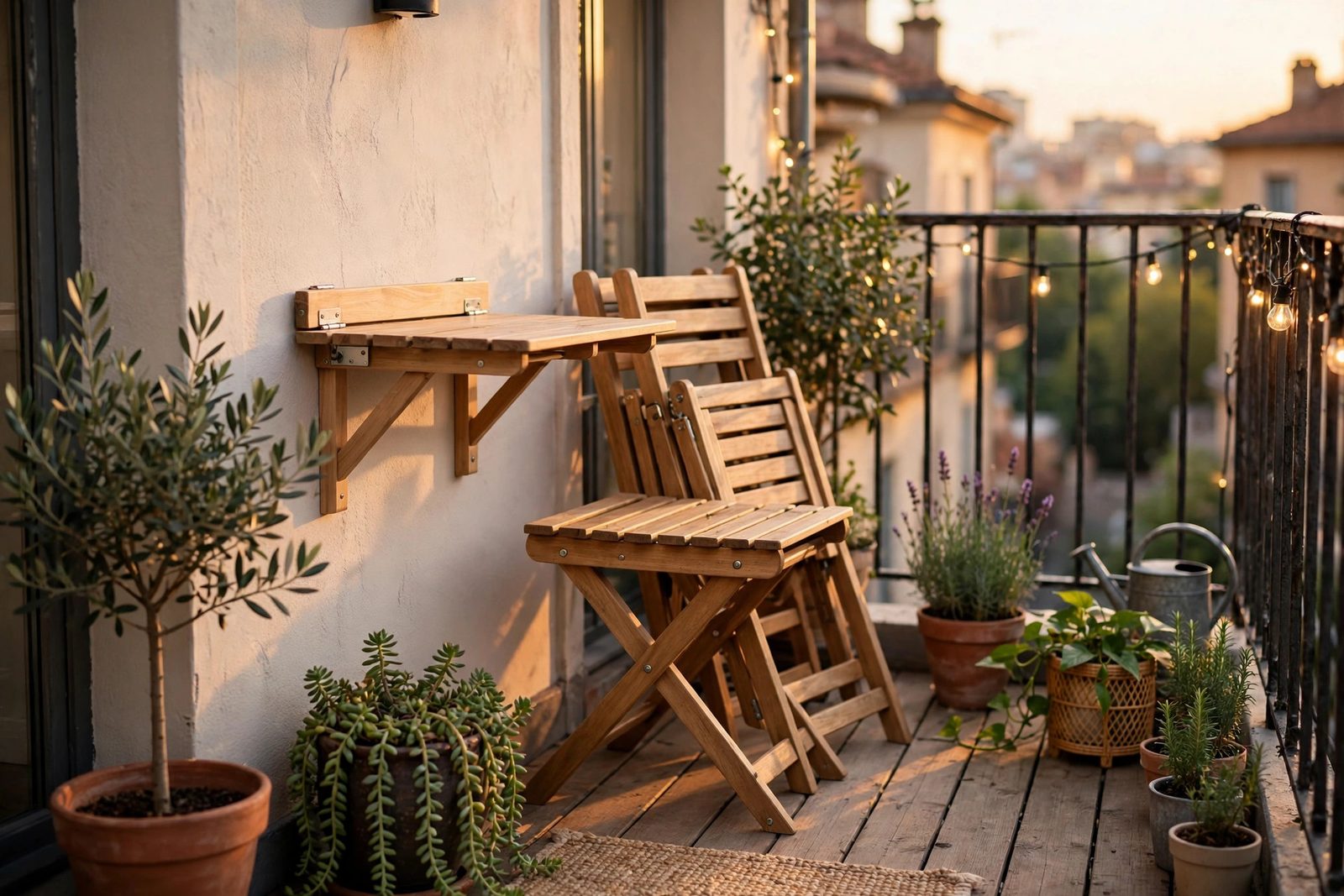
On the smallest patios, every piece should be able to disappear. Folding bistro chairs, a drop-leaf table that hugs the wall, and stackable stools let you open up the whole space in under a minute — handy when you need the patio for grilling, plant watering, or just moving around.
Look for dual-purpose pieces. A storage bench that holds cushions, a side table with a shelf underneath, or a planter box wide enough to serve as a stool all earn their footprint twice. On a small patio, single-job furniture is a luxury you cannot afford.
Keep the visual weight low. Slim-legged metal or acacia pieces read as airier than chunky furniture, and open designs you can see through — slatted backs, wire frames — let light pass and make the patio feel less filled. Two light pieces always beat one heavy piece in a tight space.
How Do Outdoor Cushions and Textiles Make a Small Patio Cozy?
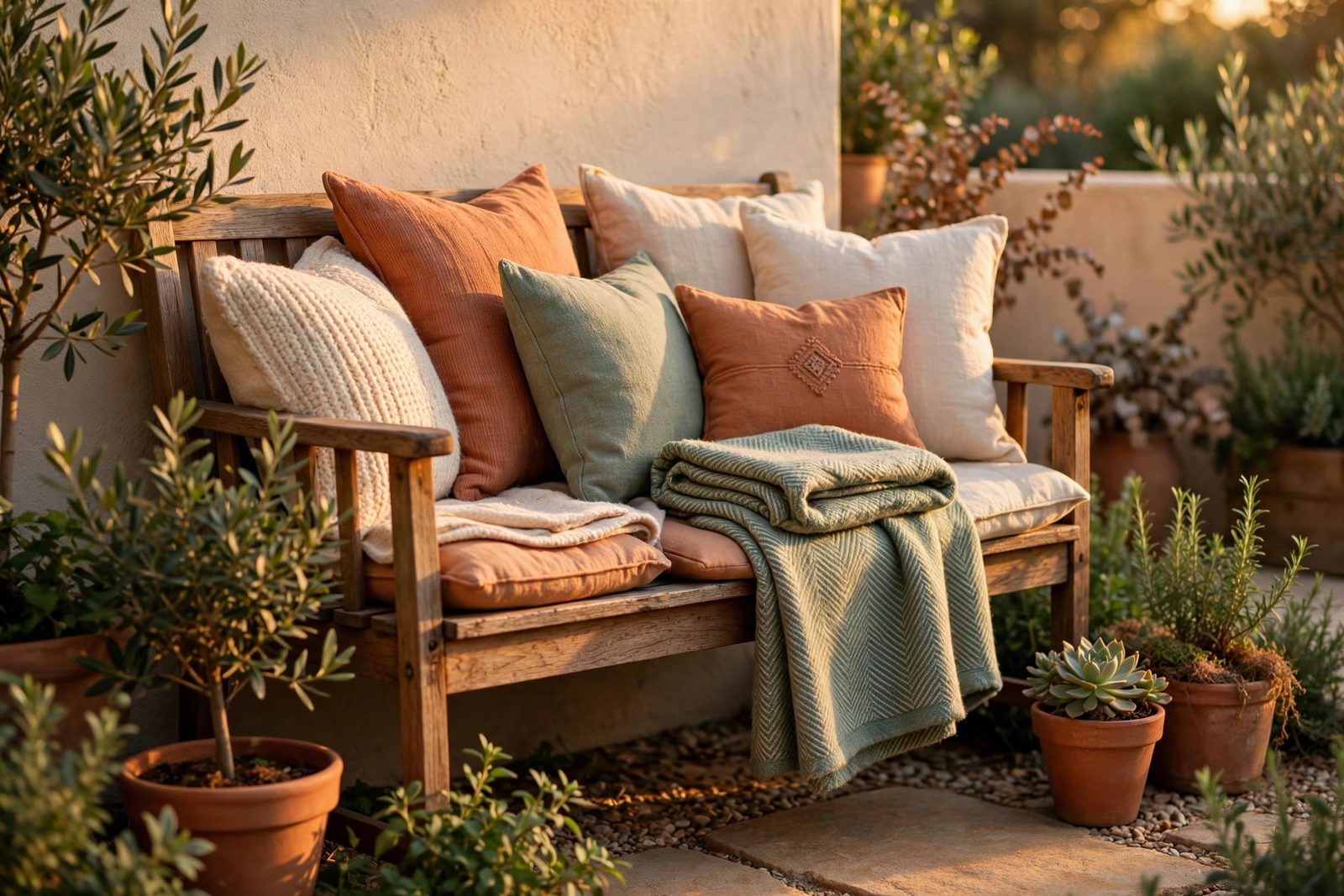
Textiles are what make a patio feel like a room instead of a slab with furniture. Outdoor cushions, a throw draped over a bench, and a couple of lumbar pillows add the softness your body expects from a living space — and they are the easiest thing to change when you want a new look next season.
Stick to a tight palette of two or three colors drawn from your rug or plants. Terracotta, cream, and sage is a warm combination that flatters golden-hour light; navy, white, and natural wood reads crisp and coastal. Repeating the same colors across cushions, throw, and rug is what makes the whole patio look designed.
Buy cushions with removable, washable covers and store them in a deck box or storage bench when rain is coming — even weather-resistant fabric lasts years longer when it is not sitting out in every storm. Solution-dyed acrylic fabrics resist fading best if your patio gets full sun.
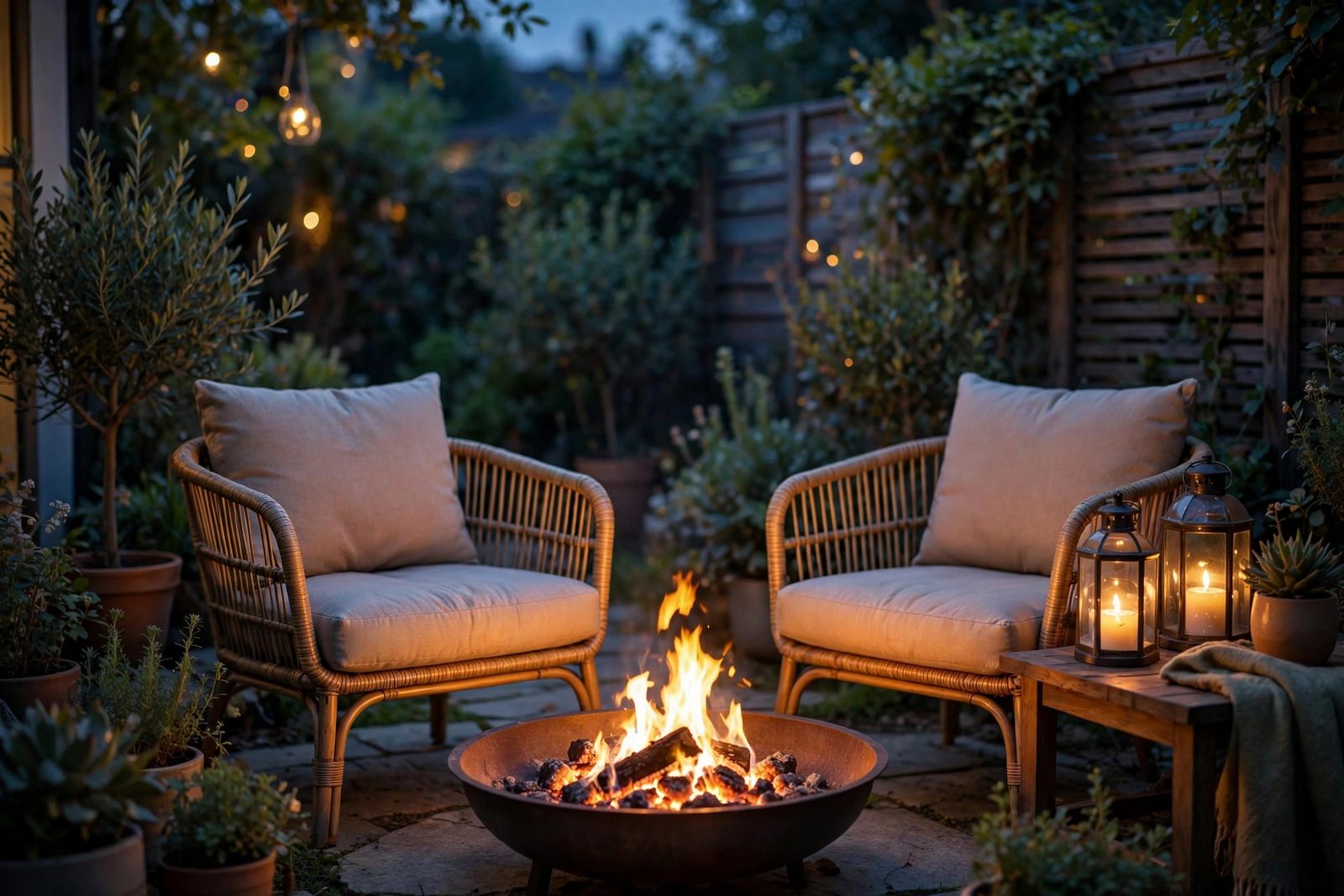
Can You Have a Fire Pit on a Small Patio?
Yes — with the right kind. A tabletop fire bowl or a compact propane fire pit under two feet wide gives you real flame and real warmth without the clearance a wood-burning pit demands. Propane is the small-patio winner: no sparks, no smoke drifting into the neighbor's window, and it turns off instantly.
Respect the clearances. Keep any flame at least three feet from cushions, railings, and walls, never put a fire pit under a covered roof or low overhang, and set it on a fire-resistant mat over wood decking. Check your local rules and your lease first — many apartments and HOAs ban open flame but allow propane.
If flame is off the table, lanterns are the next best thing. A cluster of glass lanterns with LED candles on a side table or along the patio edge gives you the same warm flicker at zero risk. Mix two or three heights for a collected look, and choose lanterns with timers so the whole patio lights itself at dusk.
How Do You Keep a Small Patio Low-Maintenance?
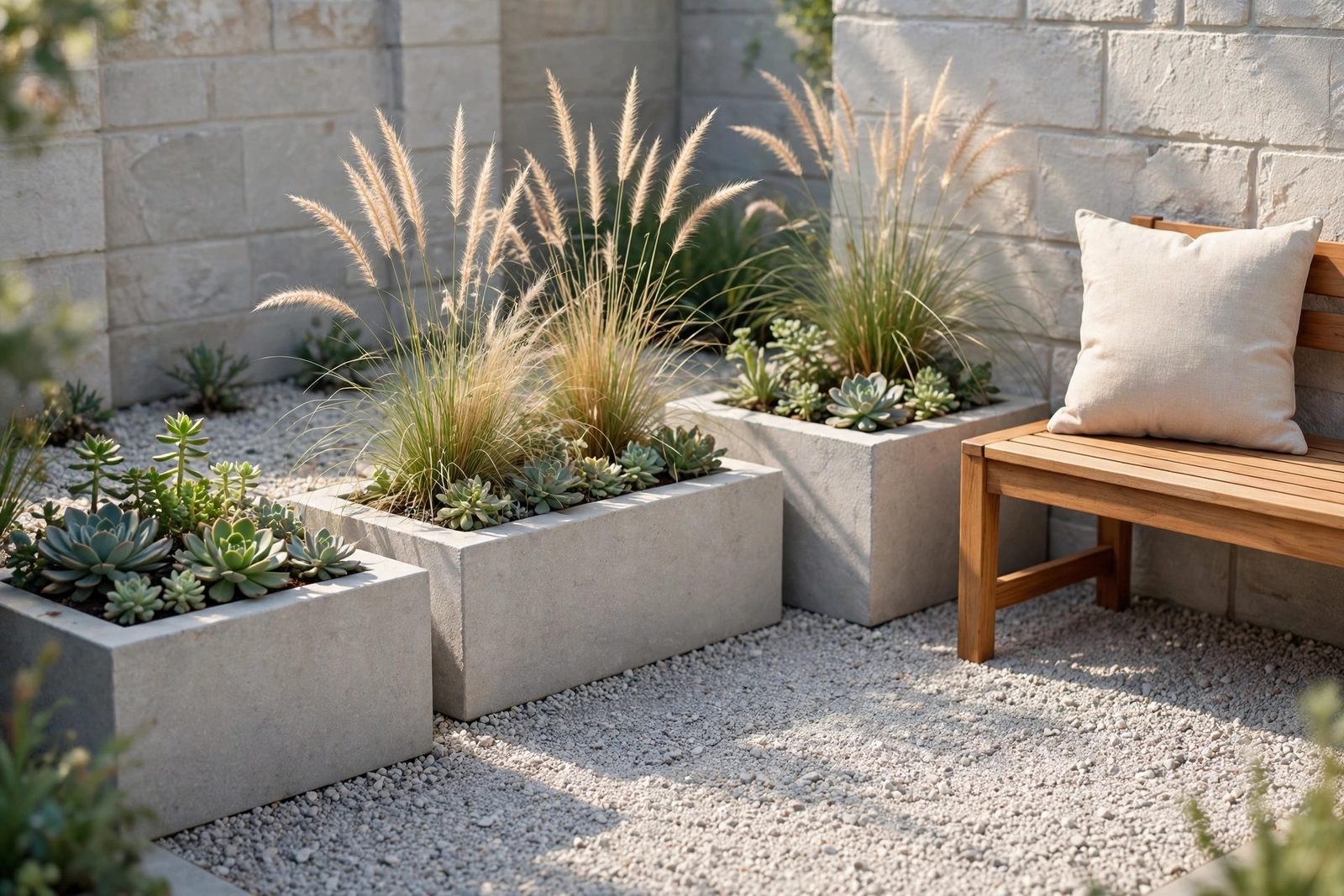
A small patio should be easy to enjoy, not another chore. Start by choosing plants that thrive on neglect: succulents, lavender, ornamental grasses, and snake plants look good with minimal water and no deadheading. Self-watering planters or a simple drip line on a timer remove watering from your to-do list entirely.
Cut clutter ruthlessly. On a small patio, every extra object is both visual noise and something to move when you sweep. Give everything a home — cushions in the storage bench, tools in a wall-mounted box, the watering can hung on a hook — and the patio stays tidy with a two-minute reset.
Build a tiny maintenance rhythm: a weekly five-minute sweep, a monthly wipe-down of the table and chairs, and a seasonal check of light strands and cushion covers. Small spaces reward small habits — five minutes a week keeps a patio feeling fresh all season.
Measuring and Layout: The 5-Minute Small Patio Plan
Before buying anything, measure your patio and sketch the rectangle on paper. Mark the door swing, any downspouts or vents you cannot block, and the sunniest and shadiest corners. Then cut paper rectangles to scale for your planned furniture — a bistro set, a bench, planters — and move them around until the walkway is clear.
The layout rule that matters most: keep one straight path from the door to the far edge at least two feet wide. Arrange seating against the walls or in one corner, never floating in the middle of a small patio. And place the largest piece first — usually the bench or table — then fit everything else around it.
Test the plan with what you own before you shop. Drag indoor chairs outside for an afternoon and live with the arrangement. You will discover in one day what no measuring tape tells you: where the sun lands at dinner time, which corner catches the breeze, and whether that walkway is really wide enough.
Weatherproofing Checklist for a Small Patio
Outdoor-rated everything is the baseline: furniture in powder-coated metal, teak, or all-weather wicker; fabrics labeled for outdoor use; and light strands rated for wet locations. Indoor pieces will survive a season or two, but they fade, rust, and mildew — on a small patio where everything is visible, that shows fast.
Plan for rain even if you cannot cover the patio. A storage bench or deck box for cushions, a grill-style cover for the table, and pot feet or saucers under planters so water drains instead of staining the slab. Tip: tilt or store the rug against the wall during heavy storm weeks so it dries instead of mildewing underneath.
At season's end, do a thirty-minute shutdown: wash and fully dry cushions before storing, coil light strands loosely around cardboard so they do not tangle, bring clay and ceramic pots inside if you get hard freezes, and wipe down furniture before covering it. A clean shutdown means spring setup takes an afternoon, not a weekend.
Final thoughts
Here is the quiet advantage of a small patio: it gets cozy fast. One rug, one strand of lights, and a couple of plants will transform a bare slab in a single weekend afternoon — no contractors, no big budget, no all-summer project required.
Start with the two moves that do the most work: the rug and the lights. Then add the pieces that fit how you actually live — morning coffee, evening wine, a sunny reading corner — and let the patio grow into your favorite room of the house. Small outdoor spaces reward editing, so buy less, choose well, and enjoy every square foot.
FAQ
How do you decorate a small patio on a budget?
Start with the two highest-impact, lowest-cost moves: an outdoor rug and a strand of string lights. Both can be found affordably, and together they make a bare slab feel like a room. Add thrifted or secondhand seating, propagate plants from cuttings, and paint a plain pot instead of buying new decor — the whole patio can come together for very little.
What size rug should I get for a small patio?
Big enough that all chair legs sit on it — for a typical bistro set, a five-by-seven-foot rug is the sweet spot. A rug that is too small makes the space feel cramped, while one that fills the seating zone makes it feel generous. Measure your furniture footprint first, then size up one step if you are between sizes.
How do I make a small apartment patio feel private?
Use a freestanding solution since most renters cannot drill: tall grasses or bamboo in large planters, a folding screen, or a tension-mounted outdoor curtain on a weighted frame. Place the screen on the side with the most exposure and keep one side open so the patio still feels like outdoors, not a box.
What plants are best for a small patio with little sun?
Ferns, hostas, pothos, and snake plants all thrive in shade and forgive irregular watering. For color in low light, try impatiens or begonias in wall planters. Vertical and wall-mounted planters keep the floor clear, which matters most on a shaded patio where every square foot counts.
Can I put a fire pit on a small apartment patio?
It depends on your lease and local rules — many apartments and HOAs ban open flame. Where allowed, choose a compact propane fire bowl under two feet wide: no sparks, no smoke, and instant shutoff. Keep it three feet from anything flammable, never under a roof, and use a fire-resistant mat on wood decking. When in doubt, LED lanterns give the same glow with zero risk.
How do I keep outdoor cushions from getting moldy on a small patio?
Choose solution-dyed acrylic fabrics with removable washable covers, and store cushions in a deck box or storage bench whenever rain is forecast. Stand cushions on edge after rain so air circulates, and wipe down the storage box interior each season. Even weather-resistant fabric lasts years longer when it is not sitting out in every storm.