Living Room
10 Statement Wallpaper Ideas for 2027: Modern Wallpaper Ideas That Transform a Room
10 modern wallpaper ideas for 2027: grasscloth, murals, chinoiserie and bold prints that turn one wall into the room's star — no repaint required.
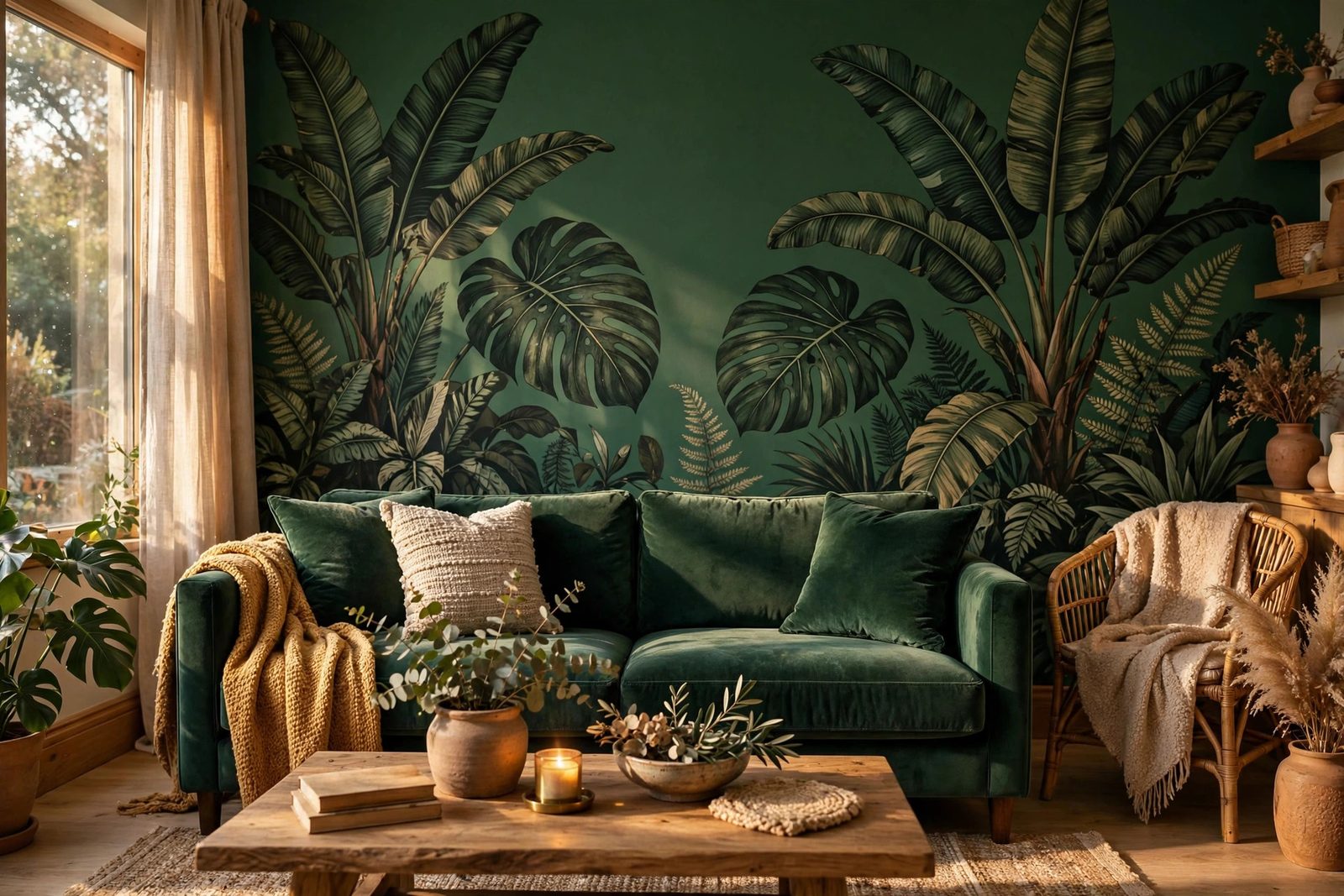
Wallpaper is back — not the fussy border of the nineties, but bold, painterly, texture-rich modern wallpaper ideas that turn one wall into the entire personality of the room. For 2027 the statement is oversized: huge-scale botanicals, sweeping murals, hand-woven grasscloth, and patterns with enough confidence to carry a whole living room on their own.
The timing makes sense. After years of all-white minimalism, rooms are asking for warmth and depth again, and nothing delivers both faster than a single wallpapered wall. It is also the lowest-commitment way to go bold: one wall, one weekend, and a peel-and-stick option if you rent. There is no wallpaper post on the site yet, so consider this your complete field guide to the ten looks defining 2027.
Below you will find the styles worth your attention, where each one works hardest, and the styling moves that keep a strong pattern feeling cozy instead of chaotic.
How Do You Make Bold Botanical Wallpaper Feel Cozy, Not Loud?
The defining wallpaper of 2027 is the oversized botanical: leaves and branches printed at three or four times their natural size, usually in deep greens, inks, or a dark moody base. The scale is what makes it feel modern rather than grandma's parlor — a few giant leaves read as art, while a hundred tiny ones read as clutter.
Ground it with solid, weighty furniture so the wall stays the only thing competing for attention. A velvet or linen sofa in a solid color pulled straight from the print — forest green, deep teal, warm ochre — anchors the pattern, and warm lamplight keeps the dark background feeling intimate instead of cavernous. Skip patterned cushions here; texture (knit, velvet, nubby linen) adds interest without arguing with the wall.
Paper just the wall your eye lands on first when you enter the room — usually the wall behind the sofa — and keep the other walls in a quiet neutral pulled from the paper's background. That one-wall rule is what separates a statement from a theme park, and it is also what keeps the project affordable and weekend-sized.
What Is Grasscloth Wallpaper — and Where Does It Work Best?
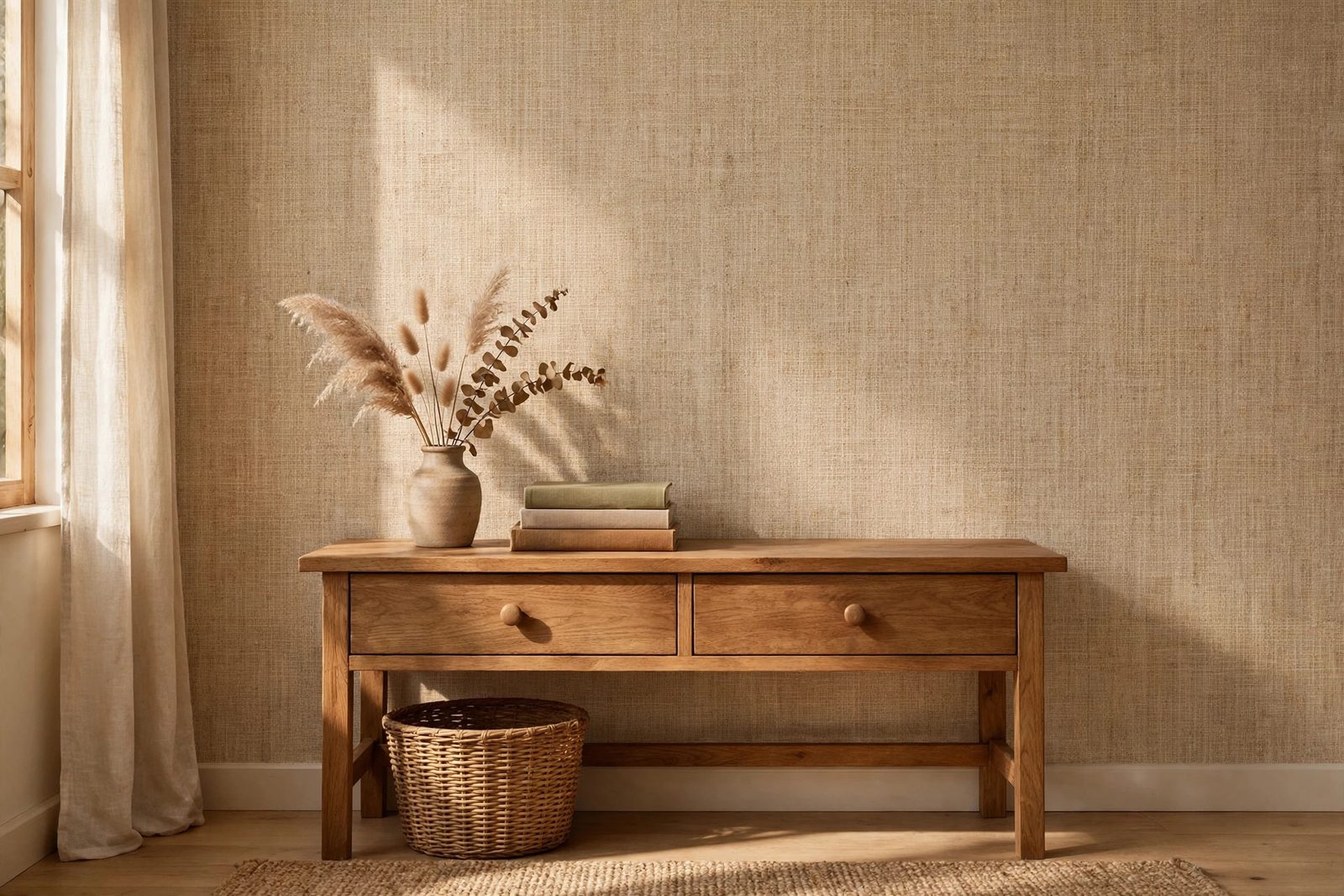
Grasscloth is the quiet luxury of the wallpaper world: strands of natural fibers — sisal, jute, seagrass — woven and backed with paper, so the wall gains real texture you can see raking across the surface in lamplight. In 2027 it is the go-to for people who want a statement they feel rather than see, especially in warm beige, oat, and natural tones.
It works hardest in rooms where you want warmth without color — entryways, behind a console table, or the wall behind a bed. Because every panel has slight natural variation, seams show a little; treat that as part of the handmade look rather than a flaw, and order panels from the same dye lot so the variation stays subtle.
Pair grasscloth with honest materials: wood, linen, stone, leather. The texture makes nearby art look richer too, which is why designers love hanging one large simple print over a grasscloth wall — the woven background does the work that a painted accent color used to do.
How Do You Hang a Large-Scale Floral Mural Without Overwhelming the Room?
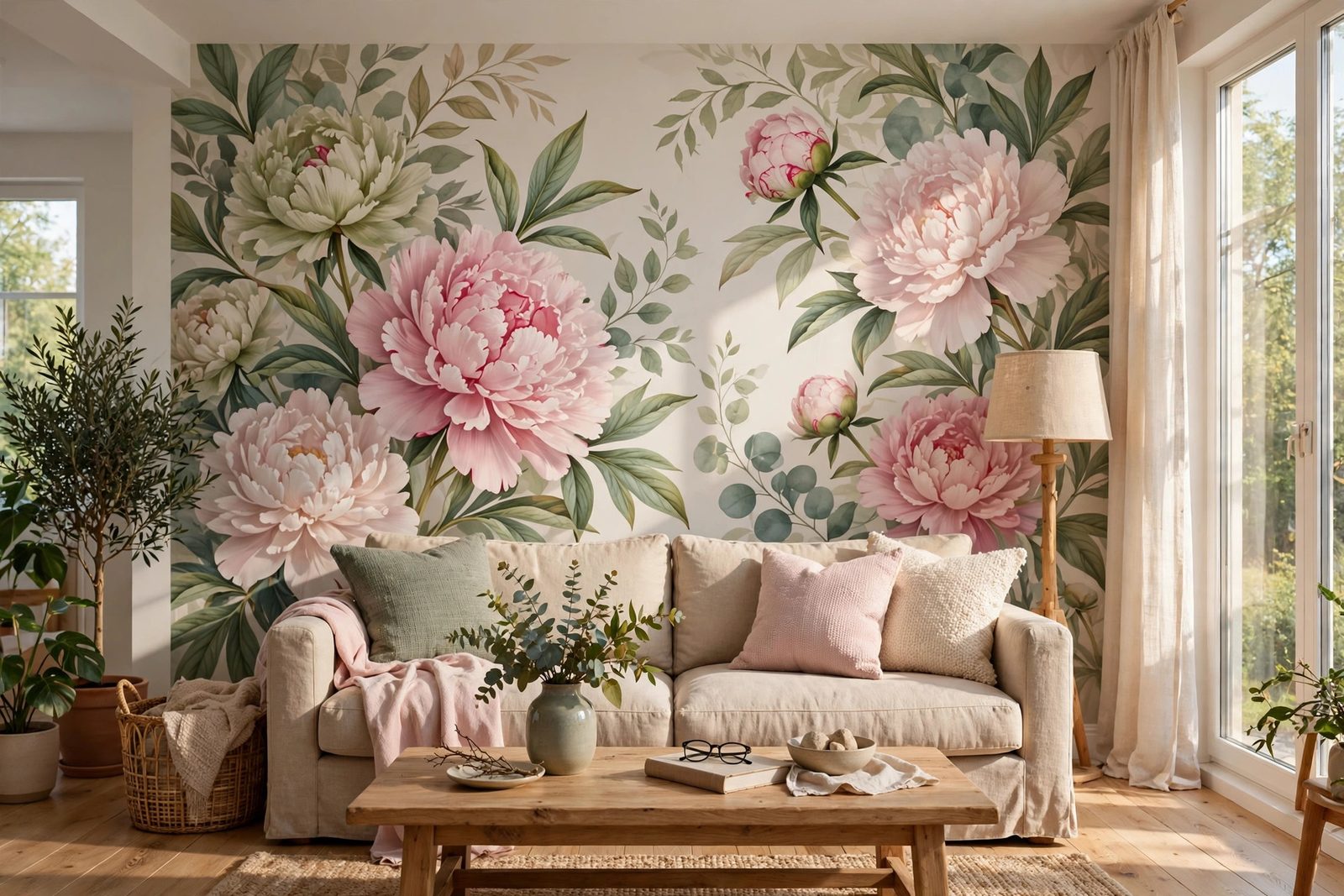
Floral murals at 2027 scale are printed wall-to-wall as a single continuous scene — oversized peonies, wild roses, or magnolias that wrap corners like a fresco. The trick to keeping it calm is composition: choose a mural with breathing room built in, where blooms cluster on one side and negative background space opens up on the other.
Placement matters as much as the print. Hang it behind the sofa and let the furniture crop the bottom third of the mural — the blooms rise above the sofa back like a garden hedge, and you never see the busy lower edge. In rooms with low ceilings, pick a mural whose design draws the eye upward: tall stems and climbing branches stretch the wall visually.
Keep everything else in the room deliberately plain. Solid bedding, solid curtains in the mural's background color, and one metal or wood accent at most. The mural is the room's artwork, lighting, and conversation piece all at once — treat the rest of the room as its frame.
Where Do Chinoiserie Wallpaper Panels Make the Most Impact?
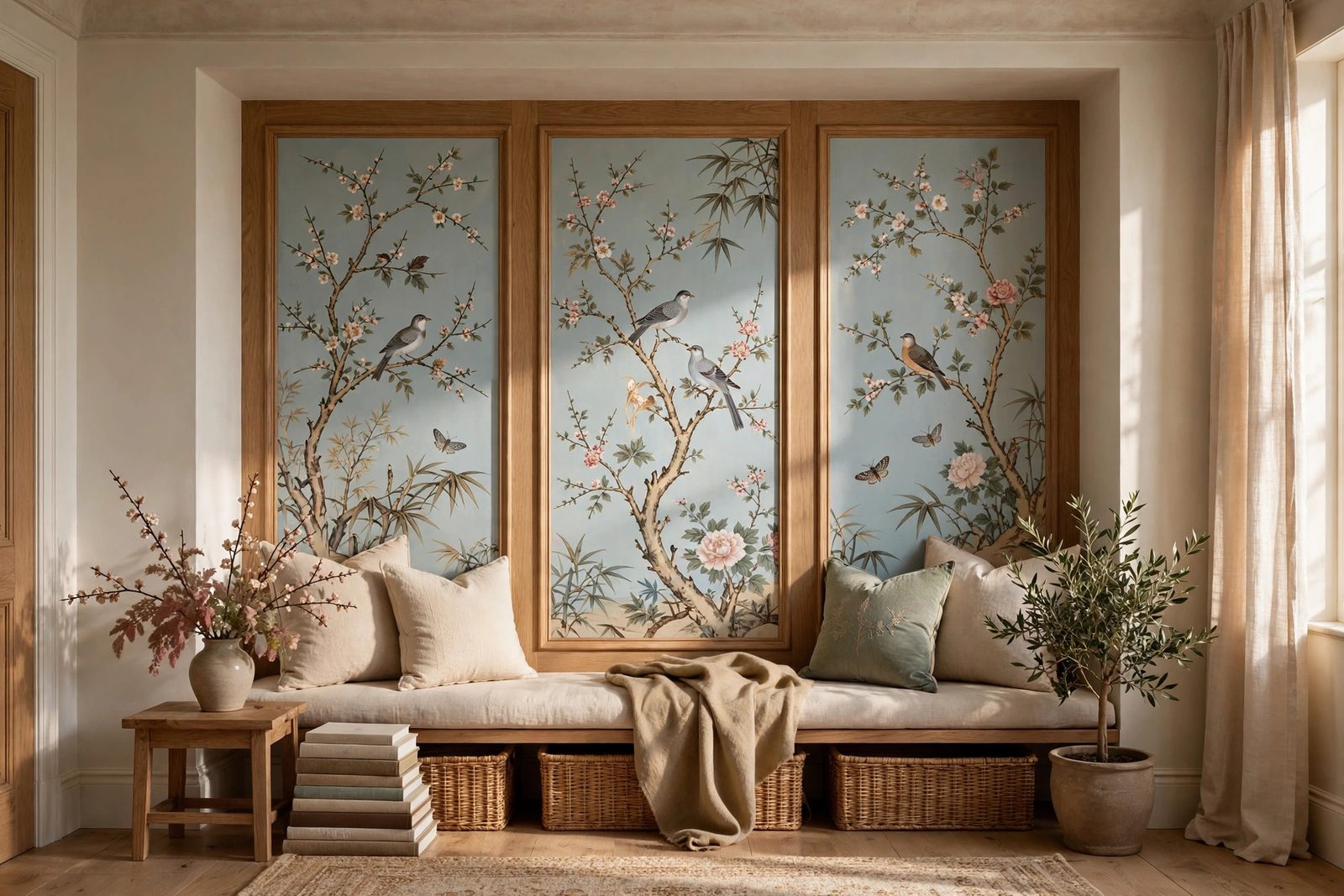
Chinoiserie — delicate hand-painted-style scenes of birds, branches, and blossoms on silk-like backgrounds — is the most elegant way into statement wallpaper, and in 2027 it has moved beyond full walls into framed panels. The alcove, the dining nook, the narrow wall between two doorways: awkward spaces are where these panels shine, because the artwork gives the oddity purpose.
Buy it as mural panels rather than repeating rolls so the scene reads like a painting, not a pattern. Hang each panel as one continuous composition, and if you are paneling an alcove, run the scene across the back wall only — the side returns stay quiet so the composition has a clear stage.
Style around it lightly. Chinoiserie scenes already carry detail, so the furniture in front should be simple and sculptural: a slim console, one ceramic vase, a pair of lamps. Dark or neutral floors ground the lightness of the paper, and a single metallic accent — brass picture light, gold tray — picks up the gilt details in the print.
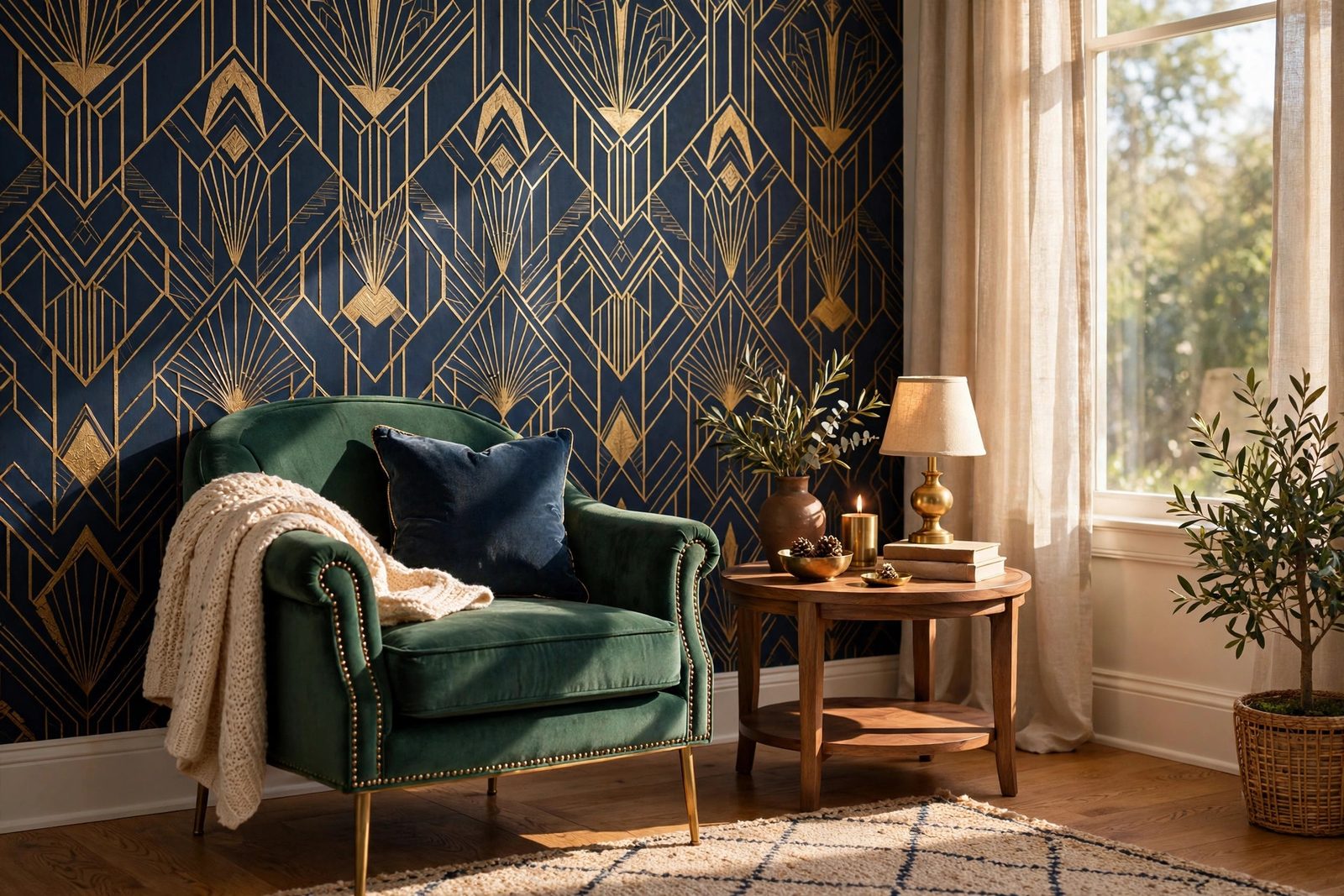
How to Pull Off Navy and Gold Art Deco Wallpaper
Art deco geometry in navy and gold is 2027's answer to the neutral living room that needs one jolt of glamour. The pattern — fans, scallops, chevrons — reads crisp and architectural from across the room, and the metallic gold ink catches lamplight in a way flat paint never will. It is a pattern with built-in evening lighting.
It works best in rooms that already have some structure: a fireplace wall, a wall with built-in shelving, or the dining side of an open-plan living room. The geometry plays well with architectural lines and gives a featureless new-build wall the molding-like presence it lacks.
Echo the palette sparingly but deliberately. A navy velvet cushion or two, one brass lamp, and a dark wood coffee table are enough — the wallpaper already did the heavy lifting. Too many gold accessories and the room tips from glamorous into casino, so let the wall be the only place the metallic goes big.
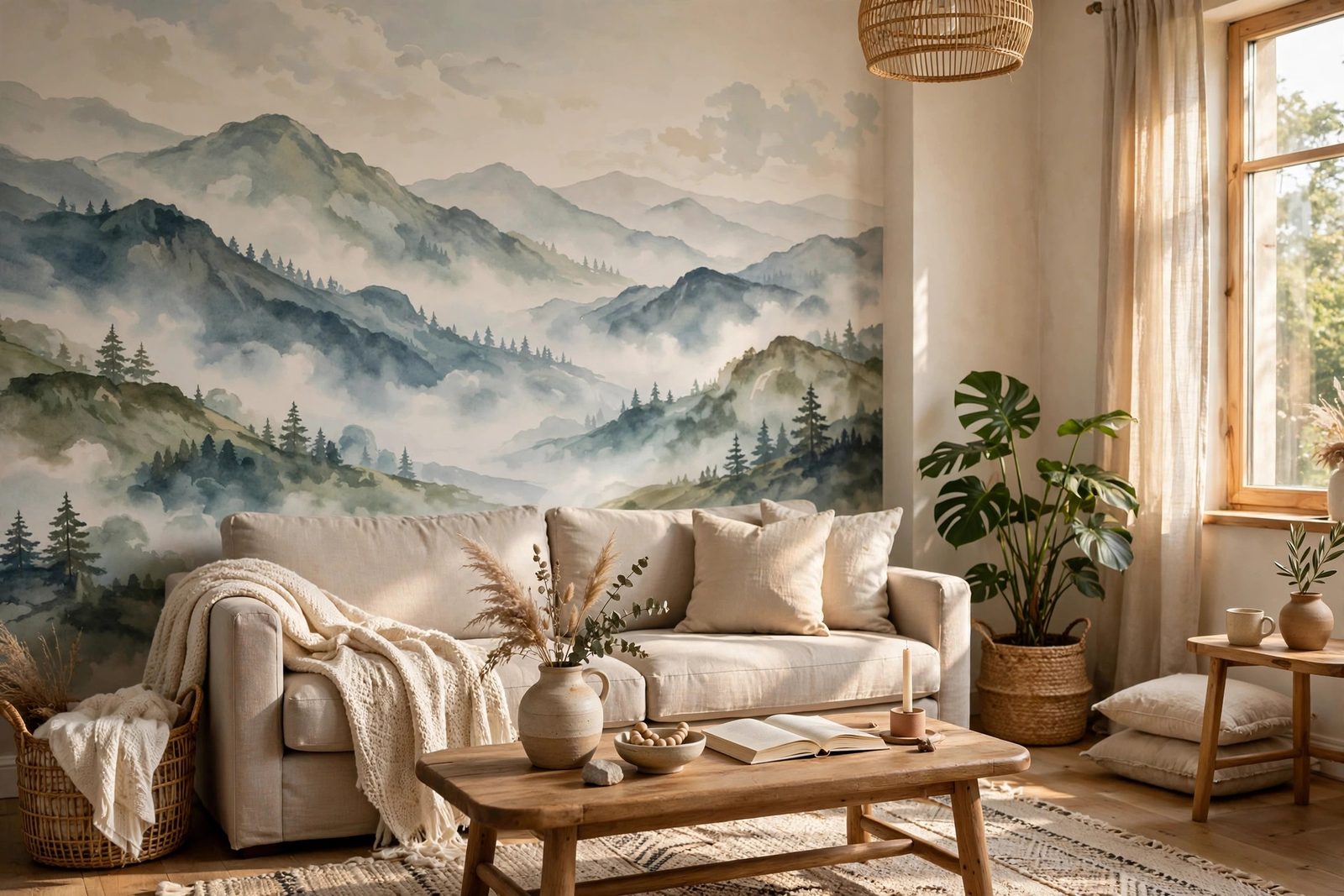
Why Is a Hand-Painted Landscape Mural the Calmest Statement Wall?
If bold botanicals feel like too much but a plain wall feels like too little, the landscape mural is your middle path. Soft, hand-painted-style scenes — misty mountains, rolling hills, distant tree lines — bring color and movement to a wall while staying as calming as a window view. It is the statement wall for people who want interest without energy.
Choose a mural in a limited palette that matches your room's neutrals: warm grays, sages, and creams that echo your sofa and rug rather than introducing new colors. Because the scene reads as depth, it visually pushes the wall back — the one statement wallpaper that can make a small living room feel larger.
Furnish in front of it the way you would furnish in front of a view: low-profile pieces that do not block the sightline. A low sofa or a pair of streamlined armchairs sit beneath the horizon line, and sheer curtains on the adjacent window keep the light soft so the mural's tones stay true all day.
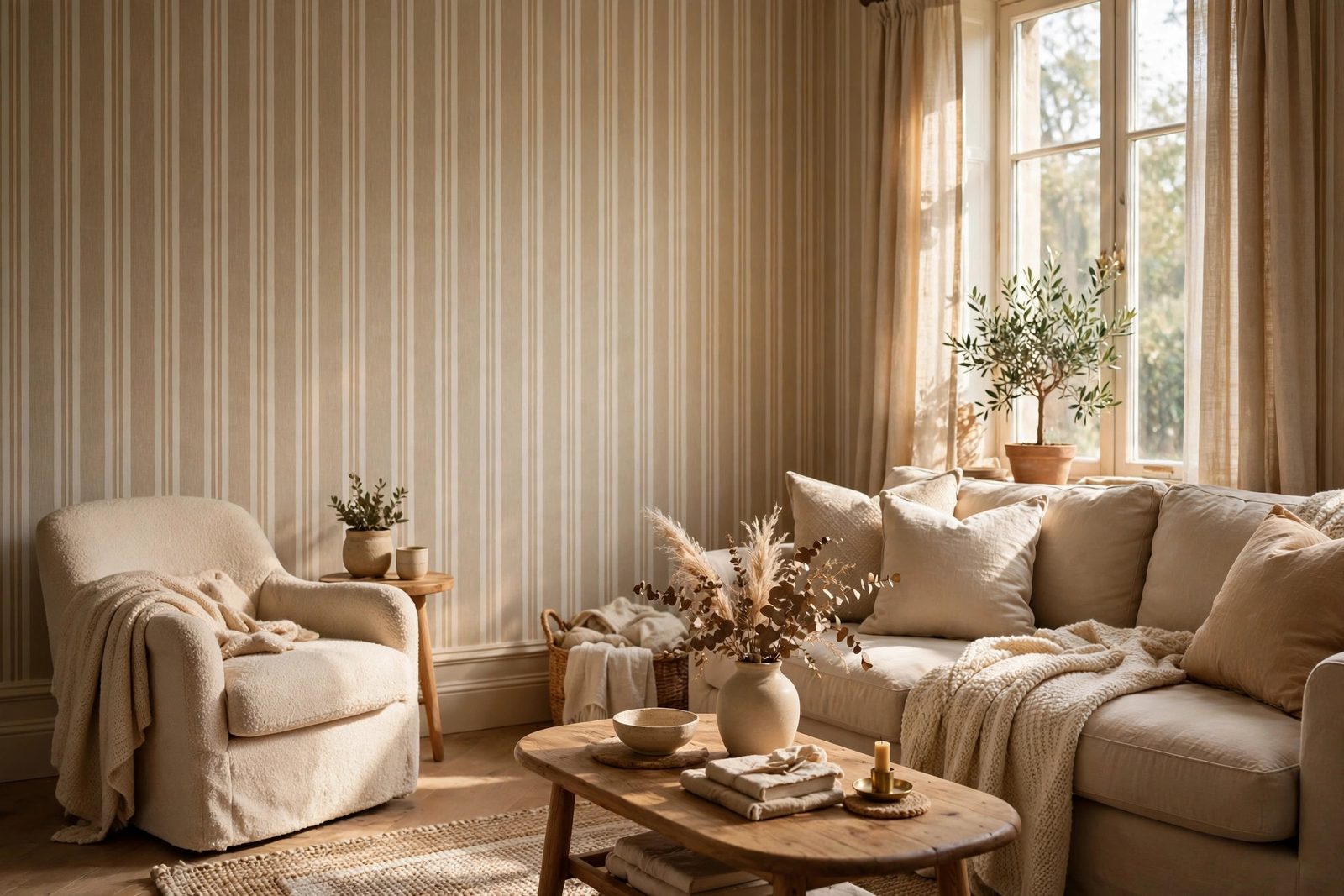
Are Striped Wallpapers Boring — or Brilliant?
Stripes never left, and in 2027 they are the connoisseur's statement: warm neutral stripes — camel and cream, taupe and ivory — that add rhythm to a wall without shouting. It is wallpaper as architecture, and it flatters every style from coastal to classic because the eye reads it as texture first and pattern second.
Use stripe direction as a tool. Vertical stripes stretch low ceilings and narrow rooms; wide horizontal bands make a tall, skinny wall feel grounded. In a cozy living room, a soft vertical stripe behind the main seating wall adds height without the visual noise of a busy print.
This is also the pattern most forgiving of real life: stripes hide minor wall imperfections, seams disappear into the design, and the quiet palette lets your furniture and art take the lead. When you want the room to feel finished rather than decorated, stripes are the answer.
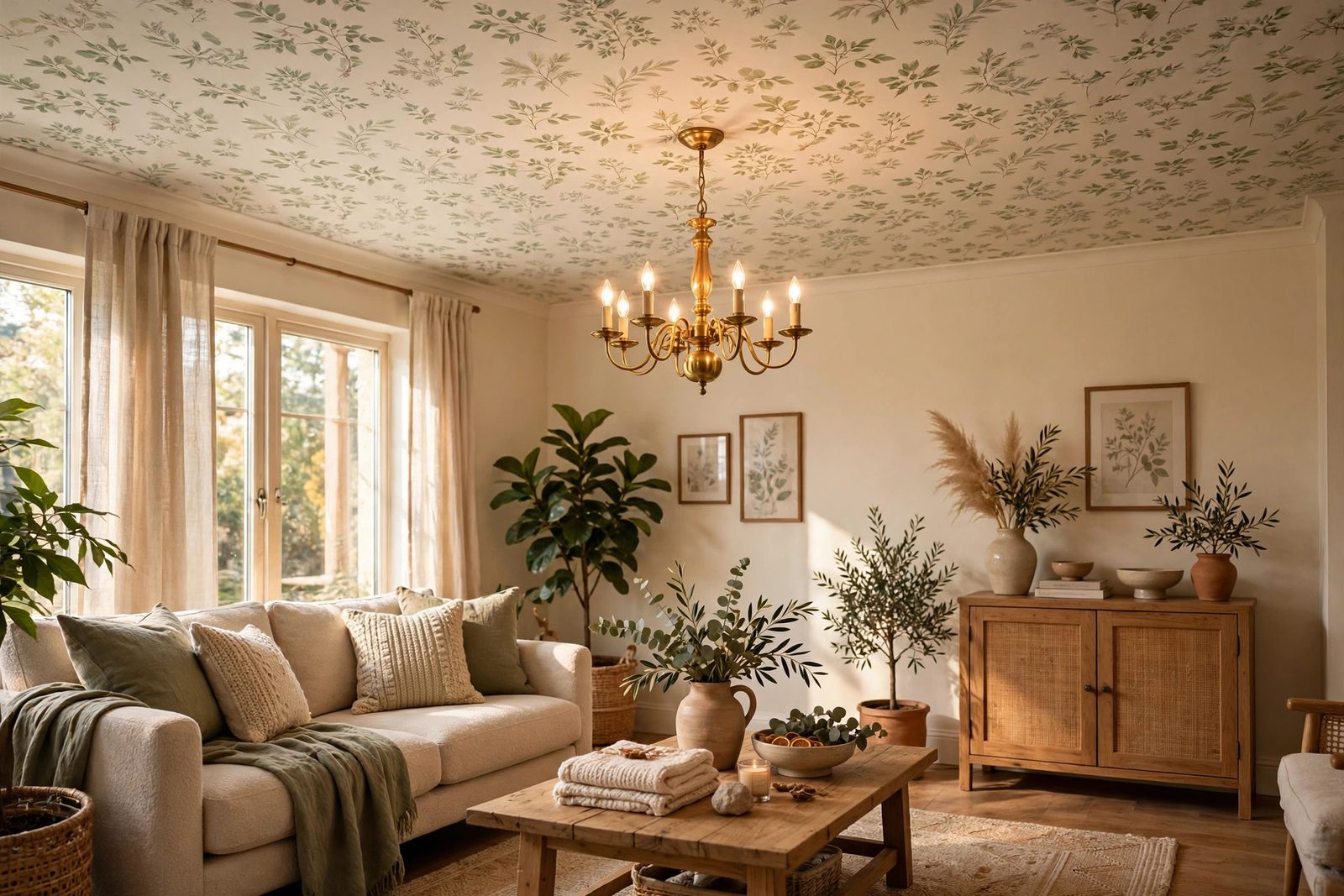
Should You Wallpaper the Ceiling? The 2027 Fifth Wall
The wallpapered ceiling — the fifth wall — is 2027's boldest move, and it works precisely because nobody expects it. A subtle pattern overhead wraps the room in one continuous gesture, and guests notice it with the delighted surprise of a hidden detail. In small rooms it erases the visual boundary where wall meets ceiling, making the space feel taller and more cocooning.
Keep the pattern quieter than you would on a wall: a small-scale botanical, a soft trellis, or a tone-on-tone damask in the same color family as your walls. The ceiling is overhead and unavoidable, so restraint here reads as luxury. A chandelier or pendant hung against the patterned ceiling becomes jewelry on the room.
Practical note: ceilings are the trickiest surface to paper, with gravity and overhead reaching fighting you. This is the one wallpaper job worth hiring out or doing with a second pair of hands — and peel-and-stick is genuinely harder overhead than paste-the-wall, so plan accordingly.
How Do You Make Dark Moody Wallpaper Work in a Small Space?
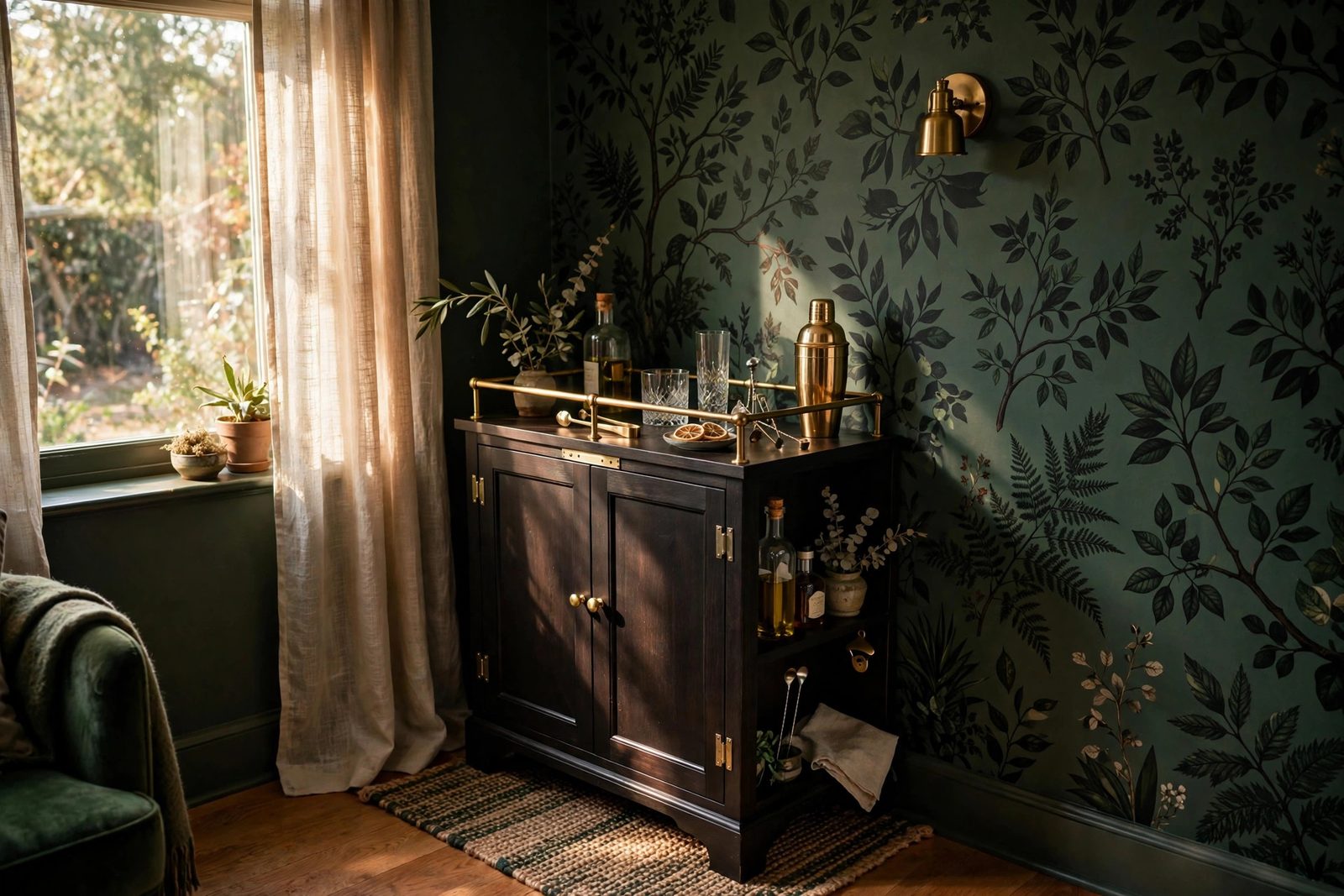
Dark wallpaper in a small space sounds backwards, but 2027's moody botanicals — deep forest green, ink blue, near-black backgrounds — are made for it. Dark walls blur the room's boundaries at night, so a tiny corner stops reading as a box and starts reading as atmosphere. The classic application is the corner bar: a small cabinet or bar cart against a dark botanical wall instantly becomes a jewel-box moment.
Light is the whole game. One warm lamp washing the patterned wall, a mirror or brass tray bouncing light back, and suddenly the dark wall glows instead of looming. Keep the ceiling and trim pale so the room retains a light frame around the dark drama.
Commit to the small zone rather than the whole room. A dark alcove, the wall behind the bookshelf, or one corner of a studio: contained darkness reads as intentional and cozy, while a full small room in dark paper can feel like a cave by February.
What Is the Wallpaper-Panel-Behind-Shelving Trick?
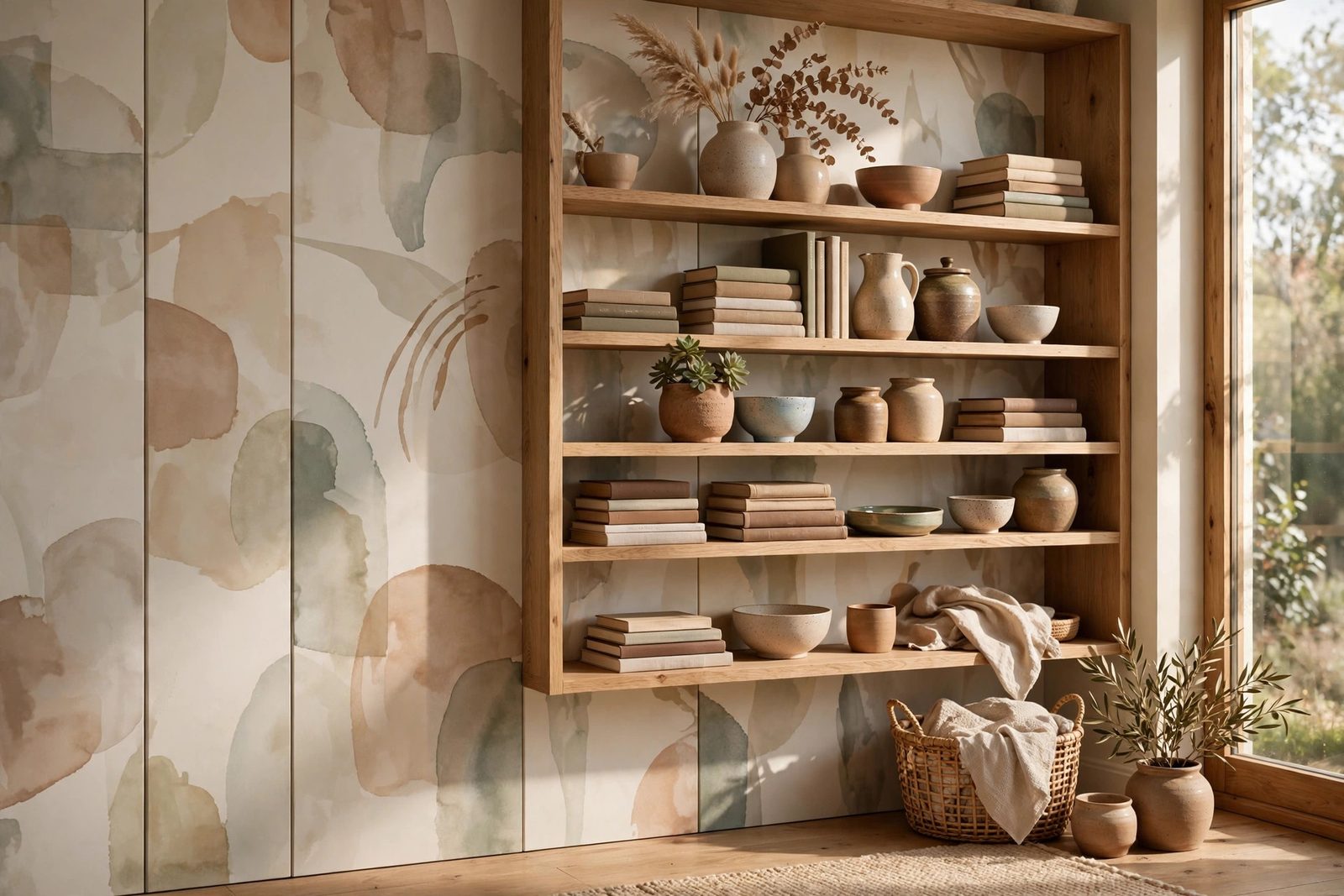
Here is the lowest-commitment statement wallpaper of all: paper only the wall behind your open shelving. The shelves frame the pattern in neat rectangles, your ceramics and books overlap it, and the whole wall reads as one curated installation. It uses a single roll, takes an afternoon, and is fully reversible if you use peel-and-stick.
Choose a pattern with a scale that works in slices — a medium abstract, a small botanical, or a texture like grasscloth reads well through the shelf gaps. Very large-scale prints get chopped up awkwardly by shelf lines, and very dark papers can swallow small objects, so mid-tone and mid-scale is the sweet spot.
Style the shelves to let the paper show through. Leave breathing room between objects, pull pieces forward to the shelf edge so they silhouette against the pattern, and keep the shelf contents lighter than the wallpaper — cream ceramics, pale wood, glass — so each item reads clearly against its backdrop.
Peel-and-Stick vs. Traditional Wallpaper: Which Should You Buy?
Peel-and-stick is the 2027 default for renters and commitment-phobes: no paste, no steamer, and it comes down cleanly when you move. It excels on smooth, primed walls and small projects like the behind-shelving trick or a single alcove. Its limits are real, though — it struggles on textured walls, can lift in humid rooms, and overhead application on a ceiling is genuinely miserable.
Traditional paste-the-wall wallpaper costs more and wants a steadier hand, but it lasts a decade, handles texture and humidity better, and looks more seamless on large murals where panel alignment matters. For a forever-home statement wall or a ceiling, traditional is worth the upgrade. Either way, order one extra roll beyond your measurements — dye lots vary and a shortfall mid-wall is the classic wallpaper heartbreak.
Where Does One Wallpapered Wall Work Hardest?
The highest-impact spot is the wall you face most: behind the sofa in the living room, behind the bed, or the wall opposite the front door that greets you on entry. These are the sightlines you live with daily, so the pattern earns its keep instead of decorating a corner you never look at.
Architectural logic helps too — paper the wall that already has a natural frame, like a fireplace wall, a wall between two windows, or an alcove. The existing boundaries contain the pattern so it reads as a designed moment rather than a random bold choice, and you need fewer rolls when the wall has windows or a fireplace eating into the square footage.
Final thoughts
Wallpaper's 2027 comeback is really a permission slip: you do not need a renovation, a new sofa, or a bigger room to make your living room feel entirely new. One wall of grasscloth, one mural, one stretch of moody botanical behind the bar cart — that is all it takes to change the room's whole story.
Start with the look that matches your tolerance for commitment. Renters and first-timers should try the behind-shelving trick or a peel-and-stick accent wall; homeowners ready for a decade of drama can go full traditional on the fireplace wall or even the ceiling.
Whichever you choose, let the wallpaper be the room's lead actor and style everything else as the supporting cast. Pick your pattern, paper your wall, and enjoy the easiest transformation in decorating.
FAQ
What are the most popular modern wallpaper ideas for 2027?
Large-scale botanicals, floral murals, natural grasscloth, chinoiserie panels, navy-and-gold art deco geometrics, hand-painted-style landscape murals, and wallpapered ceilings are the defining modern wallpaper ideas for 2027. The common thread is scale and texture — oversized prints and tactile surfaces rather than small busy repeats.
Is wallpaper or an accent paint color better for a living room statement wall?
Wallpaper wins for depth and personality — pattern, texture, and sheen that paint cannot replicate — while paint wins for price and speed. If you want a true focal point that looks layered and intentional, one wallpapered wall beats any paint color. If budget or commitment is the concern, paint the wall now and wallpaper it later.
Does peel-and-stick wallpaper actually stay up?
Yes, on smooth, clean, primed walls in climate-controlled rooms it stays up for years. It struggles on textured or unpainted drywall, in steamy bathrooms, and on ceilings where gravity works against the adhesive. Clean the wall first, avoid repositioning panels repeatedly, and it performs reliably.
Can you use statement wallpaper in a small living room?
Absolutely — wallpaper is one of the best small-room tools. Landscape murals add visual depth, stripes add height, and dark botanicals in a contained corner blur boundaries so the room feels cocooning rather than cramped. Paper one wall or one zone, not the whole room, and keep the rest of the palette quiet.
How many walls should you wallpaper in a living room?
One. A single accent wall is the 2027 rule for statement wallpaper — it gives you the drama without overwhelming the room or your budget. The only common exception is a small powder-room-style nook or a single alcove, where wrapping the paper reads as a deliberate jewel-box moment.
How do you choose a wallpaper pattern that won't feel dated?
Stick to nature and geometry: botanicals, landscapes, stripes, and classic motifs like chinoiserie have cycled through centuries without ever truly dating. Avoid novelty prints tied to a specific trend moment, and choose colorways in tones you already live with so the wall ages alongside your furniture.