Reading Corner
Chaise Lounge Reading Nook Ideas
Chaise lounge reading nook ideas for comfortable reading with window chaises, bedroom corners, library setups, curved modern designs, velvet and linen upholstery, compact apartments, fireplace nooks, sconces, and cozy styling.
A chaise lounge reading nook creates the kind of space that encourages you to slow down. Unlike a standard armchair, a chaise supports the legs and allows you to stretch out comfortably, making it especially useful for long reading sessions, quiet afternoons, or winding down before bed.
This style of reading nook can work in many parts of the home. A chaise beside a large window can take advantage of natural light, while one placed in a bedroom corner can create a peaceful retreat separate from the bed. In a library or living room, a chaise can become a strong focal point while still feeling practical.
The key is to choose the right scale, shape, and placement. A chaise should feel generous without blocking the walkway or overwhelming the room. Lighting, nearby storage, and a small surface for books or drinks are also important. Even the most beautiful chaise will not create a useful reading nook if the space is too dark or difficult to access.
These 12 chaise lounge reading nook ideas include modern, traditional, compact, moody, colorful, and neutral designs. Each one offers a different way to create a comfortable reading space that feels intentional rather than simply placing extra furniture in an empty corner. If you are comparing seating types first, these cozy reading chair ideas can help you decide whether a chaise or chair fits your room better.
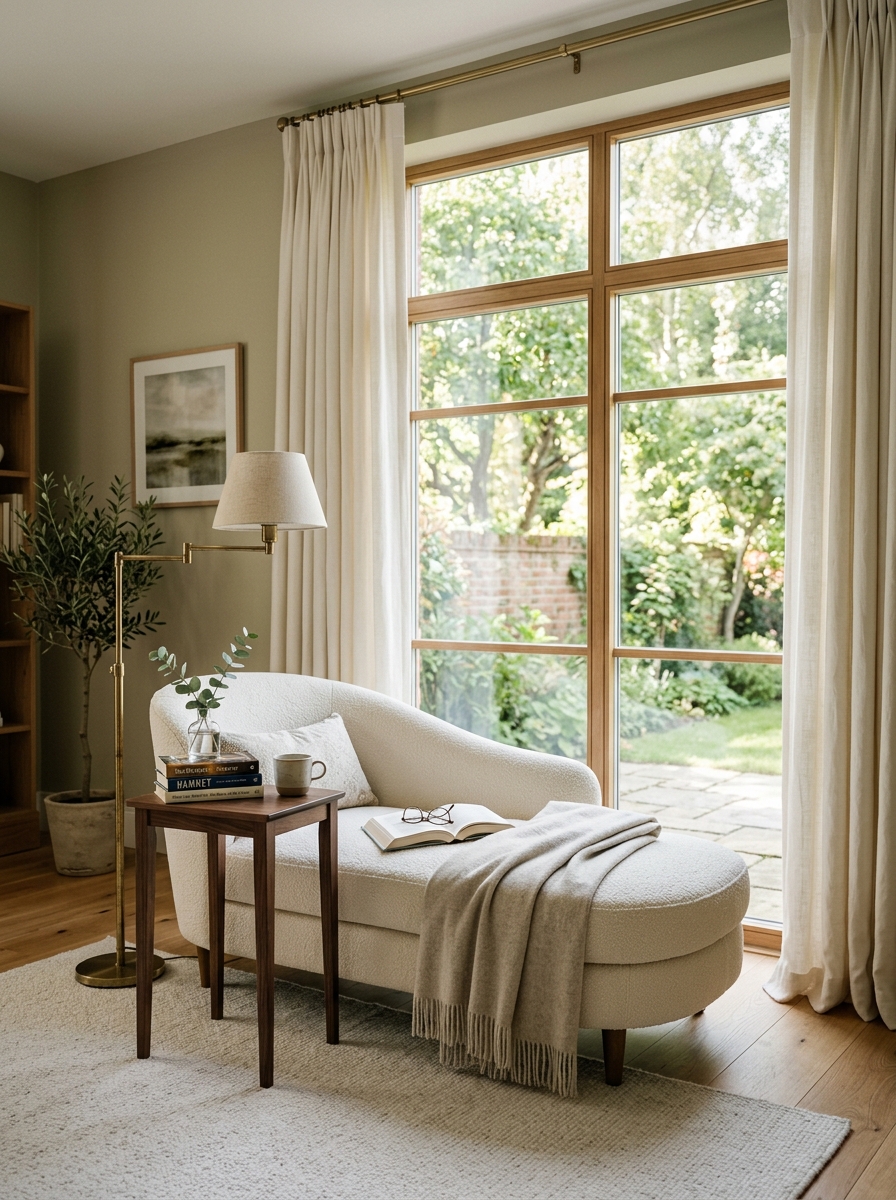
Place a chaise beside a large window
A chaise beside a large window creates one of the most naturally inviting reading nooks. The daylight reduces the need for artificial lighting during the day and helps the space feel open and connected to the outdoors.
Position the chaise so it receives light from the side rather than directly behind the reader. Side lighting is often more comfortable because it reduces glare on the page while still keeping the area bright.
Keep a slim side table within easy reach for a book, reading glasses, or a drink. A floor lamp can remain nearby for cloudy days and evening use.
Full-height curtains or soft Roman shades can help control strong sunlight and give the nook a more finished look. Choose a chaise that fits comfortably without blocking access to the window or making the room feel crowded.
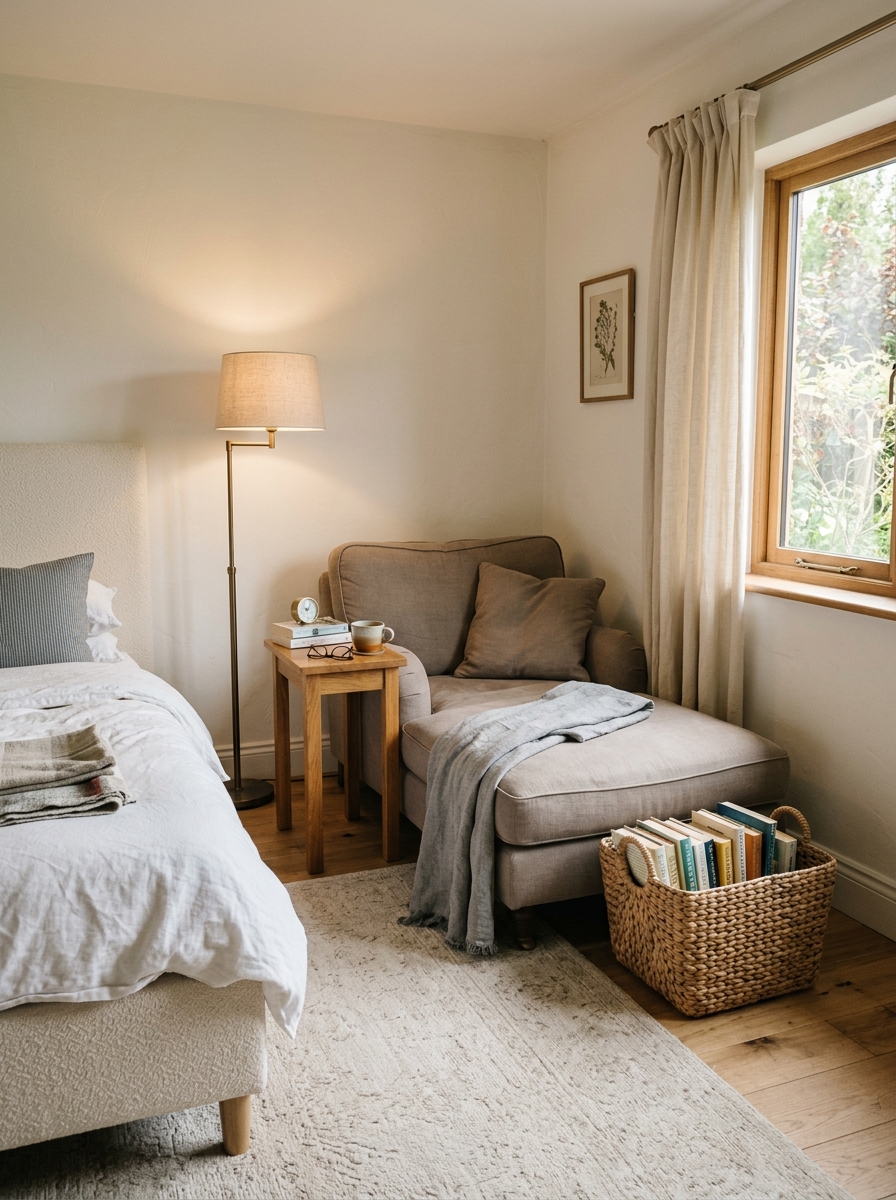
Add a chaise to a bedroom corner
A bedroom chaise creates a comfortable place to read that is separate from the bed. It can also make an unused corner feel intentional while giving the room a more complete and polished appearance.
Choose a chaise that fits the scale of the bedroom. A compact design with slim arms may work better in a smaller room, while a wider upholstered chaise can suit a spacious primary bedroom.
The upholstery should coordinate with the bedding without matching it exactly. A taupe chaise in a cream bedroom, for example, adds subtle contrast while preserving the calm palette.
Add a focused reading light and a small table so the area remains useful after dark. Avoid using the chaise as a permanent place for clothes or decorative pillows, since that will quickly reduce its function as a reading space.
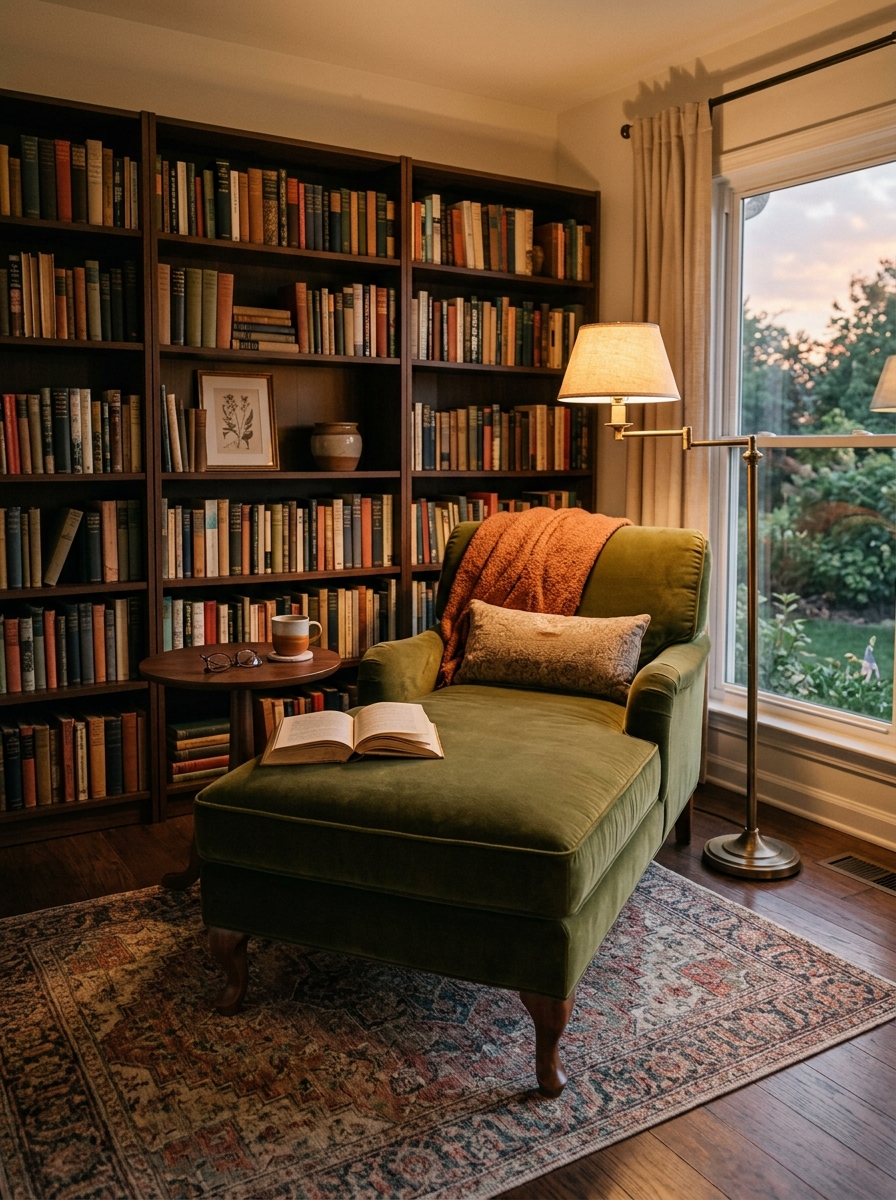
Create a library-style chaise nook
A chaise placed beside bookshelves creates a classic library atmosphere while providing enough room to stretch out. This setup works well in a home office, den, living room, or dedicated library.
Position the chaise close enough to reach the shelves without blocking them. Leave sufficient clearance so books can be removed easily and the furniture does not interfere with cabinet doors or drawers.
A darker upholstery color can work beautifully in this setting because the books already add visual richness. Olive, deep blue, warm brown, and burgundy all create a strong library-inspired look.
Use a focused floor lamp or wall-mounted light to prevent the shelves from making the area feel too dark. Keep the side table simple because the books already provide plenty of visual detail.
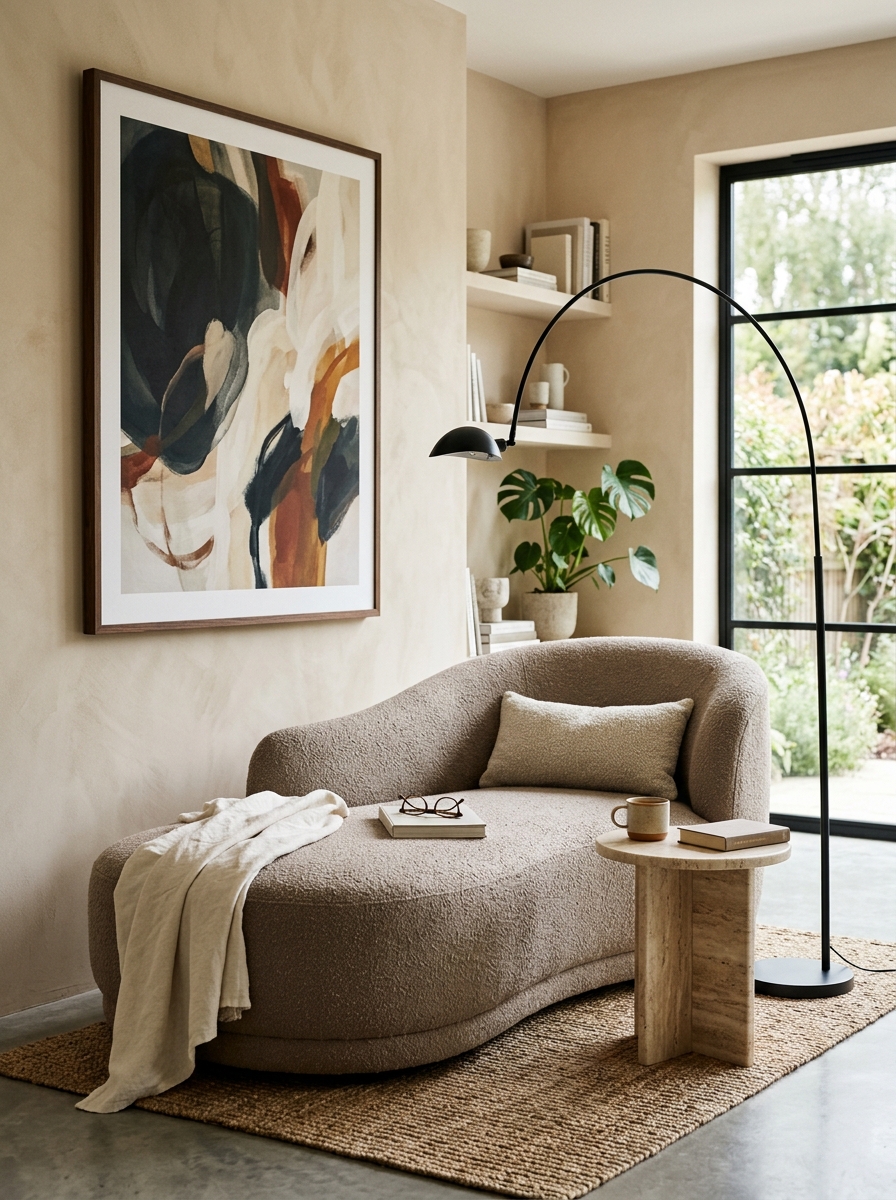
Use a curved modern chaise
A curved chaise can introduce a sculptural element into a modern reading nook. Its soft shape contrasts with straight walls, windows, and shelves, making the space feel more relaxed and visually interesting.
This style works particularly well in minimalist and contemporary interiors. Choose a simple silhouette without excessive tufting or ornament so the form remains clean.
Cream, mushroom, taupe, and muted brown upholstery allow the shape to remain the focus. A small round table or sculptural lamp can echo the curves without making the room feel overly coordinated.
Because curved chaises can have a wider footprint, measure the room carefully. The piece should have enough space around it to feel intentional rather than squeezed into the corner.
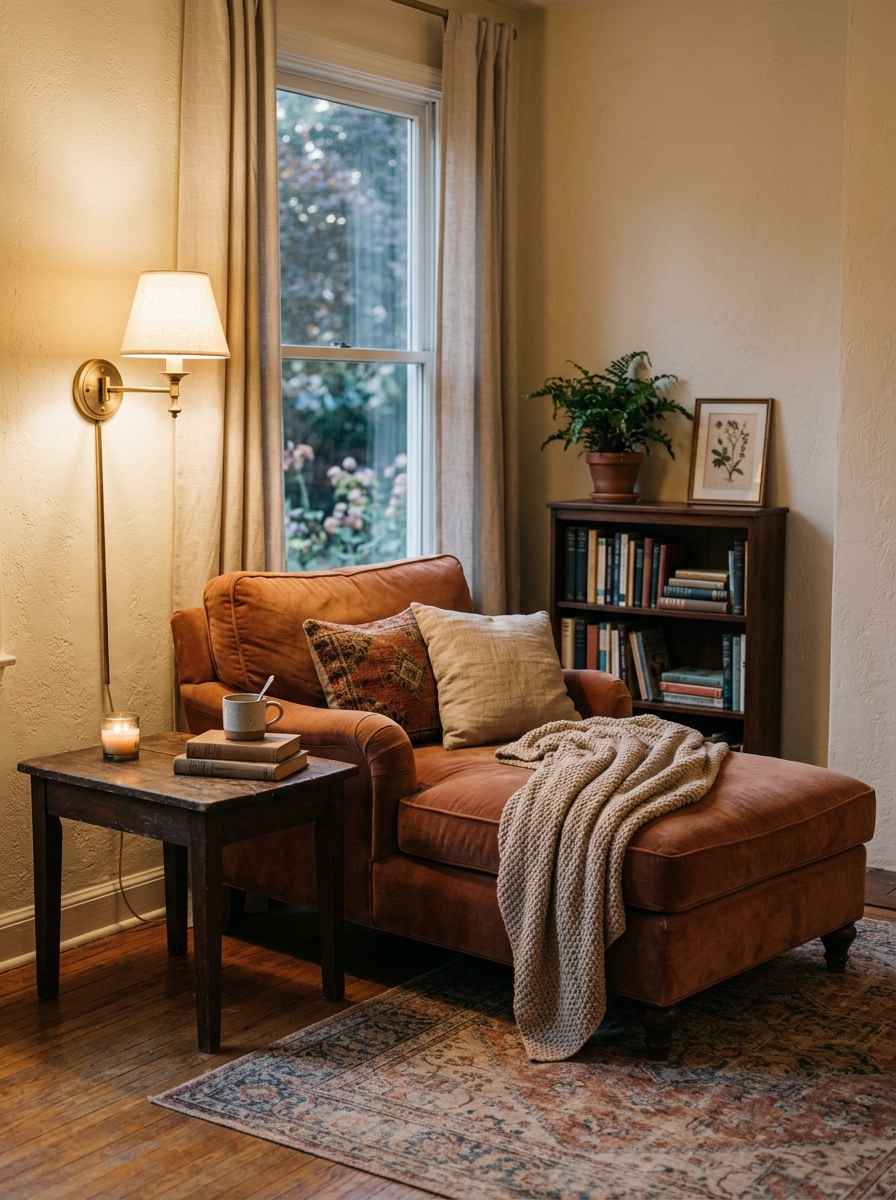
Choose a velvet chaise for richer color
A velvet chaise can give a reading nook more depth and personality. The fabric reflects light softly, making colors such as rust, olive, dusty blue, and burgundy appear especially rich.
Use velvet when you want the chaise to become a stronger focal point. It works well in living rooms, libraries, bedrooms, and moody reading rooms where a neutral piece might disappear.
Pair the chaise with quieter surrounding materials. Dark wood, brass, linen, and simple plaster walls can balance the richness of the velvet without creating an overly formal atmosphere.
The chaise should still provide good back support and sufficient seat depth. Some decorative velvet designs look elegant but are too firm or narrow for long reading sessions.
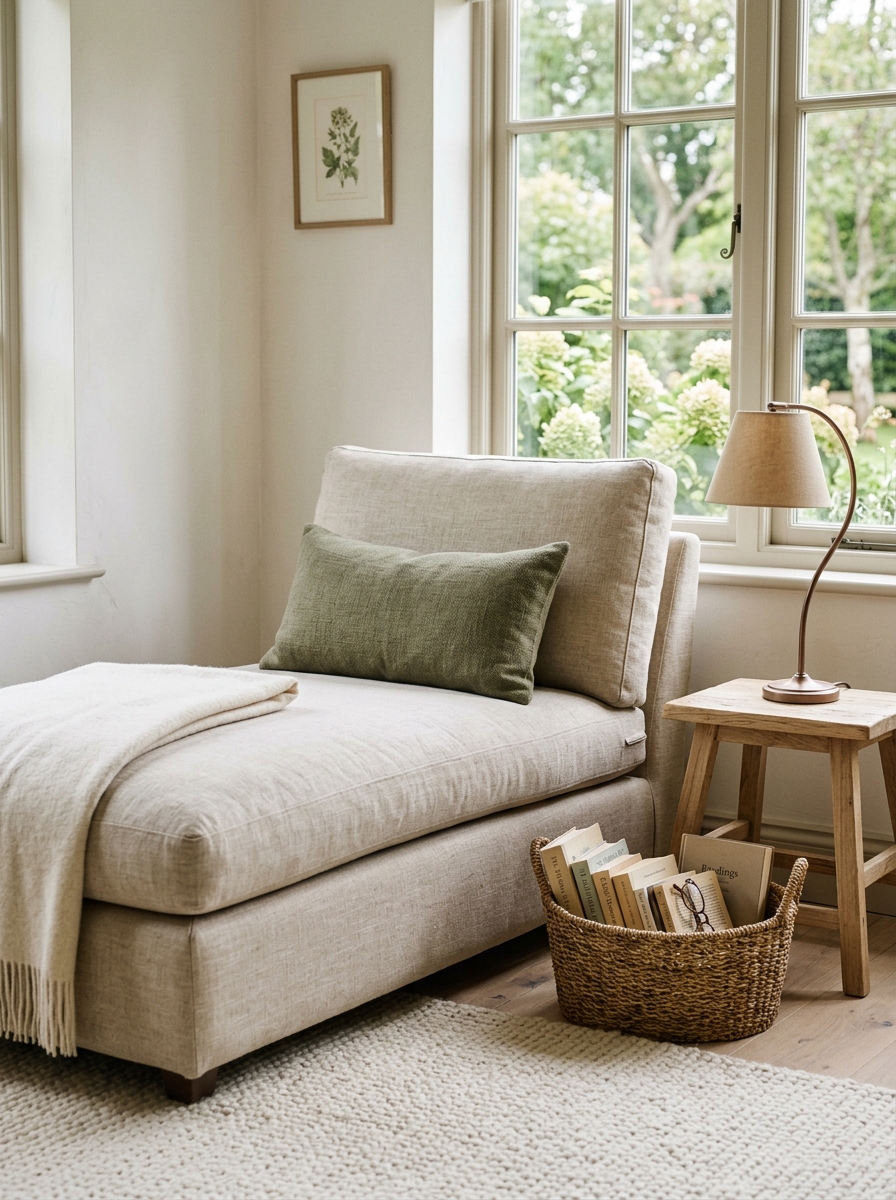
Style a neutral linen chaise
A linen chaise creates a softer and more relaxed reading nook. Its natural texture works beautifully in coastal, organic, minimalist, farmhouse, and warm-neutral interiors.
Choose upholstery in cream, oatmeal, flax, or pale taupe. These shades make the chaise easy to combine with wood, woven storage, soft stone, and muted textiles.
Linen often looks best when it is slightly relaxed rather than perfectly smooth. Gentle creases and a casual throw can make the nook feel comfortable and lived in.
Add contrast through a wood table, bronze lamp, olive pillow, or textured rug. Without some variation, a fully neutral setup can feel flat rather than calm.
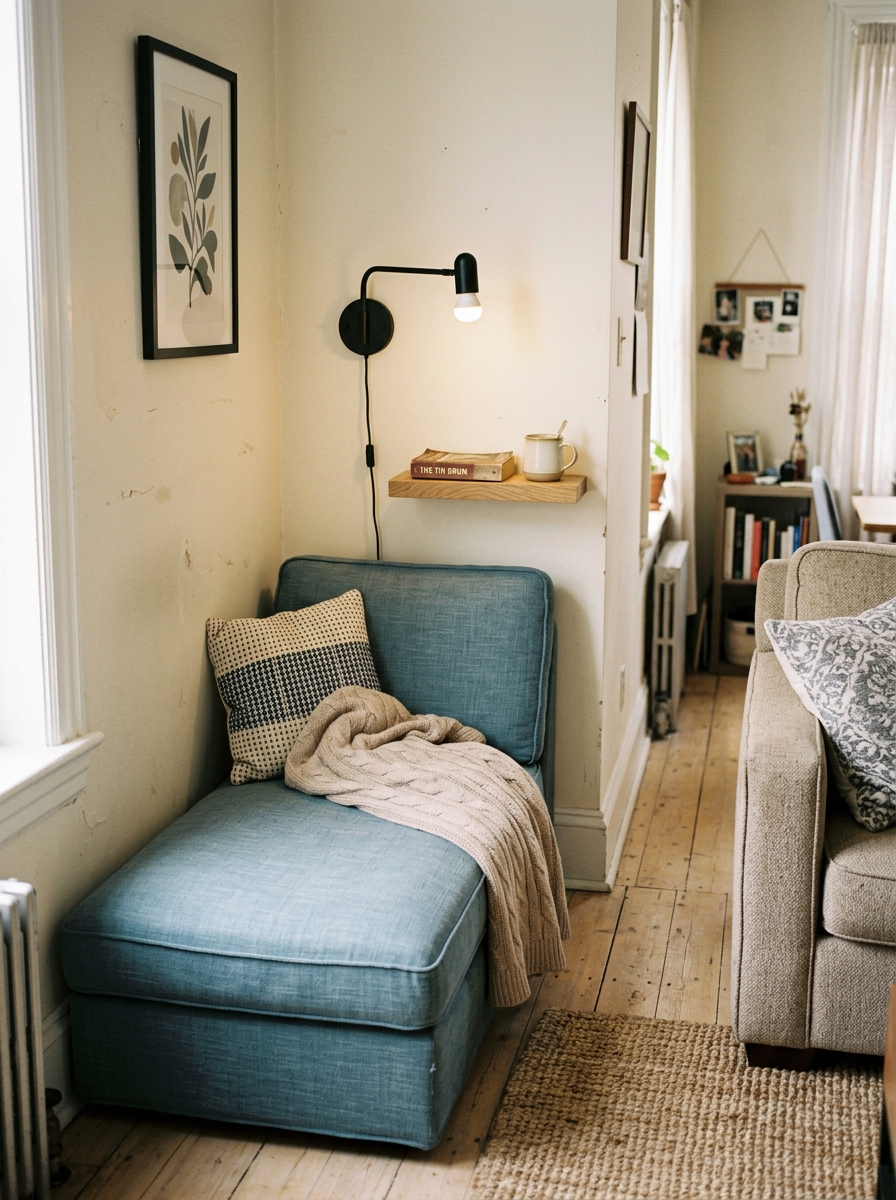
Fit a compact chaise into an apartment
A small apartment can still accommodate a chaise when the scale is carefully chosen. Look for a compact design with a narrow width, slim arm, or open base that does not visually block the room.
Place the chaise against a wall, beside a window, or at the edge of the living area. Avoid positioning it where it interrupts the main path between the sofa, kitchen, and entrance.
A small wall-mounted light can provide reading illumination without using valuable floor space. A floating shelf may replace a full side table in an especially tight layout.
Keep the styling restrained. One pillow, one throw, and a small basket are enough to make the chaise feel inviting without crowding the apartment. These small reading nook ideas share more ways to fit a book corner into limited square footage.
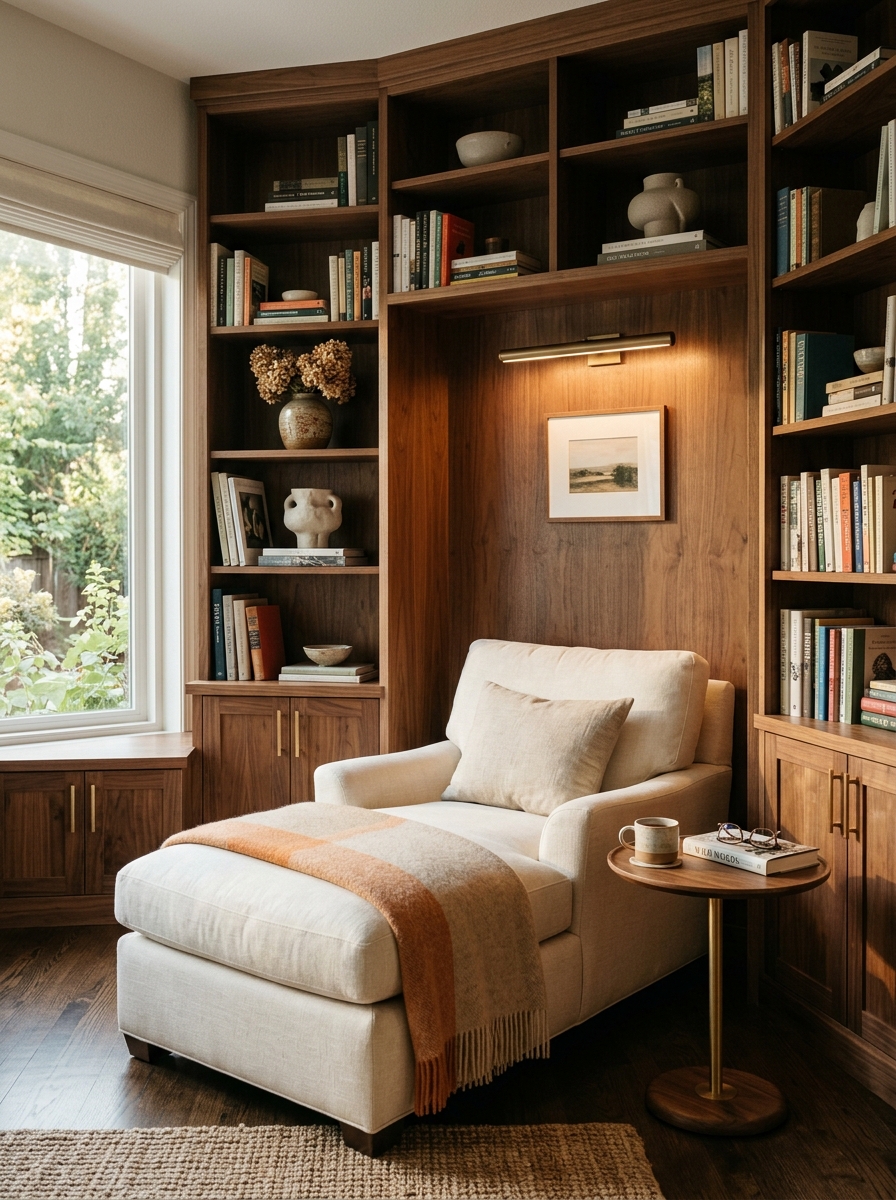
Place a chaise beside built-in bookshelves
Built-in bookshelves can frame a chaise and make the reading nook feel like part of the architecture. This arrangement works especially well when the shelves occupy one wall and there is a remaining section large enough for seating.
Use the lower cabinets for concealed storage and keep the shelves near the chaise lightly styled. Frequently read books should remain within easy reach.
A picture light, wall sconce, or slim floor lamp can provide focused illumination without interrupting the shelving.
Choose upholstery that contrasts gently with the built-ins. A cream chaise against walnut shelving feels warm and refined, while a muted blue or green chaise can add quiet color to painted shelves.
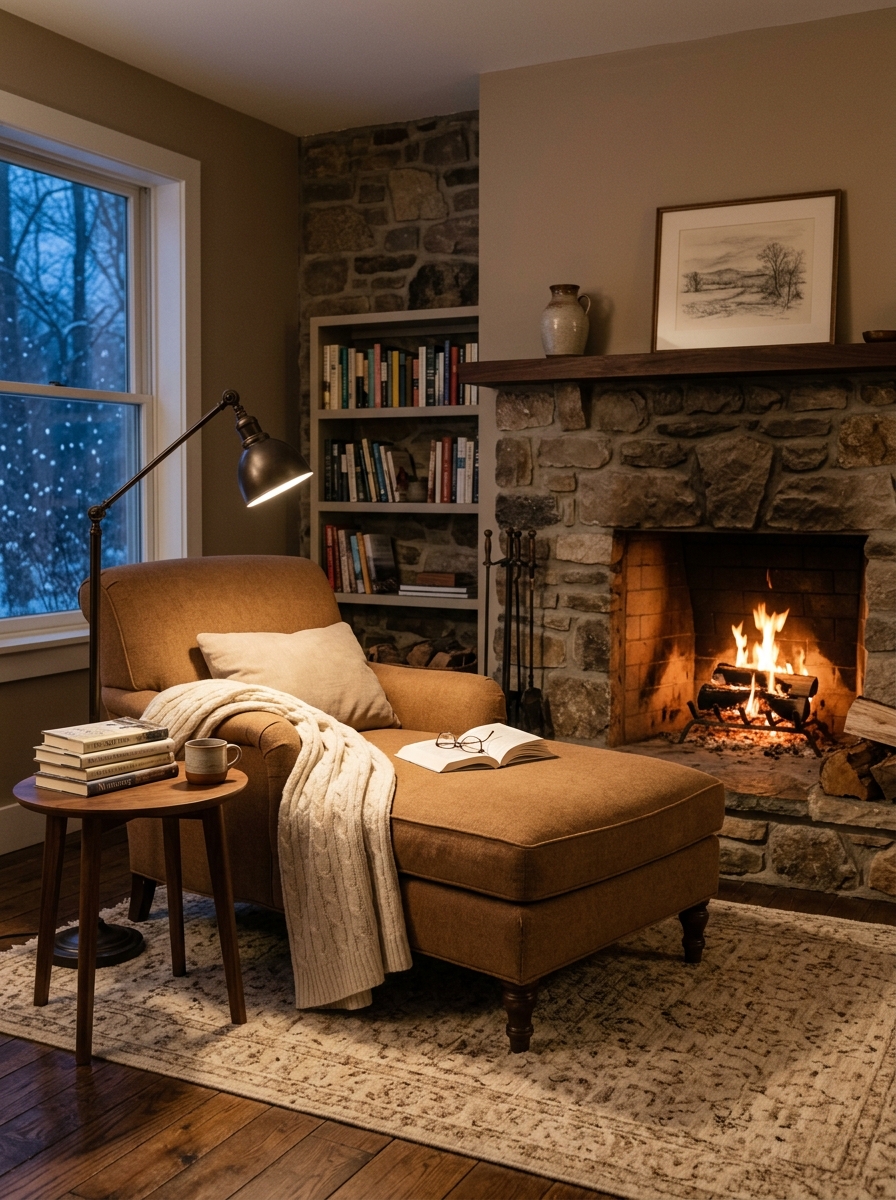
Create a fireplace reading nook
A chaise beside a fireplace creates a warm reading spot that is especially appealing during colder months. The fireplace adds natural focus and helps define the nook within a larger living room or den.
Place the chaise at an angle so the reader can enjoy the fire without sitting too close to the heat source. Follow safe clearance requirements and keep blankets and books away from open flames.
A small table and focused lamp remain useful even when the fireplace is lit. The fire provides atmosphere, but it may not offer enough light for comfortable reading.
Warm upholstery colors such as rust, caramel, olive, and taupe suit this setting. Natural wood, wool, stone, and aged brass can reinforce the cozy atmosphere.
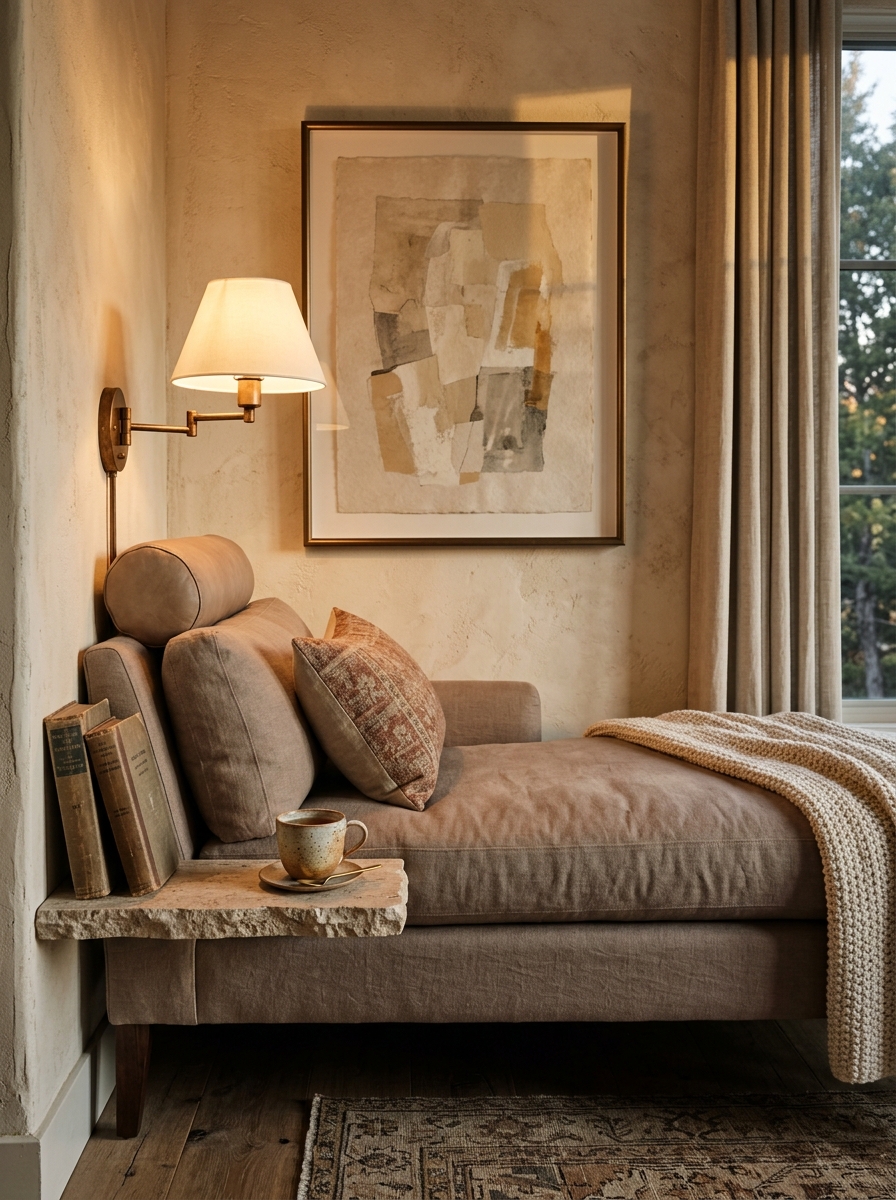
Add a picture light or wall sconce
Wall-mounted lighting can make a chaise nook feel more intentional while saving floor and table space. It is particularly useful in bedrooms, apartments, and library alcoves where there is little room for a large lamp.
A swing-arm sconce offers flexibility because the light can be adjusted toward the page. A picture light above artwork or shelving can provide softer ambient illumination, although it may need to be paired with another reading light.
Choose a fixture in bronze, black, plaster, or muted brass depending on the room's palette. The light should be positioned high enough to avoid glare but close enough to illuminate the reading area.
Plan wiring before installing a built-in chaise or shelving. Plug-in sconces can be a practical alternative when permanent electrical work is not possible.
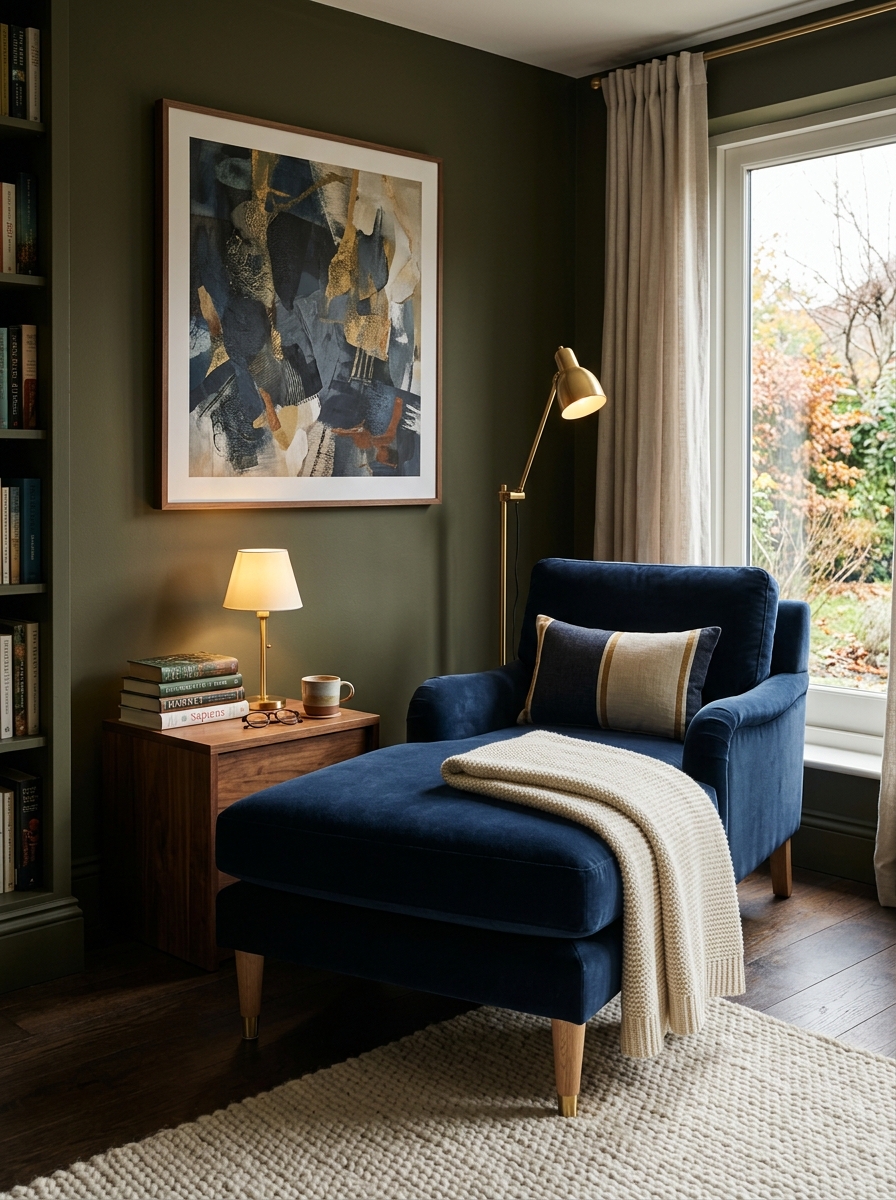
Design a moody chaise reading room
A darker reading room can feel intimate and sheltered when the lighting and materials are carefully balanced. Deep olive, charcoal, clay brown, navy, and walnut can create a rich atmosphere without making the space feel gloomy.
Use one lighter element to preserve contrast, such as a cream rug, pale pillow, or soft stone table. Warm wall lighting and floor lamps are essential because dark walls absorb more light.
A chaise with a strong silhouette works especially well in this setting. Deep blue velvet, dark olive linen, or warm brown upholstery can blend into the room while still feeling inviting.
Keep the styling restrained. Dark interiors already have visual weight, so the nook may need only a lamp, side table, and small stack of books.
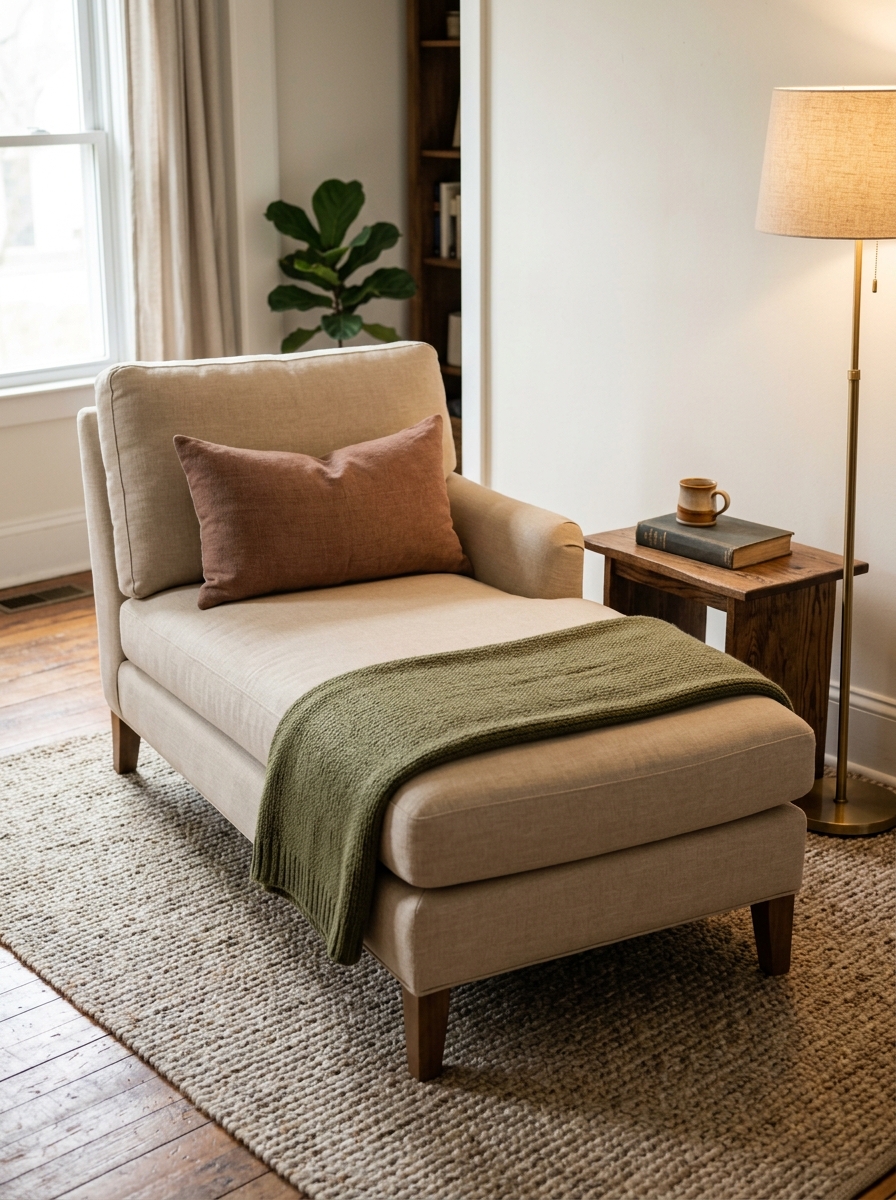
Finish the chaise with a pillow and throw
A supportive pillow and soft throw can make a chaise more comfortable while helping it feel visually connected to the rest of the room. These accessories are especially useful when the chaise has a low back or firm upholstery.
Choose one lumbar or square pillow that supports the reading position without filling the seat. A throw can be folded across the foot or draped over one side for easy access.
Use texture and subtle contrast rather than several patterns. A rust pillow can warm up a cream chaise, while an olive throw can add depth to taupe upholstery.
Avoid piling on too many cushions. A chaise should remain ready to use without requiring the reader to remove a large arrangement first.
How to choose a chaise lounge for reading
Start with comfort and support. A chaise should allow you to stretch out while still supporting the back, shoulders, and neck. Some sculptural designs look attractive but provide very little support for longer reading sessions.
Check the seat depth, back angle, and overall length. A very deep chaise may require an extra lumbar pillow, while a short design may not support the legs comfortably.
Measure the available space carefully. Include room for a side table, lamp, curtain movement, and clear circulation around the furniture. Curved or asymmetrical chaises may require more space than their basic width suggests.
Consider the upholstery based on how often the chaise will be used. Performance linen, woven fabric, and durable velvet are practical choices for frequent use, while delicate materials may require more maintenance.
Where should a reading chaise be placed?
A chaise works best where it feels slightly separated from the busiest part of the room. Window corners, bedroom walls, library areas, and fireplace zones are all good options.
Natural light is useful, but the chaise should not block access to windows or curtains. Place it at a slight angle when possible to make the nook feel less rigid.
Keep a light source close to the shoulder and a small surface within reach. If the room is narrow, use a wall sconce or floating ledge instead of a floor lamp and side table.
Avoid placing the chaise directly in a major walkway. The nook should feel relaxed and sheltered, not like furniture that must be walked around constantly.
How to make a chaise reading nook feel cozy
Lighting has the greatest effect. Use a warm floor lamp, wall sconce, or pendant that creates focused illumination rather than relying only on overhead lighting.
Add one supportive pillow and one throw in textures that suit the season. Linen and cotton work well in warmer months, while wool and knit fabrics create more warmth in winter.
Keep books nearby through a side table, low shelf, basket, or built-in bookcase. The nook will be used more often when everything needed for reading is within reach.
Finally, leave some space around the chaise. A cozy nook should feel enclosed enough to be comfortable, but not crowded with decorative objects.
Final thoughts
A chaise lounge reading nook offers a level of comfort that a standard chair cannot always provide. It allows the reader to stretch out while still creating a strong visual feature within the room.
The right chaise depends on the available space and the style of the home. A curved cream design can suit a modern interior, while velvet, linen, or traditional upholstery can create a more colorful, relaxed, or classic reading area.
Placement and supporting details are just as important as the chaise itself. Natural light, warm evening lighting, accessible book storage, and a small table can turn the furniture into a practical retreat.
Whether it sits beside a window, fireplace, bed, or bookshelf, a well-planned chaise nook can become one of the most comfortable and frequently used spaces in the home.