Decor & Styling
10 Fresh Spring Decor Ideas for 2027
These spring decor ideas bring the 2027 celery-green palette into every room — entry, living room, kitchen, and porch — for a light seasonal reset.
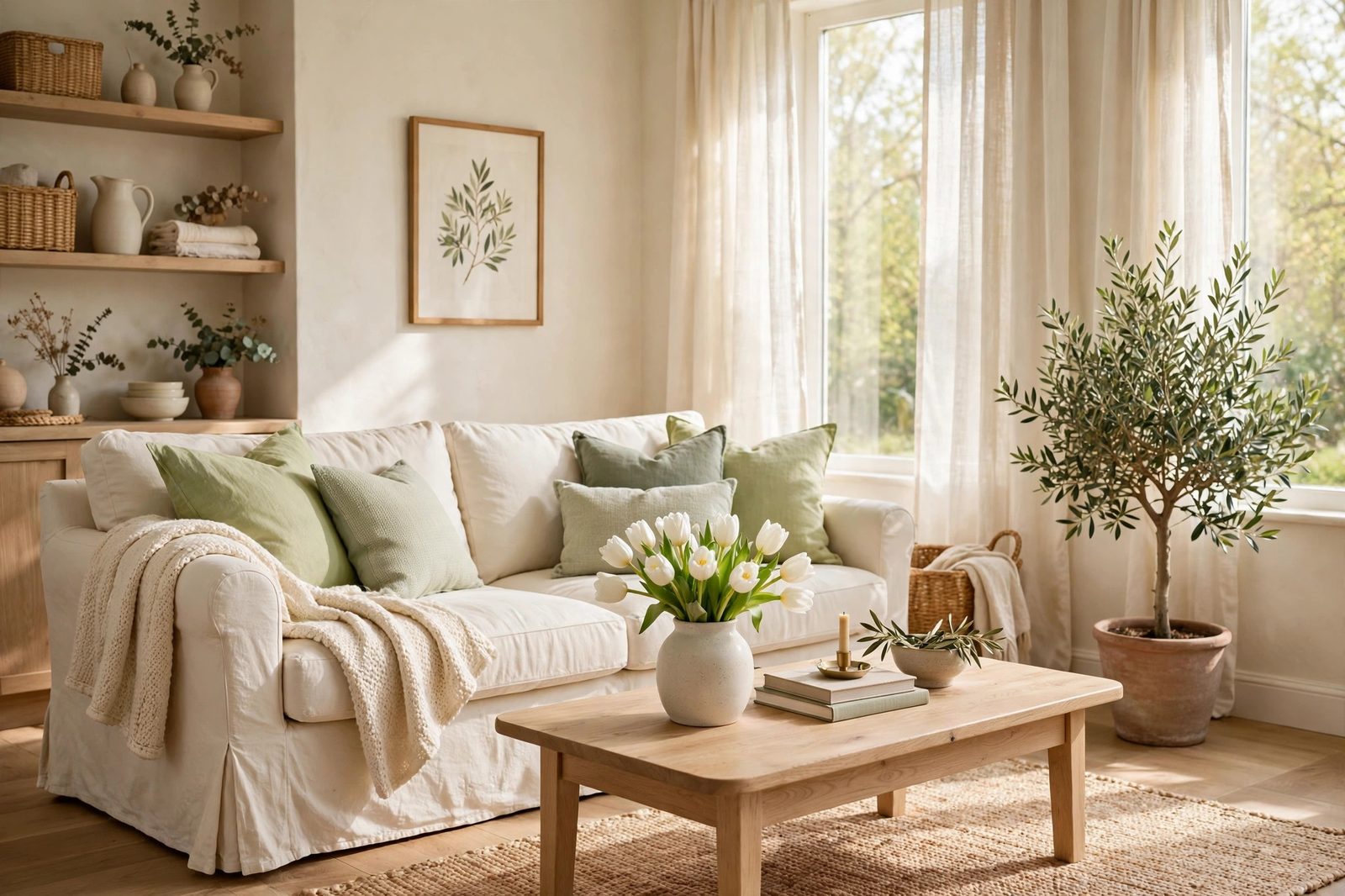
These spring decor ideas are your blueprint for a whole-home spring refresh in 2027. After a winter of heavy layers and dim light, spring styling is about one thing: letting the house breathe again. The good news is that a seasonal reset does not require new furniture or a renovation budget — swapping textiles, clearing clutter, and layering in fresh greens and natural materials will make every room feel lighter in a single weekend.
The 2027 color direction makes this year's refresh easier than most. Sherwin-Williams named a soft celery green its 2027 color of the year, and Dulux is pushing the same story with pale sage — both sit perfectly between winter's deep forest tones and summer's brighter greens. Build your spring palette on warm neutrals like cream, oat, and light wood, then layer in celery and sage through pillows, throws, ceramics, and real plants. It is fresh without being pastel-cute, and it works in traditional, modern, and farmhouse homes alike.
Below are ten specific ideas that walk you through the house room by room, from the entryway guests see first to the porch they linger on last. Each one is a concrete, do-this-weekend move — no vague inspiration, no budget surprises, just a home that feels like April.
What Is the 2027 Spring Decor Color Palette?
The headline color of 2027 spring decor is celery green — a pale, yellow-leaning green that reads fresh and optimistic without the intensity of emerald or the dustiness of olive. Sherwin-Williams made it their color of the year, and Dulux's soft sage lands in the same family, so expect to see these tones everywhere from paint chips to pillow covers. They work because they sit halfway between a neutral and a color: calm enough for large surfaces, lively enough to feel seasonal.
Build the palette in layers. Start with a warm neutral base you probably already own — cream walls, oat linen, light oak or whitewashed wood, undyed wool. Then add celery and sage in the middle layer: two or three pillow covers, a folded throw, a sage ceramic vase, a stack of linen napkins. The top layer is living green from plants and fresh stems, which adds the variation and movement that flat color cannot. Roughly seventy percent neutral, twenty percent soft green, ten percent plant green is a ratio that never fails.
The mistake to avoid is pairing these greens with cold grays or stark white, which makes them look sickly rather than fresh. Celery and sage both lean warm, so they want warm companions: brass and honey-toned wood rather than chrome, ivory rather than blue-white, terracotta and clay accents rather than slate. If your room currently runs cool, warming it up is as simple as swapping gray textiles for cream ones before you add a single green accent.
How Do You Give Your Entryway a Spring Refresh?
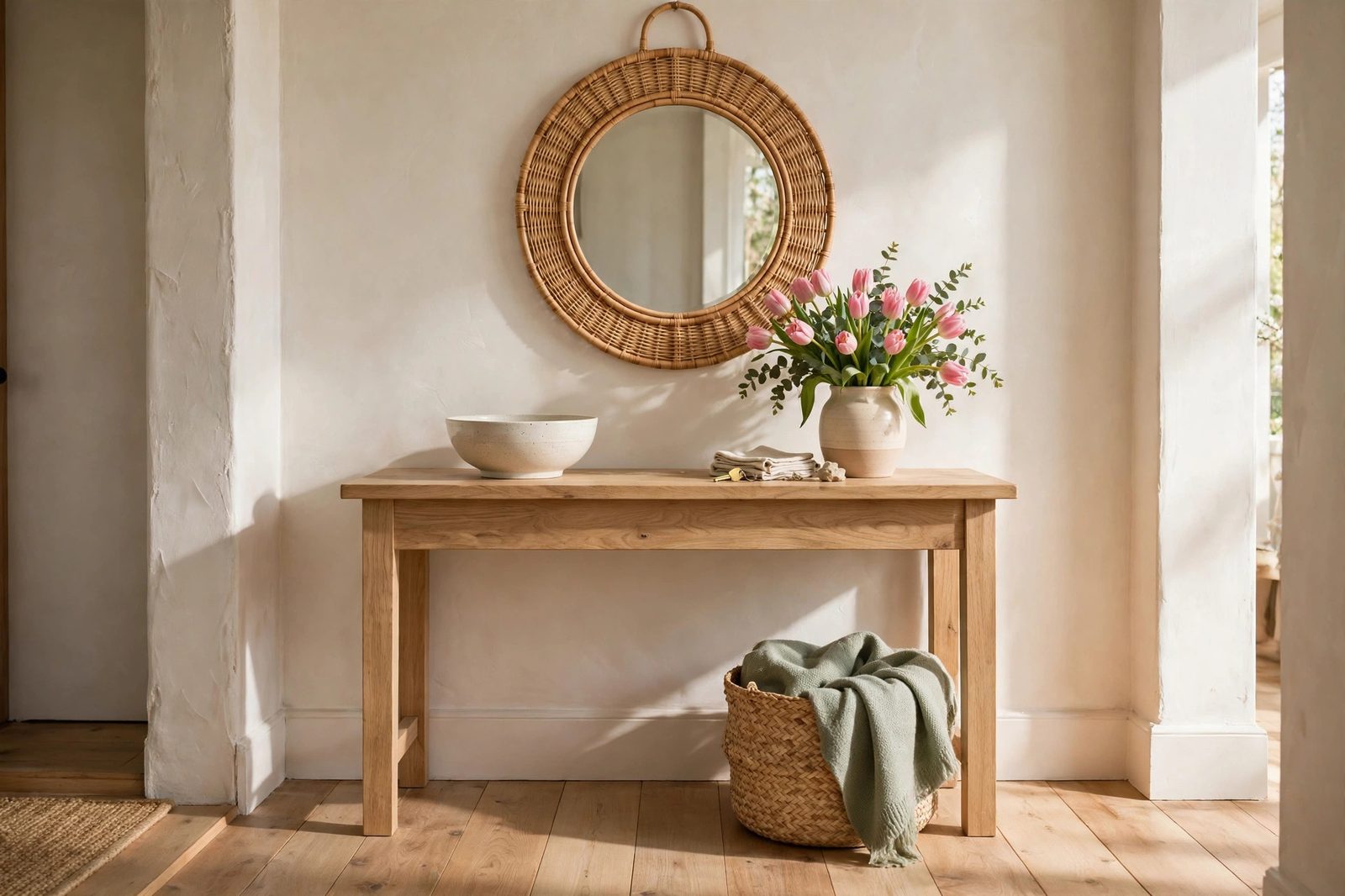
The entryway sets the seasonal story in the first five seconds, so start by removing anything that reads winter: dark wreaths, heavy wool runners, the boot tray you have been ignoring since February. Wipe down the console table and the mirror, then rebuild with three elements only — a mirror or round frame for light, one vase of fresh stems, and a catchall that looks intentional rather than accidental. An entry styled with three considered pieces always reads fresher than one with twelve small ones.
Swap the winter rug or runner for something lighter underfoot. A flatweave cotton runner in cream or a thin natural jute mat instantly changes the feel of the space, and entry rugs take the most wear in the house, so spring is a smart time to retire the tired one. If your entry is tiny, skip the runner and put the money into a good doormat — a fresh coir mat in a simple pattern costs little and is the highest-impact move for a small footprint.
Finish with a basket that does real work. A seagrass or woven basket holding a folded sage-green throw or a couple of light scarves gives the entry texture and a place for the in-between-season layers you still reach for in April. Corral keys and sunglasses in a small ceramic bowl on the console so the surface stays clear — spring entries should feel like there is room for the day to arrive.
How Do You Restyle Your Living Room for Spring?
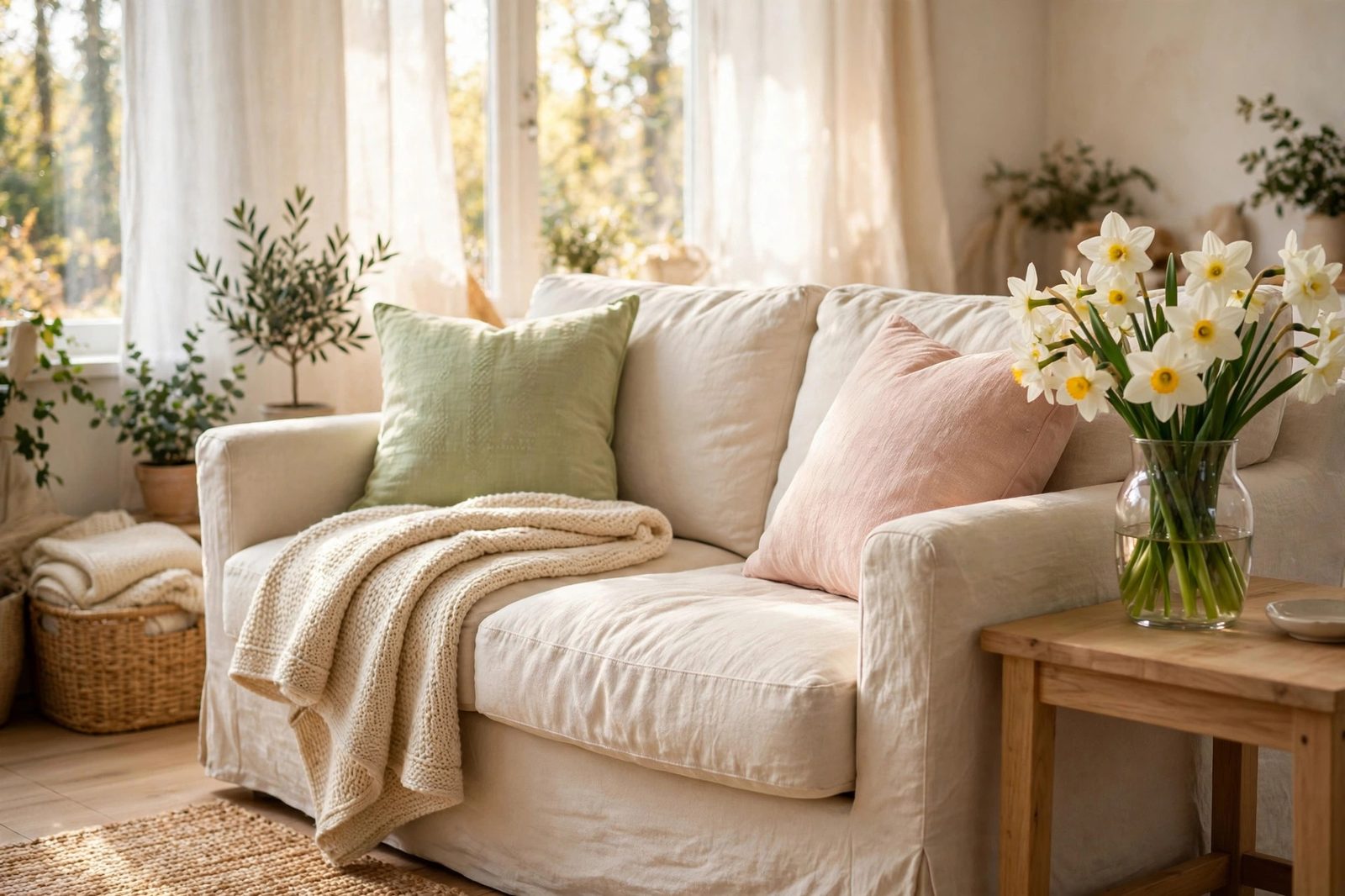
Start with the biggest visual weight in the room: the sofa. Swap dark or heavy pillow covers for linen or cotton covers in cream, celery green, and one soft accent like blush or butter yellow. Two new covers per sofa is usually enough to change the room — you do not need to replace every pillow. Fold a lightweight throw across one arm or the back of the sofa in a contrasting texture, like a waffle-knit cotton or a thin wool in sage, so the seating looks dressed rather than just covered.
Next, lighten the surfaces. Replace dark winter trays and heavy candle clusters on the coffee table with a single low arrangement: a stack of two art books, a small ceramic vase with fresh stems, and one object with breathing room around it. If you have dark curtains, consider swapping just the panels for the season — unlined linen or cotton sheers in ivory let daylight do half your decorating for you. The rule is subtract first: every heavy layer you remove makes the spring additions read twice as strong.
Finally, bring in one living plant with real presence. A small olive tree, a fiddle-leaf fig, or even a generous pothos in a ceramic pot adds the height and movement that make a spring room feel alive rather than merely redecorated. Place it where it catches natural light — a corner near the window — and put it in a pot that matches your palette rather than the plastic nursery pot, which quietly undermines the whole effort.
What Spring Textiles Lighten a Room the Fastest?
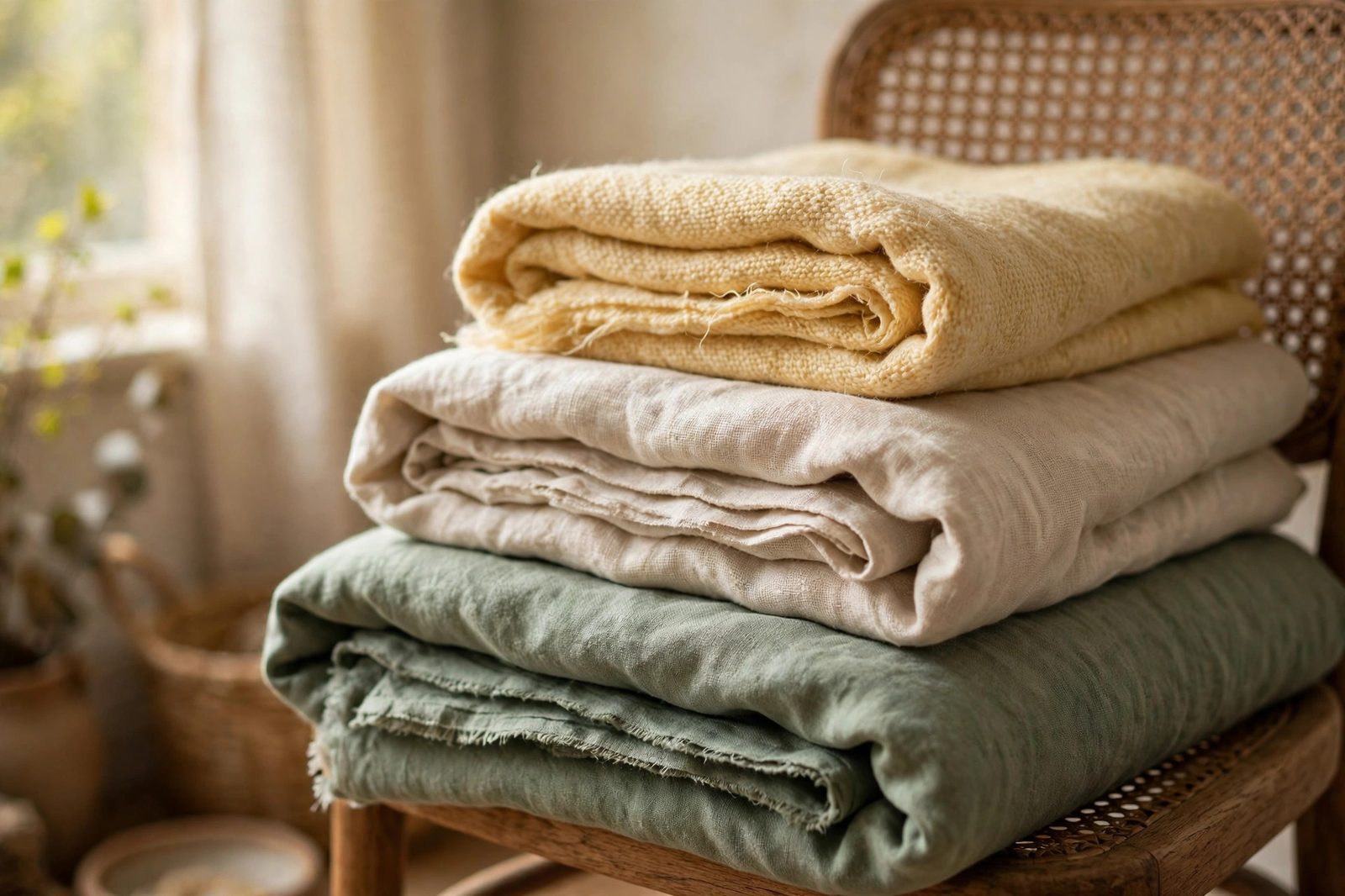
Pillow covers are the fastest, cheapest spring move in the house. Linen and cotton covers in cream, sage, and celery green cost a fraction of new pillows if you buy covers only and reuse the inserts you already own — standard 18 and 20 inch inserts fit most covers, so measure before you order. Mix textures rather than patterns: a slubby linen next to a smooth cotton and a soft waffle knit reads layered and expensive, while three busy prints fight each other.
Throws come second, and the spring rule is lighter weight, not just lighter color. Trade the chunky winter knit for a thin cotton waffle throw, a gauzy linen throw, or a light wool in a pale tone. Drape it with one fold over the sofa arm or the foot of the bed rather than spreading it flat — a folded throw looks styled, a spread-out one looks like laundry. One throw per seating area is plenty; two starts to read fussy in a light seasonal palette.
Do not forget the textiles you touch every day. Swap dark hand towels for white or cream linen ones in the bathroom and kitchen, change the bedding's top layer to a lighter quilt or duvet cover, and if you have slipcovers, spring is the season to wash them so they look their crispest. These small swaps cost almost nothing and they are the ones you notice in daily life, which is the whole point of a seasonal refresh.
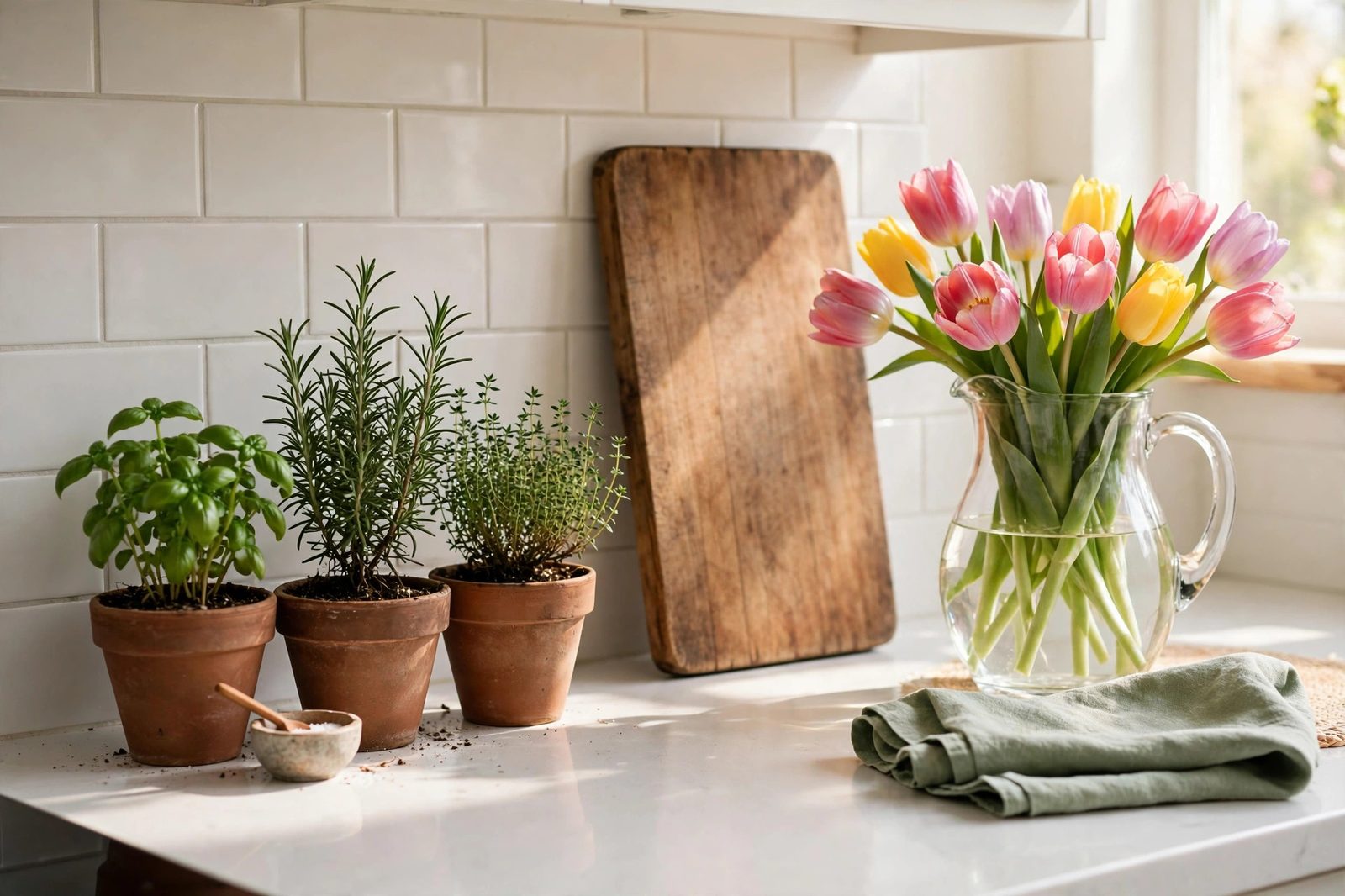
How Do You Add Spring Touches to the Kitchen?
The kitchen counter is where spring decor has to earn its keep, because this is a working surface. Pick one zone — usually the stretch between the stove and the sink, or the end of an island — and style it as the seasonal corner while leaving the rest of the counter clear. A small potted herb garden in terracotta pots does double duty as decor and cooking supply: basil, parsley, and mint are forgiving indoors and cost less than a single bouquet over the season.
Add one fresh floral moment and one textile swap. A glass pitcher of tulips or daffodils on the counter or the breakfast table is the classic spring signal, and grocery-store bunches are bred to be affordable — change the water every two days and they will last a full week. Swap the winter dish towels for linen ones in sage green or natural cream, and fold rather than hang them for a tidier look. These two moves take ten minutes and transform how the kitchen feels at breakfast.
Edit the open shelving or the countertop lineup with spring eyes. Put the dark, heavy appliances you rarely use into a cabinet for the season, and let lighter pieces — white ceramics, clear glass, light wood boards — take the front row. A wooden cutting board leaned against the backsplash, a ceramic utensil crock in a soft green, and a small bowl of lemons are all you need for a styled-but-functional spring kitchen.
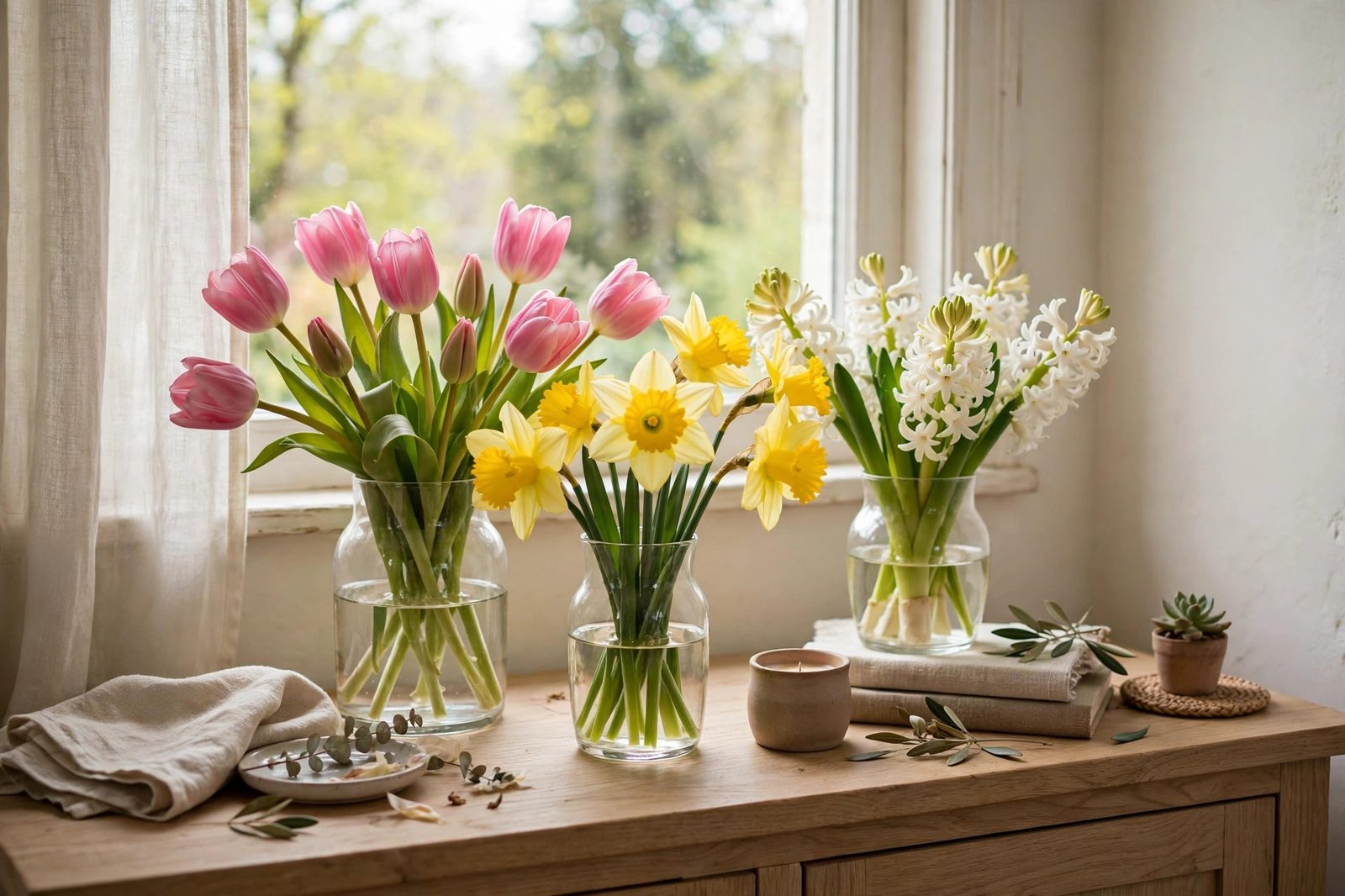
Which Fresh Flowers and Greenery Last Longest Indoors?
Tulips are the spring workhorse: affordable, available everywhere, and they last five to seven days with fresh water every two days and a fresh angled trim each time. Buy them tight — buds that are still mostly closed will open over three days and give you a longer show than flowers bought fully open. Daffodils are similarly hardy and cheaper, but keep them in their own vase: their stems release a sap that shortens the life of other flowers sharing the water.
For drama with almost no maintenance, cherry blossom and forsythia branches are unbeatable. A few tall branches in a heavy, stable vase fill vertical space better than any bouquet, last one to two weeks, and need nothing but water. Eucalyptus is the greenery equivalent — it looks good fresh for a week and then dries gracefully, so you get a second life out of it. A slim eucalyptus garland or a few stems in a bud vase adds the soft green layer that ties arrangements together.
Place every arrangement with light and heat in mind. Direct afternoon sun and heating vents are what kill spring flowers early, so keep vases a few feet back from south-facing windows and away from radiators. A drop of bleach or a commercial flower-food packet in the water genuinely extends vase life, and recutting stems under running water every few days keeps the drinking ends open. Small habits, noticeably longer blooms.
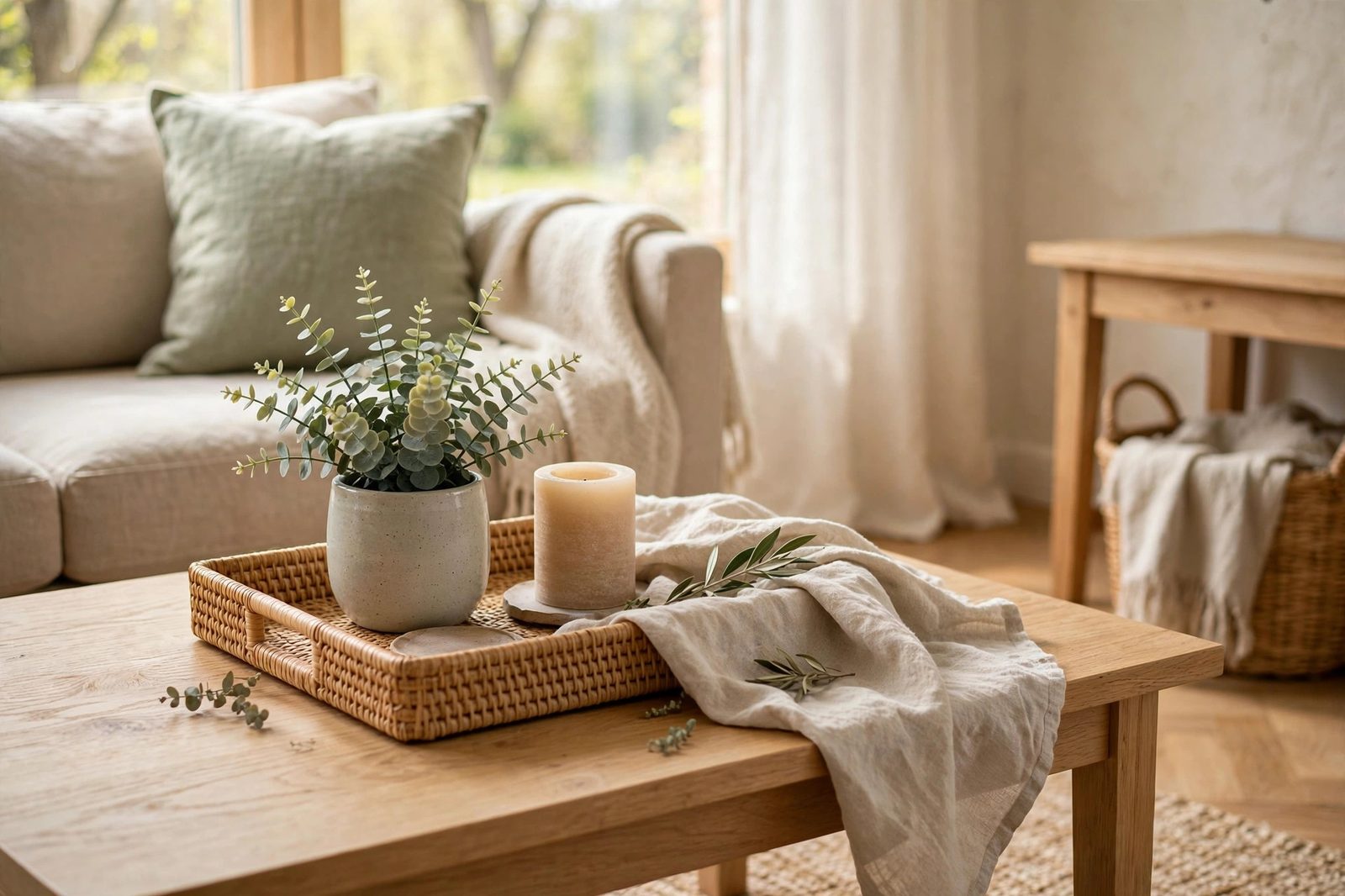
How Do You Style Natural Materials for Spring?
Natural materials are what keep a spring palette from feeling flat or precious — rattan, seagrass, light oak, linen, terracotta, and stoneware add the texture that makes cream and sage feel like a home instead of a showroom. The trick is distribution: one woven piece per surface, not three. A rattan tray on the coffee table corralling a small plant and a candle is perfect; the same tray plus a wicker basket plus a woven lampshade in one sightline tips into craft-fair territory.
Use trays as the organizing principle. A tray turns any collection of small objects into an intentional arrangement, which is exactly what spring styling needs after the winter clear-out. On a console, a light wood or rattan tray holds a bud vase, a candle, and a small stack of books as one composed unit. On a dining table, a long linen runner or a low wooden tray with a row of bud vases makes a centerpiece that survives daily life because it is easy to lift and move.
Mix one warm metal in sparingly for contrast. A small brass frame, a pair of aged-brass candlesticks, or a simple brass planter elevates natural materials the way jewelry elevates an outfit — but keep it to one or two pieces per room. Chrome and polished nickel read cold against spring's warm neutrals, so if your fixtures are cool-toned, warm metals in the accessories are what balance the room.
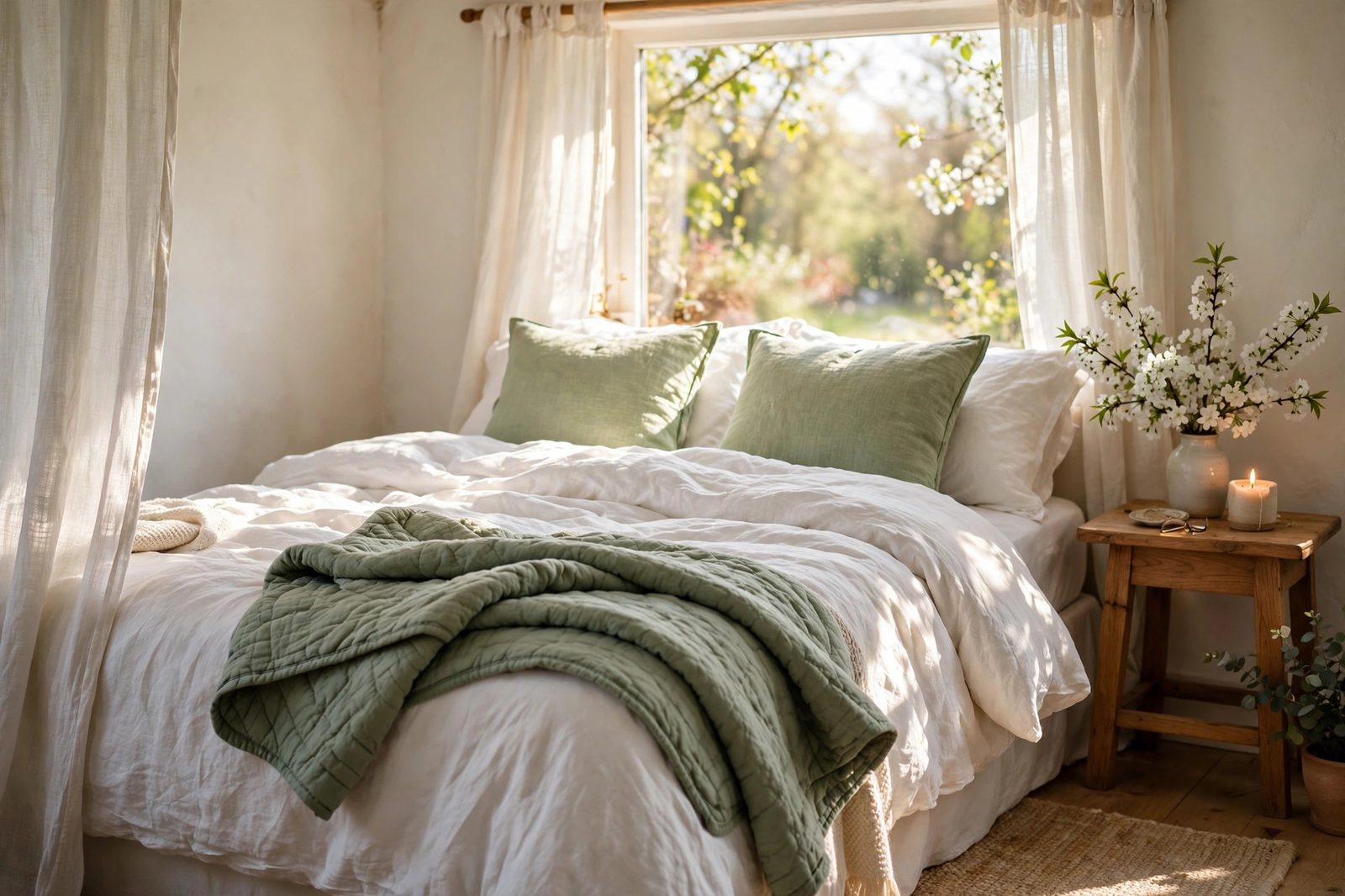
What Spring Updates Work in the Bedroom?
The bed is eighty percent of a bedroom's visual weight, so start there. Swap the winter duvet for a lighter quilt or a linen duvet cover in white, cream, or a whisper of sage, and fold the heavier blanket away — you will sleep cooler and the room will look instantly lighter. Layer two sleeping pillows plus two accent pillows in celery green or soft botanical prints against white shams; the formula of white base plus green accent is the spring bedroom in one move.
Clear and restyle the nightstands with the same subtract-first discipline as the rest of the house. Winter accumulates clutter on nightstands — extra chargers, half-read books, heavy candle jars — so strip each one back to three things: a lamp, a small vase or bud vase with fresh stems, and one personal item. A tiny vase of white blossoms or a sprig of eucalyptus on the nightstand is a small luxury that makes the whole room feel considered.
Finish with light and scent. If your bedroom curtains are heavy, spring is the moment to swap at least the panels for something that lets morning light through — even keeping the same rods and just changing panels takes under an hour. Trade the winter candle for a lighter scent: linen, citrus, green tea, or lilac. Scent is invisible decor, and the bedroom is the room where you notice it most.
How Do You Refresh Open Shelves for Spring?
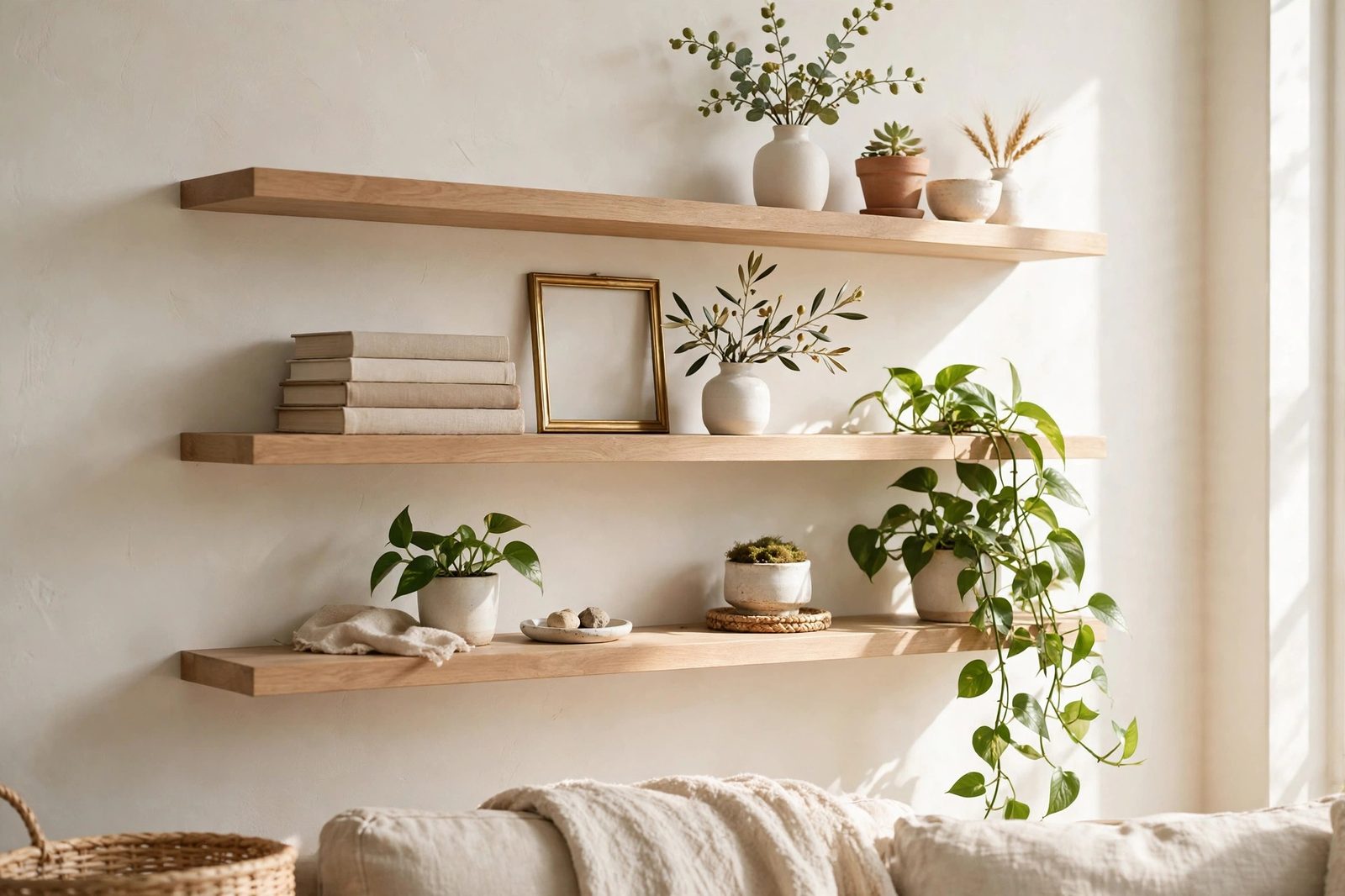
Open shelves collect winter weight silently — dark books, heavy objects, and layered frames that looked cozy in January read cluttered by April. Take everything off one shelf at a time and sort into keep, store, and relocate piles. The keep pile for spring is light: white and cream ceramics, clear glass, small plants, light wood frames, and books with pale or neutral spines turned to show their best face.
Restyle using the rule of thirds and the triangle principle. Divide each shelf mentally into three zones and leave at least one zone with real breathing room — empty space is what makes a styled shelf look styled. Build small triangles: a tall plant, a medium vase, and a low stack of books grouped so the eye moves between three heights. Repeat one material across the shelves — white ceramics on two shelves, say — so the separate groupings feel like one composition.
Add one living thing per shelf, no more. A trailing pothos on the top shelf, a small fern in the middle, a succulent or a bud vase with fresh stems on the lowest — greenery is what signals the season on a shelf, and one plant per shelf keeps it from looking like a greenhouse. If a shelf is deep, pull the arrangement toward the front edge; objects pushed to the back of a deep shelf disappear into shadow.
How Do You Carry Spring Style Out to the Porch?
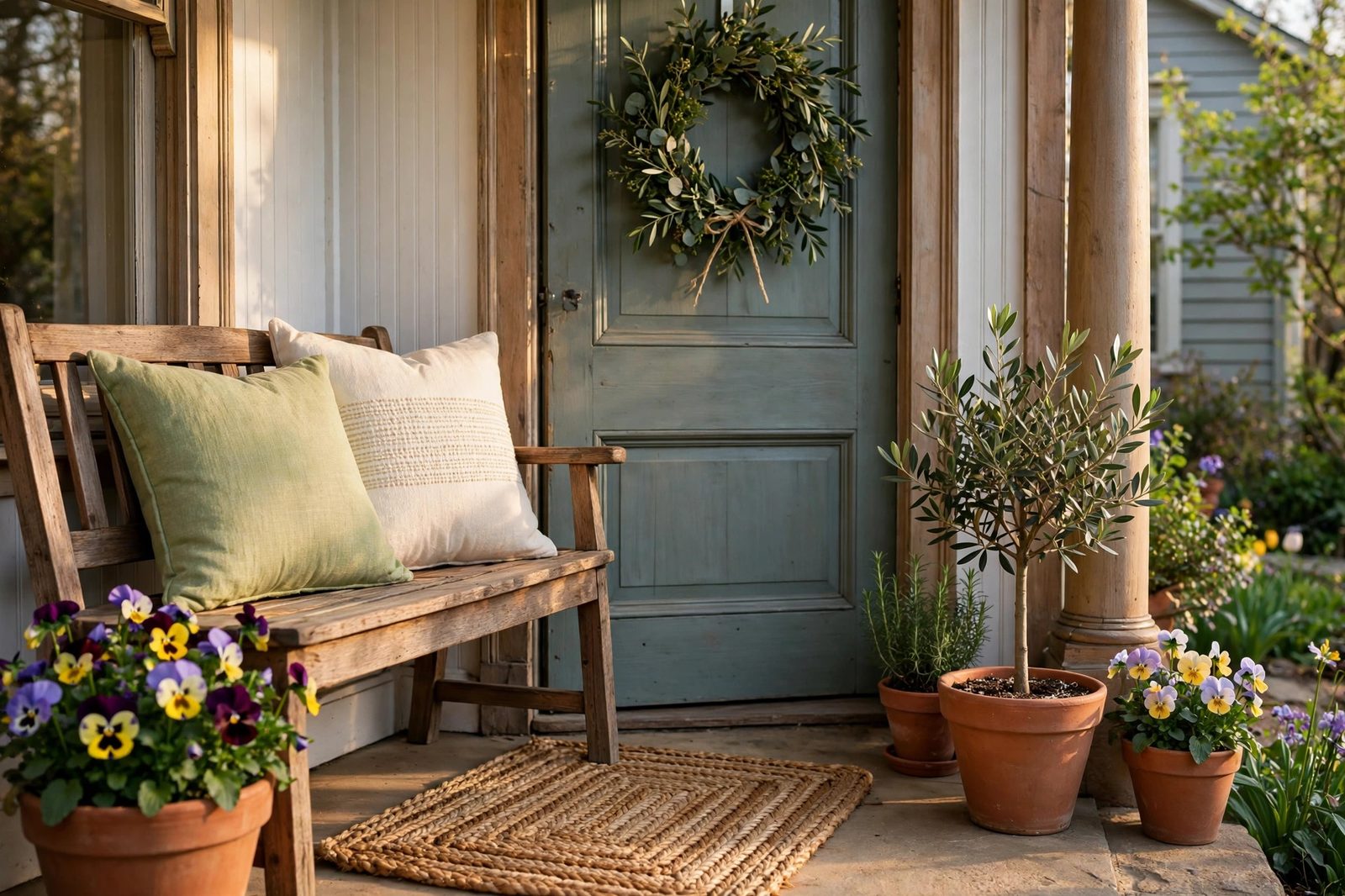
The porch is the last chapter of the spring story, and it starts at the door. Swap the winter wreath for a simple greenery wreath — eucalyptus, boxwood, or mixed spring greens — hung at eye level on the door. A fresh coir doormat in a clean pattern and a swept stoop do more for curb appeal than any decoration; spring porch styling fails most often on a dirty floor, not a lack of accessories.
Layer in seating textiles that can handle the weather. Outdoor cushions in celery green, cream, or a simple stripe on the bench or chairs tie the porch palette to the interior, which makes the whole house feel coordinated from the street. Choose solution-dyed acrylic fabrics if you are buying new — they resist fading and mildew far better than cotton outdoors. One throw in an outdoor-friendly weave on the bench arm adds the cozy layer without the maintenance worry.
Finish with planted pots in odd numbers. Three terracotta pots of pansies, violas, or early herbs flanking the door beat one large planter every time — the repetition looks designed and the small pots are easy to refresh as the season warms. Water new plantings daily for the first week until roots establish, and deadhead pansies regularly to keep blooms coming into early summer.
The Weekend Spring Refresh Plan
Do this in order and the whole house resets in one weekend. Saturday morning is the clear-out: walk every room with a laundry basket and remove anything dark, heavy, or specifically wintry — thick throws, dark pillow covers, pine-scented candles, the winter wreath. Wipe down the surfaces you have cleared, wash the slipcovers and lighter textiles, and open the windows while you work. The house should feel half-empty by lunch, and that emptiness is the point.
Saturday afternoon is the rebuild, room by room in the order guests experience them: entry, living room, kitchen, bedroom, then shelves and surfaces. Lay out your spring pieces — new pillow covers, the lighter throw, fresh stems, the greenery wreath — and style each space using the ideas above, stepping back to look at each room from the doorway before you call it done. That doorway view is how the room actually reads; styling looks different from inside the task than from the threshold.
Sunday is for the porch and the details: hang the wreath, set out the pots, lay the fresh doormat, and light one spring-scented candle in the living room. Photograph each finished room. The photos show you the spaces the way visitors see them, and next spring you will have a reference that makes the whole swap take half the time.
Three 2027 Spring Color Palettes That Always Work
Celery green plus cream plus light oak is the headline 2027 palette — fresh, modern, and almost impossible to get wrong. It suits living rooms and bedrooms, pairs naturally with white ceramics and brass, and photographs beautifully in daylight. Add depth with one darker note, like a deep green plant or a walnut frame, so the lightness has something to play against.
Soft sage plus warm terracotta on an ivory base is the earthy option, and it is the best choice if your home leans farmhouse, Mediterranean, or bohemian. The sage keeps it spring-fresh while terracotta pots, clay vases, and cognac leather add the warmth that makes the palette feel grounded rather than pastel. This is also the most forgiving palette for existing wood furniture, since sage flatters both light and mid-tone woods.
Butter yellow plus sky blue on warm white is the cheerful classic — daffodils, blue glass, pale wood, and white linen. It reads unmistakably spring and suits kitchens, breakfast nooks, and porches best, where its energy matches the activity of the space. Keep it to accents rather than large surfaces and it stays fresh; as a wall color or a full sofa it can tip into nursery territory.
Final thoughts
A spring home is really a promise you make to yourself: lighter days, open windows, fresh flowers as a matter of course. It does not take much — cleared surfaces, lighter textiles, a vase of tulips, and the discipline to leave breathing room between the pieces. The 2027 palette of celery and sage just gives this year's refresh a head start, because the colors already want to live together.
Start with the clear-out this weekend, even if you only get as far as the entryway and one bunch of tulips. Spring decorating is forgiving that way — every small swap moves the house in the right direction, and by the time the cherry blossoms are out, your rooms will already be waiting for them.
FAQ
When should I start decorating for spring?
Late February through March is the natural window — once winter feels spent but spring has not fully arrived outdoors. Decorating a little early is one of the cheapest cures for late-winter gloom. Work room by room rather than all at once if the full swap feels like too much in one weekend.
What is the 2027 color of the year for spring decor?
Sherwin-Williams named a soft celery green its 2027 color of the year, and Dulux is championing a pale sage in the same family. Both are warm-leaning greens that sit between neutral and color, which makes them easy to layer over the cream, oat, and light-wood neutrals most homes already have.
How can I decorate for spring on a budget?
Pillow covers instead of new pillows, a grocery-store tulip bunch instead of florist arrangements, and a clear-out that costs nothing are the three highest-impact budget moves. Linen-look covers, a sage throw, and fresh stems can refresh a whole living room for well under fifty dollars. Subtract the heavy winter layers first — that half of the refresh is free.
How do I decorate for spring without it looking like Easter?
Keep the ratio at roughly seventy percent neutral to thirty percent color, and let flowers rather than objects carry the color. Stick to two accent colors that repeat across the room instead of five scattered pastels, and skip glossy or glittery seasonal figurines in favor of natural materials like ceramic, wood, and linen.
What spring decor works in a small apartment?
Focus on the surfaces you see most: pillow covers, one throw, fresh stems in a single vase, and a lighter hand towel swap. A small potted herb on the kitchen counter and a bud vase on the nightstand deliver the seasonal signal without taking floor space. In small rooms, the clear-out matters even more than the additions.
How long do fresh spring flowers last indoors?
Tulips and daffodils typically last five to seven days with fresh water every two days and an angled stem trim each time. Cherry blossom and forsythia branches last one to two weeks in a tall, stable vase. Keep all fresh arrangements away from direct afternoon sun and heating vents, which are the two fastest ways to shorten vase life.