Kitchen
Minimalist Luxury Kitchen Ideas
Minimalist luxury kitchen ideas with handleless cabinetry, warm wood, pale stone, sculptural islands, concealed appliances, full-height backsplashes, bronze accents, minimal shelving, layered lighting, and edited counter styling.
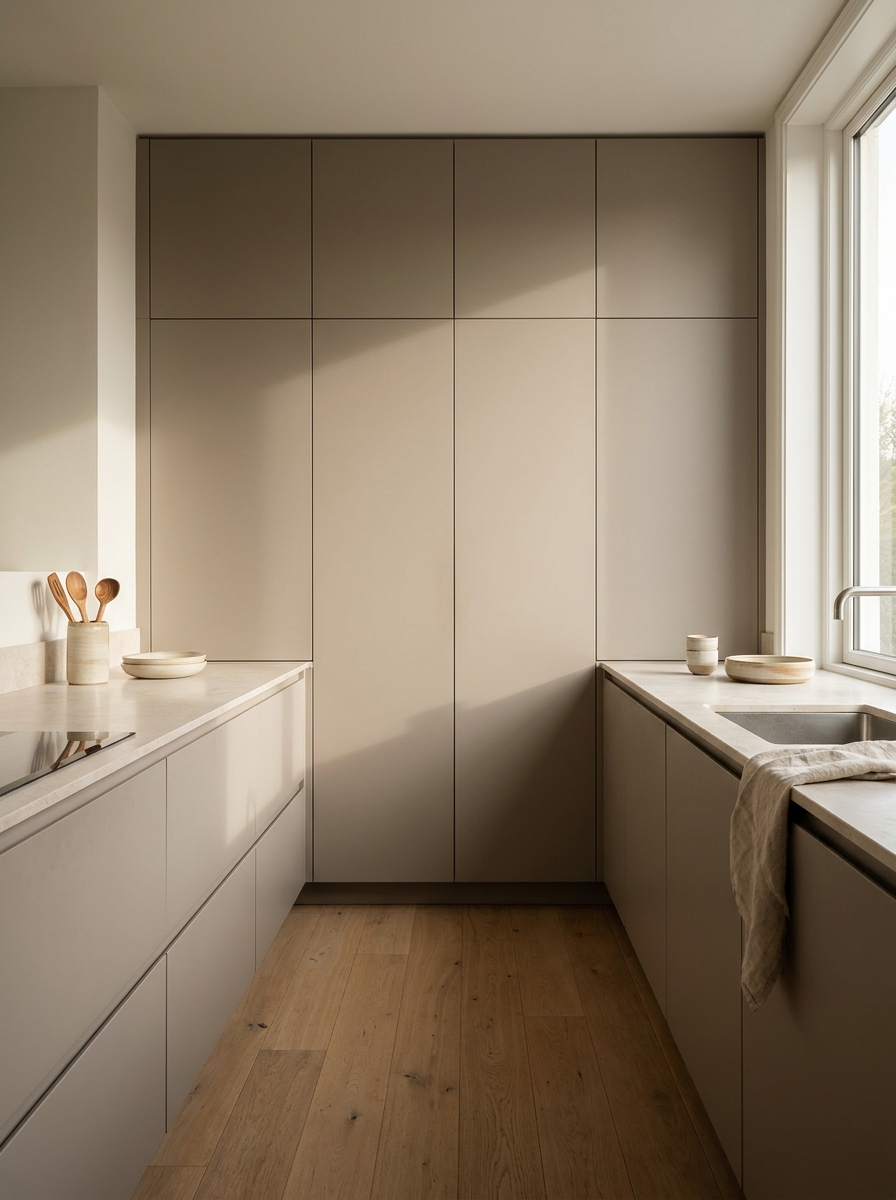
A minimalist luxury kitchen combines clean design with beautiful materials, thoughtful storage, and carefully controlled visual detail. Instead of relying on ornate cabinetry or excessive decoration, this style creates a high-end atmosphere through proportion, craftsmanship, lighting, and a restrained palette.
The most successful minimalist luxury kitchens do not feel cold or empty. Warm wood, softly veined stone, muted cabinetry, brushed metal, and layered lighting keep the room inviting. Appliances are often integrated, storage is concealed, and countertops remain mostly clear, allowing the materials and architectural lines to become the main features.
This style can work in both large and compact kitchens. A spacious open-plan room may feature a sculptural island and full-height cabinetry, while a smaller apartment kitchen can achieve a similar look through handleless doors, tonal finishes, and efficient storage. Luxury comes from visual clarity and thoughtful execution rather than square footage alone.
Warm ivory, mushroom, taupe, pale oak, walnut, travertine, bronze, and muted black work especially well in this design direction. These 12 minimalist luxury kitchen ideas will help you create a room that feels elegant, modern, practical, and comfortable. If you are carrying the same refined feeling through the home, these minimalist luxury living room ideas and minimalist luxury bedroom ideas make natural companions.
Use handleless cabinetry
Handleless cabinetry creates the uninterrupted lines that define a minimalist kitchen. Flat doors allow the cabinetry to read as one continuous architectural surface rather than a collection of separate cupboards and drawers.
True handleless systems use recessed channels, while push-to-open doors eliminate visible hardware completely. Integrated finger pulls can provide a similar appearance while remaining practical for frequently used cabinets.
Warm white, mushroom, taupe, pale oak, and walnut are all suitable finishes. Matte surfaces generally feel softer and more refined than high-gloss doors, which can create reflections and show fingerprints more easily.
The simple appearance places greater importance on alignment and installation. Consistent gaps between doors and drawers help the kitchen feel custom and high-end rather than merely plain.
Mix warm wood with pale stone
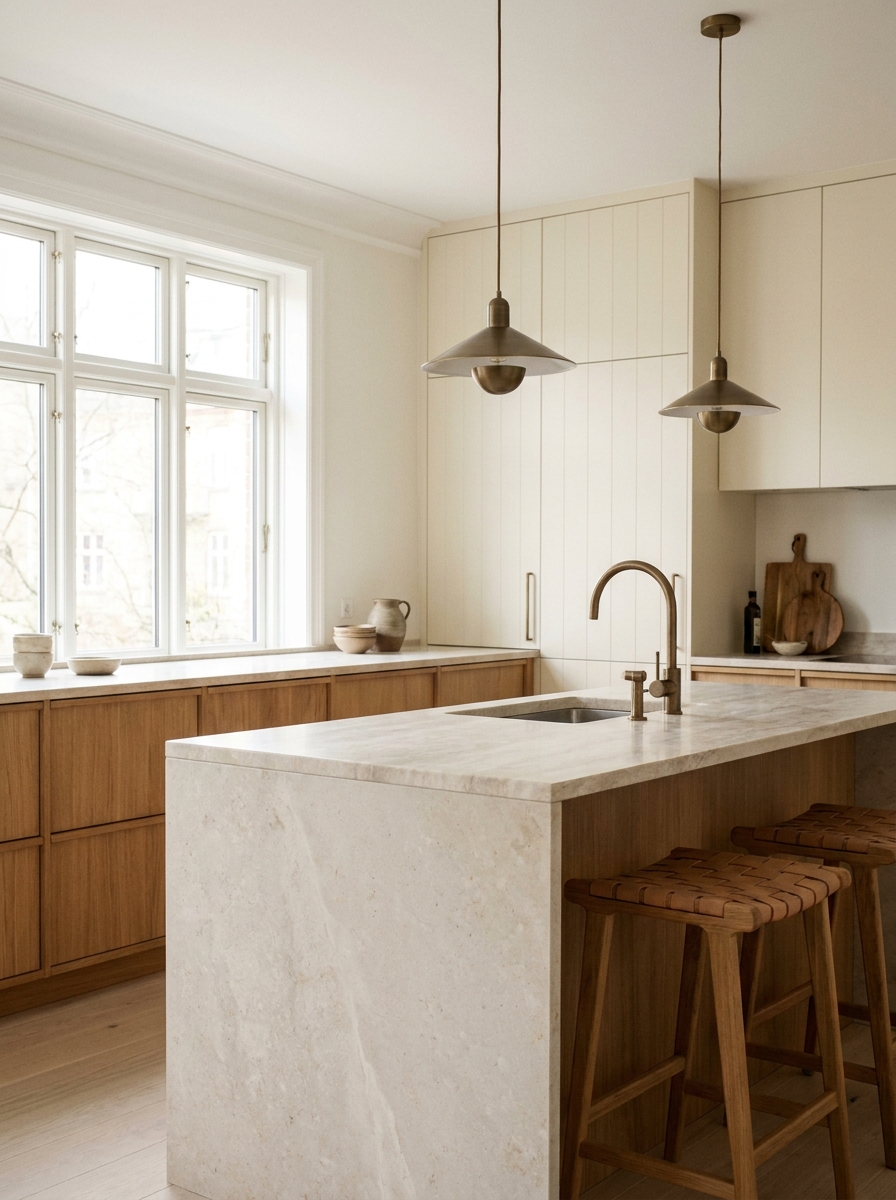
Warm wood and pale stone create one of the most effective material combinations for a minimalist luxury kitchen. The wood adds natural grain and warmth, while the stone introduces structure, durability, and subtle variation.
Pale oak creates a lighter Scandinavian-inspired appearance, whereas walnut provides deeper contrast and a more dramatic look. Both pair well with limestone, travertine, warm quartz, and lightly veined marble or porcelain.
Use one material as the dominant finish and the other as an accent. For example, combine oak cabinetry with a stone island, or use cream cabinets with a walnut island and pale countertop.
Keeping the palette limited allows the materials to stand out without making the kitchen feel visually busy. Repeat the wood tone in stools or nearby furniture to connect the kitchen with the surrounding room.
Choose a sculptural kitchen island
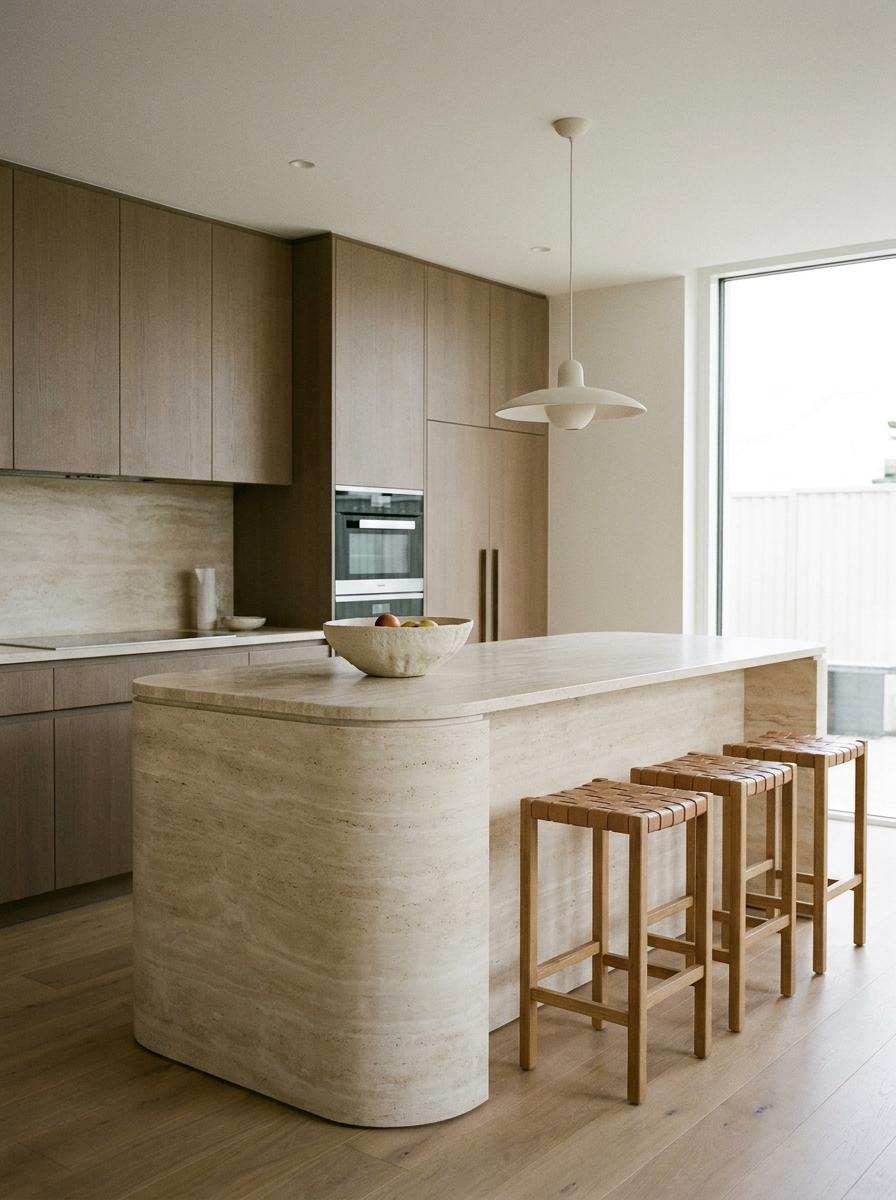
A kitchen island can become the main focal point of a minimalist space when its shape and material feel intentional. Instead of adding decorative detail throughout the room, allow one strong island to provide visual impact.
A monolithic stone island creates a clean architectural look, while rounded corners or a curved end can soften the straight lines of the cabinetry. Waterfall edges, thick counters, and fluted wood bases can also make the island feel more substantial.
The scale should suit the room. An oversized island that restricts movement will not feel luxurious, regardless of the material. Leave comfortable circulation space around every side and ensure appliances can open fully.
Keep the island surface mostly clear. A single bowl, vase, or branch arrangement is usually enough to style it without obscuring the form.
Hide appliances behind cabinetry
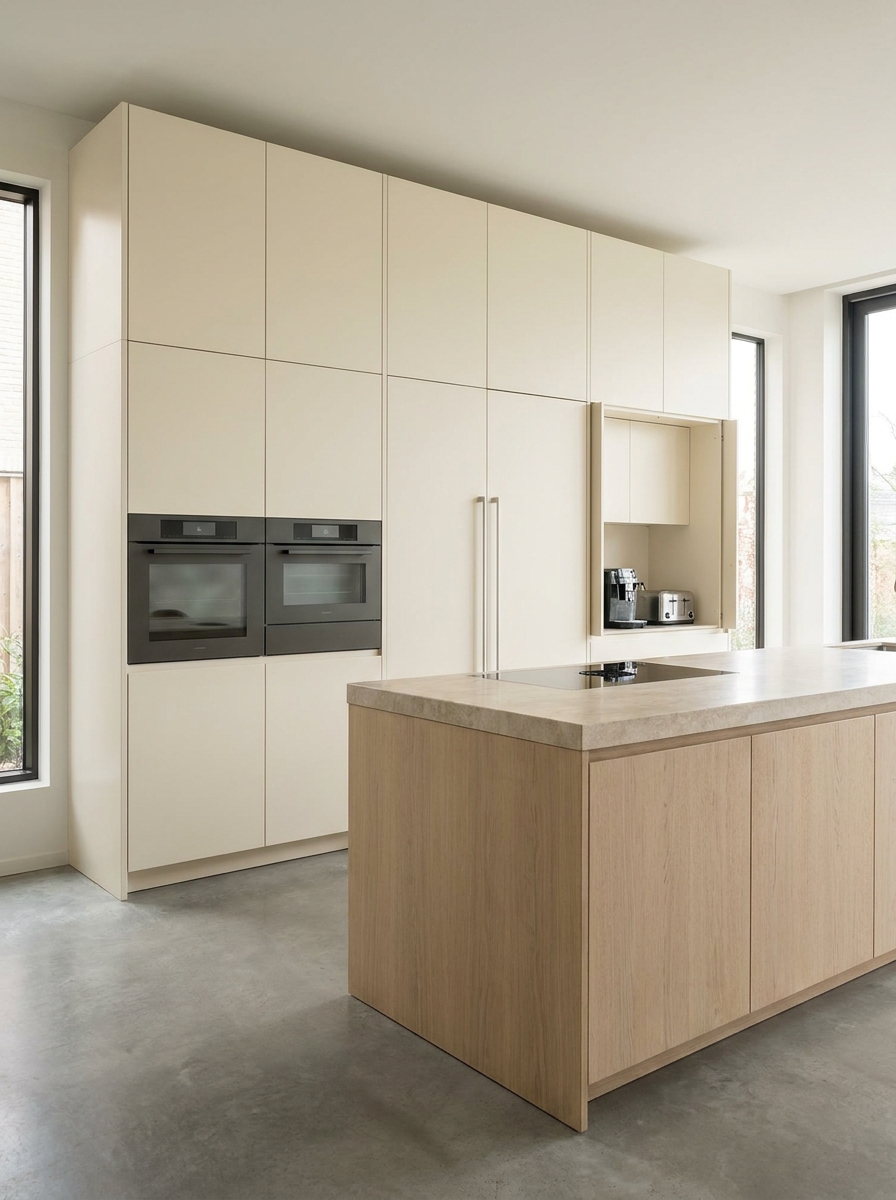
Integrated appliances help a minimalist kitchen maintain visual continuity. Refrigerators, dishwashers, and other large appliances can be concealed behind matching cabinet fronts so they do not interrupt the overall design.
An appliance wall can combine a concealed refrigerator, pantry, ovens, and storage into one organized section. Pocket doors may also hide smaller appliances such as the coffee maker, toaster, and blender when they are not in use.
Not every appliance needs to disappear. Built-in ovens can remain visible when their finish coordinates with the rest of the kitchen. Muted black, dark bronze, or stainless steel can provide a controlled contrast.
Careful planning is essential because integrated appliances require specific cabinet dimensions and ventilation. When executed correctly, the kitchen feels calmer and more architectural while remaining fully functional.
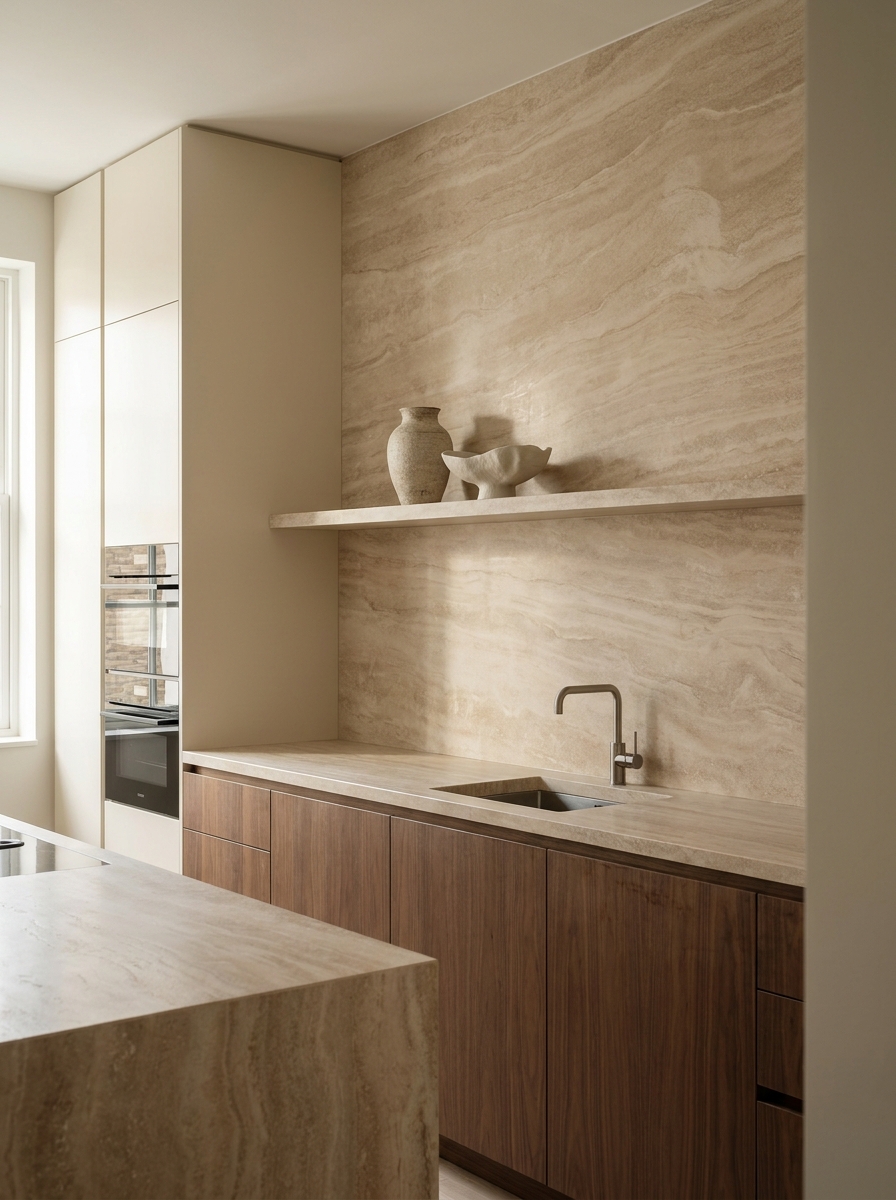
Install a full-height stone backsplash
Extending the countertop material up the wall creates a seamless and refined alternative to a traditional tiled backsplash. A full-height stone slab reduces grout lines and allows natural veining or subtle tonal variation to become part of the design.
Travertine, limestone, marble, quartzite, and stone-look porcelain can all work depending on the desired appearance and maintenance requirements. Choose a pattern that complements the cabinetry rather than overwhelming it.
A shelf made from the same material can be integrated into the backsplash for a minimal display area. Keep the shelf lightly styled so the stone remains visible.
Continuing the same material across the countertop and backsplash creates cohesion, particularly in kitchens with handleless cabinetry and a limited color palette.
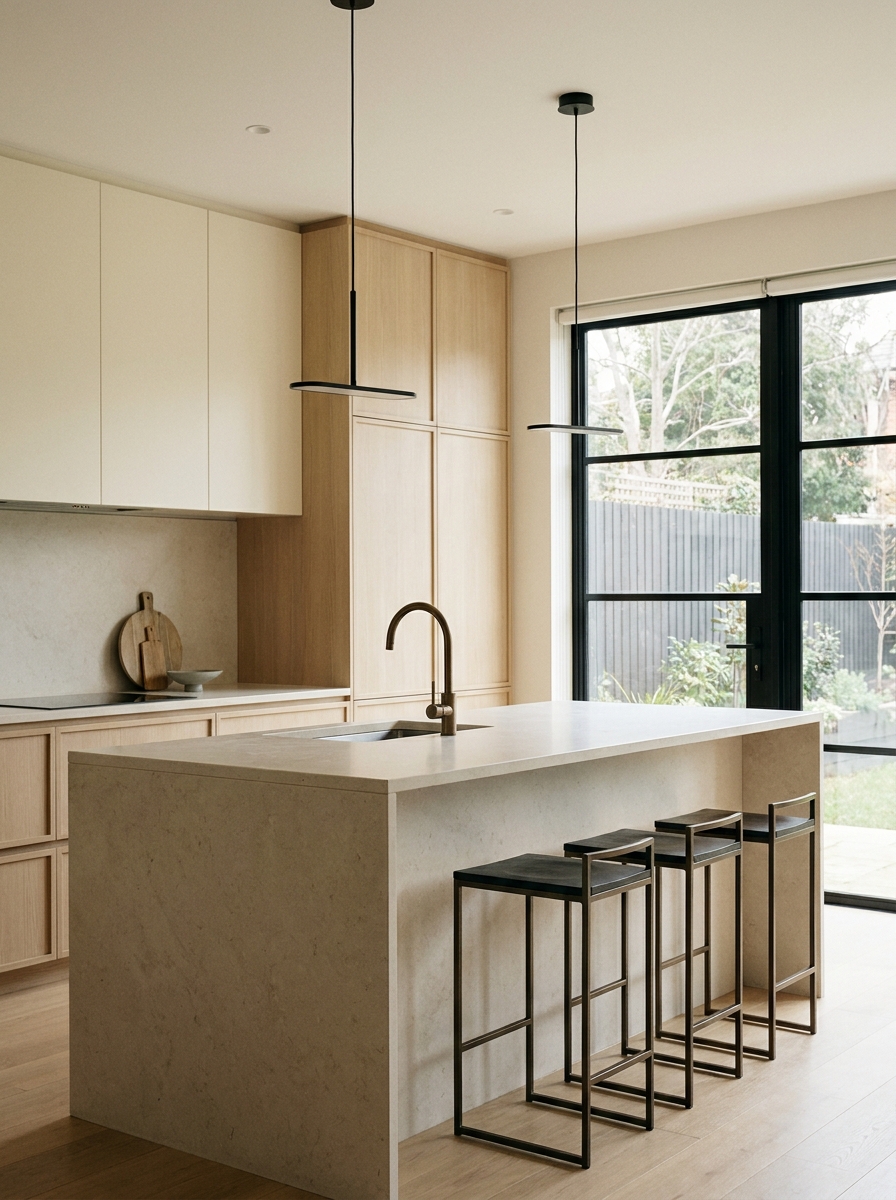
Add bronze or black accents sparingly
Dark or warm metal accents can provide useful definition in a pale minimalist kitchen. Brushed bronze, aged brass, muted black, and dark stainless steel work best when used in controlled amounts.
Possible accents include the faucet, pendant lights, stool frames, window trim, or a slim shelf. Repeating the finish in two or three places creates cohesion without turning the metal into the dominant feature.
Matte and brushed finishes generally suit minimalist luxury better than highly polished gold or chrome. Their softer reflection feels more understated and allows the wood and stone to remain prominent.
Avoid mixing too many unrelated metals. A restrained kitchen feels more considered when the visible finishes share a similar tone and sheen.
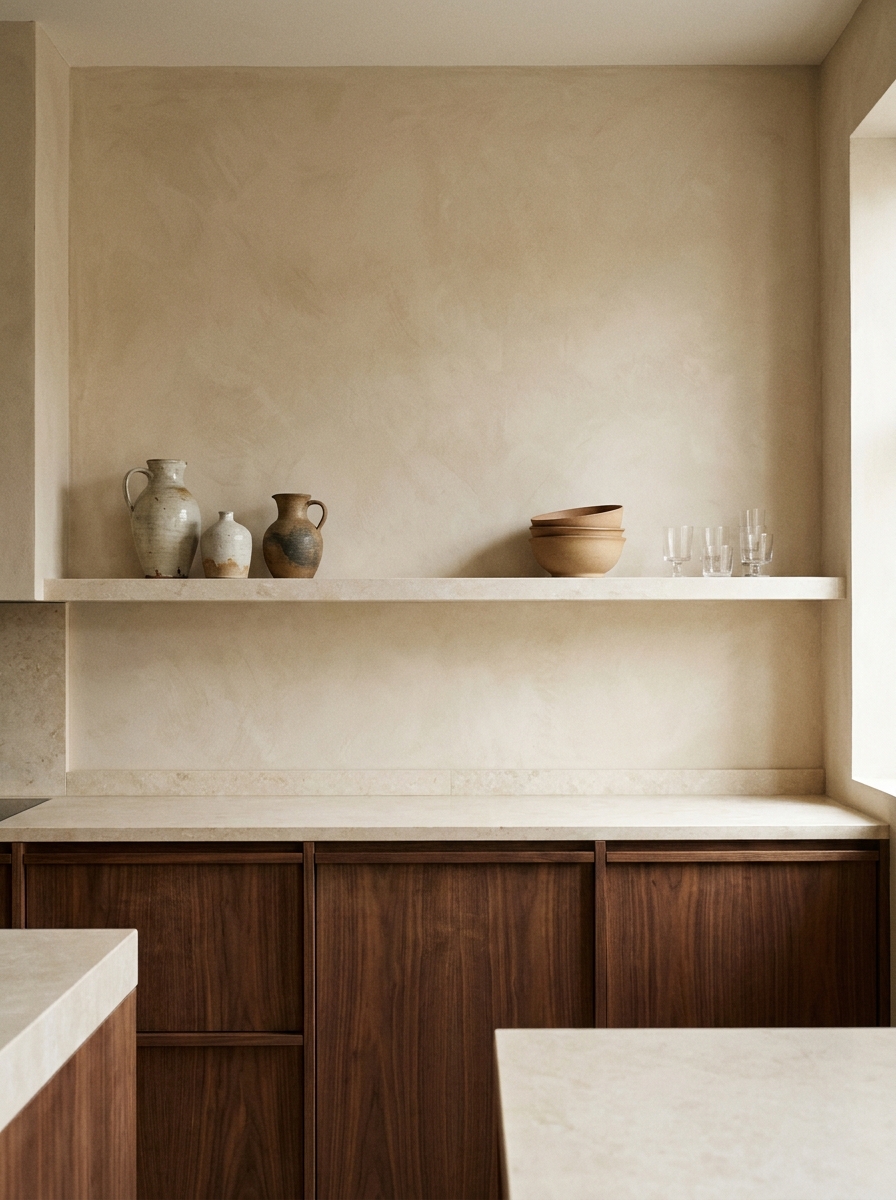
Keep open shelving minimal
Open shelving can soften a wall of cabinetry and provide room for a few attractive everyday pieces. In a minimalist luxury kitchen, however, it should remain limited and carefully styled.
One long stone or wood shelf is often more effective than several small shelves. Display only a few items such as ceramic bowls, drinking glasses, a sculptural vase, or frequently used cookbooks.
Leave visible space between objects. Filling every section can make the kitchen appear cluttered and undermine the calm architectural look.
Place open shelving away from areas that collect heavy grease or moisture when possible. Closed cabinetry should still provide most of the kitchen's practical storage.
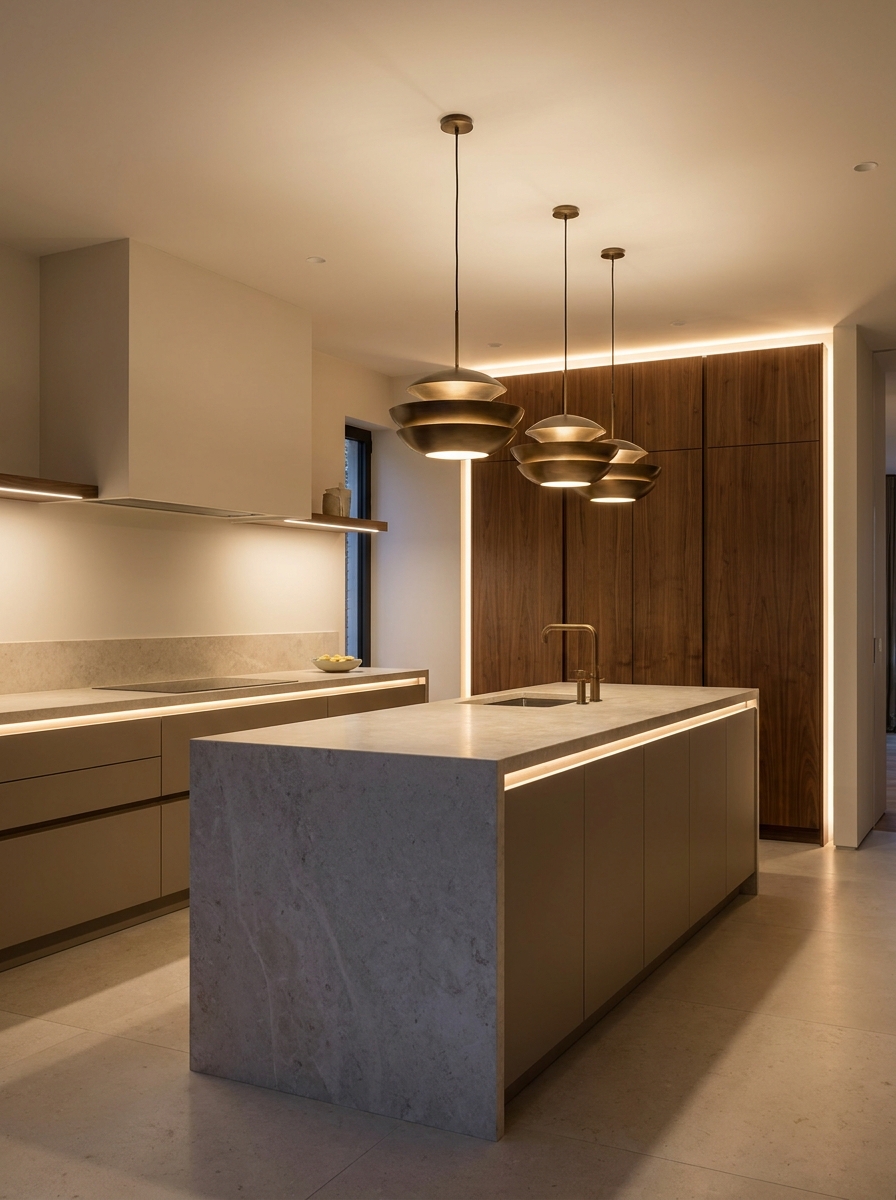
Layer pendant, task, and ambient lighting
Lighting plays a major role in making a minimalist kitchen feel warm rather than clinical. One ceiling fixture is rarely enough to provide both practical illumination and atmosphere.
Use pendant lights above the island, concealed lighting beneath upper cabinets or shelves, and subtle ambient light around tall cabinetry. Recessed ceiling lights can provide general brightness without becoming a strong visual feature.
The fixtures should have simple sculptural forms in plaster, glass, bronze, or matte black. Choose warm light temperatures that complement wood and beige surfaces.
Use separate controls or dimmers when possible. This allows the kitchen to feel bright during food preparation and softer during dining or evening use.
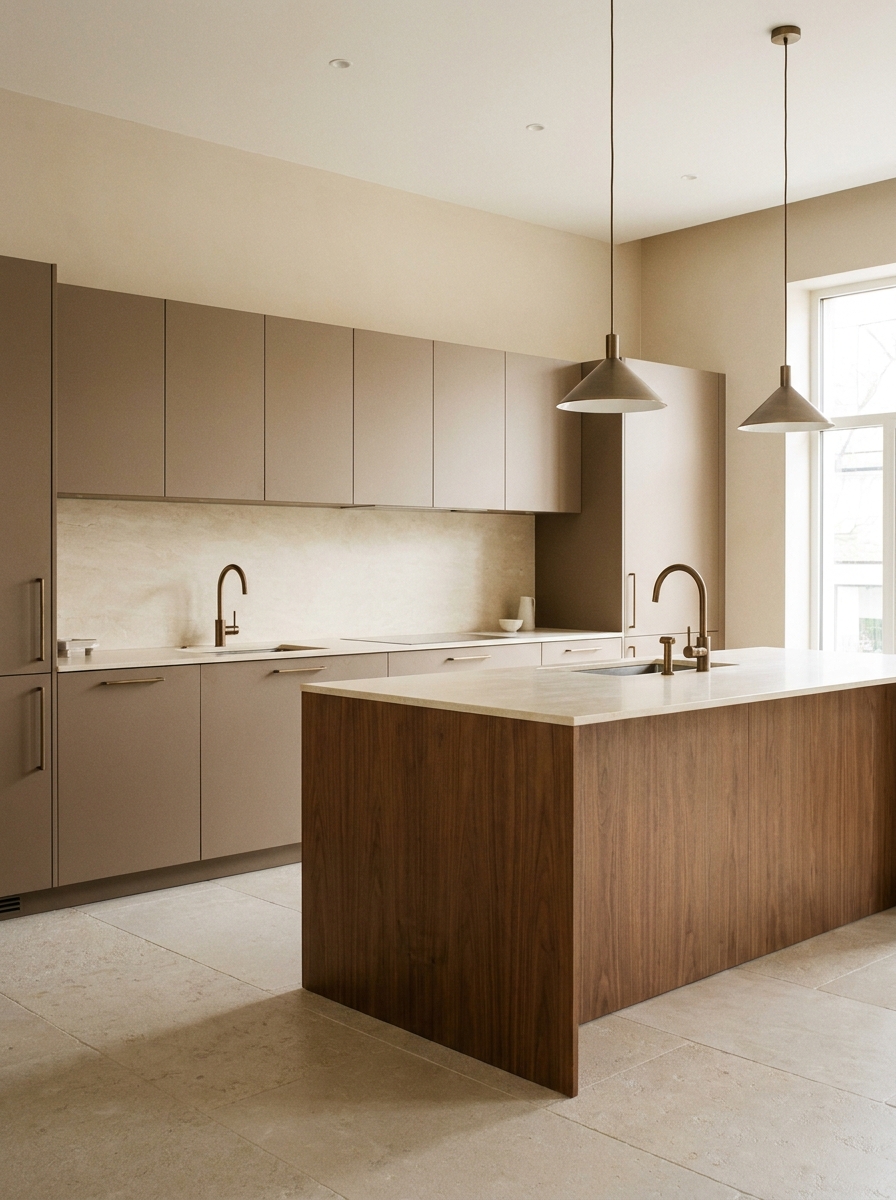
Choose mushroom, taupe, or warm beige cabinets
Muted neutral cabinetry offers more warmth and character than pure white while remaining calm and versatile. Mushroom, taupe, putty, and warm beige all work beautifully in minimalist luxury kitchens.
These shades pair naturally with stone, oak, walnut, bronze, and muted black. Their undertones should be checked carefully beside the flooring and countertops, as taupe may appear pink, gray, or purple depending on the surrounding finishes.
Use a matte finish to preserve the soft, contemporary appearance. Flat-panel doors keep the cabinetry clean, while subtle framed doors can create a more transitional version of the style. These kitchen cabinet color ideas can help if you want to compare warm neutrals with greens, blues, wood, and deeper tones.
A slightly darker island or wood accent can provide enough contrast to keep a fully neutral kitchen from appearing flat.
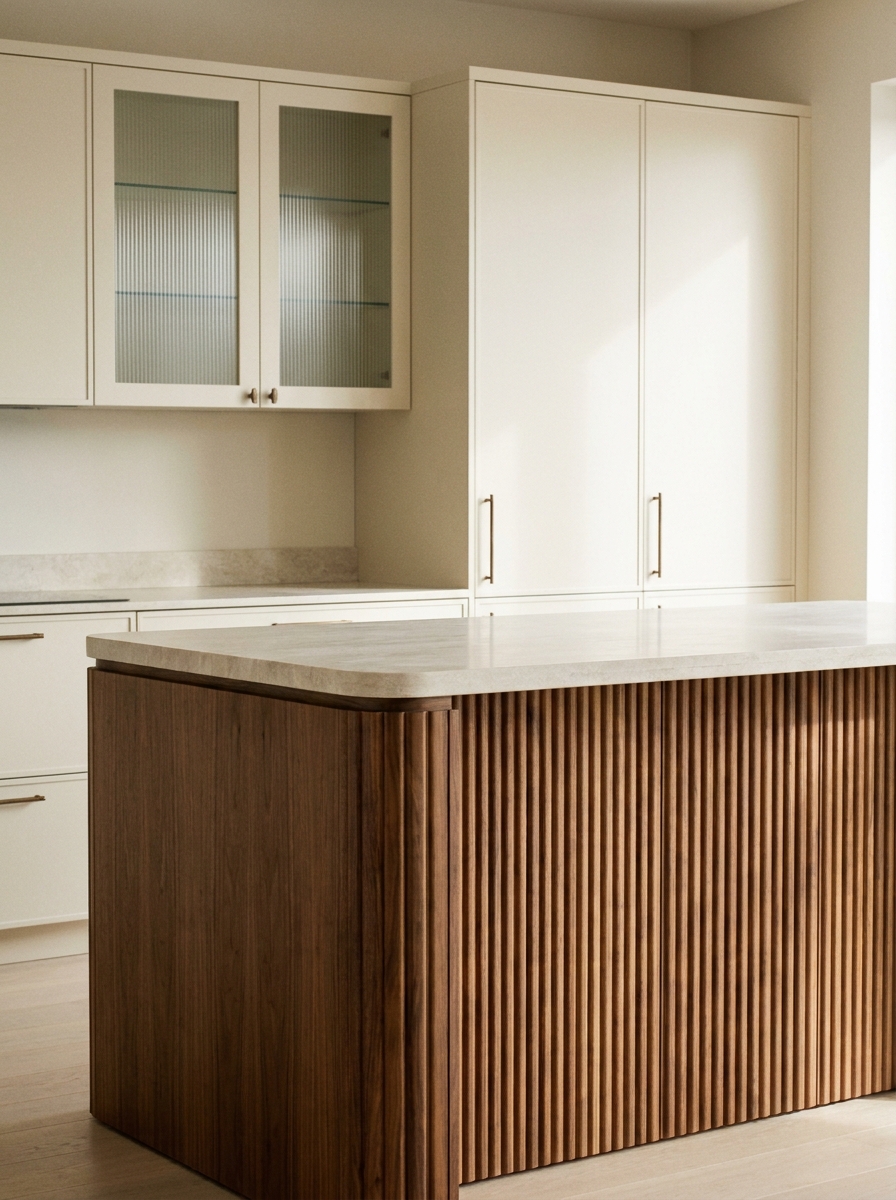
Add fluted wood or ribbed glass details
Subtle texture can make a minimalist kitchen feel custom without adding visual clutter. Fluted wood, ribbed glass, and softly reeded cabinet fronts introduce depth through shadow and repetition.
Use these details on a limited area such as the island base, one tall cabinet, a beverage station, or a pair of upper doors. Applying them everywhere may make the room feel too decorative.
Fluted oak or walnut adds warmth, while ribbed glass can make upper storage feel lighter and partially conceal its contents. Both materials look especially refined beside simple stone surfaces.
Keep the remaining cabinetry flat and understated so the textured element has room to stand out.
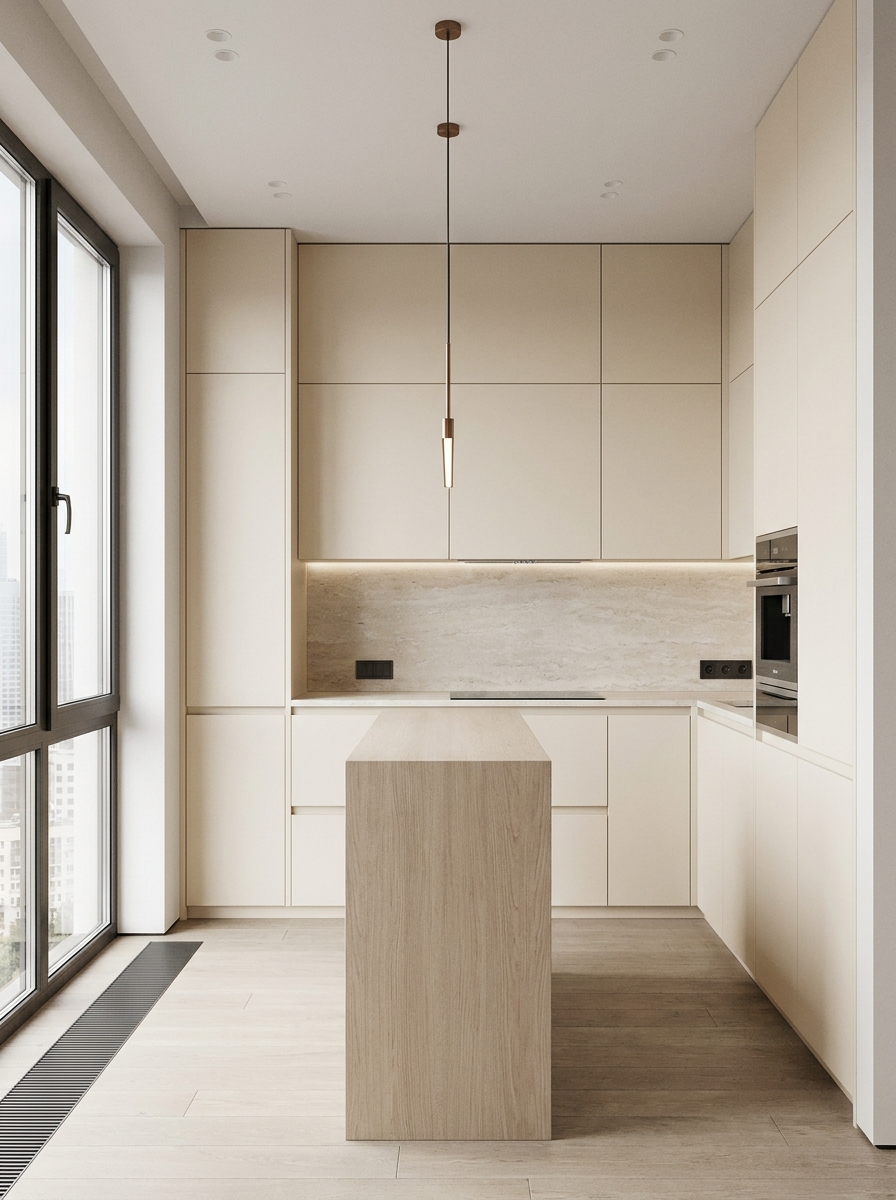
Create luxury in a small kitchen
A small kitchen can feel luxurious when the layout is efficient and the materials remain cohesive. Minimalism is particularly useful in compact spaces because it reduces visual fragmentation and keeps counters clear.
Use full-height cabinetry to maximize storage and draw the eye upward. Handleless fronts, integrated appliances, and one consistent countertop material will make the room feel calmer.
Avoid installing an oversized island when a slim peninsula, narrow table, or mobile work surface would provide better circulation. Every feature should support the available space rather than compete with it.
Light warm colors can keep the kitchen open, while a small amount of walnut, bronze, or muted black adds definition. Good task lighting is essential because compact kitchens can otherwise feel shadowed. These small apartment kitchen ideas share more practical ways to make limited kitchen space look polished.
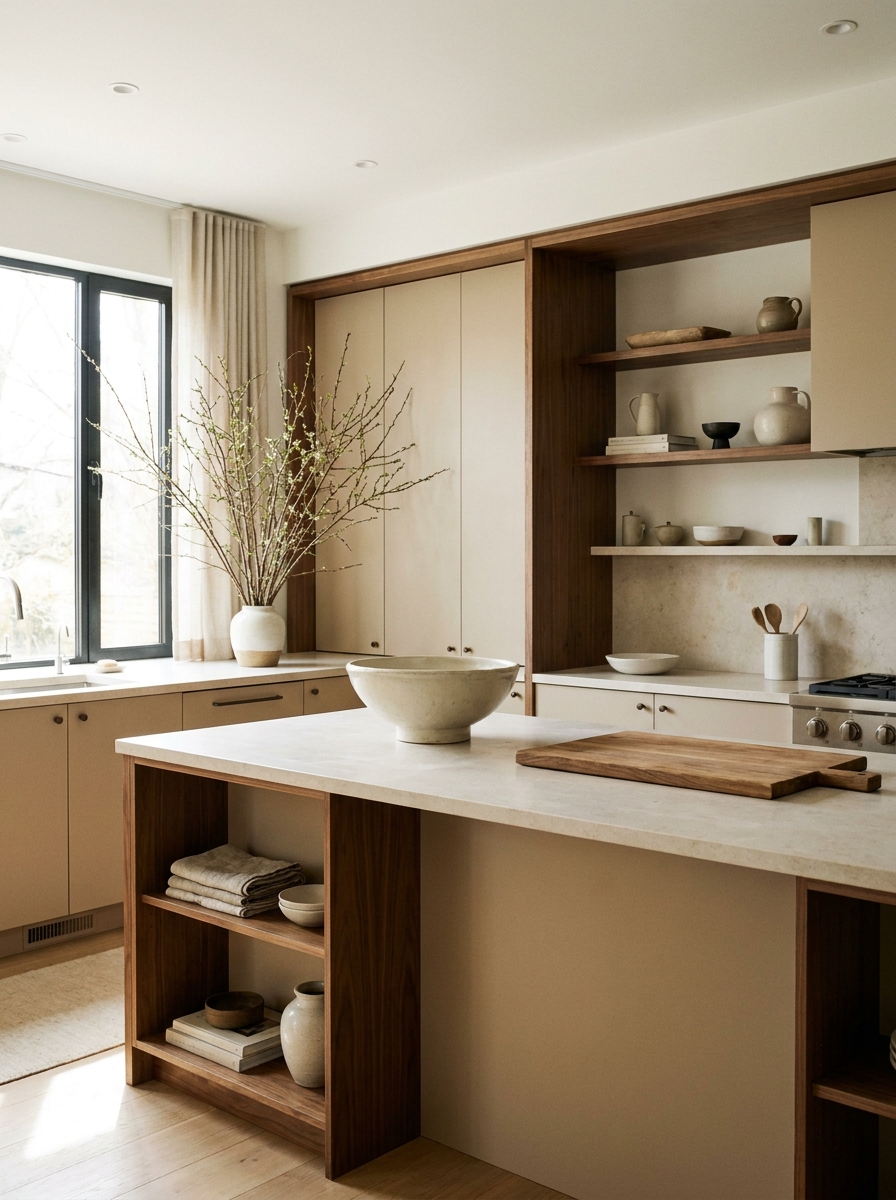
Style counters with fewer, larger objects
Minimalist luxury kitchens usually keep most work surfaces clear. This allows the cabinetry, stone, and architectural lines to remain visible while preserving useful preparation space.
Instead of grouping many small accessories, choose a few larger objects with practical or sculptural value. A substantial ceramic bowl, one wood cutting board, a stone tray, or a tall vase with branches can be enough.
Daily appliances can remain accessible when they are used frequently, but group them within one defined zone rather than spreading them across every counter. An appliance garage can hide them completely when desired.
The kitchen should still feel lived in. A bowl of fruit, a folded linen towel, or one cookbook can add warmth without making the room look cluttered. These kitchen counter decor ideas are useful if you want surfaces to feel styled but still calm.
How to make a minimalist kitchen look luxurious
Start with the largest visible elements. Cabinet fronts, countertops, backsplash materials, flooring, and lighting shape the room more strongly than decorative accessories. A limited palette and precise alignment can make even simple materials feel more expensive.
Introduce contrast through texture rather than many colors. Smooth cabinetry, visible wood grain, honed stone, ribbed glass, and brushed metal can create depth while maintaining a restrained appearance.
Pay attention to scale and proportion. Pendant lights should suit the island, stools should fit comfortably beneath the counter, and cabinetry should align with surrounding architectural features. Poorly scaled elements can make an otherwise attractive kitchen feel less polished.
Finally, reduce visual clutter through concealed storage. Integrated bins, drawer organizers, appliance garages, and full-height pantry cabinets help preserve clear surfaces and make everyday use easier.
How to keep minimalist luxury from feeling cold
Warm materials are essential. Natural wood, warm stone, linen, plaster, and muted metal finishes soften the clean lines of the cabinetry.
Layer the lighting so the kitchen does not rely entirely on cool overhead illumination. Under-cabinet and pendant lighting can create a softer atmosphere in the evening.
Include a few organic shapes to balance straight cabinet lines. A rounded island, curved stools, a sculptural bowl, or a loose branch arrangement can make the kitchen feel more relaxed.
The room should also show signs of real life. A bowl of fruit, a favorite cookbook, or an attractive coffee setup can add personality without creating clutter.
Final thoughts
Minimalist luxury kitchens feel refined because every visible element has been carefully considered. Handleless cabinetry, integrated appliances, natural stone, warm wood, and layered lighting create elegance without relying on excessive decoration.
The look can work in both spacious homes and small apartments. The key is to choose materials and features that suit the room rather than trying to copy the scale of a large designer kitchen.
By keeping the palette restrained, prioritizing concealed storage, and allowing a few beautiful materials to take the lead, you can create a kitchen that feels calm, expensive, practical, and genuinely welcoming.