Bedroom
10 Bedroom Accent Wall Ideas (Beyond Basic Black)
10 bedroom accent wall ideas that go way beyond basic black: painted arches, limewash, wallpaper panels, wood slats, and molding looks you'll love.
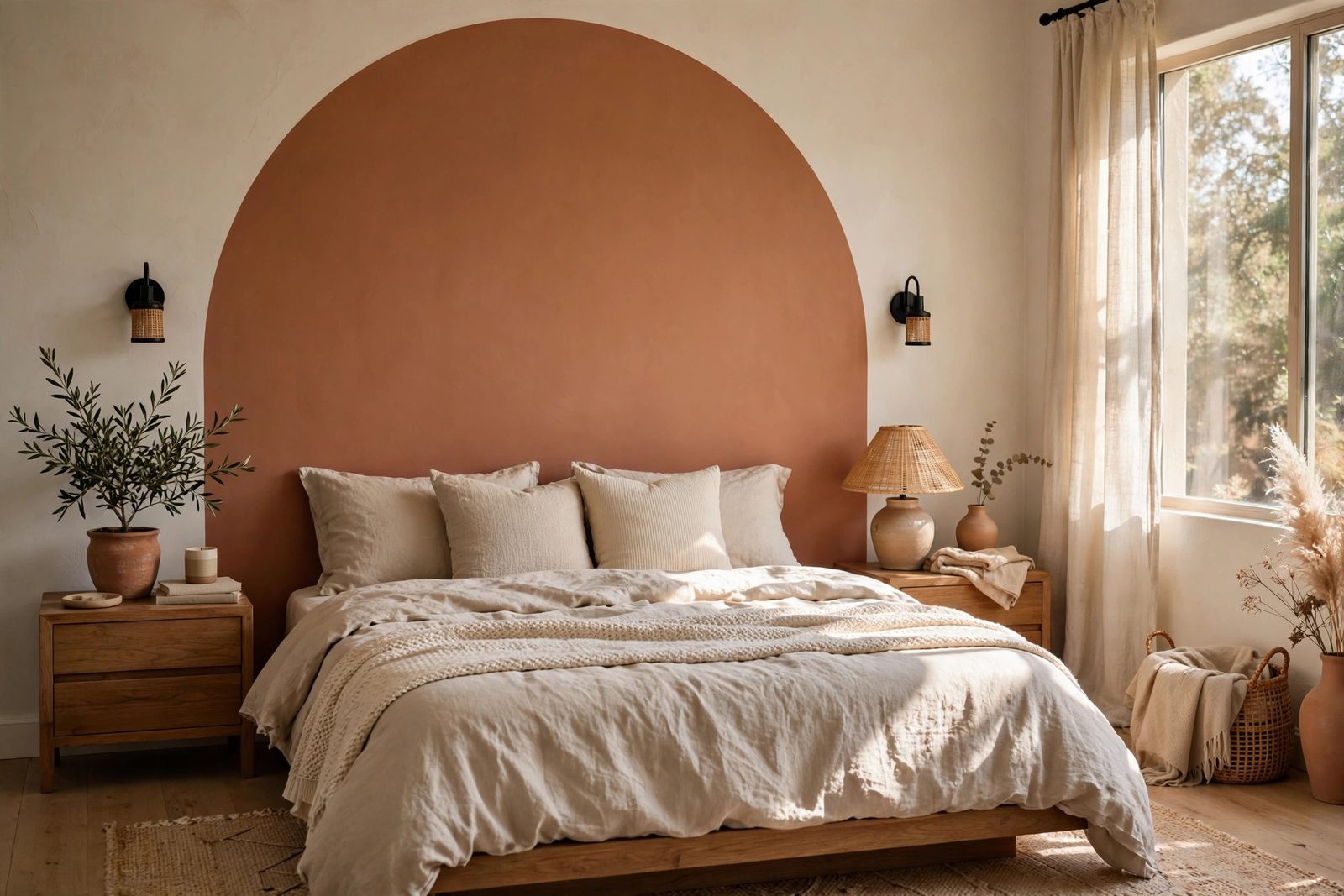
If the only bedroom accent wall ideas you have seen are a single black wall behind the bed, you are missing the best part. This roundup of bedroom accent wall ideas goes way beyond basic black — painted arches, cloud-soft limewash, wallpaper panels, vertical wood slats, and crisp molding treatments that turn the wall behind your bed into the star of the room.
An accent wall is the highest-impact, lowest-cost upgrade a bedroom can get. One wall, one weekend, and the whole room reads as designed instead of decorated. The trick is choosing a look that actually suits your style and your space — not just copying the dark wall you saw on Pinterest three years ago.
Here are ten bedroom accent wall ideas worth doing in 2026 and 2027, from renter-friendly tricks to full weekend projects. If you already love the moody look, we have that covered too — but first, the whole world of options beyond black.
How Do You Paint a Warm Clay Arch Behind the Bed?
The painted arch is the defining bedroom accent wall idea of the mid-2020s, and it is still going strong into 2027 because it does so much with so little. One arch painted in warm clay, terracotta, or a muted rose frames your bed like a headboard built into the wall, adds architecture to a plain box room, and costs about the price of a single quart of paint.
To get a clean arch, find the center point above your bed, tie a pencil to a string at your chosen radius, and swing the arc onto the wall in light pencil. Painter's tape will not bend around curves, so paint the arc freehand with a small angled brush, staying just outside your pencil line, then fill in with a roller. Two coats is usually enough. Keep the arch wider than your bed by at least six inches on each side so it reads as intentional framing rather than a halo.
Style the rest of the wall simply — this is a look that needs breathing room. A low-profile headboard, one leaning piece of art to the side, and warm bedding keep the arch as the clear hero. If you love this curved look, layer it with curved furniture and arch decor for a room that feels completely of-the-moment.
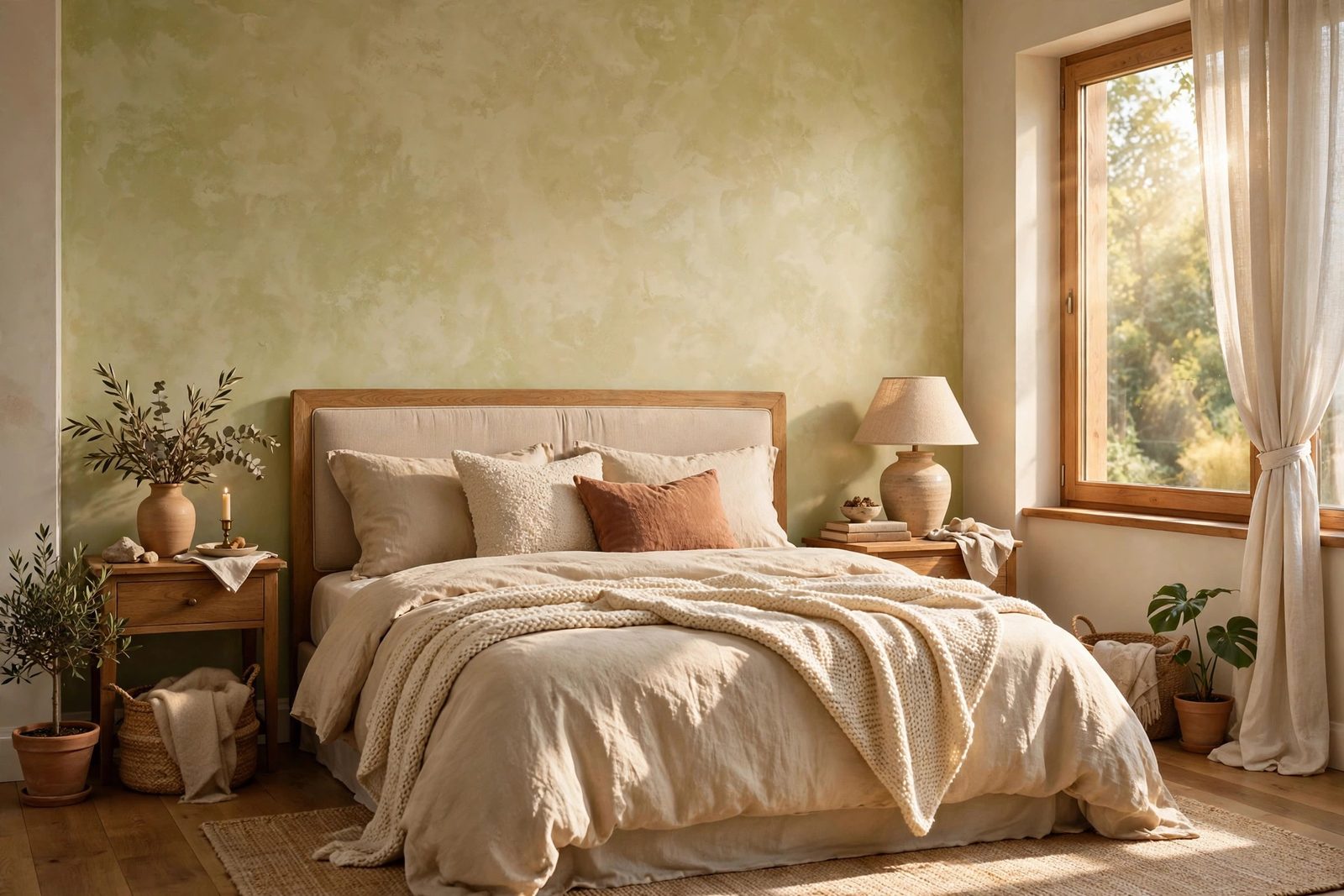
What Makes a Limewash Wall Look So Soft and Cloudy?
Limewash paint creates the mottled, suede-like finish you see in every designer bedroom right now — subtle clouds of light and dark that make a flat wall feel handmade and old-world. Unlike flat latex, limewash has actual depth: it catches morning light differently across the day, so the wall behind your headboard never looks boring.
Application is forgiving, which makes this a genuinely fun weekend project. You brush it on in random criss-cross strokes with a big block brush, building two to three coats over a tinted primer. There is no wrong way to do the strokes — the randomness is the look. Choose a warm beige, chalky white, or soft mushroom if your bedroom leans cozy; cooler limewashed grays suit a calm, minimal room.
Limewash is water-based and low-odor, and it shows imperfections beautifully, so it is perfect for older walls with character. Finish the room with linen bedding and natural wood — textures on textures — and skip heavy wall art on this wall entirely; the finish is the art.
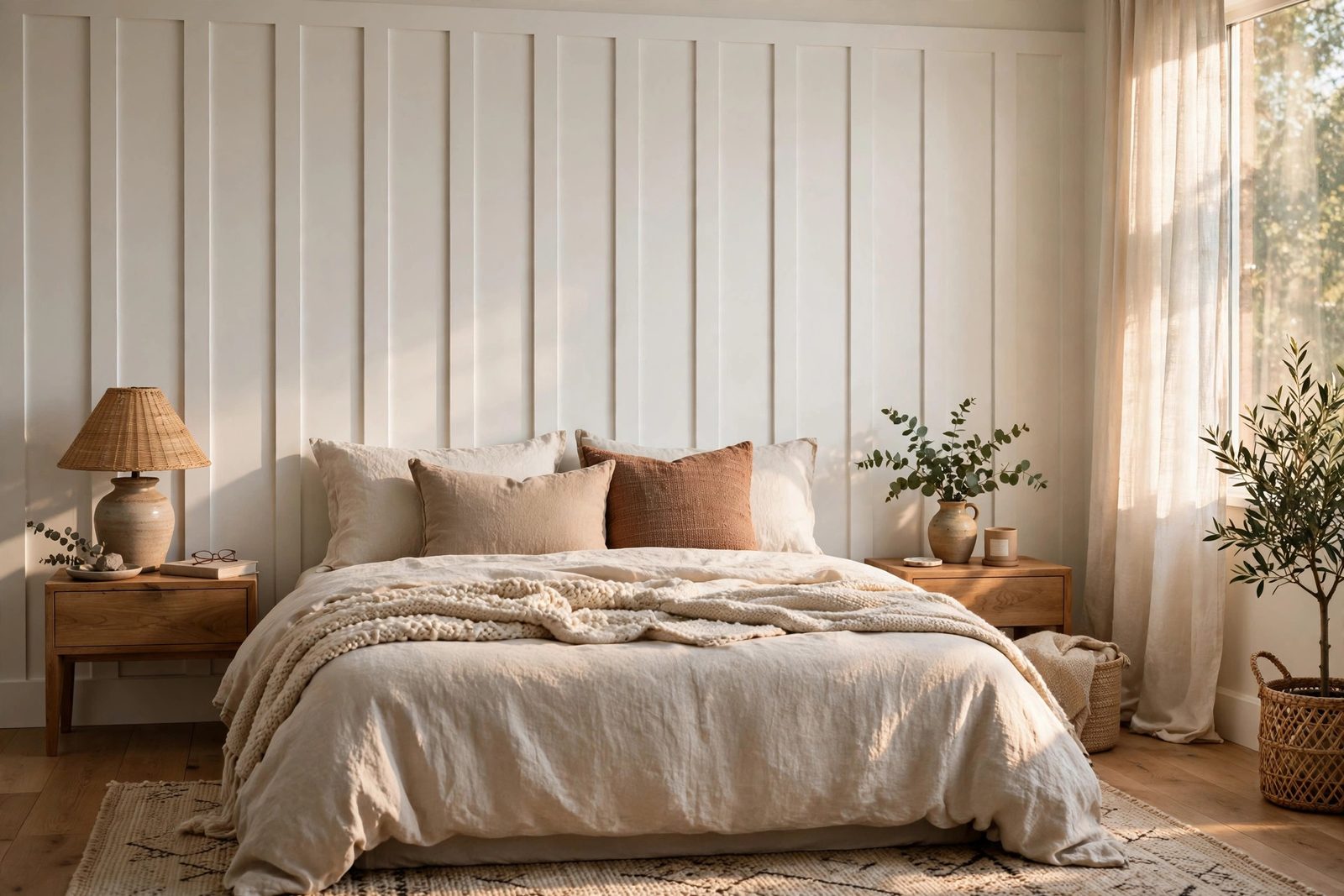
Can Board-and-Batten Look Modern in a Bedroom?
Absolutely — board-and-batten has shaken off its farmhouse-only reputation and now reads as clean, tailored, and quietly architectural, especially painted in a soft white or warm off-white. The grid of battens gives a plain wall rhythm and shadow lines that make even a budget bedroom feel finished.
This is a beginner-friendly trim project: measure a grid of equal rectangles across the wall behind your bed, attach primed MDF battens with a brad nailer and construction adhesive, caulk the seams, then paint the entire wall — battens and drywall together — in the same color. Painting wall and trim one color is what makes it look modern instead of country. Weekend one is install day; weekend two is paint day.
Keep the batten spacing generous — big rectangles read contemporary, tight ones read cottage. Once painted, this wall barely needs decorating: let the trim do the talking with just a pair of simple sconces or one piece of art at the center.
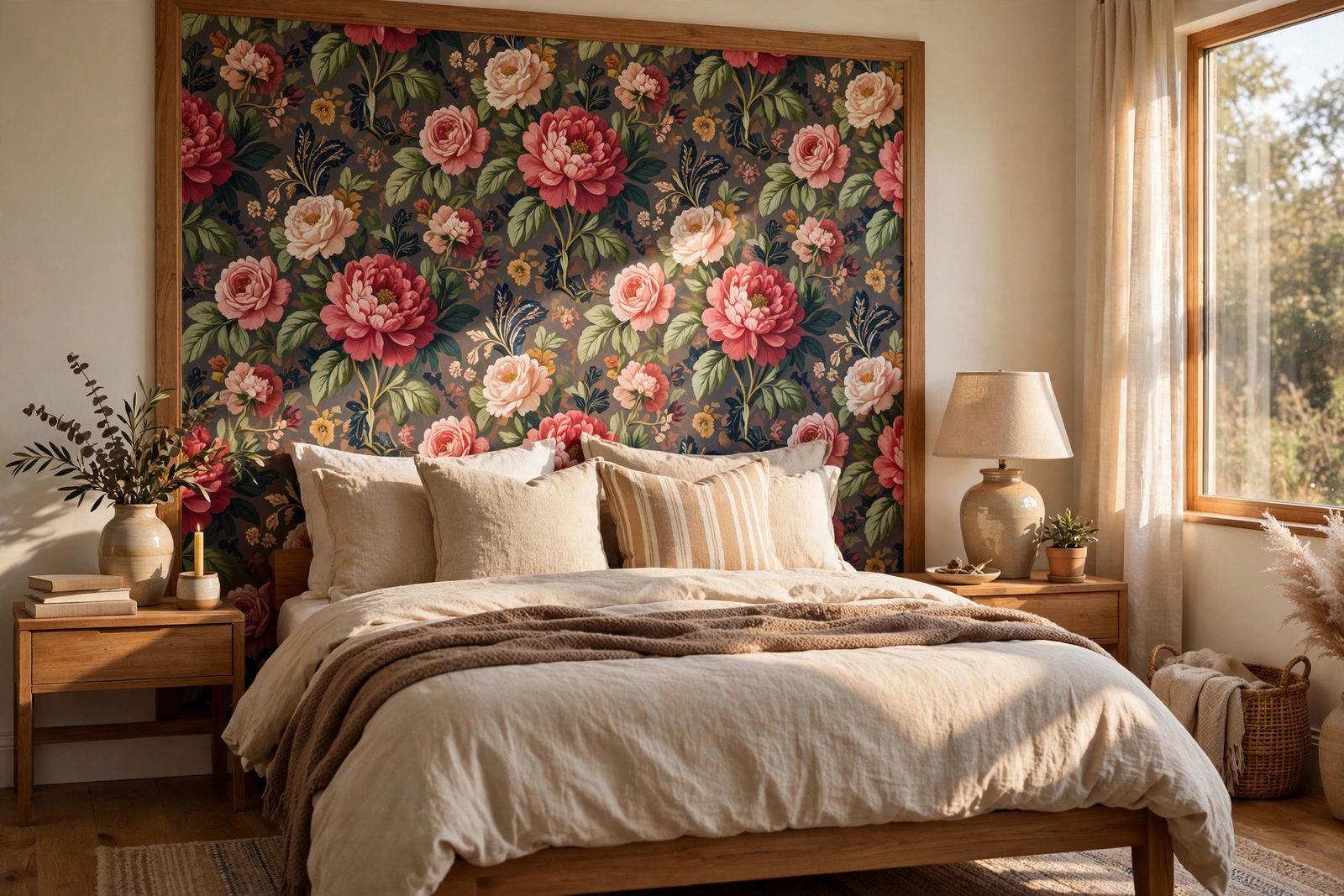
How Do You Use Wallpaper Without Papering the Whole Room?
You do not need to wallpaper an entire bedroom — the smartest move right now is a single statement panel behind the bed. Frame a section of bold floral, botanical, or oversized-pattern wallpaper like a giant piece of art: either wallpaper the wall directly and let the headboard contain it, or mount the paper on a large plywood panel you can hang and take with you when you move.
The panel approach is the renter's secret weapon. Cut a sheet of plywood or MDF to the width of your bed (plus a few inches), apply peel-and-stick wallpaper to it, and hang it with French cleats. You get the full drama of a patterned feature wall with zero damage to the actual wall — and you can swap the paper whenever your taste changes.
Scale matters here: choose a pattern with a large-scale repeat so it reads from across the room, and pull one color from the paper for your bedding. Keep the other three walls quiet — solid, light, and simple — so the panel stays the star of the show.
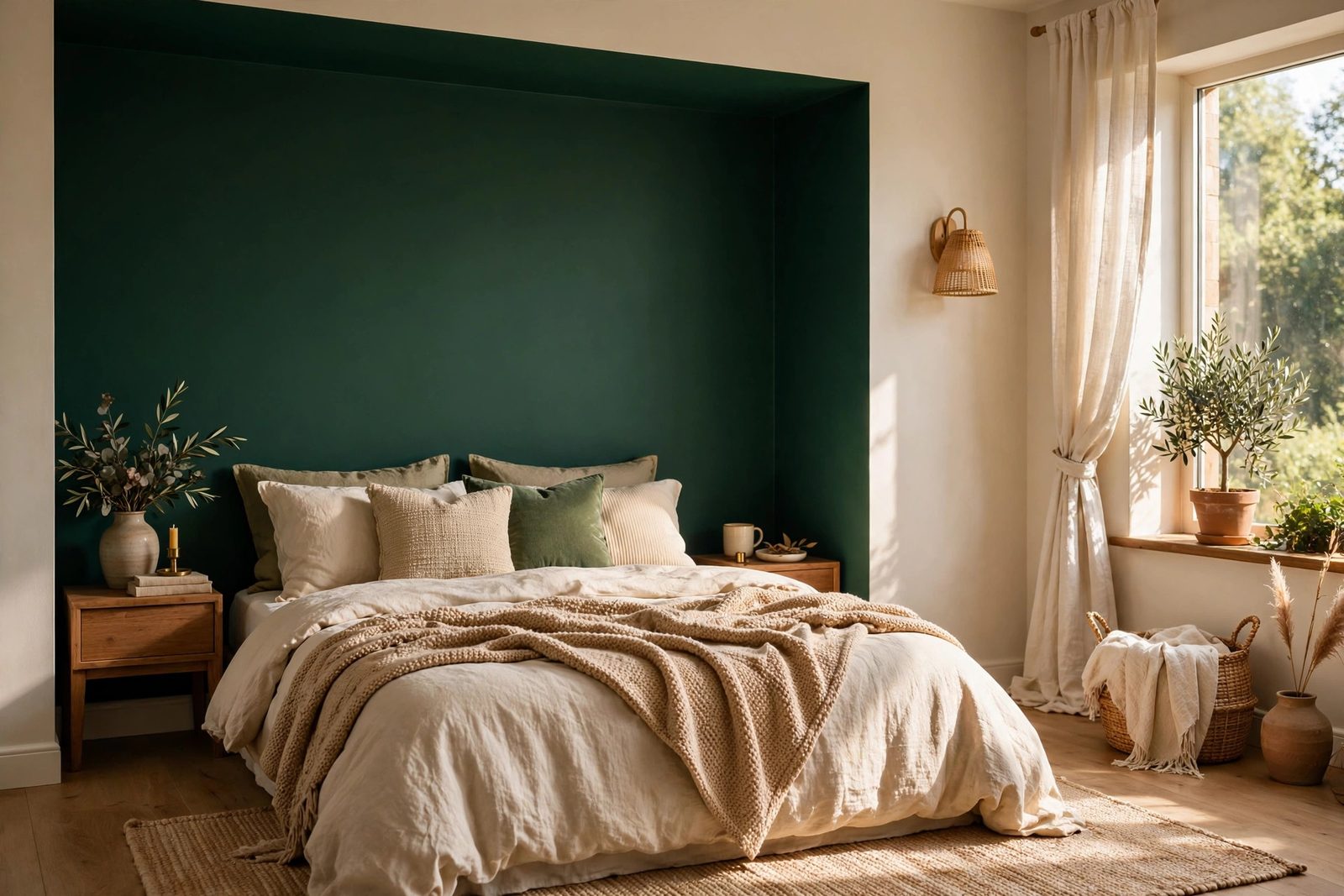
What Is Color Drenching and Should You Try It?
Color drenching means painting everything — walls, trim, ceiling, even the door — in a single rich color, and in a bedroom it creates the most cocooning, sleep-friendly feeling of any paint treatment. A deep green, inky blue, or warm oxblood alcove behind the bed feels like a velvet-lined box: intimate, dramatic, and surprisingly calming.
This is the inverse of the usual accent-wall logic. Instead of one bold wall against white ones, you commit to saturation and let the color blur the room's edges. Small bedrooms actually love this — with no contrast between wall and ceiling, corners disappear and the room feels larger and softer, not darker.
The finish matters: use matte or eggshell so the color absorbs light rather than reflecting it. Then layer in lighter bedding, warm lamps, and natural textures to keep the room glowing from within. If you are nervous, start with just the bed alcove or the wall behind the bed drenched, and extend it later.
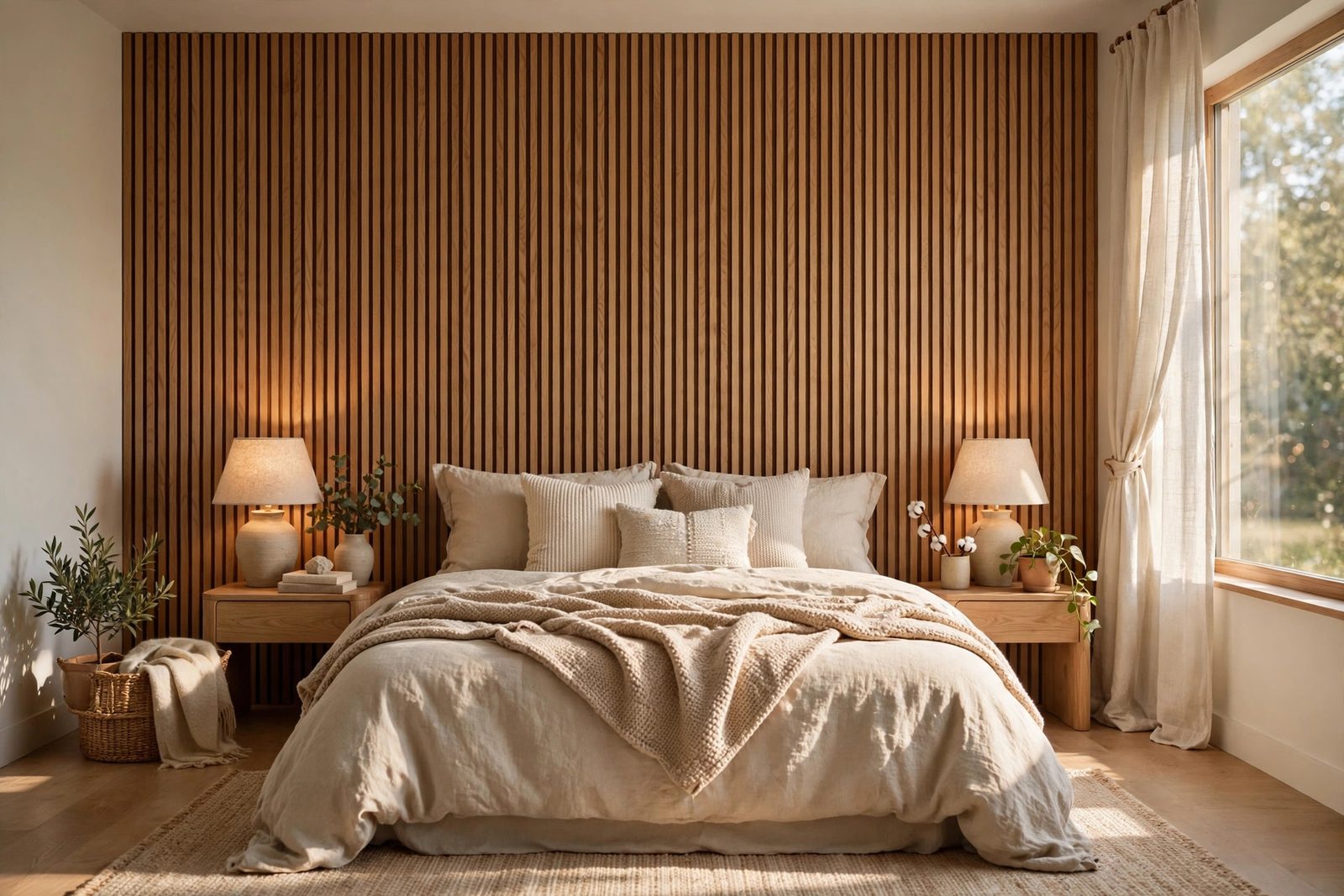
How Do Vertical Wood Slats Change a Bedroom?
Vertical wood slats are the warm, natural answer to the accent-wall question: they add real texture, bring in the organic warmth of wood, and make a bedroom feel instantly more expensive. Warm oak is the sweet spot — light enough for cozy bedrooms, rich enough to carry the wall on its own.
Full slat walls are a commitment, but partial ones are the sleeper hit: slats that run from floor to about headboard height (or from headboard to ceiling) give you the texture without the weight. You can buy slat wall panels that mount with screws or adhesive, which cuts the DIY down to an afternoon. Stain or seal the wood first, then mount over a dark backing board so the gaps read as shadow lines.
Keep the rest of the room soft to balance the linearity: linen bedding, a curved headboard, and a warm rug underfoot. And skip busy art on this wall — the vertical lines are pattern enough. This look pairs beautifully with warm neutral decor elsewhere in the room.
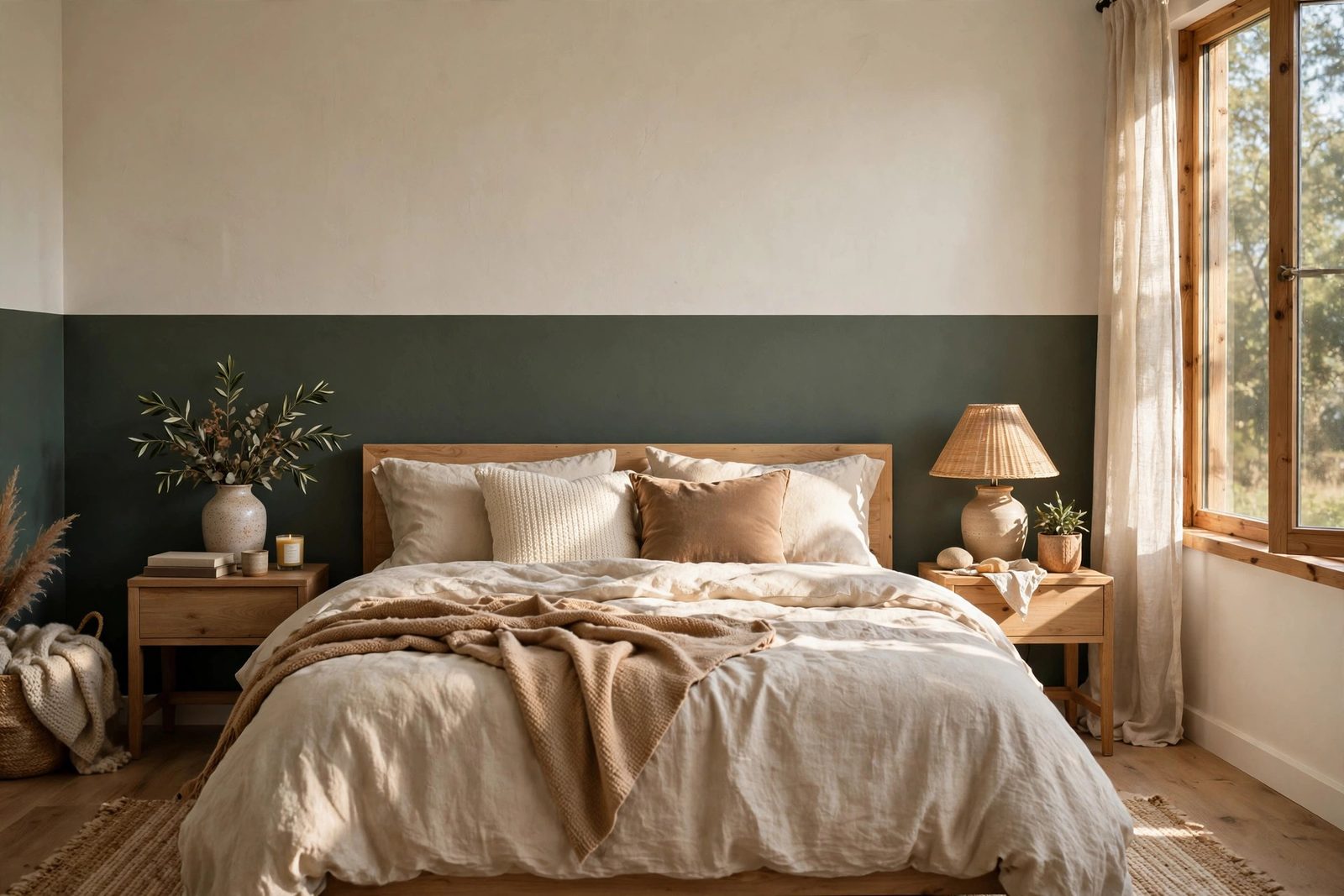
Is a Two-Tone Wall Too Simple to Count as an Accent?
Not at all — a two-tone wall is one of the cleverest accent treatments because it adds structure and color for the cost of half a wall of paint. A darker lower half in sage, dusty blue, or warm clay with a light upper half creates a natural wainscot effect that grounds the bed and makes the ceiling feel taller.
The classic approach is a chair-rail-height split: measure up about 36 to 42 inches, level a line around the wall (or just the bed wall for a true accent), and paint the lower half your deeper color. For a softer look, skip the hard line and do a color-block that follows the top of your headboard instead. A crisp tape line is the whole project — pull the tape while the paint is still slightly tacky for the cleanest edge.
This treatment is especially forgiving in small bedrooms because the light upper half keeps the room airy while the dark lower half adds the drama. Hang a long floating shelf or a row of art right at the color break for a styled, finished look.
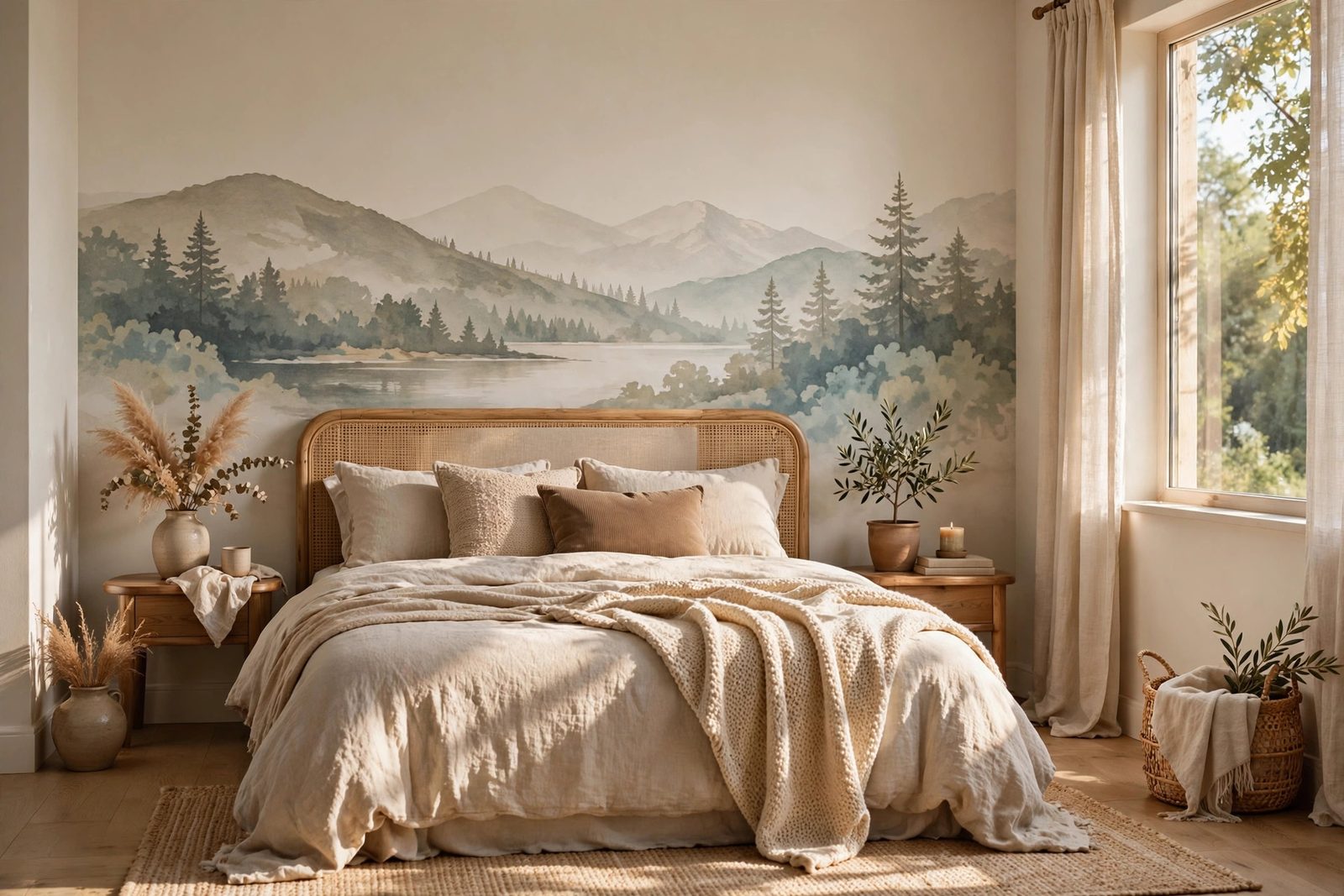
Can a Mural Wall Work in a Calm, Grown-Up Bedroom?
Yes — when the mural is subtle. Forget the loud trompe-l'oeil forests; the grown-up version is a soft, misty landscape: rolling hills, distant mountains, or a hazy gradient sky in washed-out sage, stone, and sand tones. It reads as atmosphere rather than decoration, like waking up to a view you do not actually have.
You have three routes: a printed mural panel sized to your wall (the easiest, and most renter-friendly in peel-and-stick form), a painted gradient mural in three blended tones, or a hand-painted silhouette scene if you are artistically brave. The printed route gives the most polish for the least effort — order to your exact wall dimensions and hang it like oversized art.
Keep the palette desaturated and the contrast low so the mural whispers instead of shouts. Then let it set the room's color story: pull the mist tones into your bedding and curtains, and keep furniture simple so the wall breathes.
When Is a Black Accent Wall Actually the Right Choice?
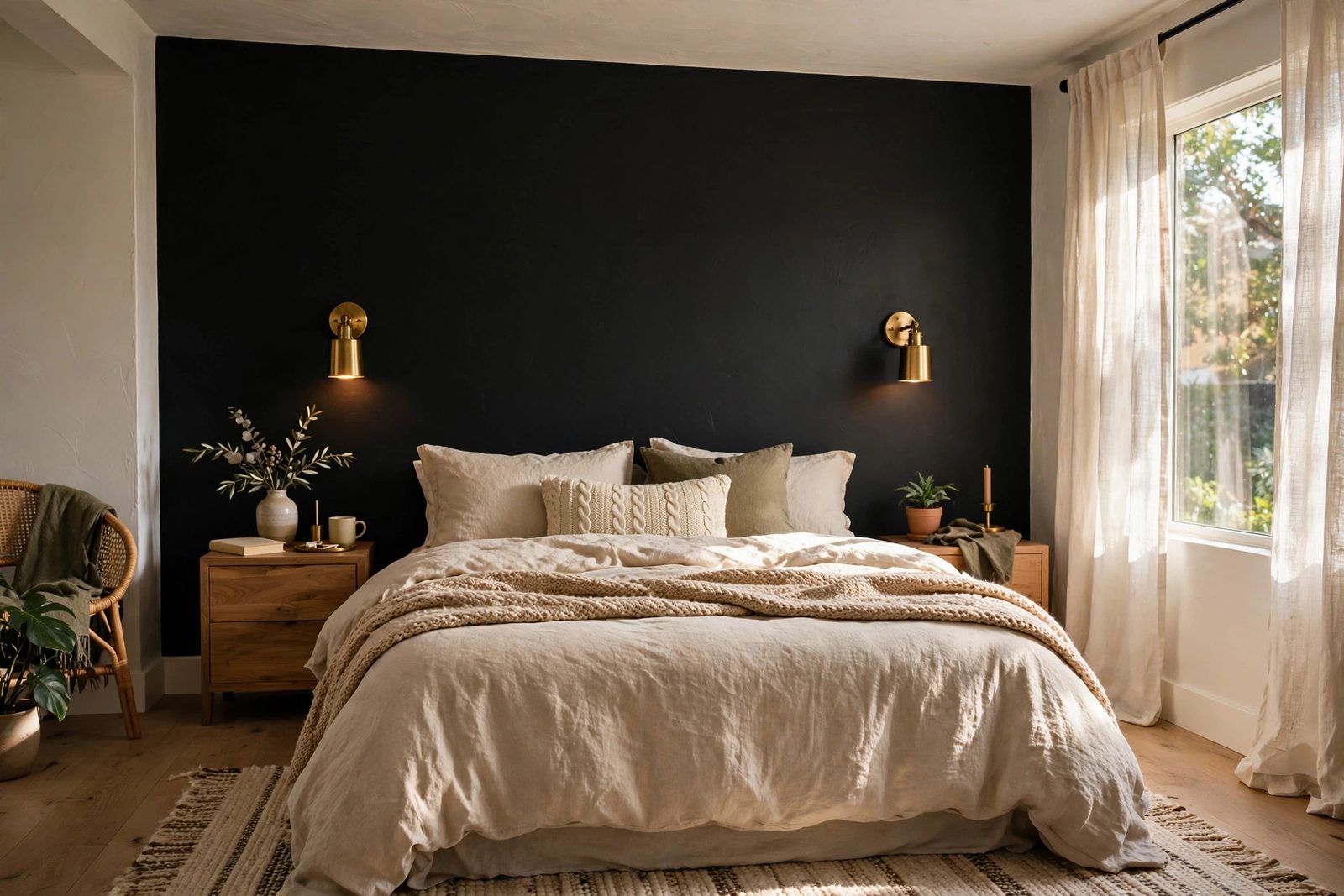
Black earns its place in this roundup because, done right, it is the most dramatic option here — but it works best when the whole room commits to the mood. A black wall behind the bed paired with brass sconces, warm wood tones, and soft lighting reads as luxe and cocooning, not cave-like. The brass against black is the detail that makes it: metallic warmth is what keeps a dark wall from feeling flat.
Placement matters more than paint color. Black works best in bedrooms with good natural light or warm layered lighting — if your room is north-facing and dim, test a large swatch first and live with it for a few days. Paint in matte or flat so the wall absorbs light evenly, and keep the other walls warm white rather than stark white to avoid a harsh contrast.
If you want to go deeper on the moody side, there is a whole playbook for black accent walls in the bedroom — tones of black that read softer, what to pair them with, and the lighting tricks that keep the room glowing.
How Does Picture-Frame Molding Differ from Board-and-Batten?
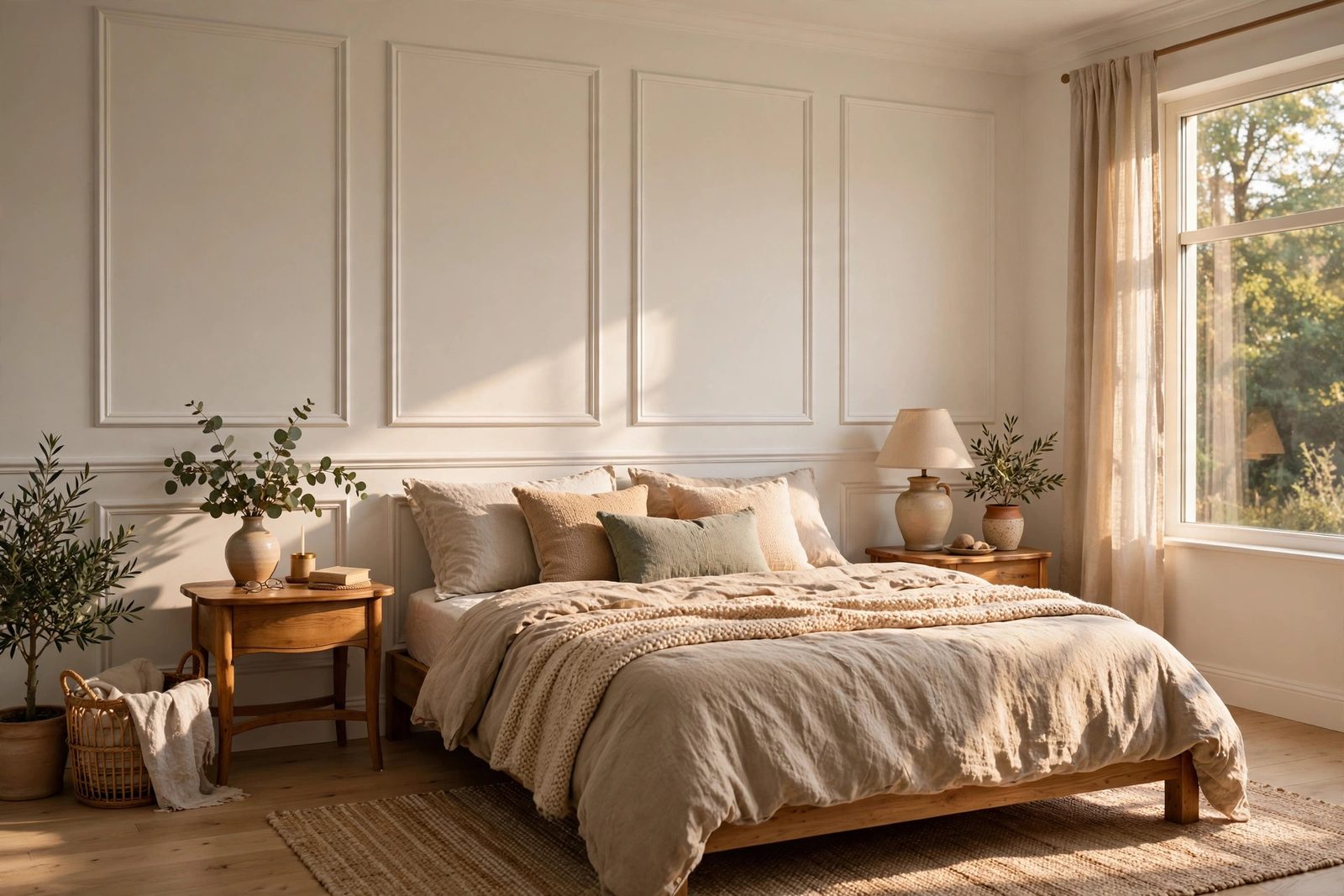
Picture-frame molding is the more refined cousin of board-and-batten: instead of full-height battens, you apply individual rectangular trim frames directly onto the wall, spaced like a gallery of empty frames. Painted soft white (or the wall color for a tone-on-tone look), it gives a bedroom the quiet elegance of a Parisian apartment — classic, tailored, and never trendy-feeling.
Installation is simpler than it looks because there are no vertical battens to align floor-to-ceiling. Plan a symmetrical layout of frames across the bed wall, cut your trim with 45-degree miters at the corners, and attach with adhesive and brad nails. Caulk, fill nail holes, and paint the wall and frames in one unifying color so it reads as architecture, not appliqué.
This is the accent wall for people who want interest without color. It works in every bedroom style from traditional to transitional, photographs beautifully, and adds resale-friendly character to an otherwise plain room. Hang one mirror or a pair of sconces centered on a frame and you are done.
Which Wall Should Be the Accent Wall in a Bedroom?
The wall behind your bed is the default answer for a reason: it is the first wall you see when you enter, the backdrop of your headboard, and the wall that frames the room's focal point. Nine times out of ten, the bed wall is the right call.
The exception is a room with a strong architectural feature elsewhere — a big window wall with a great view, a fireplace, or a sloped ceiling wall. In those cases, accent the feature, not the bed: paint or paper the wall that already has the drama. And if your bed floats in the middle of the room, consider the largest uninterrupted wall instead. The rule is simple: the accent wall should be the one your eye lands on first.
What Are the Best Renter-Friendly Accent Wall Options?
Renters have more options than ever. Peel-and-stick wallpaper panels are the obvious hero — full feature walls in an afternoon with zero damage. But do not overlook removable mural decals, large fabric panels hung with command strips, or a painted arch on a freestanding plywood board leaned against the wall (no paint on the actual wall at all).
The plywood-backer trick deserves emphasis: lean or French-cleat a painted panel behind your bed and you get the exact look of a painted accent wall — arch, color block, even faux limewash — without touching the landlord's paint. When you move, the wall goes with you or gets a fresh coat for the next room. Temporary does not have to look temporary.
Final thoughts
The best bedroom accent wall is the one that makes you happy every time you walk in — not the one with the most pins. A painted arch, a cloud of limewash, a panel of bold wallpaper: each of these takes a single wall and turns it into the reason the room works.
Start with the look that matches your tolerance for commitment. Peel-and-stick and plywood backers for the cautious, a weekend of trim work for the handy, full color drenching for the brave. Whatever you choose, keep the other three walls quiet and let your accent wall do exactly what it is named for: accent, not overwhelm.
One wall, one weekend, one completely different bedroom. Pick your favorite from these ten and start this Saturday.
FAQ
What is the most popular bedroom accent wall idea right now?
Painted arches and limewash finishes are the defining bedroom accent wall ideas of 2026, followed closely by statement wallpaper panels and vertical wood slats. Classic black accent walls remain popular for moody bedrooms, but textured and architectural treatments have taken the lead in current trends.
Should the accent wall be behind the bed?
In most bedrooms, yes — the wall behind the bed is the natural focal point and the first wall you see entering the room. The only exception is when another wall has a stronger architectural feature, like a fireplace or a large window wall, in which case you should accent the feature instead.
What color should a bedroom accent wall be?
Warm, cocooning colors work best in bedrooms: clay, terracotta, deep green, warm mushroom, and soft black all create a restful backdrop. Cooler rooms can handle dusty blues and sage. Whatever you choose, pick a tone that works with your bedding, since the accent wall and the bed are seen together.
Are accent walls still in style in 2026?
Yes — but the style has evolved. The single flat-colored wall of the 2010s has given way to textured and architectural treatments: limewash, molding, wallpaper panels, slats, and arches. These richer versions of the accent wall are firmly in style for 2026 and 2027.
How can I do an accent wall in a rental?
Peel-and-stick wallpaper, removable mural decals, and fabric panels hung with damage-free strips are the easiest renter options. For painted looks, mount your design on a freestanding plywood backer — a painted arch or color block on a board leaned behind the bed gives the full effect with zero wall damage.
Is a black accent wall too dark for a small bedroom?
Not necessarily — black can actually make a small bedroom feel cozier and more intentional, especially with warm lighting and brass or wood accents. Matte finishes absorb light evenly, and keeping the other walls warm white prevents harsh contrast. If the room has little natural light, test a large swatch for a few days before committing.