Living Room
10 Limewash & Plaster Wall Ideas for Old-World Texture
10 limewash walls ideas for old-world texture: warm beige, terracotta, sage, and charcoal plaster finishes that make flat paint look boring.
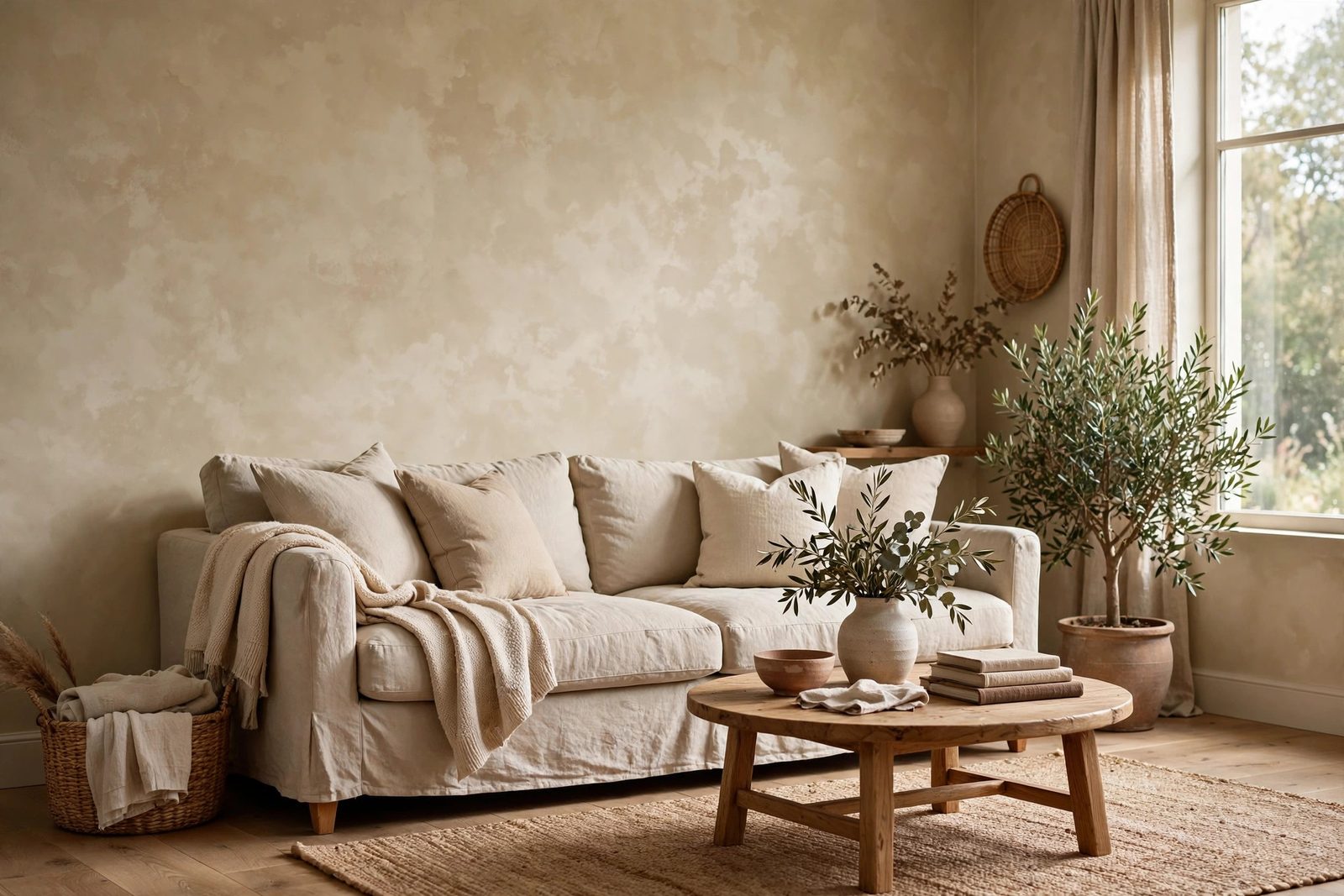
Flat paint is officially on notice. Limewash walls are the defining material story of 2027 interiors — a centuries-old, lime-based finish that brings old-world texture, soft cloud-like movement, and a depth a roller can never fake. Walk into a room finished in limewash and you feel it immediately: light drifts across the surface, the color shifts subtly from corner to corner, and the whole space feels warmer, older, and more soulful.
The appeal is partly practical. Limewash is mineral-based, naturally breathable, and far more forgiving of imperfect drywall than flat paint — its mottled, brushed finish hides flaws instead of broadcasting them. It is also endlessly layerable: a warm beige can sit next to terracotta, sage, or charcoal and every wall still reads as part of one hand-finished story.
Below are ten ideas for bringing limewash and plaster walls into a cozy living room, from full-room washes to a single dramatic accent. Whether you hire a plasterer or pick up the DIY brush yourself, here is how to get the old-world look without the old-world mistakes.
What Makes Limewash Walls Feel So Different From Flat Paint?
Flat paint sits on the surface; limewash becomes part of it. Because limewash is made from crushed limestone, it cures into the wall and develops a soft, cloudy variation — lighter in some patches, deeper in others — as the brushstrokes overlap. That movement is the whole point: the wall reads as a living material, not a backdrop.
The warm beige version is the safest entry point and the most versatile. A mid-warm neutral with a cloudy finish wraps a living room in glow without committing you to a color. Pair it with a linen slipcovered sofa and a jute rug, and the room does the cozy work on its own — no styling gymnastics required.
One caution before you start: limewash dries dramatically lighter than it looks wet, so never judge the color from the bucket. Always paint a large test board, let it cure for a full day, and look at it in morning and evening light before you commit to the whole room.
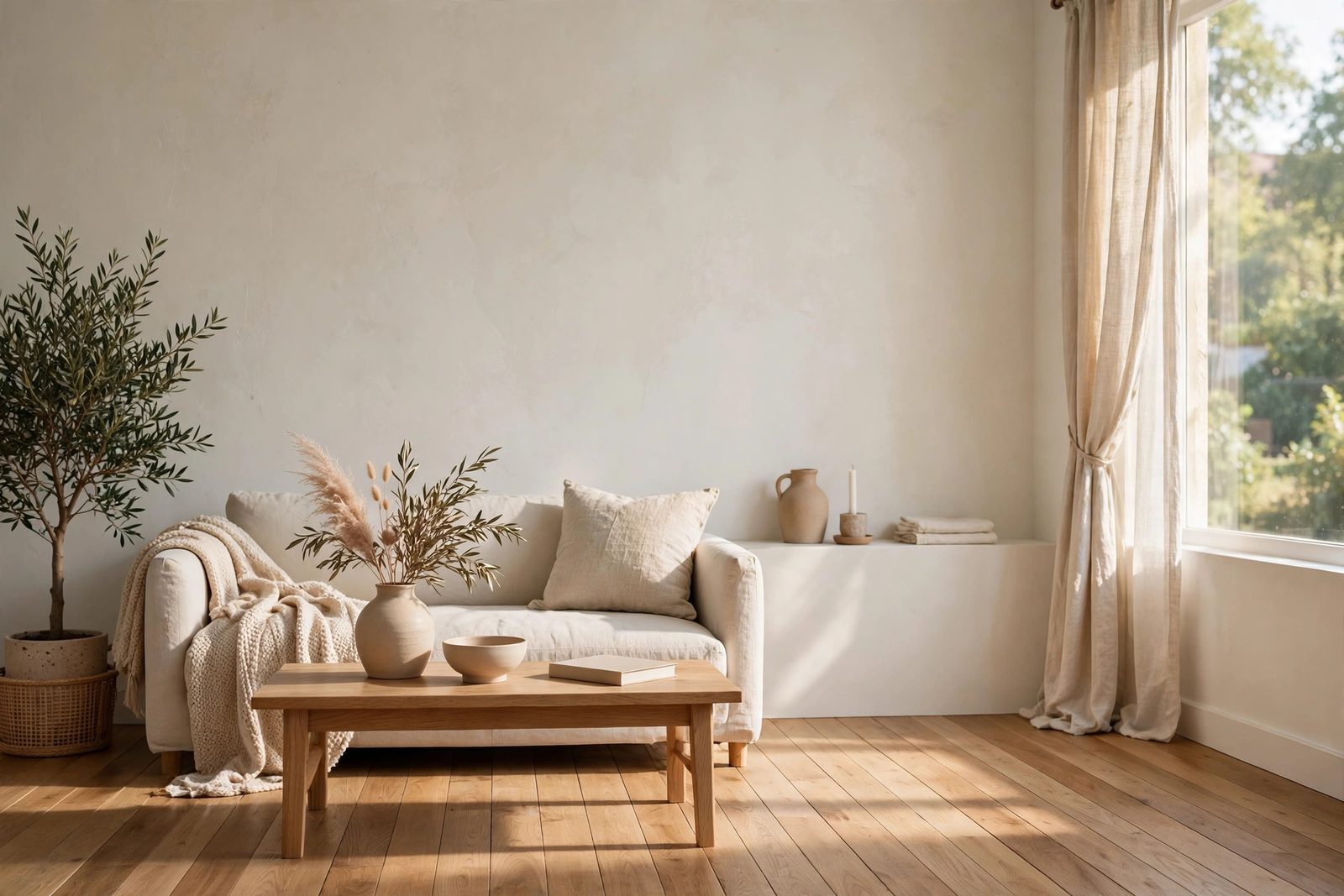
How Do You Style a White Limewash Living Room Without It Feeling Cold?
White limewash is not white paint. Where flat white can feel sterile, limewashed white has a chalky, hand-touched softness — the mottling breaks up the glare so the walls feel more like plastered stone than a painted box. It is the best way to get a light, airy living room that still has soul.
The trick to keeping it warm is the floor and the fibers. Oak floors with visible grain, a bouclé or wool rug, and linen or cotton upholstery all add the organic texture that white walls need. Add one wood tone — a walnut side table, an oak bench — so the room has a warm anchor against all that softness.
Keep the palette quiet on purpose. Soft white limewash walls, oak floors, and two or three muted textiles are a complete room. If you want art, lean into pieces with visible brushwork or raw edges; slick, glossy frames will fight the hand-finished feel of the walls.
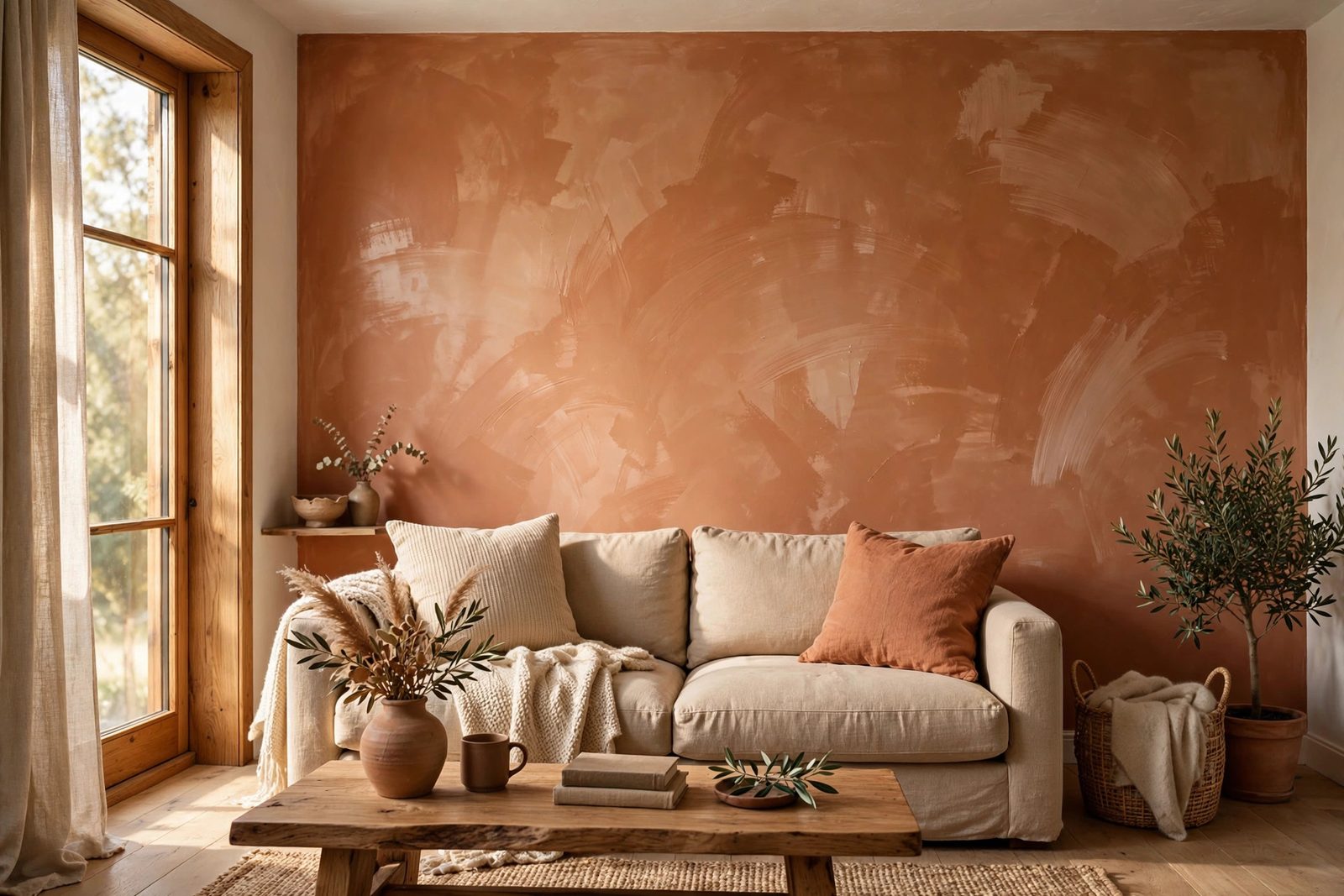
How Do You Pull Off a Terracotta Limewash Accent Wall?
If you only limewash one wall, make it count: terracotta is the accent color of the moment, and in limewash it gains an earthy, sun-baked depth that flat terracotta paint can never match. The brush movement — those visible strokes and soft overlaps — reads as intentional texture rather than a painting mistake.
Put the terracotta behind the sofa, where it becomes the room's instant focal point. Keep the other three walls in a warm plaster white or pale beige so the accent wall has room to breathe. Furniture in cream, camel, cognac leather, or warm wood will sit beautifully against it; avoid cool grays, which clash with terracotta's warmth.
To keep it from reading too Southwestern on its own, balance the look with one modern element — a black metal floor lamp, a sculptural ceramic, or a simple linen curtain. The contrast between the old-world wall and one crisp modern piece is what keeps terracotta feeling current instead of themed.
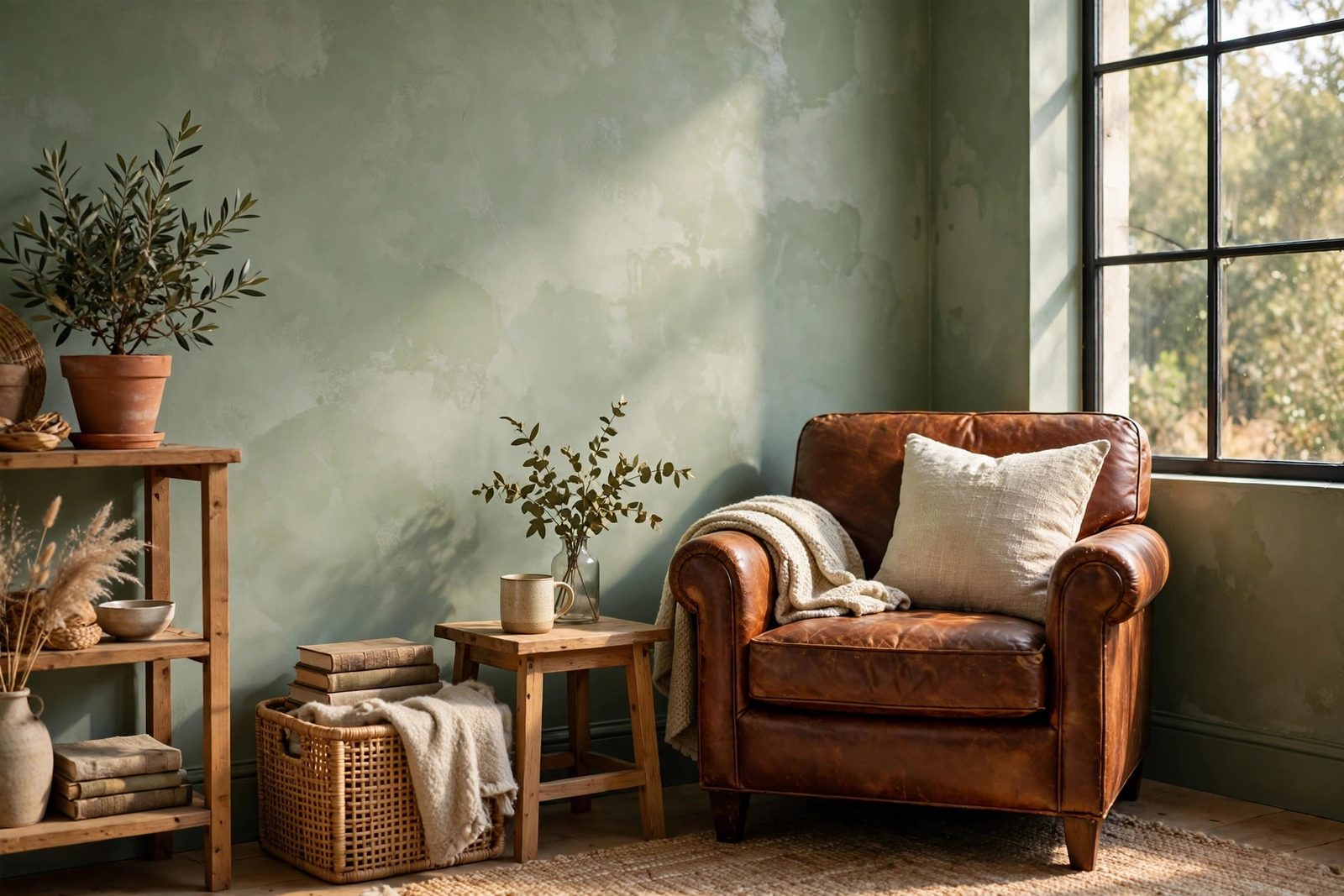
Can Limewash Walls Work in a Reading Nook?
A reading corner is one of the best places for limewash, because small spaces show off the finish's light-play most. Sage green — muted, dusty, never neon — is the color to reach for: it is calming enough for long reading sessions but has far more character than beige.
Limewash the walls around the nook rather than the whole room. Carving out the corner with a distinct finish gives the reading spot its own identity, like a room within the room. A leather armchair, a small wood side table, and a warm reading lamp are all you need; the textured wall does the heavy visual lifting.
Finish the corner with a floor cushion or sheepskin throw and one piece of art hung low, at reading-eye level. The limewashed walls will make the nook feel like a converted stone alcove in an old house — the coziest reading backdrop there is.
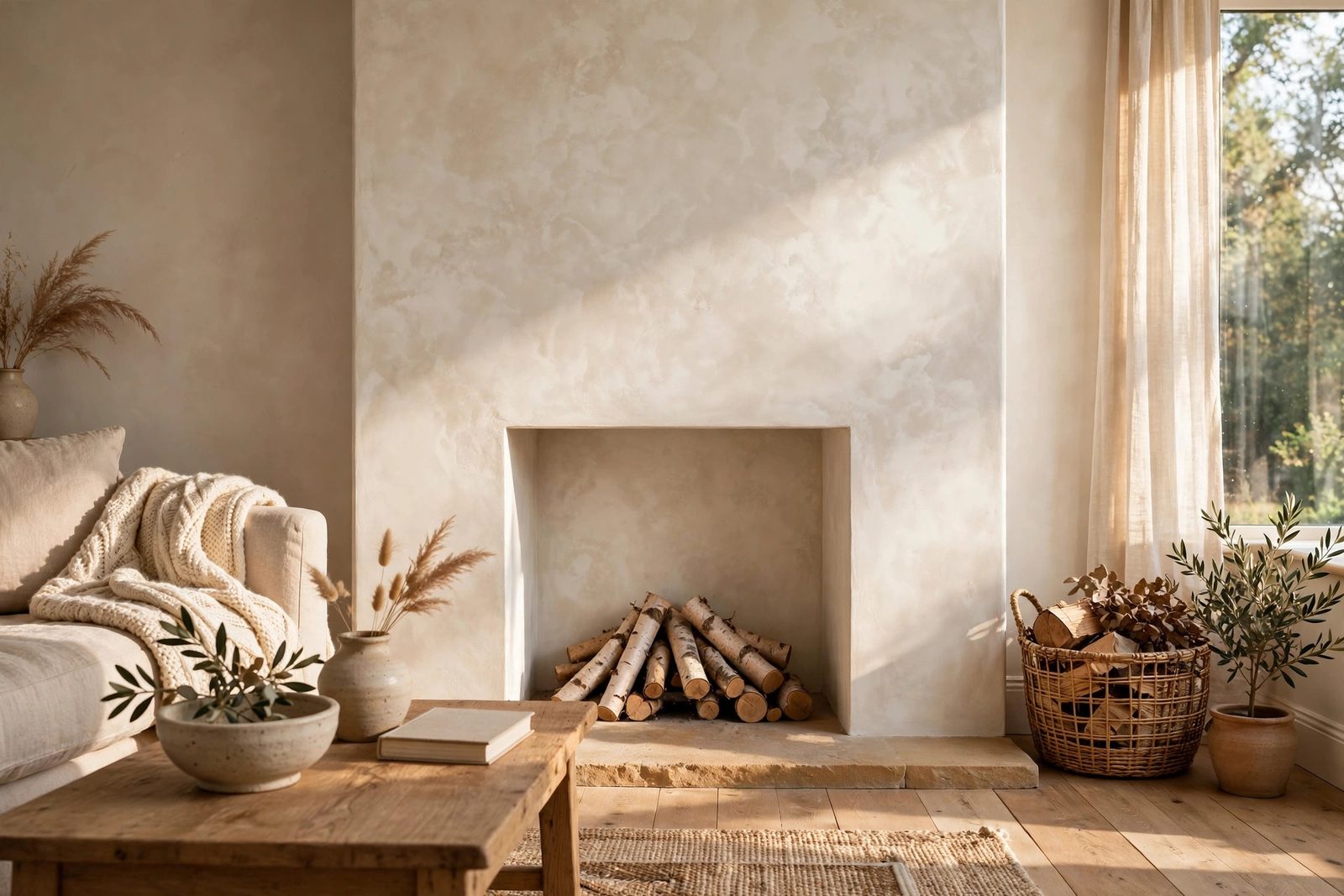
Should You Limewash a Fireplace Surround?
The fireplace is the natural heart of a living room, and a limewashed surround turns it into the architectural heart too. In warm white, the mottled plaster texture catches firelight and lamplight beautifully, giving the fireplace a soft, hand-troweled presence that a painted mantel cannot match.
Limewash is well suited to masonry and plastered surfaces, which is why it has been used on fireplaces for centuries. Keep the finish inside the firebox area heat-tolerant — use the limewash only on the outer surround and chimney breast, and leave the interior lining to fire-rated materials. One or two soft white coats over the surround are enough; the texture does the work.
Style the mantel minimally so the finish stays the star. A single leaning art piece, two candle pillars of different heights, and one organic element like a dried branch or ceramic vase are plenty. Heavy clutter on the mantel would hide the very texture you paid for.
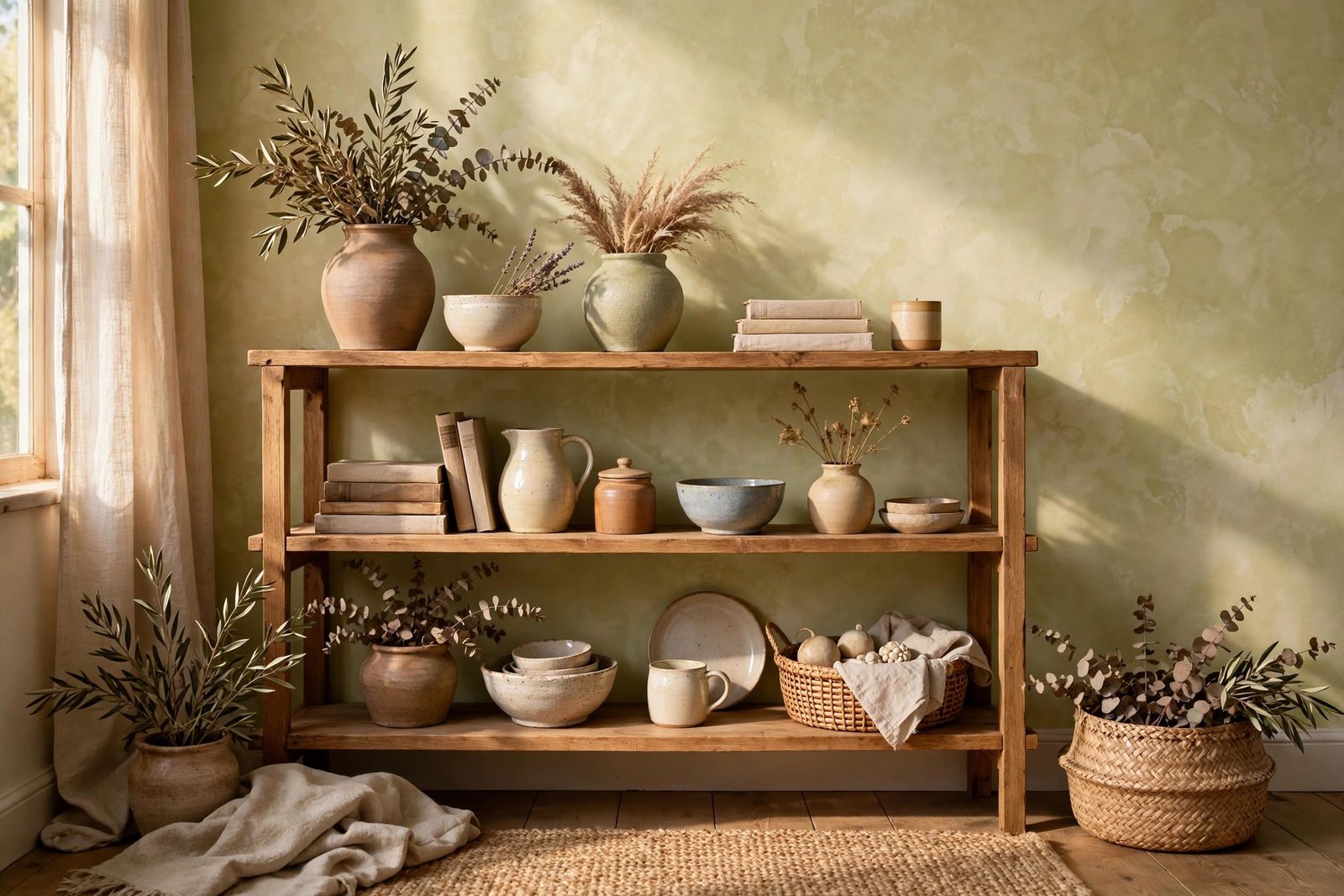
How Do Limewash Walls Pair With Open Shelving?
Open wooden bookshelves against a limewashed wall are a match made in material heaven: the warm wood and the cloudy plaster share an earthy, hand-made quality that makes the whole display feel curated by a ceramics studio. The wall's soft variation keeps the backdrop interesting even where the shelves are sparse.
Style the shelves with breathing room on purpose. A few ceramic vessels, a short stack of art books, and one trailing plant will read beautifully against the mottled wall; packing every shelf edge-to-edge turns the display into visual noise. Leave at least one shelf mostly empty so the plaster texture shows through.
Choose shelf styling that echoes the wall's materiality — handmade ceramics, linen-bound books, raw wood and stone — rather than glossy, mass-produced decor. The limewash sets a craft-forward tone, and every object on the shelves should agree with it.
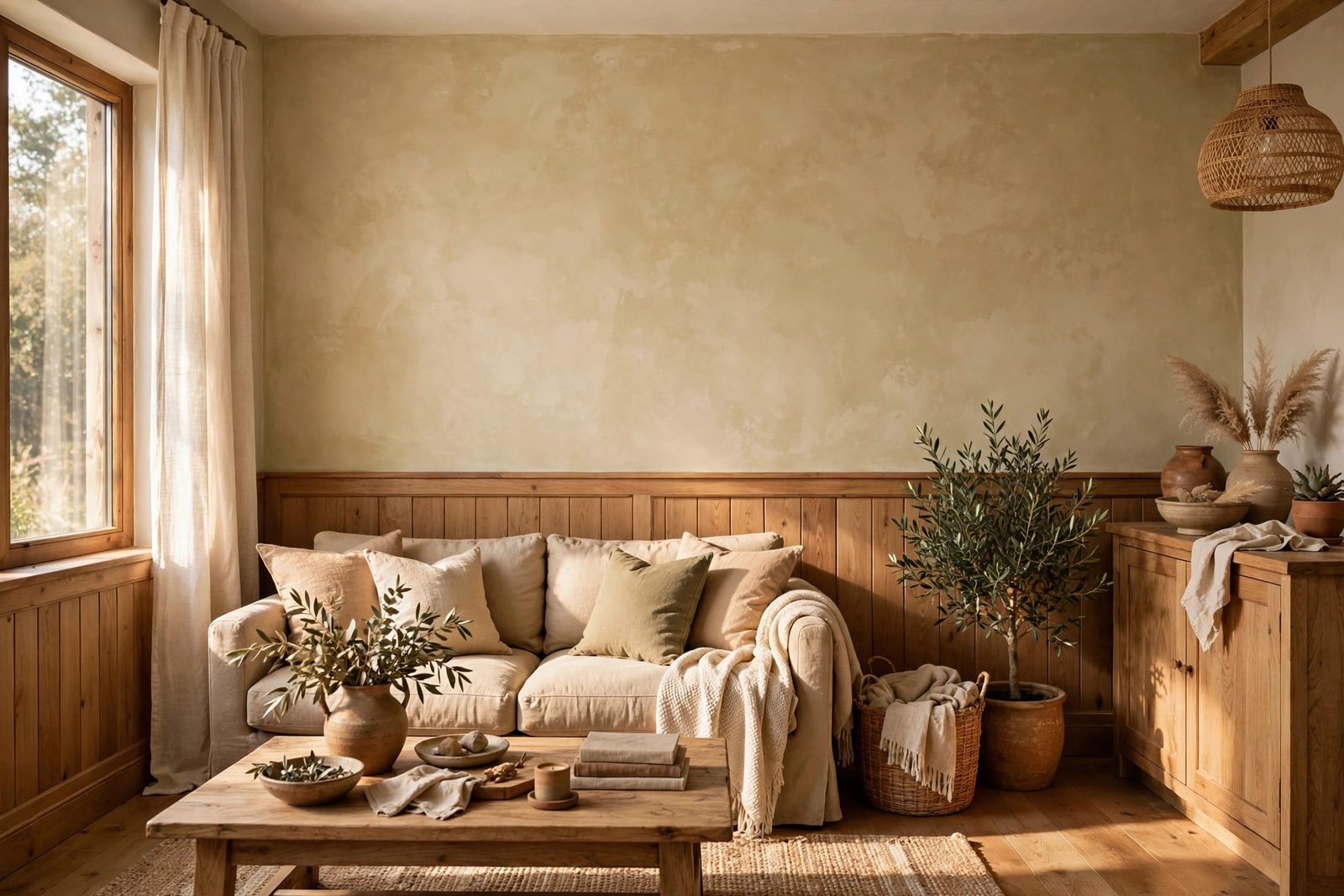
How Do You Mix Limewash Plaster With Wood Paneling?
The two-tone wall — limewash plaster above, wood paneling below — is one of the smartest ways to use this finish in a living room. The paneling protects the lower wall from scuffs and chair dings, while the limewash above gives you all the texture and light-play where the eye actually goes.
Split the wall at roughly two-thirds height or at chair-rail height, and keep the tones related. Warm white or pale beige limewash over honey-toned or medium wood reads old-world European; a cool gray wash over dark walnut reads more modern and moody. Finish the dividing line with a simple wood cap rail so the junction looks intentional, not improvised.
This combination is also a budget strategy: paneling the lower wall means less limewash product and less application time, and the paneling hides the wall's most wear-prone zone. Use it on the longest wall in the room for maximum impact per dollar.
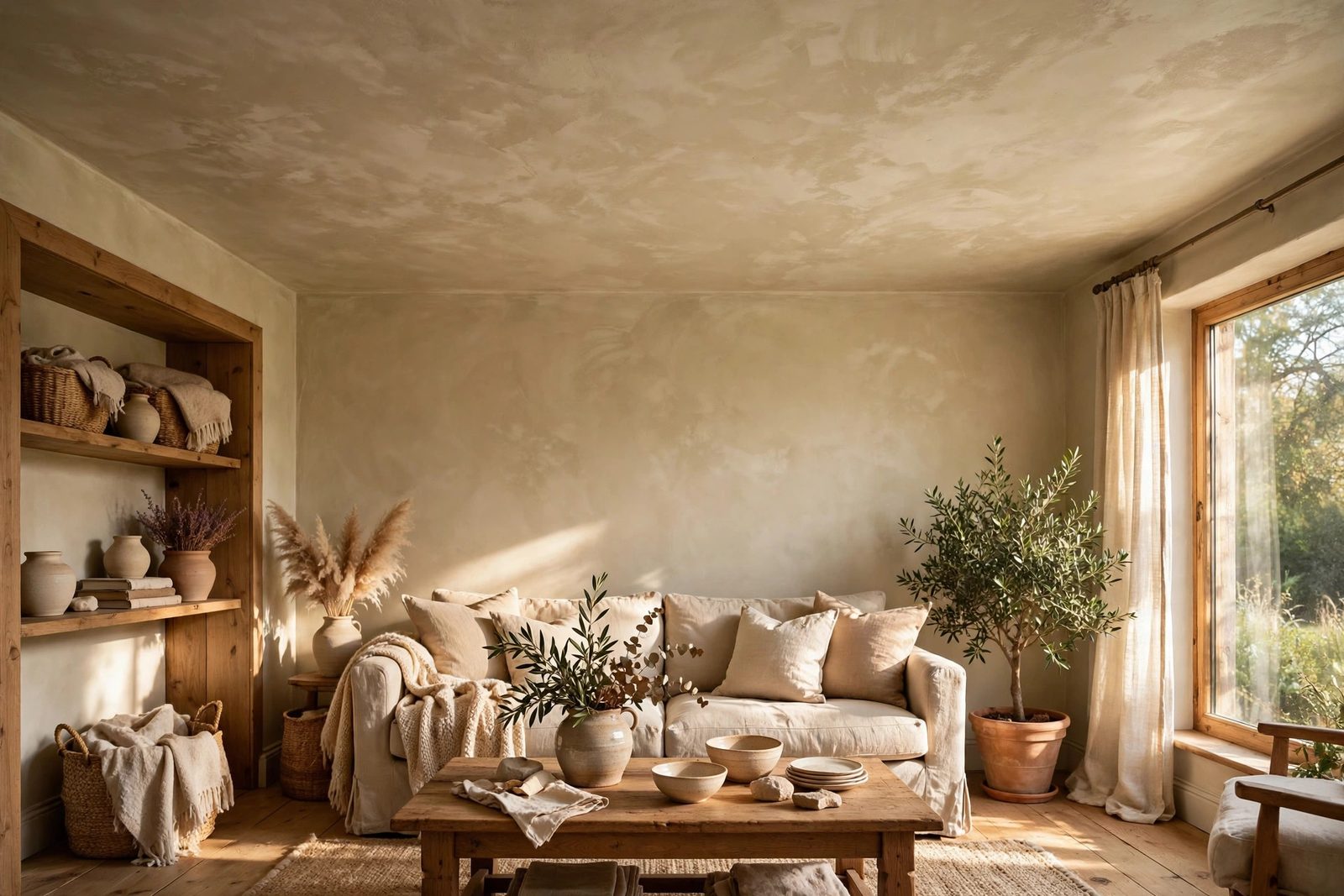
Is a Limewash Ceiling Worth the Effort?
The fifth wall is the boldest move on this list, and in a cozy living room it pays off. A limewashed ceiling in a soft warm white or pale tone adds texture overhead that makes the room feel enveloping — like being inside a hand-plastered villa — instead of just a box with interesting sides.
The catch is labor: ceilings are the hardest surface to limewash, requiring overhead brushing in crosshatch strokes while the product stays workable. If you DIY, do the ceiling first before the walls, use a thick extension pole brush, and accept that your arms will protest. Two thin coats give you the soft mottling; one heavy coat risks drips and lap marks overhead.
Keep the ceiling color within one or two shades of the walls so the room feels cocooned rather than cut in half. And skip the ceiling limewash if your ceilings are under eight feet — low ceilings with visible texture can feel oppressive, while standard or tall ceilings gain warmth and intimacy from it.
How Do You Style a Dark Limewash Accent Wall?
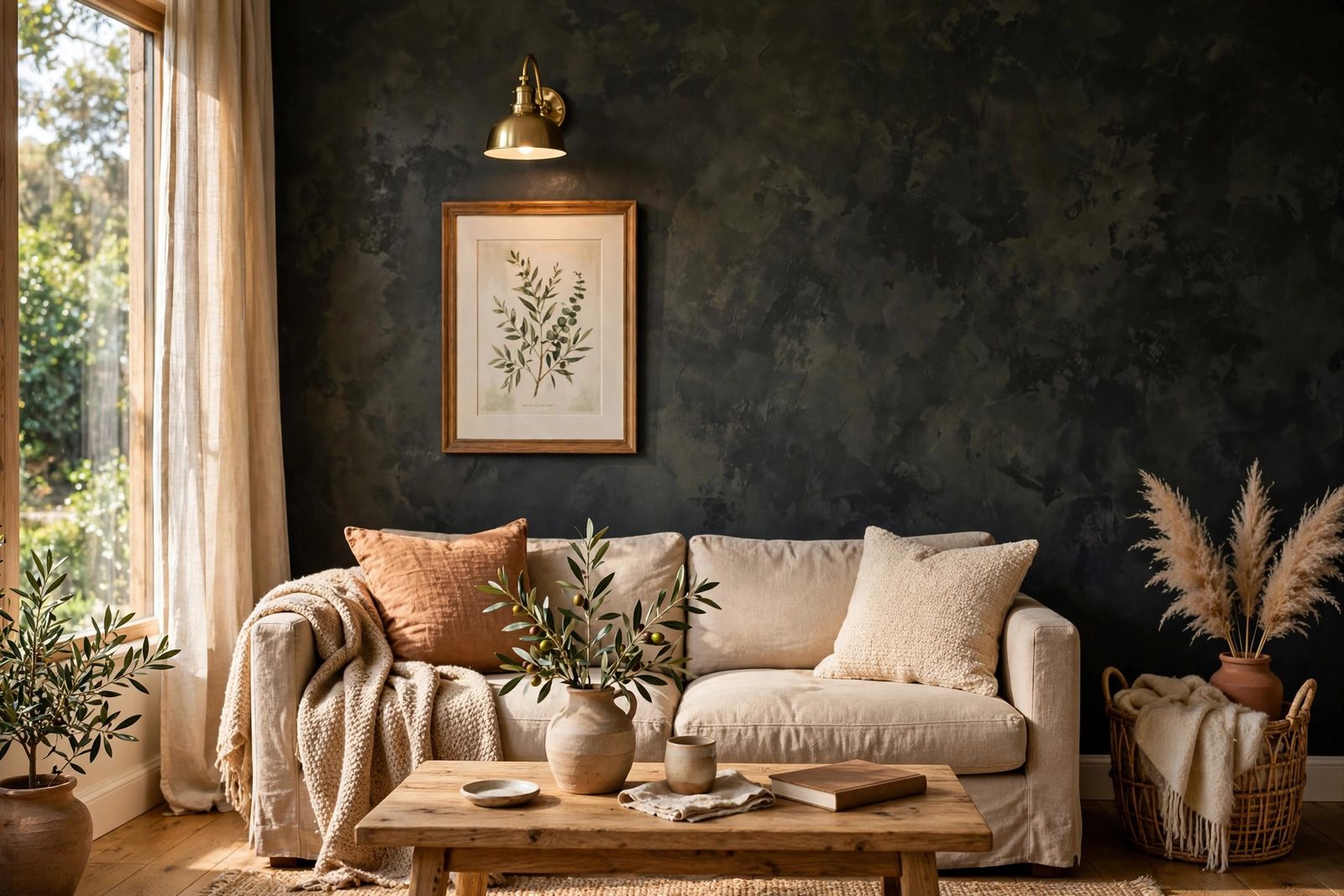
Dark limewash — charcoal, deep umber, near-black green — is the moody counterpoint to all the creamy plaster above. In limewash, a dark wall never reads flat or painted-on: the mottled brushstrokes keep it velvety and alive, which is what separates it from a plain dark paint wall.
One dark wall is the rule in most living rooms. Put it behind the media console or the main art wall, and keep the other walls in a warm light neutral so the room stays balanced. The dark limewash will make everything mounted on it pop — brass picture lights, framed art, and wood tones all glow against it.
Lighting is non-negotiable here. A brass picture light or two warm sconces raking across the surface will reveal the limewash texture and stop the wall from swallowing the light. Without that raking light, you paid for texture nobody can see.
How Do You Use an Arched Niche in a Limewash Wall?
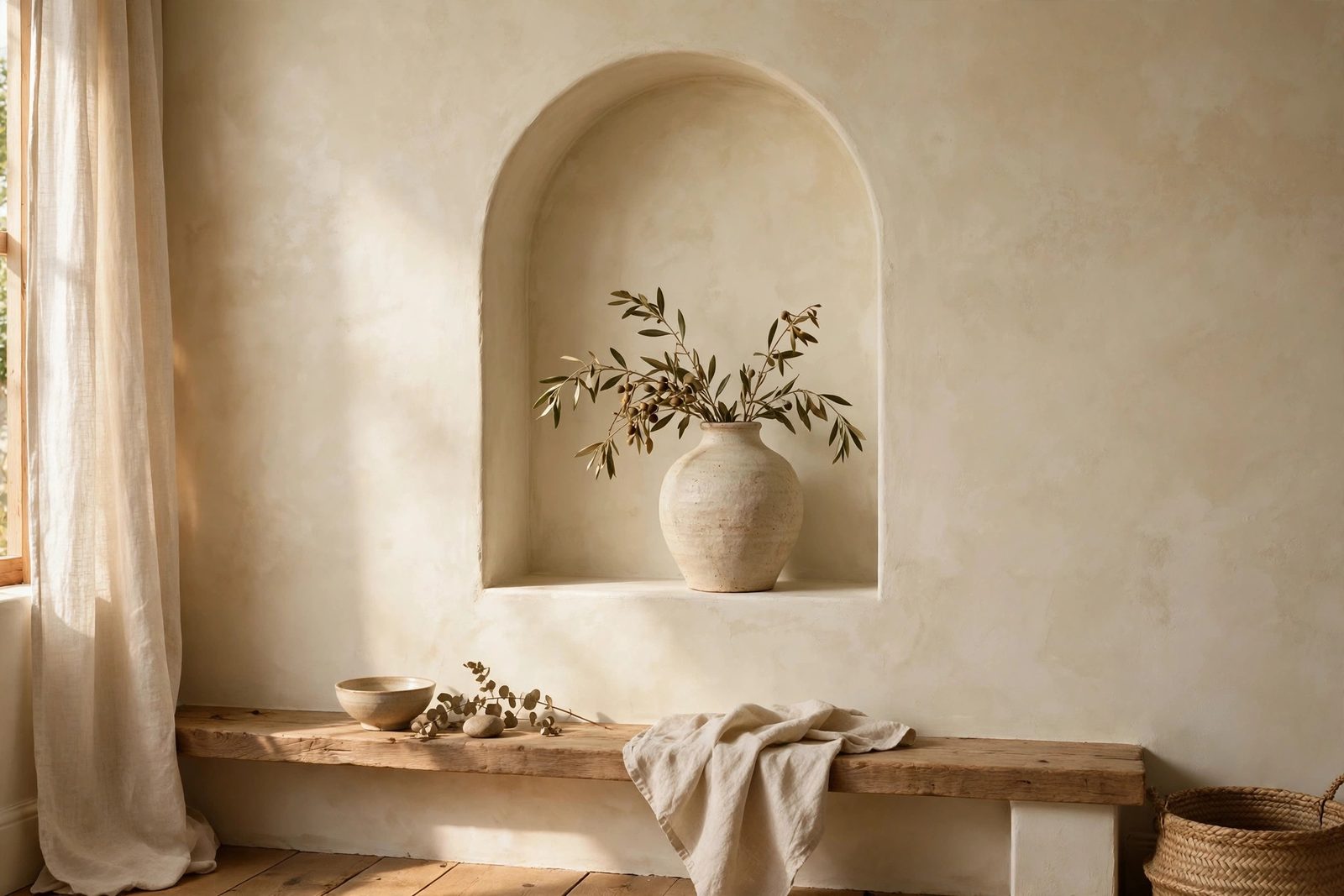
Nothing says old-world like an arch, and limewash is the perfect finish for one. An arched niche — a shallow curved alcove set into the wall — finished in creamy limewash looks like it was carved out of a Mediterranean villa wall. The limewash softens the arch's edges and gives the curve a hand-plastered glow.
No built-in niche? Fake the arch with paint: map an arched outline on the wall with a limewash color one shade deeper than the base, then place a pedestal, floating shelf, or console with a ceramic vase inside the painted arch's footprint. The effect is surprisingly architectural from across the room.
Style the niche with restraint — one sculptural ceramic vase, one small art object, or a single trailing plant. The arch and the limewash are the decor; the object inside is just the period at the end of the sentence.
Limewash vs. Venetian Plaster: What's the Difference?
Limewash and Venetian plaster get confused constantly, but they are different materials with different looks. Limewash is a thin, paint-like wash of crushed limestone that you brush on in overlapping, cloud-like strokes; the result is soft, chalky, and matte with gentle mottling. Venetian plaster is a thick, trowel-applied lime putty that gets burnished to a smooth, sometimes polished finish — it can look almost like marble and feels cool and hard to the touch.
Choose limewash when you want soft, forgiving, cloudy texture and a DIY-friendly process — it applies like paint with a big block brush, and beginners get good results. Choose Venetian plaster when you want a sleek, polished, high-end finish and are ready to hire a skilled plasterer, because the trowel work takes real practice. For a cozy living room, limewash wins on warmth nine times out of ten.
DIY Limewash Application Basics
Limewashing is one of the most beginner-friendly wall finishes, but technique matters. Start with a mineral primer suited to your wall type — limewash needs a slightly absorbent, grippy base to bond. Apply with a large limewash block brush (not a roller) in loose, random crosshatch strokes about two to three feet across, working in sections and keeping a wet edge so the strokes blend.
Plan on two coats minimum. The first coat will look streaky and alarming; the second coat is where the cloudy depth appears. Let each coat cure fully — usually a full day — and remember the finish dries much lighter than it looks wet. Work in natural light so you can see the mottling develop, and step back frequently: limewash is meant to be judged from across the room, not six inches away.
Final thoughts
The reason limewash and plaster walls have taken over 2027 interiors is simple: they give a room something flat paint never can — a sense of age, craft, and human touch. Every brushstroke is visible, every wall is one of a kind, and the finish only gets more beautiful as light moves across it through the day.
Start where the risk is lowest. One accent wall behind the sofa, a fireplace surround, or a small reading nook will teach you the material and transform the room. And once you see what a cloudy plaster finish does to ordinary daylight, the rest of the house starts looking like a very good idea.
Pick your color, buy the block brush, and trust the mottling — the imperfections are the whole point.
FAQ
What is the difference between limewash and regular paint?
Limewash is a mineral-based finish made from crushed limestone, not acrylic or latex. It cures into the wall rather than forming a plastic film on top, which creates a soft, cloudy, mottled texture that regular flat paint cannot replicate. It is also naturally breathable and more forgiving of imperfect wall surfaces.
Is limewash good for living room walls?
Yes — living rooms are one of the best places for limewash. The finish's light-play and soft texture add warmth and depth that suit gathering spaces, it hides minor drywall imperfections, and the matte, chalky look pairs beautifully with linen, wood, and leather. Choose low-traffic walls or a two-tone scheme with paneling if you worry about scuffs.
Can you DIY limewash walls, or do you need a professional?
Limewash is very DIY-friendly. You apply it with a large block brush in random crosshatch strokes over a mineral primer — no trowel skills needed. Plan on two coats, work in natural light, and always test a large board first since limewash dries much lighter than it looks wet. Venetian plaster, by contrast, usually requires a skilled plasterer.
How long does limewash last on interior walls?
Properly applied interior limewash is very durable and can last a decade or more. It bonds mineral-to-mineral with the wall, so it does not peel the way latex paint can. Touch-ups are easy because new strokes blend into the cloudy finish seamlessly — there are no visible patch lines.
What colors work best for limewash walls?
Warm neutrals (beige, warm white, greige) are the most versatile, while terracotta, sage green, dusty clay, and charcoal are the standout accent colors for 2027. Because limewash dries much lighter than it appears wet, always cure a test board for a full day and view it in both morning and evening light before committing.
Can you limewash over painted drywall?
Yes, as long as you prep first. Clean the wall, then apply a mineral primer designed for limewash to give the finish something to bond to — limewash does not adhere well to glossy latex paint on its own. Avoid limewashing over peeling or flaking paint; scrape and repair those areas first.