Decor & Styling
10 Easter Decor Ideas for 2027 (Soft, Natural & Elevated)
These easter decor ideas lean soft, natural, and elevated for 2027 — blush, sage, muted lavender, and grown-up egg displays for every room.
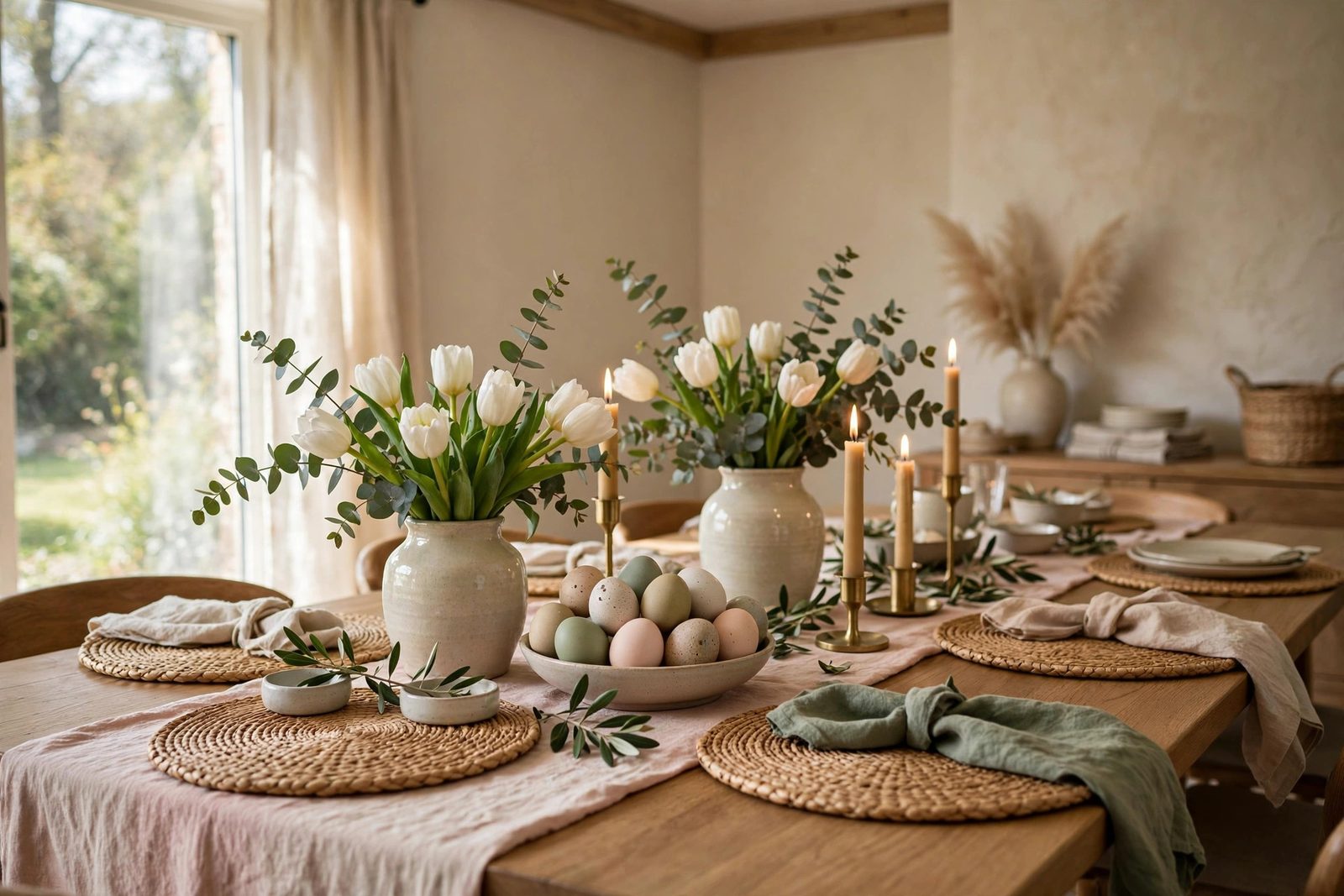
These easter decor ideas are built for the way the holiday actually looks in 2027: soft, natural, and elevated rather than plastic-bright. Easter falls on March 28 in 2027, which is early — so the smart move is decorating that reads as fresh spring first and Easter second, with pieces you can enjoy for weeks before the holiday and keep out after. Think blush, sage, muted lavender, and cream; linen, wood, and ceramic; eggs that look hand-dyed instead of shrink-wrapped.
The shift away from candy-colored Easter is the biggest trend in seasonal decorating right now. Grown-up Easter styling borrows its palette from nature — speckled eggs, moss, budding branches, stoneware — and lets one or two soft pastels do the seasonal talking. The result feels calm and current instead of themed, which is exactly why it photographs well and, more importantly, feels good to live with.
Below are ten specific ideas that cover the whole house: the tablescape, the mantel, the entryway, egg displays that actually look sophisticated, a wreath worth hanging, and a budget route using foraged and natural materials. Every one works whether Easter dinner is a crowd or just your household, and most of it doubles as general spring decor.
How Do You Pull Together an Elevated Easter Tablescape?
Start with the base layers, because the tablecloth-or-runner decision sets the whole tone. A natural linen runner down the center of a wood table is the elevated Easter move — it adds texture and softness without the formality of a full cloth, and it gives every centerpiece piece a visual home. If your table is dark wood, cream or oatmeal linen keeps the look light; on a light table, a slightly deeper flax tone adds contrast. The runner should overhang each end by about eight to ten inches, no more, so it reads relaxed rather than sloppy.
Build the center in a low, loose line rather than one tall arrangement. A trio of small ceramic vases with white tulips and eucalyptus, spaced eighteen to twenty-four inches apart, plus a low bowl of muted dyed eggs tucked between them, keeps sightlines open so guests can actually talk across the table. Add height only at the edges if you must — a single pair of brass taper holders at one end is plenty. The classic mistake is a centerpiece so tall and wide that dinner feels like eating around a barricade.
Finish with the small things that make it feel finished: woven or linen placemats, cloth napkins in blush or sage tied with a sprig of dried lavender or a single stem of baby's breath, and candlelight. Real tapers beat tea lights for atmosphere every time — light them just before guests sit down. Skip anything glossy, glittery, or neon; on an elevated Easter table, every material should look like it could have come from a garden or a potter's studio.
What Colors Should Easter Decor Use in 2027?
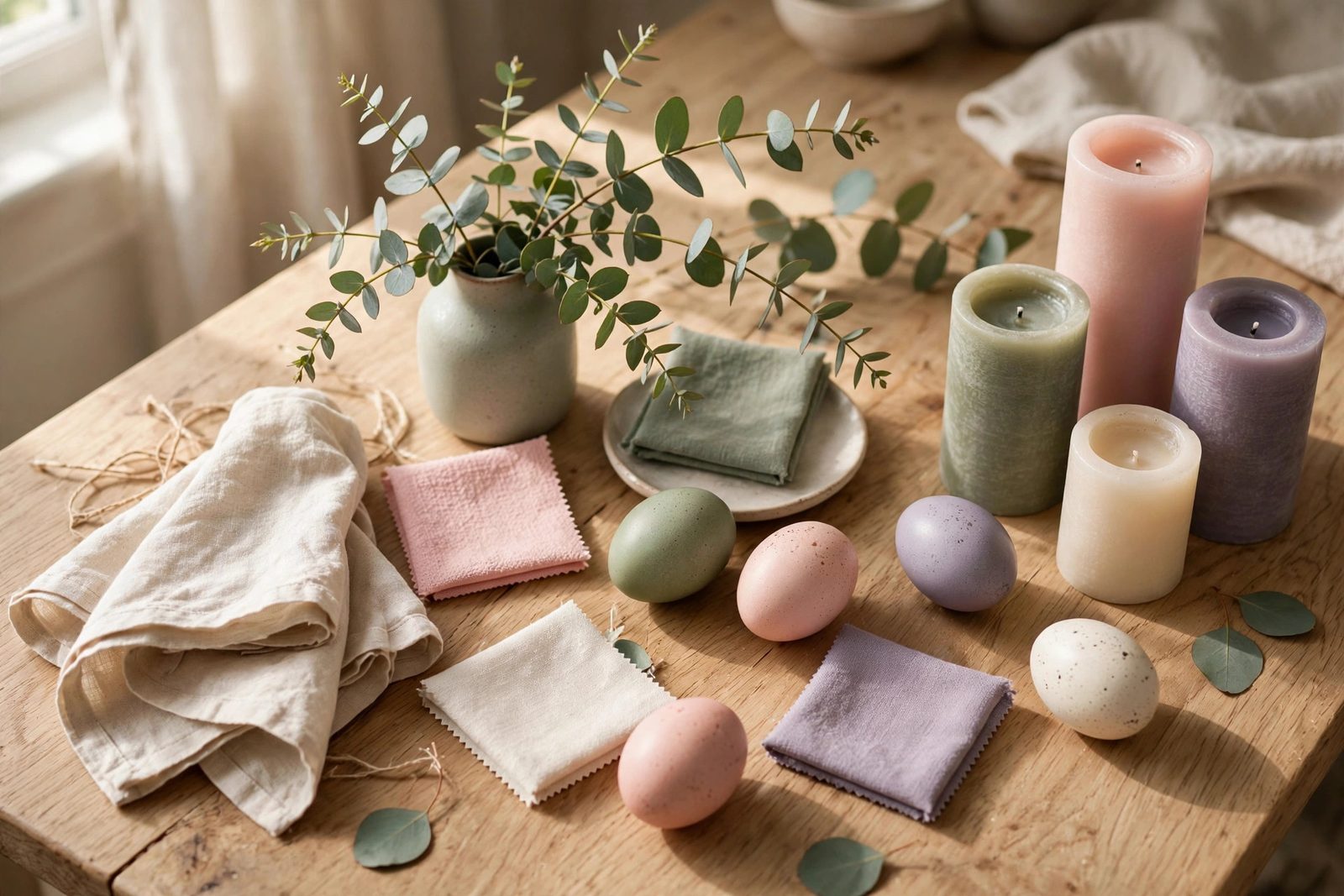
The 2027 Easter palette is pastels with the saturation turned down: blush pink instead of hot pink, sage green instead of mint, muted lavender instead of purple, all grounded in cream, oatmeal, and warm white. These dusty tones are what separate elevated Easter from the plastic-pastel look — they read as sophisticated in daylight and cozy in candlelight, and they sit comfortably next to the neutral furniture most people already own. Pick two pastels maximum and let neutrals carry the rest.
Use the seventy-thirty rule to keep it calm: about seventy percent of what the eye sees should be neutral — linen, wood, white ceramic, clear glass — and thirty percent the soft pastels. That ratio is why a blush napkin and a sage candle can carry a whole tablescape; the neutrals give them room to breathe. When pastels creep past half the visual weight, the room starts reading as themed rather than styled, which is the exact line grown-up Easter decor should not cross.
Test your palette in the actual light of the room before committing. Muted lavender can go gray in north-facing light, and blush can read peach under warm bulbs — both are fine, but you want to know before you buy. Lay your napkins, candles, and a few eggs on the table in daylight, step back to the doorway, and squint: if the colors blur into one soft wash, the palette works. If one item screams, swap it out.
How Do You Decorate Easter Eggs the Grown-Up Way?
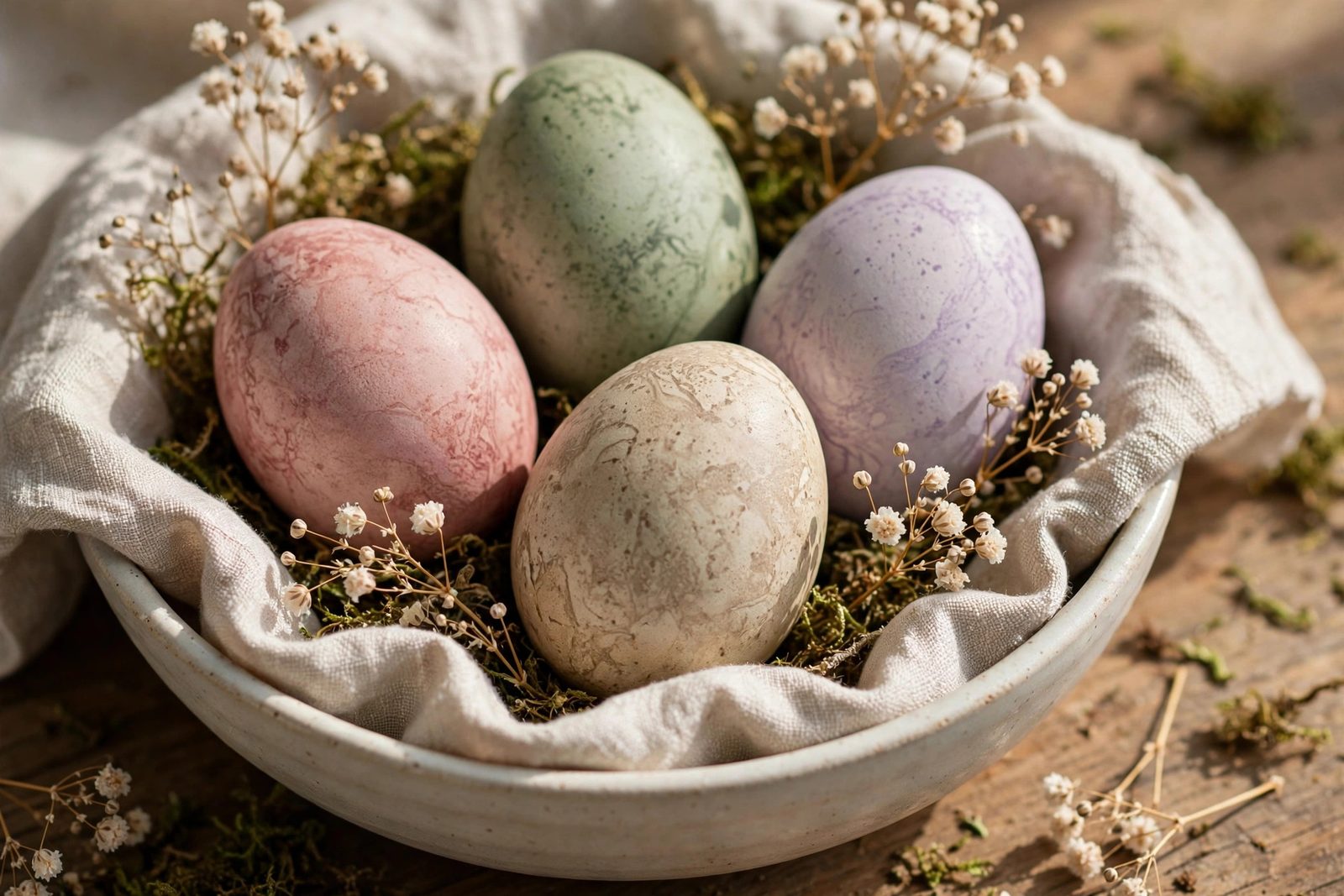
Natural dyes are the whole secret. Onion skins give a rich amber-brown, red cabbage gives dusty blue, turmeric gives soft gold, and beet gives blush pink — simmer the skins or chopped vegetables in water with a splash of vinegar for thirty minutes, strain, and soak hard-boiled eggs for anywhere from one hour to overnight depending on how deep you want the color. The results are mottled and imperfect in the best way, with a matte finish that looks handmade rather than manufactured.
Add texture after dyeing for the speckled, artisan look. Flick a toothbrush loaded with brown acrylic paint thinned with water across the dried eggs for speckles, or wrap eggs in small pieces of lace or fern leaves secured with a rubber band before a second dye bath for resist patterns. Work over newspaper and let each egg dry fully on a rack — touching them while damp is how fingerprints end up permanently dyed into the shell.
If real eggs feel like too much work, wooden or ceramic eggs take dye and paint beautifully and last for years. The grown-up rule for any egg, real or faux: keep the colors muted and the patterns simple. One technique per egg, one palette across the whole batch. A bowl of twelve eggs in three dusty tones with one shared speckle pattern looks designed; a bowl of twelve eggs in twelve techniques looks like a craft-store sample table.
How Do You Style an Easter Mantel Without the Kitsch?
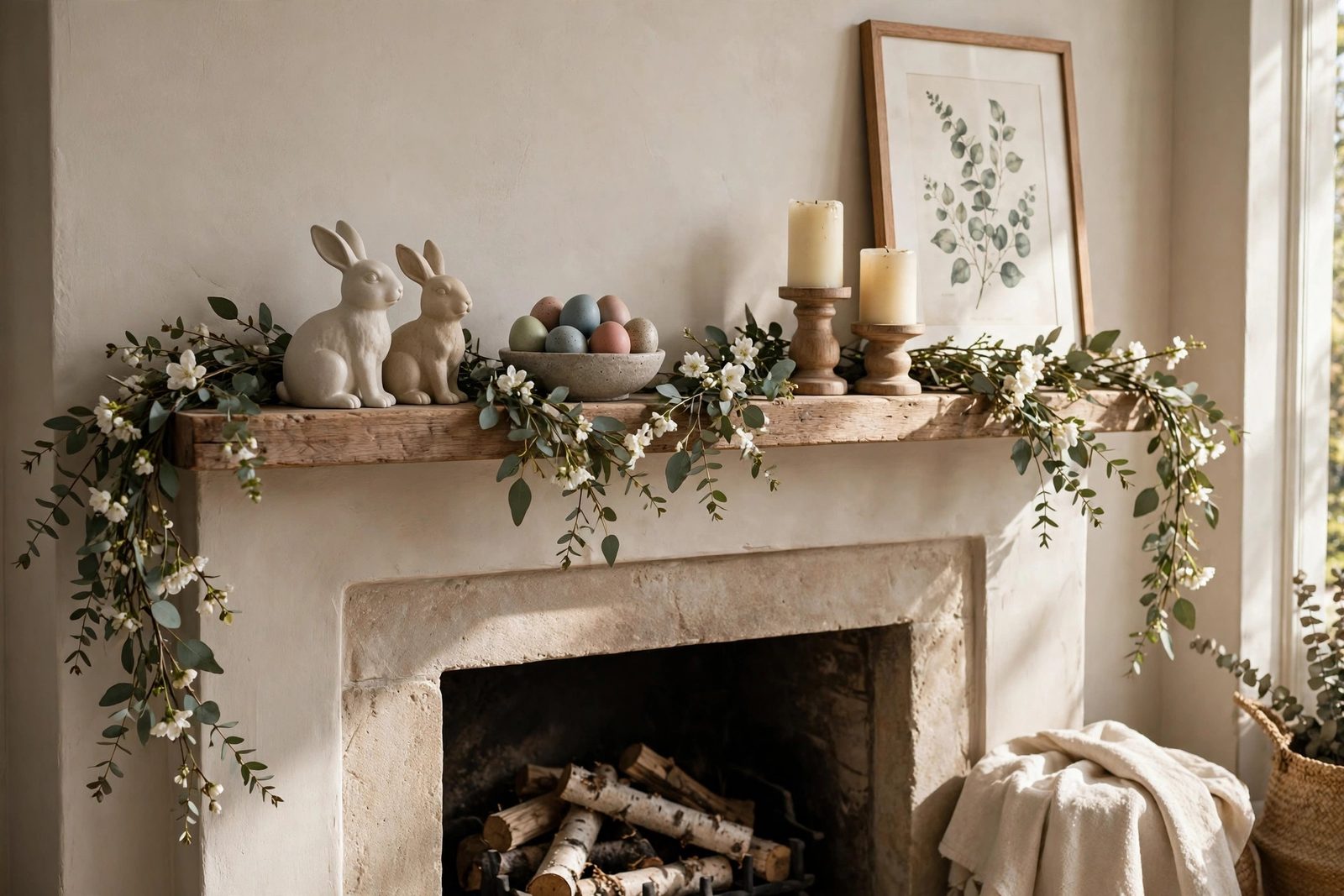
Treat Easter on the mantel as a quiet accent on a spring mantel, not a full theme takeover. Start with the spring base — a loose eucalyptus garland, a couple of vases with branches or tulips, cream candles — and then add just two or three Easter-specific pieces: a small stoneware dish of muted eggs, one matte ceramic bunny, maybe a tiny nest with speckled eggs tucked into the garland. The Easter elements should feel discovered within the styling, not announced by it.
Materials do the heavy lifting against kitsch. White or cream ceramic, natural wood, stoneware, and linen all read grown-up; glossy plastic, glitter, and anything in neon pastel reads toy aisle. If you love bunnies, choose one sculptural one in a good material over five cute ones — scale and finish are what keep a bunny figurine on the right side of tasteful. The same goes for chicks and lambs: one, natural material, tucked in, never lined up front and center.
Keep the mantel asymmetrical and breathing. A tall vase of branches on one end, the garland dipping through the middle, and a low cluster of candles and eggs on the other end gives the eye a path to follow. The mistake to avoid is symmetry plus repetition — matching bunnies bookending matching egg dishes looks like a store display. One focal moment, a few quiet supporters, and empty space between them.
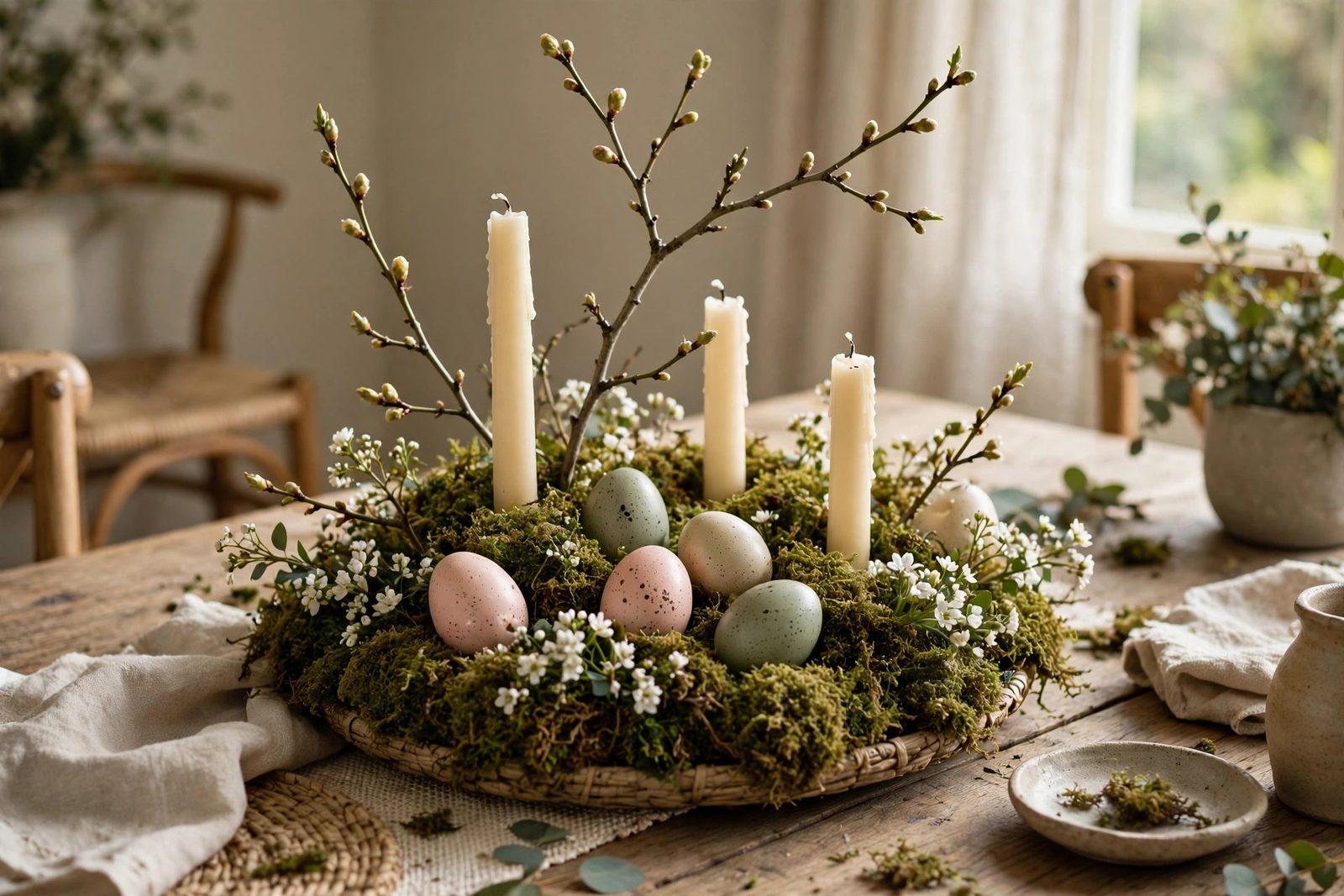
What Goes in a Natural Easter Centerpiece?
Build on a moss base and everything else gets easier. A shallow wooden tray, dough bowl, or low basket lined with sheet moss — real or good faux — instantly gives you the garden-floor look that makes Easter feel organic. Tuck speckled eggs directly into the moss at varying depths so some sit proud and others nestle half-hidden, then add small white flowers like ranunculus or anemones and a few sprigs of greenery. The moss hides all mechanics, so nothing needs to be wired or glued.
Give it one vertical moment. A single bare budding branch — forsythia, cherry, or pussy willow — anchored in a small weighted vase set into the moss adds the height that keeps a low centerpiece from disappearing on the table. Keep the branch to about eighteen inches above the table surface so it stays below eye level for seated guests. If you want to hang anything, three to five tiny ribbon-tied eggs on the branch are plenty; more than that and it becomes an egg tree wearing a centerpiece costume.
Cream taper candles or small pillar candles in the moss finish it, but mind the fire rules: real flames stay at least six inches from any dried material, and never leave the table unattended. LED tapers with a warm 2700K tone are the sane choice for a moss-and-branch arrangement you will not be watching every minute. Mist real moss lightly every couple of days and the centerpiece stays fresh-looking for two to three weeks — well past Easter Sunday.
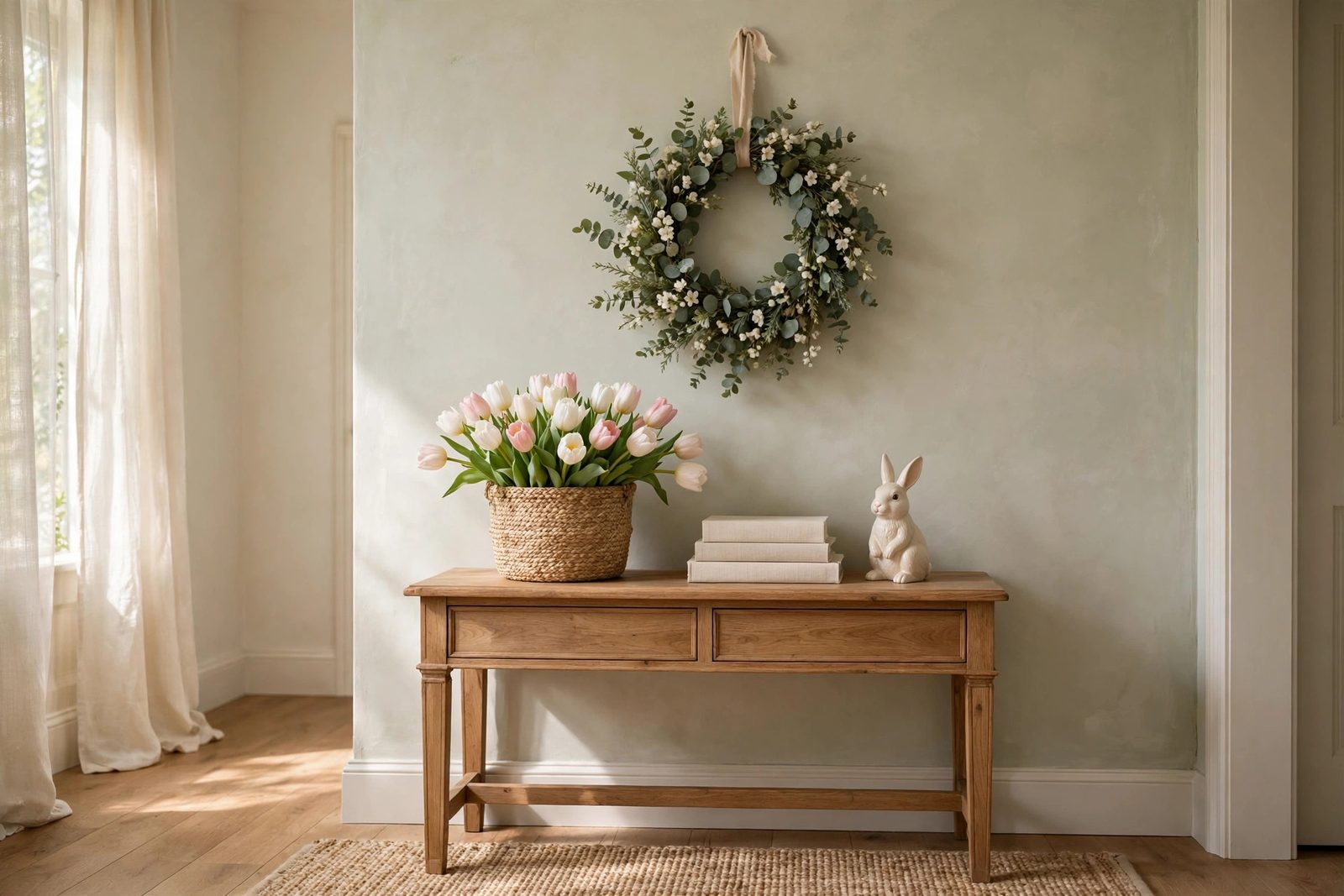
How Do You Decorate the Entryway for Easter?
The entryway gets the first-impression version of Easter: one wreath, one arrangement, one small accent, and done. Hang a eucalyptus-and-blossom wreath on the wall above the console or on the front door itself — it is the single highest-impact Easter move in the whole house because it fills vertical space and greets everyone who walks in. Inside, a woven basket of tulips or daffodils on the console table carries the seasonal color, and a single ceramic bunny or small dish of eggs provides the Easter wink.
Style the console in the classic triangle: something tall on one side (the tulip basket or a vase of branches), something medium in the middle (a small stack of linen-covered books or a lidded box), and something low on the other side (the egg dish or bunny). This takes five minutes and works on any console between thirty-six and sixty inches wide. Resist the urge to fill every inch — entryways need to function, and a console buried in decor just becomes an obstacle with keys piled on top of it.
Keep the palette consistent with the rest of the house so the entryway feels like part of the story, not a separate display. If your living room is blush and sage, the entryway tulips should be blush and white, not a surprise appearance of bright yellow. And skip anything on the floor unless the entryway is genuinely spacious — baskets and planters in walkways get kicked, and nothing ruins elevated Easter faster than a toppled arrangement.
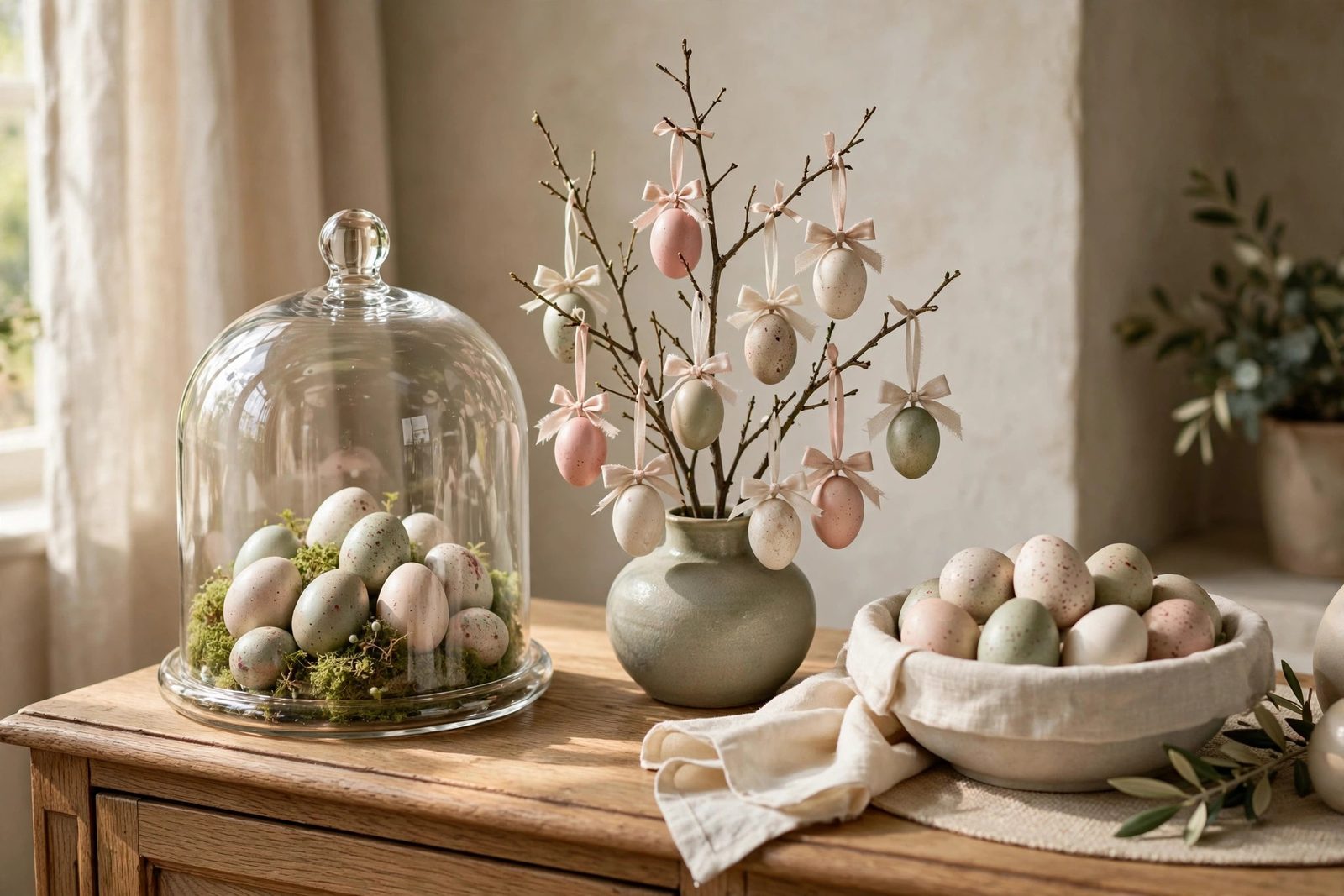
What Are the Best Ways to Display Easter Eggs?
The glass cloche is the grown-up egg display that never fails. A dozen speckled or naturally dyed eggs on a bed of moss under a glass dome — on a sideboard, coffee table, or dining buffet — turns eggs into an object of curiosity instead of a craft project. The cloche adds the formality that makes it feel intentional: without the dome it is a bowl of eggs, with the dome it is a display. Cloches in the eight-to-twelve-inch range fit standard egg groupings without crowding.
The branch egg tree is the second classic, and it works when you keep it sparse. A single interesting branch in a heavy ceramic vase, hung with five to eight blown or wooden eggs on thin ribbon at varying lengths — never more than one egg per branch tip. The elegance comes from restraint and air: each egg should have space around it. Hang the eggs with the ribbon looped, not knotted, so you can adjust heights until the composition feels balanced from the front.
For everyday surfaces, the linen-lined bowl remains unbeatable: a shallow ceramic or wooden bowl, a folded linen napkin as a liner, and eggs piled loosely two layers deep. It works on kitchen islands, bathroom counters, and bedside tables — anywhere a small seasonal touch belongs. Rotate the eggs every few days so the same sides are not always facing up, and keep real dyed eggs refrigerated when they are not on display if your house runs warm.
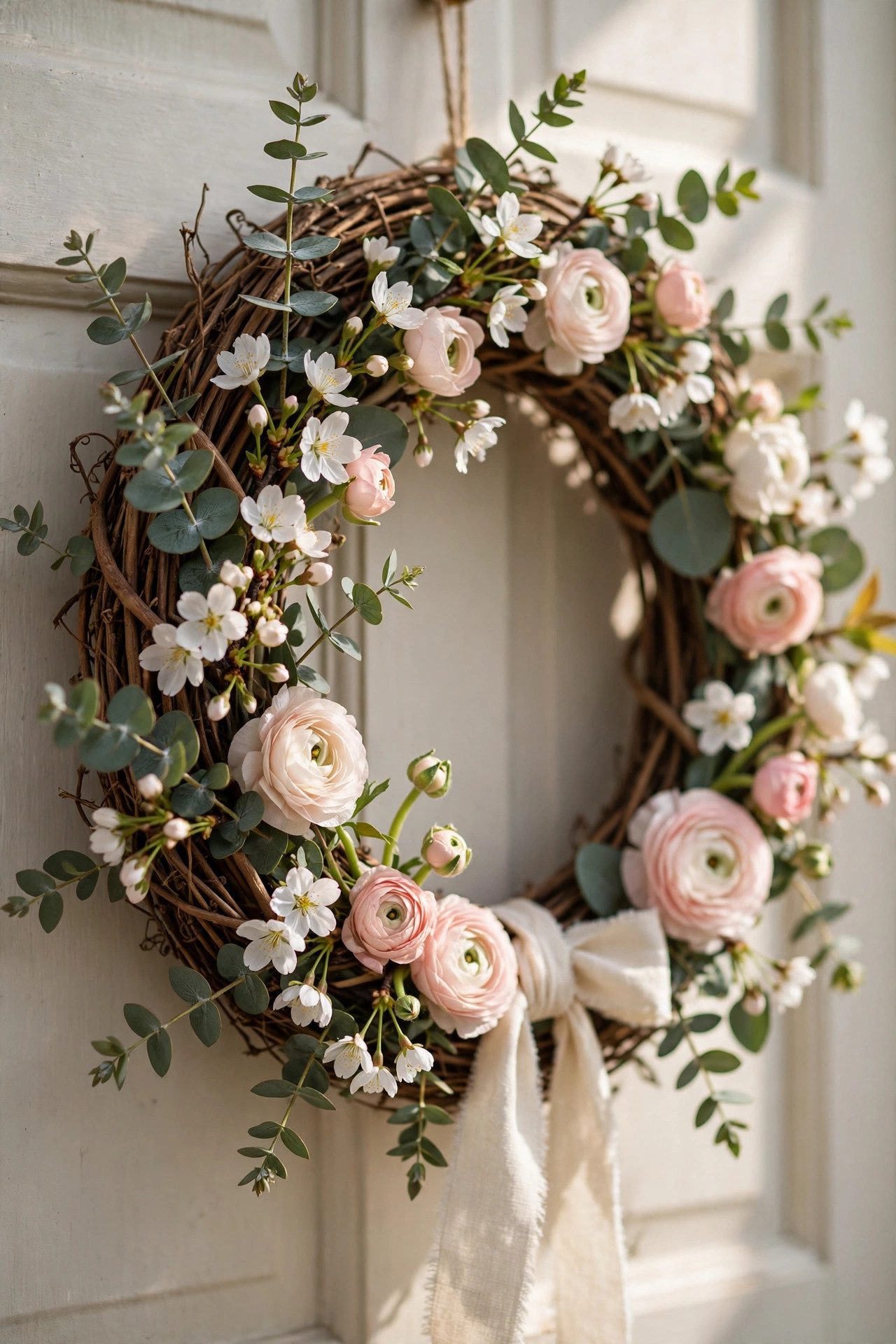
How Do You Make an Easter Wreath That Looks Sophisticated?
Start with a grapevine base and build with greenery first, flowers second, Easter elements barely at all. Wrap the base with seeded and silver-dollar eucalyptus using floral wire, working in one direction and overlapping stems so no wire shows. Then tuck in white cherry blossom branches or faux blossom picks, a few blush ranunculus or anemones, and stop. A sophisticated Easter wreath is really a beautiful spring wreath with restraint — the Easter-ness can come from a single small nest with three speckled eggs wired into the lower quadrant, or nothing at all.
The ribbon makes or breaks it. A wide cream or oatmeal linen ribbon tied in a simple bow at the top or side reads elegant; thin satin ribbon in pastel reads craft store. Cut the ribbon tails long — twelve to sixteen inches — and dovetail the ends for a finished look. Wire the bow to the wreath form rather than gluing it so you can reposition it, and hang the wreath with the bow slightly off-center, which looks more natural than dead-center symmetry.
Size it to the door: a twenty-two to twenty-four-inch wreath suits a standard thirty-six-inch front door, leaving a pleasing margin of door visible all around. Hang it so the center sits at eye level, roughly fifty-seven to sixty inches from the ground. On an interior wall, the same wreath works over a console or mantel — just swap the heavy over-door hanger for a single nail or adhesive hook rated for the weight, since a fresh-greenery wreath can weigh three to five pounds.
How Do You Do Easter Decor on a Budget With Natural Materials?
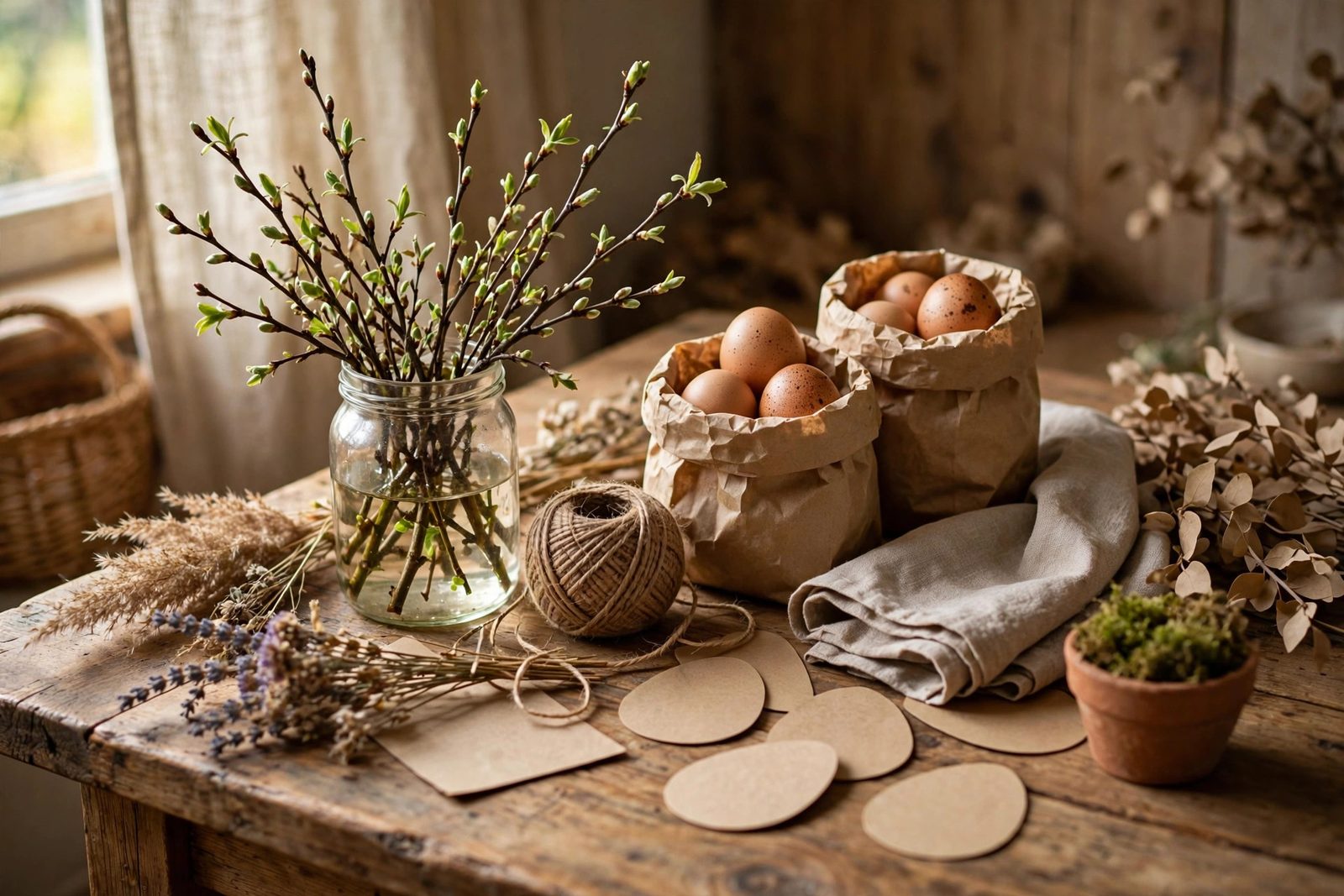
Forage first, buy second. Budding branches, pussy willow, interesting twigs, and moss are free in most yards, parks, and roadsides in March — a tall branch in a jar you already own is a more striking Easter arrangement than most store-bought decor. Grocery-store flowers are the only thing worth paying full price for: a five-dollar bunch of tulips or daffodils split across three small jars has more impact than one expensive florist arrangement, and daffodils in particular last ten days or more.
Paper and pantry eggs cost almost nothing and look genuinely charming. Cut egg shapes from brown kraft paper or watercolor paper, dye them with tea or coffee for an aged tone, and hang them with twine on a branch — or decoupage real blown eggs with torn tissue paper and matte Mod Podge for a speckled, artisan finish. A dozen handmade paper eggs on a foraged branch, total cost under five dollars, is the kind of decor guests ask about because it clearly took thought rather than money.
The budget mistake to avoid is buying lots of cheap instead of a little good. One bag of moss, one spool of natural twine, and one bunch of tulips will style a whole house when they are deployed with restraint; twenty dollars of pastel plastic from the seasonal aisle will make it look like twenty dollars of pastel plastic. Spend where the eye lands — the entryway and the table — and let the other rooms get by with a branch in a jar and a bowl of eggs.
When Should You Put Up and Take Down Easter Decor in 2027?
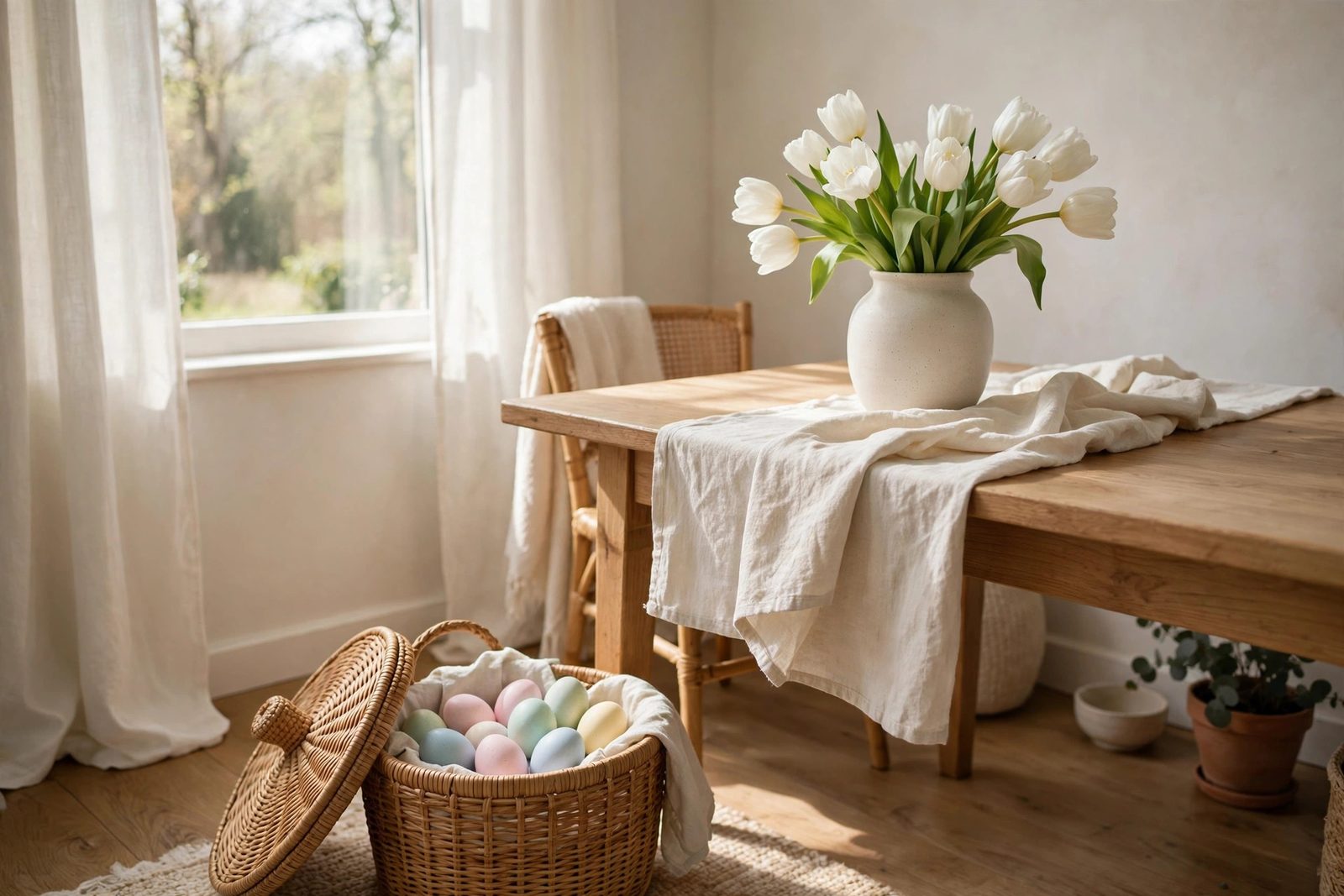
Easter Sunday is March 28 in 2027, which is early — so timing your decor matters more than usual. Put the general spring base up in late February or the first week of March: the greenery, the wreath, the tulips, the neutral pieces. These read as fresh spring regardless of the holiday and earn you a full month of enjoyment. Add the explicitly Easter pieces — the egg displays, the bunny accents, the egg tree — about ten days to two weeks before Easter Sunday, around March 14 to 18.
This two-wave approach is also the practical answer to an early Easter. If you put full Easter decor up in February, it feels stale by the time the holiday arrives; if you wait until late March for everything, you barely get to enjoy it. Staging it means the house feels progressively more festive instead of suddenly themed, and the Easter-specific pieces still feel special when they appear. It also spreads the work across two relaxed weekends instead of one frantic decorating day.
Take the Easter-specific pieces down in the week after Easter Sunday — eggs, bunnies, anything that says the holiday by name — but leave the spring base up through April. The wreath, the branches, the tulips, and the neutral ceramics transition seamlessly into general spring decor, which means half your work keeps paying off for another month. Pack the Easter pieces in one labeled bin with tissue between ceramics, and next year's decorating is a single afternoon instead of a treasure hunt through the attic.
The 2027 Easter Palette Shopping List
Shop by material family and the palette almost assembles itself. From the craft or home store: a spool of natural twine, a bag of sheet moss, cream taper candles, and a glass cloche if you do not own one. From the grocery store: two bunches of tulips or daffodils, a dozen white eggs for dyeing, and onion skins or red cabbage if you are going the natural-dye route. From around the house: a linen runner or large linen napkins, a wooden tray or dough bowl, and any white or cream ceramics you already own.
The one-splurge rule keeps the budget sane: allow yourself a single statement piece per year — a beautiful stoneware bunny, a hand-thrown egg bowl, a really good faux eucalyptus garland — and let the natural and foraged materials fill in the rest. Statement pieces are what make year-over-year Easter decor feel collected rather than repetitive, and a ten-to-twenty-dollar annual splurge builds a genuinely lovely collection within a few seasons. Everything else should be consumable or free: flowers fade, moss gets replaced, branches go back outside.
Buy the pastels last and in person if you can. Blush, sage, and muted lavender shift dramatically between screen and shelf, and the whole point of the 2027 palette is the dusty, muted quality that cheap bright versions miss. Hold the candle or napkin up to your dyed eggs in the store — if they sit in the same soft family, you are good. If the store pastel looks neon next to your eggs, keep walking.
A Room-by-Room Easter Styling Plan
Work in order of visibility: entryway first, then the dining table, then the living room mantel or shelves, and finally the kitchen and bedrooms if you have energy left. The entryway gets the wreath and one arrangement — it is the greeting. The dining table gets the full tablescape treatment since it hosts the holiday meal. The living room gets the mantel styling and one egg display on the coffee table or sideboard. This priority order means that even if you run out of steam halfway, the rooms guests actually see are done.
Keep one consistent thread running through every room so the house feels styled rather than decorated room by room. The simplest thread is the palette — blush and sage appearing in the entryway tulips, the table napkins, and the mantel candles ties everything together without any single room needing to match another exactly. A repeated material works too: the same linen, the same ceramic finish, or the same eucalyptus showing up in three rooms reads as intentional design.
Give each room exactly one Easter-specific moment and let spring do the rest. The entryway's moment is the bunny or egg dish; the dining room's is the egg bowl in the centerpiece; the living room's is the eggs tucked into the mantel garland. Everything else — the flowers, the greenery, the candles, the wreath — is just spring, which is why the whole scheme survives past Easter Sunday with only the holiday pieces removed. Fewer themed objects per room is the difference between a home that feels festive and one that feels like a seasonal pop-up shop.
Final thoughts
The best Easter decor in 2027 does not announce itself — it just makes the house feel like spring arrived a little early and brought good taste with it. Blush, sage, and muted lavender against cream and natural wood; eggs that look hand-dyed; one beautiful wreath and a table you actually want to sit at. None of it requires a big budget or a design degree, just the discipline to choose fewer, better things and let natural materials do the talking.
Start with the spring base now and layer the Easter pieces in mid-March, and the holiday will feel like it unfolds naturally instead of arriving all at once. When Easter Monday comes, pack the eggs and bunnies into their labeled bin, leave the tulips and branches out for April, and enjoy the rare seasonal decor that gets better the less of it there is.
FAQ
When is Easter in 2027?
Easter Sunday falls on March 28, 2027, which is on the early side — Easter can land anywhere between March 22 and April 25. Because it is early, plan to put your general spring decor up in late February and add Easter-specific pieces like egg displays around mid-March so everything still feels fresh on the holiday itself.
How do I decorate for Easter without it looking childish?
Stick to a muted palette of blush, sage, lavender, and cream instead of bright candy pastels, and choose natural materials — ceramic, wood, linen, and stoneware — over plastic and glitter. Limit yourself to one or two Easter-specific accents per room, like a single ceramic bunny or a bowl of speckled eggs, and let spring greenery and flowers carry the rest of the look.
What colors are trending for Easter decor in 2027?
The 2027 direction is elevated neutral Easter: blush pink, sage green, and muted lavender grounded in cream, oatmeal, and warm white. The key is keeping pastels dusty rather than saturated and letting neutrals make up about seventy percent of what the eye sees. This palette also transitions seamlessly into general spring decor after the holiday.
How long do naturally dyed Easter eggs last as decor?
Hard-boiled eggs dyed with natural dyes last about a week at cool room temperature as decor, though you should refrigerate them when not on display if your house is warm. For longer-lasting displays, dye wooden or ceramic eggs instead — they take natural dyes and paint beautifully and can be reused for years. Blown real eggs also keep indefinitely if stored carefully.
How early should I put up Easter decorations?
Put the spring base — wreath, greenery, flowers, neutral pieces — up in late February or early March, and add the explicitly Easter items like egg displays and bunny accents ten days to two weeks before Easter Sunday. For 2027 that means Easter pieces go up around March 14 to 18. Staging it this way keeps everything feeling fresh rather than stale by the holiday.
How should I store Easter decor so it lasts for next year?
Pack all Easter-specific pieces into one clearly labeled bin the week after Easter Sunday, wrapping ceramics in tissue or bubble wrap and nesting eggs in egg cartons or divided compartments. Store the bin somewhere climate-stable — attics with extreme heat can warp faux florals and fade dyes. Keep an inventory note on top of the bin so next year's decorating is a single afternoon, not a treasure hunt.