Kids Spaces
10 Nursery Decor Ideas (Calm, Neutral & Timeless)
10 nursery decor ideas for a calm, neutral, timeless nursery: a white crib, a cozy glider corner, layered rugs, and touches that grow with your baby.
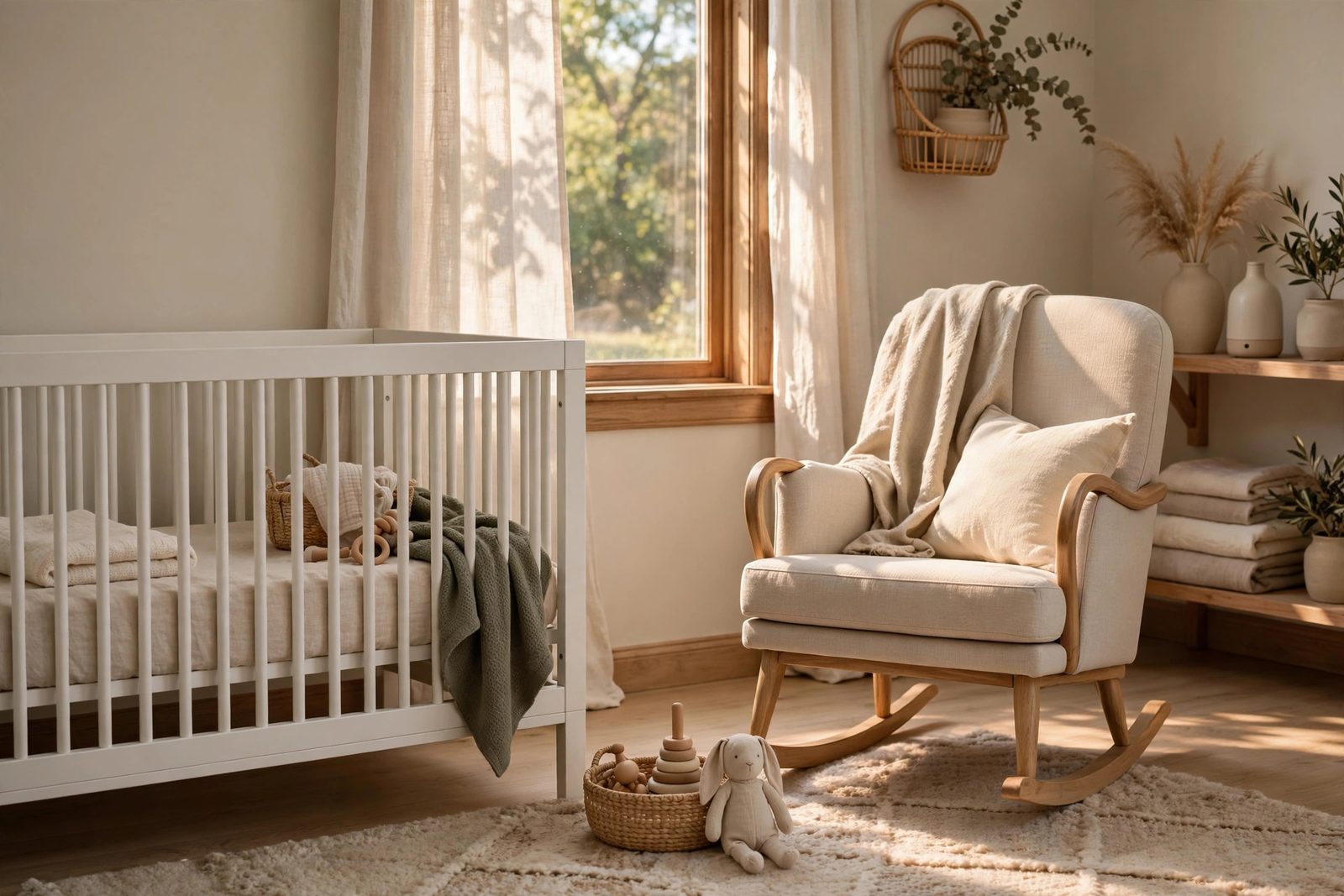
These nursery decor ideas are built around one simple philosophy: calm, neutral, and timeless beats trendy every time. A nursery is one of the highest-volume searches in home decor because every new parent wants the room to feel special — but the rooms that age best are the quiet ones, with warm whites, soft beiges, natural wood, and textures that soothe instead of shout. Decorate this way and the room still looks right when your newborn becomes a toddler.
Neutral does not mean boring. Layering knits, linen, wool rugs, woven baskets, and simple wood furniture gives a nursery all the coziness of a colorful room without the visual noise — and it is far easier to live with during 3 a.m. feedings. You also get a room that grows: swap the art, change the bedding, and the same calm base carries your child from bassinet days to big-kid bed.
The ten ideas below cover the big decisions in order: the crib and bedding, the feeding corner, floors, walls, windows, storage, and the small touches that make it yours. Every one works in a small nursery and a spacious one, and every one keeps safety built in.
How Do You Start a Calm, Neutral Nursery?
Start with a three-color palette and hold it everywhere. Pick a warm white for the walls (something with a hint of cream rather than a blue-leaning white, which can feel cold), a mid-tone neutral like greige or warm beige for large textiles, and a natural wood tone for the crib, dresser, and frames. Everything in the room — from the rug to the curtains to the mobile — should pull from these three, so nothing ever clashes.
Then layer texture instead of color. A chunky knit throw, a wool or cotton rug, linen curtains, and woven baskets give the room its warmth and depth. In a nursery, texture does the decorating work that bright colors do in other rooms, and it photographs beautifully without ever overstimulating a newborn.
Finally, plan the layout around the three zones every nursery needs: sleep (the crib), feeding (the glider), and changing (the dresser). Keeping each zone dedicated and uncluttered is what makes a nursery feel calm — and it saves endless pacing during night wakings when everything is exactly where your muscle memory expects it.
What Bedding Works Best in a Neutral Nursery?
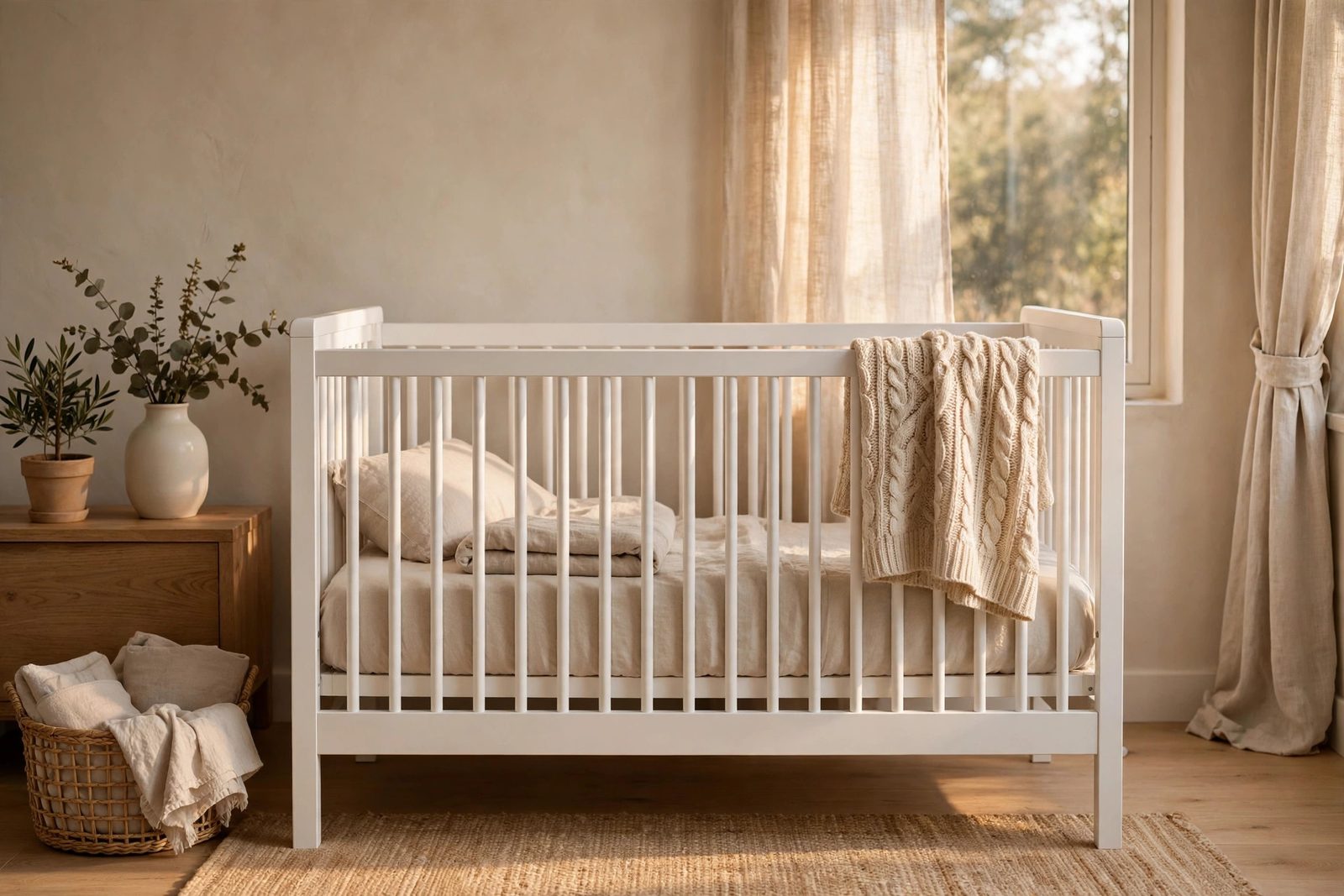
Keep the crib itself simple and let the bedding set the tone. A fitted sheet in cream, oatmeal, or a soft white is all the color a crib needs, ideally in breathable cotton or muslin. If you want pattern, choose something whisper-quiet — a tiny gingham, a tone-on-tone dot, or a fine stripe — and keep it to the fitted sheet only.
A small knit blanket draped over the crib rail or folded nearby adds the handmade warmth every nursery photo needs. Important safety note: the crib should be bare for sleep — no loose blankets, pillows, bumpers, or stuffed animals in it. Style the blanket on the rail for daytime photos and store it away at bedtime, or use it on the glider for feedings instead.
Buy three to four fitted sheets in the same neutral so changes stay invisible. Rotating one color story means a 2 a.m. sheet swap does not disrupt the room's look, and you will always have a clean one ready without doing laundry at midnight.
How Do You Set Up a Cozy Feeding Corner?
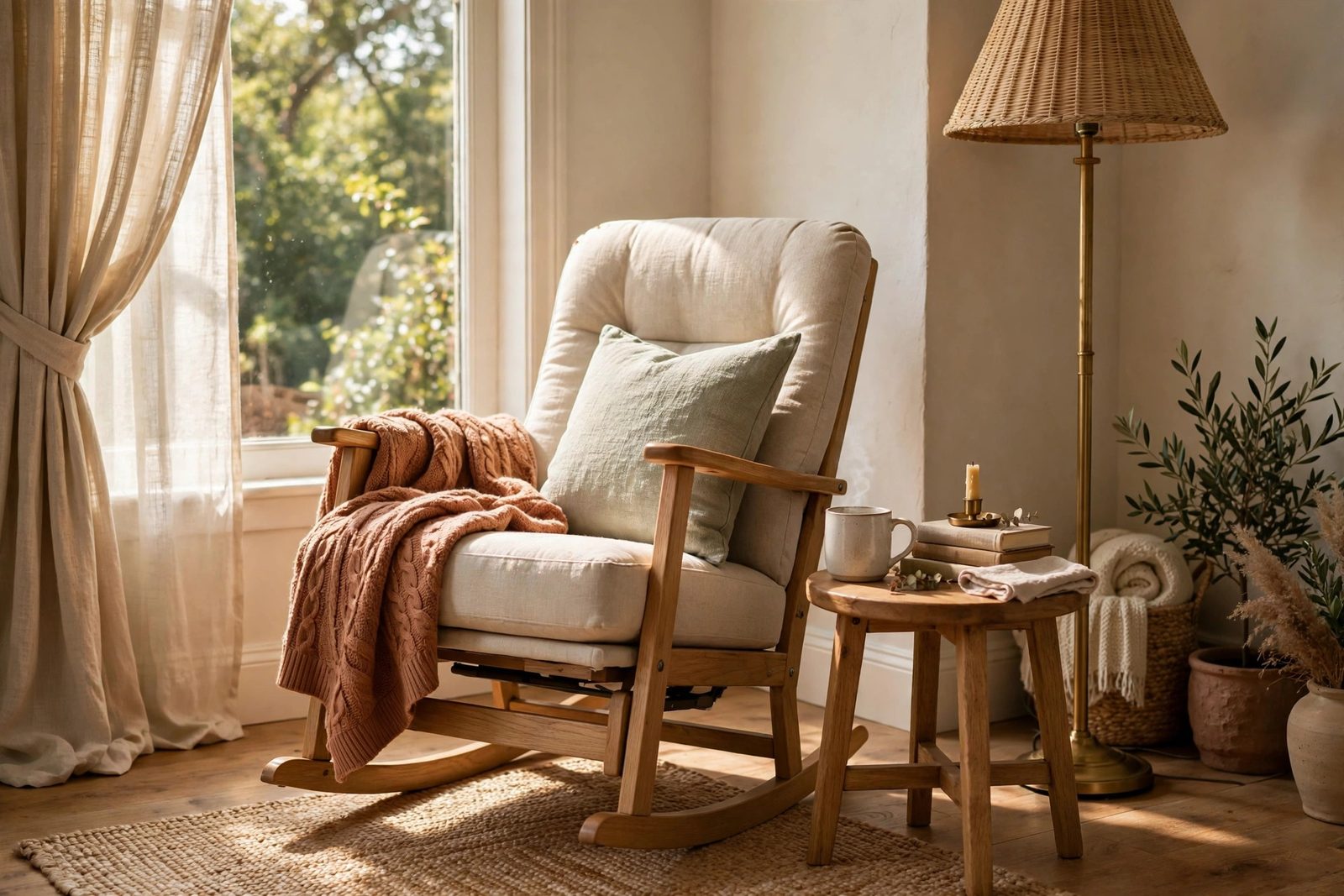
The feeding corner is where you will spend more hours than anywhere else in the house, so build it like a nest. A glider or rocking chair in a soft neutral fabric — beige, oat, or warm gray — is the anchor. Choose one with a high back and real lumbar support; your shoulders will thank you after weeks of midnight feeds.
Add the two sidekicks: a small round side table for a water bottle, your phone, and a burp cloth, and a floor lamp with a warm bulb on a dimmer. Overhead lighting is too harsh for a sleepy baby, so the lamp is doing real work — dim it low for night feeds and brighten it for diaper checks.
Finish with a small pillow behind your back and a footrest or pouf. These sound like luxuries until month two. Tuck a folded knit blanket over the chair arm for warmth, and keep a tiny basket of feeding essentials — nursing pads, nipple cream, a spare onesie — under the side table so you never have to stand up mid-feed.
Why Should You Layer Rugs in a Nursery?
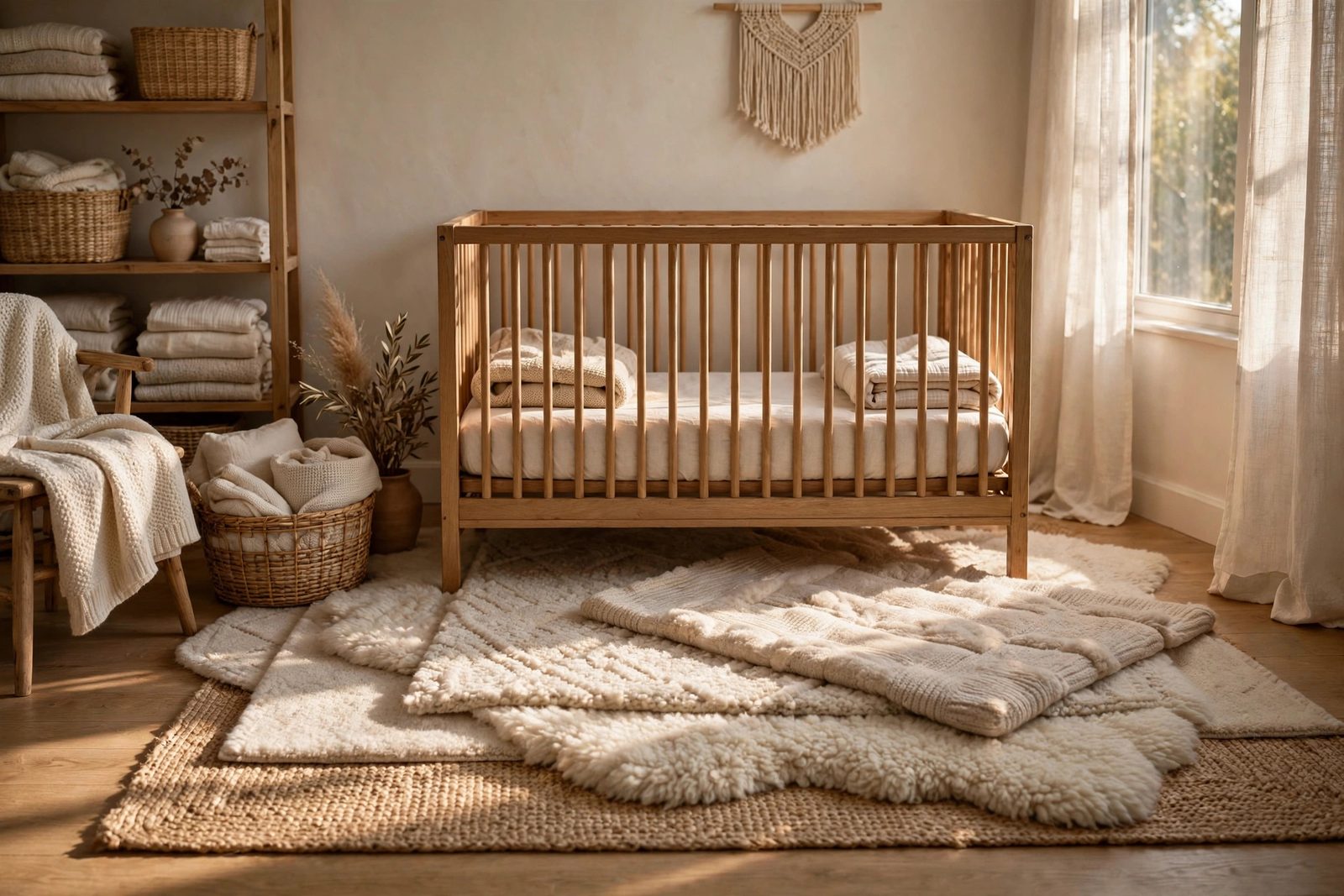
A nursery floor takes a beating — bare feet at 3 a.m., tummy time, first steps, and eventually blocks and trucks — so the rug is both decor and equipment. Layering a large flat base rug with a smaller, plusher rug on top gives you the padded landing zone babies need without committing to one expensive piece you will cry over when it stains.
Start with a low-pile, washable base rug large enough to sit under the crib and extend into the room; a 5x7 or 8x10 covers most nurseries. Then layer a soft wool or cotton rug — round or rectangular — under the glider or in the play zone where the baby will spend floor time. The two textures together read designer-styled and feel great underfoot.
Stick to neutral tones that hide a multitude of sins: oatmeal, warm gray, and soft beige forgive spit-up, dropped snacks, and the occasional crayon. Avoid high-pile shag in the play area — toys tip over on it and crawling babies fight the fibers. Save the plush for beside the glider, where your feet land during night feeds.
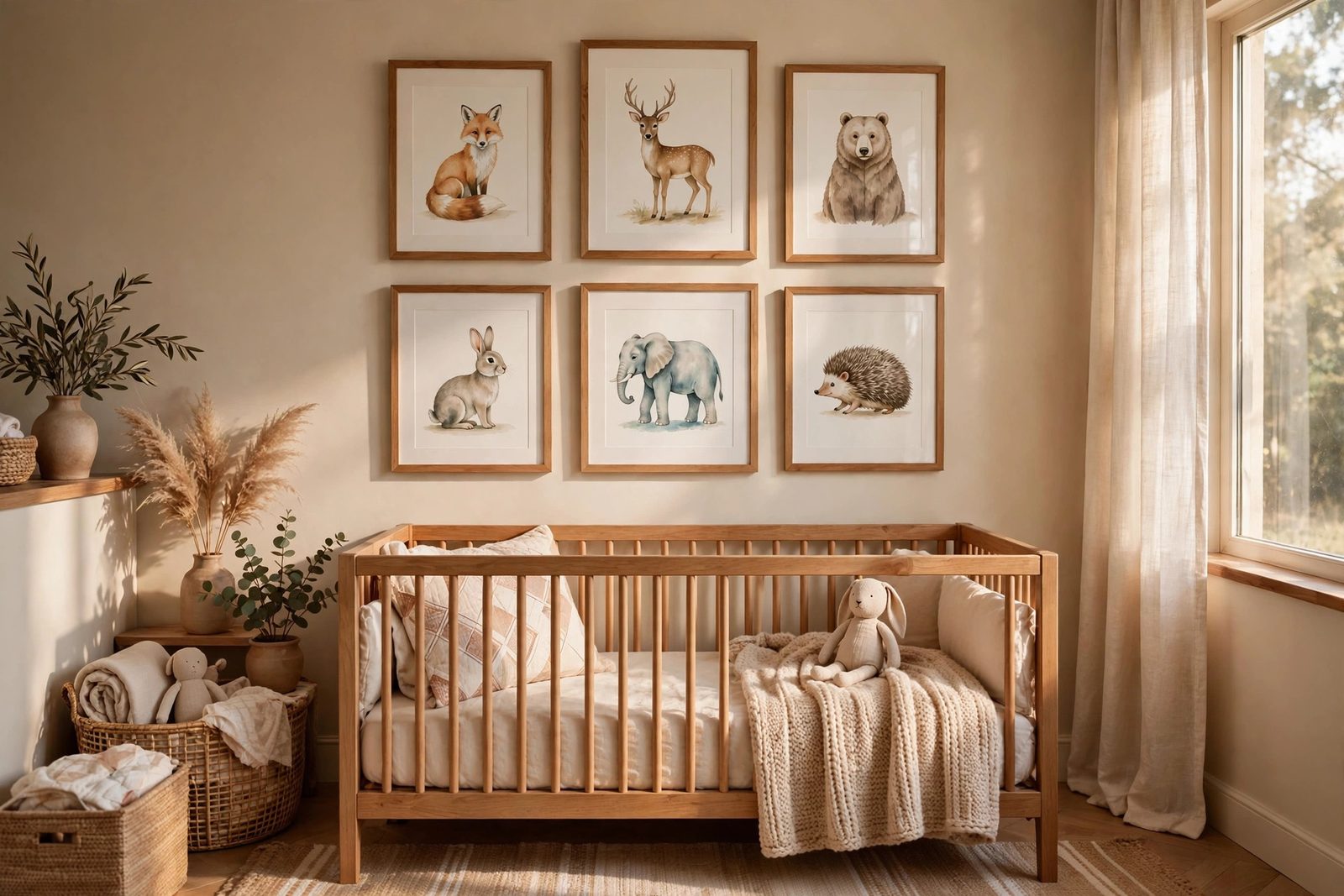
What Art Should You Hang Above the Crib?
The wall above the crib is the room's natural focal point, and a small gallery of framed animal prints is the classic choice for a reason. Choose simple, soft illustrations — a sleepy fox, a rabbit, a deer — in matching light-wood or white frames with wide mats. Wide mats and consistent frames are what make a gallery feel calm rather than busy.
Hang the arrangement high enough that a standing toddler in the crib cannot reach it — at least two feet above the top rail — and secure every frame with two hooks or museum putty so nothing can drop into the crib. This is the one nursery wall where safety placement matters most, so measure twice.
The timelessness trick: pick art your child will not outgrow at age three. Simple botanical or animal illustrations, a soft alphabet print, or a meaningful quote in simple type all survive the jump from baby room to big-kid room. When you are ready, swap one print for something they chose themselves — the frames stay, and the room evolves with them.
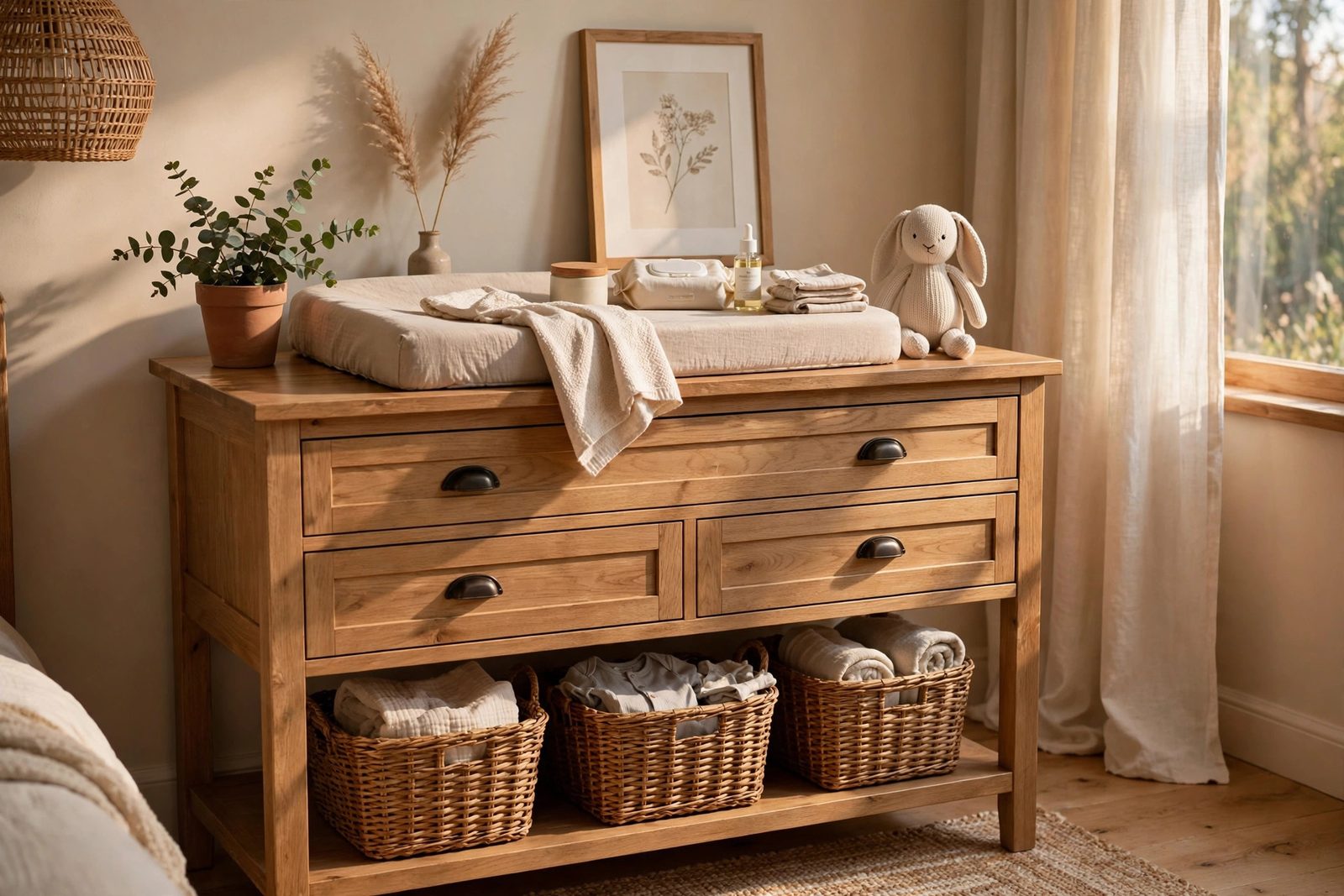
How Do You Turn a Dresser Into a Changing Station?
Skip the dedicated changing table and buy a real dresser instead — it is the smartest money move in nursery decorating. Choose a low, wide dresser at a comfortable changing height (around 36 inches), screw a contoured changing pad with a safety strap to the top, and you have a changing station that becomes plain bedroom storage the day diapers are history.
Style the top for function first: the changing pad in the center, a small caddy of diapers, wipes, and cream on one side, and a tiny lamp or plant on the other. Woven baskets in the open shelving or on a nearby shelf corral the extras — spare clothes, burp cloths, lotions — so the top stays clear for the baby.
Anchor the dresser to the wall with anti-tip straps before the baby arrives. This is non-negotiable for any dresser a toddler might climb. Choose a dresser with deep drawers that will hold real folded clothes later; shallow decorative drawers become useless the moment the changing pad comes off.
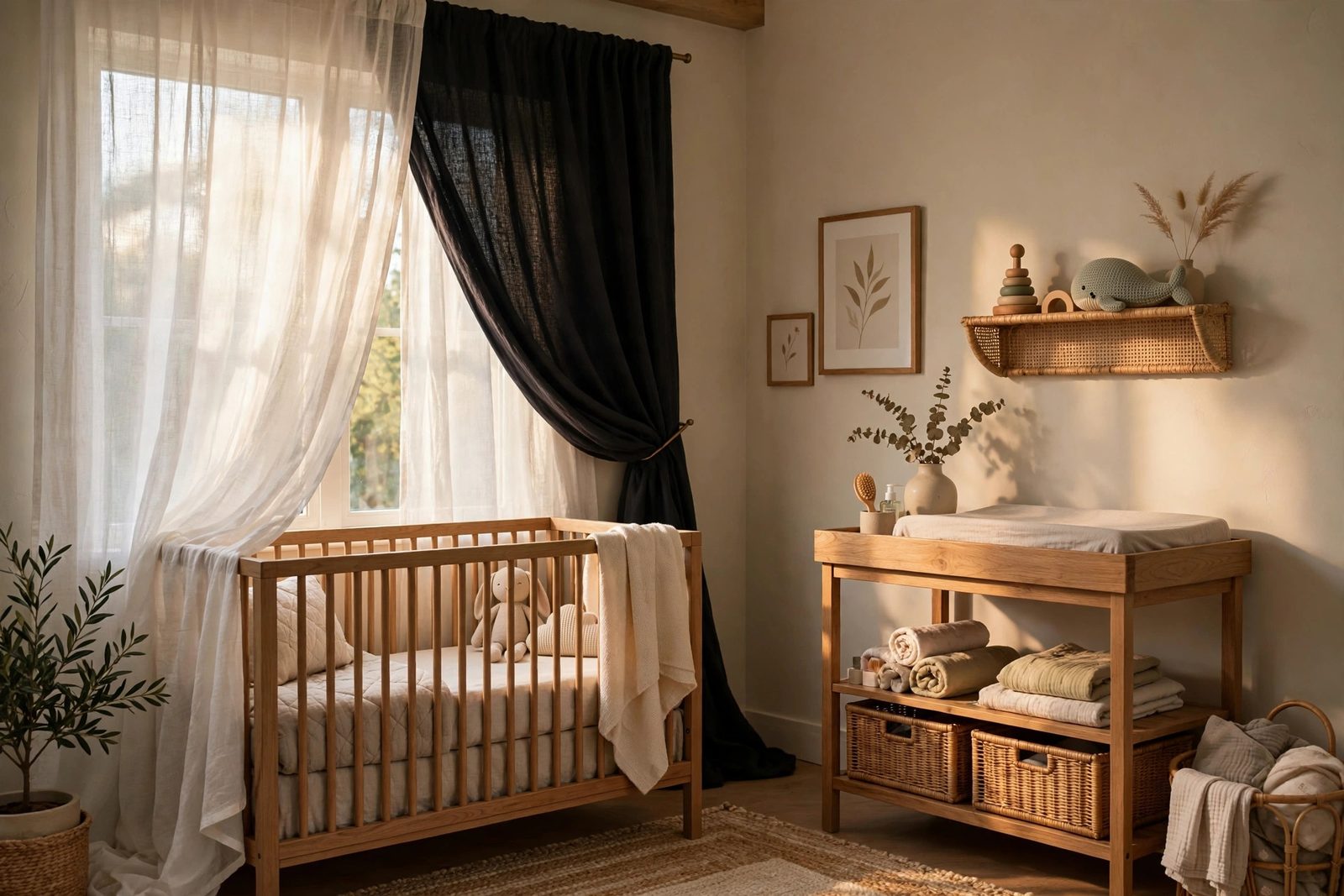
What Window Coverings Help a Baby Sleep?
Light is a sleep tool, and the right window layering gives you full control of it. Hang blackout curtains or a blackout roller behind soft sheer panels: the sheers diffuse daylight into a gentle glow for playtime, and the blackouts drop the room into nap-friendly darkness at 2 p.m. in July. This combination is the single best investment for a nursery's sleep quality.
Hang the curtain rod high and wide — a few inches below the ceiling and extending well past the window frame — so the window looks larger and the blackouts fully cover the glass when closed. Floor-length panels in a warm white or linen tone keep the calm, neutral look while hiding the functional blackout layer behind them.
Go cordless on everything. Corded blinds and curtains are a strangulation hazard, and cordless cellular shades or roller blinds are inexpensive and easy to find now. If you already have corded blinds, cut the loop and add cord cleats, or replace them before the baby moves into the room.
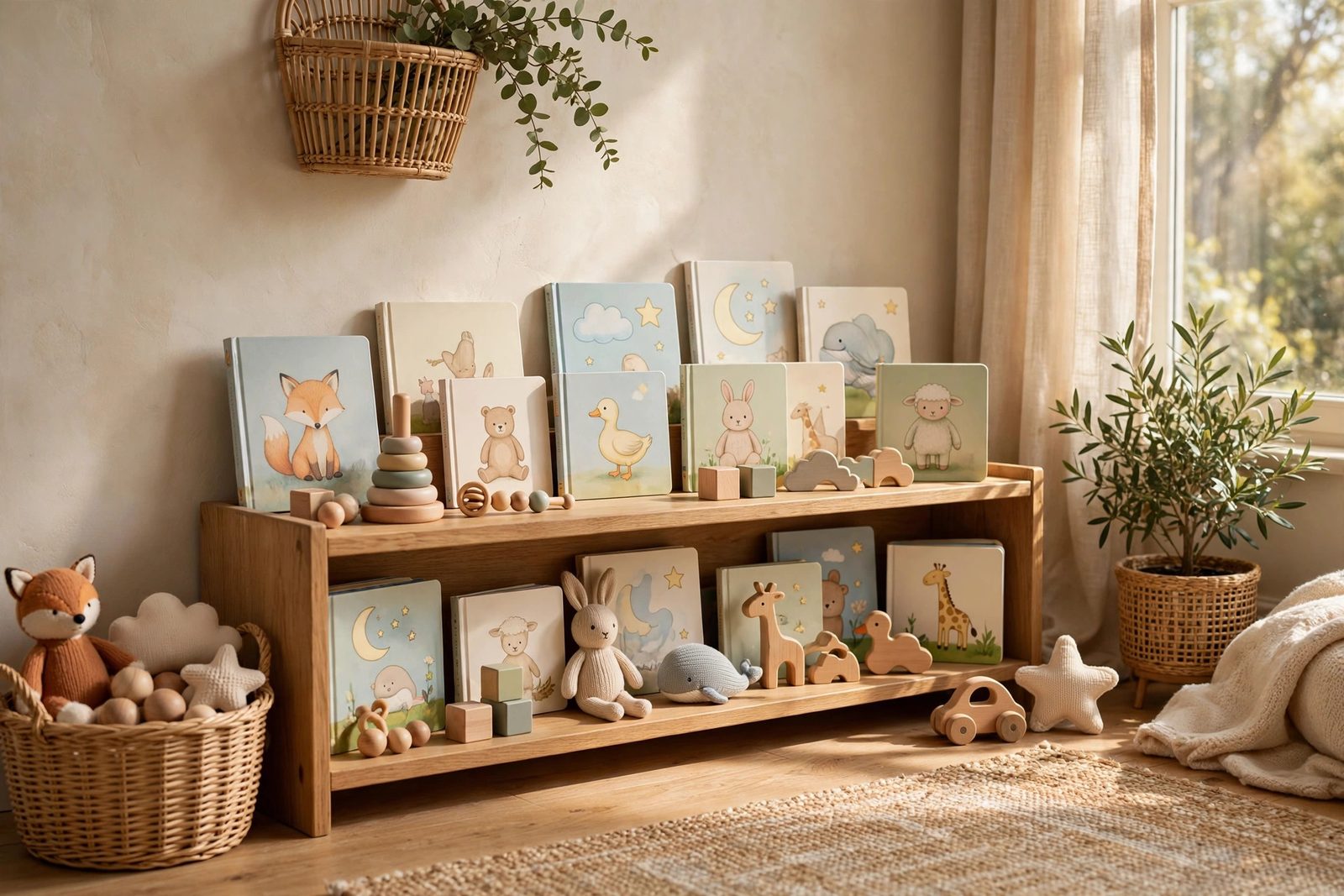
How Do You Style a Nursery Bookshelf?
A low, front-facing bookshelf is one of the most-loved pieces in a nursery — babies who cannot read yet still love choosing a book by its cover. Place a low cube shelf or a wall-mounted front-facing rack at toddler height, and fill it with a small rotating selection of ten to fifteen board books, spines turned so the covers face out like a little library.
Rotate the books monthly rather than displaying the whole collection. A small, curated shelf invites a baby to pick one up; a crammed shelf teaches them to dump. Store the rest in a basket or bin nearby and swap a few in when attention fades — it feels like new books every time.
Style the top of the shelf with two or three decor pieces: a small plant, a framed photo, one soft toy. Anchor the shelf to the wall — crawling babies pull up on everything, and a bookshelf is a climbing wall in disguise. Keep heavy items on the lowest shelves and nothing breakable within reach.
What Mobile Adds Color Without the Chaos?
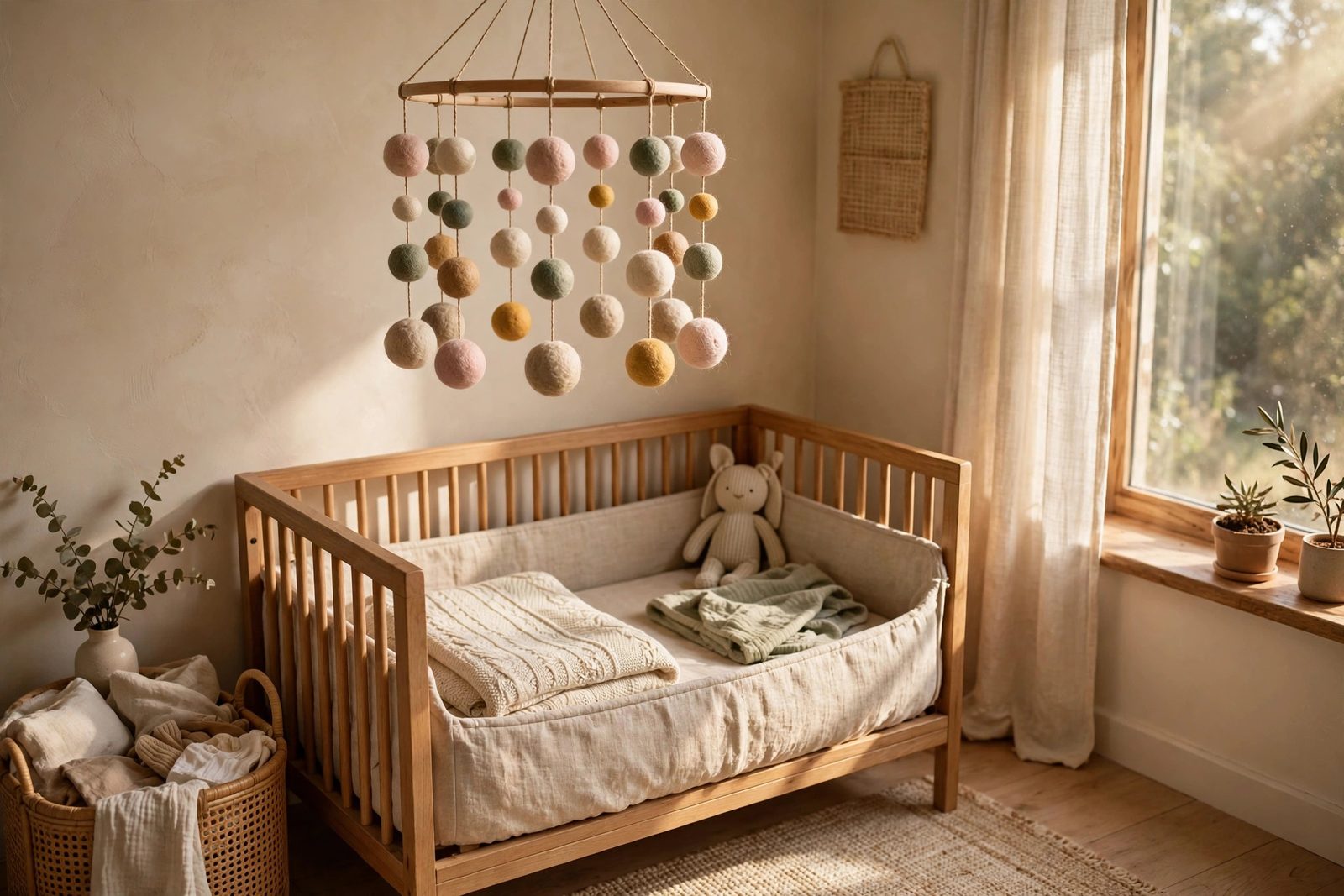
A felt ball garland mobile is the perfect neutral-nursery accent: it adds gentle color and movement without the spinning plastic chaos of a traditional mobile. Choose one in soft neutrals — cream, beige, warm gray, maybe one or two muted tones like dusty rose or sage — and hang it from the ceiling on a simple arm or hook.
Hang it high and off to the side, not directly over the baby's face. The mobile is for the room's atmosphere and for daytime gazing, not for dangling within grabbing range — a standing baby should not be able to reach it. Most safety guidance says to remove or relocate mobiles once the baby can push up on hands and knees.
The felt ball garland earns its place long after the mobile phase: drape it along a shelf, over the bookshelf, or across a window later. Buy one you actually like looking at, because in a neutral nursery it doubles as wall art for years.
How Do You Keep a Nursery Tidy as Toys Multiply?
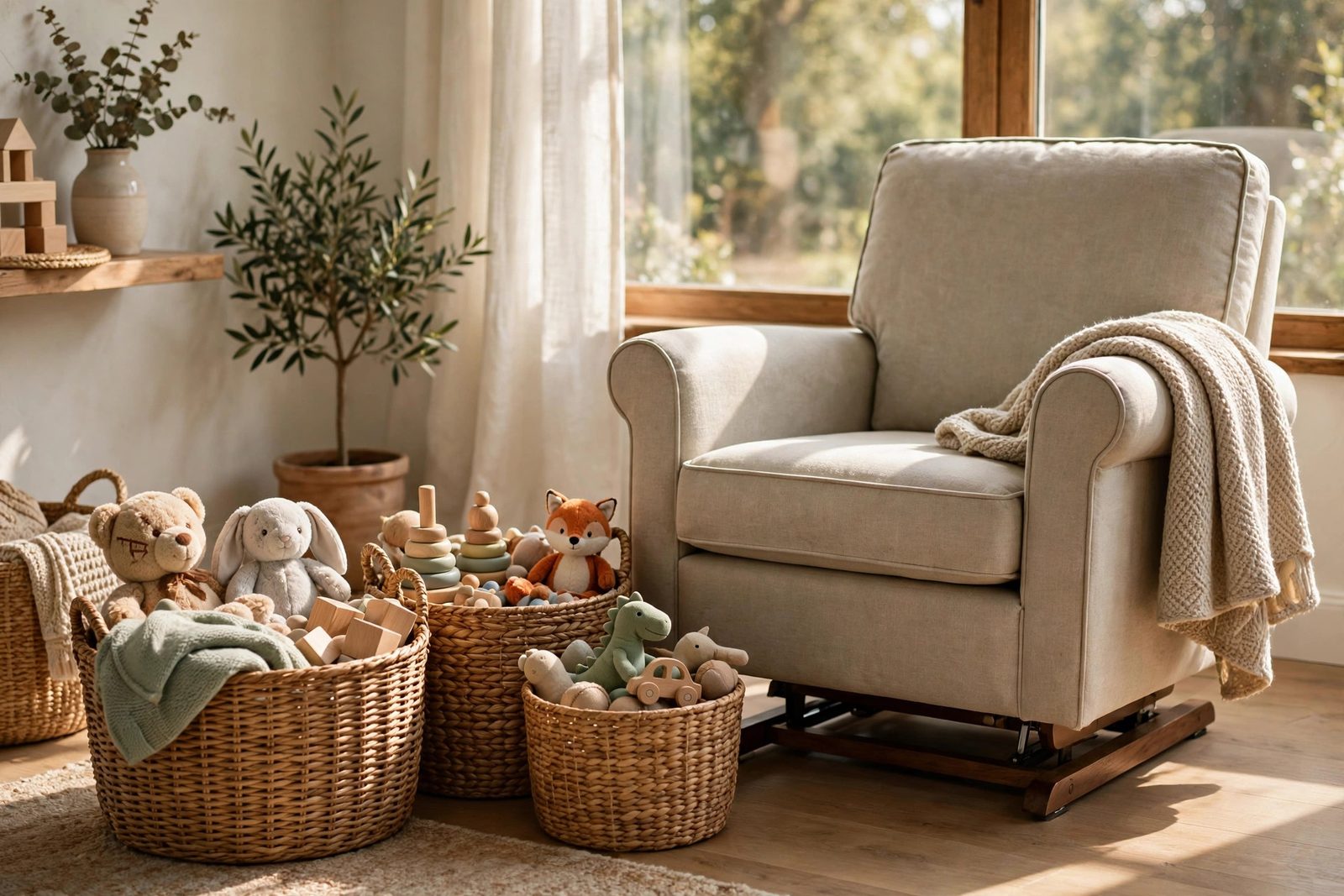
Toys multiply faster than you expect, and woven baskets are the neutral nursery's best defense. Place two or three baskets — different sizes, same natural material — beside the glider, under the crib, and by the bookshelf. The ten-second cleanup rule applies: if a toy can be tossed into a basket in ten seconds, the room stays calm.
Choose baskets with handles for carrying and open tops for easy access. Lidded baskets look tidier but become lids left on the floor; open baskets get used. Seagrass, rattan, and cotton rope all fit the neutral palette, and they are soft enough that a toppling toddler bounces off them instead of getting hurt.
Give each basket a loose category — soft toys, books, teethers — rather than labeling everything. You are the one tidying for the first two years, and a vague system you actually maintain beats a perfect system you abandon. As the child grows, the same baskets hold blocks, then art supplies, then sports gear — buy good ones once.
Nursery Safety Basics for Decor
Every decorating decision in a nursery runs through a safety filter first. The crib stays bare for sleep — no pillows, blankets, bumpers, or stuffed animals — so all your cozy textiles live on the glider, the floor, and the walls instead. Keep all cords (lamp cords, monitor cords, blind cords) at least three feet from the crib and out of reach.
Anchor every tall or heavy piece of furniture to the wall: the dresser, the bookshelf, even the glider if it is light enough to tip. Hang wall art and shelves high enough that a standing toddler cannot grab them, and use closed or cordless window coverings throughout. Check that all paint is zero-VOC and that any vintage furniture is lead-free before it enters the room.
Small-Nursery Layout That Fits It All
A small nursery still fits all three zones if you let furniture do double duty. Push the crib against the longest wall, place the glider in the corner by the window (the view helps during long feeds), and use the dresser as the changing station against the remaining wall. A compact or mini crib buys you precious inches if the room is truly tiny.
Go vertical for storage: floating shelves above the dresser, a tall narrow bookcase instead of a wide one, and baskets tucked under the crib. Keep the center of the room clear for tummy time and play — a nursery that feels open is a nursery that feels calm, even at a hundred square feet.
Final thoughts
A calm, neutral nursery is a gift to everyone who uses it — the baby, who sleeps in a room free of visual noise, and you, who will spend more bleary-eyed hours in the glider than you can imagine right now. The white crib, the soft rugs, the woven baskets: none of it is flashy, and all of it still looks right in five years.
Start with the palette, build the three zones, and let the room grow with your child. Swap the art, change a throw, add a book — the neutral base handles every phase from newborn to big-kid without a single repaint.
And remember: the best nursery decor is the kind you stop noticing because the room just feels right. Decorate for the quiet moments, not the photos — though the photos will be lovely too.
FAQ
What colors work best for a calm nursery?
Warm whites, creams, beiges, soft grays, and natural wood tones create the calmest nurseries. Avoid cool, blue-leaning whites, which can feel stark. If you want a hint of color, add it in muted, dusty tones — sage, warm clay, or soft oat — through textiles you can easily swap.
What are the must-have furniture pieces for a nursery?
Three pieces cover every need: a crib, a comfortable glider or rocking chair for feedings, and a low dresser that doubles as a changing station. Everything else — bookshelf, side table, baskets — is supporting cast. Buy the dresser and glider for the long term; the crib is the one piece you will eventually outgrow.
How do you decorate a small nursery?
Use a mini or compact crib, let the dresser double as the changing station, and store vertically with floating shelves and under-crib baskets. Keep the center of the floor clear for play, stick to light neutrals to keep the room feeling open, and choose a few multi-purpose pieces rather than many single-purpose ones.
Is it safe to hang art above the crib?
Yes, as long as it is hung well out of reach — at least two feet above the top rail — and secured so it cannot fall into the crib. Use two hooks or museum putty on every frame, keep pieces lightweight, and skip glass-front frames directly over the crib in favor of acrylic or unglazed prints.
What should you put in the crib for a newborn?
Nothing but a fitted sheet on a firm mattress. Safe sleep guidance says the crib should be bare — no pillows, blankets, bumpers, stuffed animals, or positioners. Style blankets and soft toys on the glider, shelves, or baskets instead, and add them to the bed only when your pediatrician says it is appropriate.
How do you make a nursery feel cozy without clutter?
Layer textures instead of adding objects: a knit throw, a layered rug, linen curtains, and woven baskets add warmth without visual noise. Give every item a home — baskets for toys, a caddy for changing supplies — and follow the ten-second cleanup rule so tidying never becomes a project.