Outdoor
10 Spring Porch Decor Ideas for a Welcoming Entry
These spring porch decor ideas turn your entry into a warm welcome — pastel wreaths, fresh planters, linen textiles, and layered mats for spring curb appeal.
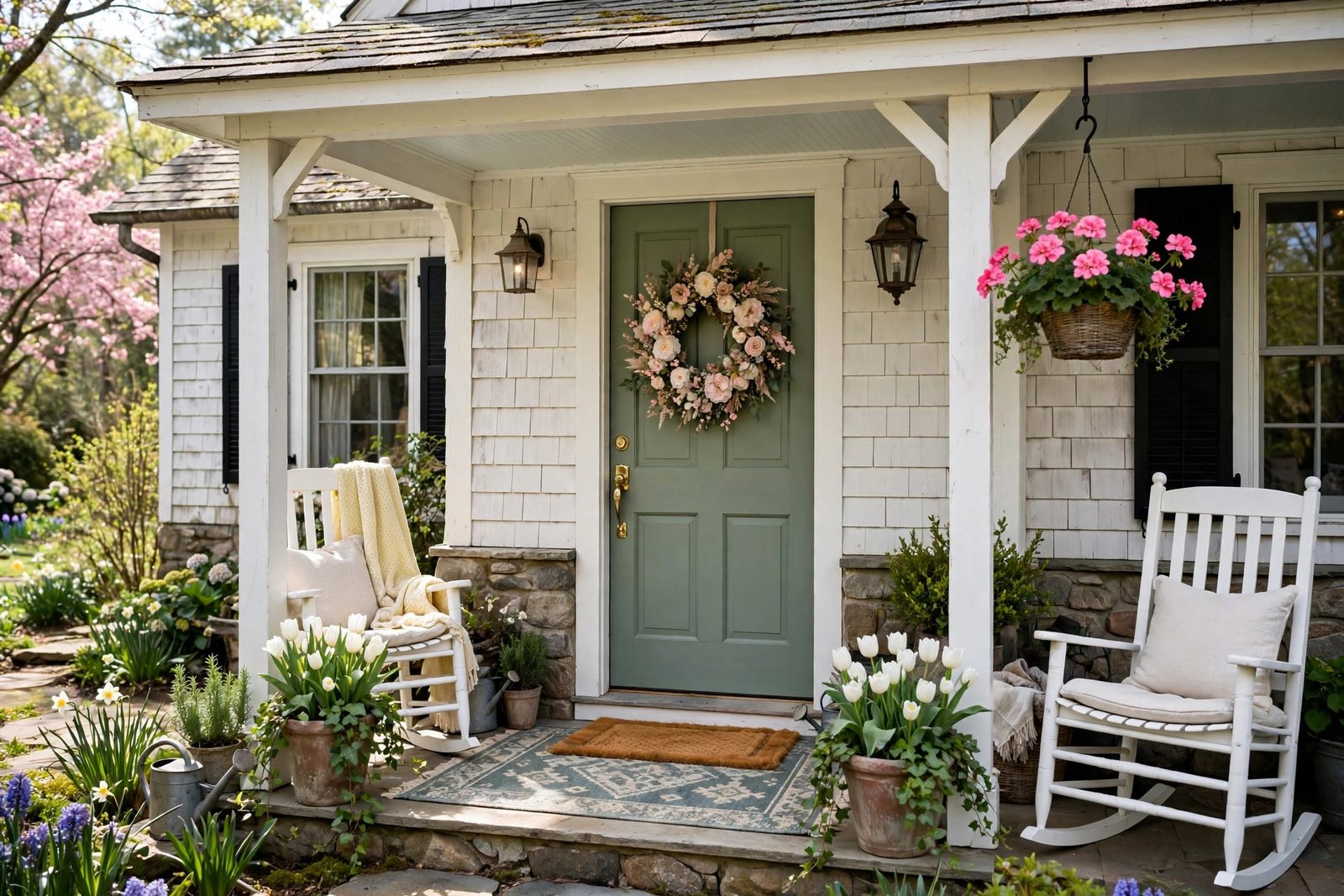
These spring porch decor ideas are how you turn the front of your house from a tired winter landing strip into the warmest spot on the block. Your porch is the first thing guests see and the last thing you see every time you leave — yet most of us treat it as the last place to decorate. Spring is the season that fixes that: the days get longer, the light gets kinder, and every neighbor starts glancing at entries again.
The 2027 spring porch look is refreshingly simple: fresh greens instead of heavy garlands, light linen textiles instead of wool blankets, botanical touches everywhere, and one great pastel door wreath doing the heavy lifting. Think of it as spring's version of a deep clean — clear the winter clutter first, then rebuild with airy layers that say the house is awake again. Most of these ideas cost under fifty dollars and take an afternoon.
Below are ten specific, do-it-in-a-weekend ideas covering the whole entry, from the door wreath to the doormat to the lighting you will enjoy long after sunset. Whether your porch is a grand wraparound or a two-foot stoop, every idea here scales down — and none of them require a green thumb.
What Should a Spring Porch Refresh Start With?
Start with the winter clear-out, because every good spring porch is built on an empty surface. Sweep the whole porch, including the corners where leaves and grit collect against the house. Put away anything that screams cold weather: the heavy plaid blanket, the pine-scented lantern fillers, the deep burgundy mat, the salt-stained boots by the door. Decorating for spring on top of leftover winter is how porches end up looking muddy — one clear season at a time.
While the porch is bare, wash the door and wipe down the hardware. A spring wreath hung on a dusty door is like fresh paint on a dirty wall — the base has to be clean for the pretty parts to land. Check your door mat too: coir mats take a beating over winter, and if yours is balding or shedding, replacing it is the single cheapest curb-appeal upgrade you can make, usually under twenty dollars.
Walk out to the curb and look back at your porch before you add a single thing. This is the view every visitor gets, and it reveals what actually matters: the door is the focal point, the mat anchors the ground, and everything else is garnish. Plan around that sightline and you will decorate the porch people see, not the porch you think you have.
How Do You Pick a Spring Wreath for Your Front Door?
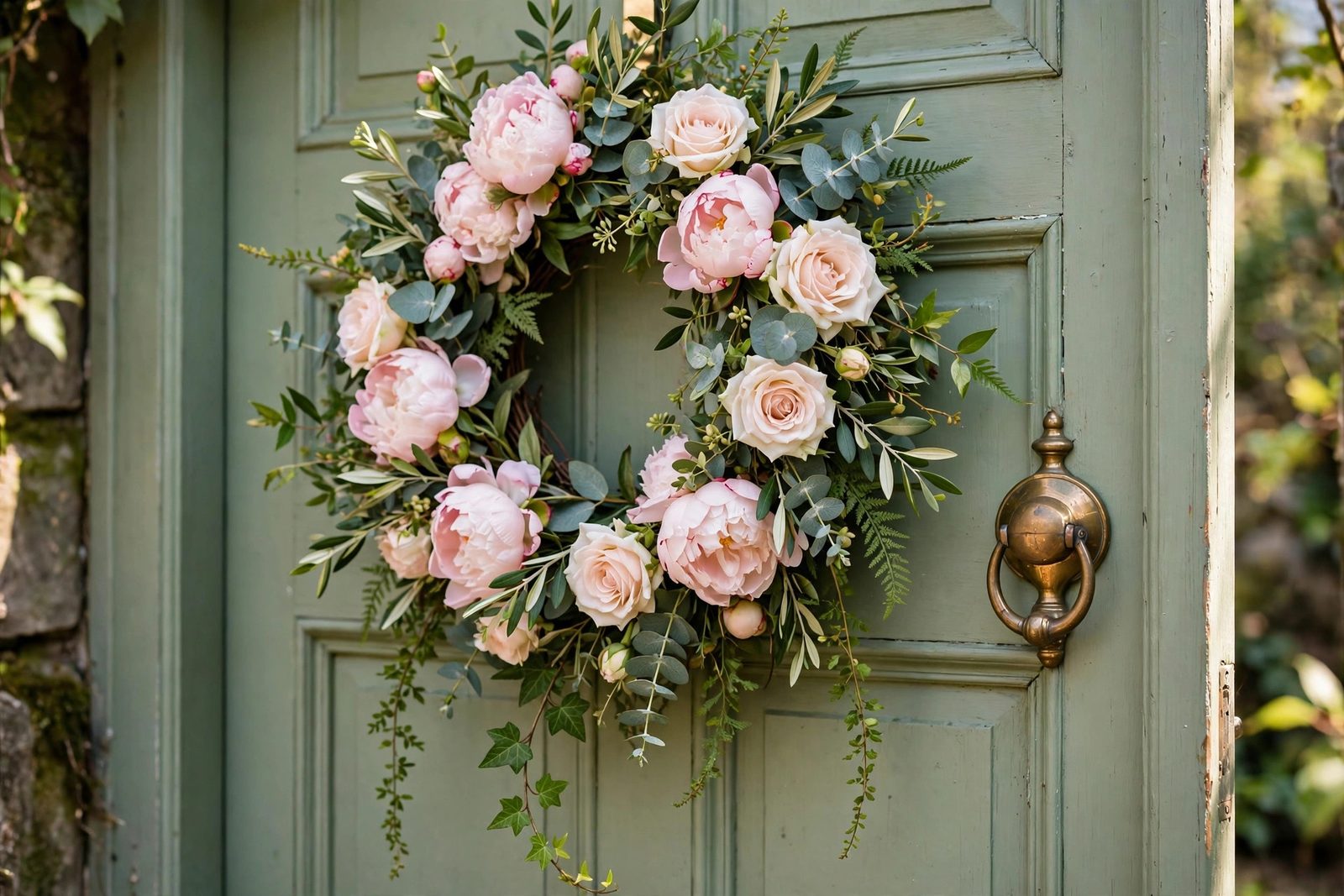
The door wreath is the highest-impact purchase on this list, so spend your money there. For spring 2027, go botanical and pastel: blush peonies or roses mixed with eucalyptus, cream blossoms with green trailing foliage, or a simple boxwood base dressed up with a few pastel stems. The wreath should be sized to the door — roughly 22 to 26 inches across for a standard front door. Anything smaller looks apologetic from the street.
Hang it so its center sits at about eye level, roughly 55 to 60 inches from the porch floor, and keep the bottom of the wreath clear of the door knocker by a few inches. An over-the-door wreath hanger in a matching metal finish protects the finish and keeps the wreath flat; command-style outdoor hooks work too if your door is steel. The classic mistake is hanging the wreath too high, which makes the door look oddly long and unmoored.
If real wreaths feel like a splurge you will resent, quality faux spring wreaths now fool almost everyone from six feet away. Fluff it properly when it arrives — pull every branch outward and alternate the angles — because a flat, just-unboxed faux wreath is what gives the whole category a bad name. Mist it lightly with water once a season and store it in a breathable wreath bag, never crammed in a plastic tub.
Which Planters and Flowers Work Best on a Spring Porch?
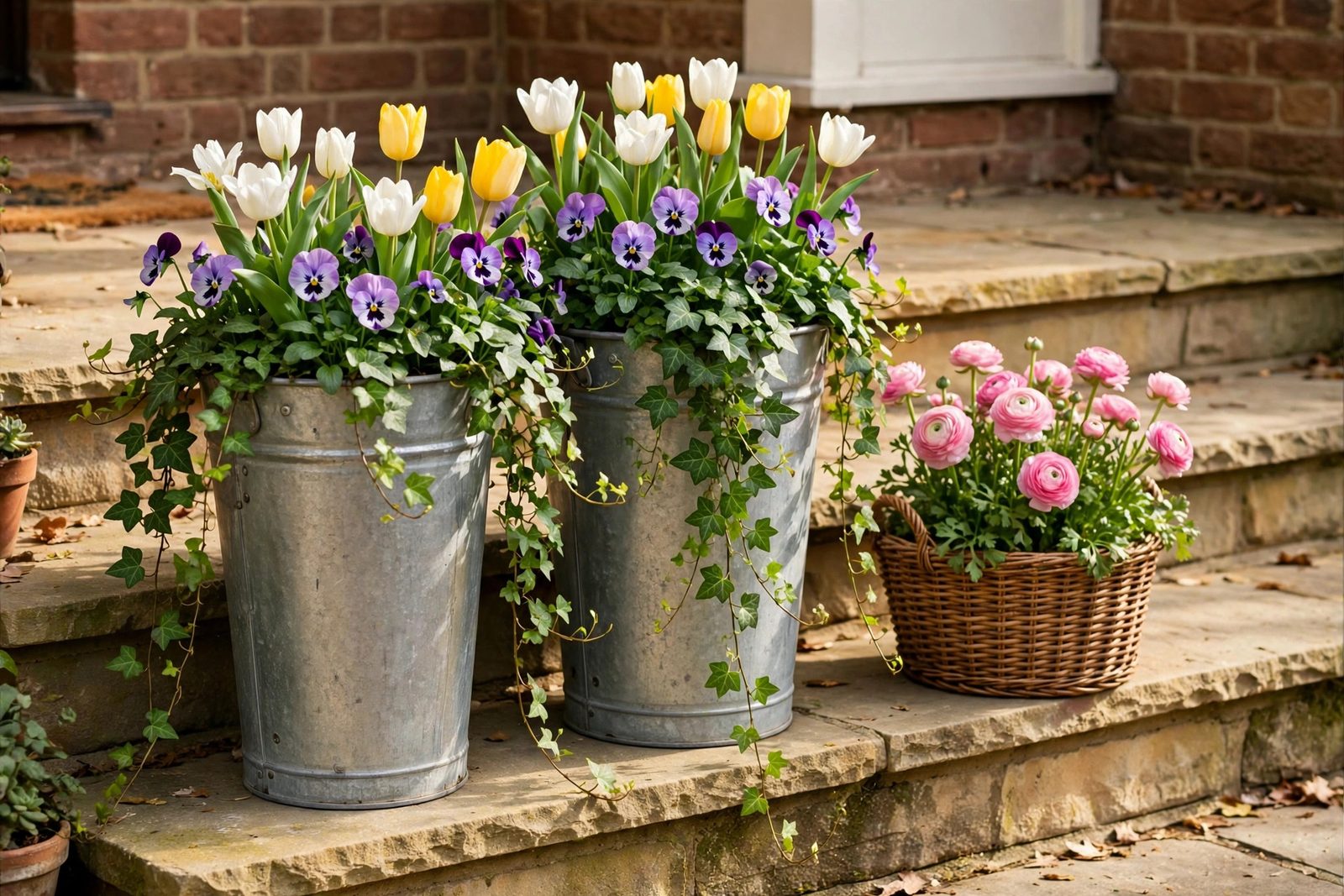
Nothing says spring on a porch faster than flowers, and the thriller-filler-spiller formula is the easiest way to get professional-looking planters. Pick one tall thriller like a white tulip cluster or a small ornamental grass, surround it with fillers like pansies or ranunculus in your pastel palette, and let trailing ivy or sweet potato vine spill over the edge. A pair of matching planters flanking the door is the classic arrangement — symmetry reads as welcoming from the street.
On size, bigger is almost always better. Small pots dry out fast and look lost on a porch; aim for planters at least 14 inches tall and wide enough to hold the root balls with room to spare. Materials matter too: galvanized metal and terracotta are the spring workhorses, but anything in a light neutral — cream, soft gray, natural stone — lets the flowers be the color. Drill a drainage hole in anything that lacks one, because drowned tulips are the number-one planter failure.
If you want flowers with zero babysitting, pansies and violas are the spring heroes: they tolerate cool nights, bounce back from a late frost, and bloom their heads off from March through May. Tulips in pots give you two to three weeks of glory and then they are done, so treat them as a replaceable seasonal moment, not a permanent fixture. Set a phone reminder for mid-April to deadhead pansies and refresh the arrangement before it gets leggy.
How Do You Style Porch Seating for Spring?
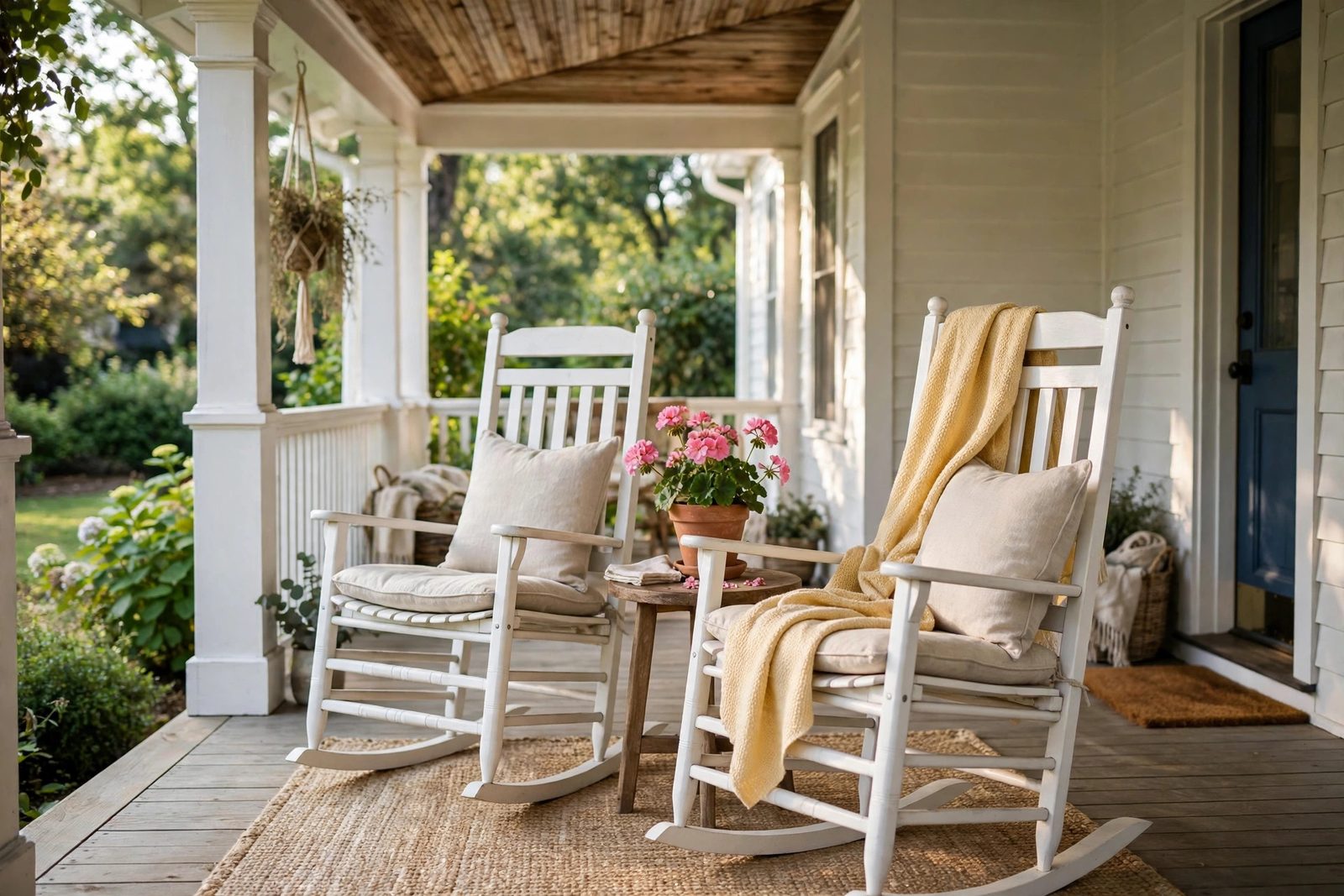
Swap the winter textiles for light ones and the whole porch breathes easier. Pack away the chunky wool throws and dark plaid pillows, and bring out light linen cushions, a cotton or gauze throw in butter yellow or sage, and a pastel pillow or two. Two or three pillows per chair is plenty — spring seating should look inviting, not stuffed. Choose outdoor-rated fabrics or, for covered porches, regular linen that you simply bring inside during storms.
Arrangement matters as much as fabric. Pull chairs slightly away from the wall at a soft angle rather than pressed flat against the house — it makes the seating look lived-in and encourages actual sitting. A small side table between two chairs, holding a potted geranium or a candle, turns a porch into a place. If you only have room for one chair, pair it with a side table and a floor cushion beside it so it still reads as a nook.
The mistake to avoid is buying a whole new porch set every spring. A set of slipcovers or fresh cushions on your existing chairs costs a fraction of new furniture and gives you a full seasonal reset. Wooden rocking chairs in white or natural finish are the spring classic precisely because they take new cushions so gracefully — the chair stays, the styling changes.
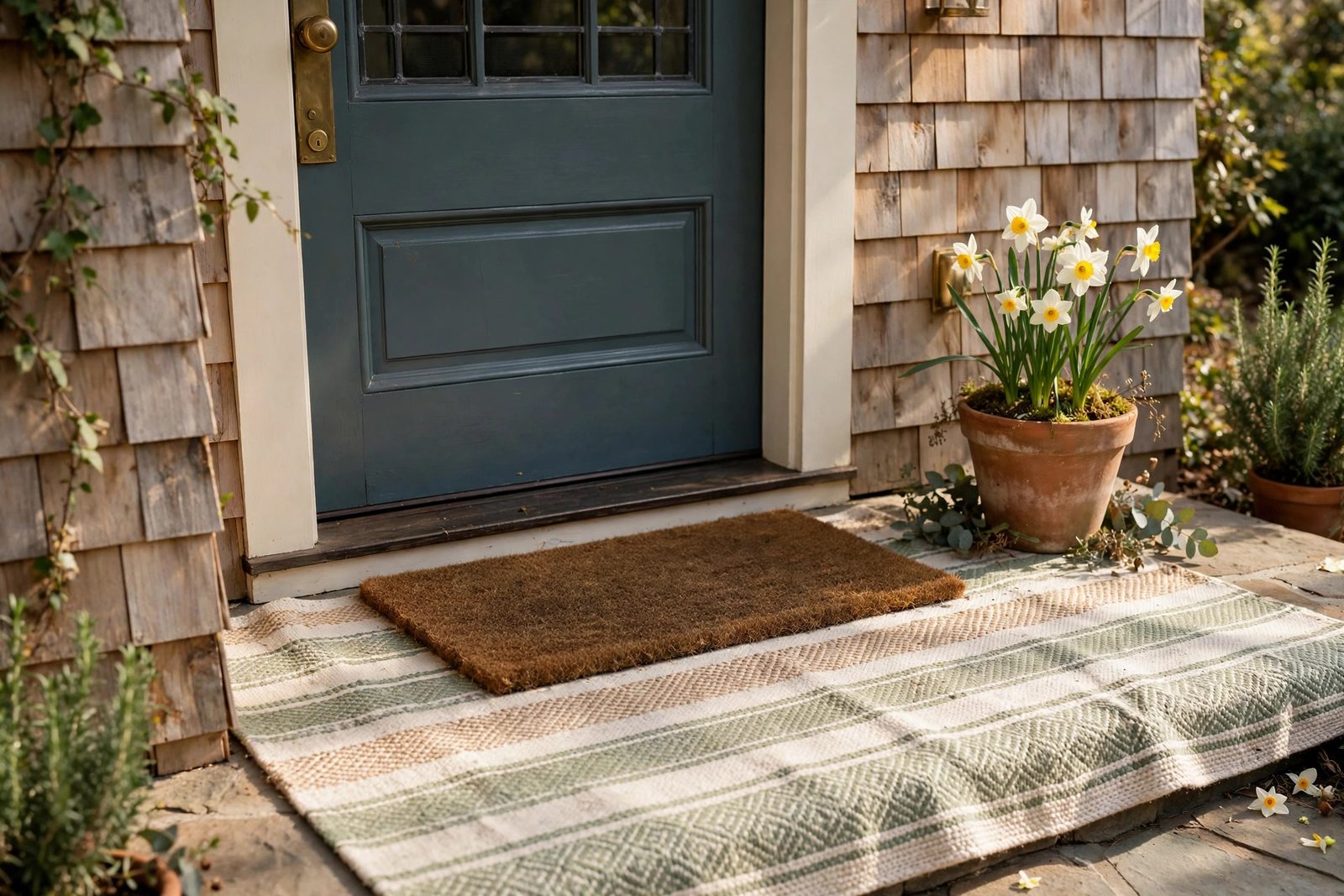
What Is the Secret to a Layered Doormat Look?
Layering is the trick: a flat patterned outdoor rug underneath, a coir doormat on top. The rug should extend at least six inches beyond the mat on every side — a common pairing is a 2x3 foot coir mat over a 3x5 or 4x6 foot flat-weave rug. Cream and sage stripes, a subtle botanical print, or a classic ticking stripe all fit the 2027 spring palette, and the layered look instantly makes a plain stoop feel styled.
Pick your layers in the right order. The base rug is the decorative piece, so choose something flat-woven and weatherproof in a pattern you love; it catches the dirt the mat misses. The coir mat on top is the workhorse — natural fiber, stiff bristles, plain or with a simple seasonal message. Replace the coir mat when it stops looking groomed, because a balding mat drags the whole layered look down.
If your porch is tiny, you can still layer — just shrink the scale. A 2x3 foot flat-weave rug with a standard coir mat on top fits most stoops, and the visual effect is the same. Avoid thick pile rugs outdoors no matter the size; they trap water, grow mildew, and take forever to dry. Flat and drainable is the whole game outside.
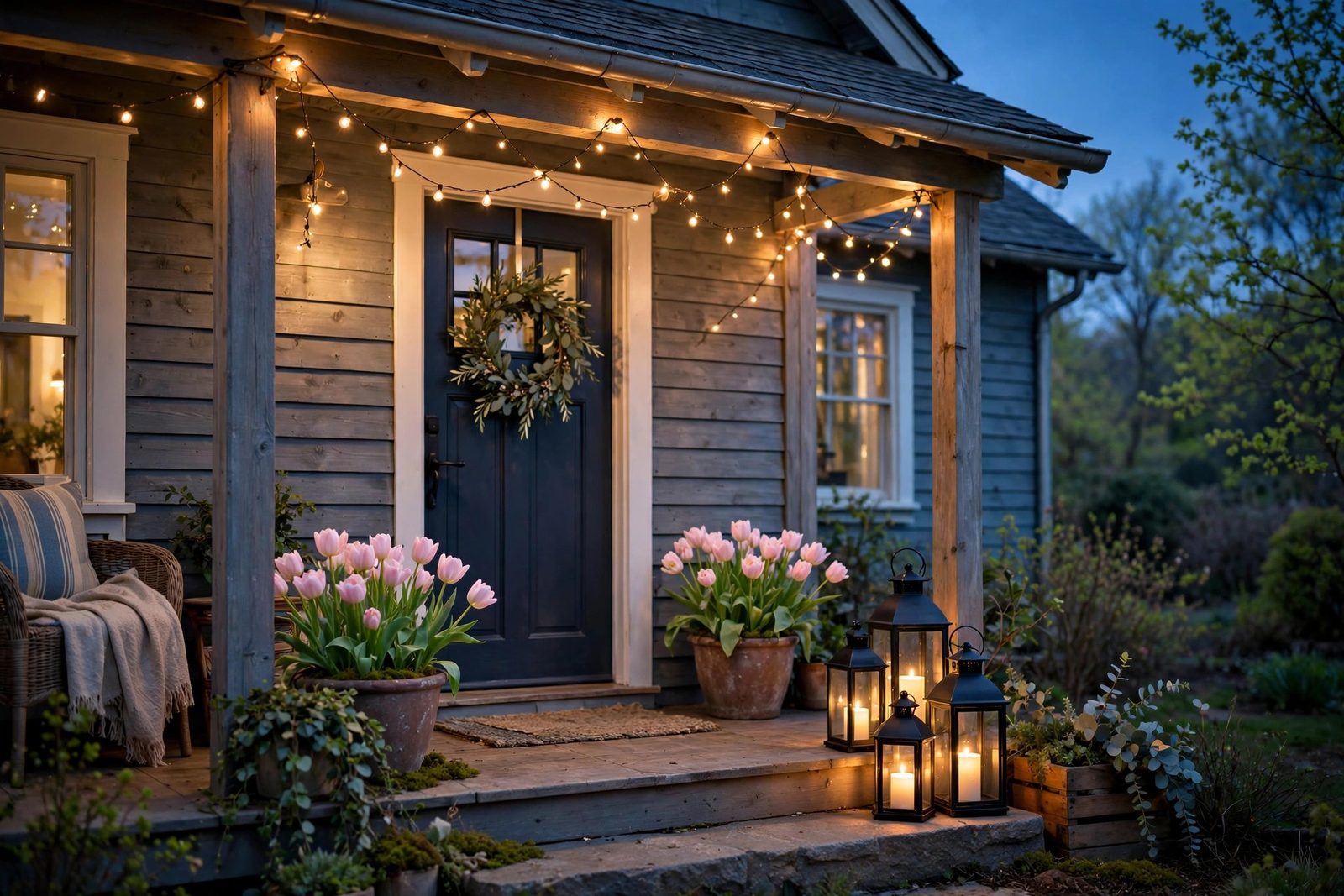
How Do You Light a Porch for Long Spring Evenings?
Spring evenings are when the porch earns its keep, and lighting is what makes them happen. Start with the porch light itself: a warm bulb (2700K, never cool white) in a clean fixture sets the tone, and if your fixture is dated, swapping it is a thirty-minute job that transforms the entry. Then layer in lanterns — a cluster of two or three metal or rattan lanterns on the steps or beside the door, filled with LED pillar candles on a timer.
String lights are spring's secret weapon on a porch. Drape warm-white café lights along the porch beam or around a column, keeping the strand slightly loose so it swags naturally. Solar-powered strings work well if your porch gets afternoon sun, but hardwired or plug-in strands are brighter and more reliable. One strand is accent lighting; two or more start to feel like a celebration, so match the quantity to the mood you want.
Never put real candles in lanterns beside fresh flowers or dried wreaths — spring planters with soil and dry stems are more flammable than people expect. LED candles with a realistic flicker are convincing at night and run on timers, so the porch glows on its own every evening. Aim the light warm and low; the goal is firefly ambiance, not stadium brightness.
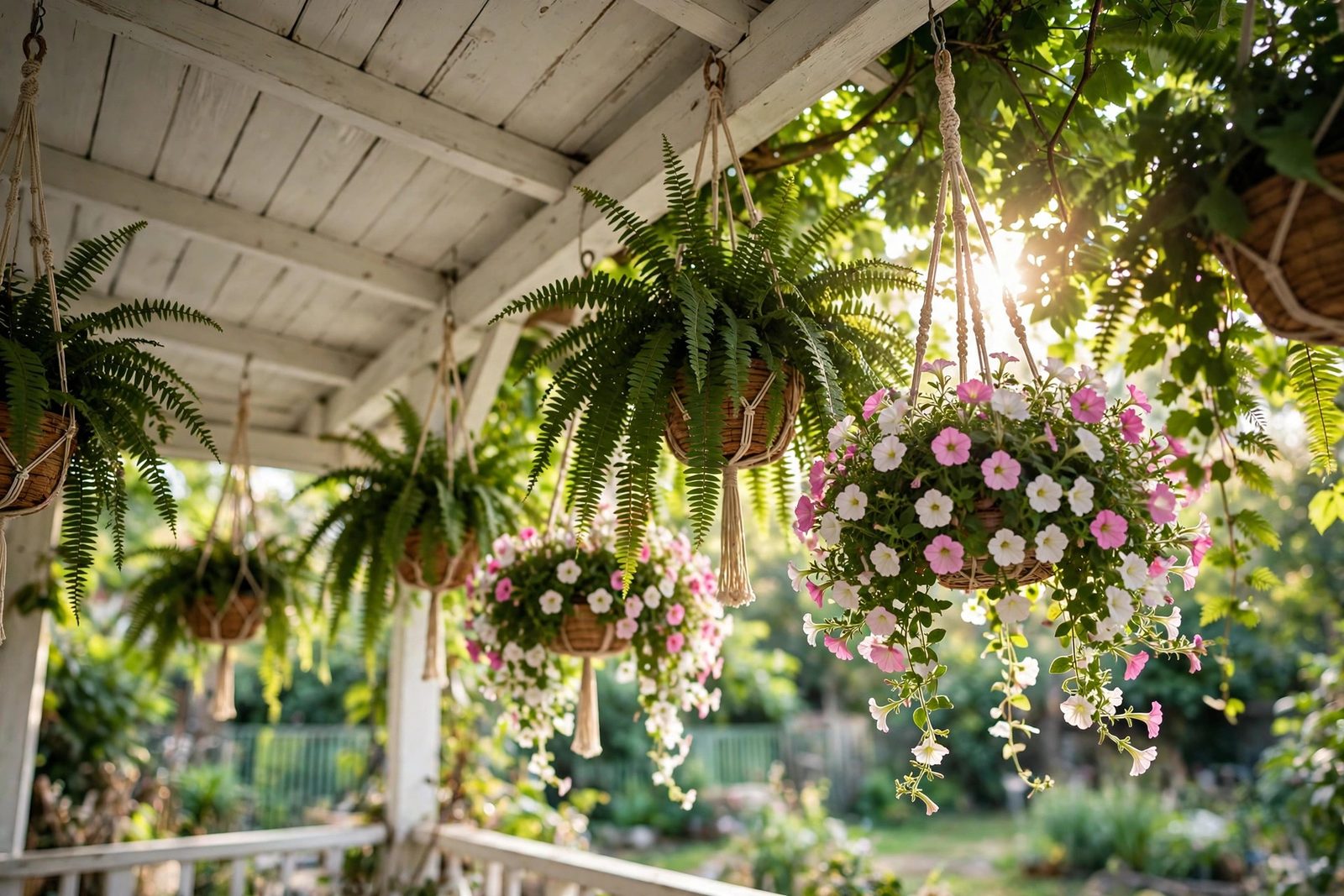
Should You Hang Ferns and Baskets on a Spring Porch?
Yes — hanging plants are the fastest way to make a porch feel lush, because they fill the empty air above eye level that planters never reach. Boston ferns are the classic porch plant for a reason: they love shade, tolerate humidity, and their arching fronds instantly soften a hard porch edge. Hang them from the porch ceiling with sturdy hooks rated for at least 25 pounds, because a saturated hanging fern gets surprisingly heavy.
Space matters: hang baskets at least 18 inches apart and high enough that nobody has to duck — roughly 6.5 to 7 feet from the porch floor to the bottom of the basket. For sunny porches, swap ferns for trailing petunias, million bells, or sweet potato vine, which all bloom or trail dramatically in full sun. One big dramatic basket beats three scraggly ones, so buy the fullest plant you can afford.
The honest maintenance note: hanging plants dry out faster than anything else on your porch because air circulates all around the basket. Water until it drips from the bottom, then check daily in warm weather — a moisture meter or simply lifting the basket to feel its weight takes seconds. If you travel, self-watering inserts or a neighbor on a watering schedule are non-negotiable, because one missed heatwave kills a fern.
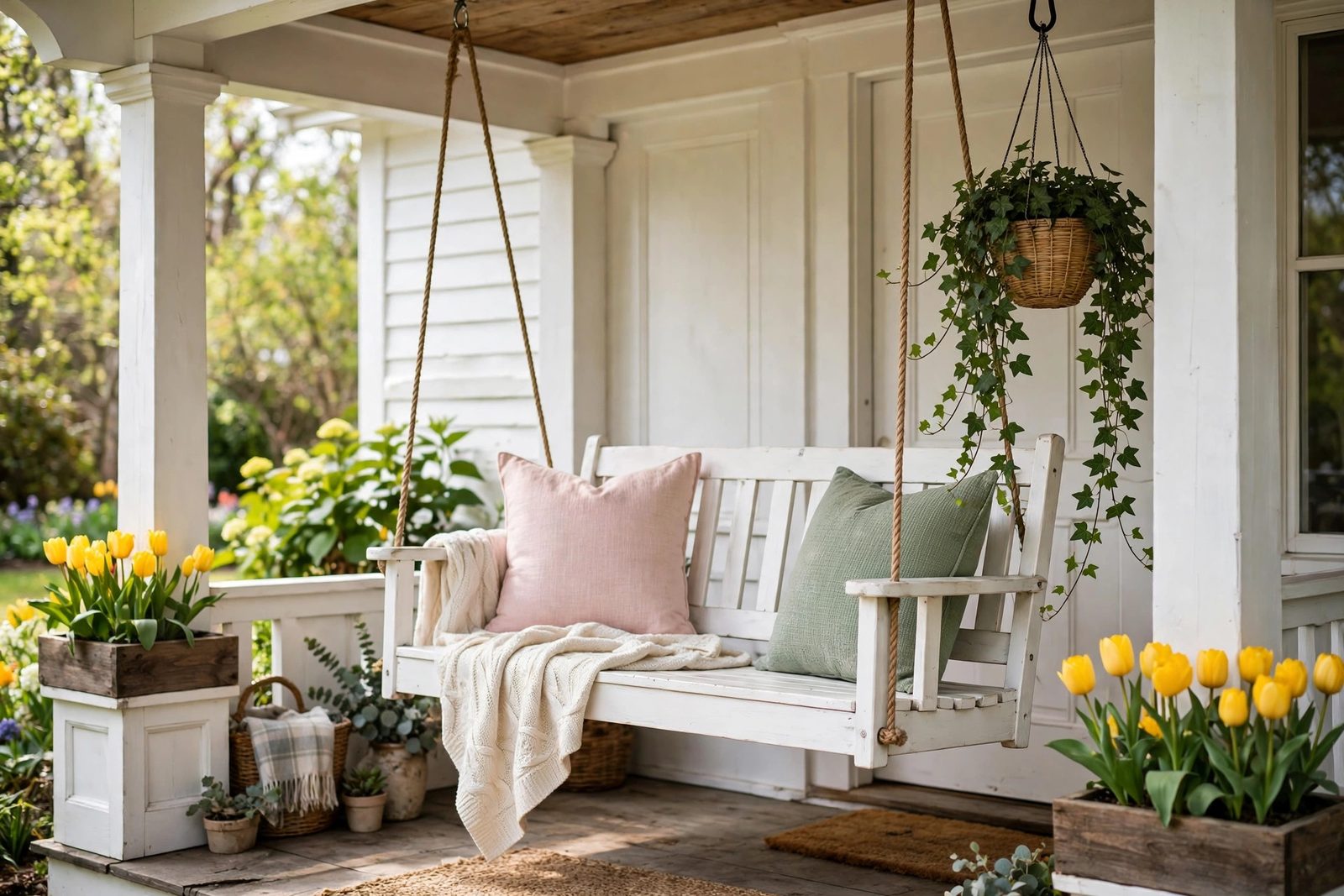
How Can a Porch Swing or Bench Turn Into a Spring Moment?
A porch swing is the emotional center of a spring entry — it is the thing that makes guests slow down and neighbors wave. Style it like an outdoor daybed: two to three pastel pillows in blush, sage, and cream, a light knit or gauze throw folded over one arm, and nothing more. The swing should look like someone just got up from it and will be back in a minute. If you have a bench instead of a swing, the same styling applies, with planters anchoring each end.
Check the hardware before spring gets into full swing. Tighten every bolt and eye screw, look for fraying ropes or rusted chains, and make sure the ceiling mount is screwed into a joist, not just the beadboard. A swing rated for 400 to 500 pounds holds two adults comfortably; if yours creaks, a little silicone lubricant on the pivot points fixes it in seconds.
Position matters for curb appeal: the swing should face the street or the garden view, never the house wall. It is the first thing people picture when they imagine your porch, so give it the best sightline. A small hanging planter beside the swing and a pair of tulip pots at the porch posts frame it perfectly without cluttering the walking path.
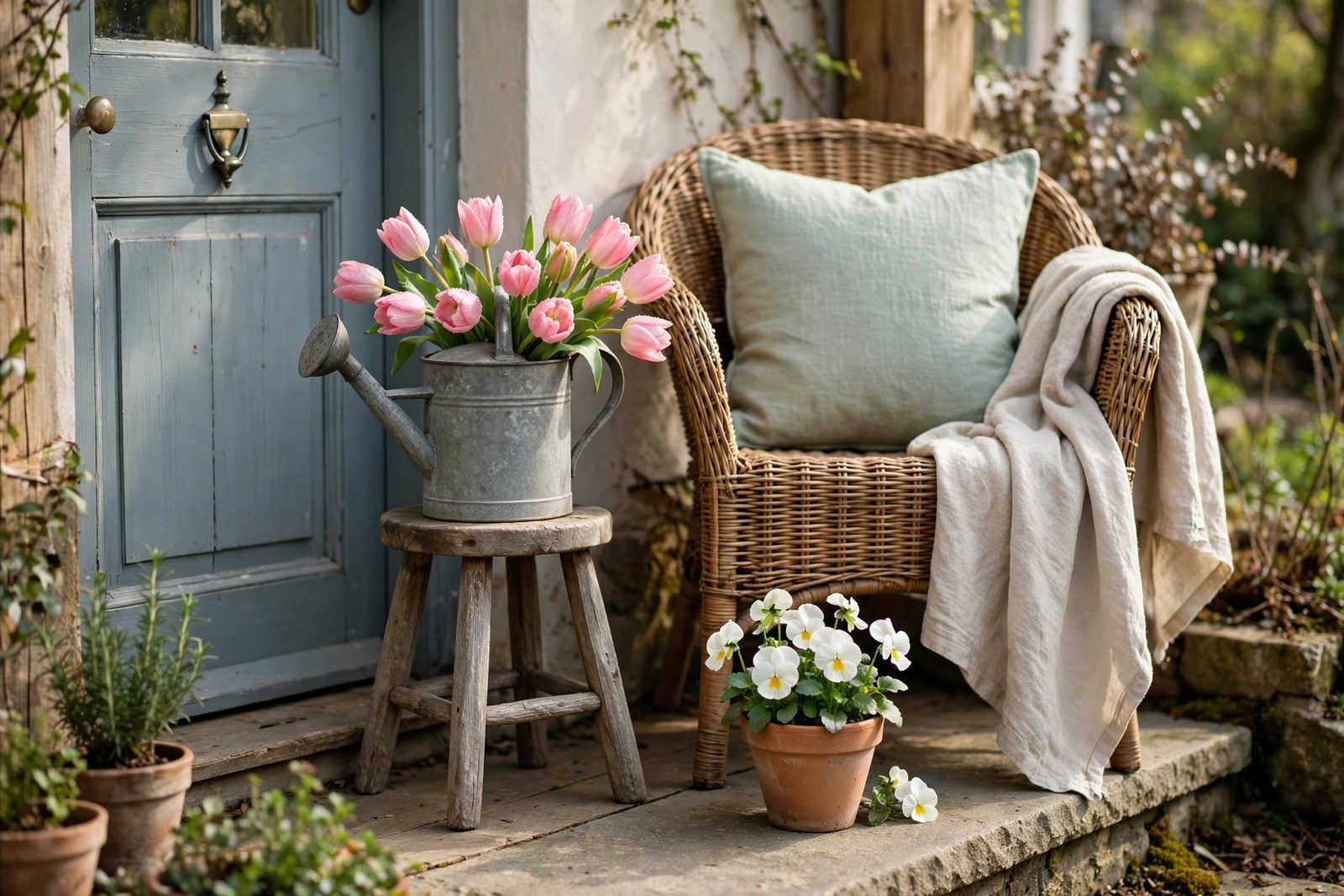
What Small Touches Make a Spring Porch Feel Finished?
The finishing touches are what separate a styled porch from a furnished one. A small garden stool or plant stand beside the door holding a zinc watering can filled with fresh tulips, a tiny terracotta pot of pansies on the top step, a pastel pillow on the chair you forgot about — each one is cheap and each one says someone tends this house. Odd numbers work best: one stool, three small pots, a single watering can.
Botanical touches belong on surfaces, not just in planters. A sprig of eucalyptus tucked into a lantern, a small framed botanical print on the wall by the door, or a grapevine wreath on a side window extends the spring story beyond the doorstep. Keep every touch in the same pastel-and-green palette, because one off-palette object — a bright red pot, a glittery sign — will shout louder than everything else combined.
Edit ruthlessly. The finished spring porch has breathing room: you should be able to see porch floor between the pieces. If every surface is covered, remove two things and look again. Spring decorating is about air and light, and a porch with space between its touches feels twice as welcoming as one that is fully loaded.
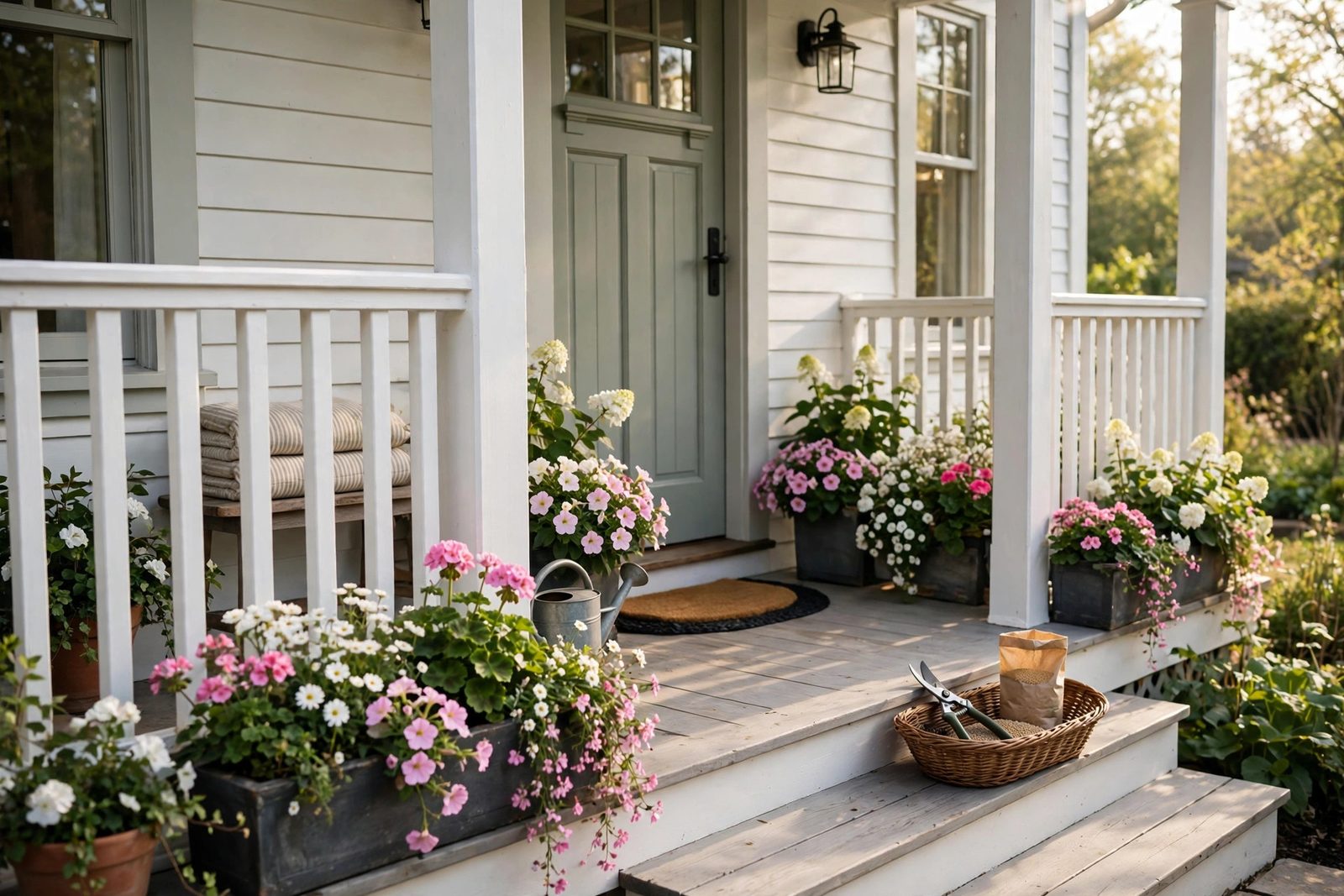
How Do You Keep Spring Porch Decor Looking Fresh All Season?
Spring decor fails in the maintenance, not the planning. Build a tiny weekly routine: deadhead spent pansy blooms every few days, sweep the porch once a week (spring pollen and petals accumulate fast), and shake out the coir mat so dirt does not grind into the rug beneath. Ten minutes a week keeps everything looking like the day you styled it.
Plan the seasonal swap-out in advance. Tulip pots fade after two to three weeks — when they do, replace them with whatever is blooming at the nursery, like geraniums or sweet alyssum, rather than letting dead stems sit. Hanging ferns appreciate a half-strength liquid feed every two weeks, and any cushion that is not outdoor-rated should come inside before a forecasted storm, not after.
The biggest long-term mistake is leaving spring decor up until it looks sad. When May turns toward summer heat, pansies leg out and tulips are done — that is your cue to transition toward summer porch styling rather than clinging to spent spring pieces. A porch that changes with the seasons always looks intentional; a porch frozen in April looks forgotten by June.
The One-Afternoon Spring Porch Refresh Checklist
Work in this order and you are done by dinner. First, strip the porch completely: sweep everything, put away all winter items, wash the door and clean the hardware. Second, lay the foundation pieces — the layered rug and coir mat, the planters (planted and watered), and the door wreath hung at eye level. These four elements are the skeleton; everything else is garnish.
Then style in this sequence: seating textiles next (cushions, pillows, throw), then the hanging baskets, then lighting (lanterns placed, string lights tested), and the small finishing touches last. Step back to the curb after each stage — that is the view that matters, and it will tell you immediately if something is off-center or missing.
Finish by photographing the porch from the street. The photo shows you what guests actually see, and it becomes your reference for next spring. Store winter pieces in one labeled bin as you go, and the swap takes an afternoon, not a weekend.
Three 2027 Spring Porch Color Palettes That Always Work
Blush pink plus sage green on a cream base is the soft romantic palette — pastel wreath, pink tulips, linen cushions, natural greenery. It suits cottages and traditional homes and photographs beautifully in morning light. Butter yellow plus sky blue on warm white is the cheerful farmhouse palette — daffodils, blue glass, light wood planters — sunny without going loud.
Fresh green plus white on natural wood is the quiet botanical palette — ferns, boxwood, white blooms, cream textiles, zero pastels. It reads modern and calm and works on porches where pink would feel fussy. Pick the palette that matches your house's existing trim and tones, not the one you wish you had — the porch has to live with your siding, door, and roof.
Final thoughts
A welcoming spring porch is really a promise to everyone who walks by: this house is awake, and the people inside pay attention. It does not take much — a cleared stoop, one great pastel wreath, a pair of planted pots, and a mat that looks groomed. The porch is the smallest room of the house and somehow the one the whole street judges.
Start with the clear-out this weekend, even if you only get as far as the bare porch and a new coir mat. Spring decorating is forgiving that way — every small swap moves the entry in the right direction, and by the time the tulips are up in the neighbors' yards, your porch will already be the one people slow down to look at.
FAQ
When should I decorate my porch for spring?
Late February through March is the natural window — right when spring curb-appeal searches start climbing. You can start with the wreath and mat early since those are weatherproof, and add live plants once nighttime temperatures stay above freezing in your zone. Decorating a little early is fine; it is one of the cheapest ways to shake off late-winter gloom.
What is the best wreath size for a standard front door?
A 22 to 26 inch wreath suits most standard front doors — big enough to read from the street, small enough not to overwhelm the door. Hang it with its center at eye level, about 55 to 60 inches from the porch floor. On double doors, hang one matching wreath on each door rather than one oversized wreath in the middle.
Which flowers survive on a spring porch with cold nights?
Pansies and violas are the hardiest spring porch flowers — they tolerate light frosts and bloom from March through May. Snapdragons and sweet alyssum are similarly tough. Tulips handle cold well but only bloom for two to three weeks, so treat them as a replaceable seasonal moment. Wait on geraniums and petunias until nights are reliably above 45 degrees.
How do I layer a doormat over an outdoor rug?
Place a flat-weave, weatherproof outdoor rug first — it should extend at least six inches beyond the coir mat on every side. Set the stiff coir mat on top as the working layer that scrapes shoes. A common pairing is a 2x3 foot coir mat over a 3x5 foot rug. Keep both flat-woven so water drains through and nothing grows mildew.
What is the best lighting for a spring porch at night?
Layer it: a warm 2700K bulb in the porch fixture, lantern clusters with timer LED candles on the steps, and warm-white string lights swagged along the beam. Avoid cool-white bulbs, which make spring styling look clinical. Never use real flames near fresh planters or wreaths — LED candles with a flicker effect are convincing and safe on a timer.
How do I keep hanging ferns alive on my porch?
Water until it drips from the bottom of the basket, then check daily in warm weather — hanging baskets dry out faster than any other porch plant because air circulates all around them. Lift the basket to feel its weight; light means thirsty. Feed with half-strength liquid fertilizer every two weeks, and give ferns shade — they scorch in direct afternoon sun.